

A fence can keep deer out of the beds without turning a much-loved garden into a stockade. The secret is choosing height, materials and planting together, so protection feels like part of the design.
This guide walks through the best deer fence design choices for ordinary gardens, from quiet mesh and slim metal to hedges, pickets and trellis, plus gates, corners and care.
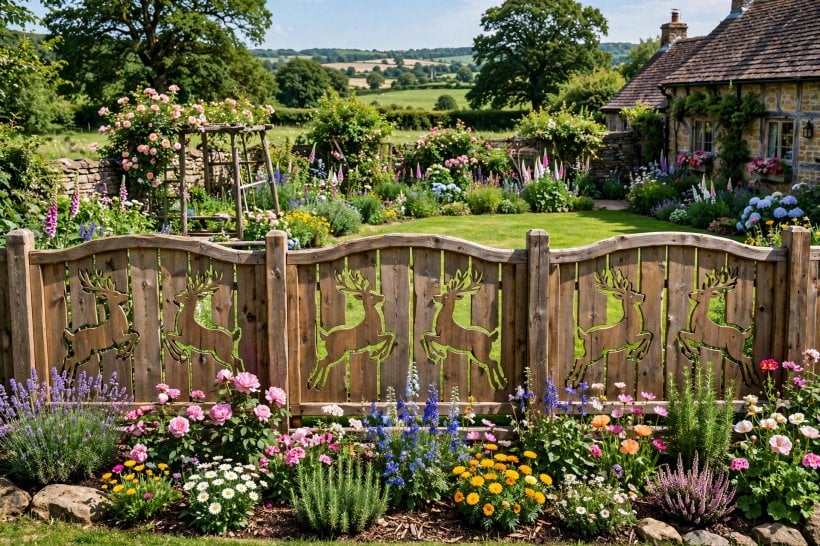
1. Start With the Job the Fence Has To Do
Before choosing a style, walk the boundary and be honest about the job in front of you. Note where deer enter, which beds they reach first, where ground slopes, and which views you want to keep. A fence around a small vegetable patch can be close and simple, while a fence around a whole plot needs clear gates, strong corners and a line that still looks calm from the house. The best deer fence design for your garden is the one that matches that pressure, not the tallest or most expensive option on a shelf. If you are planning the plot around a compact home, it also helps to think about the whole site together, in the same way you would when reading about how to build your own tiny house, where access, services and outdoor space all have to work as one plan.
| Question | What to check |
|---|---|
| How tall? | Tall enough that deer do not treat it as an easy jump, with extra care on slopes where the landing side is lower. |
| How visible? | Decide whether the fence should be a feature in its own right or a quiet background for planting. |
| Which material? | Wood softens quickly, metal stays slim and crisp, and mesh can almost disappear against green backgrounds. |
| Where are the gates? | Put gates where you actually walk with tools, barrows and harvest baskets, not only where they look neat on paper. |
| What grows near it? | Layered planting in front of and behind the line hides fixings and makes the boundary feel established sooner. |
| How will you maintain it? | Leave room to strim, prune, inspect fixings and reach both sides without trampling the beds you are protecting. |
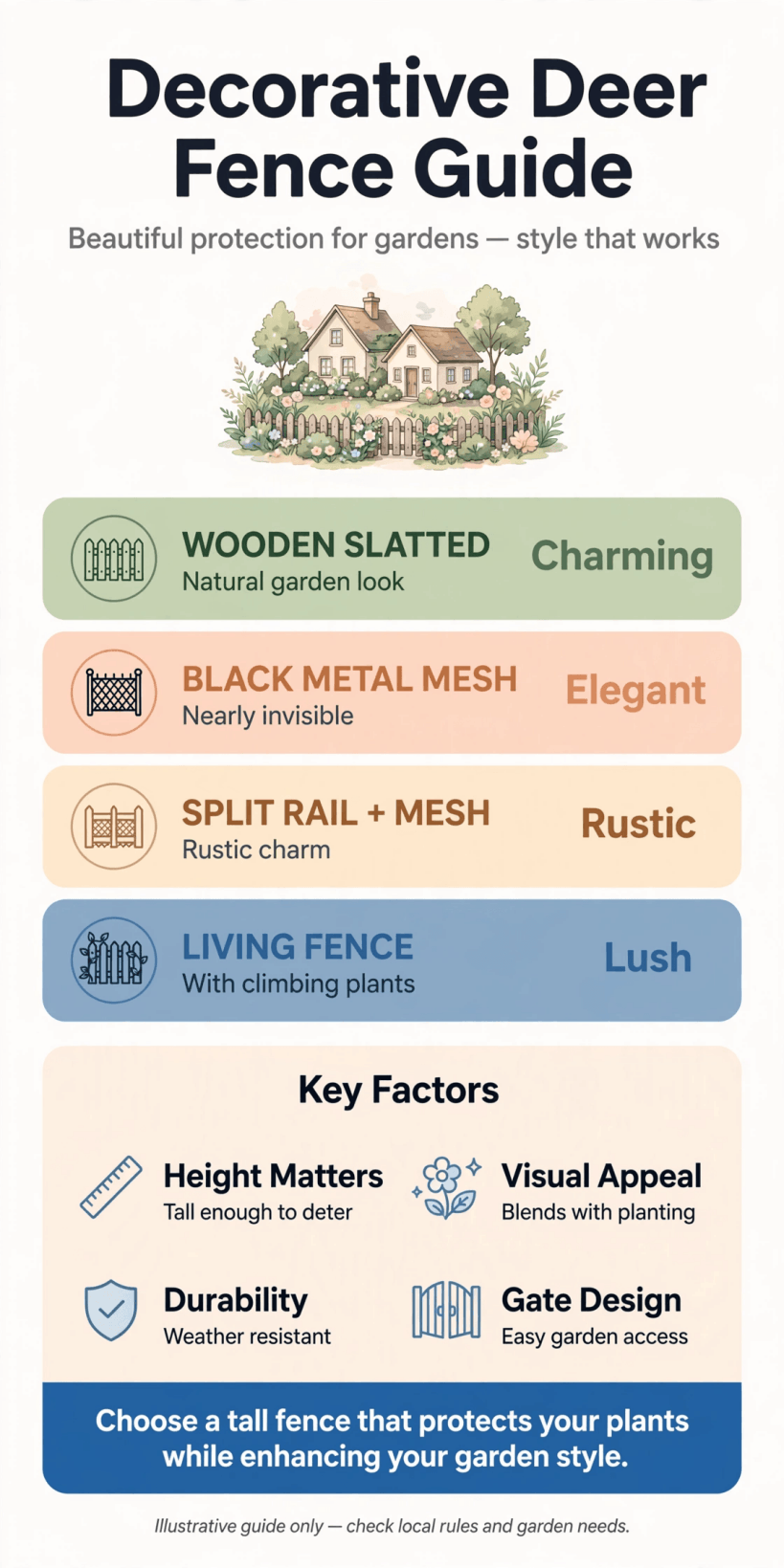
A quick visual summary of height, materials, gates and planting to check before you choose a style.
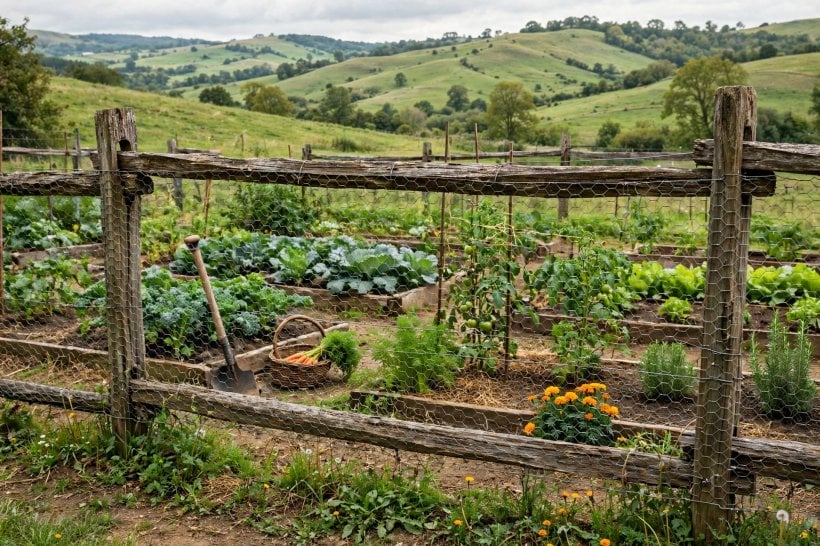
2. Wooden Split-Rail With a Quiet Inner Layer
Split-rail fencing suits country gardens, larger plots and places where a relaxed, rural line feels right. On its own, wide rails will not stop a determined visitor, because the gaps are generous, so many gardeners add a discreet inner layer of mesh or wire fixed to the garden side. From the lane or the lawn, you still see warm timber and a traditional rhythm of posts and rails. From inside the beds, the finer layer does the practical work without shouting about it.
Keep the timber tones close to nearby sheds, raised beds or tree trunks so the fence reads as part of the garden furniture rather than a new barrier. Planting helps enormously here: grasses, hardy perennials and low shrubs in front of the rails break up the horizontal lines and hide the point where the inner layer is fixed. Leave the corners especially strong, because a long timber run is only as reliable as the posts that hold its tension and line.
3. Slim Metal Panels That Let Planting Lead
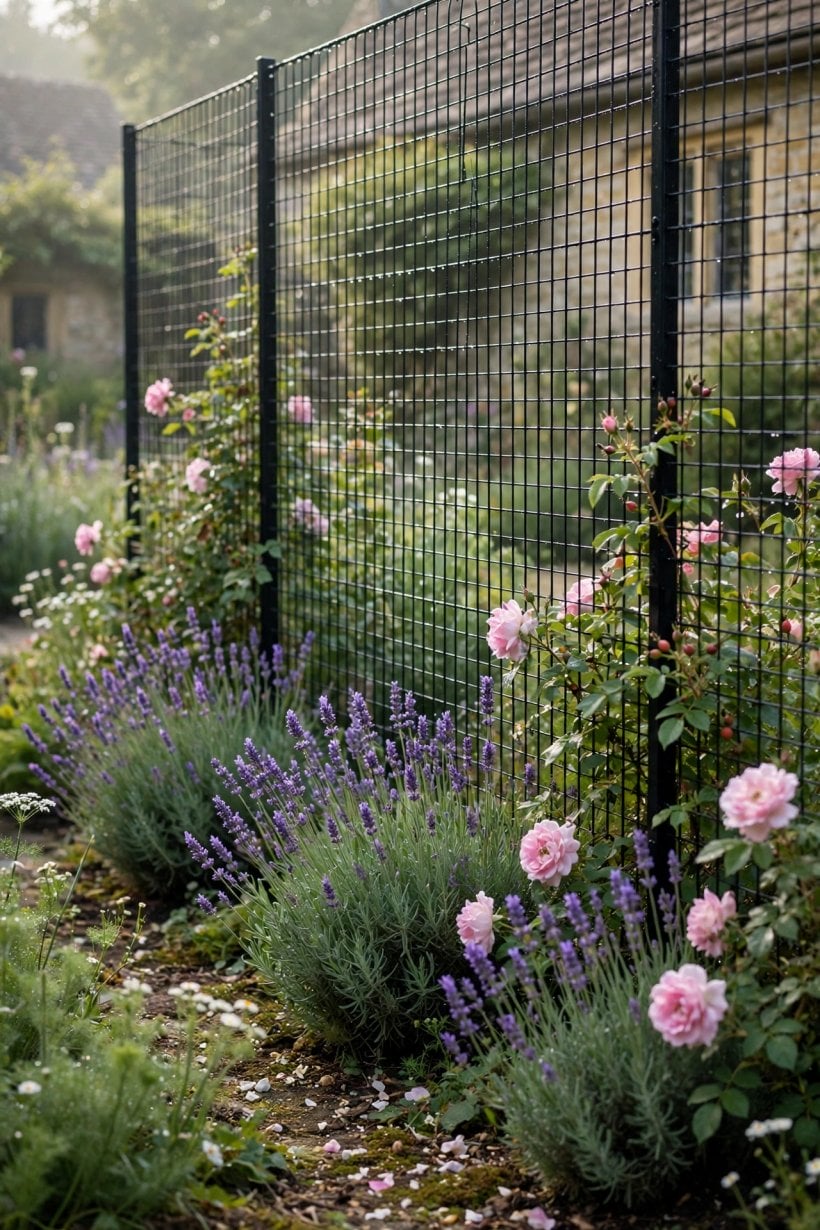
If your taste runs to cleaner lines, slim metal panels or simple vertical bars can protect a garden while staying visually light. Dark finishes tend to recede, especially against hedges and tree cover, while pale finishes feel more deliberate and architectural. The trick is spacing and proportion: narrow uprights, a modest top rail and panels that follow the ground in gentle steps usually look calmer than a single rigid, industrial run.
This style works well near patios, paths and modern extensions, where timber might fight with other materials. It also pairs beautifully with ornamental grasses and loose planting, because stems can move in front of a still, regular background. Think about how you zone space indoors, much as in these small living room interior design ideas, where a light visual divider can define a room without closing it in. Outdoors, the same principle keeps a vegetable area or flower garden distinct without making it feel caged. Check fixings and panel feet before planting climbers, so you can still lift or repair a section later if a post moves.
4. Living Fences, Hedges and Layered Planting
A hedge alone may slow browsing and hide a garden from view, but a hedge combined with a fence inside it is far more dependable. The fence provides the immediate barrier while the hedge matures, thickens and eventually becomes the face your neighbours and visitors see. Choose hedging plants that suit your soil and light, plant them in a staggered row where space allows, and be patient about clipping little and often rather than cutting back hard in one go.
Layering is what makes this option look designed rather than defensive. A hedge at the back, mid-height shrubs in the middle and lower planting at the front create depth, shelter for wildlife and a soft edge to paths. The same inside-out thinking helps when you plan rooms that open to the garden, such as the layouts in this tiny house kitchen design guide, where storage, worktops and doors are arranged around how people really move. In the garden, arrange your layers around gates, taps and compost routes, not just around the prettiest view, so the living fence stays practical to tend all year.
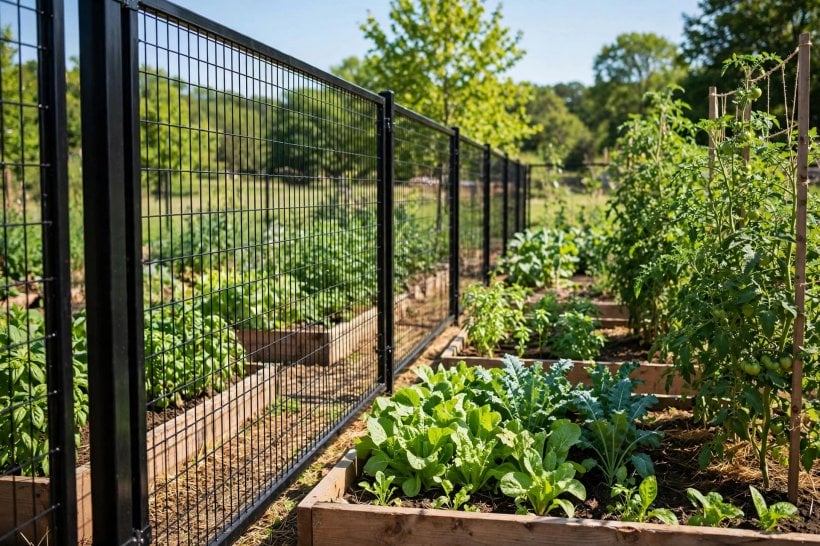
5. Mesh That Disappears Against Green Backgrounds
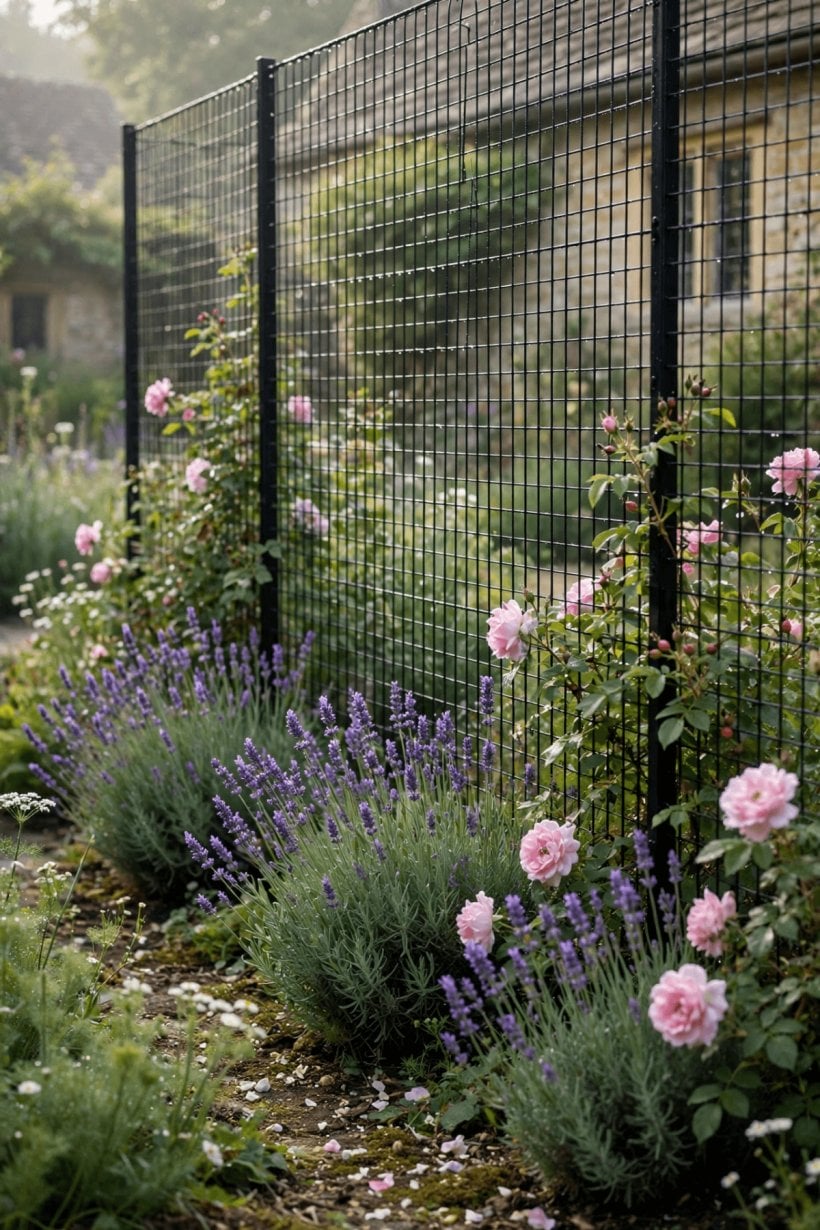
For many gardeners, near-invisible mesh is the most honest answer: it protects the planting, costs attention rather than attention-seeking looks, and lets borrowed landscape beyond the boundary stay in view. Fixed to sturdy posts and kept taut, a dark mesh can vanish against trees, hedges and shaded corners, especially once a few climbers or shrubs soften its base. The key is neatness. Sagging sections, loose ties and uneven tops quickly turn an invisible fence into a scruffy one.
Walk the line as you install it and view it from the house, the gate and the main seating spot. A mesh that disappears from one angle may catch the light from another, so small adjustments to tension and post spacing are worth making early. Keep a clear strip at the base so you can see any damage, and avoid burying the bottom edge in mulch that hides problems. Where the garden is very open, consider planting a loose, low screen just inside the mesh. That planting gives your eye something nearer and more interesting to rest on, which makes the protective layer beyond it even harder to notice.
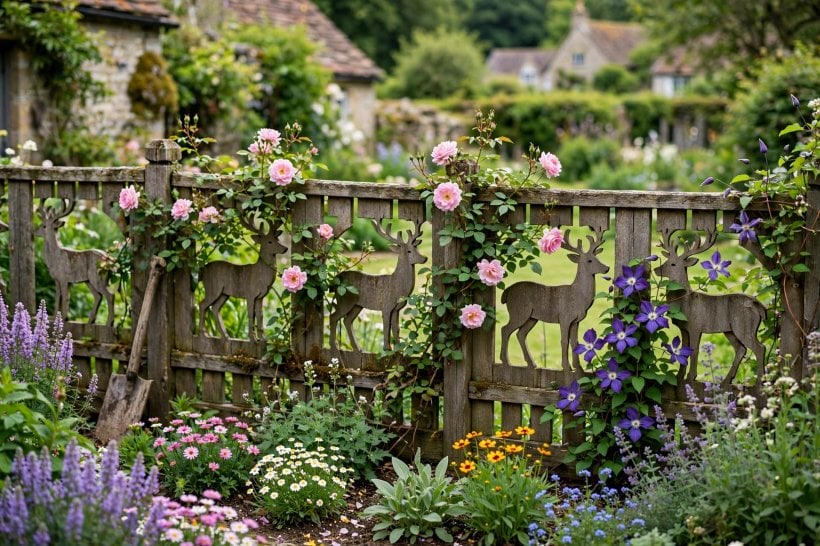
6. Pickets, Trellis and Garden-Room Dividers
Pickets and trellis bring a cottage-garden charm that suits front gardens, herb beds and smaller plots divided into rooms. A classic picket line looks friendly, but remember that height and a secure second layer may still be needed where deer pressure is high. Trellis adds height without solid weight, gives climbers a place to grow and lets light and air pass through, which nearby plants usually appreciate.
Use these dividers to make useful rooms: a protected cutting garden, a quiet orchard corner, or a vegetable area separated from play space. Repeating the same picket profile or trellis pattern around the plot ties separate rooms together, even when each area has a different purpose. Painted finishes can echo window frames, doors or garden furniture, while natural timber weathers into the planting. Whichever you choose, make at least one opening wide and obvious, so visitors and deer alike understand where the intended route runs. Animals are more likely to test a fence where the way through is confusing, so a clear gate in a clear line is part of the design, not an afterthought.
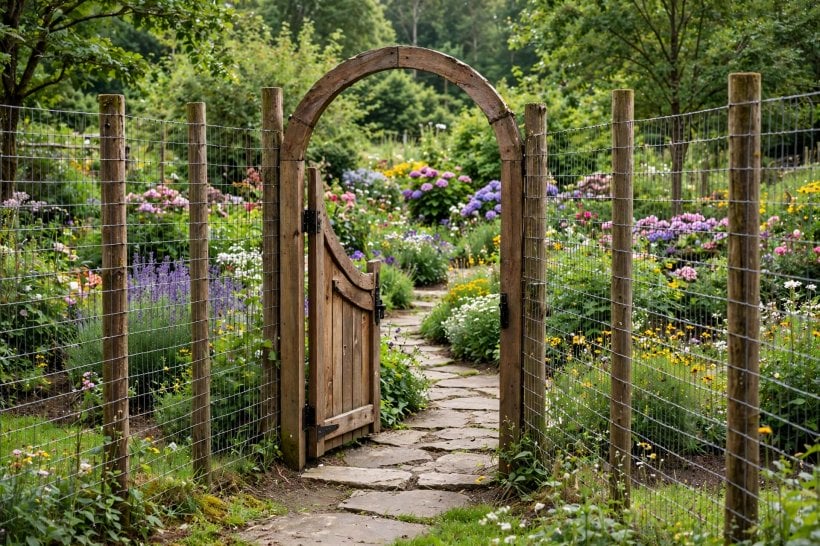
7. Gates, Corners and Changes in Level
Most fences fail at their details, not in the middle of a straight run. Gates need to close cleanly, latch securely and sit at the same protective height as the fence either side, without a tempting gap underneath. Fit a gate you can manage with full hands, and check that it still swings freely after rain, frost and a season of growth from nearby plants. A self-closing habit, formed by good hinges and an easy latch, prevents the most common mistake of all: a gate left ajar overnight.
Corners deserve extra posts, bracing and care, because they carry tension from two directions. On slopes, step the fence in short sections or follow the ground closely so no low point or under-gap appears. Deer notice a low spot on a downhill approach in a way a plan drawing rarely shows, so stand on both sides of the line and judge the effective height from the higher ground. Where paths, drives or streams cross the boundary, treat each crossing as its own small design problem, with a clear, tidy solution rather than a bundle of offcuts and hope.
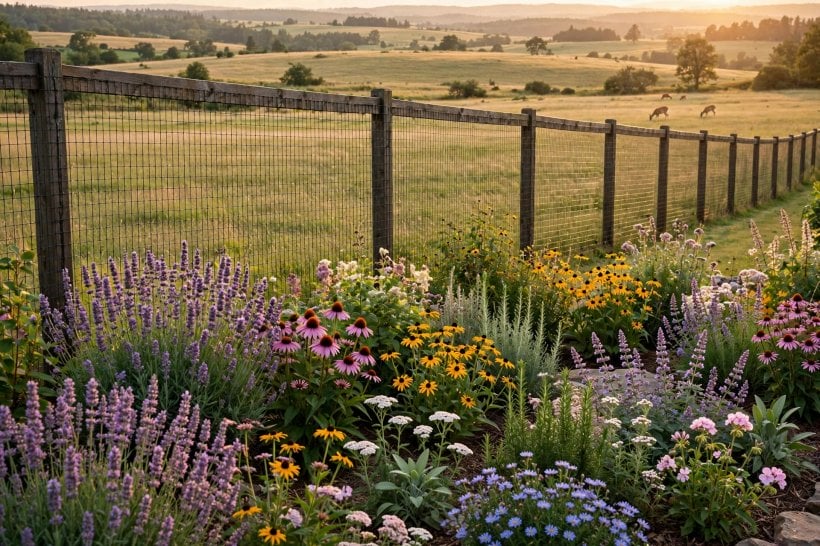
8. Colour, Finish and Details From the House
A fence looks intentional when its colour and details borrow something from the house or the garden buildings. That might be the dark tone of window frames, the soft green of a shed, the weathered grey of a bench, or the warm timber of a pergola. You do not need an exact match; a family resemblance is enough. This is the same trick used in colourful tiny house interiors and in a calm modern tiny house bedroom, where repeating a few tones makes a small space feel pulled together.
Small details lift a plain run: post caps that shed water, fixings kept in tidy lines, a top rail at a consistent height, and planting pockets that repeat every few metres. If you love a painted finish, test it on an offcut and view it in sun and shade before committing, because outdoor colour shifts through the day. If you prefer natural finishes, accept that timber will silver and soften, and plan planting that enjoys that backdrop. For restful bedroom-adjacent gardens, the palettes in these small bedroom interior design ideas show how muted, repeated colours can make even a working boundary feel restful rather than busy.
9. Protecting Beds, Young Trees and Productive Corners
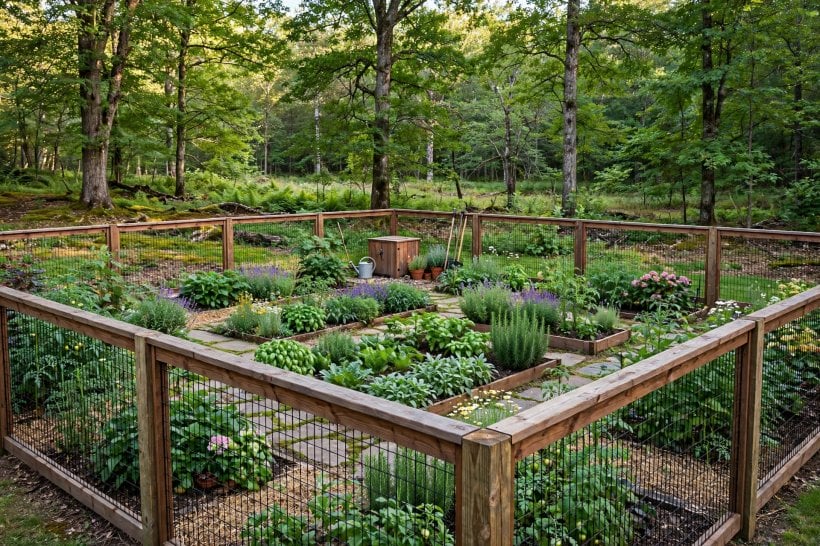
Sometimes the smartest plan is not to fence everything, but to fence the areas that matter most, beautifully. A decorative enclosure around a vegetable garden, a neat guard around each young tree until its bark and crown are beyond easy reach, or a fenced fruit corner can concentrate your budget and care where damage hurts most. Individual guards should allow air and light in, be easy to remove as a tree grows, and be checked so they never rub or constrict a trunk.
In beds, combine the boundary fence with sensible planting choices near the edges. Keep the most vulnerable, expensive or slow-growing plants deeper inside the protected area, and use tougher, readily replaced planting near gates and corners where any visitor is most likely to test the defences. Raised beds, cloches and netting have their place for short seasons, but they work best as a second layer inside a sound boundary, not as a substitute for one. Record what gets nibbled and when, in a simple notebook. Patterns in that record will tell you more about entry points and timing than guesswork, and they help you spend on repairs where they will actually count.
10. Care, Checks and Seasonal Repairs
A good-looking fence stays good-looking because someone walks it regularly. Make a simple routine: a quick look after storms, a closer check at the start of each growing season, and prompt attention to loose ties, leaning posts, rust spots, rotten bases and gates that no longer latch first time. Small repairs done early almost always look better and cost less effort than rebuilding a neglected section, a lesson that applies across a whole smallholding, just as it does when following advice on how to make a tiny house for cheap without cutting corners that matter.
Keep planting in balance with the fence. Climbers can soften a line beautifully, but heavy growth adds weight, holds moisture against timber and hides damage until it is advanced. Prune to reveal fixings once a year, clear leaf litter from post bases, and keep strimmer guards in mind before you work near mesh or young stems. Photograph each elevation once a year from the same spot. Comparing those pictures shows slow changes in lean, colour and planting cover that are easy to miss day to day, and it gives you a satisfying record of a boundary that protects the garden while genuinely improving how it looks.
Final Considerations
Choose the fence you will still enjoy looking at in February, not only the one that photographs well in June. Balance height and strength with colour, planting and honest details at gates and corners, and keep the line easy to inspect and repair. Done well, protection stops feeling like a defence and starts feeling like the frame of the garden itself: calm from the house, welcoming at the gate, and quietly reliable around the beds you have worked hardest to grow.

0 Comments