

Vinegar is the internet’s favourite laundry shortcut: a splash in the wash to soften towels, shift smells and descale the machine. It is also one of the most argued-about, with warnings that it rots seals and voids warranties.
So what is the balanced truth? This guide separates what vinegar can genuinely do from where the real risks sit, and shows you how to check your own machine’s manual so you can decide with facts rather than folklore.
1. Vinegar in the Washing Machine at a Glance
Start with the short answers. The table below tackles the questions people actually ask about using vinegar in a washing machine, in plain terms. The fuller story sits in the sections that follow, because almost every honest answer here begins with the same two words: it depends, on your machine, how much you use, and how often.
| Question | Short Answer |
|---|---|
| Can vinegar clean a washing machine? | It can help dissolve light limescale and soap residue on an occasional cleaning cycle, which is why people use it |
| Will one use damage my machine? | A single diluted use is very different from regular, strong doses; risk grows with strength and frequency |
| Which parts are people concerned about? | Rubber door seals, hoses and some metal parts, because acids and rubber or coatings are uneasy partners over time |
| Does vinegar soften clothes? | It can help rinse away detergent residue that makes towels feel stiff, which reads as softness |
| Should it go in the detergent drawer? | Many manuals advise against putting vinegar in the drawer; the rinse or fabric-conditioner compartment is the usual suggestion where it is used at all |
| What does the manufacturer say? | It varies by brand and model, which is exactly why your own manual is the deciding document |
| Are there alternatives? | Yes: dedicated machine cleaners, citric-acid-based descalers where approved, hot maintenance washes and simple wiping routines |
| What is the safest routine? | Follow the manual’s cleaning cycle, keep the seal and drawer dry and clean, and leave the door ajar between washes |
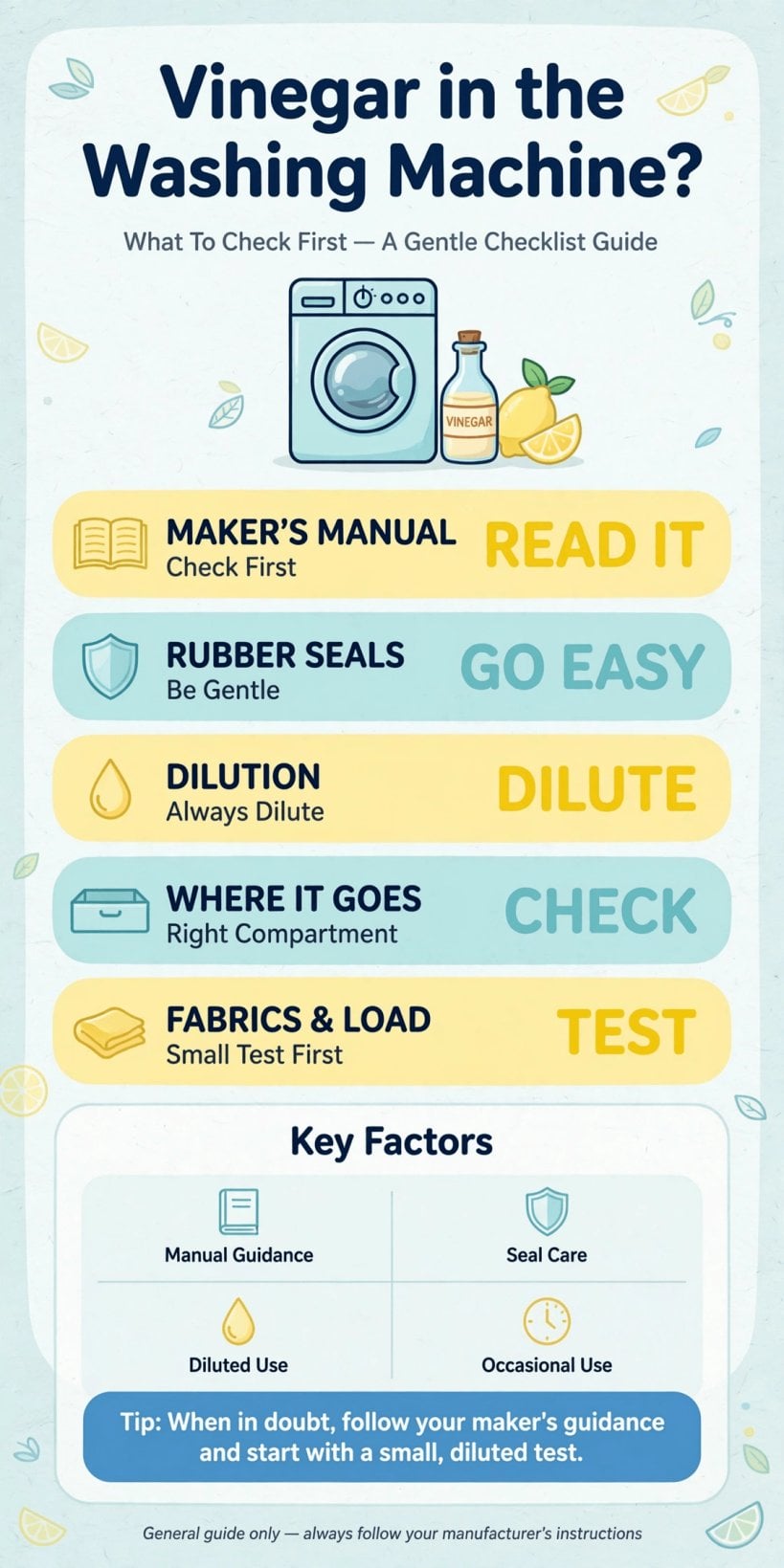
A quick visual guide to the benefits people claim, the parts worth protecting and the checks to make first.
Laundry care is part of running a small home well, alongside the everyday systems in our tiny house bathroom ideas, where another hardworking, water-filled room rewards the same habit: gentle, regular care beats occasional drastic fixes.
2. Why People Put Vinegar in the Wash
Vinegar earned its laundry reputation honestly. It is cheap, it is already in most kitchens, and as a mild acid it does a few useful jobs. People add it to a rinse to help strip detergent build-up from towels, which restores absorbency when they have gone stiff and scratchy. Others use it hoping to calm musty smells in the drum, to soften hard-water deposits, or to set the dye on new dark clothing.
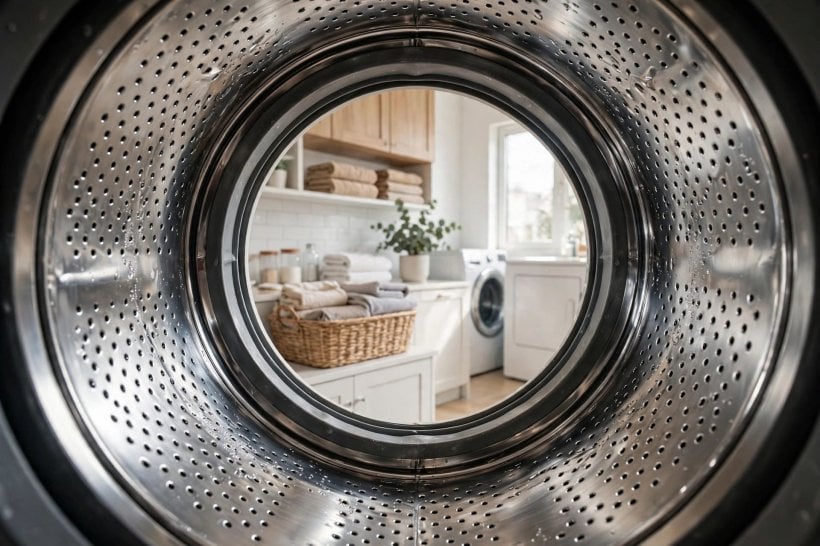
There is also a cultural pull: vinegar feels natural and uncomplicated next to a shelf of branded laundry products, and generations used it long before dedicated machine cleaners existed. None of that makes the claims behind it automatically true or false. It helps to separate three different uses that are often blurred together: vinegar in a normal wash as a rinse aid, vinegar in an empty cleaning cycle as a descaler, and vinegar applied directly with a cloth to the seal or drawer. Each use involves a different strength, a different contact time and a different level of risk, so judge them separately rather than accepting one verdict for all three.
3. What Vinegar Can Genuinely Help With
Being balanced means giving vinegar its due. As a mild acid, it dissolves the alkaline mineral deposits that hard water leaves behind, which is why a vinegar rinse can leave glassware sparkling and why it can loosen light scale inside a machine. In the wash itself, its most believable benefit is housekeeping rather than magic: it helps rinse away detergent residue trapped in fibres, and residue-free towels feel softer and absorb better.
It can also help with freshness in a modest way, because many odour problems in a machine come from the build-up of detergent, fabric conditioner and grime that bacteria feed on, and an acidic rinse works against that film. What vinegar will not do is disinfect a machine the way a hot wash can, rescue a neglected seal that already smells, or replace detergent for actual cleaning of clothes. Think of it as a supporting act for light, occasional jobs rather than a core cleaning product, and its reputation becomes much easier to judge calmly. That measured approach mirrors the care routines in our tiny barn house interior ideas, where natural materials are maintained with simple, regular attention instead of harsh interventions.
4. Where the Damage Concerns Come From
Search for vinegar damage washing machine online and you will find confident warnings, so it is worth understanding what they are actually based on. Vinegar is an acid, and acids are hard on some materials with repeated exposure. The concern focuses on rubber components, because strong or frequent acid contact can dry and degrade certain rubbers over time, and a washing machine depends on rubber in its door seal, its hoses and various gaskets.
The second concern is metal: acids can attack some coatings and finishes, and standing acidic liquid in a drawer or sump is different from a diluted rinse passing through. The third is warranties: if a manufacturer advises against a substance and a related part fails, you may face an argument you would rather avoid. Notice what these concerns have in common: they are about strength, frequency and standing contact, not about a single diluted use instantly destroying a machine. Anyone claiming one splash ruins everything, or that daily strong doses are harmless, is going beyond what the material facts support. The honest position is the middle one, and it points to the real solution, which is checking what your machine’s maker actually recommends.
5. Rubber Seals, Hoses and the Parts People Worry About
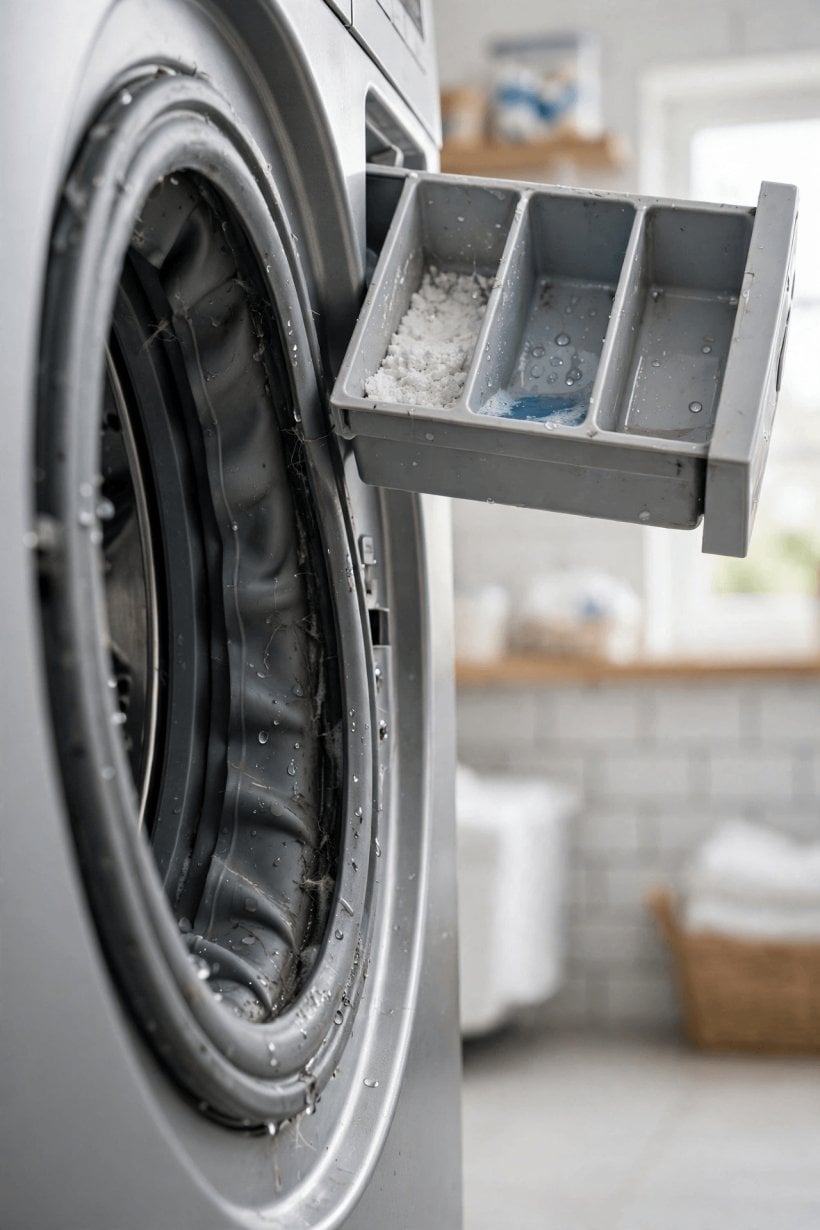
It helps to picture the parts involved. On a front loader, the grey rubber door seal, often called a gasket or bellows, folds in ways that trap water and grime; it is the part most often mentioned in damage debates, and also the part most damaged by neglect, mould and trapped coins or hairpins. Hoses carry water in and out and age gradually whatever you wash with. The detergent drawer and its housing see concentrated products daily, which is why makers care about what sits in them.
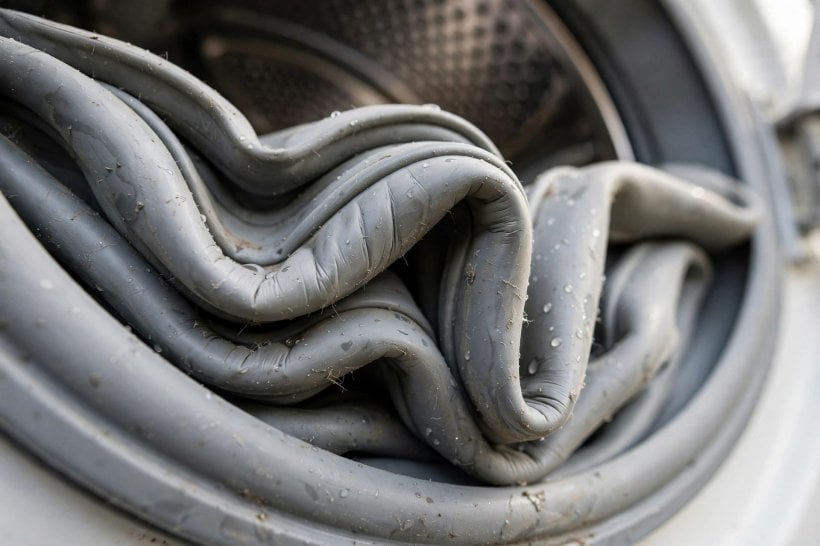
In daily life, the seal’s biggest enemies are being left wet and closed, which invites mould, and physical damage from zips and underwires escaping a wash bag. Keeping the seal wiped and dry protects it more reliably than worrying about any single wash additive. If you do use vinegar in a cleaning cycle, avoid pouring it neat onto the seal and leaving it there, and never let any acidic cleaner pool in the folds. Treat seals, hoses and drawers the way you would the fittings in our bedroom interior design for tiny houses guide treats compact built-ins: small parts, properly looked after, decide how long the whole thing lasts.
6. What Your Machine’s Manual Actually Says
Here is the step most vinegar debates skip: read your manual. Manuals differ because machines differ, in seal materials, coatings and cleaning programmes. Many manufacturers provide a dedicated cleaning or drum-clean cycle and specify the products they approve for it. Some advise that vinegar should not be used in the machine at all, some say nothing about it, and some care guides suggest diluted vinegar for wiping external parts only.
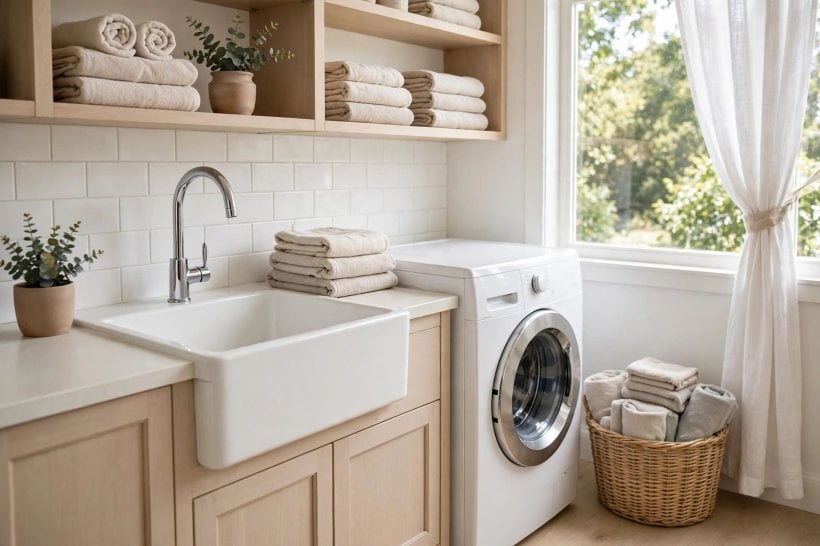
Your manual is also the authority on warranty terms, descaling in hard-water areas and the maintenance schedule the maker expects. If you no longer have the paper copy, manufacturers publish manuals on their official websites, searchable by model number, and that is the version to trust over forums and videos. Where the manual approves a descaler or a cleaning product, use that; where it warns against vinegar, that settles the question for your machine whatever anyone else’s experience has been. The same check-first habit applies across a home, from the appliances in our guide to building your own tiny house to the machine in your utility corner: the maker’s document beats general advice, including this guide.
7. If You Still Want to Use It: Gentler Ways
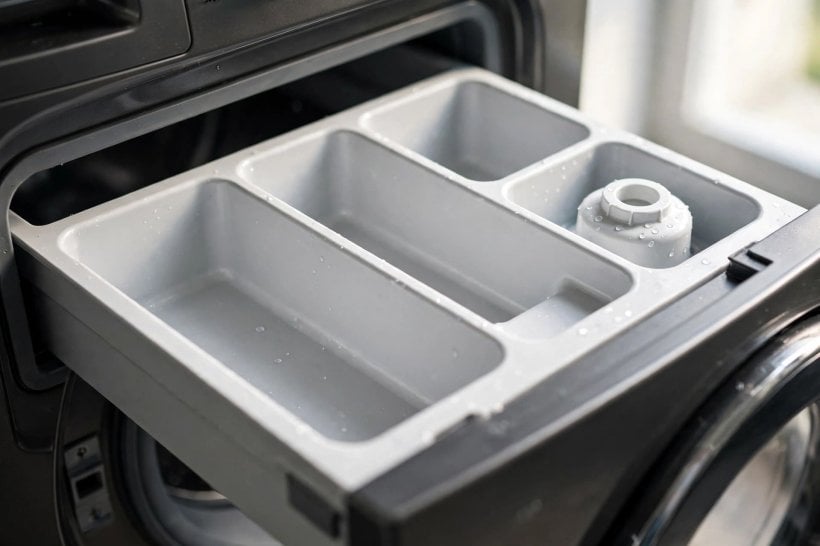
Suppose your manual does not forbid vinegar and you want to use it occasionally. The gentler pattern looks like this. Use ordinary white vinegar, diluted by the wash water, in modest amounts, and only now and then rather than in every load. Put it where it will be rinsed through, commonly the fabric-conditioner compartment so it releases in the rinse, rather than leaving it concentrated in the detergent drawer.
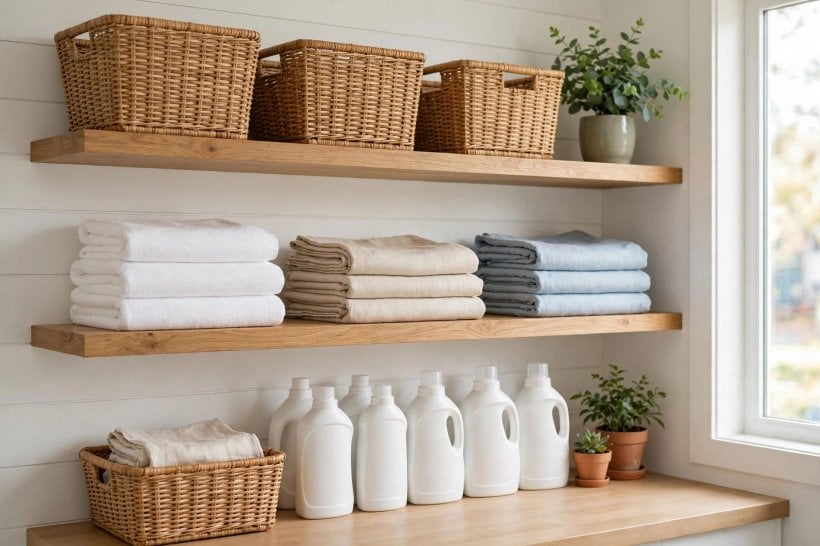
Never mix vinegar with bleach or with other cleaning chemicals, in the machine or anywhere else, because mixing acids with bleach-based products creates harmful fumes. Do not use it on loads where the care labels advise against acidic treatments, and keep it away from delicate rubberised or elasticated items you care about, since repeated acid exposure is unkind to elastic too. After a vinegar cleaning cycle, a short plain rinse or hot maintenance wash leaves nothing acidic sitting in the machine. And if your machine is under warranty and the manual is silent, a quick message to the manufacturer’s support line gives you an answer in writing. Gentle, occasional and informed beats frequent, strong and hopeful, a principle that also keeps the colours in our colourful tiny house interior ideas looking good on every fabric in the wash.
8. Vinegar vs Dedicated Machine Cleaners
The alternative to vinegar is not doing nothing; it is using products designed for the job. Dedicated washing machine cleaners are formulated to tackle the mix of limescale, detergent residue and grime that builds up in drums, drawers and pipework, and they are tested against the materials inside modern machines. Descalers approved by your manufacturer, often citric-acid based, target hard-water scale in a controlled strength.
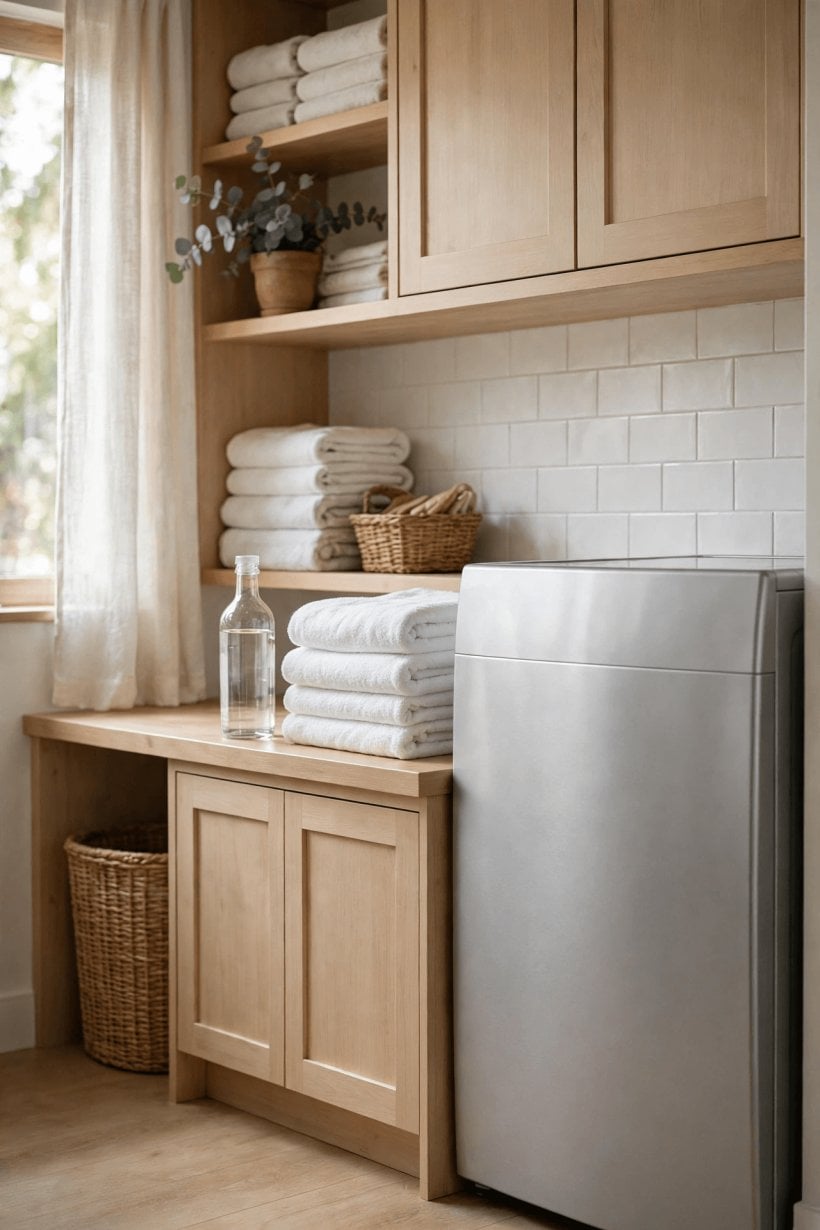
Vinegar’s advantages are price and availability: it is already at home and costs very little. The dedicated products’ advantages are formulation and backing: the dose is measured, the chemistry suits the machine, and using them as directed cannot be held against you in a warranty discussion. A sensible household can respect both points. Use the approved cleaner for the machine’s periodic deep clean, keep up the free habits that prevent most smells, and treat vinegar, if your manual allows it, as an occasional rinse aid for laundry rather than as the machine’s main medicine. Comparing the two honestly, rather than as rival tribes, is how you get a machine that stays fresh without gambling on its seals, much like the balanced material choices in our tiny house living room ideas.
9. Cleaning Your Machine Without Vinegar
Most of a machine’s freshness comes from habits that cost nothing. Wipe the door seal and its folds after the last wash of the day and leave the door ajar so the drum dries; a dry machine does not smell. Pull the detergent drawer out regularly, rinse it and its housing, and let it dry, because the slimy film that grows there is the source of many mystery odours.
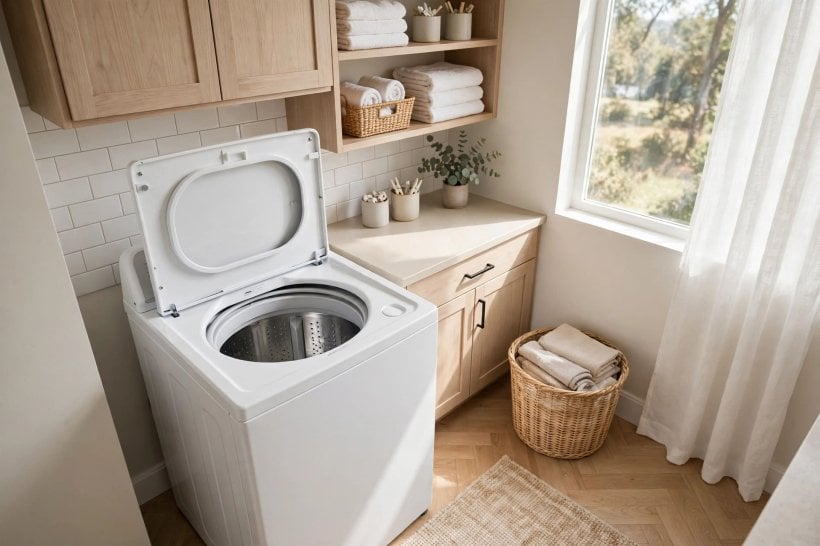
Run the machine’s own cleaning cycle, or the hottest wash, empty, at the interval your manual suggests, using an approved cleaner or nothing at all as directed. Clean the filter carefully over a tray, since a clogged filter causes smells and drainage problems that get blamed on everything else. Check pockets before washes to keep coins and tissues out of the seal, use the right dose of detergent for your water hardness rather than extra for luck, and take washing out promptly instead of leaving it sitting damp. These habits solve the problems people most often reach for vinegar to fix, and they ask nothing of the machine that its maker would object to.
10. Smells, Limescale and When to Call an Engineer
Persistent smells usually have a findable cause. Check, in order, the seal folds for trapped grime, the drawer and its housing for film, the filter for debris, and the waste pipe arrangement for drainage issues, cleaning each as you go. In hard-water areas, scale builds on the heating element and drum over time; your manual’s descaling advice, followed at the suggested interval, is the correct response rather than increasingly strong home remedies.
Call an engineer when the machine leaks, when the seal is torn or perished, when it fails to drain after a filter clean, when you hear grinding or knocking that is new, or when error codes persist after the manual’s own troubleshooting steps. Those are mechanical problems, and no cleaner, natural or otherwise, fixes them. Similarly, if a smell survives a thorough clean of seal, drawer, filter and a hot maintenance wash, professional eyes are worth it, because hidden build-up in pipework is a hands-on job. Knowing where home care ends and a repair begins protects both the machine and your wallet, the same judgement that runs through our tiny house landscaping ideas when a garden job turns out to need a professional.
Final Considerations
Should you use vinegar in your washing machine? The balanced answer is: occasionally and diluted, it is a reasonable rinse aid for laundry in many machines, but it is not a miracle cleaner, and regular strong doses are a genuine risk to seals and finishes that is not worth taking. Your manual outranks every general opinion, including the confident ones. Follow its cleaning cycle, use approved products for deep cleans, keep the seal, drawer and filter clean and dry, and your machine will stay fresh for years without anyone needing to win an argument about vinegar.




0 Comments