
Weeds are simply plants growing where they are not wanted, and a lawn or a bed that looks weedy is rarely a sign of failure. It is usually a sign that bare soil, thin grass, or a quiet corner has given an opportunist a chance. This guide looks at weed and grass control in general terms: how to read the ground, how to remove what does not belong, how to cover soil so less can start, and how to keep a lawn thick enough to hold its own. Nothing here promises a weed-free garden, because gardens do not stay still. They change with the seasons, with the weather, and with whatever seeds the wind and the birds bring in.
The approach below is deliberately calm. It starts with observation, moves to hand work and prevention, and only then turns to products, with the label as the guide at every step. That order matters, because a gardener who knows what is growing, and why it is growing there, can often solve the problem with a fork, a layer of mulch, or a change in mowing and watering habits. Where a product is considered, the advice is the same for every garden: read the label in full, check that it suits the plants and the place, and follow its directions exactly.
1. Walk the Garden Before You Pull Anything
Before a single weed is pulled, walk the whole garden slowly and look at it as a set of places rather than as one problem. Lawns, beds, paths, and edges behave differently, and each one tends to favour different weeds. A shady corner under a tree, a sunny strip beside a drive, and a bed that was recently dug over will not need the same attention. Noting where weeds gather gives a first clue about what is helping them: bare soil, thin grass, damp ground, or a border that is rarely visited.
Soil itself deserves a close look, because it shapes almost everything that follows. Squeeze a handful of damp soil and watch how it holds together, notice whether it drains quickly or stays wet, and see whether it is dark and crumbly or pale and compacted. These simple observations help a gardener choose sensible next steps, such as adding organic matter or easing off on watering, without needing any special equipment. The guide to what loam is and how soil balance works is a useful companion here, since it explains the feel and structure of healthy soil in plain terms.
Take note of the wanted plants as well, especially anything young, fragile, or newly planted. Seedlings, fresh turf, and tender shoots can look surprisingly like weeds, and pulling in a hurry can do more harm than the weeds themselves. Marking or remembering where seeds were sown, and giving new plantings a little time to show their true leaves, saves a great deal of regret. A short walk with a notebook, or a few photographs of each bed, turns a vague impression of the garden into a record that can be compared from one season to the next.
2. Learn to Tell Weeds from Wanted Plants
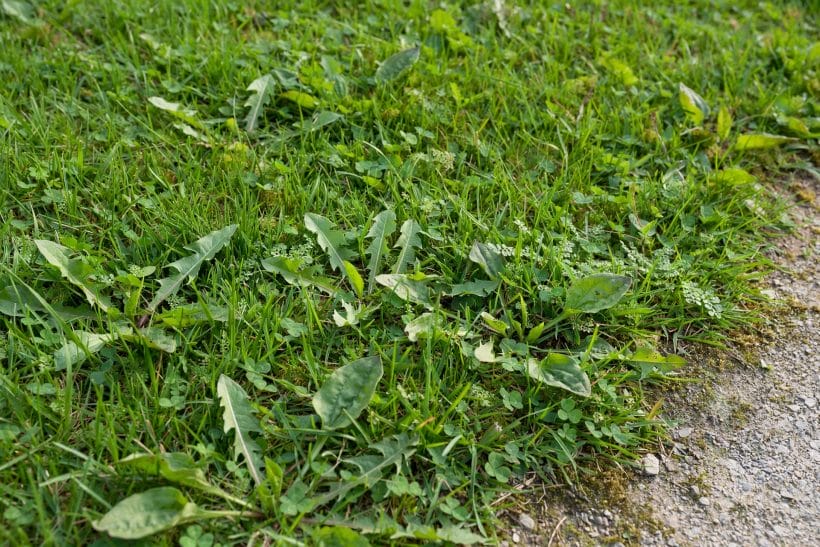
Identification does not need to be expert, but it does need to be careful. Start with the broad shapes: broad leaves spread flat against the ground, fine grass-like leaves blend into a lawn, and clover-like leaves creep along the surface in mats. Growth habit matters as much as leaf shape. Some weeds arrive as single plants with a deep root, others spread by runners, and others still scatter seed so freely that one plant left alone can become many. Watching how a plant grows, and whether it returns after pulling, often tells a gardener more than a single glance at a leaf.
Photographs taken in the garden are worth more than memory, because details fade quickly once a plant is pulled. Photograph the whole plant, a close view of a leaf, and the place where it was growing, then compare those pictures with a reliable plant guide or ask a knowledgeable local gardener. Local knowledge counts for a great deal here, since the weeds that trouble one region may be uncommon in another, and a neighbour who gardens in the same soil will often recognise a plant at a glance. When identification stays uncertain, leaving the plant for a few more days, while watching it closely, is usually safer than pulling something valuable by mistake.
It is also worth deciding, honestly, which plants truly need to go. A plant that is harmless, pretty, or useful to pollinators may be welcome in a wild corner even if it would be unwelcome in a formal lawn. Gardens can hold different standards in different places: a play lawn may be kept tidy, while a far border may be left wilder. Setting those standards in advance, bed by bed, keeps weeding focused and stops the work from feeling endless. The aim is not a garden without a single stray plant, but a garden where the wanted plants have the upper hand.
3. Pull by Hand, Roots and All
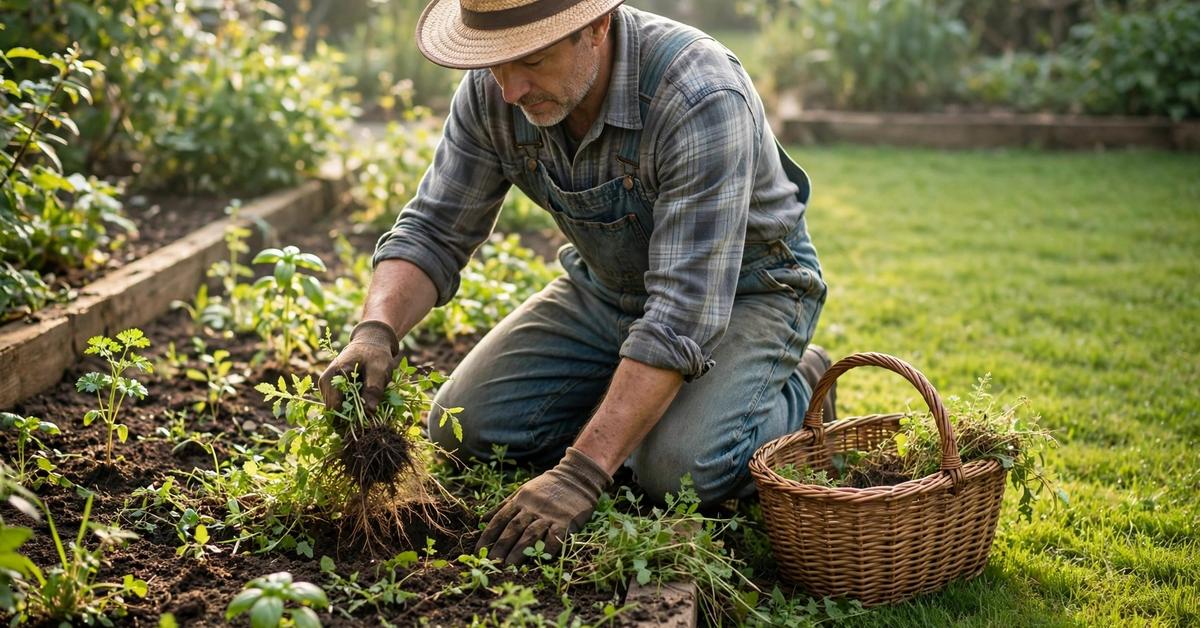
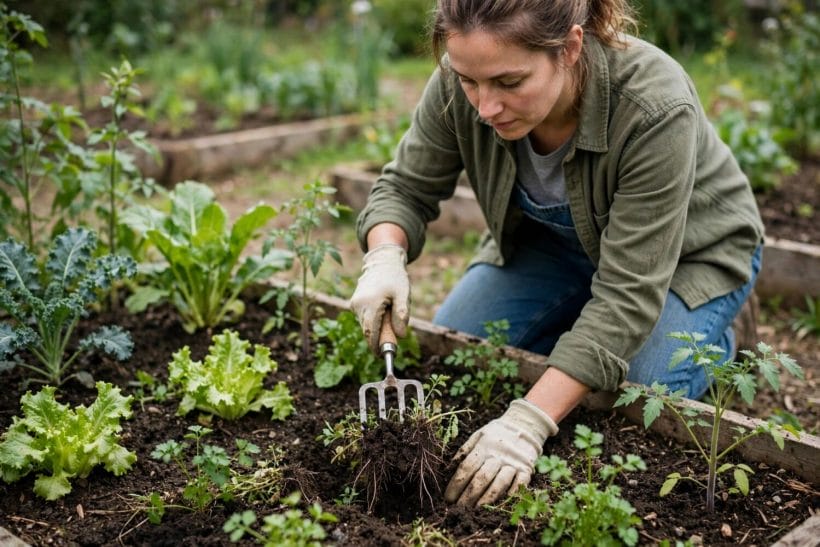
Hand pulling remains the most precise form of weed control, and it suits small numbers, beds with mixed planting, and any place where accuracy matters more than speed. The best time to pull is when the soil is soft, after watering or rain, because roots tend to come away more fully instead of snapping off at the surface. Grip low, close to the ground, and ease the plant out with a steady pull rather than a sharp yank. Where a root runs deep, a hand fork worked gently around the plant loosens the soil without disturbing neighbouring roots too much.
What happens to the pulled weed matters almost as much as the pulling itself. Plants carrying seed heads should be kept out of compost heaps that do not heat up, since seeds may survive and return with the compost. A separate container for seedy material, or disposal with household green waste where that service exists, keeps the problem from being spread around the garden in a wheelbarrow. Roots left on a path in hot sun dry out and die back, but the same roots left on damp soil may simply re-root, so it pays to be tidy about where pulled weeds are placed.
Hand work also teaches the gardener the garden itself. A weekly pass with a basket, done at a gentle pace, reveals which beds fill up fastest, which weeds return, and where the soil is changing. Raised beds repay this attention particularly well, because their edges and rich soil make both weeds and wanted plants easy to see. Ideas for laying out and planting such beds can be found among the raised garden bed ideas for planting, paths and seasonal care, which show how a well-planned bed makes routine weeding simpler. Over time, the basket fills more slowly, and that slow change is the real measure of progress.
4. Cover Bare Soil So Less Can Start
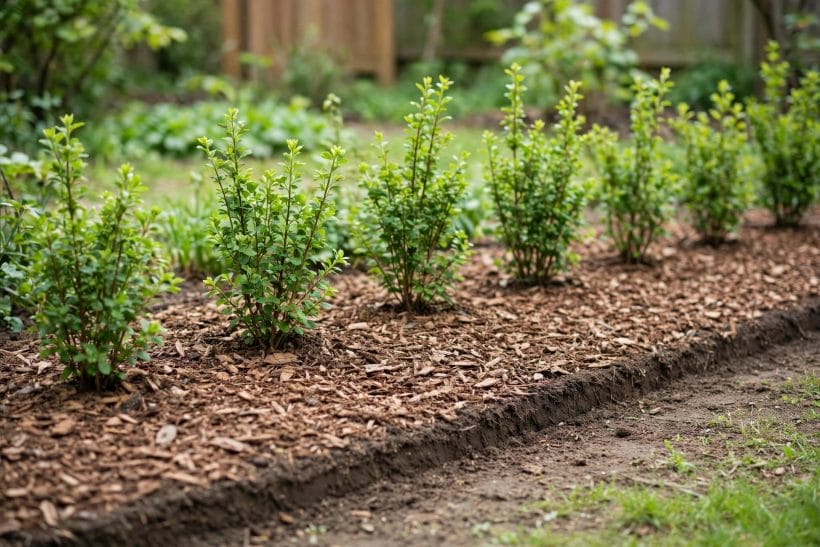
Most weeds need light and bare soil to get going, so covering the ground is one of the quietest and most effective defences available. Mulch, in the form of bark, straw, leaves, or other loose organic material, shades the soil surface, holds moisture, and makes any weed that does appear easier to pull. Spread it in a generous layer over beds, keeping it away from the stems of shrubs and the trunks of trees, where trapped moisture can cause harm. As it breaks down, it also feeds the soil, which helps the wanted plants grow stronger.
Dense planting works on the same principle, using leaves rather than mulch to shade the ground. Shrubs that meet overhead, ground-cover plants that knit together, and closely spaced perennials leave little room for newcomers. This approach takes patience, because plants need time to fill their space, and mulch can bridge the gap while they grow. It also rewards planning: a bed planted with its mature size in mind fills in gracefully, while a bed planted too sparsely stays open and weedy for far longer than it needs to.
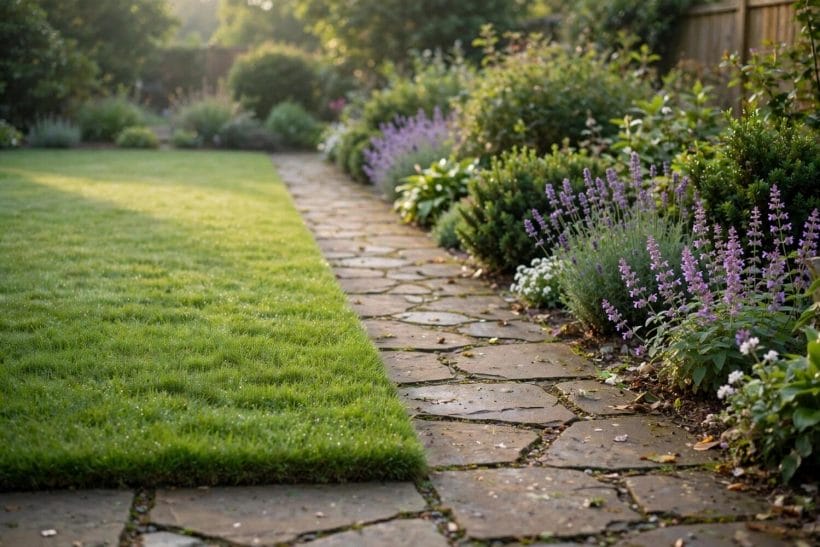
Edges deserve special attention, because weeds often start at the boundary between one surface and another. A crisp edge between lawn and bed, a border of stone or timber, or a simple trench cut along the bed line all make it easier to see where one area ends and the next begins. The habit of checking edges and mulching gaps is set out in the weed prevention checks covering mulch, edging and density, which frames the same ideas as a regular routine. Where mulch thins, top it up; where a gap opens, fill it with a plant or a little more cover. Small repairs, made often, hold the line better than one large effort made rarely.
5. Help the Lawn Fill In on Its Own Terms
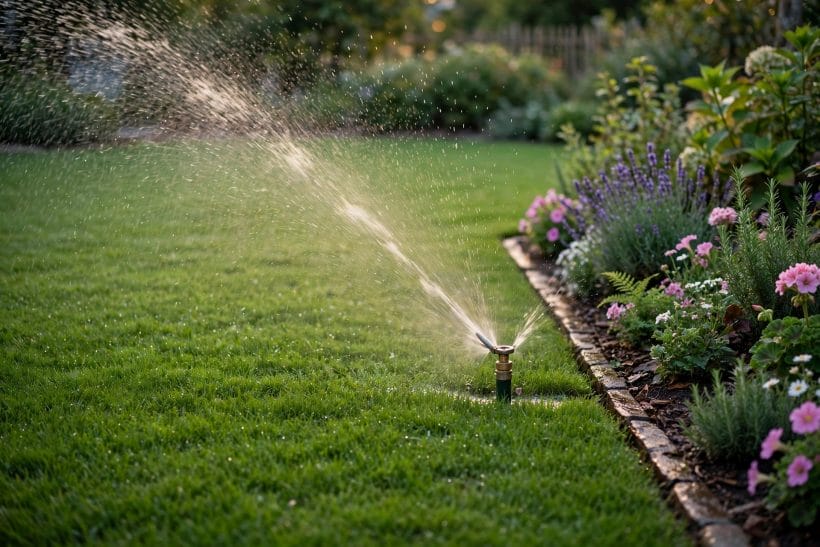
A thick lawn is its own weed control, because grass that covers the ground densely leaves little light and space for competitors. Building that density is a matter of steady care rather than sudden intervention. Mowing at a height that suits the grass, leaving the clippings where they can return to the soil, and watering deeply rather than lightly all encourage roots to grow down and blades to spread. Lawns cut very short, by contrast, tend to thin out, and thin lawns invite weeds in.
Feeding and overseeding are sometimes part of the picture, but both should be approached with local advice and a light hand. Soil type, climate, and grass variety all affect what a lawn needs, and a product or seed that suits one garden may not suit another. Where bare patches appear, it helps to ask why before reseeding: heavy foot traffic, shade, poor drainage, or worn soil may need attention first, or the new grass may thin out just as the old grass did. A lawn that is fed, watered, and rested in balance tends to recover its density gradually, and gradual recovery lasts longer than a quick flush of growth.

Patience is part of lawn care, and expectations should stay modest through dry spells and cold seasons. Grass grows in flushes and rests in between, and a lawn that looks thin in a hard season may thicken again when conditions ease. Judging a lawn over a full year, rather than in a single bad week, gives a fairer picture of whether the routine is working. Where a lawn will not thicken despite steady care, a local adviser who can see the soil and the shade can often spot a cause that a general guide cannot.
6. Mind the Edges, Paths and Cracks
Paths, drives, and the joints between paving stones are favourite places for weeds, because dust and soil collect there and water lingers. Regular sweeping keeps that debris from building into a seedbed, and a stiff brush along joints dislodges young seedlings before they anchor. Where grass grows between pavers, the question is whether it belongs there as a designed feature or has arrived uninvited, since the two cases call for different treatment. The guide to grass between pavers and how that joint planting works helps a gardener tell the difference and plan accordingly.
Edges where lawn meets path or bed are worth a regular pass with edging shears or a half-moon edger, not for neatness alone but because a clean edge makes weeds visible. A ragged edge hides seedlings among long grass, while a trimmed edge shows them plainly. The same applies to gravel areas, where raking levels the surface and exposes young growth, and to the base of fences and walls, where weeds often shelter unnoticed. A garden walked in full, edges included, rarely harbours surprises.
Outdoor rooms benefit from the same attention, since a patio or sitting area that is swept and edged regularly stays pleasant to use and easy to inspect. The many patio ideas for layouts, shade and furniture show how planting and paving meet in a well-used outdoor space, and in such spaces the junction between planting and paving is exactly where weeds settle. Keeping those junctions clear is a small job when done often, and a large one when left for a season.
7. Choose Tools That Suit the Job
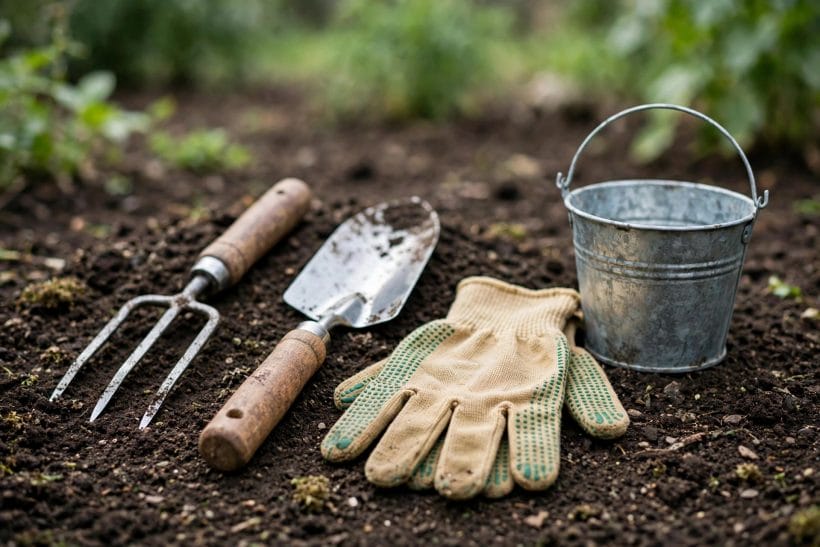
Good tools make weeding easier on the hands and kinder to the soil, and a small set covers most gardens. A hand fork loosens roots, a trowel lifts small plants, a hoe slices seedlings at the surface in open beds, and a bucket or basket carries the haul. Gloves protect against thorns, blisters, and plants that irritate the skin, and knee pads or a kneeler make longer sessions far more comfortable. Tools need not be many or costly, but they should fit the gardener: a handle that is too short strains the back, and a blade that is too heavy tires the wrist.
Keeping tools clean and sharp is part of the work, not an extra. Soil washed off after use stops rust and stops weed seeds from travelling on a muddy blade to the next bed. A hoe or edger with a keen edge cuts cleanly with less effort, while a dull edge tears and drags. Storing tools under cover, hung up rather than left on damp ground, keeps handles sound and blades dry. A few minutes of care after each session saves the cost and frustration of replacing tools that have been left to decay.
Safety around tools is straightforward but worth stating plainly. Wear gloves when handling unknown plants, wash hands after weeding, and take care with any plant that causes a rash or irritation. Children should be shown which plants are safe to touch and which are not, and pulled weeds should not be tasted or used as play food. Where a plant is unknown and looks unusual, a photograph and a question to a knowledgeable gardener is a better response than handling it freely.
8. Read Labels Before Any Product Comes Out
When hand work and prevention are not enough, many gardeners consider a product sold for weed control. This guide makes no recommendation for or against any particular product, and it names none, because the right choice depends on the plants, the place, and local rules that a general article cannot know. What can be said generally is that the label is the authority: it states where the product may be used, which plants it is meant for, how it should be applied, and what precautions apply. Reading it in full, before buying as well as before using, prevents most mistakes.
Labels also carry the cautions that matter most around people, pets, and other plants. Some products must not be used near vegetables, near water, or on windy days when drift could reach wanted plants. Others ask the user to keep children and pets away until the treated area has dried, or to avoid use before rain. These directions exist for good reason, and following them exactly is not optional extra care but the basic condition of safe use. If a label is unclear, or if the garden holds plants the label does not mention, the cautious course is to ask the seller or the maker, or to leave the product unused.
Storage and disposal deserve the same care as application. Products should be kept in their original containers, out of reach of children, and away from food, seed, and animal feed. Empty containers should be disposed of as the label directs, and leftover product should never be poured onto soil, into drains, or into water. A garden shed that holds products tidily, with labels intact and lids closed, is a safer shed, and it also means the right information is at hand the next time a question arises.
9. Keep People, Pets and Planting Safe
Weed control touches the whole household, not just the gardener, so safety thinking should include everyone who uses the garden. Play areas, vegetable beds, and pet runs each call for extra caution, and in those places hand work and mulching are often the sensible first choice. Children and pets should be kept away from any area that has been treated with a product until the label says it is safe to return, and treated areas should be marked or remembered clearly so that no one wanders in by mistake.
Wildlife and neighbouring gardens also deserve consideration. Weeds pulled with seed heads should not be tossed over a fence or into a wild corner where they can spread, and products should never be applied in a way that could drift onto a neighbour’s plants or into a pond or stream. Bees and other pollinators visit garden flowers through the day, so any product use should follow the label’s guidance about timing and flowering plants. A garden managed with its surroundings in mind stays on good terms with both its wildlife and its neighbours.
Finally, some weeds are best left to a professional, particularly large woody growth, plants with extensive root systems near buildings or drains, or anything that may be protected or invasive under local rules. Invasive plants, in particular, can carry legal duties and disposal requirements that vary by place, and a wrong move can spread them further. When a plant looks beyond hand tools, or when local rules may apply, a local adviser or a professional service can assess the situation in person, which no general guide can do.
10. Build a Small Weekly Routine
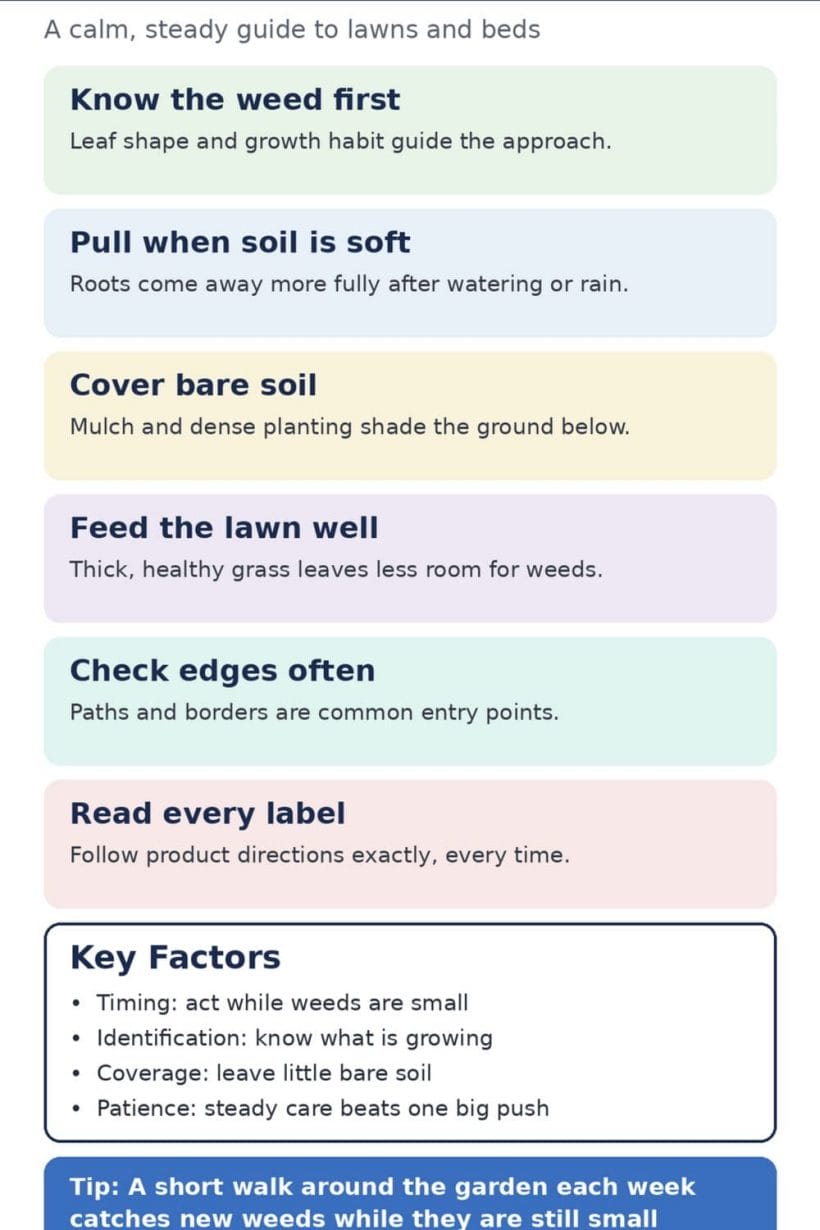
The most reliable weed control is not a single method but a routine, and the best routine is one small enough to keep. A short weekly walk, basket in hand, catches new weeds while they are still small and easy to lift. That same walk is the moment to notice thinning mulch, a gap in planting, a lawn edge that needs trimming, or a path joint filling with debris. Because the walk is short, it tends to happen; because it happens often, problems stay small.
Seasonal tasks can be layered onto that weekly habit without making it heavy. Spring and early summer are the busiest seasons for new growth, so a slightly longer pass then pays off through the rest of the year. Autumn is a good time to mulch beds, tidy edges, and note which areas were troublesome, while winter offers a quieter chance to plan changes such as denser planting or a reshaped edge. Keeping a simple note of what was done, and where, turns each year into a lesson for the next, and the garden gradually needs less intervention rather than more.
It helps to treat the routine as gardening rather than as a battle. A garden is a living place, and a few weeds among healthy plants are normal, not a defeat. The gardener who pulls a little, mulches a little, and watches the lawn thicken over the seasons is doing the real work of weed control, even if the basket never comes back empty. Over time, that steady attention shows in the ground itself: fewer bare patches, denser grass, and beds where wanted plants clearly hold the upper hand.
Final Considerations
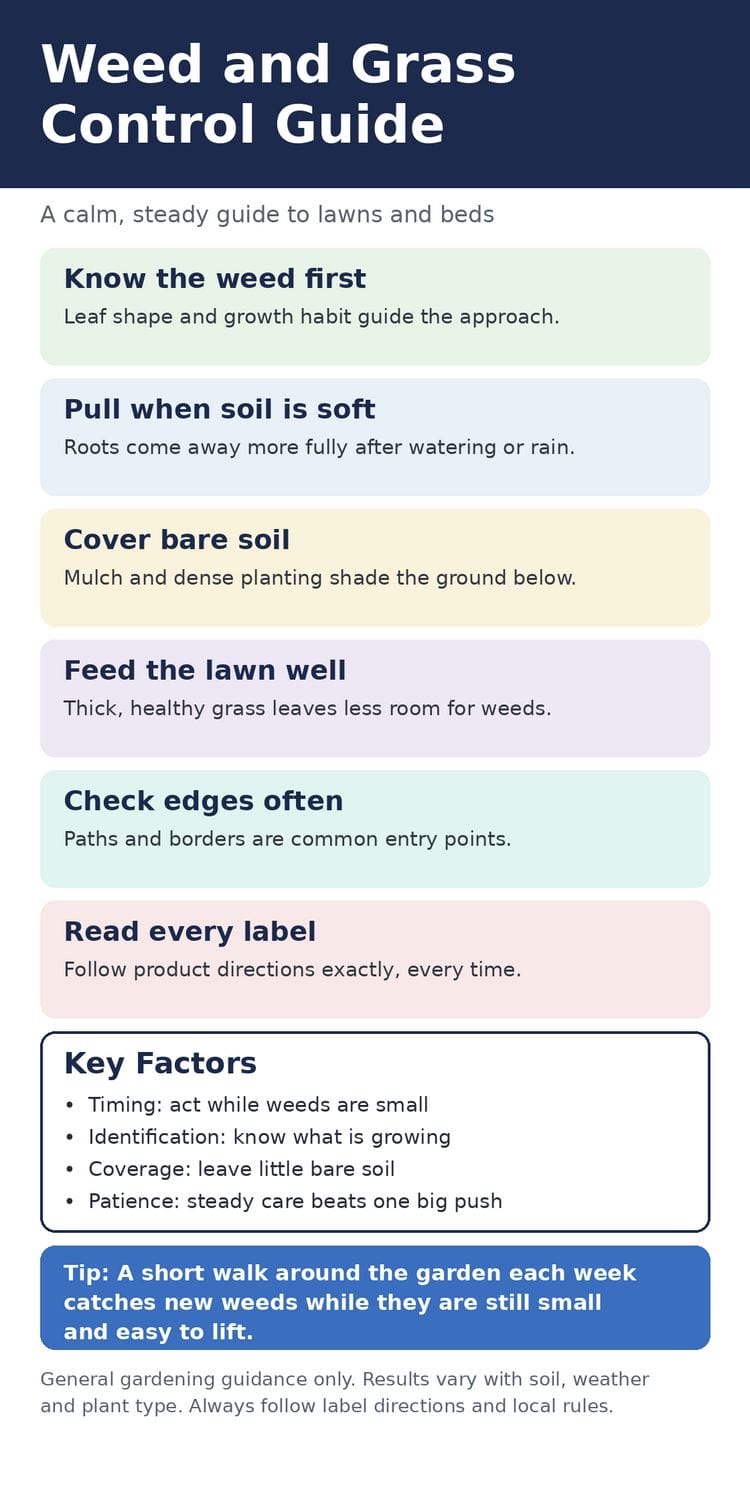
Weed and grass control, taken as a whole, comes down to a handful of habits: look before pulling, identify with care, pull roots fully, cover bare soil, help the lawn thicken, mind the edges, use suitable tools, read every label, and keep people and pets safe. No single habit does the work alone, but together they form a system that is gentle on the garden and sustainable for the gardener. Where a problem persists despite steady care, local advice from someone who can see the soil, the shade, and the plants is worth more than any further general reading.
For gardeners planning the space around the lawn, it is worth remembering that small homes often have small gardens, and a compact outdoor area can be easier to keep on top of than a large one. The collection of tiny house designs and small-home ideas shows how modest plots are planned with planting close at hand, which suits a weekly weeding walk very well. Whatever the size of the garden, the same principles apply: shade the soil, feed the grass, pull early, and let patience do the rest.
Start with the next walk around the garden, basket in hand, and see what the ground is actually telling you. Note the worst spots, pull what is ready to come, top up the thinnest mulch, and leave the rest for next week. Gardens reward that kind of steady, unhurried care, and a lawn and beds that are watched closely tend to stay in balance with far less effort than a garden left to surprise its keeper.



0 Comments