
Some front yards whisper. This one smiles, waves, and invites you up the path.
A white picket fence can do that in a single weekend — if you pick the right style, height and planting. Start with these 75 ideas.
1. Picket Fencing at a Glance: What to Decide First
Before you fall for a photograph, walk your boundary with fresh eyes. Note where the sun lands, where the path meets the street, and what you actually need this boundary to do: frame a garden, slow a dog, mark a line kindly, or simply finish the picture. A white picket fence works hardest when its height, spacing and gate all answer those small questions first, and style comes second.
Measure the full run, including corners and the driveway edge, and photograph it from across the street. That long view shows proportions your eye misses up close. If the wider yard still feels unfinished, borrow a trick or two from these tiny house landscaping ideas — layered beds, a clear path and one strong focal point make any frontage look intentional.
| Decision | Popular options | Best for | Watch out for |
|---|---|---|---|
| Picket top | Pointed, flat, scalloped, Gothic-inspired | Setting the whole mood | Sharp points where children climb |
| Height | Low garden edge to taller side runs | Front charm versus side privacy | Front-yard limits — check with your city or county |
| Material | Painted timber, vinyl-look, composite, metal | Matching upkeep to your free time | Cheap coatings that chalk or peel early |
| Gate | Single, double, arched, with an arbour | Welcoming the path and deliveries | Swing clearance on a slope |
| Planting | Roses, lavender, perennials, climbers | Softening the line all season | Growth that swallows the boards |
2. Classic Picket Styles (Ideas 1–8)
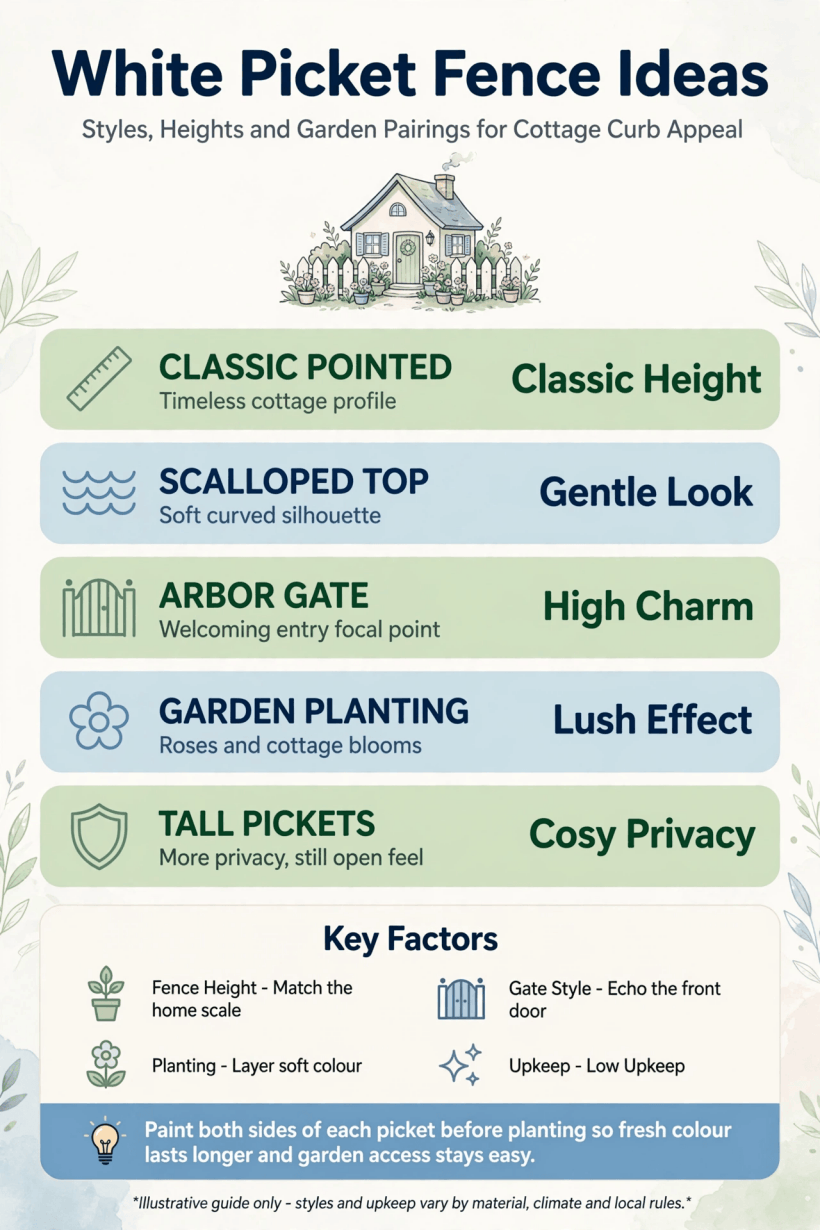
Style is the silhouette your street reads first. Pointed tops feel storybook, flat tops feel calm and modern, and a gentle scallop feels like a garden party. Choose one profile and repeat it everywhere — mixing profiles along a single run looks like three projects stitched together, while one confident rhythm looks designed, even when the planting around it is joyfully informal.
- Pointed classic. The timeless profile: evenly spaced boards with simple triangular tips, a crisp top rail and paint kept bright so the points read as one clean rhythm from the street.
- Flat-top calm. Square-cut boards give a quieter, more contemporary outline that suits rendered walls, modern letterboxes and homes whose windows already carry plenty of detail.
- Scalloped swag. Panels that dip gently between posts soften a long straight run, echoing garden beds beautifully when the curve of the boards follows the curve of the planting.
- Gothic-inspired tips. A steeper, more decorative point adds cottage drama; keep the rest of the frontage simple so the profile stays charming rather than fussy or theatrical.
- Wide-spaced airy. Generous gaps keep small front yards feeling open, let hedging peek through, and use less material — a graceful pick where the garden itself is the real show.
- Tight-spaced tidy. Narrow gaps read more formal and give small pets a clearer boundary, though you should confirm any local expectations with your city or county office first.
- Alternating heights. A subtle tall-short-tall pattern adds movement along dull boundaries; mark the rhythm out with pegs first, because irregular spacing only works when it looks deliberate.
- Double-rail traditional. Two horizontal rails with pickets over the top is the sturdiest classic build, and the lower rail gives climbing plants a first rung to hold onto.
However you style it, keep paint colour in the same family as your trim. These tiny house interior paint colors show how small shifts in white — warm, cool, creamy — change a whole mood, and the same is true outdoors.
3. Heights and Proportions (Ideas 9–16)
Height is where charm meets common sense. Too low and the boundary disappears behind planting; too high and a friendly marker turns into a barrier that argues with the house. As a rule of eye, the front run should sit comfortably below the windowsill line, while side runs can climb a little for privacy. Always check front-yard height guidance with your city or county before posts go in.
- Low garden edge. A knee-height run simply tidies beds and keeps mulch off the path — more punctuation than barrier, and perfect where neighbours chat over it daily.
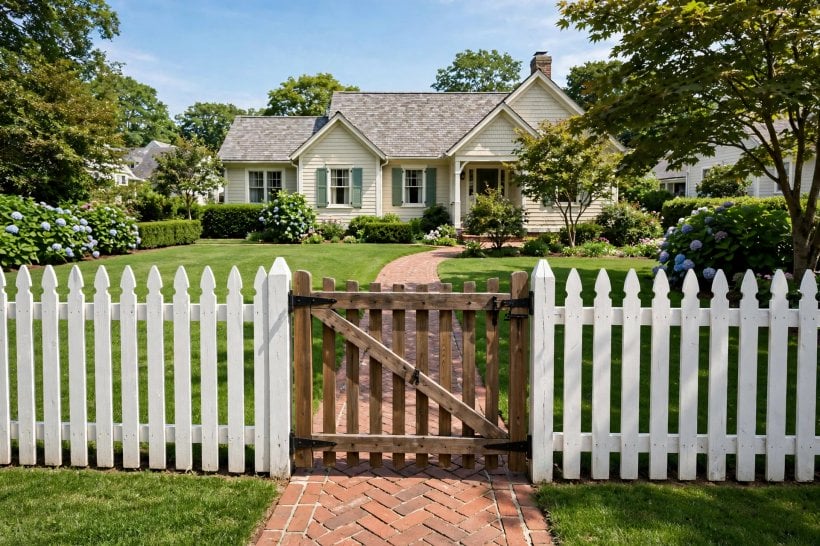
- Cottage waist height. The classic front-yard proportion: high enough to hold a gate and a climbing rose, low enough that the house still feels open and welcoming.
- Stepped heights. Drop the front run lower and raise the sides in two or three gentle steps; the transition looks intentional and quietly solves privacy without a fortress feel.
- Taller side boundary. Along a side path or bin store, a taller run screens the working parts of a home while the front stays friendly and low.
- Height for dogs. Match the top rail to your dog’s honest jumping ability, and keep gaps snug at the bottom where small, determined noses investigate first.
- See-through upper, solid lower. A denser lower half with airier spacing above balances privacy and light on narrow lots where every sliver of sun matters.
- Match the porch. Echo your porch rail height at the street and the two lines bookend the front yard, making even a modest home look composed and considered.
- Gate slightly proud. Let the gate arch or sit a fraction higher than the run; that tiny lift marks the entrance clearly for guests, deliveries and happy dogs alike.
4. Gates, Arbours and Entrances (Ideas 17–24)
Every visitor experiences your boundary at the gate, so spend your effort there. A gate should swing freely, latch with one hand, and look like it belongs to the run on either side. Add an arbour or a pair of planted posts and the entrance becomes a small event — the moment a house starts feeling like a home people remember.
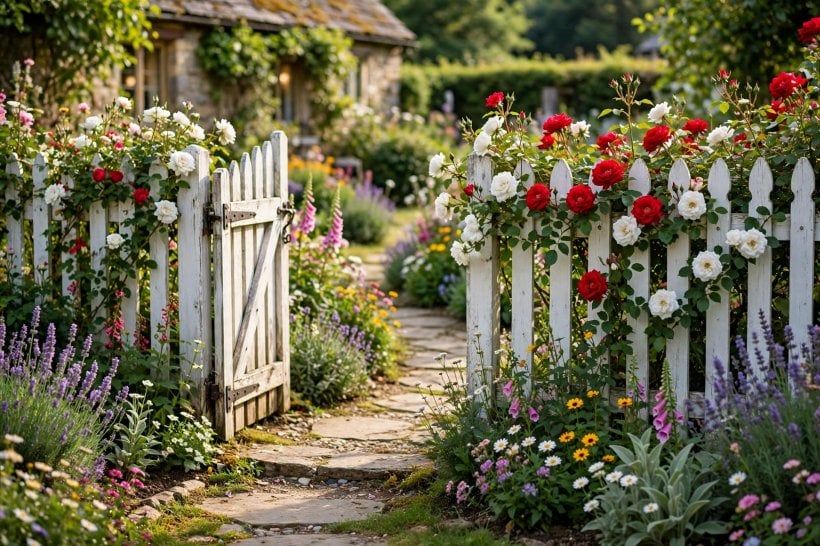
- Single swing gate. The everyday hero: same pickets, same paint, hinges sized generously so it never sags, and a latch you can work while carrying groceries or a watering can.
- Double gates. For wide paths and mower access, pair two narrower leaves; they open gracefully, close evenly, and make moving day far less of a fence-climbing exercise.
- Arbour entrance. A simple overhead frame turns the opening into a doorway; train a climber up one side only, so growth frames the view instead of swallowing it.
- Curved-top gate. A gentle arch in the gate leaf echoes scalloped panels and cottage windows, softening an otherwise straight, practical boundary run.
- House-number gate. Mount the number on the gate itself, in a contrasting finish, so guests and deliveries find the opening instantly — charm and wayfinding in one detail.
- Trellis-sided opening. Short trellis cheeks beside the gate give climbers a home that is not the gate, keeping leaves, hinges and latches clear through the growing season.
- Self-closing hinges. Where a pool, road or livestock sits beyond the boundary, ask your supplier about self-closing hardware and confirm local safety guidance with your city or county.
- Contrasting latch. One dark, well-made latch and handle set against bright boards reads like jewellery — a tiny upgrade everyone notices and nobody can quite name.
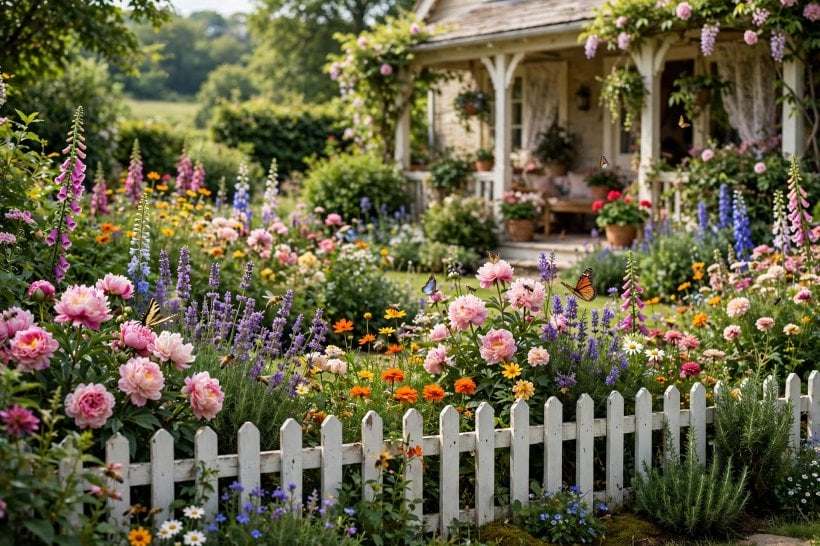
Entrances set the tone indoors too: the thinking behind a welcoming gate is the same thinking that makes tiny house kitchen design ideas work — clear routes, honest materials and nothing precious blocking daily life.
5. Gardens and Planting Partners (Ideas 25–32)
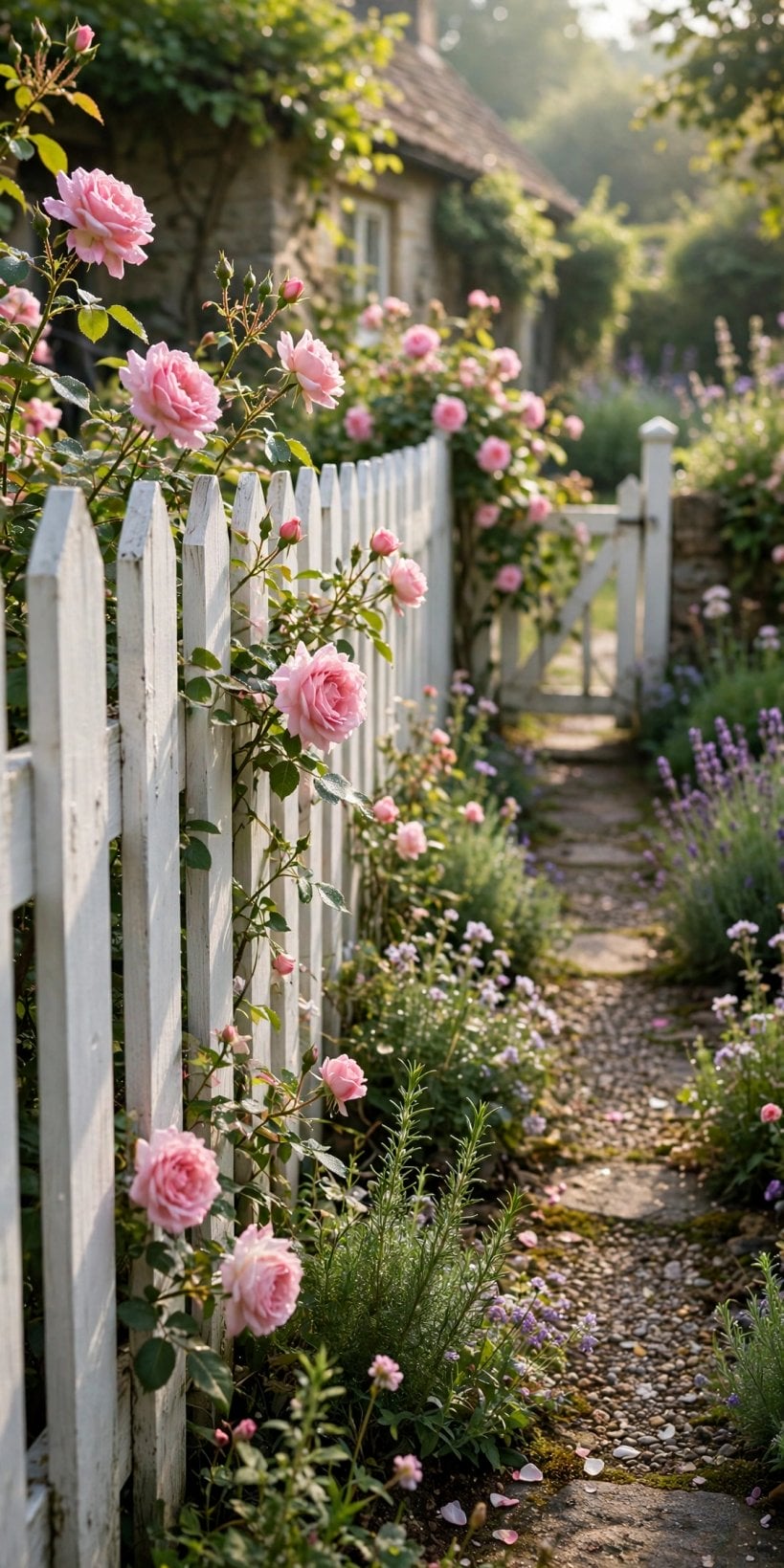
Boards alone are a line; boards plus planting are a garden. The happiest pairings layer heights — low edging at the boards, mid-height colour behind, and one or two climbers allowed to lean casually over the top. Leave a hand’s width between foliage and paint so air can move, boards can dry, and your future self can repaint without wrestling a rose bush.
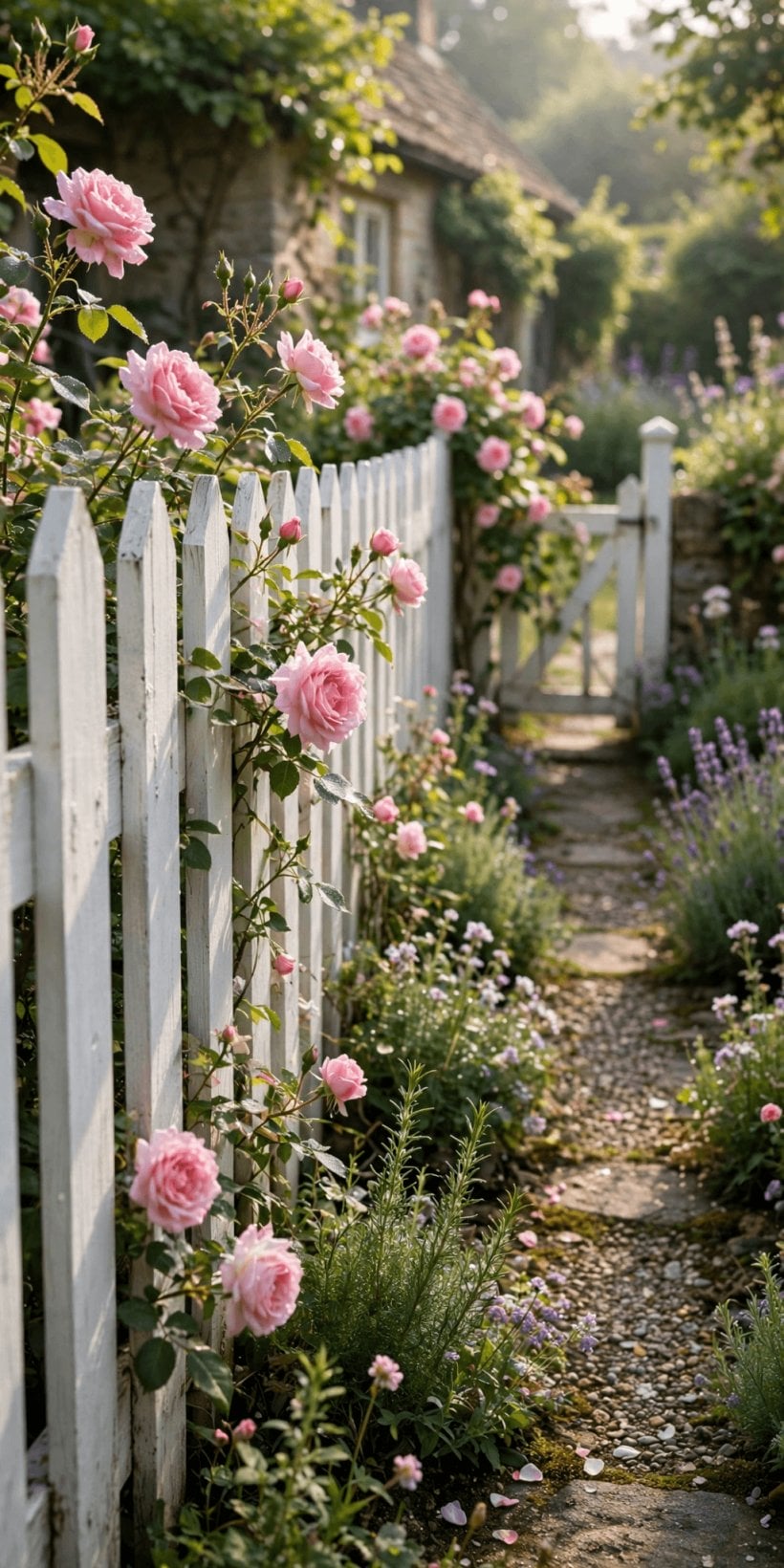
- Roses behind the line. Plant shrub roses just inside the boundary so blooms nod over the tops; choose thorn-light varieties near the gate where sleeves and shopping bags pass.
- Lavender edging. A low lavender row along the street side perfumes every arrival, loves the reflected warmth of pale boards, and asks for little once established.
- Cottage perennials. Foxglove-style spires, daisies and catmint in loose drifts deliver the storybook tumble — planned in odd-numbered groups so it looks grown, not arranged.
- White-on-white planting. Pale blooms against bright boards feel serene and expensive; break the calm with deep green foliage so the scheme glows rather than washes out.
- One polite climber. A single jasmine or clematis, tied in as it grows, perfumes the gate without the repainting nightmare of a fully swallowed boundary.
- Matching window boxes. Repeat the gate-side planting in window boxes and the whole facade joins up — same colours, same rhythm, twice the cottage confidence.
- Herb beds inside. Keep herbs just inside the gate where you pass daily; brushing past rosemary on the way in becomes a small ritual everyone in the house enjoys.
- Spring bulbs at the posts. Tuck bulbs around post bases where soil stays undisturbed; they mark the corners each spring and vanish before the summer planting takes over.
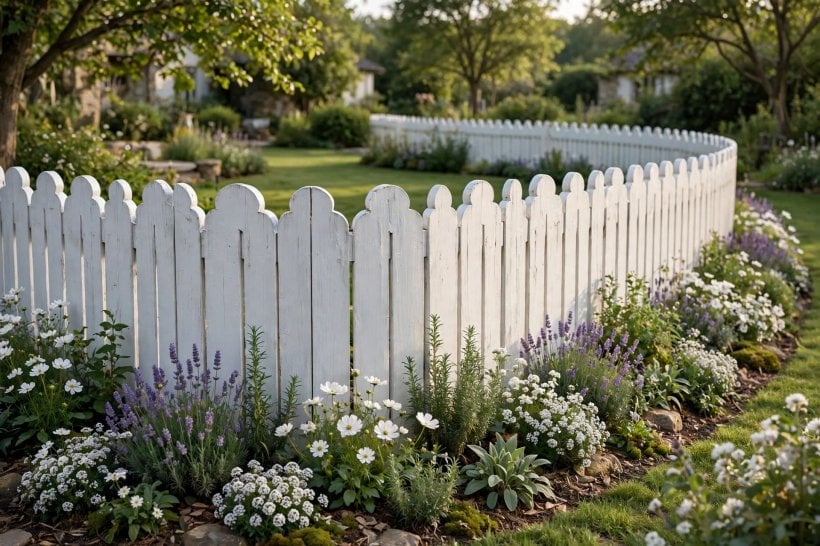
6. Materials and Finishes (Ideas 33–40)
Material decides how your weekends look. Painted timber is the romantic original and the most repairable; modern alternatives trade a little authenticity for far less painting. Whichever you choose, the finish matters more than the brochure: proper preparation, primed end grain and two honest topcoats will outlast any miracle product applied in a hurry on a dusty afternoon.
- Painted timber classic. Real wood takes paint beautifully, feels warm to the touch, and lets you replace a single damaged board invisibly — the repairable, forgiving original choice.
- Vinyl-look low upkeep. Pale manufactured boards shrug off repainting for years; view a full panel in daylight before committing, because some finishes read blue-grey beside warm house trim.
- Composite middle path. Wood-fibre composites resist rot in damp corners and hold colour well, a sensible pick for shaded runs where timber struggles to dry between rains.
- Metal picket-look. Slim steel or aluminium profiles mimic the rhythm with greater span strength — handy where wind funnels down a side path and worries lighter panels.
- Whitewash softness. A diluted, brushed-on finish lets grain ghost through for a beachy, relaxed feel that forgives small imperfections far better than a mirror-gloss coat.
- Primer-plus-two system. Whatever the boards, seal knots, prime every face including cut ends, then add two topcoats; ends drink water first and fail first when skipped.
- Hidden fixings. Screws placed from behind or plugged after fixing keep faces clean, so the finished run reads as craft rather than hardware-store assembly.
- Spare-board stash. Paint a few extra boards with the same batch and store them dry; future repairs disappear when the colour, sheen and weathering all match perfectly.
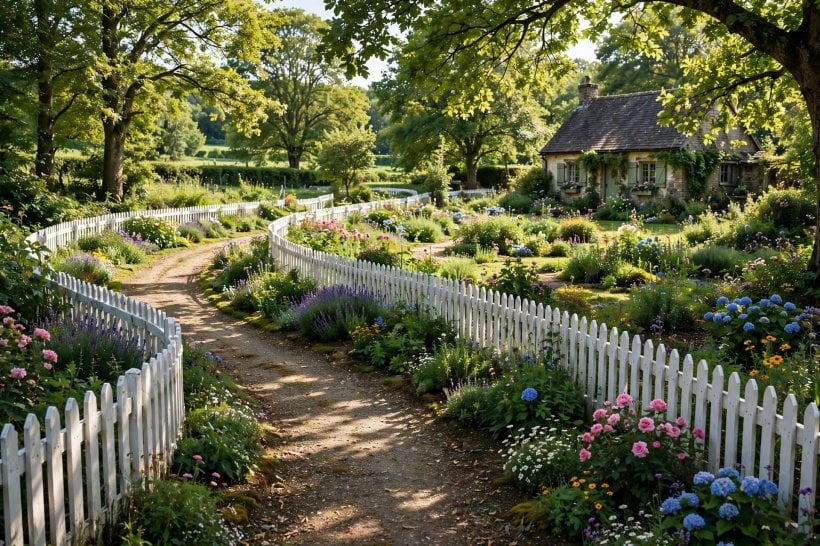
Material honesty is a theme indoors as well — see how tiny barn house interior ideas let wood, metal and paint each do the job they are genuinely best at.
7. Slopes, Corners and Tricky Boundaries (Ideas 41–48)
Few boundaries are flat, straight and empty, and that is fine — the solutions are old and reliable. Stepped panels suit firm changes in level, racked panels follow gentle rolls, and a confident corner return turns an awkward angle into a feature. Walk the line with a string and level first; ten minutes of layout saves a weekend of quiet regret.
- Stepped panels. On a clear slope, level each panel and step down like stairs; even steps look deliberate, while random drops look like a measuring mistake.
- Racked panels. Where ground rolls gently, rails angled to follow the land keep the bottom gap even — the neatest answer for lawns that drift rather than drop.
- Corner returns. Wrap the run around corners with a proper post, never a butt joint; a strong corner anchors the whole boundary visually and physically.
- Working around trees. Stop the run short, return it, and resume beyond the trunk, leaving room for growth — trees outlive paint, posts and most renovation plans.
- Driveway sightlines. Keep the last panel lower near the drive so drivers see the pavement clearly; confirm visibility expectations with your city or county if unsure.
- Gaps that drain. On wet ground, a small shadow gap under the bottom rail lets water and leaves pass instead of damming against boards and rotting them quietly.
- Uneven-ground disguise. Plant the low side with groundcover and the high side with edging; greenery smooths level changes far more kindly than ever-deeper buried boards.
- Boundary double-check. Before digging, confirm the true line from your documents and have a friendly word with neighbours — moving one post early beats moving twenty later.
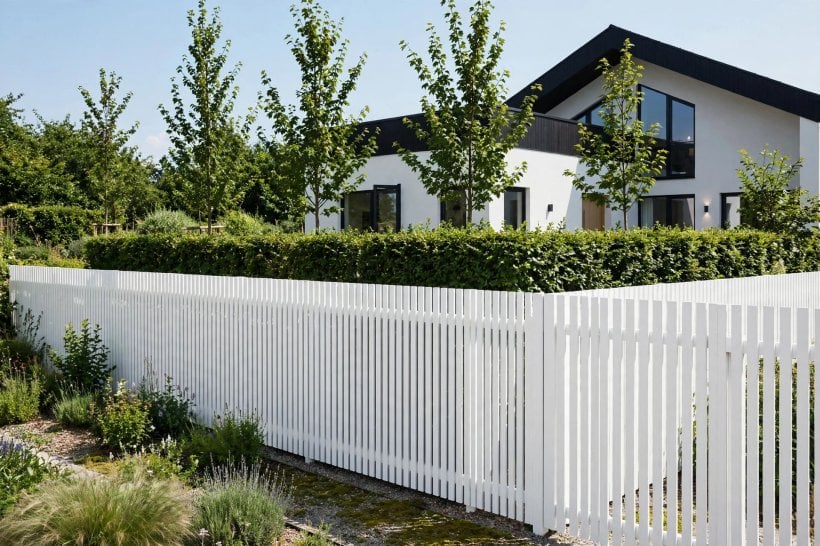
Planning a tricky layout rewards the same patience as fitting a small interior: these modern tiny house interior ideas are full of awkward corners turned into the best seat in the house.
8. Curb Appeal Styling (Ideas 49–56)
With the structure sound, styling is the joyful layer — the details a passer-by photographs. Work in matching pairs, repeat one accent colour, and keep every addition easy to remove for painting day. The goal is a frontage that looks cared for at a glance: swept path, bright boards, healthy planting and one or two personal touches that say someone loves living here.
- Matching letterbox. A letterbox in the same finish as the latch ties the entrance together from twenty paces — often the cheapest curb-appeal upgrade on this whole list.
- Paired planters. Two identical pots flanking the gate, planted identically, create instant symmetry; asymmetry is for inside the garden, where it can tumble freely.
- Path lighting. Low, warm lights along the path make evening arrivals feel ceremonial and help guests find the latch; keep fittings modest so boards stay the stars.
- Seasonal gate wreath. A simple wreath or hanging basket at the gate marks the seasons without touching the paintwork — swap it in minutes whenever the garden changes mood.
- Coordinated trim. When fence, window trim and door share one white family, the house reads as a single composition rather than a collection of separate projects.
- A bench inside. A small bench just inside the boundary, facing the garden, turns the front yard into a room neighbours wave at and you actually sit in.
- Birdhouse accent. One well-made birdhouse on a corner post adds height, story and actual birds — charm that also does ecological work for the garden.
- Numbers with presence. Oversized, legible house numbers on or near the gate photograph beautifully and end the delivery driver’s slow crawl past your home forever.
9. Care, Painting and Repairs (Ideas 57–64)
A bright boundary stays bright through small, boring kindnesses done regularly: a wash each spring, a walk-past inspection each autumn, and touch-ups while they are still the size of a coin. Neglected for years, the same job becomes scraping, sanding and swearing. Keep a labelled touch-up pot from the original batch and every repair in this section shrinks to an afternoon task.
- Annual gentle wash. Soft brush, mild soapy water, rinse and dry — most dullness is city film and pollen, not failed paint, and a wash reveals the true condition underneath.
- Shady-side checks. The north and shaded runs grow algae first; treat green patches early, improve airflow by trimming planting back, and repaint only where the coating has truly failed.
- One-board repairs. A split or rotted board unbolts, gets copied in length and profile, primed all over, and swapped in an hour — the great advantage of a boarded design.
- Rail and post inspection. Push every post each autumn; a slight rock caught early needs packing and drainage, while a season of wobbling quietly destroys the whole panel’s fixings.
- Vegetation clearance. Keep soil, mulch and climbers a small gap off the boards; constant damp contact is the single most common reason pale paint blisters and timber softens.
- Touch-up discipline. Sand tiny chips, spot-prime bare wood, and feather the topcoat in while the damage is small — twenty minutes now or a full recoat in two summers.
- Gate hardware care. A drop of oil on hinges and a latch adjustment each spring keeps the gate closing with that satisfying, well-made click instead of a shoulder shove.
- Winter once-over. After storms, walk the run collecting debris, check for leaning panels, and note jobs for the first dry weekend — a written list makes spring maintenance feel small.
Care habits transfer indoors, too — the same little-and-often mindset keeps colour schemes fresh, as these colorful tiny house interior ideas prove room after room.
10. Budgets, Rules and Final Checks (Ideas 65–75)
The last decisions are practical, and they protect everything above. Costs vary with material, length and how much you do yourself, so think in proportions — posts and preparation first, paint quality second, decorative extras last — rather than chasing a number somebody else paid in a different place. For rules, permits and front-yard limits, always check with your city or county; guidance differs street by street.
- Measure twice, honestly. Walk the line with a tape, add corners and gate openings, then add a small allowance for cuts and mistakes — running short mid-run wastes more than spares cost.
- Check the front-yard rules. Height, setback and corner-visibility guidance varies; a quick check with your city or county before ordering saves rebuilding a finished run.
- Ask about shared costs. Where a boundary is shared, a friendly early conversation about style and splitting the bill often improves both the fence and the neighbourly relations.
- Posts before panels. Spend on sound posts, proper depth for your soil and frost conditions — confirm local guidance — because every panel above depends on them silently.
- Paint in the right weather. Dry, mild days let coatings cure as the manufacturer intends; rushed paint in damp cold is the most expensive bargain in any garden.
- Phase the project. Front run this season, sides next: phasing spreads cost and effort, and a finished frontage motivates the rest far better than a half-built everything.
- Reuse sound boards. Straight, rot-free boards from an old run can become garden edging or the spare-board stash, keeping good timber in service and out of landfill.
- Tool list first. Level, string line, post measure, drill, saw and a second pair of hands — borrowing the missing item beats improvising around it at post-hole three.
- Safety around services. Before digging post holes, confirm where buried services run using your local checking service; a shallow surprise is the worst kind of project souvenir.
- Photograph your line. Pictures before, during and after record post positions and boundary details you will be grateful for at repaint, repair or resale time.
- The street test. Finish, cross the road, and look back honestly: one rhythm, one white, a gate that invites. If it makes you smile from there, the project has truly landed.
Small homes prove that a boundary, like a room, rewards clear thinking over big spending. For one more dose of that philosophy, browse these tiny house bedroom decor ideas before you order a single board.
Final Considerations
The best version of this project is never the longest or the tallest; it is the one whose style, height, gate and planting all suit the house in front of you and the life lived inside it. Start with the at-a-glance decisions, build the front run beautifully, and let the sides follow when time and budget allow. Keep the paint batch labelled, the latch oiled and the roses politely off the boards, and your boundary will keep making the whole street smile for years — one small, bright, well-kept panel at a time.


0 Comments