
Yellow is the bravest colour on the paint chart and the most forgiving in a living room: it borrows light from every window, warms every grey afternoon, and makes even a plain sofa look deliberately chosen.
These seventy-five ideas cover the yellow living room only: the wall shade, the sofas and layouts against it, the colours that steady it, and the layered lighting that keeps it glowing after dark — costs kept to honest drivers.
1. Yellow Living Room Ideas at a Glance
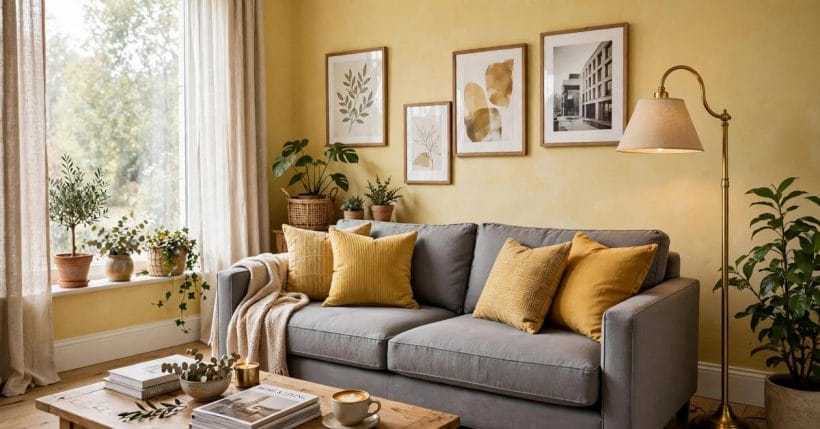
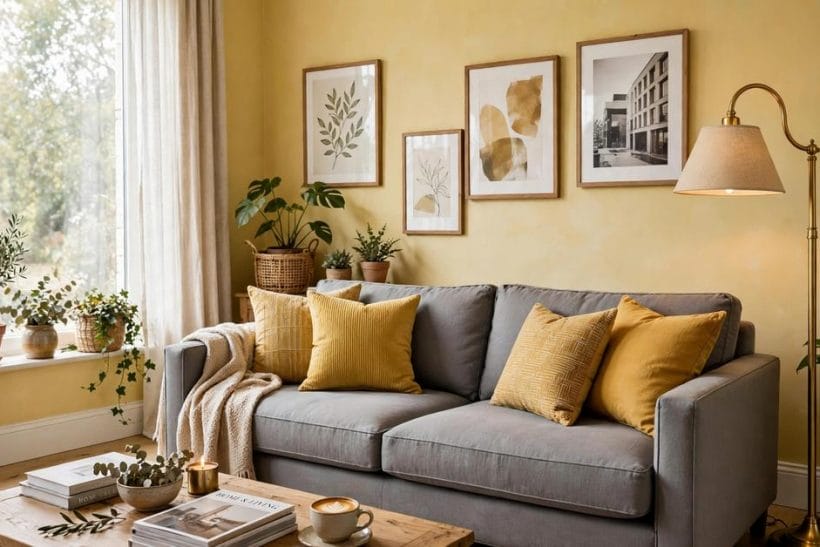
The central entity is the yellow-walled living room: a room whose walls carry a warm yellow — butter, primrose, mustard or ochre — and whose attributes are the shade’s undertone, the light the room receives, the sofa and furniture colours set against it, the fabrics that soften it, and the lighting that takes over at dusk. This post keeps one slice of the living-room family: the whole room in all its colours answers to the living room ideas pillar; the same colour worn by a bedroom is the pair to this post, over in yellow bedroom ideas — the two share a palette and split by room; and the wall behind the sofa as a piece of furniture planning belongs to console table behind sofa ideas. Here the yellow wall is the subject and everything else is its supporting cast. The feature photograph shows the shade at its most liveable: soft butter walls, a calm grey sofa, mustard cushions repeating the wall one tone deeper, brass light and green plants doing the cooling.
| Question | Short answer |
|---|---|
| Which yellow is easiest to live with? | A muted, slightly greyed yellow — butter or primrose — reads warm without shouting; brighter yellows make the room work harder to stay calm |
| What sofa colour suits yellow walls? | Grey, cream, warm white and natural linen let the walls lead; mustard and ochre sofas commit to the theme; blue is the classic counterweight |
| How do I stop yellow looking too sweet? | Add weight: natural wood, black outlines in frames and lamps, green plants, and one deep accent — navy, forest or charcoal — somewhere in the room |
| Does yellow suit a dark room? | It is the traditional answer to a north-facing room, borrowing warmth the window never delivers — but test the shade at dusk, when lamps change it most |
| One wall or all four? | All four wraps the room in warmth; a single yellow wall behind the sofa suits renters and the cautious, and still earns the room its name |
2. First, the Light: How Yellow Behaves in Your Room
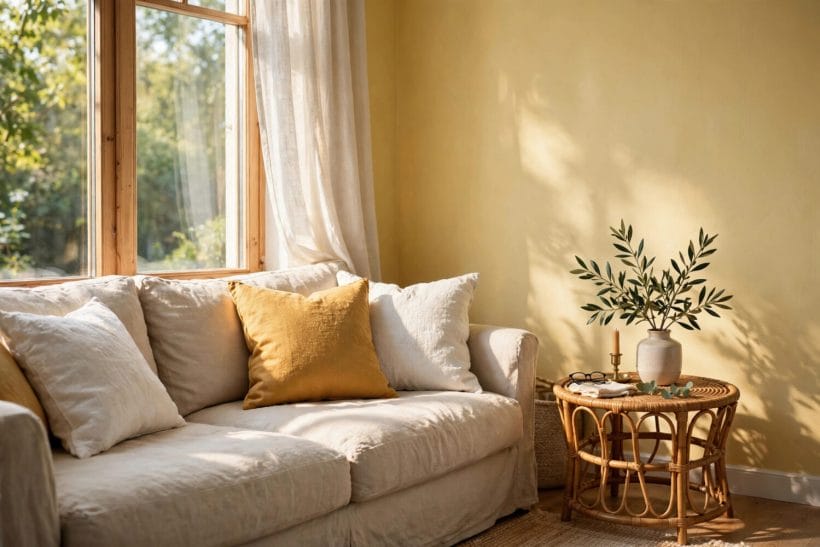
No colour is more light-sensitive than yellow: the same paint is primrose at noon, gold at teatime and nearly amber under lamps. The gallery photograph shows the honest test — a pale yellow wall doing quiet work behind a linen sofa while the sun does the showing off. Judge every shade in these conditions before a single wall is rolled.
1. Test the shade on the wall, not the card
Paint a large patch on the wall that gets least light and one beside the window. Yellow intensifies as it dries and as the coated area grows; what charms on a card can shout across four walls.
2. North-facing rooms: choose a yellow with warmth to spare
Cool daylight greys a yellow down, so a north-facing room can carry a richer, more golden shade than a bright one. This is yellow’s oldest job in the house — lending a room the sun it never receives.
3. South-facing rooms: soften towards butter
Where sun pours in all day, a strong yellow doubles itself and glares. Drop to butter, straw or a cream-leaning primrose and let the daylight supply the brightness the paint no longer needs to.
4. Check the shade under evening lamps
Most living rooms are used after dark, yet most paint is chosen at midday. Warm lamp light pushes yellow towards orange; a shade that looks fresh at noon can feel foxy by night, so the dusk test decides.
5. Mind the undertone: green, gold or orange
Yellows lean three ways — greenish and sharp, golden and warm, or orange and earthy. Hold the card against your sofa fabric and floor: the undertone that agrees with both is the family your shade should come from.
6. One wall first if you are renting or unsure
The wall behind the sofa carries the colour’s full effect for a fraction of the commitment. If the single wall delights you for a season, the other three are an afternoon’s work whenever you are ready.
7. Limewash and colour-washed yellows for softness
A washed, uneven yellow — limewash, or paint worked thin and cloudy — gives the warmth without the flat glare of a solid coat. It suits old walls and cottage rooms especially, where perfection would look out of place.
8. Keep the ceiling and trim warm white
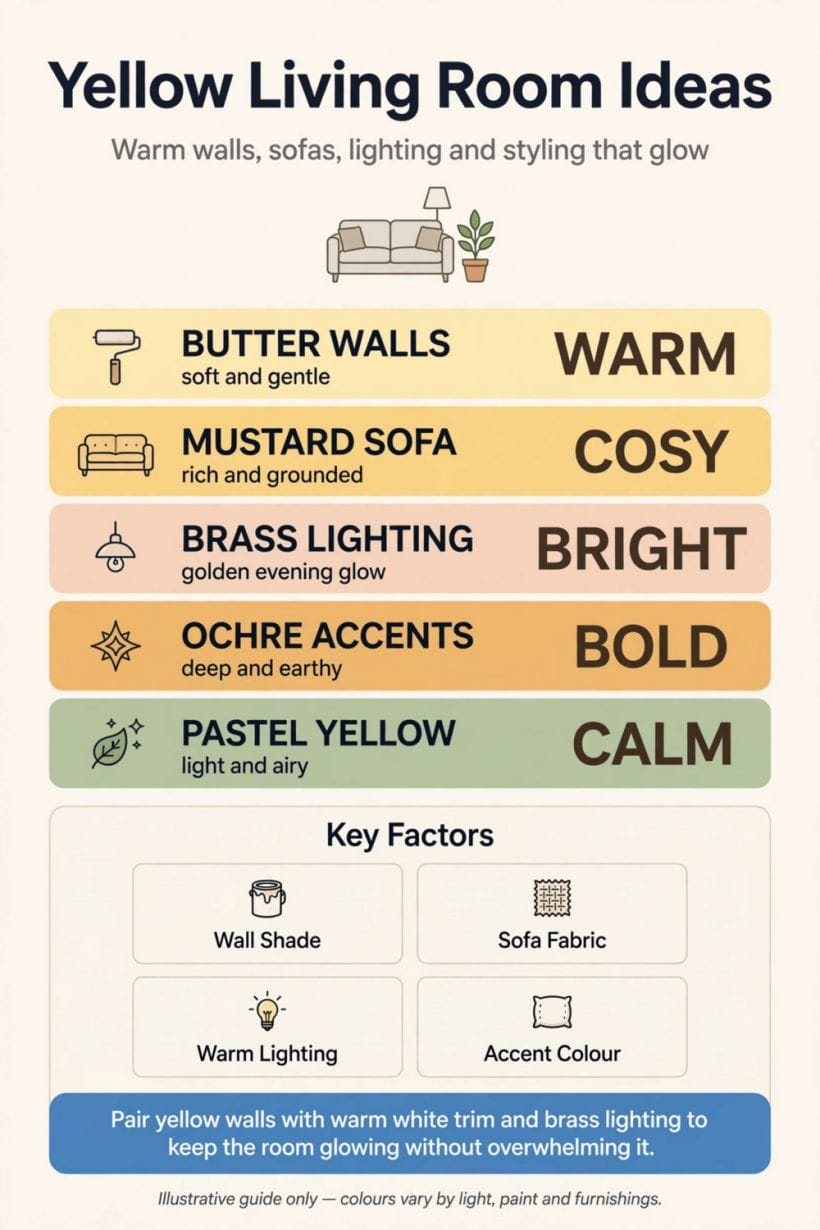
A blue-white ceiling makes yellow walls look dirty by contrast; a warm, creamy white keeps the whole shell in one family. The infographic’s advice is the short version: warm white trim is yellow’s frame, not its rival.
9. Photograph your test patches
Photograph the patches on a dull morning: if the shade still looks pleasant in a flat phone photo, it has the resilience a living room wall needs.
3. Sofas and Seating Against Yellow
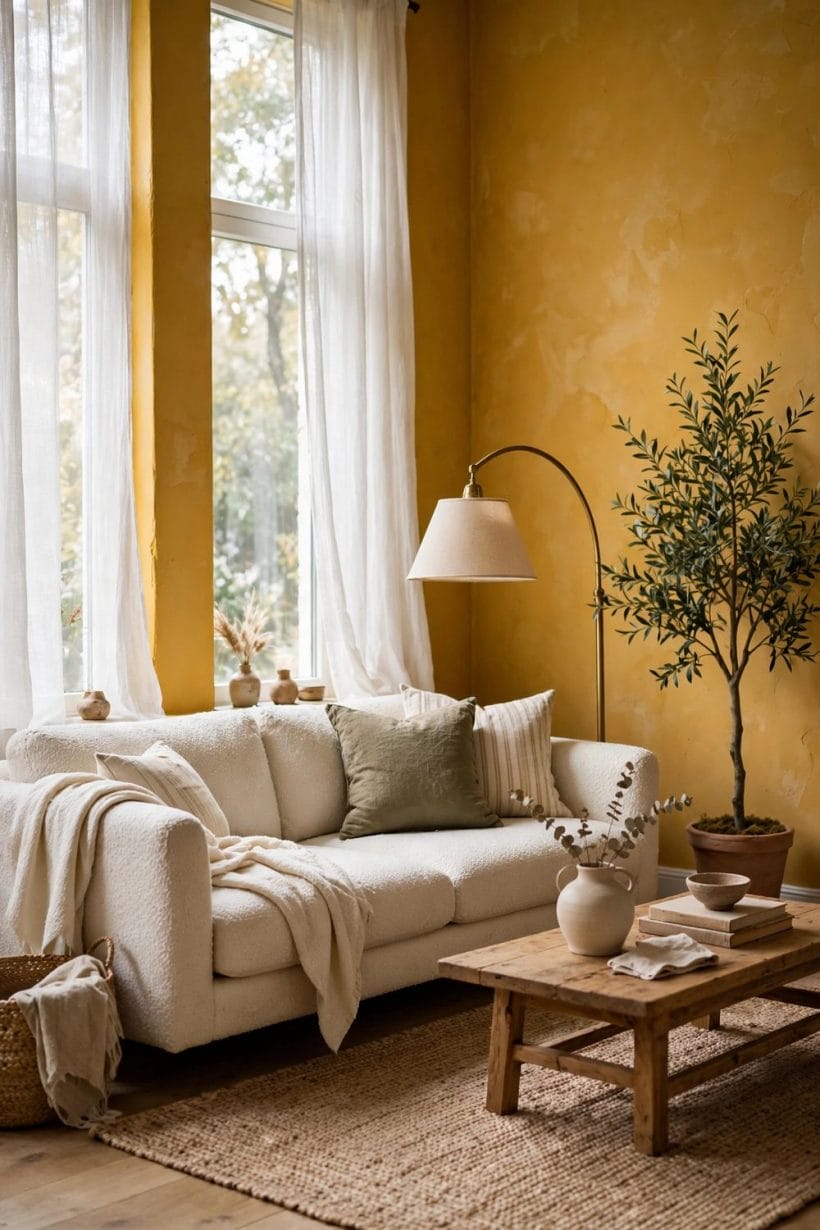
The sofa is the largest object the yellow wall will ever meet, and the pairing decides whether the room reads composed or chaotic. The feature photograph’s answer — mid-grey upholstery, cushions one tone deeper than the wall — is the pattern these variations follow.
10. The grey sofa: the reliable anchor
Mid-grey upholstery cools yellow without fighting it, hides everyday wear, and lets cushions do the colour talking. It is the pairing in the feature photograph and the safest first decision in the room.
11. Cream and warm white sofas for a tonal room
A cream sofa against butter walls builds a soft, layered envelope of warm neutrals. Keep texture varied — linen, wool, a nubby throw — so the gentleness never flattens into blandness.
12. The mustard sofa: committing to the theme
A mustard or ochre sofa against paler yellow walls reverses the usual order and looks deliberate rather than loud, because wall and sofa share one colour family at two depths. Ground it with a pale rug.
13. Blue as the classic counterweight
Blue and yellow sit opposite on the colour wheel and have settled rooms for centuries: a navy or dusty-blue sofa, or even blue cushions on a neutral one, gives yellow its composure. Keep the blue deep, not bright.
14. Natural linen and rattan for the relaxed reading
Unbleached linen, cane and rattan bring yellow down to earth — the gallery corner’s formula of linen cushions, a woven side table and one mustard accent. It is the country version of the same colour story.
15. Leather in tan or cognac
Warm leather agrees with yellow’s warmth and adds the weight a bright wall needs. A single tan armchair can anchor a whole seating group; a full leather suite wants the walls dropped to the palest butter.
16. Armchairs that answer the sofa
Where the sofa is neutral, let an armchair carry the pattern or the deeper yellow; where the sofa is mustard, keep chairs plain and pale.
17. Cushions one tone deeper than the wall
The stylist’s trick in the feature photograph: cushions in the wall’s own colour, deepened by a shade or two. It ties sofa to wall without a single new colour entering the room.
18. A patterned cushion to break the block
One patterned cushion — a stripe, a small floral, a woven check — stops large areas of yellow and grey reading as flat blocks. Pull its colours from the room you already have.
4. Shades of Yellow: Choosing the Wall Colour
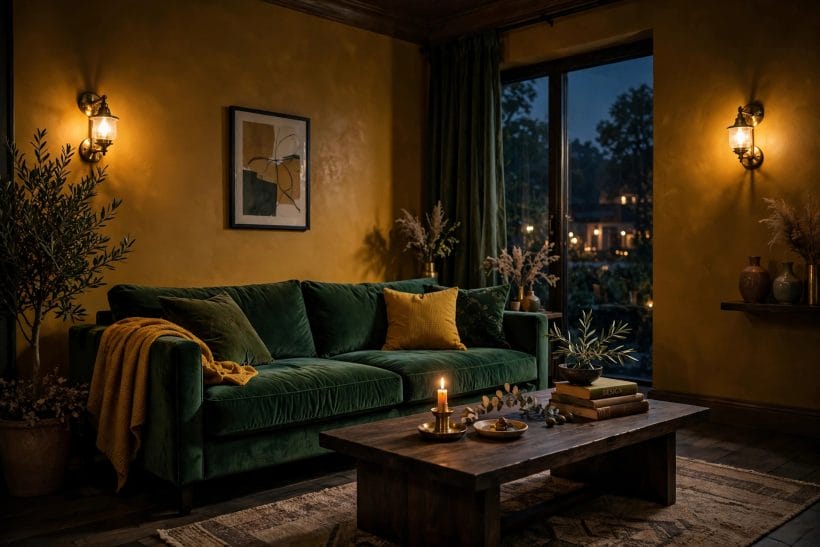
Between primrose and ochre lies the whole personality range of the colour: the shade you choose sets whether the room feels like spring morning, harvest afternoon or lamplit evening. These are the families, and the rooms each one flatters.
19. Butter yellow: the gentle default
Soft, creamy and slightly muted, butter is the shade that converts the yellow-sceptical. It flatters north light, old plaster and pale wood, and it behaves beside almost any sofa colour you already own.
20. Primrose and pale lemon for brightness
The clear, cool end of the family wakes up small and shaded rooms. Keep furnishings warm — pale yellows can turn chilly beside grey — with wood, brass and cream doing the warming.
21. Mustard for depth without darkness
Mustard is yellow grown up: earthy, spiced and calm. It pairs with charcoal, deep green and walnut, and it is the shade to choose when the room must also work as an evening sitting room.
22. Ochre and turmeric for the earthy room
The deepest common yellows lean towards clay and spice, agreeing with terracotta, rattan and unglazed ceramics. In the infographic’s words: deep and earthy — a bold that still feels natural.
23. Yellow with a green lean for freshness
A chartreuse-leaning yellow feels botanical and modern beside white and pale oak. It is the riskiest undertone — test it longest, because green leans can turn sour under warm lamps.
24. Two yellows in one room
Walls in butter, the alcoves or the chimney breast in mustard: tonal layering gives a plain room architecture. Keep the deeper shade on the smaller area and the joinery in one warm white throughout.
25. Yellow above a picture rail, white below
In tall rooms, carrying yellow only above the rail or wainscot line gives the colour presence without enclosure. The white lower wall keeps furniture silhouettes crisp against it.
26. The yellow hallway test
If the living room opens off a hall, painting the hall yellow and the room neutral — or the reverse — makes the doorway a deliberate threshold.
27. Sample the shade beside your floor
More yellows fail against the floor than against the furniture: orange-toned floorboards fight a golden wall, while pale ash or stone lets it sing. Judge the patch from standing height, floor in view.
5. Pairing Colours and Honest Materials
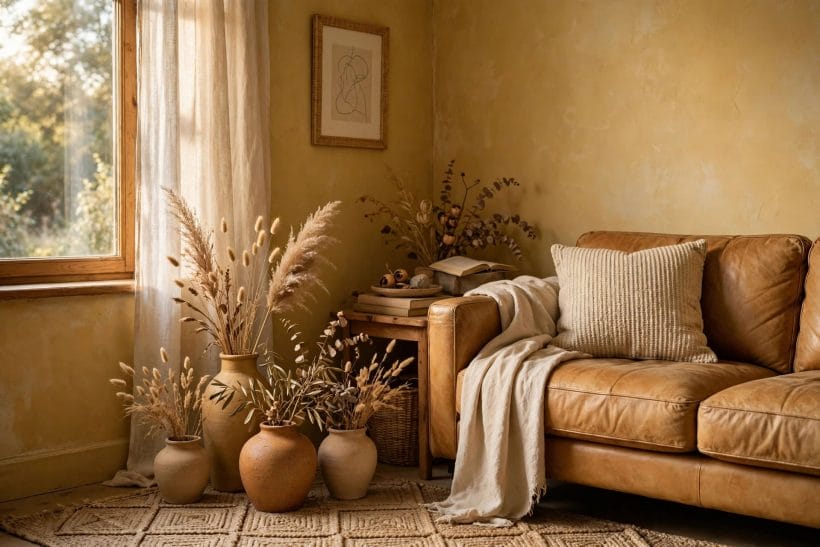
Yellow rarely fails alone; it fails by the company it keeps. These pairings are the room’s steadying influences — the woods, metals and second colours that keep warmth from tipping into sweetness, including the confident tropical palettes gathered in tropical interior design, where yellow sits happily beside deep green.
28. Natural wood: the essential ground
Oak, pine and walnut share yellow’s warmth at a deeper register, so timber floors, tables and frames settle a yellow room instantly. The greyer the wood, the calmer the wall can be — and the paler it can go.
29. Black outlines for definition
Thin black lines — picture frames, a lamp stem, a fireplace grate, ironmongery — give a yellow room its drawing. Without them, warm colours blur; with them, every edge reads deliberate.
30. White as breathing room
Warm white in the rug, the curtains or the shelving keeps yellow airy. The proportion that recurs in successful rooms is roughly two parts calm to one part colour — walls aside, let neutrals hold the large soft areas.
31. Green: the plant effect, in fabric too
Green is yellow’s neighbour and its best moderator: plants first, then perhaps a green cushion or a botanical print. A room of yellow and green reads as a garden room whatever the weather is doing.
32. Navy and ink for the evening room
A deep blue accent — one chair, a rug border, the inside of a bookcase — gives a yellow room its dusk register. It is the pairing to choose when the room works hardest after dark.
33. Terracotta and rust as warm allies
Clay colours extend yellow towards autumn: terracotta pots, a rust cushion, an unglazed lamp base. Used sparingly they deepen the scheme; used everywhere they turn the room into a sunset.
34. Brass and aged gold metals
Brass is yellow’s metal: lamps, handles and frame edges glow in sympathy with the walls. Keep the finish aged or brushed rather than mirror-bright, so the metal warms instead of glittering.
35. Stone, slate and concrete coolers
A grey stone hearth, slate table or concrete lamp base lends a yellow room its necessary cold note. One cool material among the warmth is enough; the contrast is the point.
36. Pink, used once, on purpose
A single blush or dusty-pink note — a cushion, a lampshade lining, flowers — flatters yellow surprisingly and keeps it from feeling themed. The discipline is in the once: twice is a scheme, and a sugary one.
6. Fabrics, Curtains and the Soft Layer
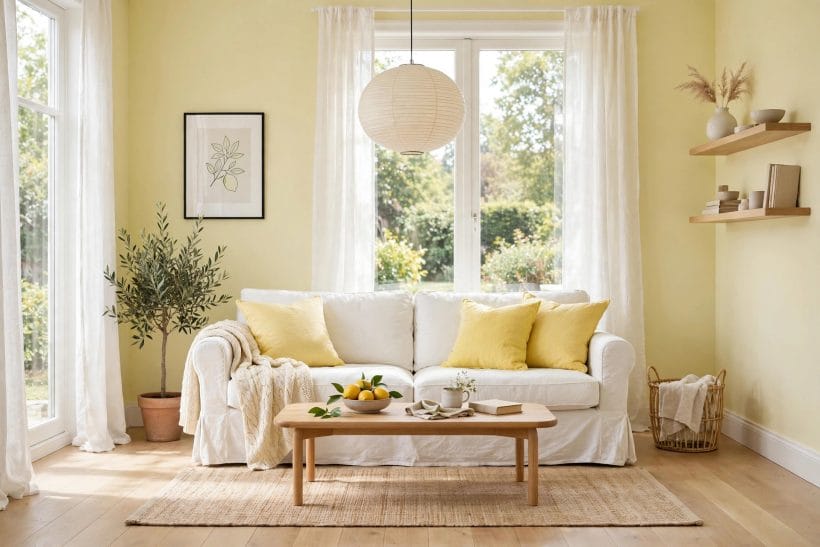
Paint is only half the colour in a room; the fabrics decide how the yellow feels at sitting height. These choices soften, filter and layer — the difference between a yellow room that glows and one that glares.
37. Sheer curtains to filter the glare
Where sun strikes a yellow wall directly, a linen sheer takes the edge off both light and colour, as in the gallery corner. The wall stays yellow; the room stops squinting.
38. Curtains in warm white or natural linen
Full curtains in cream or flax frame yellow walls without competing. Avoid bright white, which argues with the wall’s warmth, and avoid yellow curtains, which double the colour at its most visible edge.
39. A rug that cools the floor
The rug is the room’s largest cool surface waiting to happen: a pale jute, a grey-woven wool or a faded traditional pattern in blues and reds anchors yellow walls and protects the floor’s own tone from clashing.
40. Throws in the wall’s family
A throw in cream, ochre or soft gold over the sofa arm repeats the wall at body level and makes the seating look gathered rather than placed. Wool and woven cotton carry the colour best.
41. Velvet for one luxurious note
A single velvet cushion or an ottoman in deep gold or green gives a yellow room its evening richness. Velvet drinks light, which is precisely the counterweight a bright wall asks for.
42. Stripes to organise the colour
A striped cushion, blind or rug — yellow with white, or grey with a yellow thread — introduces order into a warm scheme. Stripes read tailored, and tailoring is what keeps yellow grown-up.
43. Layered cushions: plain, patterned, plain
The sofa formula that rarely fails: a plain cushion in the wall’s deeper tone, one patterned cushion, then a plain neutral. Odd numbers and mixed sizes keep the group relaxed.
44. Upholstering a footstool in yellow
If the walls must stay neutral for now, a yellow footstool or ottoman is the colour’s trial run — movable, recoverable and big enough to judge the shade family by.
45. Seasonal swaps: lighter in summer, deeper in winter
Yellow rooms respond beautifully to a twice-yearly cushion change: pale linen and primrose for the bright months, ochre and wool when the lamps come on early. The walls stay; the season changes.
7. Layered Lighting That Keeps the Glow
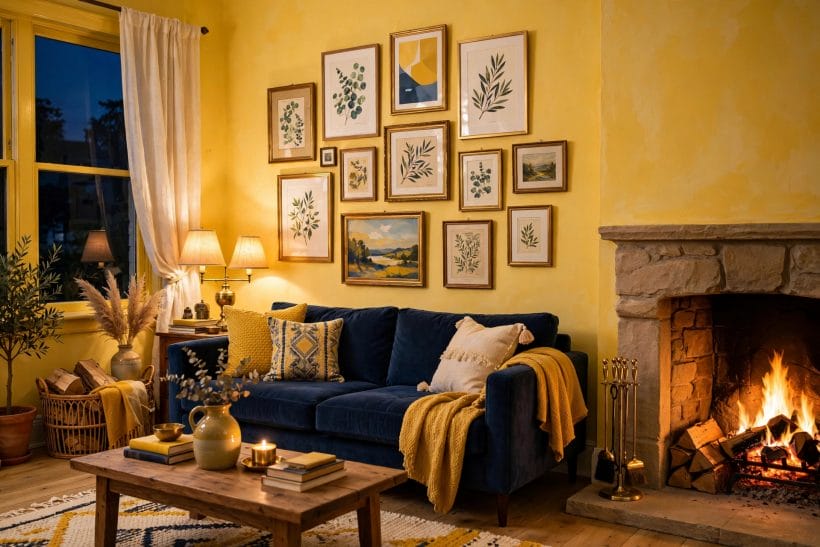
Yellow walls and lighting are partners: the wall colours the light, the light re-colours the wall. These layers are how the room keeps its daytime warmth after dark.
46. Warm bulbs everywhere, matched
Choose warm-toned bulbs throughout and keep them consistent: a single cool bulb makes its corner of yellow wall look green and ill. Consistency matters more than any particular fitting.
47. A brass arc or floor lamp for the evening pool
The feature photograph’s brass arc lamp is doing deliberate work — a pool of warm light thrown across the yellow wall, doubling its glow. Floor lamps earn their footprint in yellow rooms as nowhere else.
48. Table lamps with cream shades
Cream or natural-linen shades filter light into the wall’s own register; white shades cool it, coloured shades fight it. Two table lamps at different heights beat one bright centre light every evening.
49. Picture lights and shelf lights
A small picture light over the main artwork, or a strip inside a bookcase, gives a yellow room its gallery moment after dark — pools of lit colour along the wall rather than one flat wash.
50. The ceiling light: soft, shaded, dimmable
Bare overhead light flattens yellow into glare. A shaded pendant or a dimmer lets the ceiling light support the lamps instead of overruling them, and the wall colour stays rich rather than bleached.
51. Candles and the fireplace effect
Real flame is yellow’s oldest companion: candles on the mantel or table repeat the wall colour in moving light. Even unlit, cream candles continue the palette down to table level.
52. Mirrors placed to bounce lamplight
A mirror opposite or beside a lamp returns its glow into the room’s darker half. In a yellow room the reflected light arrives pre-warmed, which no bulb can quite imitate.
53. Light the corners, not the middle
Yellow rooms feel richest when their edges glow: a lamp in the far corner, a small light on the bookcase. The centre can stay dim; the walls are the room’s event and deserve the lighting budget.
54. Test new bulbs against the wall
Bulbs are cheap and walls are not: before repainting a yellow that disappoints at night, change the bulbs. Half the “wrong shade” living rooms are right shades under wrong light.
8. Art, Mirrors, Plants and the Finished Wall
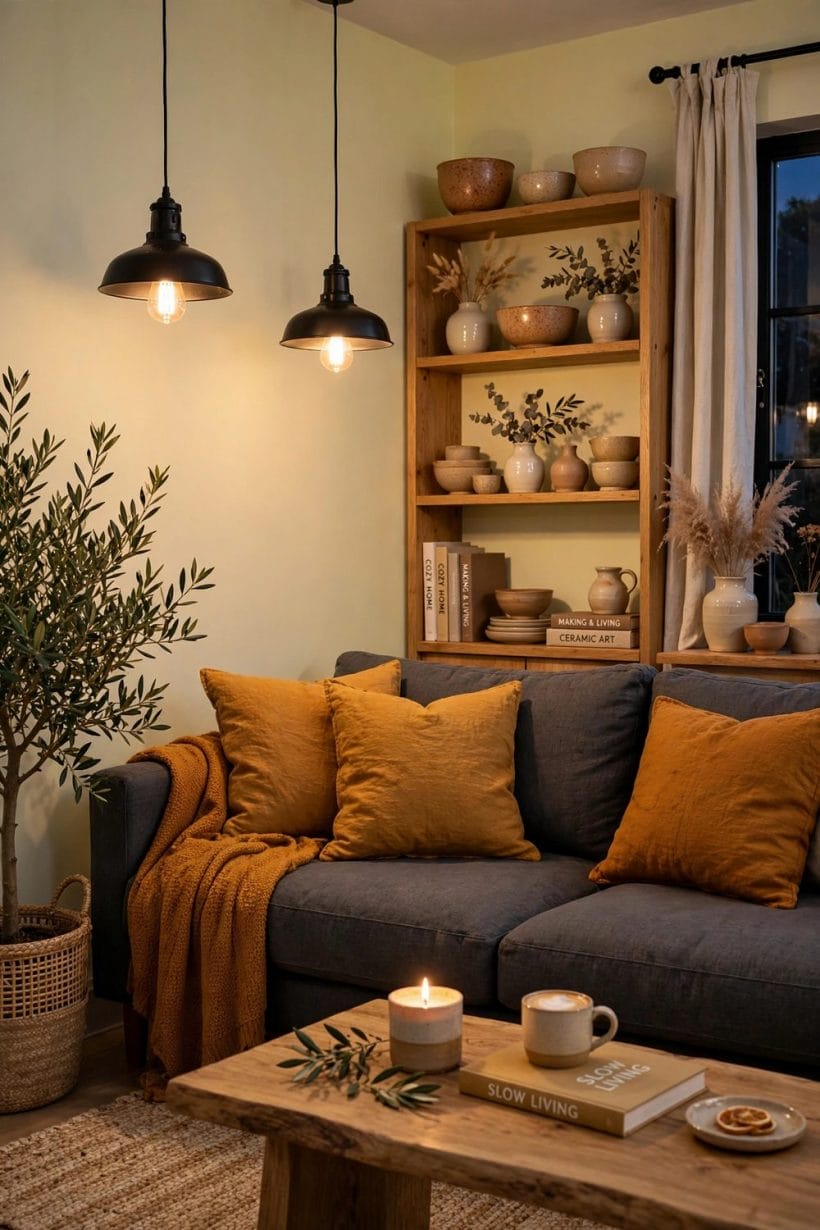
A yellow wall is a backdrop that asks to be dressed: it flatters gilt and oak frames, deepens behind green leaves, and gives black-and-white prints their crispness. Where the seating wall doubles as the media wall, the arrangements in media wall living room ideas keep the screen from swallowing the colour; here the dressing is art, glass and green.
55. Black-and-white prints for contrast
Monochrome photographs and etchings look sharper on yellow than on white — the wall gives them warmth, they give the wall its outline. Group them in even frames with generous mounts.
56. Botanical prints: the garden echo
Leaf and flower studies are yellow’s natural companions, as the feature wall shows: three framed botanicals and abstracts in a loose row. Keep frames in one wood so the group reads as a set.
57. One large painting instead of many small
A single generous canvas steadies a strong wall colour where a scatter of small frames would fuss. Choose art with cream, ochre or green in it and the wall and picture will hold each other up.
58. Oak and gilt frames over black
Warm frames extend the wall’s temperature into the art; black frames punctuate it. Either works — mixing warm woods and gilt together is the relaxed, collected version, and suits yellow best.
59. Plants: the non-negotiable green
Every successful yellow room in these photographs has leaves in it. A tall plant in the corner, something trailing on the sill, a stem in a vase on the table — green is the colour yellow is always waiting for.
60. A mantel or shelf styled in threes
On a mantel against yellow, group objects in threes at varied heights — candlesticks, a small stack of books, a vase. The wall supplies the drama; the objects need only supply the rhythm.
61. Books as colour: cream and cloth spines
Open shelves of cloth-bound and cream-spined books soften a yellow wall into a library feeling. Turn the most lurid paperback spines to the back — the wall has colour enough for everyone.
62. A mirror with a warm frame
An overmantel or wall mirror in gilt or oak doubles the room’s light and gives the yellow a second showing. Hung slightly low, it reflects the seating and lamps rather than the ceiling.
63. Leave one stretch of wall empty
Yellow needs its breathing space: a bare section of wall — beside the window, above the low bookcase — lets the colour be appreciated as colour. Restraint is what separates a scheme from a theme.
9. Small Rooms, Renters and Low Light
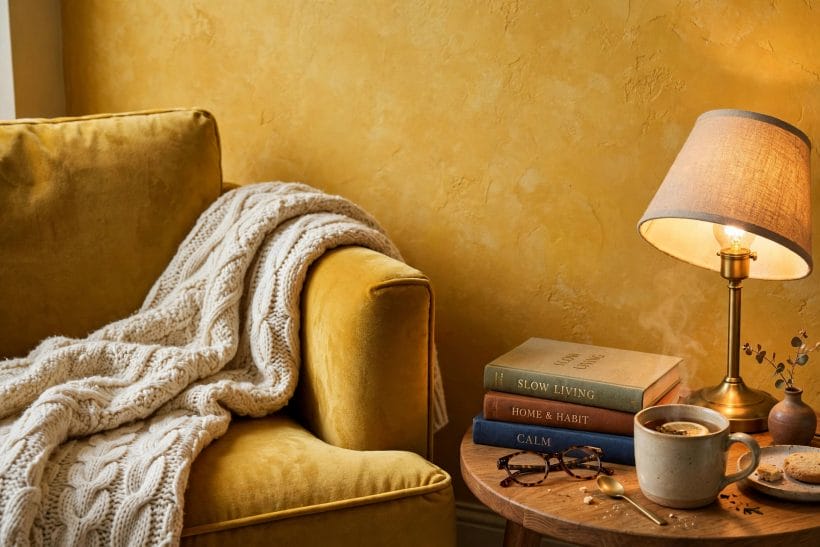
Yellow’s reputation as a small-room colour is earned: it advances light rather than space, making a compact room feel sunlit instead of enlarged. The small-space discipline in tiny house living room interior design applies here with a warmer palette — these are its yellow-specific lessons.
64. Pale yellow to borrow light in a box room
In the smallest rooms keep to primrose and butter: the wall reflects what light there is and the room reads as a sunny nook rather than a painted box. Deep shades belong to larger walls.
65. The one-wall renter’s version
Paint is the renter’s most reversible upgrade, and the sofa wall is the one to choose: it is the wall you look at least and live against most, so its colour warms every hour spent facing the room.
66. Yellow in the furniture instead
Where walls cannot be painted at all, run the scheme in reverse: mustard sofa cushions, an ochre throw, yellow-shaded lamps against neutral walls. The room still answers to yellow — the colour simply lives at sitting height.
67. Low ceilings: keep yellow below the picture rail
In a low room, a strong colour overhead presses down; keep yellow on the walls, the ceiling warm white, and the deepest shade low — in cushions and rugs — so the room’s weight sits at the floor.
68. Mirror the window wall
In a one-window room, hang the mirror on the wall opposite the window: the yellow wall beside it catches doubled light, and the room’s dullest corner gains a borrowed view of green.
69. Compact furniture in pale finishes
Small yellow rooms stay airy when the furniture is pale and leggy — a light oak side table, a cream armchair — leaving the walls to be the room’s single strong statement.
70. A yellow door or bookcase back
The smallest dose with the largest effect: paint the room’s door, or the inside back of a bookcase, in mustard or butter. It is an afternoon’s painting that makes the whole room feel colour-planned.
10. Costs, Care and Choosing Well
Yellow is among the least expensive transformations a living room can have — paint, fabric and light — and among the least forgiving of haste. These closing decisions keep the costs honest and the colour loved for years.
71. Budget for samples, not mistakes
The cost drivers are the honest usual ones — paint quality, wall preparation, the coats a strong colour needs to cover evenly — plus the textiles you change to suit it. Sample pots are the cheapest insurance in decorating; buy several.
72. Yellow shows its coverage: prime properly
Strong yellows can look patchy in one coat over old colours, and mustard over white can turn insipid if under-coated. A tinted primer or a patient second coat is what separates a rich wall from a streaky one.
73. Sun fade: rotate and choose washable finishes
Yellow pigments fade gracefully but visibly in hard sun. A washable matt or soft-sheen finish in the sunniest spots, and cushions turned now and then, keep the scheme even across the years.
74. Keep the leftover paint, labelled
Yellow walls mark at chair height like any other, and a labelled leftover pot makes touch-ups invisible. Note the shade name and the wall it covers — memory is a poor colour matcher.
75. Live with it a full year before judging
Yellow is a four-season colour: it must earn its keep in August glare and in February gloom. Give any new yellow room a year of cushions, bulbs and small adjustments before deciding the shade itself was wrong.
Final Considerations
Stand in the doorway at dusk, lamps on, and read the room as a stranger would: walls warm, sofa calm, one deep accent, green leaves somewhere, nothing shouting. If the room glows rather than glares, the yellow is right and the rest is furniture.
A yellow living room earns its place by being several good decisions at once — a shade tested in real light, seating that steadies it, lighting that takes over gracefully at dark, and the discipline to let green, wood and one dark note do the cooling. Keep the splits clean — the bedroom’s yellow with the bedroom post, the whole room with its pillar — and let this be the warmest wall in the house, chosen once and enjoyed in every season.

0 Comments