

A new appliance is on the truck, the doorbell is about to ring, and one awkward question is suddenly urgent: is a tip expected, and if so, how much is reasonable?
If you have been wondering do you tip appliance delivery guys, this guide gives general, practical answers — what is typical, when it is optional, and what to check before anyone leaves.
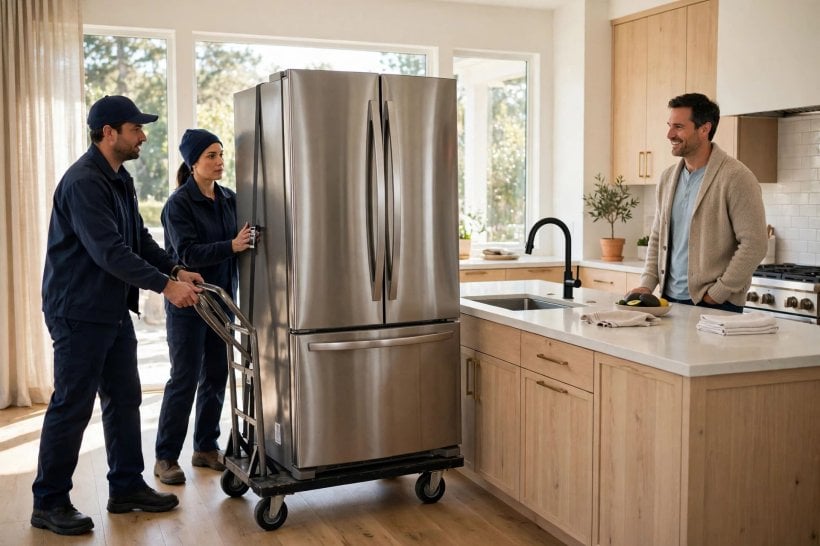
1. The Short Answer: Appreciated, Rarely Obligatory
| Question | Answer |
|---|---|
| Is tipping delivery people required? | Generally no — it is a thank-you for good work, not a formal obligation. |
| Do people commonly tip? | Yes, many households offer a modest cash tip, especially for heavy or careful deliveries. |
| What is a typical amount? | As a rough, common pattern, a small amount per person for a simple drop-off, rising for difficult or extra work. |
| Cash or card? | Cash is simplest, because card payments for the appliance itself rarely include a way to add a tip for the crew. |
| When is no tip fine? | When the delivery was poor, very late without explanation, or damage was left unaddressed — see the later sections. |
| What matters more than the tip? | Checking the appliance and paperwork properly before the crew leaves. |
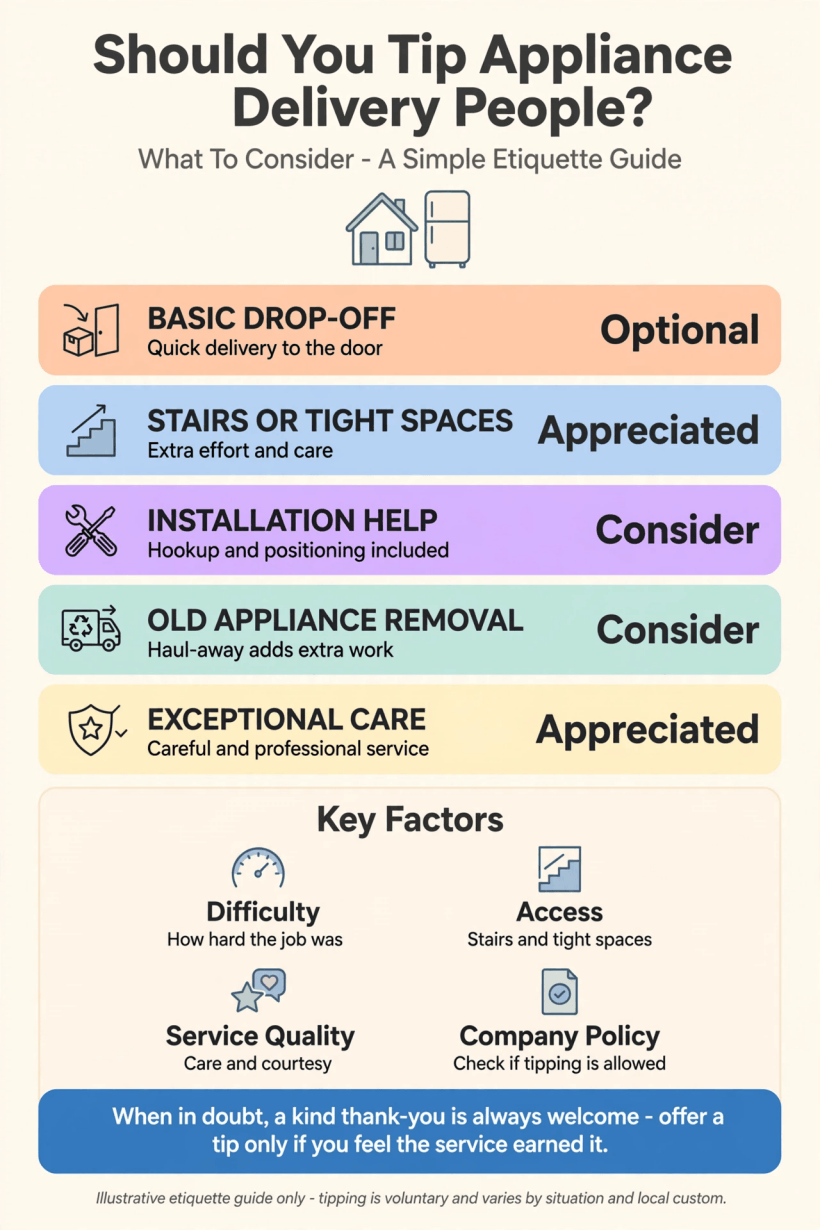
At a glance: the common questions people ask about tipping appliance delivery crews, answered simply.
Delivery work is physical, skilled and easy to underrate until you watch a heavy machine eased through a narrow doorway without touching paintwork. A tip recognises that care. It is not usually treated as compulsory in the way restaurant tipping may be, because delivery crews are typically paid for the job itself — but a modest, cheerful thank-you is a common and welcome custom, particularly when the crew has been careful, patient or helpful beyond the basics.
The healthiest way to think about it is as feedback with a banknote attached: give it for a job done well, scale it to the difficulty you witnessed, and do not feel pressured to reward a delivery that created problems you now have to solve. The sections that follow break that down into amounts, timing and the checks that matter more than money.
2. Typical Amounts, Framed Honestly
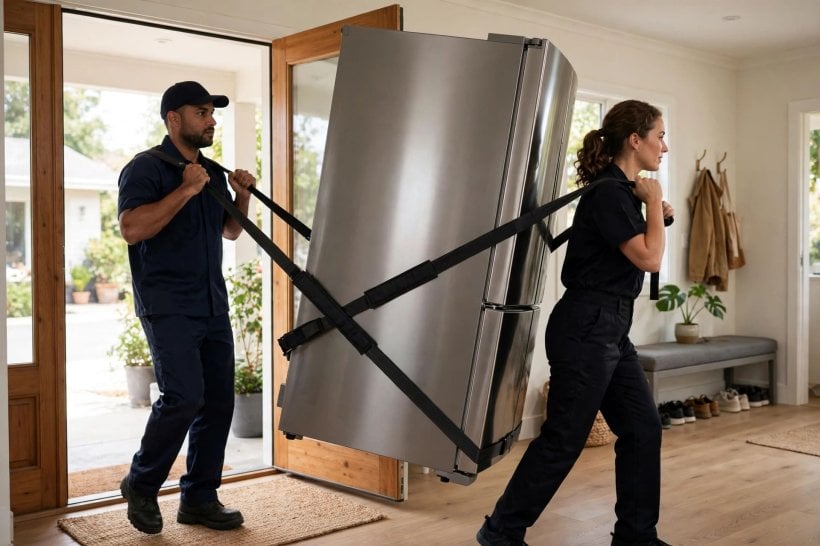
Because there is no formal rule, amounts vary by region and household, so treat every figure in this section as a typical pattern rather than a standard. For a straightforward delivery — appliance carried in, placed, packaging removed — many people give a small amount per crew member, roughly in the range you would hand over for a good takeaway delivery, a few units of local currency each. It is a gesture, not a fee, and crews generally receive it that way.
Amounts tend to rise when the job rises: a very heavy item, several flights of stairs, a tricky installation or an old appliance hauled away might see people doubling that basic gesture, sometimes more for genuinely awkward work handled with good humour. Think per person rather than per delivery, since two people usually share the carrying. If you are unsure, the middle of the typical range for the difficulty you saw is a decent instinct — and a sincere thank-you alongside it is remembered as clearly as the money.
3. When a Tip Feels Expected — and When It Does Not
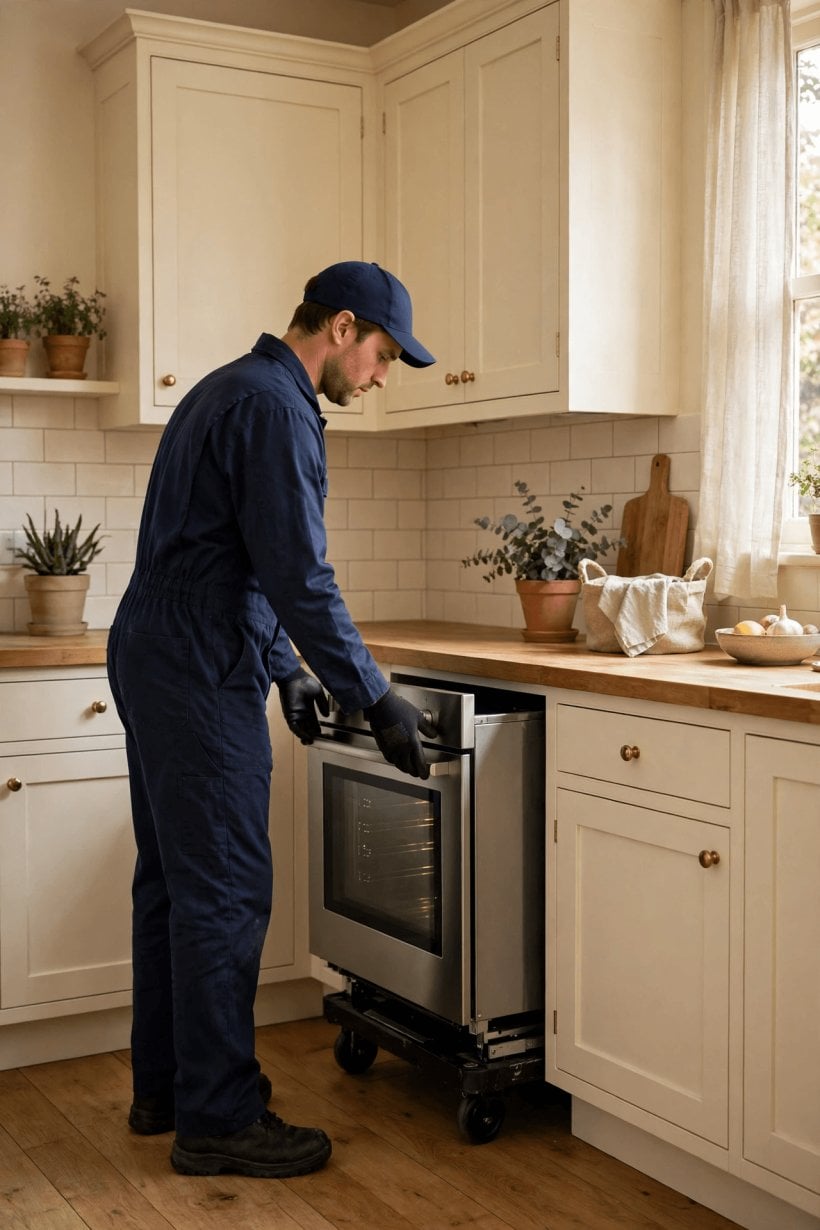
Context shapes expectations. A standard doorstep drop-off of a boxed item, where the crew is gone in two minutes, sits at the no-tip-needed end of the spectrum for most households. At the other end, a two-person crew that navigates stairs, removes doors to fit a large machine through, levels it, connects it and takes the old one away has done substantial work in your home, and a tip feels natural to most people in that situation.
Between those poles, let the service guide you. Crews who protect floors, explain what they have done and leave the area tidy have earned their gesture. Conversely, you are not obliged to tip for carelessness, damage brushed aside, or promised services quietly skipped. Where delivery was included as part of a purchase, that fact changes nothing fundamental: what was bought was the delivery service itself, and a tip remains an optional extra for how well it was carried out. Your judgement, calmly applied, is the rule here.
4. Cash, Card and Other Ways to Hand It Over
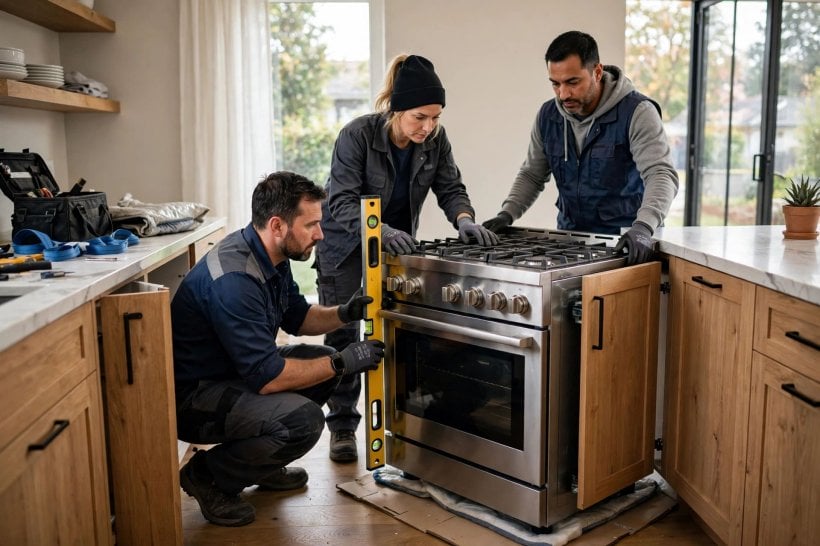
Cash is the simplest route because it goes directly to the people who did the work, on the spot, with no forms or fees. If you plan to tip, having small notes ready before the truck arrives avoids an awkward scramble or a trip to find change while two people wait in your hallway. Hand it over at the end, once the work is finished and you have done your checks, and give it to the crew members directly rather than leaving it to be passed on.
Card and app payments suit some situations — for instance, when a delivery includes an invoiced installation service with a gratuity line — but appliance purchases themselves rarely offer a clean way to tip the crew, and asking a driver for personal payment details is not something to improvise on the doorstep. If you have no cash and genuinely want to thank the crew, the alternatives section below covers reviews, refreshments and a message to their employer praising the work. Simple and settled in advance is best: decide your approach before the doorbell rings.
5. Difficult Deliveries Deserve Recognition
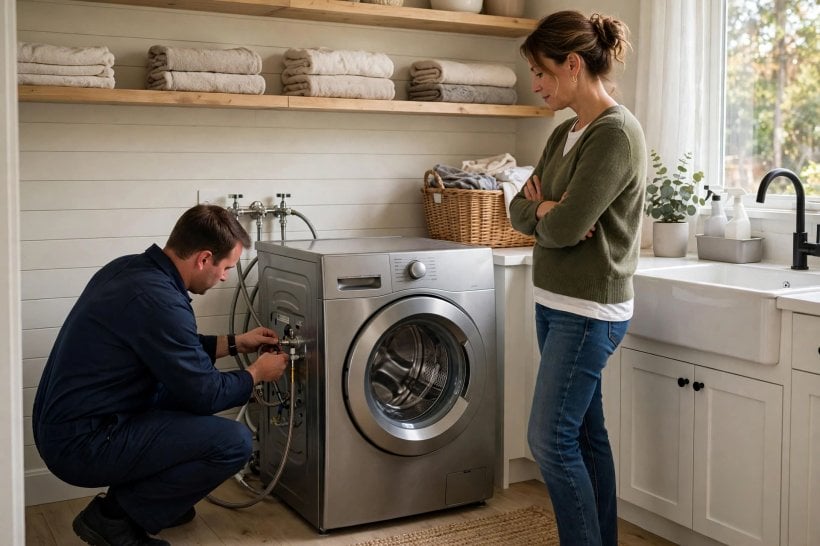
Some deliveries are routine and some are a quiet feat of logistics. Stairs, narrow halls, tight corners, gravel drives, bad weather and appliances that only just fit through a doorway all raise the effort involved — and the risk of damage the crew is working to avoid. When you watch a team problem-solve your awkward staircase with straps, blankets and patience, that is exactly the circumstance in which a more generous tip makes sense to most people.
You can help before difficulty strikes. Mention stairs, tight turns or narrow doors when the delivery is arranged, so the right crew and equipment are sent — surprises help nobody, and a forewarned team arrives ready. The preparation thinking in tiny house kitchen design underlines the same principle indoors: appliances and the spaces they must pass through should be measured against each other early. In compact homes the route can be as tight as any in tiny house and small-space interior design, which is why honest measurements protect everyone involved.
6. Hookup, Installation and Haul-Away Change the Picture
There is a real difference between dropping a box in the hall and finishing a working installation. Connecting water, power or drainage, levelling the machine, testing a cycle or demonstrating controls, and removing the old appliance for disposal are all extra labour — sometimes included in the service you arranged, sometimes booked as extras. Either way, they extend the visit and the skill involved, and most people’s tipping instincts rise accordingly.
Know what is included before the day, so you can judge the work fairly. If haul-away of the old unit is part of your arrangement, have it emptied, disconnected where required and ready to go; if installation is included, clear the space and have access to valves and outlets. Where a crew goes beyond what was booked — repositioning something awkward, say, or solving a fitting problem on the spot — a tip is the natural language of thanks. The room-by-room planning in kitchen ideas for tiny houses and small spaces is a reminder that in compact homes especially, a well-fitted appliance is worth real gratitude.
7. Check the Delivery Before You Tip
A tip is the final step, not the first. While the crew is still with you, look the appliance over calmly: check panels and corners for dents or scratches, open doors and drawers, confirm the model and colour are what you ordered, and make sure included accessories, manuals and fittings are present. If the appliance has been connected, a quick basic function check — power on, a short run where appropriate — is worth the minute it takes.
None of this needs to feel like an inspection parade; crews expect a sensible once-over and would rather hear about a problem now than via a complaint later. Note anything you find on the delivery paperwork before signing, and photograph damage rather than arguing about it. In small homes a washer may live in the bathroom, where the space-saving layouts in bathroom interior design ideas for tiny houses show why checking access and connections matters just as much there. Only when you are satisfied does the handover complete: thanks, tip if you are giving one, and a clear conscience on both sides.
8. If Something Goes Wrong
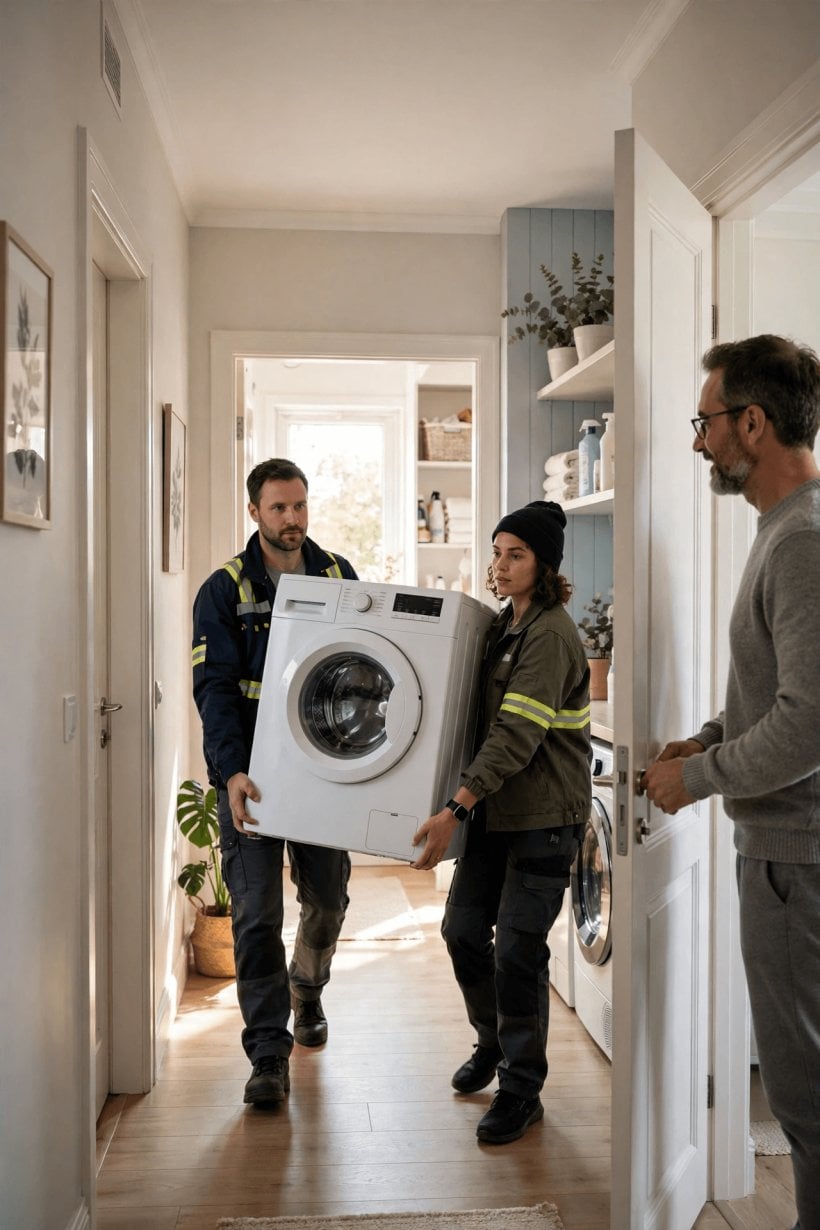
Occasionally a delivery arrives damaged, the wrong item appears, or the crew cannot complete an installation — a valve will not budge, a doorway defeats everyone. Stay courteous and factual. The people at your door rarely packed the truck or built the appliance, and they can often help most if the conversation stays practical: what is wrong, what can be done today, what will be arranged next, and how it will be recorded.
In these circumstances nobody sensible expects a tip, and you should not feel one is owed. If the crew handled a frustrating situation professionally — documenting damage, making calls, protecting your home while plans changed — a small gesture or at least a named thank-you to their employer is a classy response to effort, separate from the failed item itself. Follow up through the seller’s normal customer service route, keep your paperwork and photos together, and note dates and names. Good records resolve problems; tips, withheld or given, do not.
9. No Cash on Hand? Other Ways to Say Thanks
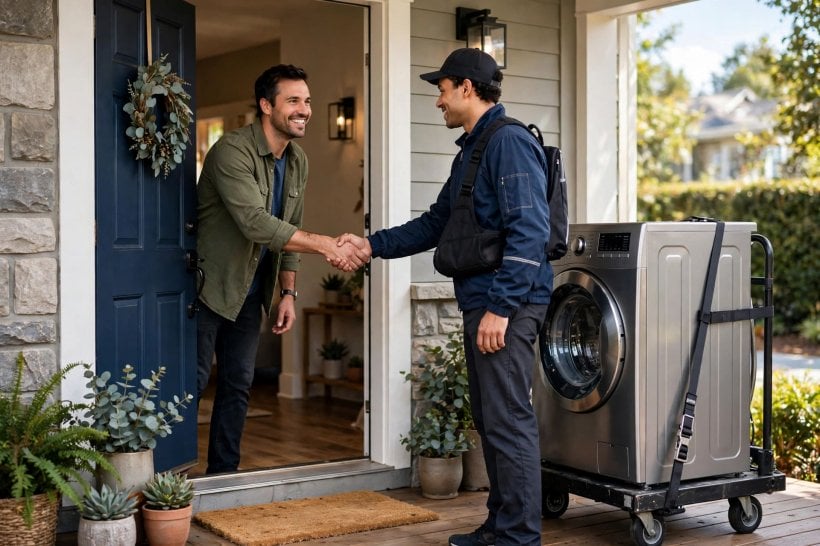
Sometimes the truck arrives early, the cash you meant to draw is still a plan, and the moment passes. Do not panic: money is only one form of appreciation. A cold drink on a hot day, offered early in the job rather than as an afterthought, is genuinely welcome to people doing heavy physical work. Allowing a crew to use the bathroom without being asked is a small kindness that costs nothing and is remembered.
Beyond the day itself, a positive review that names the crew, or a short message to their employer praising specific care, can matter professionally in ways a small tip cannot. If you still wish you had tipped in cash, let it go rather than chasing payment details afterwards; prepare notes before the next delivery instead. Asked directly, most delivery people would rank a clear route, a ready room and respectful treatment alongside money anyway — which is good news, because those are entirely within your control on every delivery.
10. Prepare Your Home So the Crew Can Do Their Best Work
The easiest way to have a delivery worth tipping is to set it up to succeed. Measure the route — doorways, hall turns, stairs — against the appliance’s size before it is dispatched, and clear that route of furniture, rugs and clutter on the day. Empty and defrost an outgoing appliance where needed, secure pets in another room, and make sure someone adult is home for the whole delivery window rather than most of it.
Decide in advance where the appliance is going and where its packaging should end up, and have your tip, if you are giving one, folded and ready so the ending is smooth. Preparation like this is the same habit that makes any home project run better, as the step-by-step projects in how to build your own tiny house show repeatedly, and the planning approach in designing your own tiny house — measure first, commit second — applies exactly here. A prepared home gets a crew’s best work, and their best work is what tips are really for.
Final Considerations
So, do you tip appliance delivery guys? For most households the honest answer is: often, modestly, and for the work rather than out of obligation. A small cash amount per person suits a smooth standard delivery; more is a fair reflection of stairs, weight, installation and haul-away handled well; and nothing at all is defensible when the job was careless or the checks were skipped. Use typical ranges as a compass, not a contract, and let what you actually witnessed be the final guide.
Above all, spend your attention where it protects you: prepare the route, confirm what the service includes, check the appliance thoroughly and note any damage before signing. Then close the visit the way you would want it closed at someone else’s door — with thanks, a fair gesture if it was earned, and the kettle offered while there is still time to accept it.


0 Comments