

Every house has a corner where the evening naturally gathers — and in most houses that corner is wasted on a sofa end and a charging cable. A proper home bar gives the gathering a headquarters: a counter to lean on, bottles within reach, and a reason to linger.
These 75 home bar ideas build that headquarters in order, as this cluster’s pillar: the spot first, the counter and shelving after, storage, seating and atmosphere next, and the small-home answers last — linking down to the specialists, because a pillar’s job is to hold the map, not to drink the whole cellar itself.
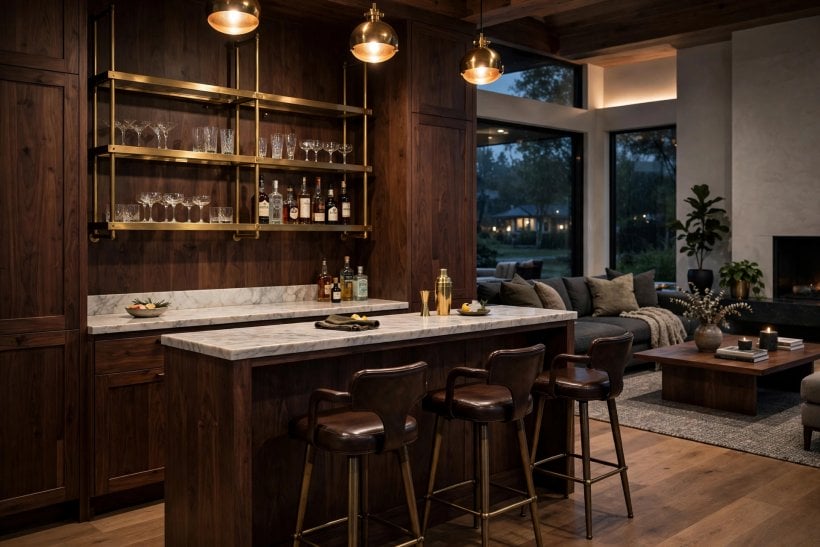
1. Home Bar Ideas at a Glance
The central entity is the home bar: the house’s dedicated drinks station, part worktop, part display, part social furniture — defined by its attributes: the location, the counter, the shelving and display, the storage and glassware, the seating, the lighting and atmosphere, and the services (water, cold, power) that separate a real bar from a tray on a sideboard. The first attribute governs the rest: a home bar succeeds where people already gather, and fails beautifully in rooms nobody visits.
| Where does a home bar belong? | On the edge of the room where evenings already happen — living room, dining room, basement den — close to seating and never more than a few steps from where guests settle. |
| What is the minimum a real bar needs? | A counter at standing height, storage for bottles and glassware, and light that flatters both. Water and refrigeration are upgrades; the counter and the welcome are the bar. |
| How much space does it take? | A full bar wants a wall run and room to stand behind it; a serving bar needs only a counter’s depth against a wall. The compact end of the family has its own post in this cluster, linked below. |
| What makes a home bar feel grown-up? | Restraint: bottles edited, glassware matched, surfaces clear. A bar that displays everything it owns looks like a shop; a bar that displays a chosen few looks like a host. |
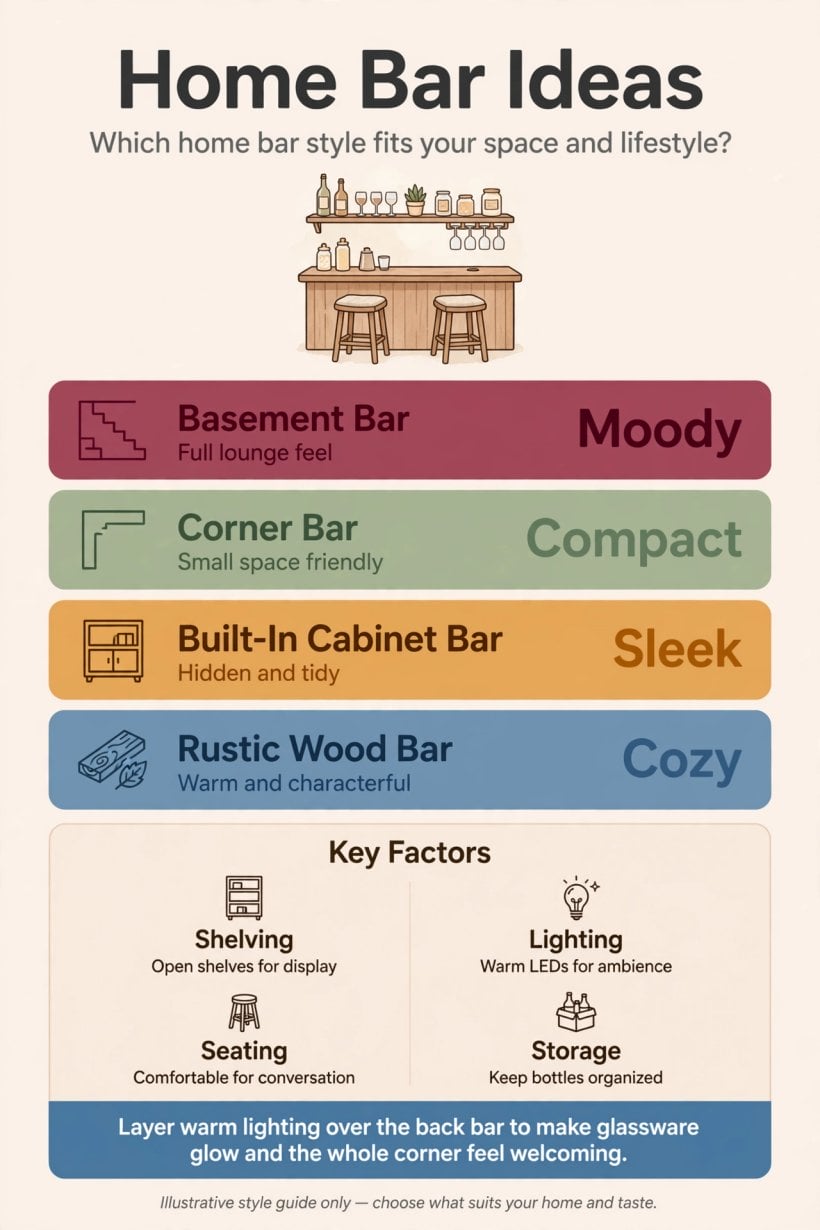
2. Choosing the Spot: Where a Home Bar Wants to Live
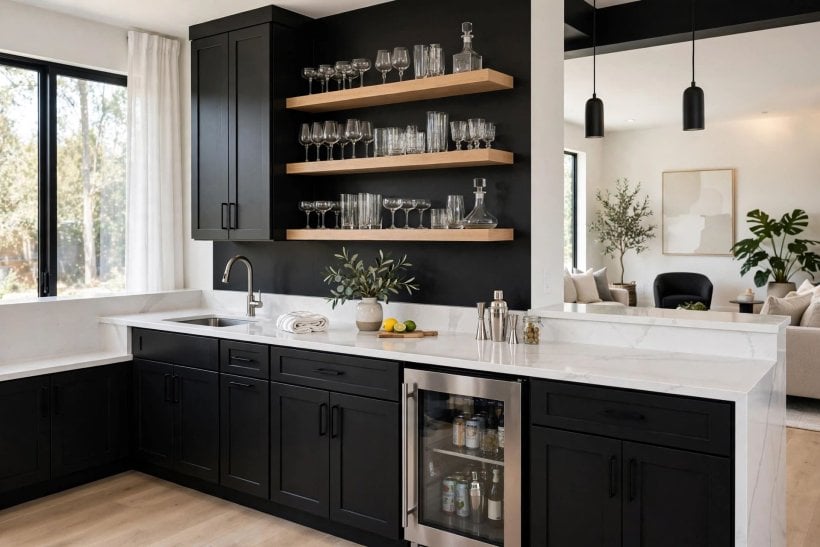
Location is the pillar decision, because every later attribute — plumbing, seating, noise, light — inherits it. Bars succeed at thresholds: between kitchen and living room, at the den’s end, beside the dining table they serve.
1. Put the Bar Where Evenings Already Happen
Watch where guests actually stand and talk at the next gathering, and build the bar there. A bar installed in a formal room the household avoids becomes an expensive monument to an intention.
2. Stand It Between Kitchen and Company
The threshold spot borrows the kitchen’s water, ice and glassware while facing the room where people sit. Most successful home bars are really kitchen walls that learned to entertain.
3. Give Basements the Full Bar
A basement den can carry the complete build — counter, stools, back bar, fridge — because its floor and its noise are forgiving. The basement survey in basement ideas treats the room; the bar is its natural anchor tenant.
4. Keep Dining Rooms to a Serving Bar
Where meals are the main event, a shallow serving bar against one wall supports the table without competing with it. Depth is the difference between a bar that serves a dinner and one that upstages it.
5. Let a Living-Room Wall Run Do It
One wall of a living room — counter below, shelving above, stools that tuck away — is the classic full-size answer, and it keeps the bar inside the house’s social centre of gravity.
6. Claim the Under-Stair and the Alcove
Dead alcoves and under-stair voids are bar-shaped by accident: enclosed, central, and useless for furniture. A counter and two shelves convert the house’s most wasted volume into its most visited.
7. Take the Garden Room Only With Shade
A bar in a sunny extension sounds idyllic and cooks its bottles. If the spot is glass-heavy, the storage must be closed and shaded, or the collection quietly spoils in the light that sold the idea.
8. Respect the Noise Budget of the House
Ice, glass and laughter carry. A bar beside bedrooms needs soft closings, rugs and a door that shuts; a bar in the social wing can be as loud as its welcome. Place for the household’s real bedtime.
9. Plan the Route to Water Early
A sink is the bar’s most-wanted luxury and its most expensive afterthought. If plumbing is ever coming, the bar’s spot is decided by where the pipes can honestly reach — settle it before the counter is designed.
10. Leave the Bar Out of the Passage
A bar that narrows a hallway creates a nightly negotiation between guests and architecture. Counters belong against walls and in rooms, never as toll booths on the way to the bathroom.
11. Face the Bar Toward the Room
The host should pour facing the company, not the wall. Wherever the layout allows, orient the counter so the person mixing stays in the conversation — hospitality is a sightline before it is a recipe.
3. The Counter: The Working Heart
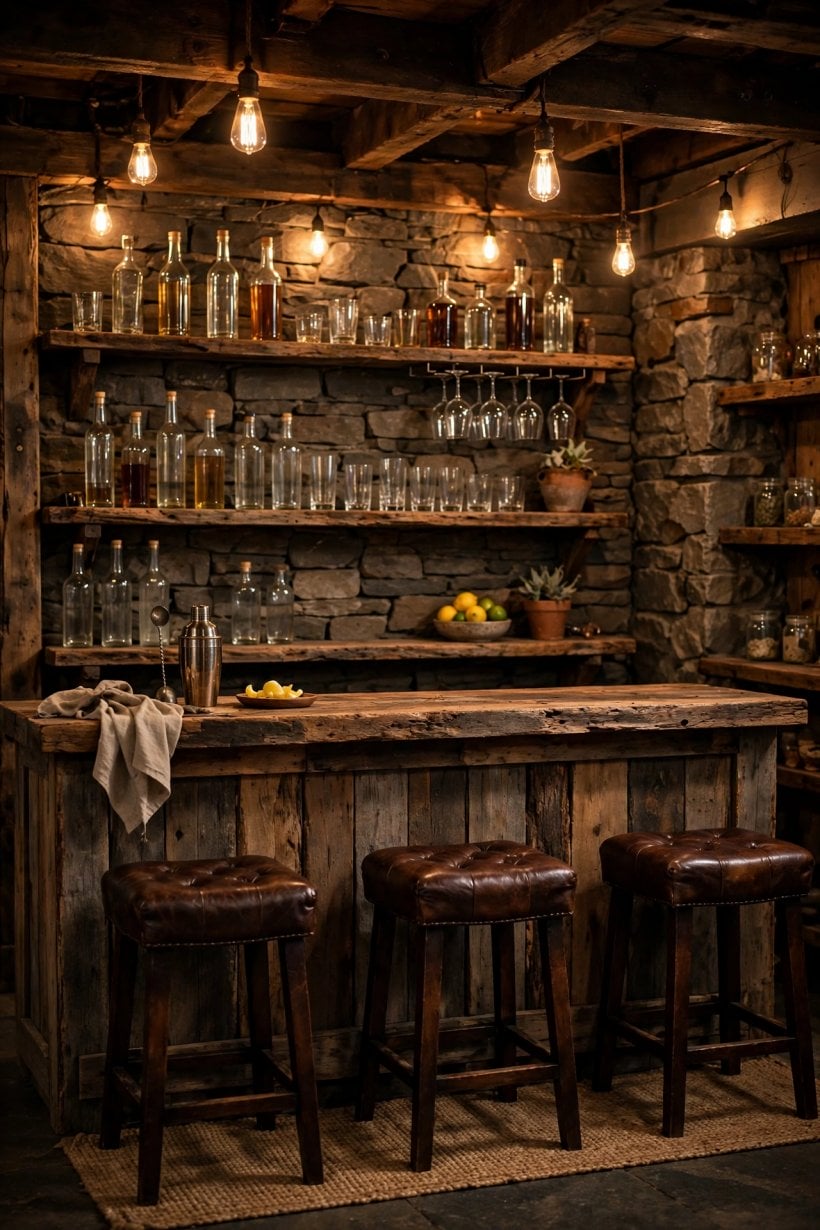
The counter is where the bar is used, leaned on, photographed and judged. Its height, depth and surface decide whether the bar works nightly or merely poses — and the surface question alone fills its own post in this cluster, the home bar countertops survey.
12. Build the Counter at Standing Height
A bar counter sits higher than a kitchen worktop, at the height a standing guest leans on comfortably and a host works behind without stooping. The few centimetres of difference are the bar’s whole posture.
13. Give Guests an Overhang to Lean Into
Knee space under the guest side turns a counter into a bar: stools pull up, elbows land, conversations settle. A slab on cupboards with no overhang is a shop counter, and guests stand accordingly — briefly.
14. Choose a Surface That Forgives Rings
Stone, sealed timber, laminate with nerve, or metal: the counter will meet citrus, ice melt and red wine in its first week. Choose the surface whose marks read as patina rather than damage.
15. Edge the Front for Elbows and Spills
A rounded or raised spill edge keeps drinks on the counter and elbows comfortable. Sharp stone arrises bruise forearms and chip; the bar front is touched more than any surface in the house’s social life.
16. Keep a Clear Landing Zone at One End
Every bar needs an unglamorous empty stretch where trays land, bags open and the mixing actually happens. Display that consumes the whole counter leaves the host performing surgery in a crowd of bottles.
17. Let the Foot Rail Earn Its Brass
A foot rail looks like decoration and behaves like furniture: standing guests rest a foot and stay longer. It is the cheapest comfort in the bar and the detail most often remembered from good ones.
18. Match Counter Length to Real Gatherings
Build for the household’s actual crowd, not its annual party. A counter that seats the usual six in comfort beats one that seats twelve strangers while the regulars stand in each other’s way.
19. Split the Counter Into Wet and Dry
One end for ice, cutting and mixing — the wet work — and one for resting glasses and conversation. The split keeps guests out of the splash zone and the host out of the audience.
20. Let a Peninsula Beat a Wall When Space Allows
A counter that steps into the room gives the host a stage and the guests three sides to gather on. In open-plan rooms it is the strongest social geometry the bar can take.
21. Keep the Host’s Side Honest Flooring
Behind the counter, spills are a schedule, not an accident. A washable, forgiving floor on the working side protects the room’s good floor and the host’s temper in equal measure.
22. Finish the Counter’s Front Like Furniture
The guest side faces the room, so panel it, paint it or clad it as the room’s joinery, not as a kitchen’s plinth. The bar front is a facade, and it is looked at all evening.
4. Shelving and Display: Bottles Kept Beautifully
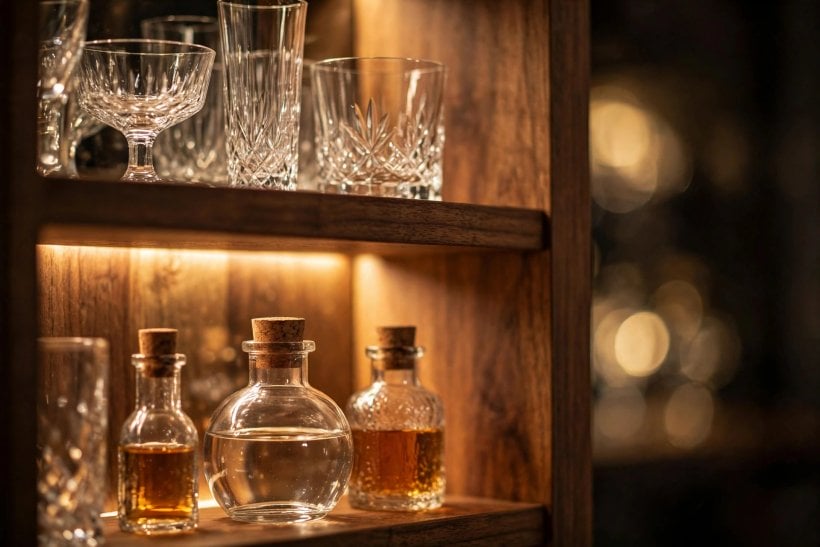
The back bar is the bar’s face: shelving that stores, displays and advertises in one gesture. The rule of this section is editing — the shelves hold the working collection, not the whole cellar.
23. Run Shelves at Reaching Height Only
Display shelving earns its place within the host’s reach; bottles stored above it become dusty scenery. If a shelf needs a ladder, it should hold the reserves, closed away, not the display.
24. Edit the Bottle Display to the Working Set
The bottles used monthly belong on the shelf; the rest belong in storage. A dozen chosen bottles look like a collection; forty look like inventory awaiting a stocktake.
25. Group by Silhouette, Not by Shelf Order
Tall bottles at the ends, a rhythm of heights between: the back bar reads as a skyline. Grouping by type is the stockroom’s logic; grouping by shape is the display’s.
26. Put Glassware Where Light Finds It
Glass belongs on the shelf that catches light — under-shelf strips, a lit cabinet, the top run. Glassware is the bar’s jewellery, and it should be stored where it can sparkle on duty.
27. Use One Closed Run for the Working Mess
Measures, cloths, openers, spare everything: a single closed cabinet among the open shelves keeps the machinery invisible. A bar with no hidden storage displays its clutter as faithfully as its bottles.
28. Let a Mirror Back the Shelves, Lightly
A mirrored or antiqued-glass back doubles the bottles and the light in one move. Use it where the bar is shallow and the room forgiving; in bright rooms it can tip from glow to glare.
29. Keep Shelf Depth to One Bottle and a Glass
Deep display shelves hide the back row and invite accumulation. A shelf one bottle deep keeps every label visible and every choice honest — the display stays a display.
30. Add a Rail Where Glasses Hang
Stemware hung by its foot under a shelf saves space and signals the bar’s trade instantly. Keep it over the counter, never over the walkway — hanging glass wants a soft landing beneath it.
31. Reserve One Shelf for the Non-Drinkers
Sodas, tonics, juices and the alcohol-free bottles deserve a designed place, not an apology at the end. The modern host’s shelf plan includes everyone it invites, visibly and without fuss.
32. Light the Back Bar From Within
Under-shelf light turns storage into theatre and makes labels readable at midnight. It is the single fitting that most separates a designed back bar from a cupboard with ambitions.
33. Let the Shelves Match the Room’s Joinery
Shelving in the room’s own timber or colour makes the bar look built with the house; a foreign finish makes it look installed last Tuesday. The pillar rule for every fitted element applies here too.
5. Storage, Glassware and the Hidden Machinery
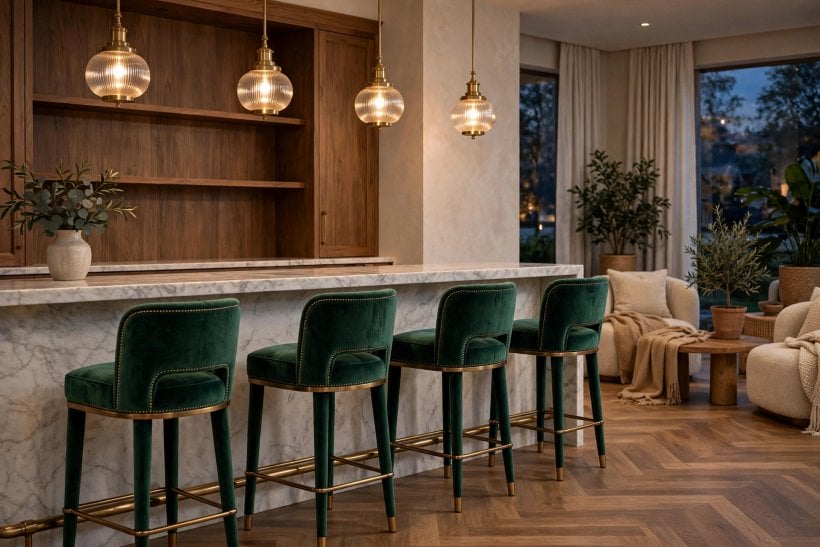
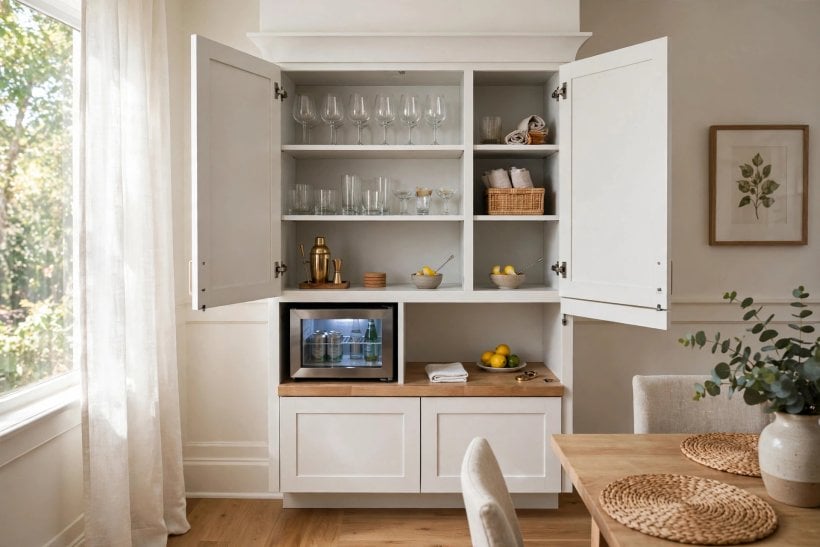
For every object the bar displays, three should be stored: backup bottles, the second set of glasses, the tools of the trade. This section is the bar’s engine room — unphotogenic and indispensable.
34. Store Bottles Upright, Dark and Still
Spirits keep best upright, away from light and heat, in a closed run of the bar or a nearby cupboard. The display shelf is a working selection; the store is the archive behind it.
35. Give Wine Its Own Answer
Wine wants cool, dark and horizontal — a rack in the bar’s shaded base, a wine fridge, or a cellar elsewhere in the house. Bottles baked on a sunny display shelf are décor, not wine.
36. Count Glassware by the Real Crowd
Two sets of the glasses the household actually uses — one in service, one in reserve — sized to real gatherings. Novelty glassware for drinks nobody makes is storage spent on theatre props.
37. Drawer the Small Tools Together
Openers, measures, pourers, picks and cloths in one shallow drawer, laid out like instruments. The host who hunts for a bottle opener mid-conversation has a drawer problem, not a memory problem.
38. Keep Ice a System, Not a Scramble
A freezer drawer, an insulated bucket with a home, or a counter ice-maker for serious households: ice should be a place, restocked on rhythm, not a bag torn open in a panic at eight o’clock.
39. Hide the Chilling for Whites and Bubbles
A slim under-counter fridge is the bar’s most-used appliance and its least visible luxury. It keeps the cold chain two steps from the counter, which is where every chilled bottle gets opened anyway.
40. Plan a Bin Within Arm’s Reach
Caps, corks, citrus ends and napkins generate a quiet stream of waste. A small, lidded, lined bin inside the bar’s base saves the host a hundred dripping journeys to the kitchen.
41. Store Mixers Like Ingredients, Not Décor
Tonics, syrups and bitters belong cool, dark and grouped by use, with the opened ones dated quietly. The bar’s flavour library deserves the same order as its bottle library.
42. Give Garnishes a Cutting Home
A small board, a sharp knife and a bowl, always in the same place: garnish prep is the bar’s mise en place. Households that set it once stop improvising it onto the good counter.
43. Keep a Spare Shelf for the Season
Mulled spices in winter, spritz makings in summer: one flexible shelf that changes with the calendar keeps the bar current without renovation. The bar that never changes becomes a museum of one party.
44. Lock What Needs Locking, Quietly
Where children or guests’ children visit, one lockable run for the strong shelf is good hosting, not suspicion. A simple cabinet lock, fitted when the bar is built, answers the question forever.
6. Seating and the Social Geometry
A bar is a machine for conversation, and seating is its gearing. The household that eats together in the dining room ideas survey already knows the principle: arrangements decide whether people talk across, along or past each other.
45. Choose Stools That Invite Staying
A stool with a back, a footrest and a seat that forgives an hour turns a drink into an evening. Perches are for tasting counters; the home bar’s stools should be built for the second glass.
46. Space Stools for Elbows, Not Catalogues
Leave a body’s width per stool plus breathing room — guests who cannot lift a glass without negotiating elbows migrate to the sofa. Fewer stools, properly spaced, seat more people happily.
47. Mix Perching and Sitting Zones
Stools at the counter, a sofa or chairs within talking distance, standing room between: a gathering breathes when guests can change altitude. One fixed row makes one fixed conversation.
48. Keep a Sightline From Stool to Sofa
The counter crowd and the sofa crowd should see each other without turning chairs. A bar that splits its party into two rooms’ worth of people has built a wall with bottles on it.
49. Let One Chair Be the Host’s Throne
Every bar develops a favourite end seat — make it a good one, near the host’s station. Rituals form around furniture that deserves them, and the bar’s rituals are its real furnishing.
50. Tuck Stools Fully Away
Stools that slide completely under the overhang return the floor when the bar is closed. In shared rooms this is the difference between a bar that lives in the house and one that blocks it.
51. Mind the Stool-to-Counter Heights
Counter and stool heights are a pair, not two purchases: the gap between seat and counter decides whether guests lean in comfort or perch on a climbing frame. Buy them as one decision.
52. Put a Ledge for the Standing Crowd
A shallow shelf or rail-height ledge along the wall behind the stools catches the overflow glasses of standing guests. Parties expand past the stool count; the room should have planned for it.
53. Favour Washable Seats Near the Splash Zone
The stools nearest the mixing end will meet a drink eventually. Timber, metal or wipeable upholstery there; the heirloom fabric can live at the quiet end of the counter.
54. Keep the Bar’s Edge Out of the Sofa’s Back
A counter directly behind a sofa makes both worse — drinks over heads, conversation over shoulders. A body’s width of breathing space between the bar zone and the sitting zone saves both.
55. Let Music Reach the Bar, Not Fight It
Whatever plays in the room should include the bar’s corner at conversation volume. A speaker aimed at the seating and away from the counter keeps orders audible and evenings unshouted.
7. Light, Sound and Atmosphere
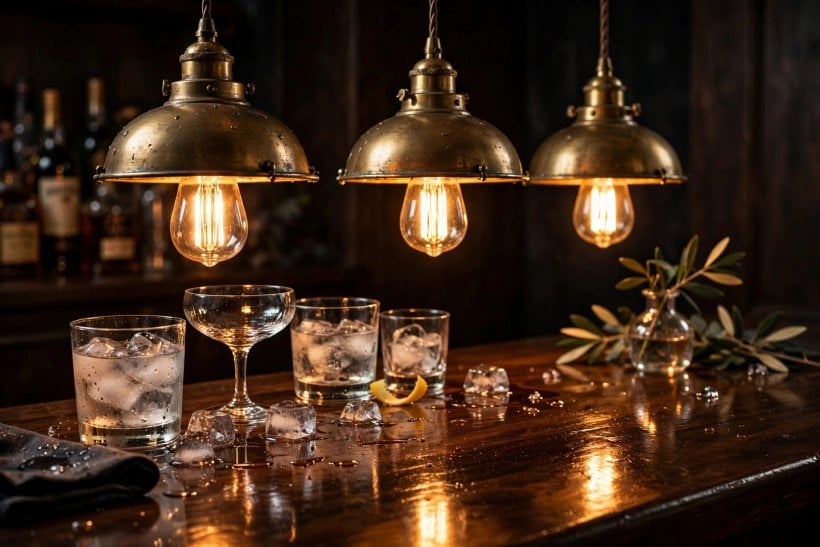
Atmosphere is the attribute guests remember and hosts under-plan. A home bar lives at night, so its light is lower, warmer and more deliberate than any other room’s — and its outdoor cousin makes the same choices in the patio ideas survey.
56. Light the Counter, Dim the Room
Pendants or a lit canopy over the counter make the bar the room’s lantern while the seating stays in gentle shade. People gather at the lit edge; that is the bar’s gravity, designed.
57. Keep Every Bar Light Dimmable
The same bar serves a bright afternoon mix and a midnight nightcap. Dimmers are the difference between a lighting scheme and a lighting mood, and the bar is nothing but mood.
58. Warm the Light Like Lamplight, Not Daylight
Warm lamps flatter faces, bottles and timber alike. A cool bulb over a bar makes good whisky look like cleaning fluid, and no collection survives the insult nightly.
59. Add One Point of Theatre
A lit cabinet, a glowing shelf, a small neon-free sign of personality: one deliberate sparkle gives the bar its photograph and its identity. Two theatres compete; three become a pub theme park.
60. Soften the Room’s Hard Echoes
Glass, ice and voices in a hard room add up to a shout. A rug under the stools, curtains, upholstered seats — the soft layer is acoustic equipment disguised as comfort.
61. Scent the Bar by Serving, Not by Candle
Citrus peel, coffee, a herb sprig: the working scents of a bar beat scented candles beside open bottles. Keep naked flames away from high-proof shelves as a matter of plain design sense.
62. Let the Back Bar Glow After Hours
On its lowest setting, the back-bar light makes the room feel kept rather than closed — the household’s night light with better stories. Bars that go fully black look abandoned between parties.
63. Hide the Cables of the Small Machines
Blenders, coffee kit and chargers trail cables across the theatre. A cable route inside the joinery, planned at build, keeps the bar’s working clutter from reviewing the show.
64. Give the Bar a Closing Ritual
Surfaces wiped, bottles home, lights to glow: a two-minute closing routine keeps the bar perpetually ready. The bar that is always ready gets used on Tuesdays, not just birthdays.
65. Keep the Coffee Answer in the Same Footprint
The morning after has its own station in many houses — the home coffee bar is the bar’s sober sibling, and planning the two as cousins keeps both footprints honest.
8. Home Bars in Small Homes and Tiny Houses
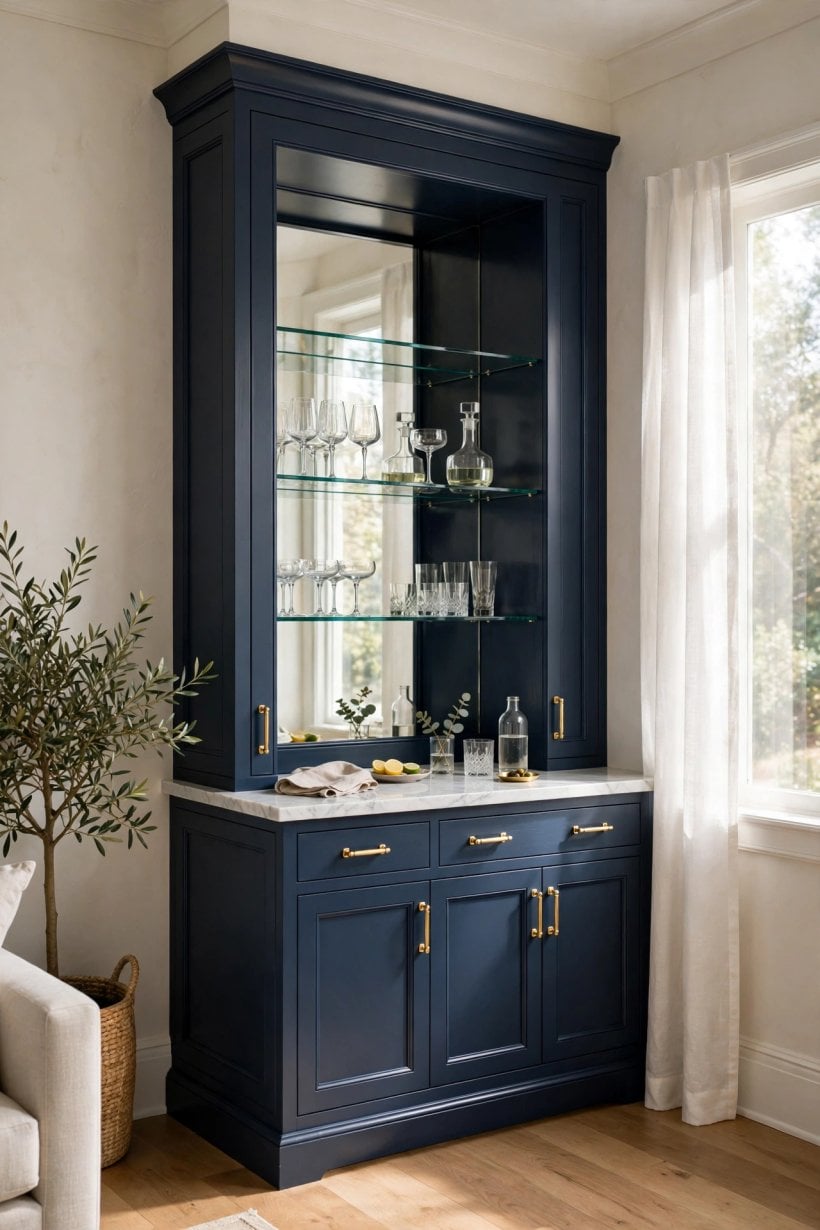
The pillar keeps this section brief on purpose: the compact bar is a specialism with its own post in this cluster — single-wall home bar ideas takes the small-space angle in full, and the small-home bar at #599 will narrow it further. What follows is only the survey’s outline.
66. Shrink the Bar to a Station, Not a Shrine
In a small home the bar becomes a defined station — one counter run, one shelf, the working set only. The ritual survives the shrinking; the footprint is what changes.
67. Let the Bar Share a Wall With Another Trade
The same wall run can host the bar at one end and the coffee kit or the desk at the other, each with its own closed storage. Shared joinery is how small homes afford specialisation.
68. Use a Drop-Down or Folding Counter
A hinged counter leaf gives the mixing surface at party time and the floor back at breakfast. In a tiny house, furniture that folds is not a compromise; it is the architecture.
69. Keep the Collection to the Honest Dozen
Small bars cannot warehouse ambition. Twelve bottles, chosen for range, cover nearly every drink a household makes — the limit improves the buying as much as the storage.
70. Hang the Glassware, Shelf the Rest
Vertical storage is the small bar’s whole game: glasses hung, bottles on one deep shelf, tools in one drawer. Every horizontal surface in a tiny home is already employed elsewhere.
71. Let the Bar Cart Retire
The rolling cart is the small bar’s charming first draft; a fixed station with a home for everything is its final form. Wheels wander, wobble and gather dust at exactly ankle height.
72. Borrow the Window Sill and the Hall
A wide sill for the tonic shelf, a hall console for the reserve bottles: the tiny bar is a network, not a room. Placed with intent, the network feels like a feature, not a spill.
73. Keep Tiny Bars Dry by Design
Without plumbing, design around it: a lidded water vessel, a melt-water jar for the ice bucket, a tray under everything. The dry bar planned honestly beats the wet bar plumbed optimistically.
74. Light It Like a Room, Not a Cupboard
One warm light of its own keeps a small bar from reading as stored bottles. The station should glow at evening like the full-sized bars do — scale changes, theatre doesn’t.
75. Let the Small Bar Grow Up in Place
Start with the station; upgrade the same footprint as the habit proves itself — better shelf, a small fridge, a real counter top. The cluster’s compact specialist, linked above, maps that growth in detail.
9. Checks and Mistakes: Before the First Pour
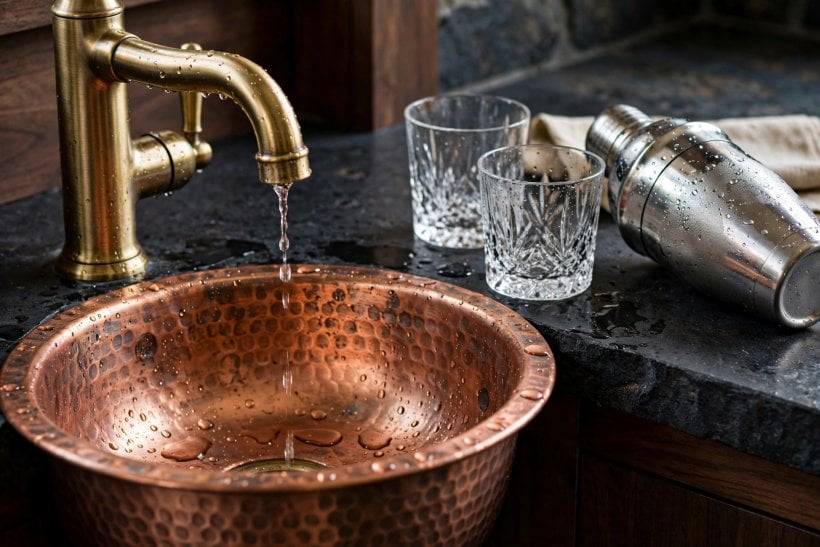
The classic home bar mistakes are predictable: a bar built where nobody gathers, a counter with no knee space, forty bottles displayed and nowhere to put a tray down, glassware for drinks the household never makes. Each is a planning error wearing a shopping receipt, and each shows up in the first month.
Run the checks in serving order. First, the gathering check: does the bar stand where people already stand? Second, the working check: can the host mix, chill, serve and bin without leaving the station or crossing the guests? Third, the display check: is everything visible also used, and everything used also reachable? Fourth, the morning check: can the bar be wiped, closed and left ready in two minutes? A bar that passes all four will be used weekly; a bar that fails the first will be photographed once.
10. Costs and Pulling It Together
A home bar’s costs fall into three honest tiers. The first is the station tier — a counter run, shelves and stools on an existing wall — achievable at furniture money, and where most households should start. The second is the fitted tier: built joinery, a wine fridge, dedicated lighting and a finished back bar, the cost of permanence in a room the household loves. The third is the serviced tier — plumbing, drainage, serious refrigeration — where the bar becomes a small commercial fit-out and deserves a tradesman’s plan rather than a weekend’s enthusiasm.
The pillar’s advice is to climb the tiers in order and let use justify each step: a bar poured from nightly will argue for its own upgrades more honestly than any catalogue. Keep the spending where the hands land — counter surface, stools, light — and let the display grow by editing rather than by buying. The collection, like the bar itself, should be curated faster than it is expanded.
Final Considerations
A home bar is hospitality given an address. Built in the right spot, with a counter that works, shelves that edit and a glow that gathers, it becomes the house’s evening headquarters — the place conversations choose. Built as a display in the wrong room, it is a shelf with delusions.
This pillar holds the whole map: spot, counter, display, storage, seating, atmosphere, and the compact answers that its specialist posts take deeper. Start with the station the household will actually use, in the corner where the evening already gathers — and let every later upgrade answer to that first, correct decision.


0 Comments