
A boy’s bedroom has to be several rooms at once: a place to sleep, study, play, hide treasure and host a best friend, all inside four walls that never get bigger. These seventy-five boy room ideas start with a plan that zones the space, then work through colours, beds, storage and play zones, finishing with the flexible touches that let the room grow up gracefully.
1. Plan the Room in Zones First
Divide the room into sleep, study, storage and play zones, even if each zone is only a rug or a shelf wide. Zoning is what makes small bedrooms feel generous, as these tiny house bedroom ideas prove in far smaller spaces. Keep the bed against the quietest wall, the desk near natural light, and play space where noise bothers nobody, and borrow the zoning discipline from small living room ideas for shared family spaces.
| Zone | Needs | Watch out for |
|---|---|---|
| Sleep | A calm corner, warm light, blackout for early nights | Screens and bright colours at the pillow end |
| Study | Daylight, a chair that fits, power for a lamp | A desk so small homework spreads onto the bed |
| Storage | Reachable shelves and labelled boxes | Storage only an adult can reach or open |
| Play | Clear floor, a rug, toy storage at the edge | Play swallowing the whole room by bedtime |
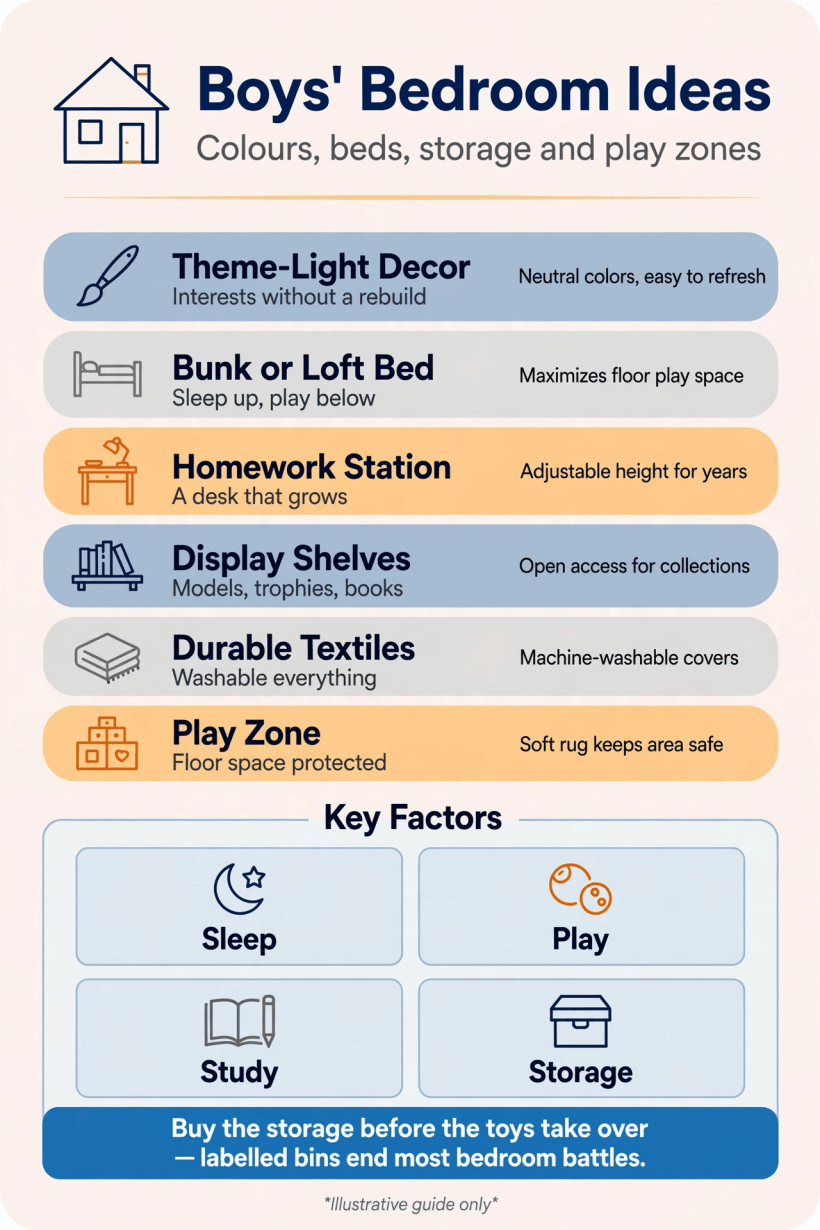
At a glance: zone the room for sleep, study, storage and play before you buy a thing.
1. Sketch the zones on paper: a five-minute plan with bed, desk and play rug placed first prevents expensive furniture that almost fits.
2. Keep a clear floor centre: open floor is the play zone, the dressing zone and the wrestling ring; protect it fiercely from extra furniture.
3. Put the bed in the calm corner: furthest from the door and hallway noise, so sleep stays separate from the room’s busy edges.
4. Face the desk toward light: sideways daylight is kindest for homework, drawing and reading, and reduces screen glare in the afternoon.
5. Give play a boundary: a rug edge or low shelf line tells toys where their territory ends and the walkway begins.
6. Plan power early: lamps, clocks and chargers all need sockets; route cables safely along walls, never across the play floor.
7. Leave one empty wall section: room to grow means a blank space for future posters, shelves or a bigger desk later.
8. Ask the room’s owner: even young children choose colours and themes better when offered two good options instead of twenty.
2. Colours That Last Beyond One Birthday
Colour is the cheapest transformation and the easiest to redo, so be brave on one wall and calm everywhere else. Deep blues, greens and warm greys all pair happily with timber and white, and they survive the jump from dinosaurs to gaming far better than novelty shades. Take confidence from these tiny house interior paint colors, test big swatches in the room’s real light, and keep ceilings pale to hold onto height.
9. Paint one navy feature wall: a single deep wall behind the bed adds drama, hides scuffs and makes white bedding look crisp.
10. Try forest green with oak: green and warm wood feel adventurous without a theme, and suit nature lovers of every age.
11. Use warm grey as the base: a soft neutral background lets bedding, art and toys rotate colour without repainting.
12. Add a colour-blocked reading corner: a painted arch or square in a second colour marks the book nook and costs half a tin.
13. Keep the door and trim playful: painting woodwork in the accent colour is a small commitment with an outsized effect.
14. Choose washable paint: children’s rooms collect fingerprints and mystery marks; a scrubbable finish saves the whole scheme.
15. Repeat the accent three times: cushions, a lamp and one storage box in the same colour make the palette look planned.
16. Let bedding carry the theme: themed duvet covers change in minutes, while walls stay timeless for the next obsession.
3. Beds That Work Harder Than Any Other Furniture
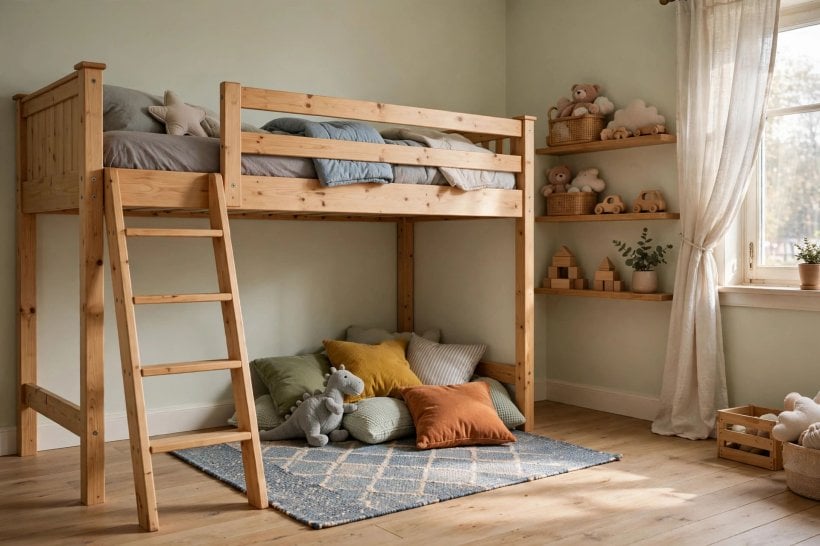
The bed is the room’s biggest object, so make it earn its footprint: storage beneath, a den inside, or a second sleeping spot hidden away. Choose the frame for the next three years, not the next three months, and check guard rails, ladder angles and mattress sizes carefully with the maker. A bed a child can make themselves, with bedding they chose, gets made far more often.
17. Choose a storage bed: deep drawers underneath swallow spare bedding, board games and out-of-season clothes without another furniture piece.
18. Try a cabin bed den: a mid-sleeper with curtains or open space beneath creates a hideaway for reading, dens and quiet time.
19. Add a trundle for sleepovers: a pull-out guest bed beats air mattresses and keeps best-friend visits easy for years.
20. Pick a simple frame that grows: a plain single bed in a standard size outlasts themed frames and accepts any bedding.
21. Build a bedside shelf: a small shelf or caddy holds book, water and clock where a table will not fit.
22. Layer two light sources at the bed: a dimmable main light plus a reading light supports both playtime brightness and bedtime calm.
23. Use a washable throw at the foot: the throw catches snacks, den dust and muddy socks before the duvet does.
24. Keep bedding in two sets only: one on, one washing; more sets create storage problems disguised as generosity.
4. Storage a Child Can Actually Use
Storage only works if small hands can operate it at tidy-up speed. Open cubes, low drawers and labelled boxes succeed where high wardrobes fail, and the system in these tiny house closet design ideas — everything visible, reachable and zoned — is exactly right for children’s rooms. Put daily things at child height, keep a donation box permanently in the room, and let the tidying routine be part of the design, not an afterthought.
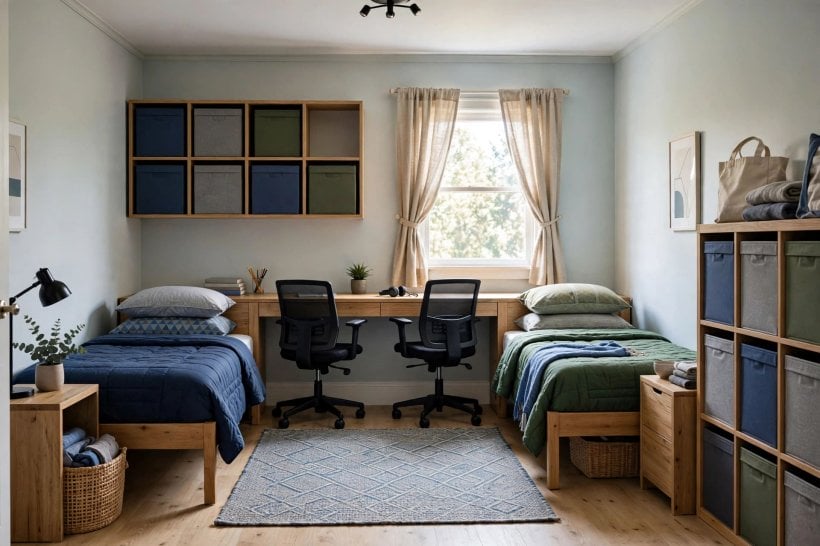
25. Install low cube shelves: cubes at child height become garage, library and shop in one, and tidy-up becomes a sorting game.
26. Label boxes with pictures: picture labels work before reading does, and keep categories honest when friends help tidy.
27. Add a book sling or forward-facing rack: covers facing out invite reading far better than spines on a high shelf.
28. Use under-bed boxes for rotations: swap toy collections monthly and old favourites feel brand new without buying anything.
29. Hang a door organiser: the back of the door holds small treasures, hairbrushes of state and tomorrow’s outfit.
30. Create a treasure drawer: one drawer with no rules, for stones, tickets and mysterious treasures, protects the rest of the system.
31. Fit double hanging rails: two low rails double wardrobe capacity for small clothes and teach outfit independence early.
32. Keep a laundry basket in the room: a basket at the point of undressing beats a daily floor harvest every time.
5. A Study Corner That Grows With School
Homework starts small and grows teeth. A desk that fits an adult-sized chair later, a lamp with proper brightness, and one drawer for supplies will serve from first spellings to exam revision. Position the desk to share the room’s best light, add a pinboard at eye height, and use the planning habits behind these home office ideas in miniature: everything for the task, within reach, in the same place every day.
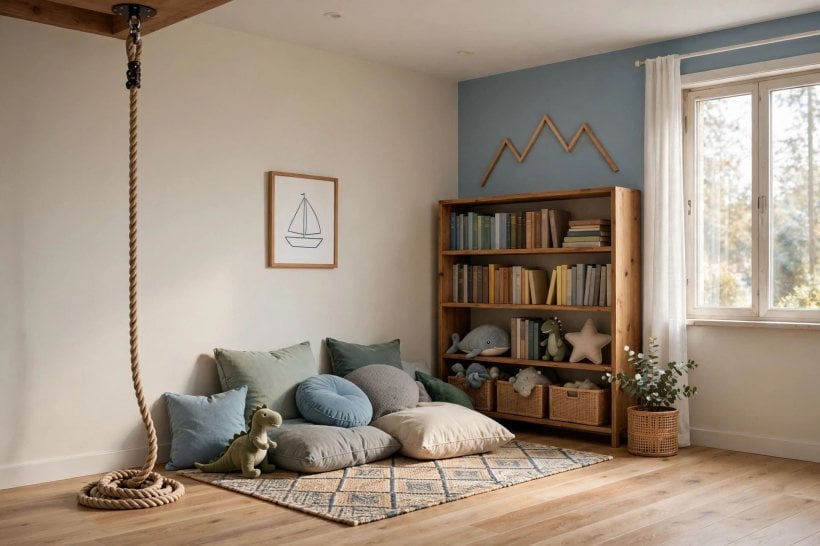
33. Choose a desk with one drawer: pencils, rulers and chargers disappear into the drawer, and the clear top resets for each task.
34. Add a pinboard above the desk: timetables, certificates and postcards get a home that is not the wall itself.
35. Use an adjustable chair: feet flat and elbows level matter for concentration; an adjustable chair keeps pace with growth.
36. Clip a lamp to the desk edge: a clamp lamp saves surface space and aims light exactly at the page.
37. Keep a homework caddy: one portable box of supplies moves between desk, kitchen table and grandparents’ house effortlessly.
38. Make a display shelf for models: finished builds deserve a shelf, or they colonise the desk forever.
39. Route one charging point: a single, supervised spot for devices keeps cables out of bedding and off the floor.
40. Add a small clock: a visible clock builds time awareness better than a phone ever will.
6. Play Zones That Contain the Chaos
Play needs territory, storage at its edge, and a five-minute reset. A rug defines the kingdom, low shelves guard its borders, and one special display place honours today’s creation while yesterday’s returns to the box. Rotate large toys between the room and a store cupboard, keep construction toys in trays that slide under the bed, and remember that the floor is the furniture here — keep it warm, washable and clear of anything fragile.
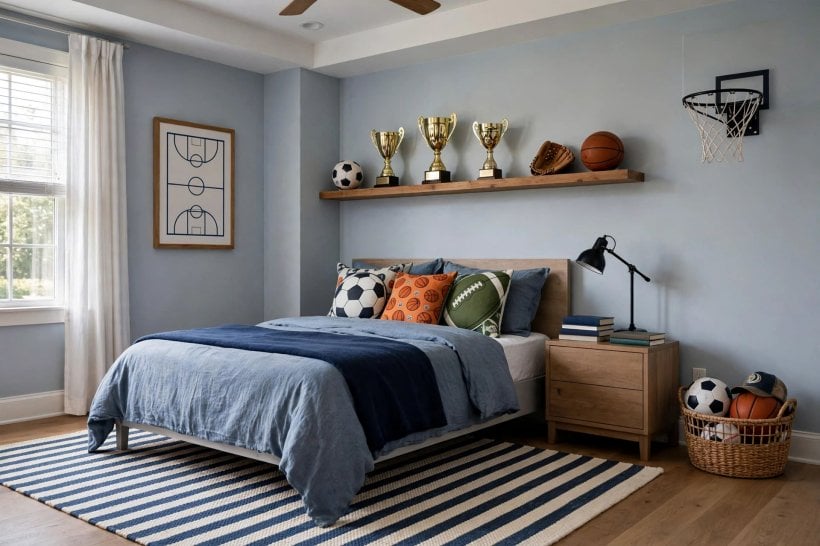
41. Lay a big washable rug: the rug is the play zone boundary, the car mat and the picnic spot in one washable layer.
42. Build a play table with storage: a low table with bins beneath hosts building projects that can pause without being destroyed.
43. Add a dressing-up rail: costumes on a small rail get used daily; costumes in a box get forgotten.
44. Create a reading teepee or canopy corner: a soft corner with cushions gives quiet play a destination equal to the noisy kind.
45. Use trays for small pieces: construction bricks and game pieces live on trays that slide away mid-project, keeping floors barefoot-safe.
46. Keep one toy category out at a time: rotation keeps play fresh and tidy-up achievable in minutes, not negotiations.
47. Add a display ledge for creations: one shelf of honour prevents every surface becoming a museum of unfinished models.
48. Store board games vertically: games filed like books are easier to choose, carry and put back than a teetering stack.
7. Small Rooms and Shared Rooms That Still Feel Fair
In a small or shared room, fairness is a design feature: equal shelves, equal light, and a way for each child to claim a corner. Bunk and L-shaped layouts free floor, curtains create privacy without walls, and matching bedding with personal colours keeps peace. Measure twice, keep the door swing and window completely clear, and give each child one storage unit that is unmistakably, defensibly theirs.
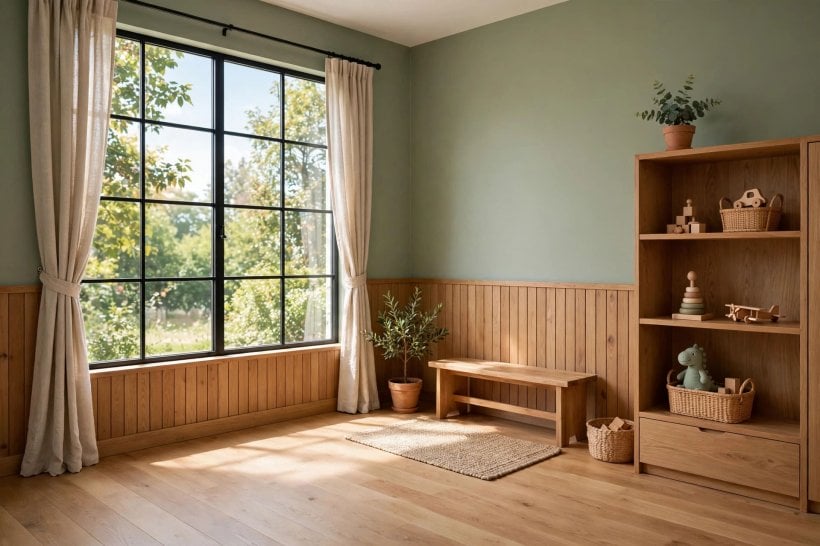
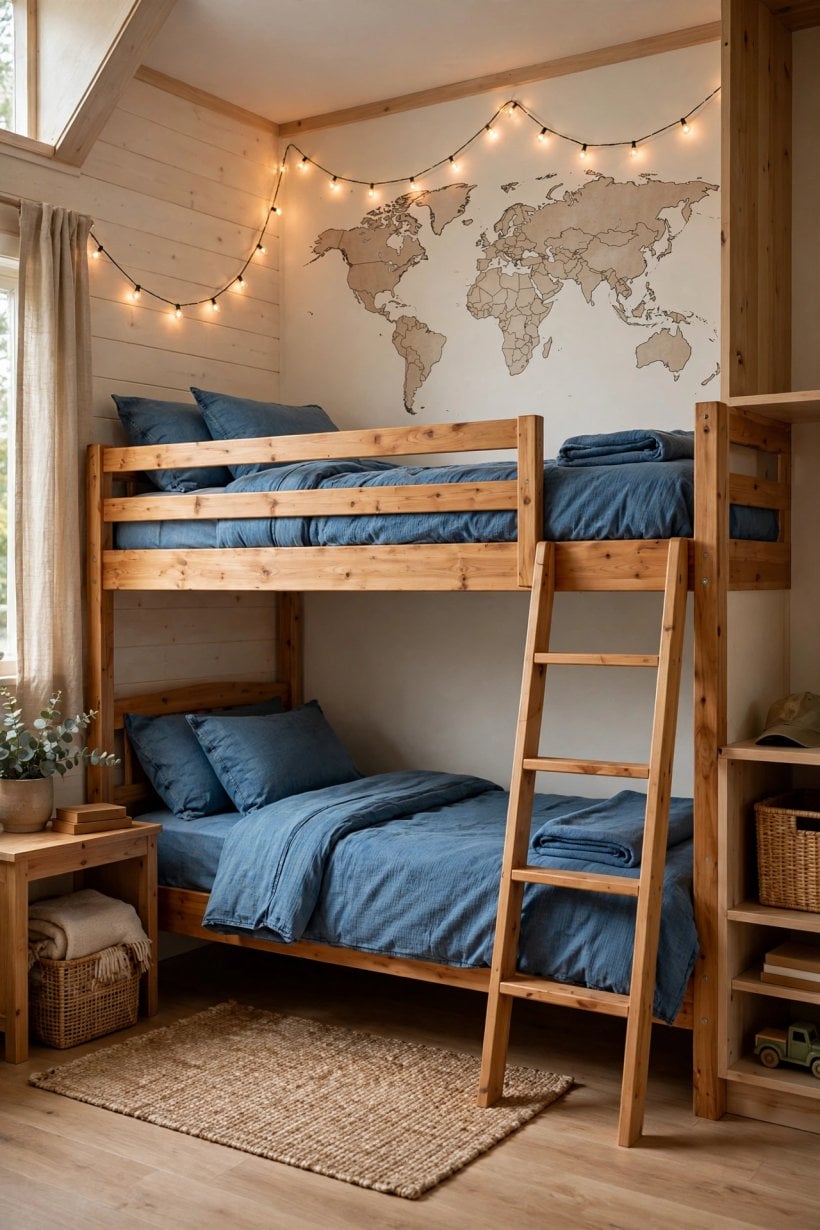
49. Choose bunks with individual lights: each bunk gets its own light, shelf and switch, so one reader never keeps the other awake.
50. Split storage symmetrically: identical cubes or drawers per child ends most territorial disputes before they start.
51. Use curtains for privacy: a bunk curtain or wardrobe curtain gives a sense of a room within the room.
52. Personalise with colour, not furniture: matching furniture with personal bedding colours feels fair and looks calm in photographs.
53. Keep one shared play rug: shared floor in the middle, private corners at the edges is the layout that lasts.
54. Add name labels without shame: labelled drawers and hooks make tidying a sorting task, not a memory test.
55. Use vertical space ruthlessly: high shelves for adult-managed storage keep floor and fairness intact in tight rooms.
56. Plan an escape route: in shared rooms, a beanbag in the hallway or a reading chair elsewhere prevents most storms.
8. Lighting, Safety and Sleep Quality
Bedrooms must be bright for play at 4pm and genuinely dark at bedtime. Layer a ceiling light, a desk lamp and a warm bedside light, then remove every obstacle between a sleepy child and the bathroom: clear floor, a low night light, and cords secured. Check furniture anchoring, blind cords and window latches with fresh eyes each year, and confirm current local safety guidance for anything you are unsure about.
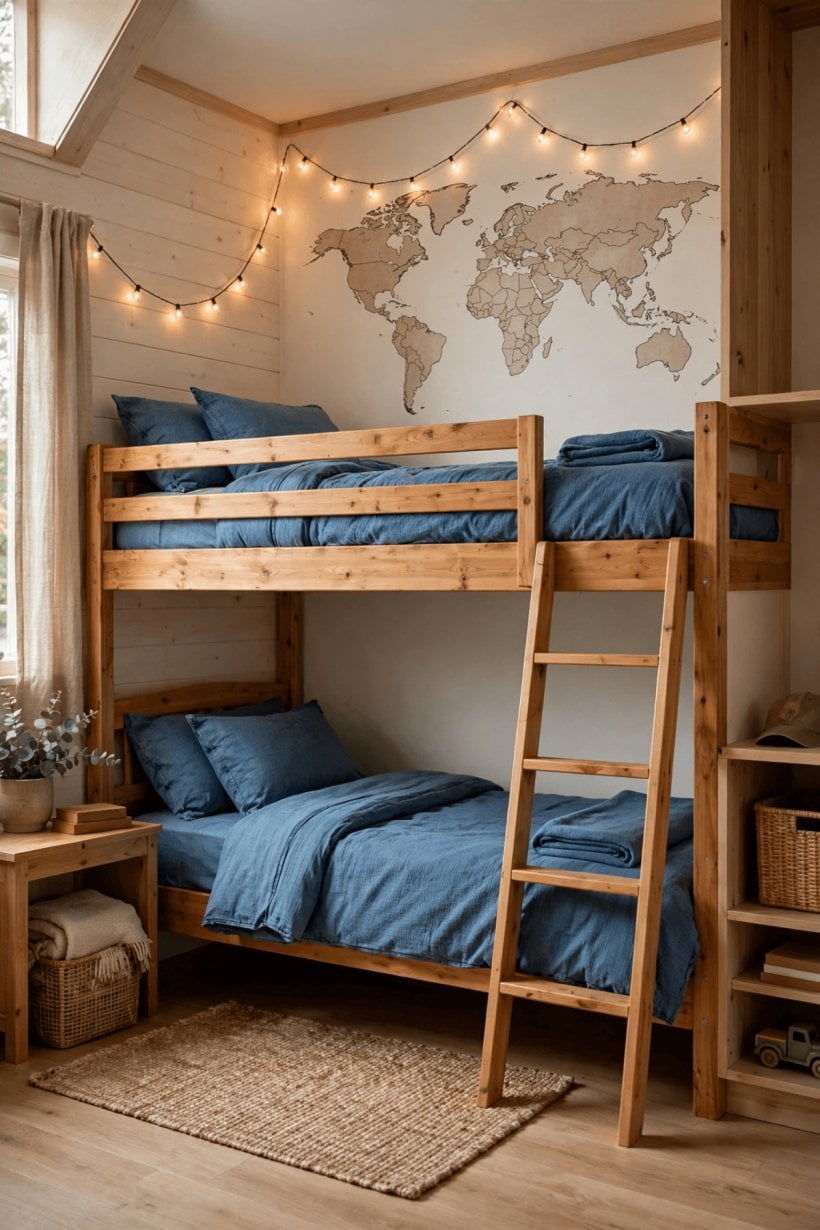
57. Layer three light levels: ceiling, task and bedside lights let the room shift from homework to wind-down without a fight.
58. Fit blackout lining: summer evenings and early sunrises are sleep thieves; blackout curtains or blinds return the dark.
59. Add a low hallway night light: a gentle guide light makes night trips safe without waking the whole house.
60. Anchor tall furniture: wardrobes and bookcases should be fixed to the wall as makers direct, especially with climbers in residence.
61. Secure blind cords: use cordless blinds or cleats, and check current local guidance when you fit them.
62. Keep the floor route clear: a nightly five-minute reset keeps the path from bed to door safe for sleepy feet.
63. Choose a warm bedtime bulb: warmer light signals sleep far better than bright white, and makes stories feel cosier.
64. Put a dimmer or smart bulb on a timer: lights that fade at the same time nightly build a routine children can trust.
9. Decor, Themes and Personal Touches
Themes are happiest in the layers that change cheaply: bedding, posters, cushions and one brilliant wall sticker. Let interests lead — space, sport, animals, maps, music — but express them in objects that can retire gracefully. A gallery wall that can grow, a shelf for collections, and art the child chose themselves will always beat a matched theme set, and photographs of family and friends belong here too.
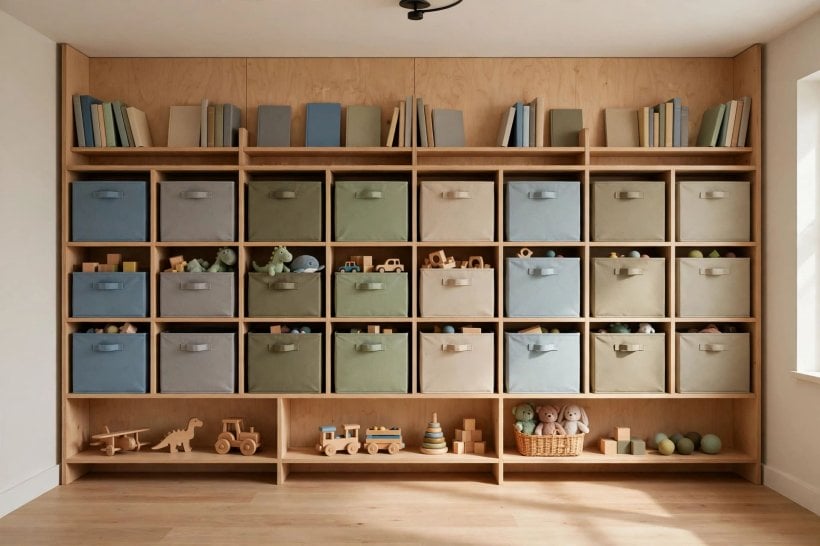
65. Start a gallery wall: framed drawings, posters and photos in matching frames look intentional and update one print at a time.
66. Add a world map: a map invites questions, marks travels and quietly teaches geography for years.
67. Display collections on one shelf: rocks, cars or trophies on a single shelf look curated; everywhere looks cluttered.
68. Use removable wall stickers: big impact, zero commitment, and they leave with the interest that inspired them.
69. Hang a growth chart: a chart on the door frame records the years in the room where they happen.
70. Frame their own art properly: one good frame with rotating art honours creativity more than a wall of blu-tack.
10. Growing Up: Flexibility for the Teen Years
The best children’s rooms are adolescent rooms in disguise. A full-size bed, a real desk, a neutral base and storage that accepts bigger clothes and bigger hobbies mean the teen update is bedding, art and a better chair — not a refit. Keep one piece of the childhood room, a framed picture or the reading chair, because continuity matters at thirteen just as much as novelty.
71. Buy the full-size bed early: if the room fits it, a standard single or small double ends bed-buying for a decade.
72. Choose a desk that fits a laptop and books: teen homework needs elbow room, a monitor position and space for a friend to join.
73. Add a proper chair and a floor cushion: teens live at desk and floor level in equal measure; serve both.
74. Upgrade storage to closed fronts: older children prefer doors and drawers over open cubes of childhood evidence.
75. Let the teen re-style one wall: a single wall of their choosing marks the transition without repainting the whole room.
Final Considerations
Plan zones before furniture, choose colours that can grow, make the bed and storage work double duty, and keep themes in the layers that change cheaply. A boy’s bedroom succeeds when its owner can find things, host a friend, finish homework and actually sleep — and when tidying takes minutes because the room was designed for the child who lives in it. Check sizes and safety guidance locally, involve the room’s owner in every choice you can, and let the room evolve one good idea at a time.


0 Comments