
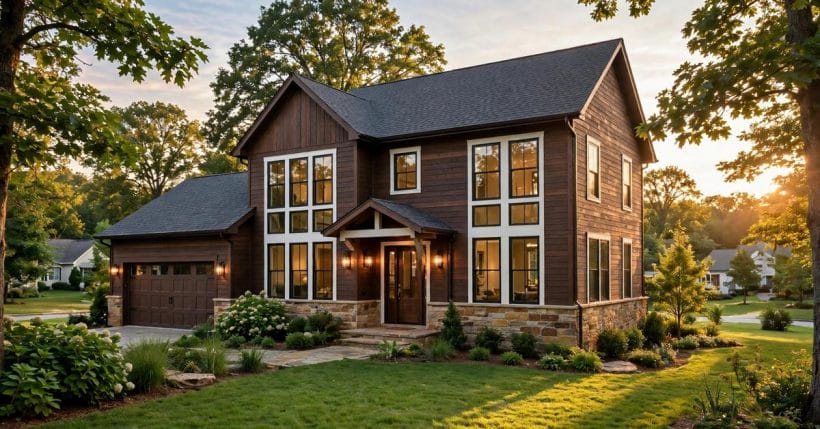
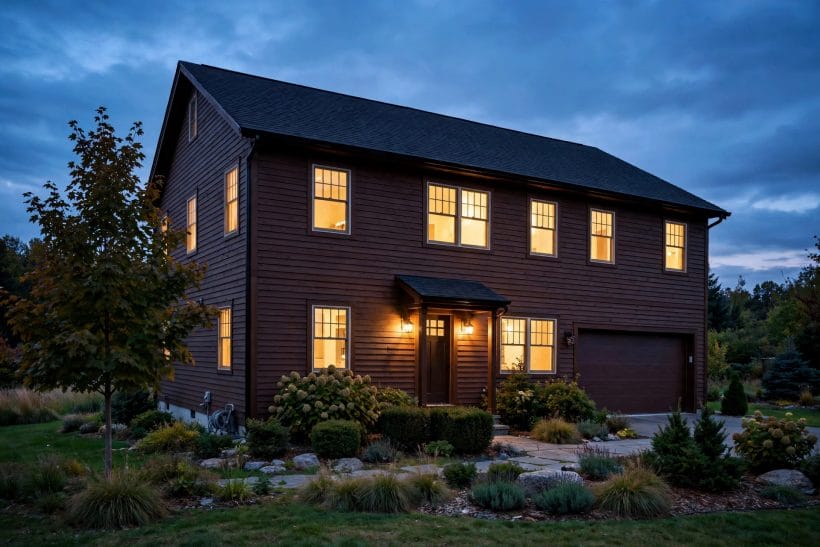
A brown home exterior has a warmth that few other colours can match, because brown carries the tones of timber, earth and stone all at once. It can feel rustic on a cabin, calm on a rendered modern house, or grand on a large family home with stone details, and it changes beautifully through the day as the light moves across it. This guide gathers seventy-five ideas for brown exteriors in general terms, covering siding, trim, roofing, doors, windows, stone and brick, landscaping, paths, lighting and upkeep, so you can compare looks and practical details before settling on a direction for your own home.
One note before the ideas begin: this guide describes finishes, pairings and practical points in general terms, and it names no paint codes and no prices. Costs are discussed only through the drivers that shape a quote, and any structural, roofing or electrical work is noted as work for qualified professionals. The single phrase for this kind of home, a brown exterior house, appears here and once more in the closing section, and the rest of the guide simply talks about brown homes, brown walls and brown exteriors in everyday language.
1. Brown Siding Materials and Finishes
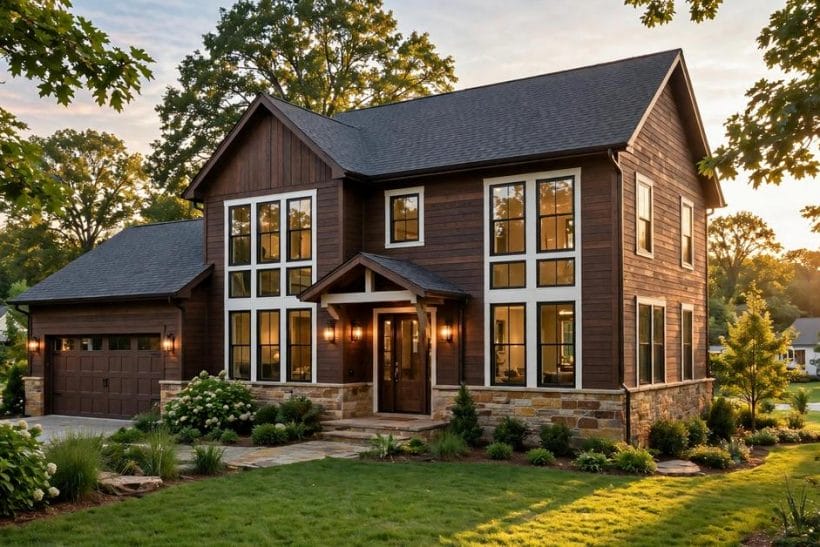
Siding sets the whole mood of a brown home, because it covers the largest area the street sees. The material you choose decides whether the house reads rustic or refined, and the shade decides whether it feels warm at dusk or grounded at noon. The ideas below stay in general terms, describing finishes and tones rather than naming products, so you can compare them by look, upkeep and feel before talking to a supplier or a tradesperson. For the base of the walls, see these skirting ideas for smaller homes.
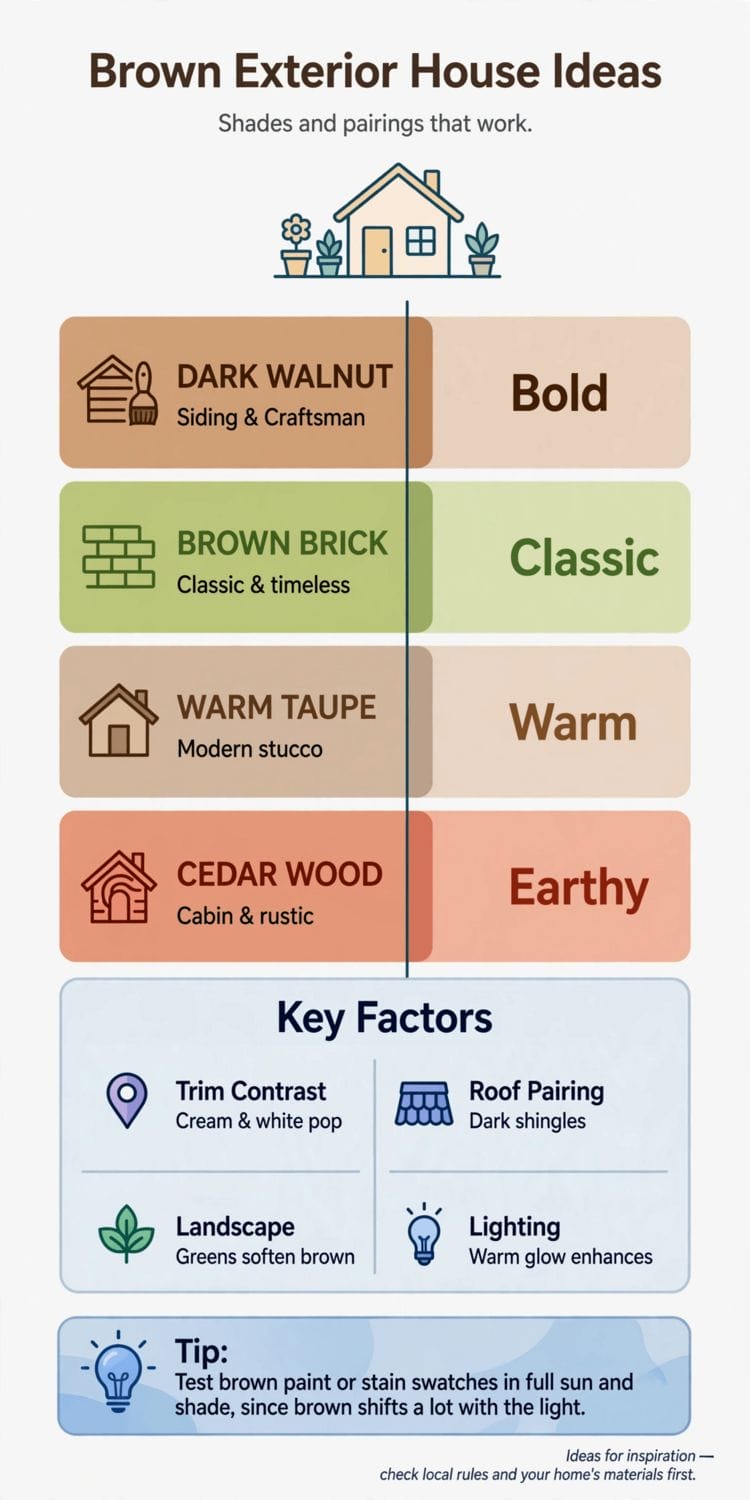
| Item | What it is |
|---|---|
| Horizontal timber boards in warm walnut | Horizontal boards are the classic brown exterior, and a warm walnut tone gives them a richness that reads well from the street and from the garden path. |
| Vertical board-and-batten in deep bark brown | Vertical boards draw the eye upward, which suits taller, narrower houses and any home that wants a little more presence without extra bulk. |
| Cedar-look cladding in honey brown | A honey brown cladding gives a house a sunny, welcoming face even on grey days, because the tone carries warmth without shouting. |
| Smooth rendered walls in soft mocha | Smooth render in soft mocha turns a brown house into something calm and contemporary, because the flat surface lets the colour itself do all the talking. |
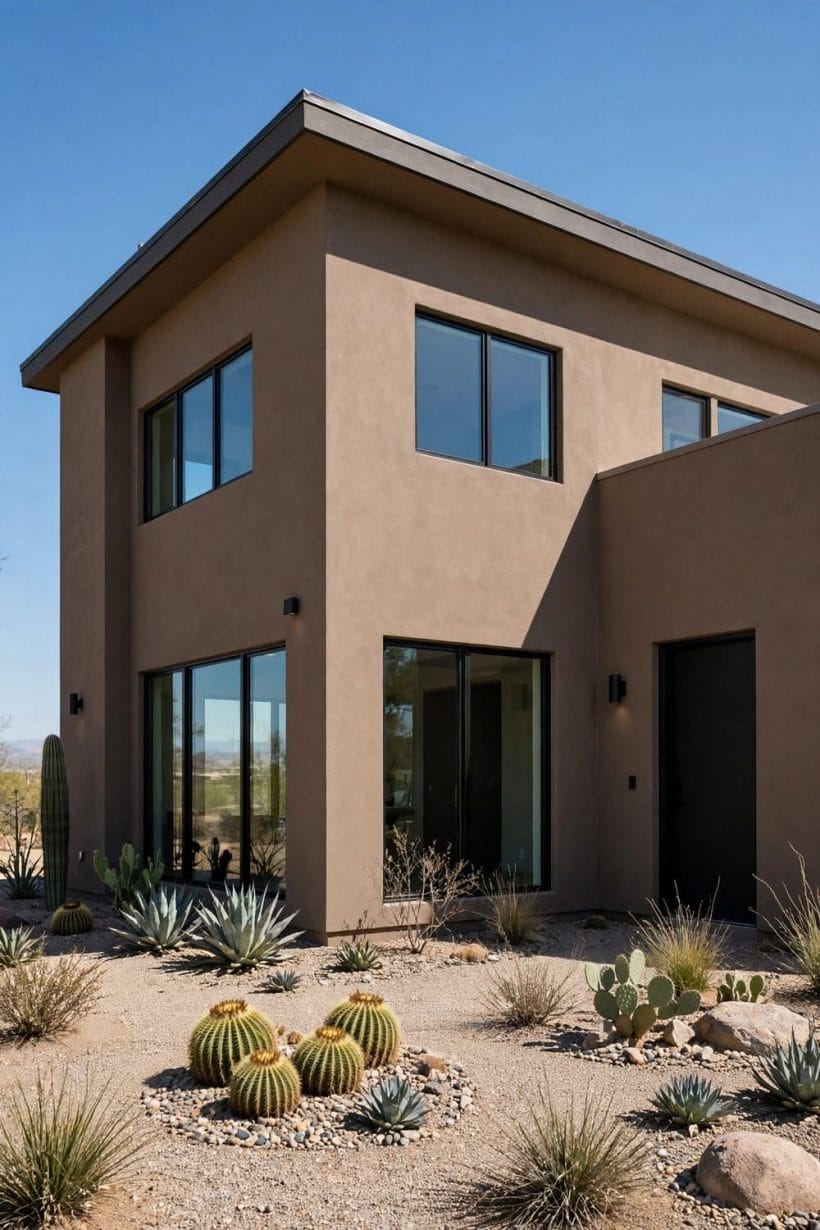
| Textured stucco in warm cocoa | Textured stucco in warm cocoa adds a hand-finished feel that suits Mediterranean and Spanish-inspired homes as well as plain modern boxes. |
| Fibre-cement boards in chestnut brown | Fibre-cement boards in chestnut brown offer the look of painted timber with a steadier, more even finish across large walls. |
| Log-style cladding in russet brown | Log-style cladding in russet brown gives a house an instant cabin character, with rounded or squared profiles that read as honest timber from a distance. |
| Mixed-width boards for a hand-crafted face | Mixed-width boards break the strict rhythm of uniform siding and give a brown house a hand-crafted, slightly rustic feel. |
| Cream trim against chocolate siding | Cream trim is the simplest way to lift a chocolate brown house, because the pale lines around windows and doors give the eye places to rest. |
| Warm white fascia boards | Warm white fascia boards draw a clean line where the walls meet the roof, which is especially valuable on a dark brown house that might otherwise look top-heavy. |
| Soft stone trim around windows | Soft stone trim around windows adds weight and permanence to a brown house, giving each opening a sense of being properly built rather than simply cut out. |
| Dark bronze window frames | Dark bronze window frames give a brown house a tailored, contemporary edge, because the frames sit close to the wall colour while still defining each window. |
| Natural timber corner boards | Natural timber corner boards finish the edges of a brown house with warmth, especially on timber-clad homes where painted corners would look fussy. |
| Pale stone sills and lintels | Pale stone sills and lintels give brown walls a quiet rhythm, marking each window with a light horizontal line that stops the facade feeling flat. |
| Muted sage accents | Muted sage accents offer a gentle, leafy counterpoint to brown walls without pulling attention away from the house itself. |
| Charcoal gutters and downpipes | Charcoal gutters and downpipes give a brown house a tidy, grounded outline, because the dark lines at the roof edge and wall corners echo the deepest tones in the siding. |
| Dark grey-brown shingles | Dark grey-brown shingles are a safe, handsome partner for brown walls, because they sit just darker than the siding and let the walls carry the warmth. |
| Warm terracotta roof tiles | Warm terracotta roof tiles bring a sun-baked glow to a brown house, and the pairing feels instantly Mediterranean or Spanish in character. |
| Standing-seam metal in dark bronze | Standing-seam metal in dark bronze gives a brown house a crisp, contemporary roofline, with long clean lines that suit simple house shapes and modern extensions. |
| Slate-look roofing in soft grey | Slate-look roofing in soft grey cools a brown house just enough to keep it feeling fresh, especially on larger homes where a warm roof might overwhelm the walls. |
| Timber-look shakes on the roof | Timber-look shakes on the roof echo timber siding below, giving a brown house a unified, cabin-like character from eaves to ridge. |
| Low-contrast roof edges | Low-contrast roof edges keep a brown house looking calm by letting the roof colour sit close to the wall colour, so the building reads as one solid form rather than a stack of competing bands. |
| Wide eaves with timber soffits | Wide eaves with timber soffits give a brown house shelter and shadow in equal measure, because the overhang protects the walls while the timber underside adds warmth overhead. |
| Chimney finishes that match the walls | A chimney finished to match the walls stops the roofline feeling like an afterthought, because the tallest element of the house stops competing with the rest. |
| A deep walnut front door | A deep walnut front door is the natural centrepiece of a brown house, because it deepens the wall colour at exactly the point where visitors arrive. |
| A red-brown painted door for warmth | A red-brown painted door adds a gentle glow to a brown house, warming the entry the way lamplight warms a room. |
| A timber door with glazed panels | A timber door with glazed panels softens a brown entry by letting a little light through, which matters on dark-walled houses that can feel closed in. |
| A covered porch in matching brown | A covered porch in matching brown extends the house toward the garden and gives visitors shelter, shade and a place to pause. |
| Porch columns in cream and brown | Porch columns in cream and brown give an entry a classic, balanced look, because the two tones divide the column into a base and a shaft that feel properly proportioned. |
| A stone step and threshold | A stone step and threshold ground a brown entry beautifully, because stone adds a cool, solid note beside all that warm timber and render. |
| Entry lanterns in dark bronze | Entry lanterns in dark bronze flatter brown walls after dark, because their warm glow and dark metalwork sit comfortably against chocolate and walnut tones. |
| A bench and planters by the door | A bench and planters by the door turn a brown entry from a threshold into a welcome, giving visitors somewhere to sit and something green to look at while they wait. |
| Cream shutters on chocolate walls | Cream shutters on chocolate walls are a timeless pairing, because the pale panels break the dark wall into a friendly rhythm of light and shade. |
| Timber shutters in natural stain | Timber shutters in natural stain suit brown houses that lean rustic, because the wood-on-wood pairing feels warm and unforced. |
| Dark-framed windows for contrast | Dark-framed windows give a brown house a crisp, modern rhythm, because each opening reads as a clean dark rectangle against the warmer walls. |
| Window boxes with trailing plants | Window boxes with trailing plants soften brown walls in the most charming way, because green and flowers spill down over chocolate and mocha siding like a garden deciding to join the house. |
| Brass-look door hardware | Brass-look door hardware adds a small note of polish to a brown entry, because a warm metallic handle and letterbox catch the light against a dark door. |
| House numbers in a clear, simple style | House numbers in a clear, simple style do a practical job beautifully on a brown house, because visitors and deliveries need to find the door without hunting. |
| Shutter dogs and hinges in dark metal | Shutter dogs and hinges in dark metal are the small blacksmith details that make shutters on a brown house feel properly finished. |
| Warm brown brick plinth | A warm brown brick plinth anchors a brown house to its site, because the base of the walls gains a solid, masonry weight that siding alone cannot provide. |
| Fieldstone around the base | Fieldstone around the base gives a brown house a rugged, country footing, because the irregular stones contrast beautifully with flat siding or smooth render above. |
| A stone chimney breast | A stone chimney breast gives a brown house a strong vertical accent, drawing the eye up the facade and balancing a long, low roofline. |
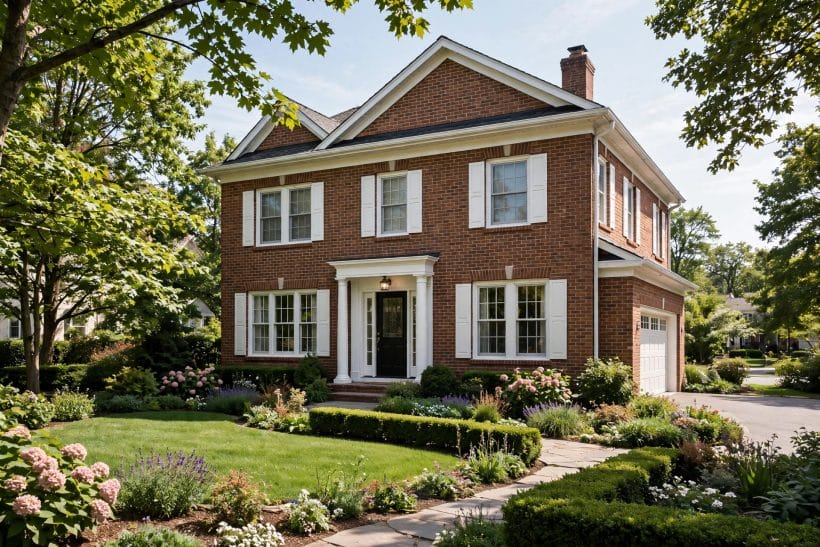
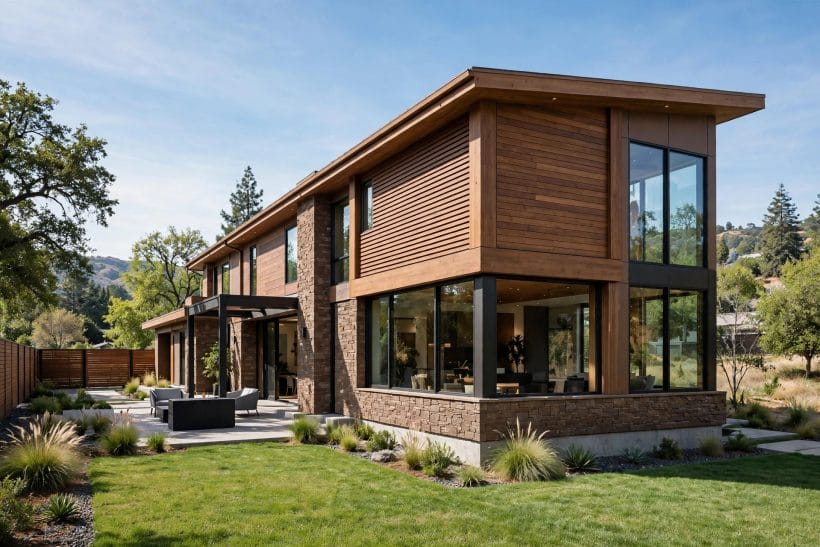
| Brick and timber together | Brick and timber together are a natural pairing for a brown house, because the masonry adds permanence while the timber adds warmth. |
| Stone veneer on the porch piers | Stone veneer on the porch piers gives an entry a sense of being built to last, because the solid piers carry the porch roof visually as well as structurally. |
| A low garden wall in matching brick | A low garden wall in matching brick extends the brown house into its garden, turning the front boundary into part of the architecture rather than an afterthought. |
| Mixed siding and stone gables | Mixed siding and stone gables give a brown house a layered, crafted face, because the gable becomes a feature panel while the siding carries the main walls. |
| A feature wall in darker brown | A feature wall in darker brown adds depth to a brown house without introducing a new colour, because the darkest wall becomes a quiet backdrop for the entry or a garden seating area. |
| Green shrubs against brown walls | Green shrubs against brown walls are the easiest win in front-garden design, because every green tone flatters every brown tone. |
| Ornamental grasses by the path | Ornamental grasses by the path bring movement and softness to a brown house, because their fine blades catch the light and sway in the breeze beside solid walls. |
| White and cream flowers for lift | White and cream flowers lift a brown house the way cream trim does, giving the garden pale notes that stop dark walls feeling heavy. |
| A lawn edged with warm gravel | A lawn edged with warm gravel gives a brown house a tidy, natural frame, because the gravel strip keeps the grass off the walls and the paths while adding a warm tone of its own. |
| Climbing plants on a side wall | Climbing plants on a side wall soften a brown house with living texture, turning a plain flank into a green tapestry through the seasons. |
| Evergreen structure for winter colour | Evergreen structure keeps a brown house looking composed through winter, when deciduous planting has dropped its leaves and the walls carry the whole scene. |
| A small tree to frame the house | A small tree to frame the house gives a brown home scale and softness, because a single well-placed tree breaks the roofline and casts gentle shade across the walls. |
| A gravel path in warm tones | A gravel path in warm tones leads visitors to a brown house on a surface that feels natural underfoot and looks right beside brown walls. |
| Stone pavers to the front door | Stone pavers to the front door give a brown house a solid, generous arrival, because large flat stones feel substantial and look calm beside warm walls. |
| A brick-edged driveway | A brick-edged driveway frames the arrival at a brown house with a warm, crafted border, because the brick line ties the drive to the house plinth and garden walls. |
| A timber pergola in stained brown | A timber pergola in stained brown extends the brown house into the garden, creating a shaded outdoor room that feels like part of the architecture. |
| A garden shed that matches the house | A garden shed that matches the house stops the garden feeling like two different properties, because the shed carries the same brown family and trim as the main building. |
| A fence in weathered brown | A fence in weathered brown gives a brown house a boundary that feels like part of the garden rather than a barrier around it. |
| A gate in darker stained timber | A gate in darker stained timber marks the entry to a brown house with a satisfying sense of arrival, because the darker gate reads as a deliberate threshold in the lighter fence line. |
| Outdoor seating in natural timber | Outdoor seating in natural timber completes a brown house garden, because timber benches and chairs echo the siding and pergola without matching them exactly. |
| Warm wall lights by the door | Warm wall lights by the door flatter a brown house after dark, because their golden glow deepens the wall colour instead of washing it out. |
| Path lights in low, soft glow | Path lights in low, soft glow guide visitors to a brown house without turning the garden into a runway, because small, low fittings throw gentle pools of light exactly where feet need them. |
| Uplights that graze the walls | Uplights that graze the walls show off a brown house at night, because light washing up timber, render or stone reveals texture that daylight flattens. |
| Porch ceiling light in warm white | A porch ceiling light in warm white turns a covered entry into a welcoming room after dark, because the overhead glow fills the sheltered space evenly. |
| Step lights for safe evenings | Step lights make a brown house safer after dark, because each tread glows gently and the way to the door stays obvious even on the darkest night. |
| Lanterns on posts by the drive | Lanterns on posts by the drive give a brown house a gracious arrival after dark, because the paired lights mark the entrance the way gateposts do by day. |
| Timer and sensor controls | Timer and sensor controls keep a brown house lit sensibly, because the lights come on as dusk falls and switch off when they are no longer needed. |
Idea 1: Horizontal timber boards in warm walnut
Horizontal boards are the classic brown exterior, and a warm walnut tone gives them a richness that reads well from the street and from the garden path. Keep the boards in one steady shade across the main walls, and let the natural grain show through a clear or lightly tinted finish rather than hiding it under a heavy opaque coat. The result feels crafted and calm, and it pairs easily with cream trim, stone steps and green planting that softens the base of the walls.
Idea 2: Vertical board-and-batten in deep bark brown
Vertical boards draw the eye upward, which suits taller, narrower houses and any home that wants a little more presence without extra bulk. A deep bark brown keeps the look grounded and woodland-like, especially when the battens are narrow and the shadows between them stay soft. Pair it with simple trim and a plain door so the vertical rhythm stays the star, and keep planting low near the walls so the boards stay visible and dry.
Idea 3: Cedar-look cladding in honey brown
A honey brown cladding gives a house a sunny, welcoming face even on grey days, because the tone carries warmth without shouting. It works beautifully on smaller homes and cabins, where a lighter brown keeps the building feeling friendly rather than heavy. Match it with warm white trim and a door in a deeper brown, and let the garden do the rest with grasses and shrubs that echo the honey tone in autumn.
Idea 4: Smooth rendered walls in soft mocha
Smooth render in soft mocha turns a brown house into something calm and contemporary, because the flat surface lets the colour itself do all the talking. Without grain or joints to catch the eye, the walls feel quiet and generous, which suits simple house shapes and clean rooflines. Add pale stone sills and a dark bronze door for contrast, and keep the landscaping loose and green so the smooth walls never feel bare.
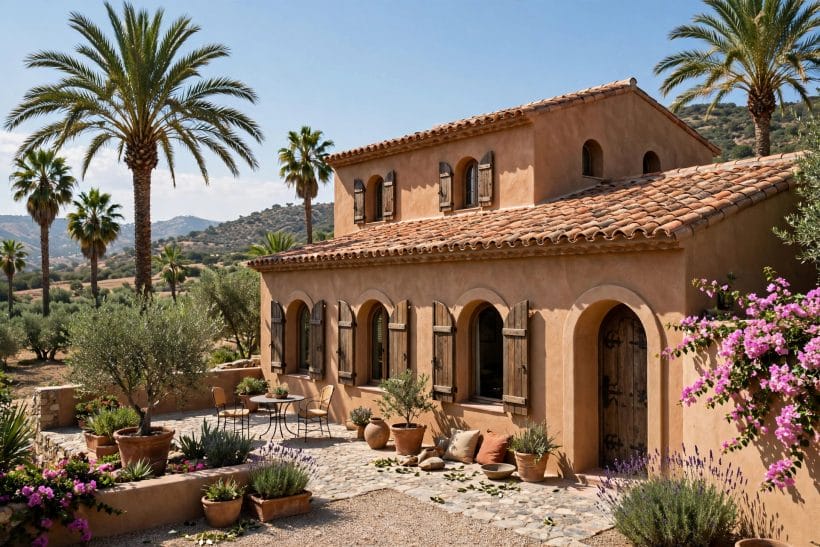
Idea 5: Textured stucco in warm cocoa
Textured stucco in warm cocoa adds a hand-finished feel that suits Mediterranean and Spanish-inspired homes as well as plain modern boxes. The texture catches light and shadow through the day, so the walls shift gently from morning to evening instead of sitting flat. Keep the trim simple and pale, choose a door in a deeper chocolate tone, and let terracotta pots and warm gravel complete a palette that feels sun-baked and relaxed.
Idea 6: Fibre-cement boards in chestnut brown
Fibre-cement boards in chestnut brown offer the look of painted timber with a steadier, more even finish across large walls. The chestnut tone sits comfortably between light honey and dark chocolate, which makes it one of the easiest browns to pair with stone, brick and planting. Use it on the main walls, keep the corners and fascia crisp in a warm white, and let a timber door and natural stone path add the organic touches the boards themselves keep understated.
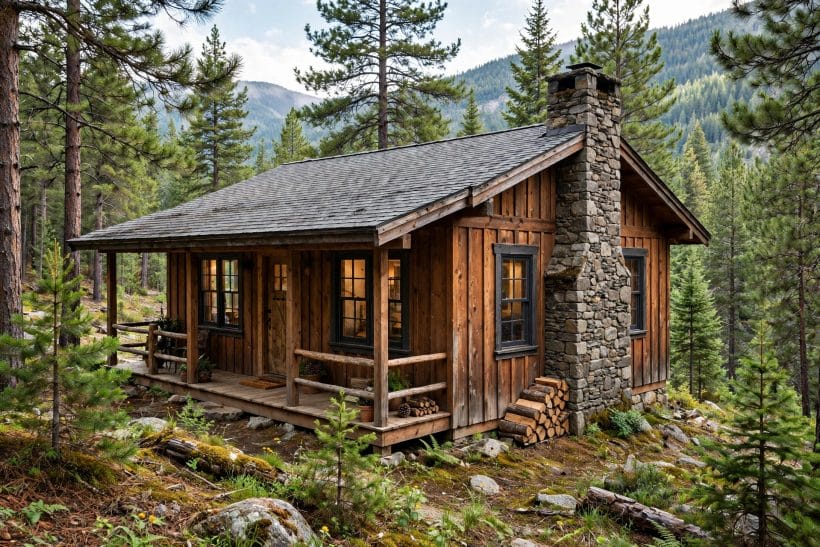
Idea 7: Log-style cladding in russet brown
Log-style cladding in russet brown gives a house an instant cabin character, with rounded or squared profiles that read as honest timber from a distance. The russet tone carries a reddish warmth that glows in low evening light and sits beautifully against pine trees and woodland gardens. Keep the trim in a natural timber tone rather than bright white, choose a simple solid door, and let stone footings and a gravel path finish the woodland picture.
Idea 8: Mixed-width boards for a hand-crafted face
Mixed-width boards break the strict rhythm of uniform siding and give a brown house a hand-crafted, slightly rustic feel. Wider boards anchor the lower walls while narrower ones add detail higher up, and a single steady brown keeps the mix feeling deliberate rather than patched. This treatment suits farmhouses and country homes best, especially with a stone base, a timber porch and planting that is allowed to grow a little wild at the edges.
2. Trim, Fascia and Accent Pairings
Trim is the frame around the picture, and on a brown house it does more work than most people expect. A pale fascia can lift a dark wall, while a dark gutter line can ground a pale one. The pairings below keep the brown walls as the main voice and let the accents support them, so the house looks settled rather than busy.
Idea 9: Cream trim against chocolate siding
Cream trim is the simplest way to lift a chocolate brown house, because the pale lines around windows and doors give the eye places to rest. Paint the window frames, corner boards and fascia in one steady cream rather than mixing several whites, so the trim reads as a single calm frame. The contrast also helps the house look cared for from the street, and it makes the front door stand out without needing a bold door colour at all.
Idea 10: Warm white fascia boards
Warm white fascia boards draw a clean line where the walls meet the roof, which is especially valuable on a dark brown house that might otherwise look top-heavy. The warmth in the white matters: a cool, stark white can clash with brown walls, while a warm white feels like part of the same family. Keep the gutters in a quiet dark tone so the fascia line stays crisp, and let the roof colour sit just darker than the walls for a settled silhouette.
Idea 11: Soft stone trim around windows
Soft stone trim around windows adds weight and permanence to a brown house, giving each opening a sense of being properly built rather than simply cut out. Pale limestone-look sills and lintels work well against chocolate and mocha walls, while warmer sandstone tones suit honey and caramel siding. Keep the stone pieces simple and uncarved so they feel timeless, and repeat the same stone at the doorstep so the house reads as one composition.
Idea 12: Dark bronze window frames
Dark bronze window frames give a brown house a tailored, contemporary edge, because the frames sit close to the wall colour while still defining each window. This treatment suits modern homes and extensions, where slim frames and large panes matter more than decorative trim. Pair the bronze frames with a matching dark door handle and simple house numbers, and keep the surrounding walls in a mid-brown so the windows do not disappear entirely into the dark.
Idea 13: Natural timber corner boards
Natural timber corner boards finish the edges of a brown house with warmth, especially on timber-clad homes where painted corners would look fussy. A clear-finished timber corner in a tone close to the siding ties the walls together, while a slightly darker corner adds definition without introducing a new colour. Keep the boards straight and well sealed, and let them weather gracefully by planning a regular care cycle for all exposed timber on the house.
Idea 14: Pale stone sills and lintels
Pale stone sills and lintels give brown walls a quiet rhythm, marking each window with a light horizontal line that stops the facade feeling flat. They work on rendered, brick and clad homes alike, because stone sits comfortably beside almost every brown tone. Choose one stone colour for the whole house, keep the profiles simple, and repeat the same stone at the base of the walls or on the porch piers so the detail feels intentional rather than added as an afterthought.
Idea 15: Muted sage accents
Muted sage accents offer a gentle, leafy counterpoint to brown walls without pulling attention away from the house itself. Use sage sparingly, perhaps on shutters, a garden gate or a bench, so it reads as a soft echo of the planting rather than a competing colour. The combination feels calm and natural, especially on country and cottage-style homes, and it keeps the brown walls firmly in charge of the overall impression.
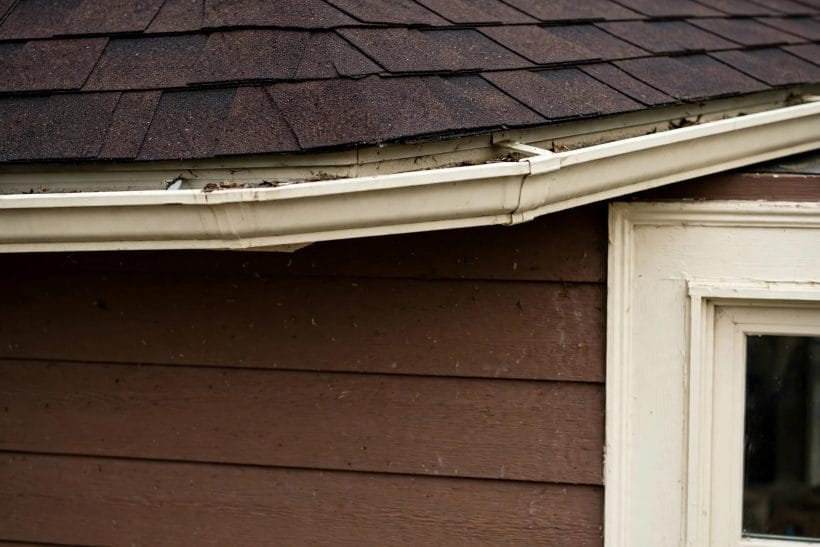
Idea 16: Charcoal gutters and downpipes
Charcoal gutters and downpipes give a brown house a tidy, grounded outline, because the dark lines at the roof edge and wall corners echo the deepest tones in the siding. They are less demanding than white gutters, which show every mark, and they suit both modern and traditional homes. Keep the fascia in a warm pale tone for contrast, and make sure downpipes are placed neatly at corners and beside doors rather than running across the middle of a wall.
3. Roofing Pairings for Brown Exteriors
A roof is a large, quiet surface, and its tone either settles a brown house or fights it. The pairings below describe roof finishes in general terms, from shingles to metal, and note where a roof edge, eave or chimney can tie the whole composition together. Roofing work belongs to qualified professionals throughout, including any work at height or around chimneys.
Idea 17: Dark grey-brown shingles
Dark grey-brown shingles are a safe, handsome partner for brown walls, because they sit just darker than the siding and let the walls carry the warmth. The grey in the shingle keeps the roof from looking reddish or orange beside the brown, which matters in bright sunlight. This pairing suits almost every house style, from cottages to modern boxes, and it gives the whole building a settled, weather-ready look that ages gracefully.
Idea 18: Warm terracotta roof tiles
Warm terracotta roof tiles bring a sun-baked glow to a brown house, and the pairing feels instantly Mediterranean or Spanish in character. The roof becomes the warmest element in the composition, so keep the walls in a softer mocha or cocoa rather than a deep chocolate, and let cream trim mediate between roof and walls. Terracotta suits low-pitched roofs and courtyards best, and it pairs beautifully with warm gravel, pots and drought-tolerant planting.
Idea 19: Standing-seam metal in dark bronze
Standing-seam metal in dark bronze gives a brown house a crisp, contemporary roofline, with long clean lines that suit simple house shapes and modern extensions. The bronze tone harmonises with brown walls while adding a subtle metallic sheen that changes with the light. Roofing and any work at height belong to qualified professionals, and the metal finish rewards a simple facade, so keep wall details and trim quiet and let the roof lines speak.
Idea 20: Slate-look roofing in soft grey
Slate-look roofing in soft grey cools a brown house just enough to keep it feeling fresh, especially on larger homes where a warm roof might overwhelm the walls. The grey reads as a neutral sky tone, so it flatters chocolate, walnut and chestnut siding alike. Pair it with pale stone trim and a dark bronze or timber door, and let the roof’s quiet colour give the brown walls room to be the warm heart of the house.
Idea 21: Timber-look shakes on the roof
Timber-look shakes on the roof echo timber siding below, giving a brown house a unified, cabin-like character from eaves to ridge. The shake texture adds shadow and depth that flat roofing cannot match, which suits rustic and woodland settings particularly well. Keep the wall brown a touch lighter than the roof so the house does not look top-heavy, and leave all roof work, including any repairs, to qualified roofing professionals.
Idea 22: Low-contrast roof edges
Low-contrast roof edges keep a brown house looking calm by letting the roof colour sit close to the wall colour, so the building reads as one solid form rather than a stack of competing bands. This treatment suits modern homes and small houses, where a high-contrast roofline can chop the building into pieces. Choose a roof tone just one step darker than the walls, keep the fascia simple, and let the door and planting provide the accents instead.
Idea 23: Wide eaves with timber soffits
Wide eaves with timber soffits give a brown house shelter and shadow in equal measure, because the overhang protects the walls while the timber underside adds warmth overhead. The soffit colour should sit close to the siding or a shade darker, so the eaves feel like a natural extension of the walls. This detail suits craftsman and farmhouse styles best, and any work on eaves, fascias or rooflines should be handled by qualified professionals working safely at height.
Idea 24: Chimney finishes that match the walls
A chimney finished to match the walls stops the roofline feeling like an afterthought, because the tallest element of the house stops competing with the rest. Render it in the same brown, clad it in matching boards, or face it in a stone that already appears at the base of the house. Keep the chimney pot or cap simple and dark, and leave any chimney or roofline work to qualified professionals rather than treating it as a weekend task.
4. Front Doors, Porches and Entry Details
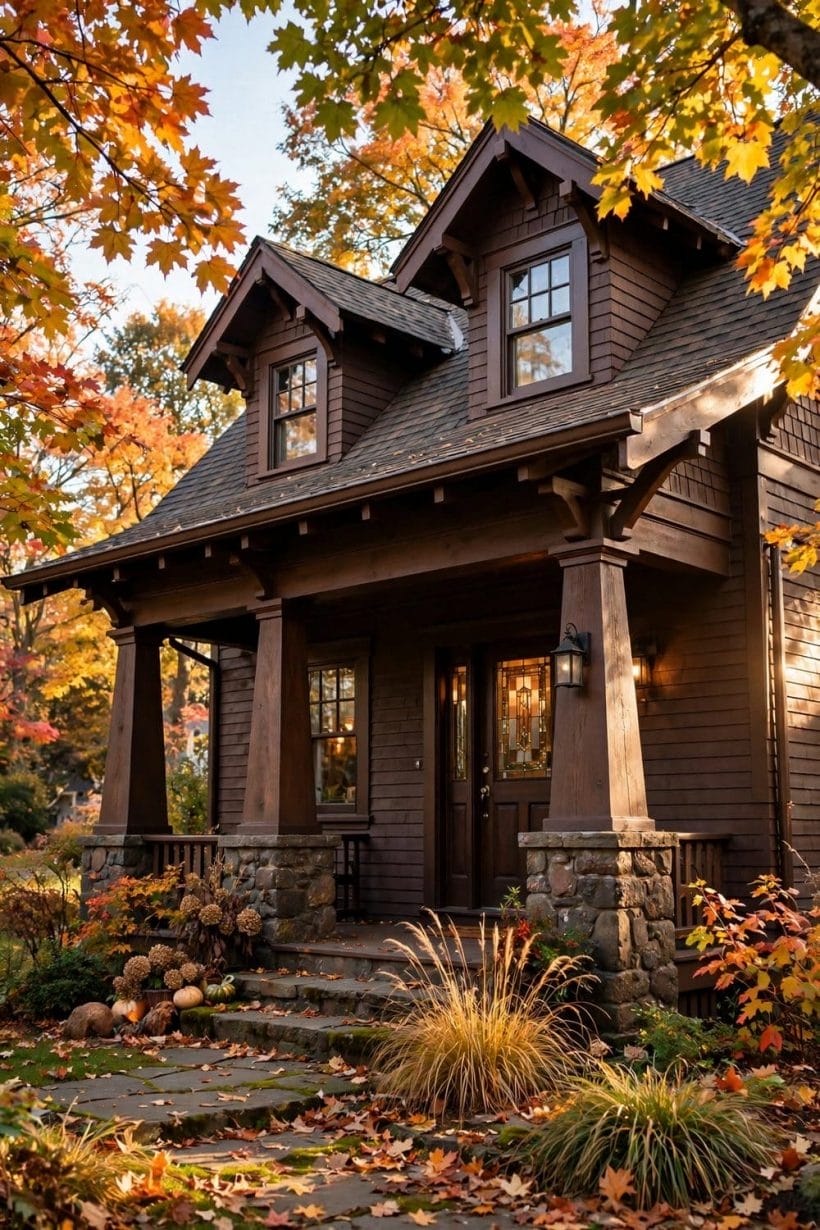
The entry is where a brown exterior becomes personal, because it is the part visitors touch, stand beside and remember. A door, a porch and a few well-chosen details can warm up even the darkest brown wall. The ideas below cover doors, porches, steps and the small fittings that make an arrival feel considered. For the covered space itself, see these porch ideas for smaller homes.
Idea 25: A deep walnut front door
A deep walnut front door is the natural centrepiece of a brown house, because it deepens the wall colour at exactly the point where visitors arrive. The door should read as the darkest brown on the facade, with a simple panel design and a handle in dark bronze or brushed brass-look metal. Flank it with warm light and a plain, pale surround, and the entry will feel generous and calm without needing any bold colour at all.
Idea 26: A red-brown painted door for warmth
A red-brown painted door adds a gentle glow to a brown house, warming the entry the way lamplight warms a room. The reddish note should stay close to the wall family, more russet than bright red, so the door feels like a deeper shade of the house rather than a separate statement. Pair it with cream trim and a simple canopy or porch, and keep the rest of the entry quiet so the door can do its welcoming work alone.
Idea 27: A timber door with glazed panels
A timber door with glazed panels softens a brown entry by letting a little light through, which matters on dark-walled houses that can feel closed in. Keep the glazing simple, with plain or lightly textured glass and a timber tone that matches the door frame, and add a warm porch light so the glass glows in the evening. The result feels open and friendly while still giving the privacy a front door needs.
Idea 28: A covered porch in matching brown
A covered porch in matching brown extends the house toward the garden and gives visitors shelter, shade and a place to pause. The porch roof, posts and ceiling should carry the same brown family as the walls, with cream or stone details to stop the covered space feeling dark. Furnish it simply with a bench and a couple of planters, and the porch becomes a small outdoor room that makes the whole house feel more generous.
Idea 29: Porch columns in cream and brown
Porch columns in cream and brown give an entry a classic, balanced look, because the two tones divide the column into a base and a shaft that feel properly proportioned. Paint or finish the lower part in brown and the upper part in cream, or use cream columns with brown bases, and keep the capitals simple. The pairing echoes the house walls and trim at once, which is why it suits traditional and farmhouse homes so well.
Idea 30: A stone step and threshold
A stone step and threshold ground a brown entry beautifully, because stone adds a cool, solid note beside all that warm timber and render. Choose a pale or warm grey stone that already appears elsewhere on the house, keep the step wide and shallow enough to feel welcoming, and make sure the threshold sits flush and safe. Stone also weathers gracefully, so the entry keeps looking cared for even as the seasons wear on the softer materials around it.
Idea 31: Entry lanterns in dark bronze
Entry lanterns in dark bronze flatter brown walls after dark, because their warm glow and dark metalwork sit comfortably against chocolate and walnut tones. Hang one lantern beside the door or a matching pair flanking it, and choose warm-toned bulbs so the light feels like candlelight rather than a security floodlight. All wiring and fitting work belongs to qualified professionals, and the lanterns themselves should stay simple in shape so they suit the house for years.
Idea 32: A bench and planters by the door
A bench and planters by the door turn a brown entry from a threshold into a welcome, giving visitors somewhere to sit and something green to look at while they wait. Choose a timber bench in a tone close to the door, and planters in stone or dark metal that echo the trim, filled with trailing plants and seasonal colour. Keep the arrangement clear of the opening swing and the path, so the entry stays practical as well as pretty.
5. Windows, Shutters and Hardware
Windows break up a brown wall, and the way they are framed decides whether the house feels open or closed in. Shutters, boxes, hardware and house numbers are small pieces, but together they give the face of the house its rhythm. The ideas below keep those details simple and in proportion with the walls around them. Planters and pots at the windows pair well with container garden ideas.
Idea 33: Cream shutters on chocolate walls
Cream shutters on chocolate walls are a timeless pairing, because the pale panels break the dark wall into a friendly rhythm of light and shade. Size the shutters to match the windows they flank, even if they are fixed in place, so the facade feels honest rather than decorated. The cream should match the window trim exactly, and a simple door in deep walnut completes an entry that feels classic without trying too hard.
Idea 34: Timber shutters in natural stain
Timber shutters in natural stain suit brown houses that lean rustic, because the wood-on-wood pairing feels warm and unforced. Keep the shutter stain close to the siding tone or one step darker, and choose a simple board-and-batten shutter shape rather than a fussy louvre. The shutters will weather over time, so plan a regular care cycle for them along with the rest of the exterior timber, and they will keep rewarding that attention with a rich, lived-in look.
Idea 35: Dark-framed windows for contrast
Dark-framed windows give a brown house a crisp, modern rhythm, because each opening reads as a clean dark rectangle against the warmer walls. This treatment suits contemporary homes and extensions, where slim frames and generous glass matter more than decorative trim. Keep the wall brown in a mid-tone so the windows stay distinct, and echo the dark frames in the door hardware and house numbers for a quietly coordinated face.
Idea 36: Window boxes with trailing plants
Window boxes with trailing plants soften brown walls in the most charming way, because green and flowers spill down over chocolate and mocha siding like a garden deciding to join the house. Choose boxes in dark metal or stained timber that sit quietly against the walls, and plant them with trailing varieties that suit your light and climate. Keep the boxes watered and trimmed so they stay lush, and the whole facade gains a cottage warmth that paint alone cannot provide.
Idea 37: Brass-look door hardware
Brass-look door hardware adds a small note of polish to a brown entry, because a warm metallic handle and letterbox catch the light against a dark door. Keep the hardware simple in shape and consistent across the door, gate and any porch fittings, so the metal reads as one quiet family rather than a collection of odd pieces. The hardware will age and mellow over time, which only suits a brown house better, and it rewards an occasional clean to keep its glow.
Idea 38: House numbers in a clear, simple style
House numbers in a clear, simple style do a practical job beautifully on a brown house, because visitors and deliveries need to find the door without hunting. Choose numerals large enough to read from the path, in a pale or metallic finish that stands out against the wall or door, and mount them where the porch light reaches them in the evening. A simple, modern numeral style suits almost every brown house, from cottages to contemporary builds.
Idea 39: Shutter dogs and hinges in dark metal
Shutter dogs and hinges in dark metal are the small blacksmith details that make shutters on a brown house feel properly finished. These modest fittings hold shutters open against the wall and add a crafted, traditional note that suits farmhouse and colonial-style homes. Keep all the metalwork in one dark finish, from hinges to handles, so the details feel considered, and let the brown walls and cream trim carry the broader colour story around them.
6. Stone, Brick and Mixed Materials
Brown walls pair naturally with stone and brick, because all three materials carry warmth and texture. Mixing them well means letting one material lead and the others support, rather than giving every surface equal weight. The ideas below show where a plinth, a chimney, a pier or a garden wall can add depth without stealing the show. Stone in the garden pairs with these rock landscaping ideas.
Idea 40: Warm brown brick plinth
A warm brown brick plinth anchors a brown house to its site, because the base of the walls gains a solid, masonry weight that siding alone cannot provide. The brick should sit in the same brown family as the walls, slightly darker, so the base reads as a shadow line rather than a new colour. This detail suits almost every house style, and it protects the lower walls from splashes and garden wear while giving the whole building a properly grounded look.
Idea 41: Fieldstone around the base
Fieldstone around the base gives a brown house a rugged, country footing, because the irregular stones contrast beautifully with flat siding or smooth render above. Keep the stonework to the lower walls and any porch piers, so it reads as a foundation rather than a competing facade, and choose stones with warm grey and brown tones that echo the siding. The result feels as though the house grew out of its site, which is exactly the charm of a well-grounded brown home.
Idea 42: A stone chimney breast
A stone chimney breast gives a brown house a strong vertical accent, drawing the eye up the facade and balancing a long, low roofline. The stone should already appear somewhere else on the house, perhaps at the base or on the porch, so the chimney feels connected rather than imported. Keep the chimney breast simple and well proportioned, and leave any chimney construction or repair work to qualified professionals who can handle structure, flashing and weatherproofing properly.
Idea 43: Brick and timber together
Brick and timber together are a natural pairing for a brown house, because the masonry adds permanence while the timber adds warmth. Use brick on the lower storey or on one wing and timber cladding on the rest, with a single brown family tying both materials together. The junction between them deserves care, with a neat trim or stone string course marking the change, and the overall effect suits suburban and country homes that want both solidity and softness.
Idea 44: Stone veneer on the porch piers
Stone veneer on the porch piers gives an entry a sense of being built to last, because the solid piers carry the porch roof visually as well as structurally. Choose a stone tone that matches the house base or the chimney, and keep the veneer neat and tightly jointed so the piers look like real masonry. Structural work on porches and piers belongs to qualified professionals, and the finished piers will repay that care every time someone arrives at the door.
Idea 45: A low garden wall in matching brick
A low garden wall in matching brick extends the brown house into its garden, turning the front boundary into part of the architecture rather than an afterthought. The wall should use the same brick family as the house plinth or chimney, with a simple coping stone on top, and it should stay low enough to feel welcoming rather than defensive. Planting behind it softens the line, and the wall gives the whole front garden a finished, settled frame.
Idea 46: Mixed siding and stone gables
Mixed siding and stone gables give a brown house a layered, crafted face, because the gable becomes a feature panel while the siding carries the main walls. Use stone on one or two gables only, keeping the rest of the house in a steady brown, so the feature feels special rather than scattered. The stone tone should sit close to the siding family, and the junction between materials needs a neat trim so the change looks deliberate and weather-tight.
Idea 47: A feature wall in darker brown
A feature wall in darker brown adds depth to a brown house without introducing a new colour, because the darkest wall becomes a quiet backdrop for the entry or a garden seating area. Use the darker tone on one plane only, perhaps the porch wall or a recessed entry bay, and keep the surrounding walls in a mid-brown so the contrast stays gentle. The effect is subtle and sophisticated, and it gives the facade a sense of depth that a single flat brown cannot achieve.
7. Landscaping That Suits Brown Homes
Planting softens brown walls in a way paint alone cannot, because green is the natural partner of every brown tone. The ideas below use shrubs, grasses, flowers and small trees to frame the house, lift dark walls and give the front garden shape through the seasons, with planting kept clear of walls and paths so upkeep stays simple. For the wider garden picture, see these backyard landscaping ideas.
Idea 48: Green shrubs against brown walls
Green shrubs against brown walls are the easiest win in front-garden design, because every green tone flatters every brown tone. Plant shrubs in loose drifts rather than stiff rows, with taller varieties at the corners of the house and lower ones beneath the windows, so the planting frames the building without hiding it. Keep shrubs trimmed clear of the siding itself, so air can move and the walls stay dry, and the house will look settled and loved in every season.
Idea 49: Ornamental grasses by the path
Ornamental grasses by the path bring movement and softness to a brown house, because their fine blades catch the light and sway in the breeze beside solid walls. Choose grasses that suit your climate and keep them in generous clumps rather than single stems, so they read as intentional planting rather than weeds. Their autumn colours, from gold to russet, echo brown siding beautifully, and a simple annual cut keeps them tidy without demanding much attention.
Idea 50: White and cream flowers for lift
White and cream flowers lift a brown house the way cream trim does, giving the garden pale notes that stop dark walls feeling heavy. Plant them in beds near the entry and along the path, where visitors see them up close, and mix them with green foliage so the white reads as fresh rather than stark. The combination suits every brown tone, from honey to chocolate, and it keeps the front garden feeling bright even when the house itself is dressed in its darkest brown.
Idea 51: A lawn edged with warm gravel
A lawn edged with warm gravel gives a brown house a tidy, natural frame, because the gravel strip keeps the grass off the walls and the paths while adding a warm tone of its own. Choose a gravel in a sandy or honey colour that echoes the siding, keep the edging neat with stone or timber, and let the lawn itself stay simple and green. The result is a front garden that looks cared for without needing elaborate beds or constant attention.
Idea 52: Climbing plants on a side wall
Climbing plants on a side wall soften a brown house with living texture, turning a plain flank into a green tapestry through the seasons. Choose climbers that suit your wall type and climate, give them a proper support frame held clear of the siding, and keep growth trimmed around windows, gutters and rooflines. Fixings and any work near rooflines should be handled with professional advice where the wall or structure is involved, and the reward is a wall that changes beautifully from spring leaf to autumn colour.
Idea 53: Evergreen structure for winter colour
Evergreen structure keeps a brown house looking composed through winter, when deciduous planting has dropped its leaves and the walls carry the whole scene. Use evergreen shrubs, small conifers and clipped hedging to frame the entry and corners, so the house never looks bare in the cold months. The deep green of evergreens is the perfect partner for brown, and a simple evergreen skeleton lets seasonal flowers and grasses take their turn without the garden ever losing its shape.
Idea 54: A small tree to frame the house
A small tree to frame the house gives a brown home scale and softness, because a single well-placed tree breaks the roofline and casts gentle shade across the walls. Plant it to one side of the front garden rather than dead centre, so it frames the house instead of blocking it, and choose a variety that suits your space at full size. The tree will grow with the house, and its seasonal change, from blossom to autumn leaf, becomes part of the home’s character.
8. Paths, Driveways and Outdoor Structures
The ground around a brown house matters as much as the walls, because paths, drives and garden structures lead the eye to the door. Warm gravels, stone pavers and stained timber all echo brown walls without matching them exactly. The ideas below cover the arrival route and the structures that make the garden useful as well as good-looking. Seating areas connect naturally with patio ideas for smaller homes.
Idea 55: A gravel path in warm tones
A gravel path in warm tones leads visitors to a brown house on a surface that feels natural underfoot and looks right beside brown walls. Choose a sandy or honey gravel, edge it neatly with stone or timber, and keep the path wide enough for two people to walk comfortably. Gravel also drains well and crunches pleasantly underfoot, which adds a sensory welcome that paving alone cannot match, and it is easy to top up as the years wear it thin.
Idea 56: Stone pavers to the front door
Stone pavers to the front door give a brown house a solid, generous arrival, because large flat stones feel substantial and look calm beside warm walls. Choose pavers in a warm grey or sandy tone, lay them with even joints and a gentle fall away from the house for drainage, and keep the path wide and level for safe, easy access. The stone will weather gracefully, and a few planted joints or a gravel border will stop the path feeling too formal for a family home.
Idea 57: A brick-edged driveway
A brick-edged driveway frames the arrival at a brown house with a warm, crafted border, because the brick line ties the drive to the house plinth and garden walls. Use the same brick family as the house base, keep the edging neat and flush so it is easy to cross, and let the main drive surface stay simple, whether gravel, pavers or plain asphalt. The brick edge does the decorative work, so the drive itself can stay practical and uncluttered.
Idea 58: A timber pergola in stained brown
A timber pergola in stained brown extends the brown house into the garden, creating a shaded outdoor room that feels like part of the architecture. Stain the pergola in a tone close to the siding or a shade darker, keep the structure simple and well proportioned, and let climbing plants soften the beams over time. Footings and any structural work belong to qualified professionals, and the finished pergola gives the garden a destination as well as a view.
Idea 59: A garden shed that matches the house
A garden shed that matches the house stops the garden feeling like two different properties, because the shed carries the same brown family and trim as the main building. Paint or clad the shed in a brown close to the house walls, add a simple dark roof and a matching door, and place it where it serves the garden without blocking views. The shed then reads as a small companion to the house rather than an afterthought, and the whole plot feels more considered.
Idea 60: A fence in weathered brown
A fence in weathered brown gives a brown house a boundary that feels like part of the garden rather than a barrier around it. Let the timber weather naturally or stain it in a soft, muted brown, and keep the fence height and style consistent along the whole boundary. A weathered fence suits country and cottage homes best, and it pairs beautifully with hedging and shrubs that blur the line between fence and planting as the seasons pass.
Idea 61: A gate in darker stained timber
A gate in darker stained timber marks the entry to a brown house with a satisfying sense of arrival, because the darker gate reads as a deliberate threshold in the lighter fence line. Choose a simple gate design with sturdy hinges and a latch that works smoothly, stain it a shade darker than the fence, and keep the path beyond it clear and welcoming. The gate becomes a small daily pleasure, opening onto a garden that feels private without feeling closed off.
Idea 62: Outdoor seating in natural timber
Outdoor seating in natural timber completes a brown house garden, because timber benches and chairs echo the siding and pergola without matching them exactly. Choose simple, sturdy pieces in a natural or lightly stained finish, place them where they catch the sun and a view of the house, and add cushions in cream or sage for comfort and a soft colour note. The seating turns the garden from something to look at into somewhere to spend time, which is the whole point of a home exterior.
9. Lighting for Brown Exteriors
Brown walls drink in light, so evening lighting needs a little more thought than on a pale house. Warm, low glows flatter brown tones, while harsh white light can make them look flat. The ideas below use wall lights, path lights and uplights to keep the house welcoming after dark, with all electrical work left to qualified professionals. Outdoor rooms and raised platforms also draw on deck ideas for smaller homes.
Idea 63: Warm wall lights by the door
Warm wall lights by the door flatter a brown house after dark, because their golden glow deepens the wall colour instead of washing it out. Choose simple lanterns or shaded fittings in dark bronze, mount them at a height that lights faces as well as the door, and use warm-toned bulbs throughout the entry. All electrical fitting work belongs to qualified professionals, and the result is an entry that feels safe and welcoming from the moment the sun goes down.
Idea 64: Path lights in low, soft glow
Path lights in low, soft glow guide visitors to a brown house without turning the garden into a runway, because small, low fittings throw gentle pools of light exactly where feet need them. Space the lights evenly along the path, keep them low and shielded so they do not glare, and choose warm tones that match the entry lighting. The path then feels safe and inviting at night, and the house itself stays the brightest, warmest thing in view.
Idea 65: Uplights that graze the walls
Uplights that graze the walls show off a brown house at night, because light washing up timber, render or stone reveals texture that daylight flattens. Place the fittings close to the walls and aim them upward, so the light grazes rather than blasts, and keep the number of uplights small so the effect stays elegant. All outdoor electrical work belongs to qualified professionals, and a few well-placed uplights will make the house look its best long after dark.
Idea 66: Porch ceiling light in warm white
A porch ceiling light in warm white turns a covered entry into a welcoming room after dark, because the overhead glow fills the sheltered space evenly. Choose a simple flush or semi-flush fitting that suits the porch ceiling, use a warm-toned bulb, and consider a dimmer or sensor so the light adapts to the evening. The porch then works as hard at night as it does by day, giving visitors a bright, safe place to pause at the door.
Idea 67: Step lights for safe evenings
Step lights make a brown house safer after dark, because each tread glows gently and the way to the door stays obvious even on the darkest night. Recess small fittings into the step risers or the wall beside them, keep the light warm and low, and let the steps themselves stay the focus rather than the fittings. All wiring belongs to qualified professionals, and the result is an entry that feels cared for and safe for every visitor, whatever the hour.
Idea 68: Lanterns on posts by the drive
Lanterns on posts by the drive give a brown house a gracious arrival after dark, because the paired lights mark the entrance the way gateposts do by day. Choose posts in dark metal or stained timber that match the fence and gate, top them with simple lanterns in warm tones, and keep the glow low and welcoming rather than bright. The drive then reads as a proper approach, and the house glows warmly at the end of it like a destination.
Idea 69: Timer and sensor controls
Timer and sensor controls keep a brown house lit sensibly, because the lights come on as dusk falls and switch off when they are no longer needed. Set entry and path lights to timers, use sensors on less-used corners, and keep the whole system on warm tones so the house always glows rather than glares. All control wiring and installation belong to qualified professionals, and the result is lighting that is welcoming, efficient and entirely effortless for the household.
10. Seasonal Care, Upkeep and Costs in General Terms
A brown exterior earns its keep when it is looked after in small, regular steps rather than left until it looks tired. The ideas below cover seasonal checks, repainting and restaining cycles, and the drivers that shape any quote, all in general terms and without invented figures, so you can plan the work in stages that suit your home and budget.
Idea 70: Washing down siding each season
Washing down siding each season keeps a brown house looking fresh, because dust, pollen and winter grime dull even the richest brown over time. A gentle wash with plain water and a soft brush suits most siding types, working from the top down and rinsing well, and it also gives you a chance to spot any small issues early. Keep water away from open joints and electrical fittings, and leave any high or awkward areas to professionals with the right access equipment.
Idea 71: Checking seals around windows and doors
Checking seals around windows and doors protects a brown house from draughts and damp, because failed seals let weather in at exactly the points where walls meet openings. Look for cracked or shrunken sealant, gaps around frames and any staining that suggests water is getting in, and have worn seals renewed promptly. The work itself is modest, but it keeps the walls, the paint and the interior in good shape, and it is worth building into a seasonal routine alongside the siding wash.
Idea 72: Repainting and restaining on a sensible cycle
Repainting and restaining on a sensible cycle keeps a brown house looking rich rather than tired, because exterior finishes fade and weather at different rates depending on sun, rain and exposure. South and west walls usually need attention first, while sheltered walls last longer, so plan the cycle wall by wall rather than repainting everything at once. A steady cycle also spreads the work and the expense, and it keeps the brown tones deep and even instead of patchy and sun-bleached.
Idea 73: Gutter and roof checks from the ground
Gutter and roof checks from the ground keep a brown house safe without anyone climbing up unnecessarily, because binoculars and a walk around the garden reveal slipped tiles, sagging gutters and blocked outlets. Clear gutters regularly, watch for staining on the walls below the eaves, and call qualified roofing professionals for anything that needs height, repair or replacement. A small routine of ground-level checks prevents the water damage that can spoil even the best-kept brown walls.
Idea 74: What shapes a repaint or re-clad quote
What shapes a repaint or re-clad quote is mostly scope and condition rather than any single item, so it helps to understand the drivers before asking for prices. The wall area and height, the current condition of the surface, the preparation needed, the material chosen, access around the house and local labour all play a part, and so does the amount of trim, repair and protection work involved. Get several detailed quotes, compare what each one includes, and be wary of any quote that skips preparation or protection entirely.
Idea 75: Planning a brown exterior in stages
Planning a brown exterior in stages makes the whole project manageable, because walls, trim, roof details, planting and lighting can each take their turn without overwhelming the household or the budget. Start with the walls and roof, since they set the palette, then move to trim and entry details, and finish with planting and lighting that flatter the finished house. Staging the work also lets you live with each change before committing to the next, so the final result feels considered rather than rushed.
Final Considerations
A successful brown exterior is rarely about one bold choice, because it is the quiet agreement between walls, trim, roof, door, planting and light that makes the house feel settled. Start with the wall tone that suits your house size and setting, choose a roof that sits just darker and a trim that lifts without shouting, and then let the door, the planting and the lighting add warmth in layers. Keep the palette narrow, repeat materials rather than introducing new ones, and let the garden soften the edges so the house feels part of its site.
Practical care matters as much as the first impression, so build a simple seasonal routine of washing, seal checks and ground-level gutter checks, and plan repainting and restaining wall by wall as each face weathers. When you ask for quotes, compare scope, preparation and protection rather than headline figures alone, and stage larger work so walls and roof come first and planting and lighting finish the picture. Done that way, a brown exterior house stays rich, welcoming and easy to live with for years, whatever the season or the light.


0 Comments