
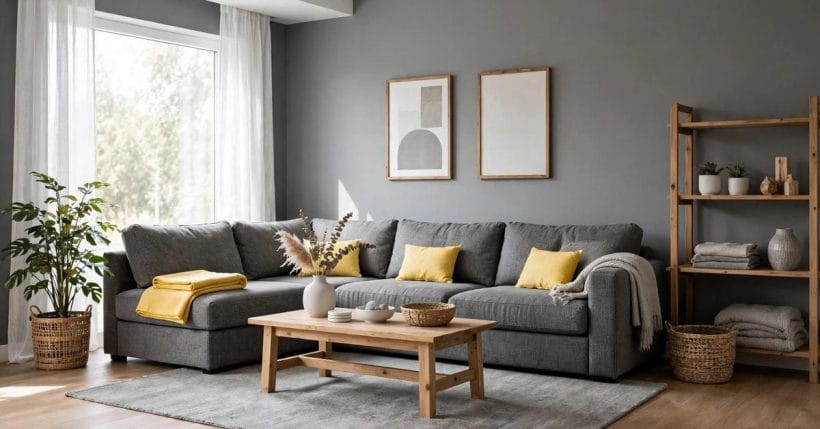
Gray and yellow should not work together, and yet they do — which is exactly why the pairing has stayed popular long after brighter colour trends faded. Gray brings calm, order, and a neutral ground that lets furniture and architecture speak. Yellow brings warmth, light, and a note of cheerfulness that keeps gray from feeling cold or flat. Together they balance each other the way a good room balances rest and energy.
The secret of the pairing lies in proportion. Gray leads and yellow accents; reverse the balance and the room can feel restless rather than sunny. This guide walks through ten ways to use the combination, from wall colour to small accessories, always with gray as the steady base and yellow as the considered accent. The result is a room that feels both composed and welcoming.
1. Let Gray Lead on the Walls
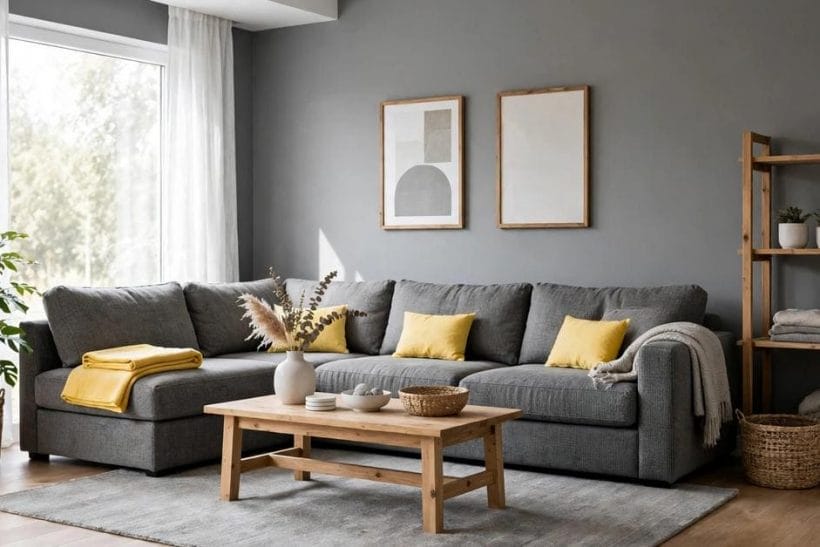
The simplest version of the pairing starts with gray walls and yellow accents. A mid to soft gray on the walls gives the room a calm envelope, and yellow cushions, throws, or art supply the warmth. Because the walls carry the gray, the yellow can be bold without overwhelming the room — a single strong yellow chair or a sunny piece of art reads as a deliberate accent rather than a shout.
Choose a gray with a warm undertone if the room receives little direct sun, since cool grays can feel chilly in north-facing rooms. Test the shade on the wall itself, in daylight and lamplight, before committing. The right gray disappears behind the furniture in the best way, letting the yellow accents do their cheerful work.
Gray walls also make art and furniture easier to change over time, since almost any colour sits comfortably against a mid gray. A room painted gray is a room that can accept a new sofa colour, a new rug, or a new set of curtains without repainting. That flexibility is part of gray’s value: it is a background that flatters whatever comes next, yellow included.
2. Anchor the Room With a Gray Sofa
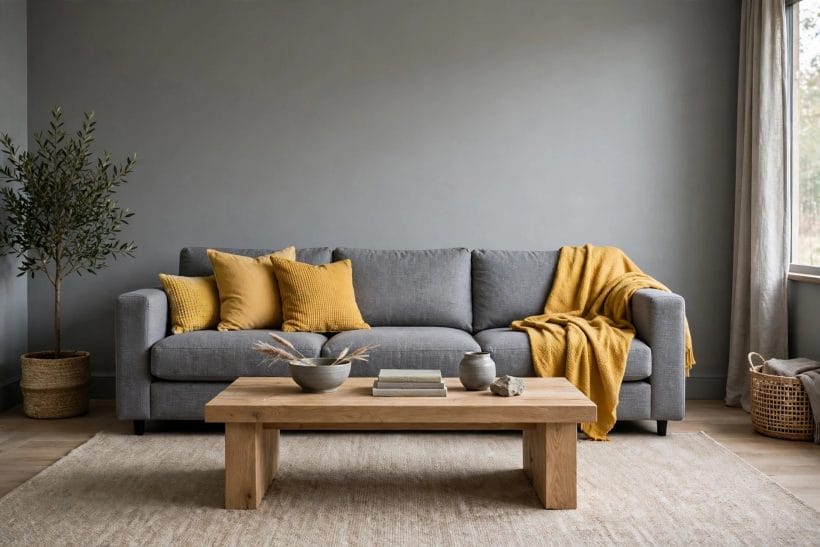
A gray sofa is the workhorse of this pairing: practical, forgiving, and endlessly re-dressable. With gray as the largest single item in the room, yellow cushions and a throw become easy seasonal changes rather than permanent commitments. Swap the yellow for another accent when tastes change, and the sofa carries on undisturbed.
Layer the yellow in two tones rather than one — a clear sunny yellow beside a softer mustard, for example — so the accent feels collected rather than matched. Add a neutral third element, such as natural timber or white, to keep the two main colours from tiring the eye. The sofa stays gray; the room’s mood comes from what sits on it.
Sofa fabric choice affects how gray reads. A gray velvet looks softer and more formal, while a gray linen looks relaxed and casual, and a gray leather looks structured and cool. The same shade of gray can therefore anchor very different rooms depending on its material. Choose the fabric for the room’s daily life first — pets, children, and sunlight all argue for different weaves.
3. Use Yellow in the Kitchen as a Lift
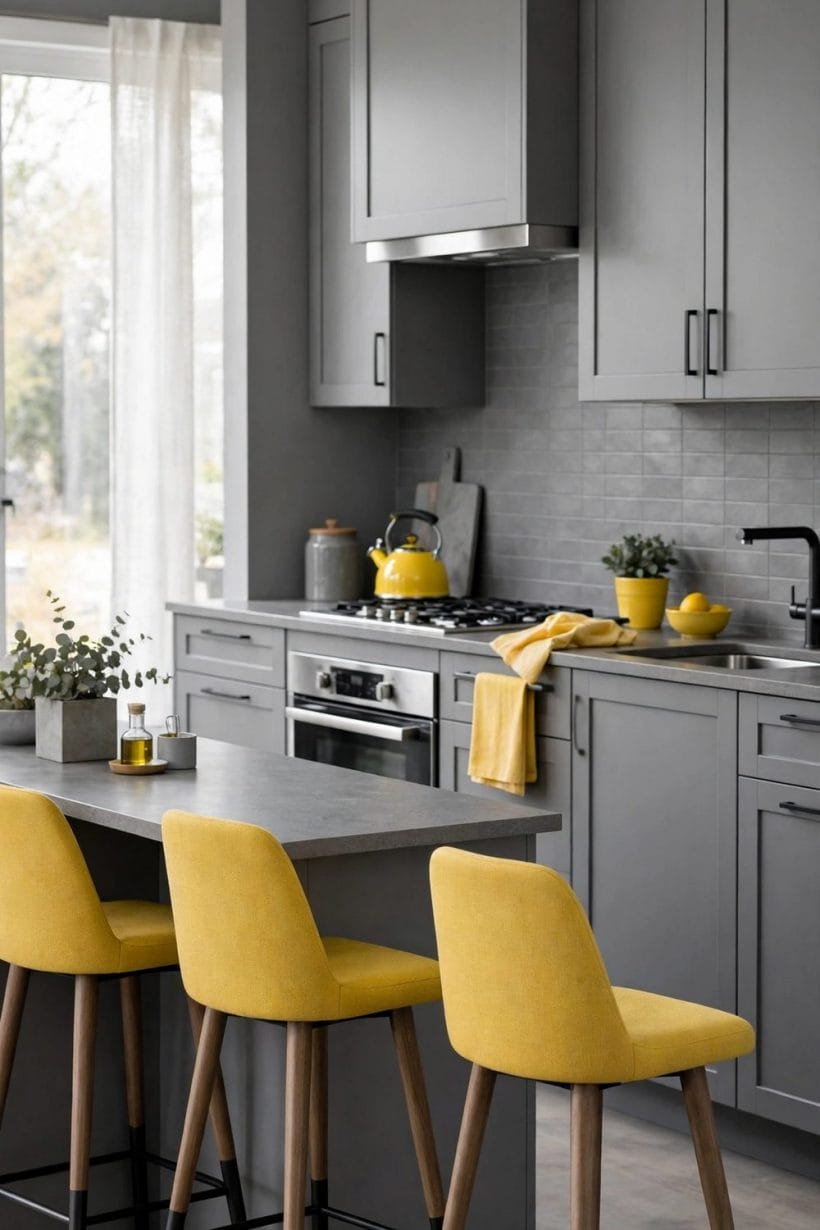
Kitchens benefit from yellow more than most rooms, because they are working spaces used at all hours. Gray cabinetry with yellow bar stools, a yellow kettle, or a row of sunny canisters lifts a practical room without demanding a repaint. The gray keeps the kitchen feeling orderly; the yellow keeps it from feeling like a laboratory.
Keep the yellow to moveable or small-scale items in the kitchen, so the room can change with little effort. A yellow blind, a set of towels, or a single open shelf of yellow crockery all give the lift without locking the kitchen into one accent. If the kitchen already has gray worktops, the pairing is halfway there.
Yellow works in kitchens partly because kitchens already contain yellow-adjacent materials: timber boards, brass handles, and warm wood tones all sit near yellow on the colour spectrum. A yellow accent therefore feels less foreign in a kitchen than in a room of cool materials. Let those existing warm elements guide how much yellow the kitchen needs; often a little is plenty.
4. Ground a Bedroom in Gray, Wake It With Yellow
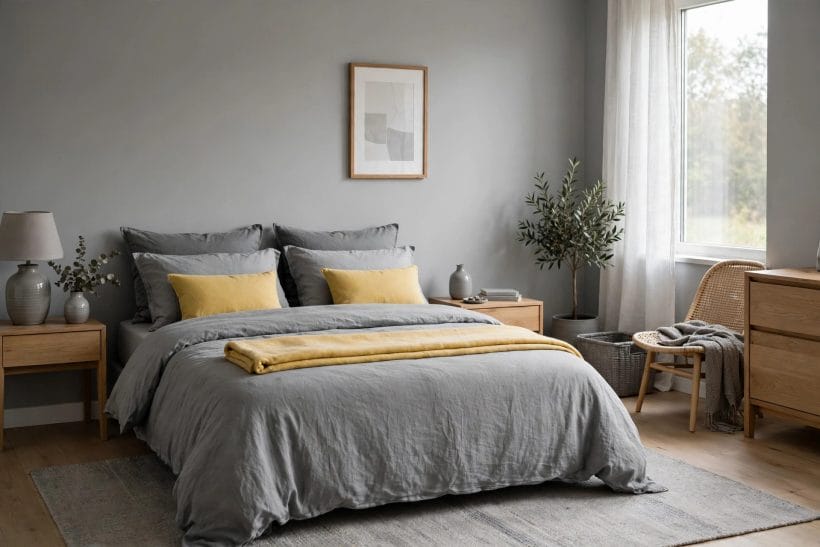
Bedrooms need calm first and cheer second, which makes them natural ground for gray-led pairings. Gray bedding with yellow cushions, or gray walls with a yellow throw folded at the foot of the bed, gives the room a restful base with a gentle morning lift. The yellow should be the last thing the eye finds, not the first.
Keep yellow away from the pillow area itself, where strong colour can feel busy at night, and place it instead on a chair, a bench, or art above a dresser. Soft, muted yellows suit bedrooms better than sharp ones, and a single yellow lamp or vase can be enough. The room should still read as gray when the lights are low.
Bedroom lighting changes how gray and yellow interact more than in any other room, because bedrooms are used in both bright mornings and dim evenings. Check the pairing under the bedroom’s actual lamps, not just in daylight, since some yellows turn muddy under warm bulbs while others glow pleasantly. A pairing that works in both lights is the one worth keeping.
5. Pair Charcoal Gray With Mustard for Depth
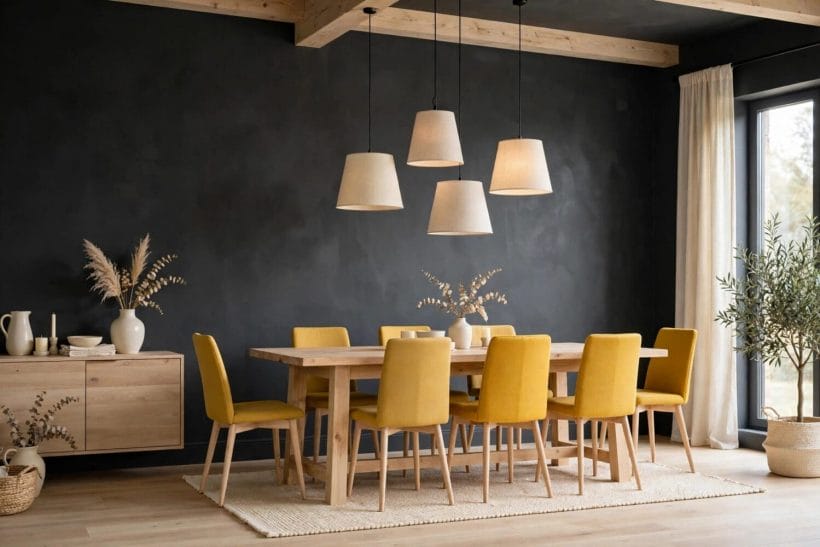
Not all grays and yellows are equal. Charcoal gray with mustard yellow is the deeper, more grown-up version of the pairing, suited to dining rooms, studies, and living rooms that want drama without brightness. The charcoal gives weight, the mustard gives warmth, and together they feel autumnal and settled.
Use this deeper version where the room has good daylight or strong lamps, since charcoal absorbs light. Balance it with pale timber, cream, or glass so the room does not darken, and keep the mustard to upholstery or art rather than walls. In a well-lit room, the combination feels rich rather than heavy.
Charcoal and mustard suit rooms with architectural features worth emphasising — a fireplace, a bay window, or original woodwork — because the dark walls make those features stand out. In a plain, featureless room, however, charcoal can feel oppressive rather than dramatic. If the room lacks features, keep the charcoal to one wall and let the remaining walls stay lighter.
6. Try Gray and Yellow in a Bathroom
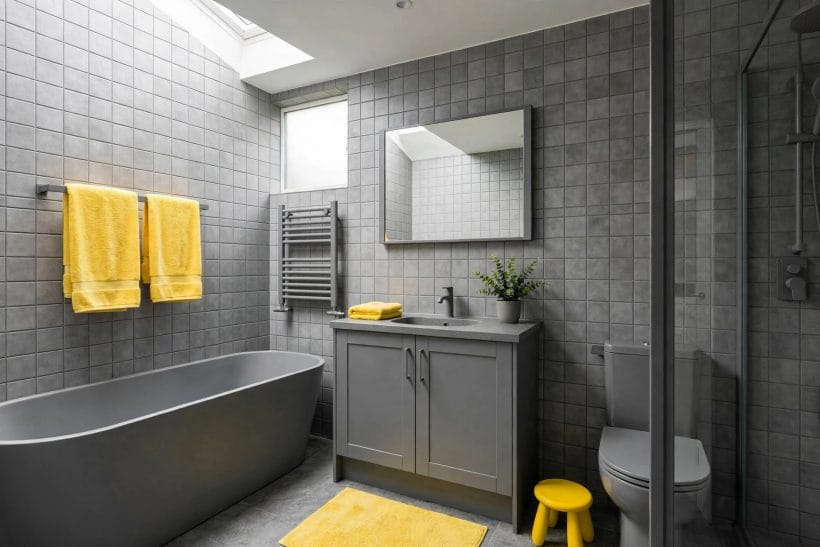
Bathrooms suit the pairing surprisingly well, because gray tiles are practical and yellow towels are easy to change. Gray wall tiles with a yellow bath mat, towels, and a small stool give a plain bathroom personality without any building work. When the towels change, the accent changes with them.
Keep the yellow to textiles and one or two small objects, and let the gray tiles and fittings carry the room’s structure. A yellow-framed mirror or a sunny print can anchor the accent if the textiles alone feel scattered. The result is a bathroom that feels fresh in the morning and calm in the evening.
Bathroom gray tiles vary in undertone, and the undertone decides which yellow works. A blue-gray tile pairs best with a clear, cool yellow, while a warm gray tile suits a mustard or golden towel. Hold the towel against the tile in the bathroom’s own light before buying a full set; a mismatch that looks minor in the shop can dominate a small bathroom.
7. Use Pattern to Blend the Two Colours
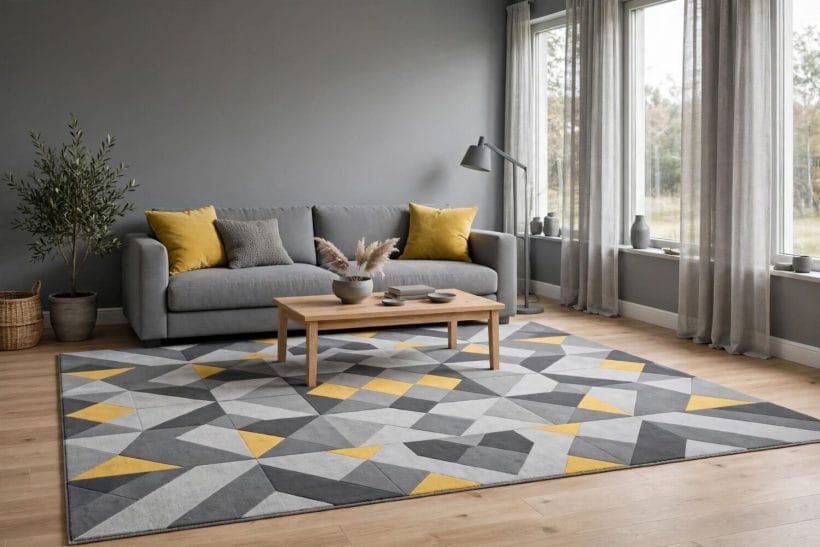
Pattern is the easiest way to make gray and yellow feel like a single scheme rather than two colours sharing a room. A striped or geometric fabric that contains both colours — on curtains, a rug, or a cushion — ties the pairing together and gives the eye a place where the two colours already coexist.
Choose one patterned piece per room as the bridge, and keep the remaining yellow and gray items plain. Too many patterns compete, but one confident pattern makes the whole scheme look intentional. A gray and yellow rug under a plain gray sofa, for instance, anchors the room while quietly introducing the accent.
Pattern scale matters as much as pattern colour. A large-scale geometric suits a spacious room with plain furniture, while a small-scale pattern suits a smaller room or one that already holds patterned pieces. When in doubt, choose the smaller scale; it blends more easily and tires more slowly than a bold large pattern competing with everything else.
8. Add Yellow Through Art and Plants
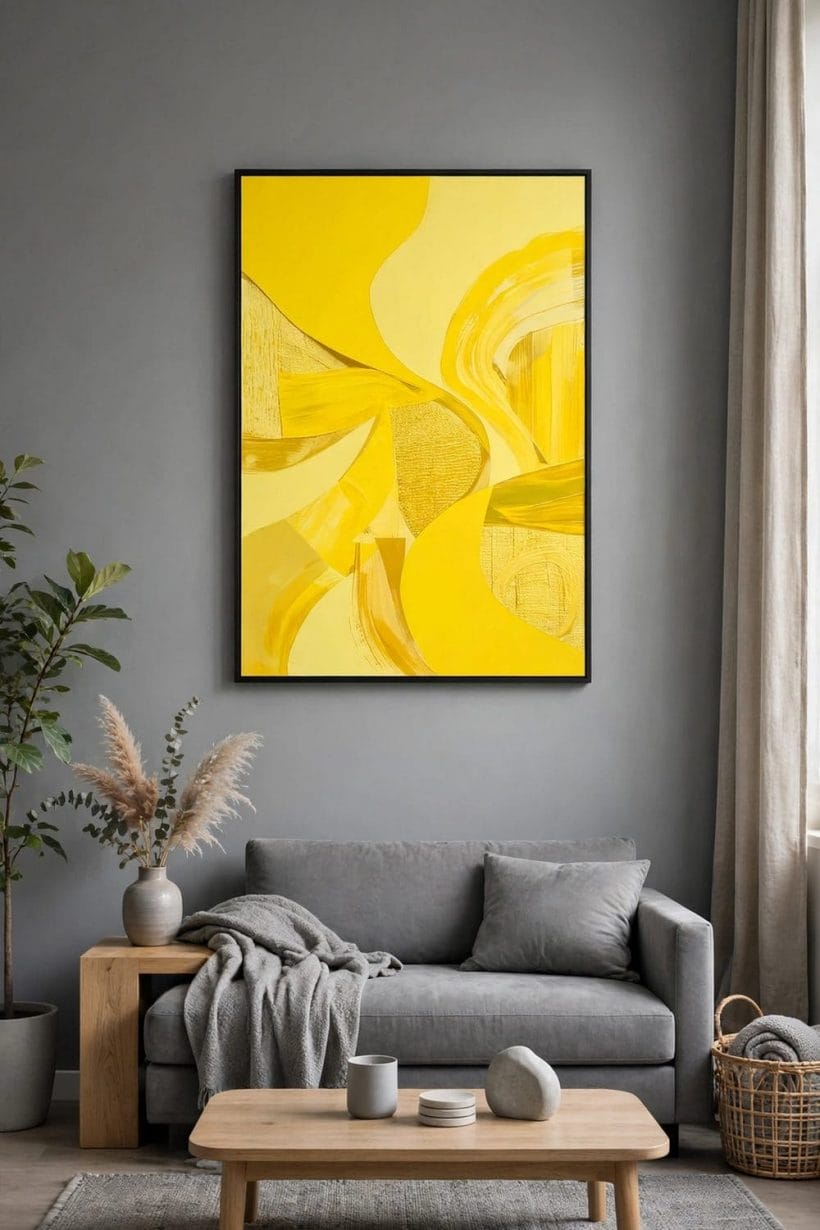
Art is the lowest-commitment way to test the pairing. A sunny abstract print on a gray wall, or a yellow-framed photograph above a gray console, introduces the accent without touching furniture or paint. If the combination does not suit the room, the art moves to another wall.
Plants with yellow flowers or golden foliage offer a living version of the same idea, and they suit rooms where painted yellow might feel too deliberate. A pot of yellow blooms on a gray shelf, or a golden-leaved plant beside a gray chair, brings the pairing in softly and seasonally. Both approaches let the room evolve without redecoration.
Seasonal rotation keeps the pairing fresh without any redecoration. Yellow flowers in spring, golden leaves in autumn, and a sunny print swapped between rooms all renew the accent as the year turns. A pairing that changes slightly with the seasons feels alive, while a fixed yellow accent can start to feel like a permanent fixture rather than a choice.
9. Balance With Neutrals So Yellow Stays Sunny
Yellow tires quickly when it has nowhere to rest. White, cream, natural timber, and black all give the pairing breathing room: white freshens it, timber warms it, and a touch of black sharpens it. Without these neutrals, gray and yellow alone can feel like a two-note tune played too loudly.
Introduce at least one neutral in every gray-and-yellow room. White ceilings and trim already do much of this work, but a timber coffee table, a cream rug, or black picture frames all help. The neutrals are not filler; they are what allow the yellow to stay sunny rather than strident.
Black deserves special mention as a neutral in this pairing: a thin black frame, a black lamp base, or black handles sharpen gray and yellow the way a frame sharpens a picture. Used sparingly, black stops the scheme from feeling soft or vague. Used heavily, it darkens the room, so keep black to lines and details rather than large surfaces.
10. Know When to Stop Adding Yellow
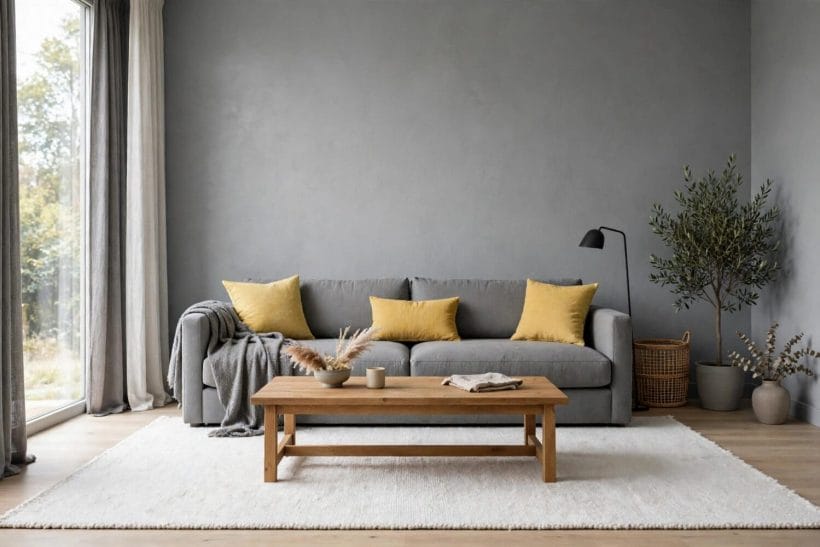
The pairing’s charm fades the moment yellow appears everywhere. A useful rule: yellow should occupy roughly a fifth of what the eye sees, with gray and neutrals carrying the rest. When every surface holds a yellow object, no single accent stands out, and the room loses the contrast that made the combination appealing.
Audit the room from the doorway. If yellow appears in more than three distinct places, consider removing one. The strongest gray-and-yellow rooms are often the most restrained, with a single confident accent — a chair, a piece of art, a set of cushions — doing all the sunny work.
Photographing the room is a useful audit tool, since a camera flattens a space and reveals imbalances the eye overlooks in person. Take a photo from the doorway and look at it as if it were someone else’s room. Yellow that appears in too many places will show immediately, and the photo makes it easier to decide which accent to remove.
Final Considerations
Gray and yellow work because they divide the labour: gray calms and structures, yellow warms and lifts. Keep gray in charge, let yellow accent in a few considered places, bridge the two with pattern or art, and rest the scheme on neutrals. The pairing suits almost any room, provided the yellow stays an accent rather than a rival.
If you are unsure where to begin, start with the room’s largest gray surface and one yellow accent, then live with that combination for a week before adding more. A gray sofa with yellow cushions, or gray walls with a yellow chair, tells you quickly whether the pairing suits the room’s light and your taste. Adding yellow gradually is always easier than removing it after the room has filled up.
For related colour ideas, see dusty rose, blush pink bedroom, Tuscan style homes, craftsman living room ideas, tiny house designs, and interior design ideas. For the white-led version of this pairing, see the companion guide to white and yellow below.



0 Comments