

Blush pink is a soft, warm pink with a hint of peach, and in a bedroom it does a particular job: it makes the room feel gentle and restful without turning it into a statement. Unlike a bold pink, blush works as a background colour that flatters skin tones in the morning light, calms a busy room and pairs easily with neutrals, timber and soft metallics. This guide looks at how to use blush pink in a bedroom only — the walls, the bedding, the furniture and the finishing touches — and how to keep it feeling grown-up and restful rather than sweet or overdone. Blush is the room’s colour here; the colour itself, its undertones and pairings in general, is covered in the companion dusty-rose colour guide.
1. Blush on the Walls
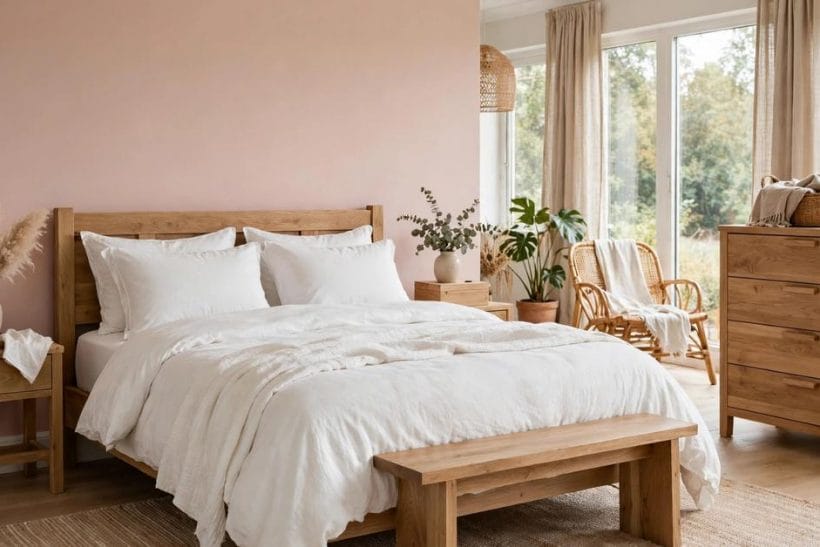
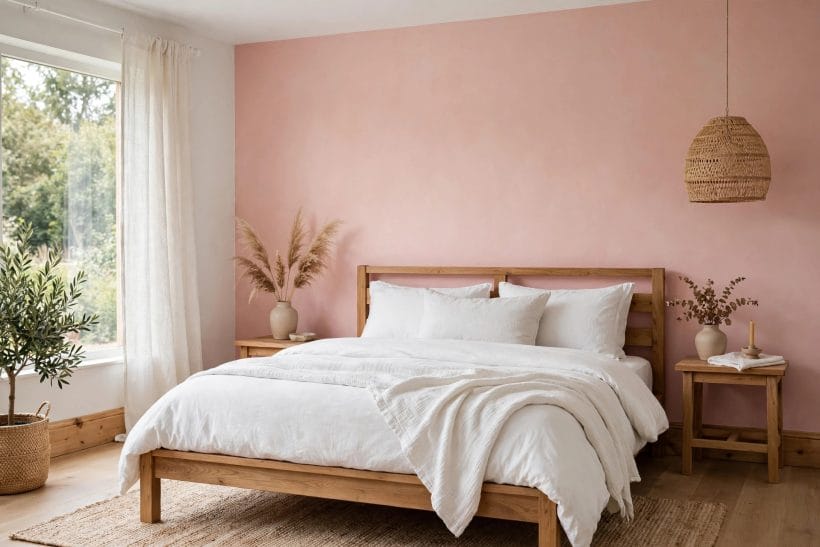
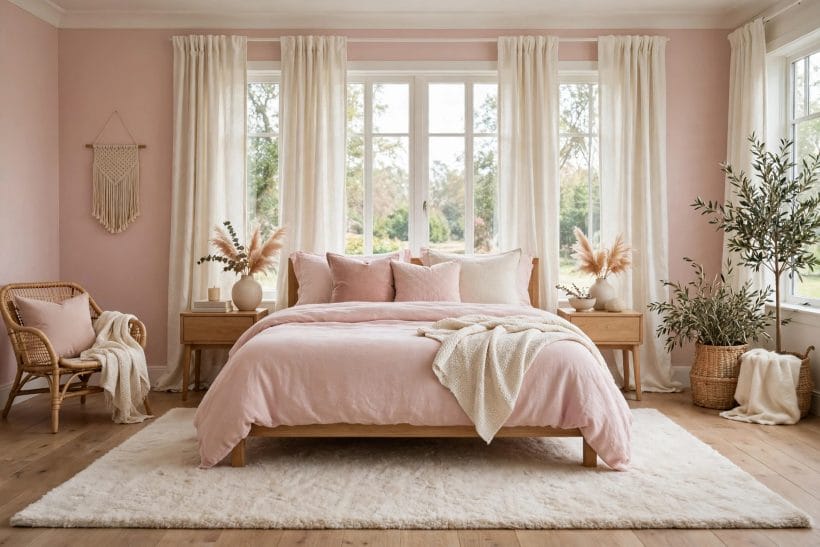
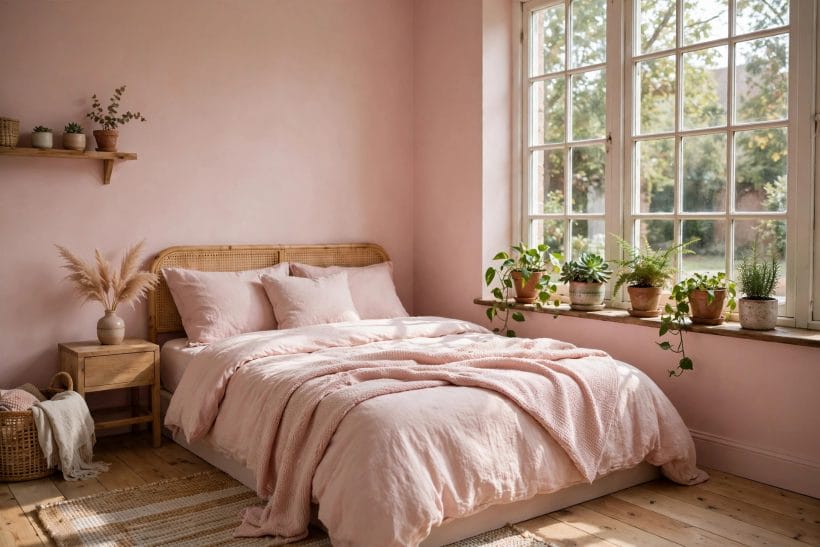
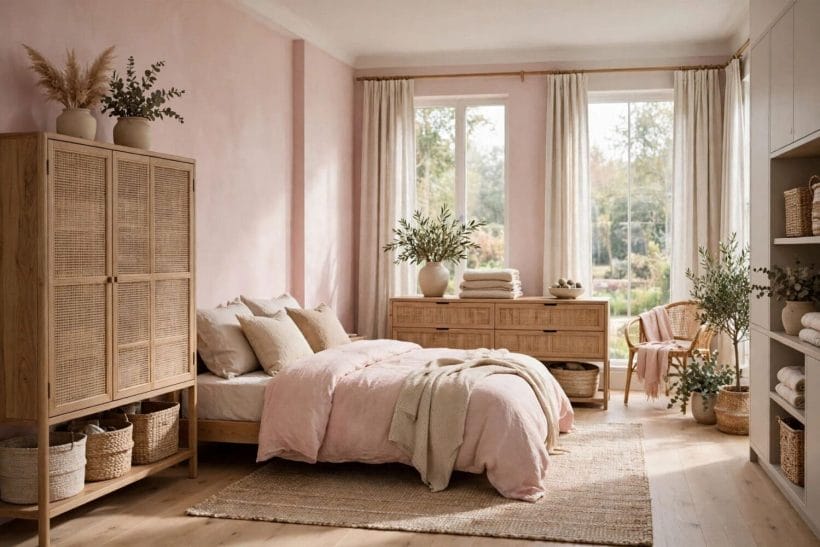
Walls are where blush makes its biggest difference, and also where it is easiest to get wrong. Test the colour on the wall itself, in large patches, and look at it in morning light, evening light and lamplight before committing, since blush shifts noticeably between warm and cool light. A blush with a peach undertone feels warmer and suits a north-facing room, while a blush with a cooler, rosier undertone suits a room that already gets warm sun. Paint all four walls for a cocooning feel, or paint the bed wall only and keep the rest in a soft white if you want the colour as an accent rather than an embrace.
Finish matters as much as colour: a flat or eggshell finish softens the pink and hides wall imperfections, while a shinier finish makes the colour read stronger and shows every bump. If the room is small, a paler blush keeps it feeling open; in a larger room a deeper blush gives the walls presence without closing the space in. Take the time to live with test patches for a few days, since blush is a colour that reveals its true character slowly.
Choosing the right blush for the walls also means thinking about the room as a whole rather than the paint chart alone. The colour of the floor, the tone of the woodwork and the amount of natural light all shift how a blush reads, so test patches should be viewed against those fixed elements, not in isolation. A blush that looks perfect on a white chart can turn peach or grey against warm timber floors, and only a large patch on the actual wall reveals the truth. Give each test patch a few days and look at it in every light the room gets before deciding.
2. Bedding in Layers of Blush
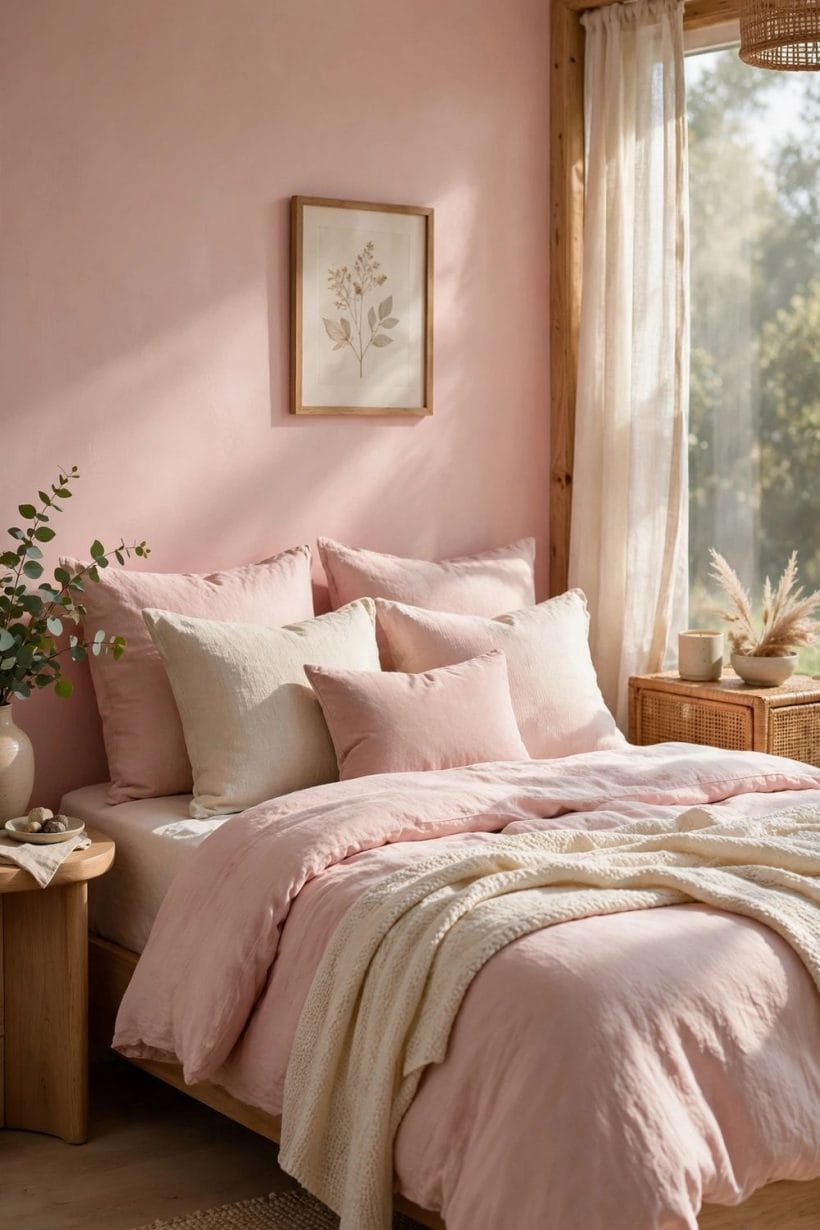
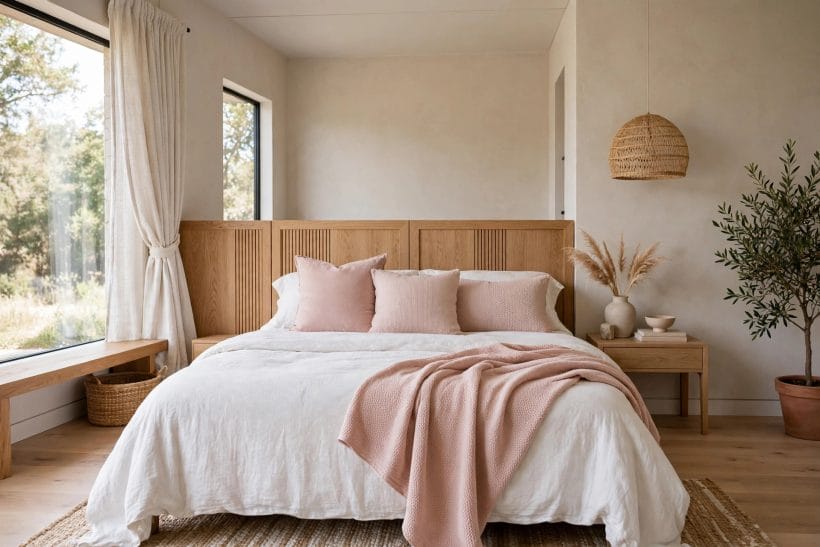
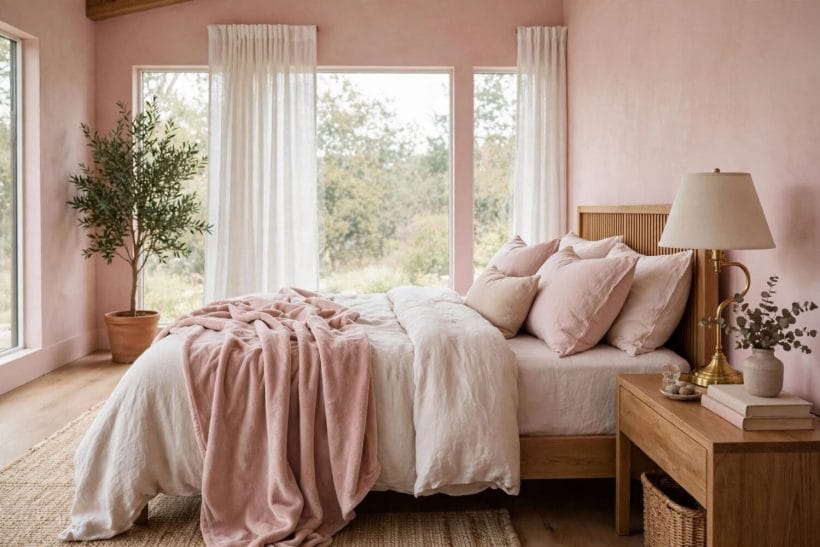
Bedding is the easiest place to bring blush into a bedroom without painting anything, and layering is what makes it look intentional. Start with white or ivory sheets as a calm base, add a blush duvet cover or coverlet as the main colour, and finish with cushions and a throw in deeper blush, rose or warm taupe for depth. The mix of tones stops the bed from looking flat, and the white base keeps the whole arrangement feeling fresh rather than heavy.
Texture does as much work as colour here: linen, washed cotton and soft knits all take blush differently, and combining two or three textures gives the bed a relaxed, inviting feel. Change the balance with the seasons if you like — more blush and heavier layers in winter, paler blush and lighter fabrics in summer — without changing anything structural in the room. Wash new bedding before first use, since dyes can transfer, and check that the blush tones you combine share the same warm or cool undertone so they harmonise rather than clash.
3. Furniture That Sits Well With Blush
Blush pairs most easily with pale timber, white-painted furniture and warm natural wood, all of which keep the room feeling light. A pale oak bed frame, white bedside tables and a light timber dresser let the blush walls or bedding lead while the furniture stays quiet. Darker furniture can work too, but it changes the mood: walnut or dark-stained timber against blush feels more dramatic and formal, which suits a larger room better than a small one.
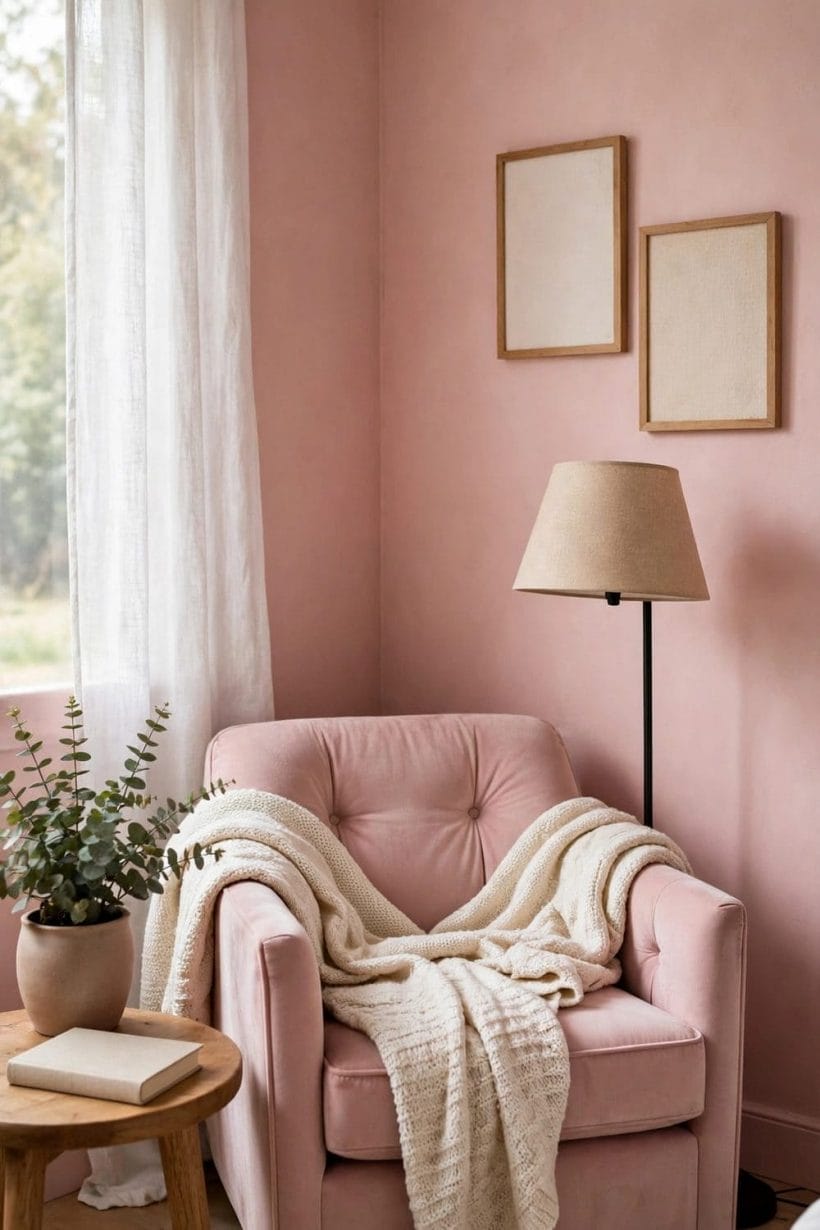
Upholstered pieces deserve care: a blush velvet chair or headboard adds luxury, but the same colour in a large upholstered item can dominate the room, so use it as one accent rather than repeating it everywhere. Metal finishes in soft gold, brass or warm bronze flatter blush, while cool chrome can make it look colder than intended. Keep the furniture lines simple and the room will feel calm; fussy, ornate pieces fight with the softness that makes blush work.
Layering bedding is also a practical skill, not just a decorative one. A bed that is easy to make in the morning is a bed that stays inviting, so keep the number of layers manageable and choose pieces that can be laundered without fuss. A duvet that is too heavy for the season will be kicked off and left crumpled, while one that is too light will send you hunting for extra blankets at night. The right bedding balance is the one that lets you sleep comfortably and remake the bed in a couple of minutes each morning.
4. Balancing Blush With Neutrals
Blush needs neutrals to keep it grounded, and the choice of neutral changes the whole room. Soft white and ivory keep it airy and fresh; warm grey adds a contemporary calm; taupe and warm beige deepen it into something cosier. Use the neutral on the largest surfaces that are not blush — the ceiling, the woodwork, large rugs — so the pink always has somewhere quiet to rest the eye.
Avoid pairing blush with too many other colours at once: one neutral family plus blush, with at most one small accent such as soft green from plants or a touch of gold, keeps the room coherent. If the room starts to feel too sweet, the fix is usually more neutral, not less blush — a larger neutral rug, ivory curtains or a taupe throw will settle the palette without losing the warmth that made you choose blush in the first place.
5. Light That Flatters Blush
Light decides whether blush looks warm and flattering or washed out and cold. Warm-white bulbs suit blush far better than cool daylight bulbs, which can turn a soft pink grey or harsh. Use layered lighting — a central light for general brightness, bedside lamps for reading, and perhaps a soft glow from a dressing-table lamp — so the room can shift from bright morning to calm evening without changing colour character.
Natural light matters too: sheer curtains soften strong sunlight and let blush glow gently, while heavy curtains in a dark colour can make the room feel closed in. If the bedroom faces a direction that brings cool light for much of the day, lean toward a warmer blush undertone to compensate. Check the wall colour at night under the actual lamps you will use, since shop lighting and home lighting flatter paint very differently.
Lighting a blush bedroom well means thinking about the whole day, not just the evening. Morning light should feel fresh without washing the colour out, which is where sheer curtains earn their keep, while evening light should feel warm and restful, which is where warm bulbs and dimmers matter. If the room has only one overhead light, add bedside lamps as a priority, since a single harsh ceiling light flattens blush and makes the room feel less restful than it could be.
6. Curtains, Rugs and Soft Furnishings
Curtains and rugs are where blush can be repeated in small, controlled doses. Ivory or white curtains keep the window light and let blush stay the accent, while blush curtains make the window a feature — a good choice if the rest of the room is mostly neutral. A rug in ivory, warm grey or a soft pattern that includes blush ties the floor into the scheme without demanding attention.
Cushions and throws are the low-commitment way to test blush before painting: a few cushions in blush and deeper rose on a neutral bed show immediately whether the colour suits the room and your taste. If you love it, expand it to the walls; if it feels too much, you have lost nothing. Keep soft furnishings washable where possible, since a bedroom’s cushions and throws are handled daily and need to stay fresh.
7. Art, Mirrors and the Walls Beyond Paint
What hangs on blush walls should complement rather than compete. Art with soft landscapes, botanical prints or abstract pieces in warm neutrals sits comfortably on blush, while very bold or dark art can feel jarring unless it is deliberately chosen as a contrast. Mirrors are especially useful in a blush bedroom: they bounce light around, make the room feel larger, and their frames in gold, brass or pale timber echo the warm metals that suit blush.
Keep wall displays calm and uncluttered — a single large piece over the bed or a small, considered group on one wall suits the restful mood better than a busy gallery wall. If you hang shelves, style them lightly with books, a plant and one or two objects rather than filling every inch, since blush rooms feel best when there is visual breathing space.
Soft furnishings in a blush bedroom also carry a practical burden: they are touched, sat on and slept with daily, so they need to be durable as well as pretty. Choose curtain and cushion fabrics that can be cleaned without drama, and keep spare cushion covers so a stained set can be swapped rather than lived with. A room that is easy to keep fresh stays restful, while one whose soft furnishings cannot be cleaned quickly starts to feel tired no matter how good the colour scheme is.
8. Storage That Keeps the Calm
A restful blush bedroom depends on storage that keeps clutter out of sight. Built-in wardrobes in white or pale timber disappear into the scheme, while freestanding wardrobes should be chosen in a finish that matches the furniture rather than fighting it. Bedside tables with a drawer each keep nighttime essentials tidy, and a blanket box or ottoman at the foot of the bed gives throws and spare bedding a home.
Open storage needs discipline in a blush room, since visible clutter breaks the calm faster than in a bolder scheme. If you love open shelves, limit them to one area and keep what is on them tidy and intentional. The goal is a room that feels restful when you walk in, not one that demands tidying before you can relax in it.
9. Blush Through the Seasons
Blush adapts well across the year if you shift its companions rather than the colour itself. In summer, pair blush with white linen, light curtains and green plants for a fresh, airy feel. In winter, add deeper rose cushions, a heavier throw and warmer lamplight, and the same room feels cosy and enveloping. This seasonal flexibility is one of blush’s real strengths: the walls stay the same while the room’s mood changes with its textiles.
Plants deserve a special mention, since green is blush’s natural partner. A few healthy plants soften the pink, add life to the room and keep the palette from feeling one-note. Choose plants that suit the room’s light and that you can realistically care for, since struggling plants undermine the calm you are trying to create.
10. Keeping Blush Grown-Up
The difference between a blush bedroom that feels sophisticated and one that feels saccharine comes down to restraint and contrast. Keep the blush to a considered range of tones rather than every shade at once, ground it with neutrals and natural materials, and let one or two elements — a timber bed frame, a brass lamp, a linen throw — provide texture and contrast. Avoid pairing blush with other pastels in equal measure, since a room full of competing soft colours quickly feels unfocused.
Think of blush as the room’s warmth, not its theme. When it is used as a warm background with thoughtful furniture, good light and calm storage, it reads as elegant and restful at any age. When it becomes the only idea in the room, it tips into sweetness. The checks in this guide — undertone, light, neutrals and restraint — are what keep it on the right side of that line.
Final Considerations
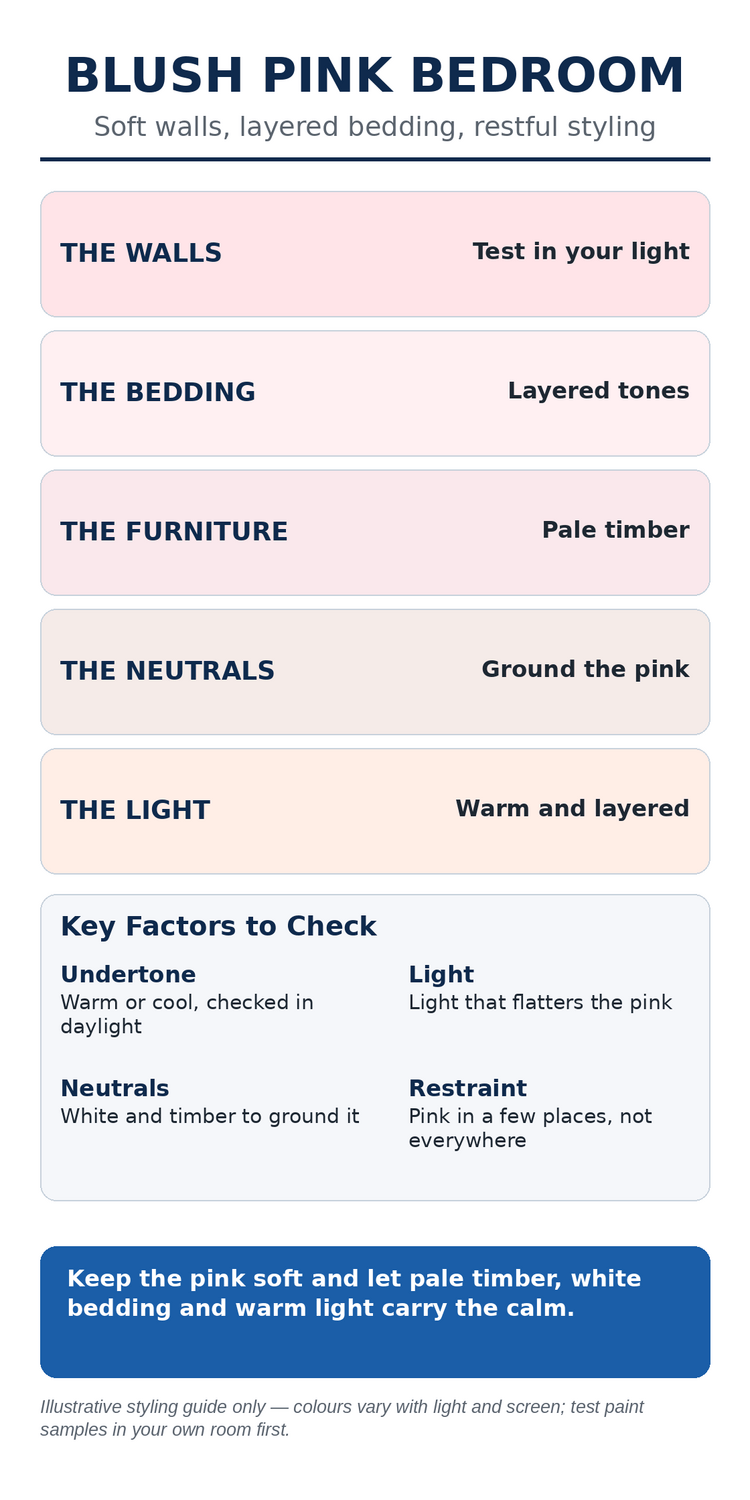
A blush pink bedroom works when the colour is treated as a warm, restful background rather than a statement on its own. Test undertones in your own light, layer bedding in related tones, choose furniture and neutrals that let the blush breathe, and use warm lighting to keep it flattering day and night. Keep storage calm, let plants and natural textures provide contrast, and resist the urge to add more pastels on top. Done with restraint, blush gives a bedroom a gentle warmth that suits mornings and evenings alike, and a room that feels both soft and grown-up for years. For the colour itself and its pairings, see dusty rose, and for more bedroom ideas see scandinavian bedroom ideas, craftsman living room ideas, daybed ideas, tiny house designs and interior design ideas.



0 Comments