

A chainsaw that stalls at idle, bogs down in the cut or races when it should be settling is often asking for carburetor attention, not replacement. Two small screws — marked L and H — control most of that behaviour.
This guide explains the general method behind a poulan 2150 carburetor adjustment and similar saws: what each screw does, how to work in small, safe steps outdoors, and when to stop and hand the saw to a technician instead.
1. Before You Touch a Screw: Safety and Symptoms
Carburetor adjustment happens with the engine running and the chain fitted, which makes it one of the few maintenance jobs where the tool is live throughout. Treat it with the same respect as cutting itself. Wear proper protective gear — chainsaw gloves, eye and ear protection, sturdy boots and, ideally, chainsaw trousers or chaps — and work outdoors on level ground with the saw able to sit flat, well away from other people, pets and anything flammable. Never adjust a saw indoors: exhaust fumes build up quickly in enclosed spaces.
Be honest about the symptom before you begin. A saw that has run well for seasons and suddenly misbehaves usually has a cause — stale fuel, a clogged filter, a split fuel line — and turning screws to mask that cause makes the eventual fix harder. Adjustment is for fine-tuning a healthy saw, especially after a carburetor clean or a change in working conditions, not for resurrecting a neglected one. Note exactly what the saw does: stalls at idle, hesitates when you squeeze the trigger, screams at full throttle, or four-strokes and smokes. Each symptom points at a different screw, and guessing wastes the one resource you cannot get back — your starting settings.
Write down the answers to these questions for your saw before you start; they are the whole job in miniature.
| Where should I work? | Outdoors, on firm level ground, with space around you and no audience — the saw is running throughout. |
| What do I wear? | Chainsaw gloves, eye and ear protection, sturdy boots and protective trousers or chaps, as for cutting. |
| What tool fits the screws? | Many modern saws use a special splined or shaped adjusting tool rather than a plain screwdriver; check what your saw needs before you start. |
| How far do I turn a screw? | In small increments — think eighths of a turn — then pause and listen. Big turns overshoot and lose your place. |
| What is my reference point? | The saw’s own manual gives the maker’s baseline settings and limits; find them first, and never force a screw past a stop or limiter. |
| When do I stop and see a technician? | If the chain creeps at idle and will not settle, the saw races uncontrollably, fuel leaks, or symptoms survive basic checks. |
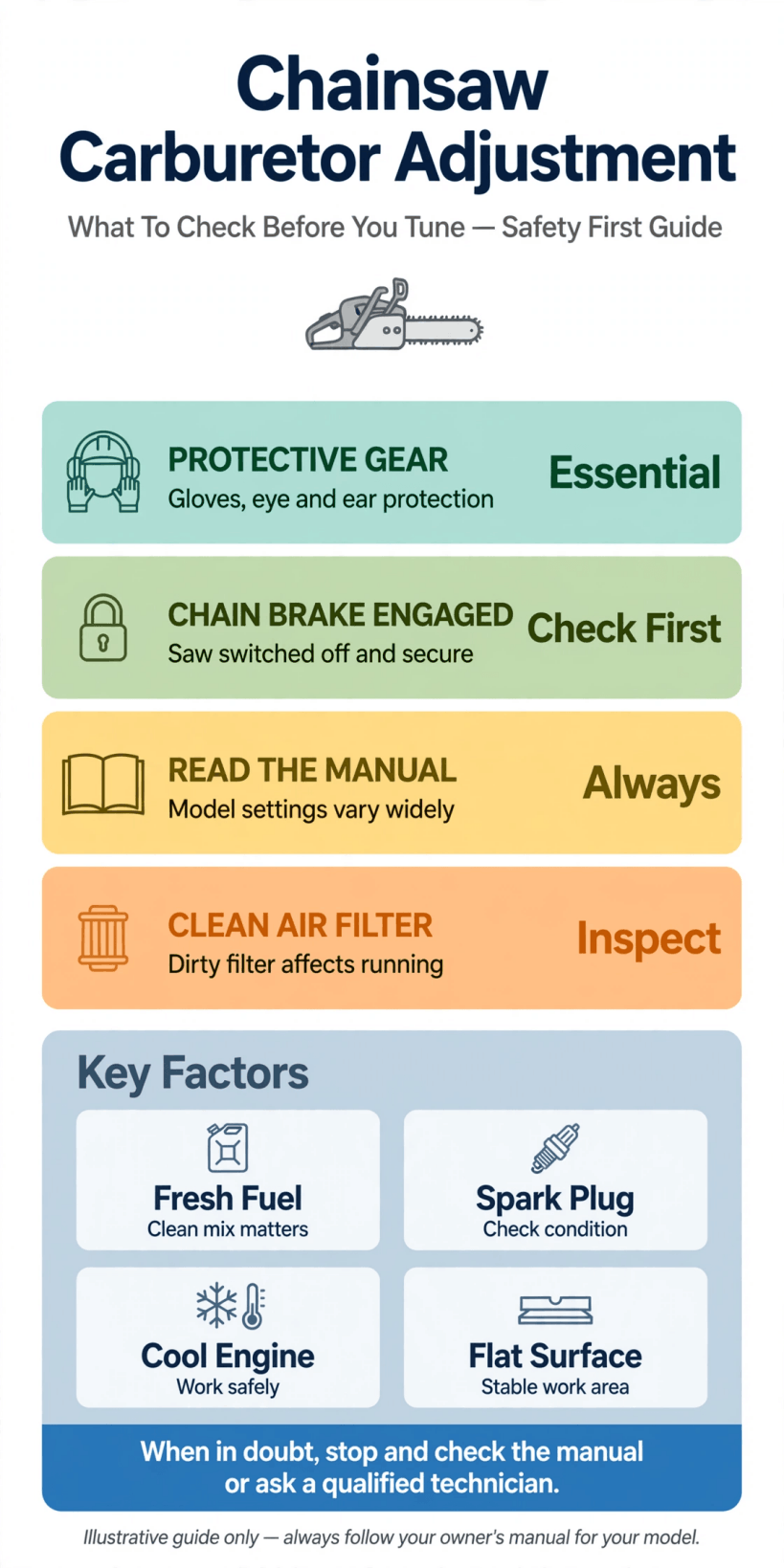
The L, H and idle screws at a glance, with the safety checks that come before any adjustment.
2. What the L, H and Idle Screws Actually Do
A small two-stroke carburetor meters fuel through separate circuits for low and high engine speeds, and the screws are simply taps on those circuits. The L screw governs the mixture at idle and during the first part of acceleration, which is why a saw that stalls when you open the throttle, or dies the moment you let go of the trigger, is usually telling you about L. The H screw governs the mixture at full throttle, under cutting load; it decides whether the saw pulls cleanly through timber or bogs, smokes and gives up.
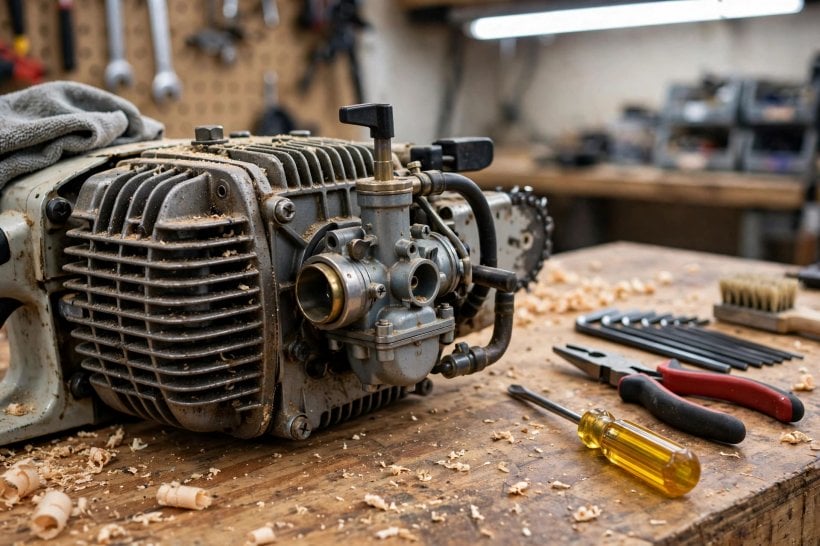
The third control, often marked T or LA, is not a mixture screw at all: it sets the idle speed mechanically by holding the throttle plate slightly open. Turning the screws clockwise generally leans the mixture — less fuel for the same air — and anticlockwise richens it, but treat that as orientation, not instruction: work from your manual, and remember that too lean at full throttle is the setting that can overheat and damage an engine. Understanding which circuit misbehaves is the skill; the turning itself is the easy part, and it is what keeps a saw ready for work around the home and garden, from firewood to the clearing jobs in these tiny house landscaping ideas.
3. Tools, Access and Finding the Screws
On most homeowner saws the adjustment screws sit on the side of the carburetor, reached through holes or slots in the cover near the air filter, and they are marked L and H beside small cast letters that are easy to miss under sawdust. Clean around them first with a brush or air, because grit falling into the carburetor area helps nobody. Many newer saws use splined or otherwise shaped screw heads that need the matching adjusting tool; that tool is inexpensive, and forcing the wrong driver damages the heads and makes every later adjustment harder.

Before starting the engine, locate each screw and rehearse which is which: L is normally nearest the engine block, H nearest the air filter, but layouts vary, so confirm against the manual’s diagram rather than memory. Check that the screws turn smoothly through a small range and are not seized; a stiff screw is a reason to stop and have the carburetor serviced, not to reach for more force. Note the starting position of each screw in a way you can return to — a fine marker line across the screw head and surrounding casting works — so a failed experiment can always be undone.
4. Checks Before Adjustment: Fuel, Filter and Spark
More ‘carburetor problems’ are cured without touching the screws than with them. Start with the fuel: two-stroke mix that has sat for months loses its sparkle, and old or incorrectly mixed fuel makes a saw run badly in exactly the ways people blame on settings. If in doubt, empty it, mix fresh fuel at the ratio the maker specifies for your saw, and try again. Check the fuel filter inside the tank and the fuel lines for splits, softness or collapse.
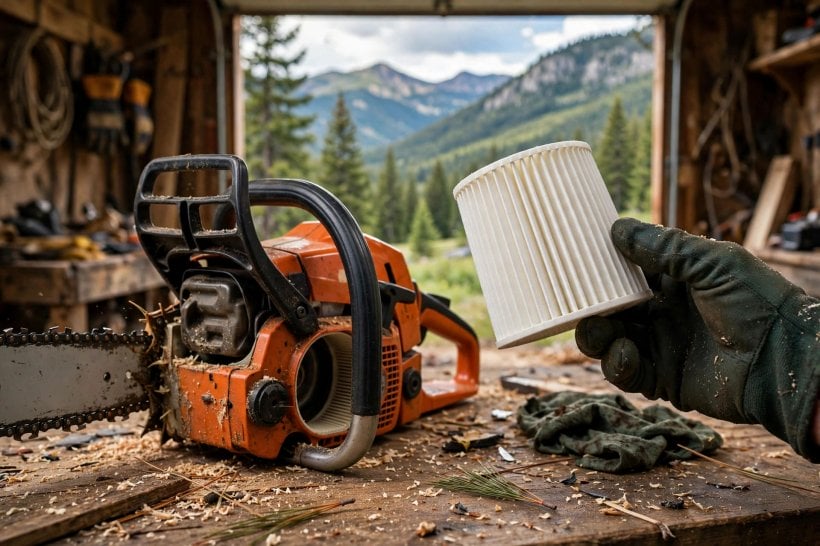
Then the air filter: a filter clogged with fine dust starves the engine of air and enriches the mixture, mimicking a carburetor fault, so clean or replace it before judging settings. Look at the spark plug too — its colour and condition are a diary of how the engine has been running — and confirm the spark arrester screen in the exhaust is not choked with carbon. Only when fuel, filtration and spark are known-good does adjustment make sense; it is the same checks-first discipline that applies to any workshop project, from saw tuning to the builds described in this guide on how to build your own tiny house.
5. Warm the Saw Up Properly
A cold engine lies about its mixture. Fuel vaporises poorly when cold, the choke enriches everything, and settings made on a cold saw wander as soon as it reaches working temperature. Start the saw as you normally would, let it idle until it responds cleanly to a gentle squeeze of the throttle, and make a few light cuts in scrap wood if you can, so the engine is properly warm and loaded before you judge anything. Keep the chain brake and your own position in mind throughout: the saw sits on the ground or is held securely as the manual advises, and the bar points away from you and from anything the chain could catch.

Listen before you touch. A healthy warm idle is steady and unhurried; hesitation when the throttle opens suggests the low-speed side needs attention; a flat, bogging note at full speed, or excessive smoke, points the other way. Work in a set order — idle speed and L first, H last — because the circuits overlap slightly and chasing them in random order has you undoing your own work. Between every small change, let the engine settle for several seconds and re-test, because a two-stroke takes a moment to show you what a change actually did.
6. Setting the Idle and the L Screw
Begin with the idle speed screw so the engine just runs reliably without the chain moving; the chain must not creep at idle, and if it does, the idle is too high or something else is wrong — lower the idle or stop and investigate rather than accepting a creeping chain as normal. With a steady idle established, turn the L screw in tiny increments, pausing after each, and listen for the cleanest, strongest idle. Moving one way will make the engine falter and die; moving the other will make it sound lazy and smoky; the sweet spot sits between, where the idle is smooth and the saw picks up crisply when you squeeze the trigger.

Test the transition repeatedly: from idle, open the throttle briskly. A pause, cough or stall before the revs climb means the low side is still lean; a sluggish, blubbering climb suggests it is rich. Adjust in smaller steps as you get closer, and re-trim the idle speed screw afterwards if the idle has risen or fallen, because the two settings lean on each other. When the saw idles steadily, accelerates cleanly and settles back to idle without hanging or dying, the low side is done — resist the urge to keep hunting for a perfection that wears out your patience and your reference point.
7. Setting the H Screw Under Load
The H screw decides how the saw behaves at full throttle in the cut, and it carries the highest stakes of the three: running too lean at full speed starves the engine of the fuel that also carries its lubricating oil, and that is how engines overheat and seize. Work in small increments and test under real load, making cuts in a decent-sized log rather than judging by free revving alone, because a saw can sound eager in the air and still be wrong in the wood. Briefly revving the saw out of the cut tells you part of the story — a slight burble or ‘four-stroke’ note at maximum revs, clearing as the saw loads in the cut, is the classic sign described in most guidance — but the cut itself is the honest test.
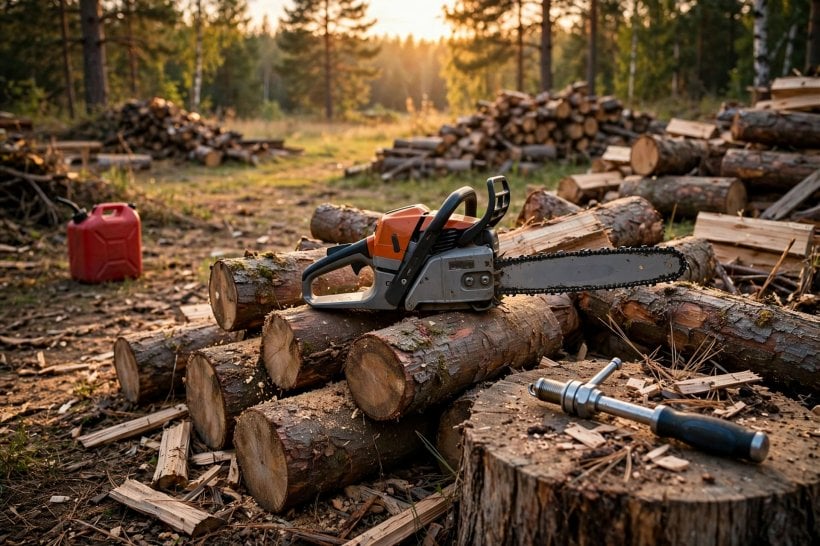
If the saw bogs, smokes heavily or will not hold revs in the cut, the high side is rich; if it screams, feels harsh and loses pulling power, suspect lean and back off promptly. Never chase maximum revs for their own sake, and never defeat limiter caps or force a screw beyond its stop to get there. Store the saw afterwards somewhere clean and dry, as you would in the kind of ordered outbuilding shown in this tiny barn house interior, with fuel treated as the flammable liquid it is.
8. Testing in the Cut and Reading the Saw
With both circuits set, spend a few minutes simply working: cross-cut, make a longer rip cut, let the saw idle between cuts, and restart it warm. A well-tuned saw starts readily when warm, idles without drama while you reposition the log, pulls through the cut without bogging, and produces chips rather than dust — dust means a dull chain, which no amount of carburetor work will disguise, so keep chain sharpening ahead of screw-turning in your habits.
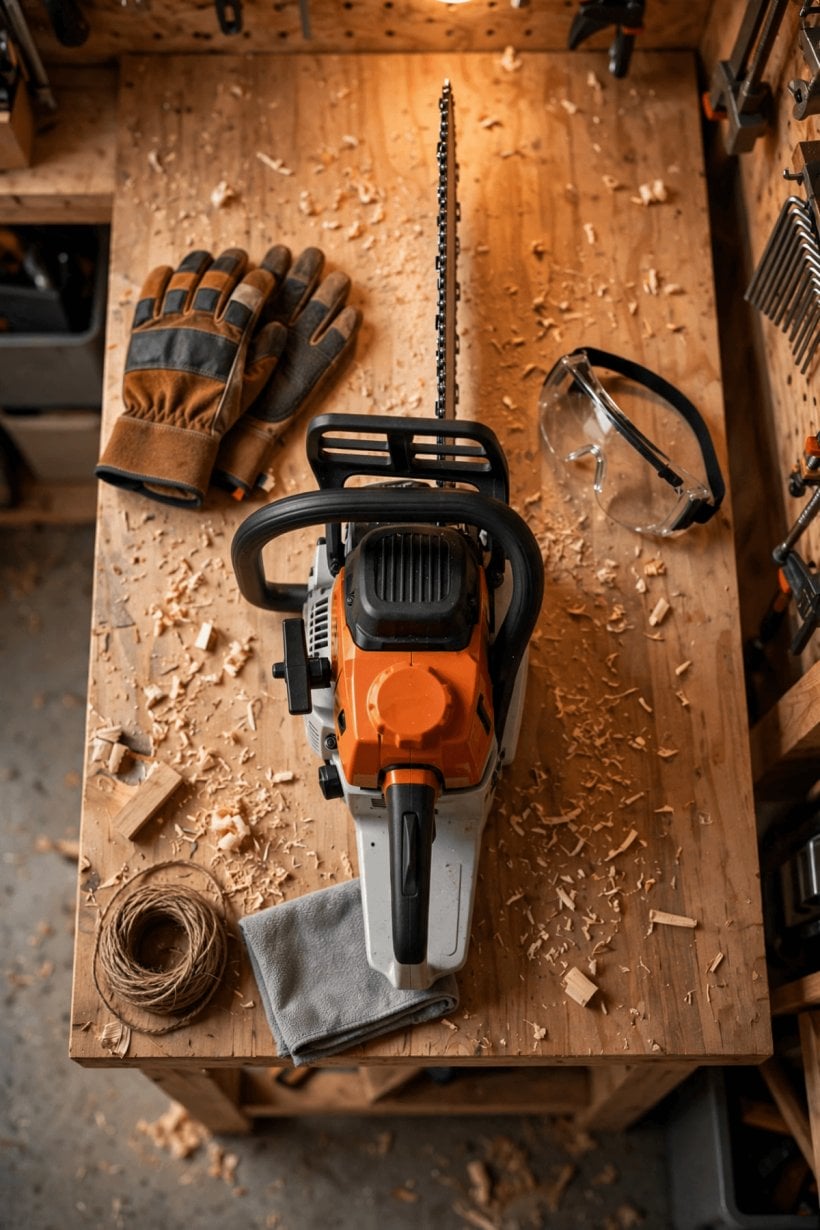
Read the whole saw, not just the sound. The bar and chain should run without excessive heat or smoke from the bar oil side; the exhaust note should stay consistent as the saw warms fully; and the spark plug, checked later when the engine is cold, should not come out chalky white or sooty black. If the saw behaves in the wood but misbehaves elsewhere — perfect in the cut, impossible at idle — you have narrowed the fault to one circuit, which is valuable information whether you fix it yourself or hand it to a technician with a clear description. Garden timber, once cut and stacked, feeds the stoves and fire pits that make outdoor spaces like those in these landscaping ideas for tiny house gardens so enjoyable in the cooler months.
9. When Adjustment Is Not the Problem
Some symptoms laugh at screwdrivers. A saw that needs constant re-adjustment, runs differently every outing, or floods and refuses to start may have perished carburetor diaphragms, a worn needle valve, an air leak at a gasket or crank seal, or a blocked fuel vent — none of which respond to mixture screws, and all of which are made harder to diagnose if the screws have been wandered away from sensible settings. This is the moment your marker lines earn their keep: return the screws to where you found them, or to the baseline in the manual, and stop.
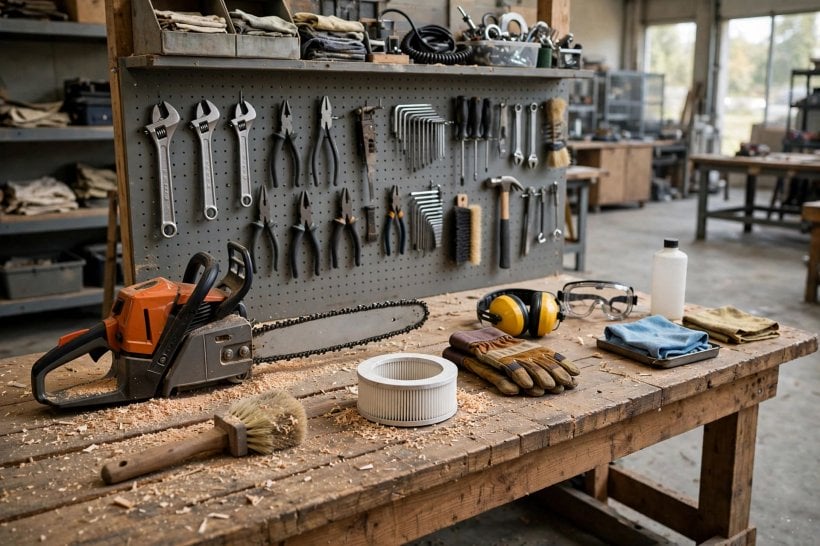
Handing a saw to a technician is not defeat; workshops have pressure testers, spare diaphragms and the experience to spot an air leak in minutes. Take the saw in with your notes: what it does, when it started, what you checked and what you changed. That description saves workshop time and gets you a saw back that is genuinely fixed rather than merely adjusted around its fault. Fuel leaks, a chain that will not stop moving at idle, cracked housings near the carburetor and any damage to the chain brake are all stop-now faults — do not run the saw again until they are repaired.
10. Records, Re-Checks and Seasonal Habits
Finish the job on paper. Write down the date, the fuel batch you used, what the symptoms were and roughly where the screws ended up relative to your marks. Next season, that note turns a mystery into a comparison. A saw’s tune also drifts legitimately: altitude, temperature and a fresh air filter all nudge the ideal settings, so a light re-check at the start of the heavy cutting season is normal ownership, not a sign of failure — provided the basic checks come first each time.
Build the surrounding habits and the carburetor will need you less: fresh fuel in small quantities, a clean air filter, a sharp chain, bar oil topped up, and the saw stored clean with the tank and carburetor treated as the maker’s storage guidance advises. Stack the firewood you cut somewhere airy to season, ready for the stove — well-seasoned logs and a well-tuned saw are the two halves of the cosy evenings pictured among these tiny house living room ideas. Keep the adjusting tool with the saw’s kit, not in a general toolbox drawer, so it is there the day you need it.
Final Considerations
Carburetor adjustment is a listening skill with a screwdriver attached. Work outdoors, wear the gear, make the basic checks first, change one thing at a time in the smallest steps you can, and let the saw’s behaviour in real wood be the judge. The L screw shapes idle and pickup, the H screw shapes full-throttle cutting, and the idle screw simply sets the speed at which the engine ticks over — three small controls that reward patience and punish hurry.
Above all, keep the stop rules sacred: a chain that creeps at idle, a saw that races or leaks, or symptoms that survive honest checks all mean the session is over and a technician takes the next turn. A saw adjusted calmly and correctly is a pleasure for seasons; a saw forced past its limits is an engine rebuild. Choose the pleasure.




0 Comments