
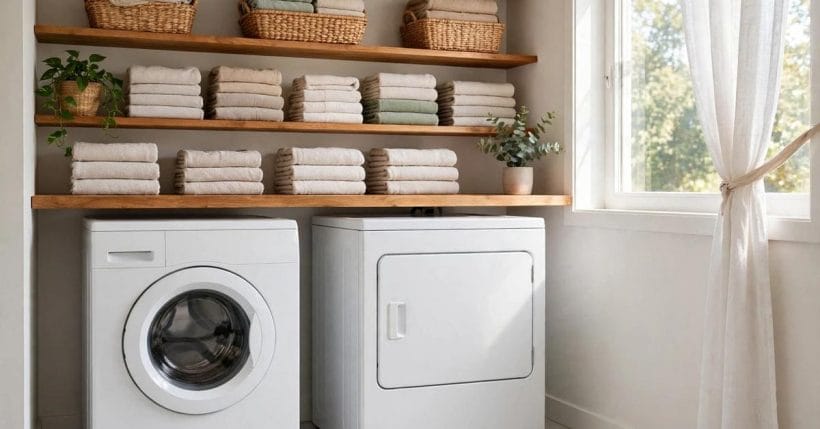
A gas dryer is the one laundry appliance you cannot simply plug in and forgive. It burns gas to make its heat, breathes moist air out through a vent, and asks more of the room — and of the people who fit it — than any washer ever will.
This guide works through the choosing in the order that keeps you safe and saves you money: the space, the vent, the gas connection, the drum, and only then the dials — with every gas and venting job left, plainly and without exception, to licensed professionals.
1. Choosing a Gas Dryer at a Glance
The central entity is the gas clothes dryer: a tumble dryer that heats with a gas burner and turns with an electric motor. It belongs to the same laundry family as the machines in our stackable washer dryer guide, but the choosing is different in kind, because two of its five big questions — the vent and the gas line — are about the house, not the appliance.
| Aspect | What to know | In a word |
|---|---|---|
| The Fit | Space, door swing, stacking | Measured |
| The Vent | A clear path for moist air out | Essential |
| The Gas Line | Fitted and tested by a licensed pro | Pro only |
| The Drum | Room for the loads you really wash | Honest |
| The Heat | Even drying, gentle on fabric | Steady |
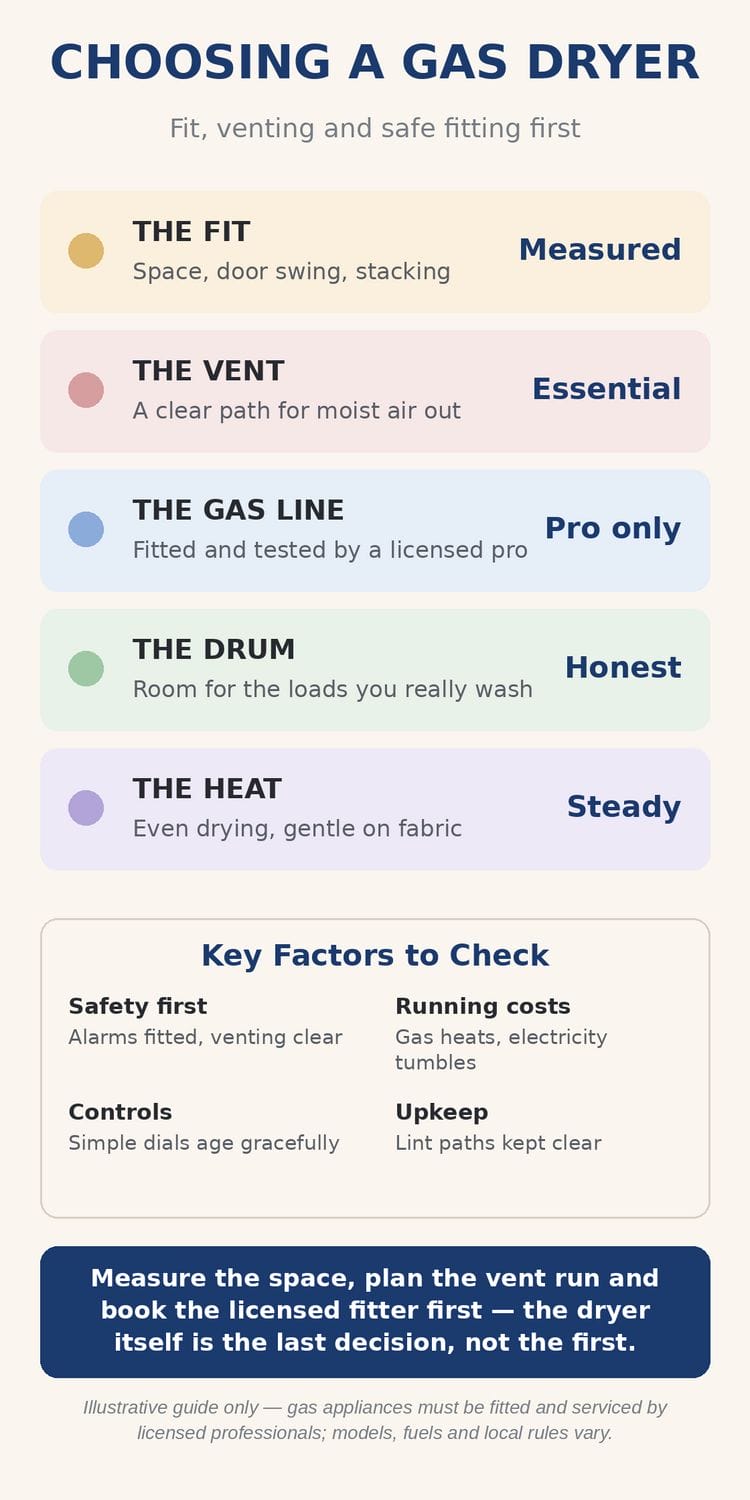
Measure the space, plan the vent run and book the licensed fitter first — the dryer itself is the last decision, not the first. Four checks sit behind the table: safety first, because alarms and clear venting come before convenience; running costs, since gas makes the heat while electricity only turns the drum; controls, where simple dials age more gracefully than crowded touch panels; and upkeep, because a lint path kept clear is the cheapest performance upgrade there is.
Everything below assumes the same discipline: you choose the machine, and qualified professionals connect it. A gas appliance fitted casually is not a bargain at any price, and no section of this guide will suggest otherwise.
2. Start With the Space: Fit Before Features
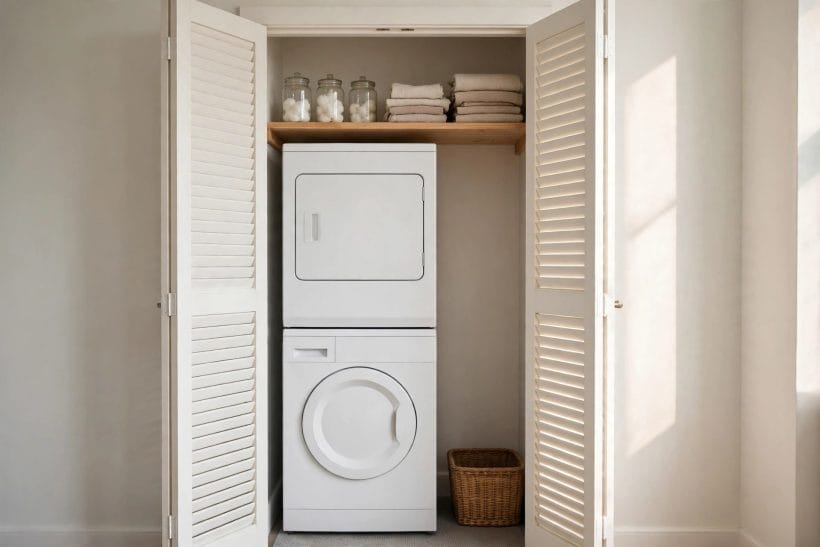
The stacked pair in this photograph lives in a closet barely wider than the machines themselves, and it works — because somebody measured before they bought. A dryer needs its own width, room for its door to swing fully open, and working space behind it for the vent and the gas connection.
Measure the route as well as the room: doorways, hall turns and stair corners between the street and the laundry space decide whether the machine you chose can even arrive. The tight fits in our laundry closet post show how small a working laundry space can be when the layout is planned around the machines rather than around hope.
Door swing deserves its own minute. A dryer door that opens against a wall, a bench or the washer’s door will be fought daily, and a door that cannot open fully makes loading a wrestling match. It is the same small-room geometry that governs the doors in our slide-away oven door checks — in tight rooms, the swing is the design.
Stacking is the other fit question. A stacked pair saves floor space and suits closets and small apartments, but it puts the dryer door at chest height and the controls higher still. If anyone in the household is shorter, or loads with limited reach, a side-by-side pair under a worktop is usually the kinder arrangement.
3. The Vent Run: Moist Air Needs a Way Out
Every load of washing holds a surprising amount of water, and a gas dryer sends that moisture out through its vent along with the products of combustion. The vent is therefore not an accessory; it is half the appliance. The tall laundry room in this photograph has the one thing every vent wants — a short, honest path to an outside wall.
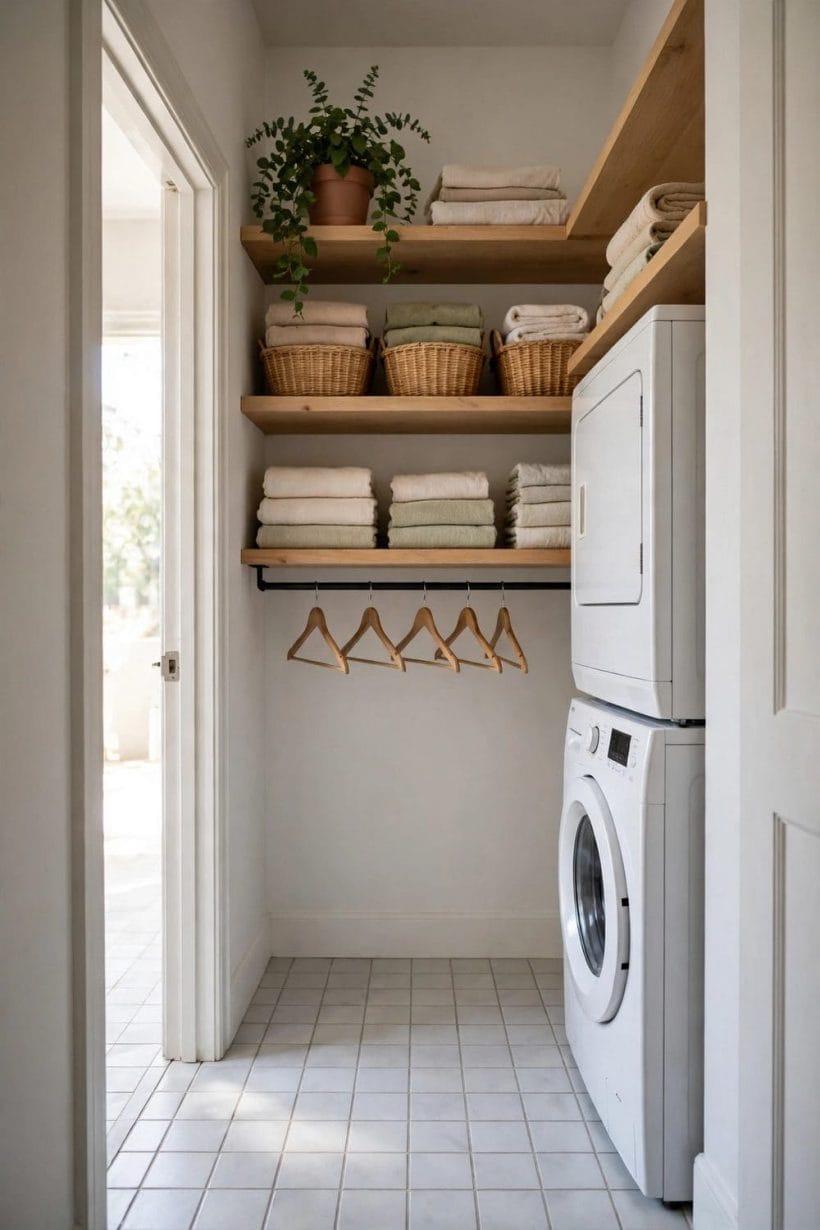
Plan the vent before the machine. Short runs with few bends move air freely; long runs with several turns ask the dryer to push against resistance, which lengthens drying times, loads the machine with lint and, in a gas appliance, is a safety question rather than a mere inefficiency. Where the vent must travel matters as much as which dryer you buy.
The vent’s materials and its termination — where it leaves the building — are part of the licensed fitting job, and local rules govern both. What you can decide as a buyer is the room: a dryer placed on or near an outside wall almost always vents better than one buried in the middle of the house.
Never accept a gas dryer vented into the room, the attic or a bucket of water. Indoor venting arrangements that are merely tolerated for some electric dryers are not acceptable for gas: the exhaust carries combustion products, and it belongs outside, entirely and always.
4. The Gas Connection: Licensed Work, No Exceptions
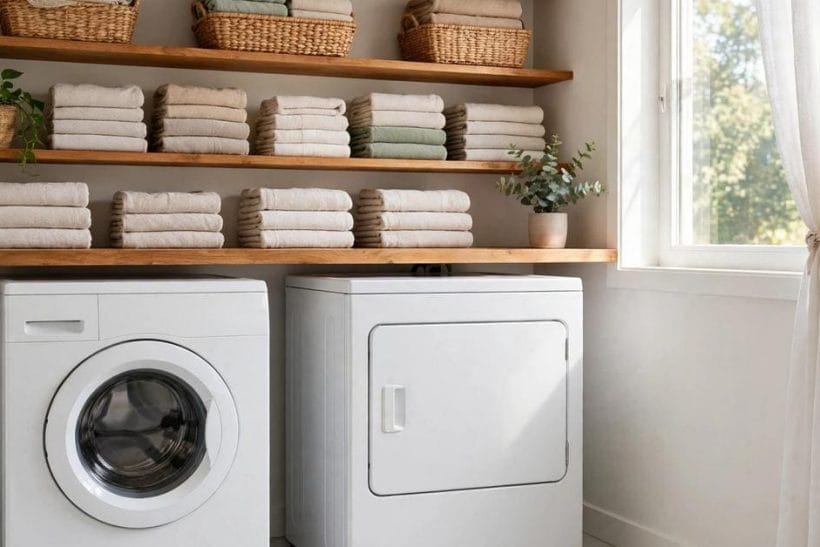
The under-counter pair in this photograph looks as simple as furniture, and that is the trap. Behind the calm front sits a gas supply that must be connected, tested for leaks and signed off by a licensed gas fitter — in most places, by law, and everywhere, by common sense.
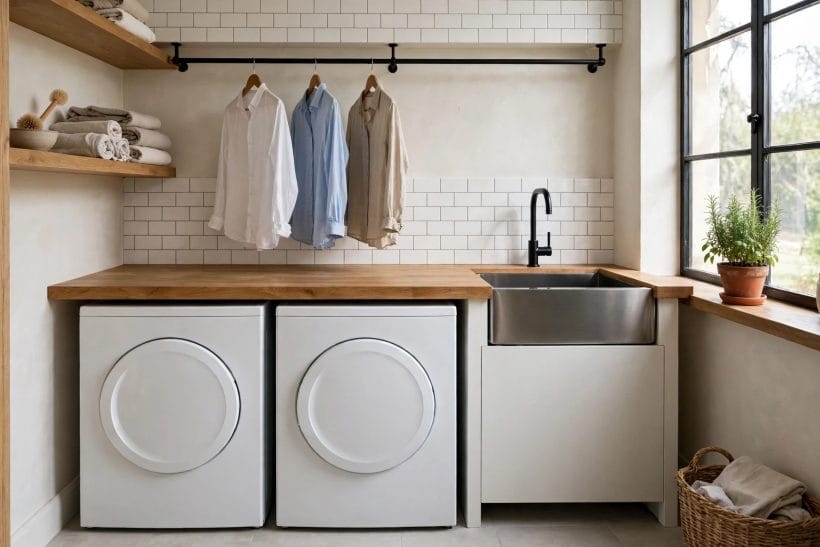
Budget and book the fitter as part of the purchase. The fitter confirms the supply can serve the appliance, fits the connection and shut-off, tests the whole run, and checks the completed installation’s ventilation and combustion. If a seller suggests the connection is a do-it-yourself detail, that seller has told you something important about themselves.
If your laundry space has no gas supply, the honest comparison is between paying for a new supply run — quoted by the fitter, in writing — and choosing an electric dryer instead. That is a legitimate either/or decision; what is not legitimate is improvising the supply yourself.
Ask the fitter, before the machine arrives, where the shut-off will sit and how the dryer can be pulled out for servicing without straining the connection. Appliances are serviced from behind more often than brochures admit, and a fitting that allows safe access is part of a good installation.
5. Drum Size: Honest Capacity for Real Loads
The open drum in this photograph is the part of the dryer you will actually live with. Drum sizes are described in ways that flatter, so translate them into your own laundry: the question is never the number on the label but whether your largest real load — bedding day, towel day — tumbles freely.
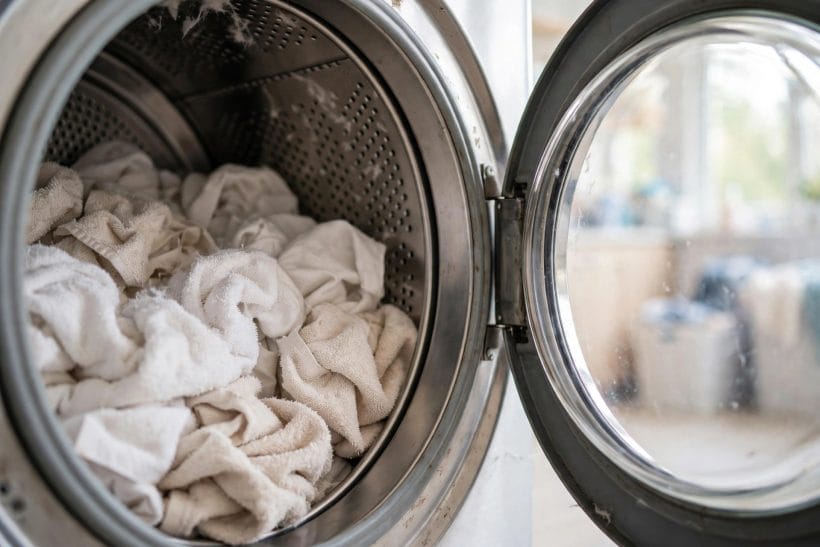
Clothes dry by tumbling through warm air, and a drum packed tight dries slowly and unevenly however good the burner is. A household that washes big loads needs a drum that lets them move; a household of one or two, washing little and often, is better served by a smaller machine run at its comfortable load than a large one run nearly empty.
Match the dryer to the washer. The pair works as a system: a dryer noticeably smaller than the washer invites either overloading or a second, half-empty cycle for every wash. Sales staff will happily sell you a mismatch; your laundry basket will not forgive it.
Special loads deserve a thought before purchase. Duvets, blankets and bulky jackets need drum room more than they need programmes. If bulky bedding is a weekly event in your house, say so when you shop, and judge the drum by that load, not by a shirt.
6. Heat and Cycles: How Gas Drying Feels
The wooden rack in this photograph is the dryer’s quiet partner: line-drying and rack-drying still do part of the week’s work in most houses, and a load spread on a rack asks nothing of the burner at all. Judge a dryer’s cycles against the loads the rack cannot take — the wet, heavy, urgent ones.
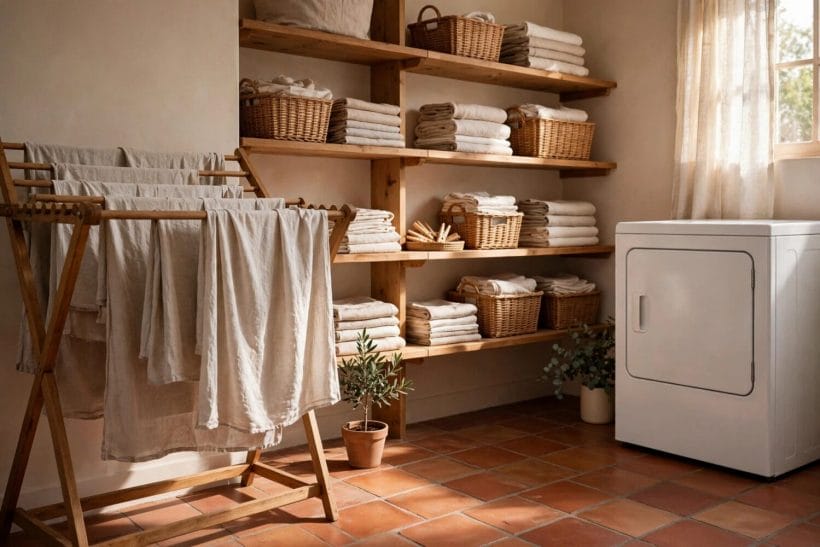
Gas heat has a character: it arrives quickly and in strength, which is why gas dryers are often praised for shorter cycles. The practical consequence for choosing is that the quality of a gas dryer shows less in its heat — which is ample — than in how gently and evenly it applies that heat load after load.
Look for cycles you will genuinely use rather than a long menu. A everyday mixed load, a gentle cycle for delicates, a thorough one for towels and bedding, and a simple timed option cover nearly every household. The honest test of a cycle list is whether you can name the laundry each entry is for.
Moisture-sensing cycles, which end the load when the clothes are dry rather than when a timer guesses, are worth having: they save energy, spare fabric from needless heat, and end the tyranny of the still-damp second run. Where two machines differ mainly here, choose the better sensing over the longer feature list.
The appliance guides on this site share one habit — checking the thing that actually affects daily life. It is the same reasoning we applied to quiet refrigerator noise and to dryers here: the specification that matters is the one you will notice every single day.
7. Controls and Features Worth Having
The mudroom pair in this photograph will be used with full baskets and wet hands, which is the right test for controls. Big, legible, forgiving controls — a dial you can set by feel, a start button you can find without glasses — outlast any novelty.
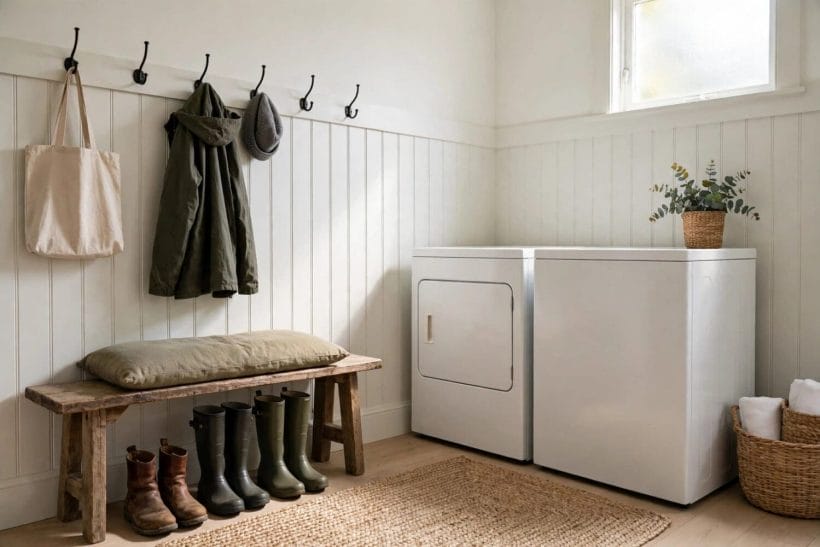
Features that earn their place: a lint filter that is easy to reach and obvious to clean, an end-of-cycle signal you can turn down, a drum light if the room is dim, and a door that can be reversed if the room demands it. Features that rarely earn theirs: novelty cycles named for fabrics nobody owns, and connectivity that lets an app watch laundry dry.
The checks here rhyme with those in our compact microwave guide — measure honestly, prefer the controls you will use weekly, and let the maker’s specification sheet, not the showroom pitch, have the last word.
8. Running Costs and Upkeep
A gas dryer’s running story is simple: gas usually provides heat economically, the motor and fan use a little electricity, and the machine’s real appetite is decided by your vent, your loads and your lint filter more than by its label.
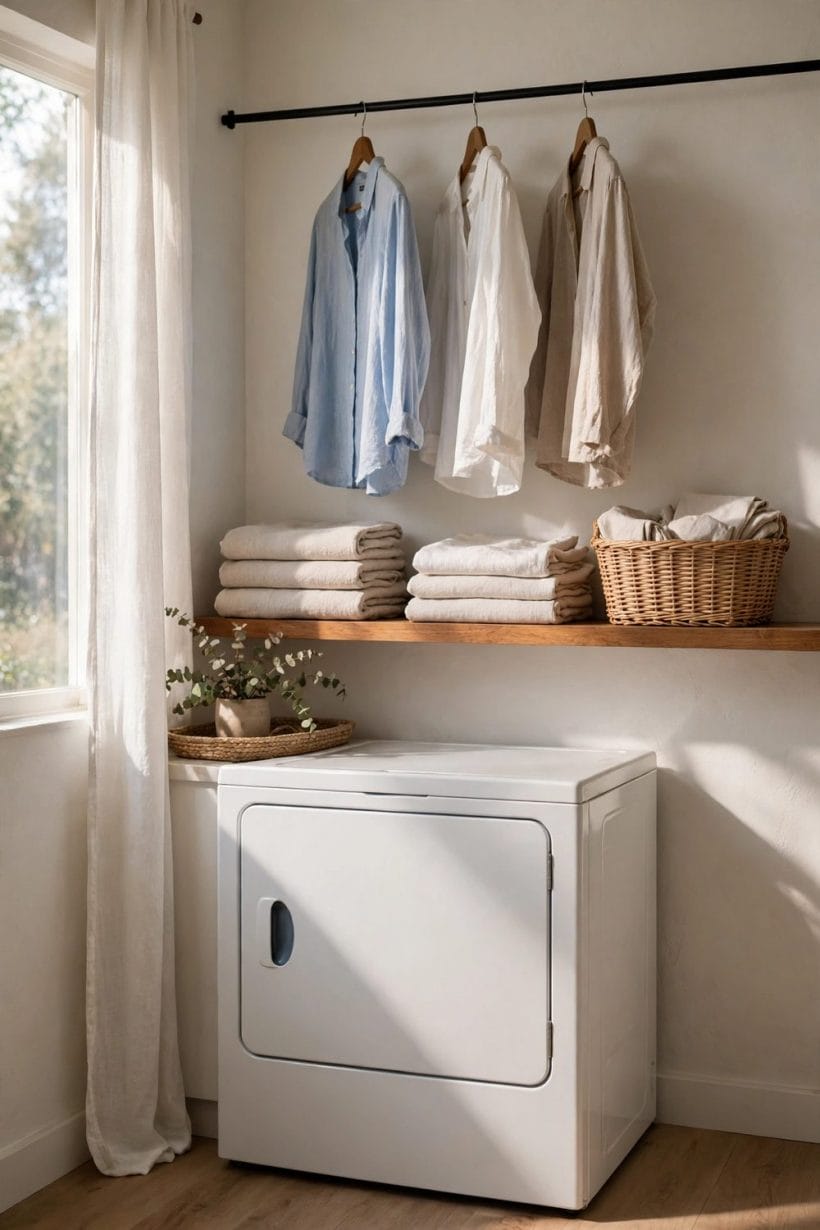
Upkeep is short and non-negotiable. The lint filter is cleaned after every load — a clogged filter lengthens cycles, overheats the machine and is a genuine fire risk. The vent run needs periodic professional checking and cleaning, because lint gathers where you cannot see it. The area behind and beneath the machine should stay clear rather than becoming storage for the flammable clutter laundry rooms attract.
Servicing belongs to the same licensed world as fitting. A gas dryer that smells of gas, soots, dries unevenly in a new way or trips its flame sensing is switched off and booked in — not opened up at the kitchen table. Keep the fitter’s details with the machine’s paperwork.
Whole-room running costs include the laundry’s other citizens, and the organised utility spaces among our kitchen ideas show how worktops, sinks and storage around the machines make the weekly routine cheaper in time, which is the currency households actually feel.
9. Safety Checks That Are Not Optional
The tiled room in this photograph is a good laundry room partly because it is uncluttered. Gas appliances ask for a short list of standing safeguards, and a choosing guide is the right place to state them plainly.
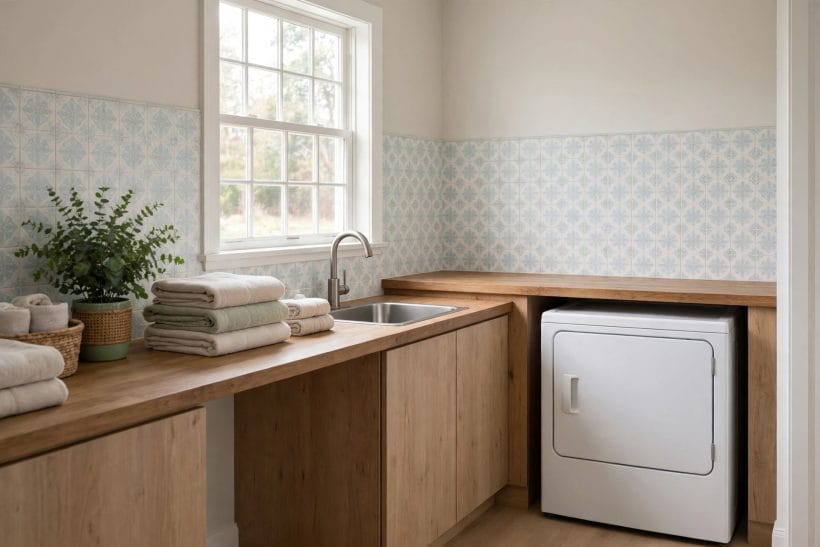
Fit a carbon monoxide alarm in the home where the appliance maker’s and local guidance require it, test it on its maker’s schedule, and treat any alarm as a stop-and-call event: appliance off, air the room, and the licensed fitter or emergency service consulted — never silenced and forgotten.
Keep the dryer’s surroundings honest: no stored solvents, paints or fuel near the appliance; no drying of anything that has been in contact with oils or solvents, which belong nowhere near a heated drum; and no bypassing of door switches or sensors, ever, for any reason of convenience.
Children and laundry rooms are a standing household negotiation — the dryer door stays closed, the machine is never a hiding place, and the room’s chemicals live high and latched. None of this is specific to gas, but gas raises the stakes of treating it casually.
10. Questions to Ask Before You Buy
Bring a short list to the showroom or the listing, and let the answers — or the shrugs — rank the machines for you. Does the room it is going into appear anywhere in the seller’s questions? A seller who asks about your space and vent before praising features is selling the right thing.
Ask: who fits it, and is the fitter licensed for gas work? What does fitting include — connection, testing, the vent run, removal of the old machine? What is the vent route from my room, and does the quote assume it? What does the warranty cover, and who services it locally?
Ask about the machine itself last: the drum against your biggest load, the sensing cycles, the filter’s position, the door’s swing and whether it reverses. By the time these questions matter, the house questions have already eliminated most of the shelf.
And if the answers reveal the room cannot take gas safely or sensibly, take the hint gracefully — the wider home design ideas on this site are full of laundry rooms that chose electric and never looked back.
Final Considerations
A gas clothes dryer is a good servant with strict terms: a measured space, a short and honest vent, a licensed fitting, a clear lint path and an alarm standing guard. Choose in that order and the machine almost chooses itself; choose by the dial menu and the showroom shine, and the house will spend years correcting you. The burner is the easy part. The room is the decision.




0 Comments