
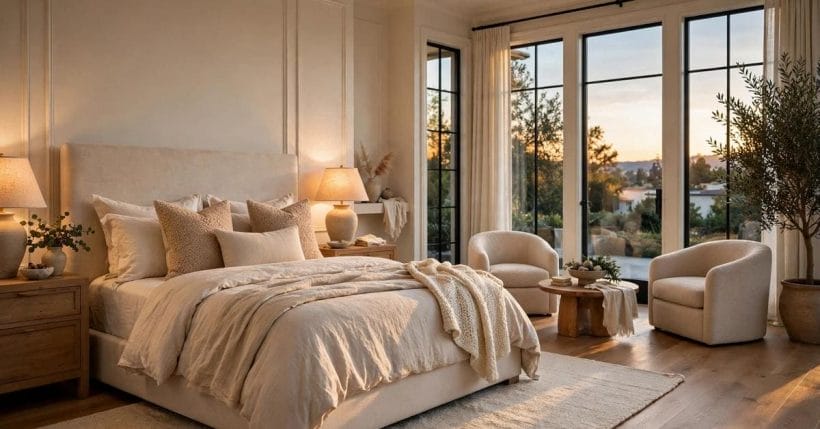
A master suite earns the word luxury in a specific way: not by containing expensive things, but by arranging ordinary ones — a bed, a chair, a lamp, a door that closes — so the room feels calm from the moment you walk in.
These 36 luxury master suite ideas work through the room in the order it is actually used: the layout, the bed, the colours, the corner you sit in, the dressing space, the bathroom beyond, and the light all of it is seen by.
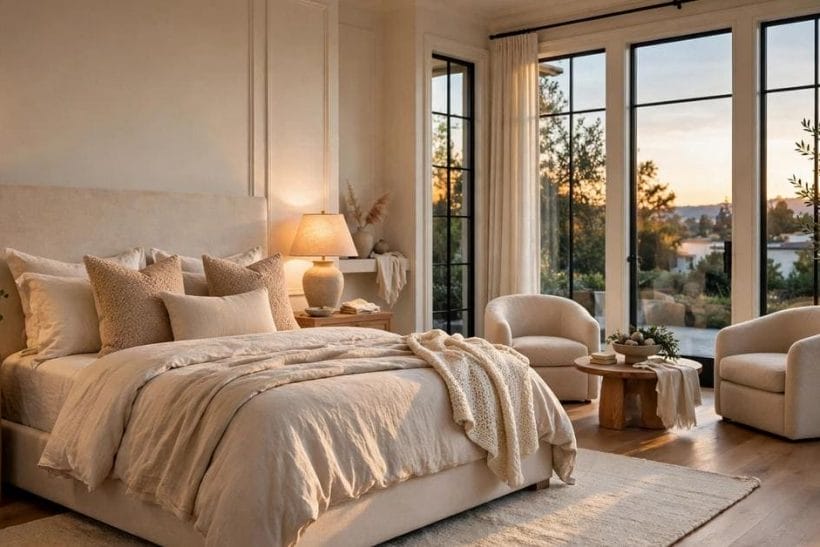
1. Luxury Master Suites at a Glance
The central entity is the master suite: not a big bedroom, but a small sequence of connected spaces — sleeping, sitting, dressing and bathing — that belong to one or two people and nobody else. It sits inside the wider family surveyed in our bedroom ideas, and what makes it a suite rather than a room is the zoning: each activity given its own ground, inside one calm whole.
| Aspect | What to know | In a word |
|---|---|---|
| The Layout | Sleep, sit, dress, bathe — in zones | Zoned |
| The Palette | Soft neutrals, calmly layered | Serene |
| The Retreat | A chair, a lamp, quiet corner | Private |
| The Dressing | Wardrobes plus a vanity | Orderly |
| The Light | Layers for morning and evening | Glow |
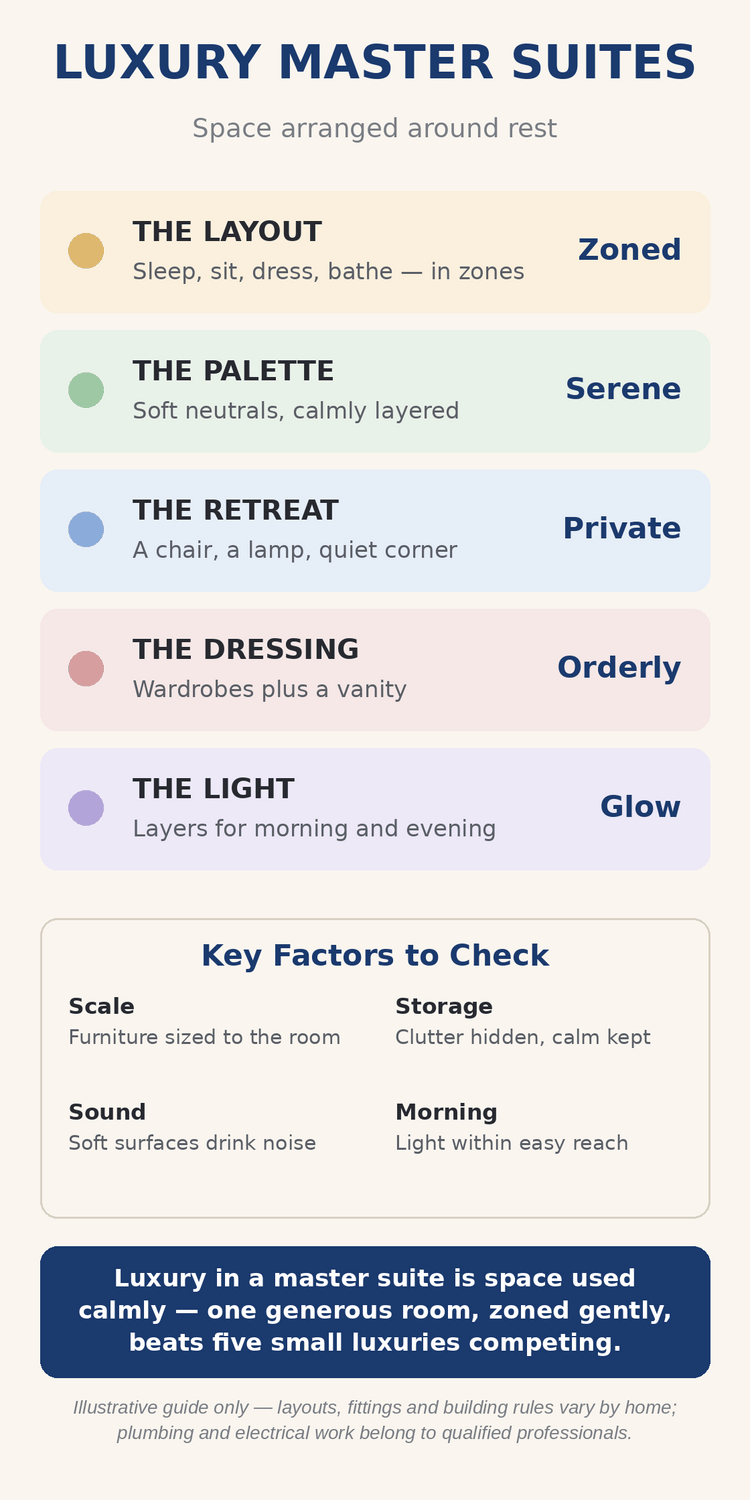
Luxury in a master suite is space used calmly — one generous room, zoned gently, beats five small luxuries competing. Four checks sit behind the table: scale, because furniture sized to the room is the first luxury; storage, with clutter hidden and calm kept; sound, since soft surfaces drink noise; and the morning, with light and everything needed within easy reach.
Most readers arrive here from luxury master bedroom photographs, where every suite seems to be the size of a small flat. Some are. Most are ordinary rooms arranged with unusual discipline, and the 36 ideas below are ordered the way that discipline is built — ground plan first, then the bed, the colours, the comforts, and finally the evening the room is really for.
2. Layouts That Zone the Room
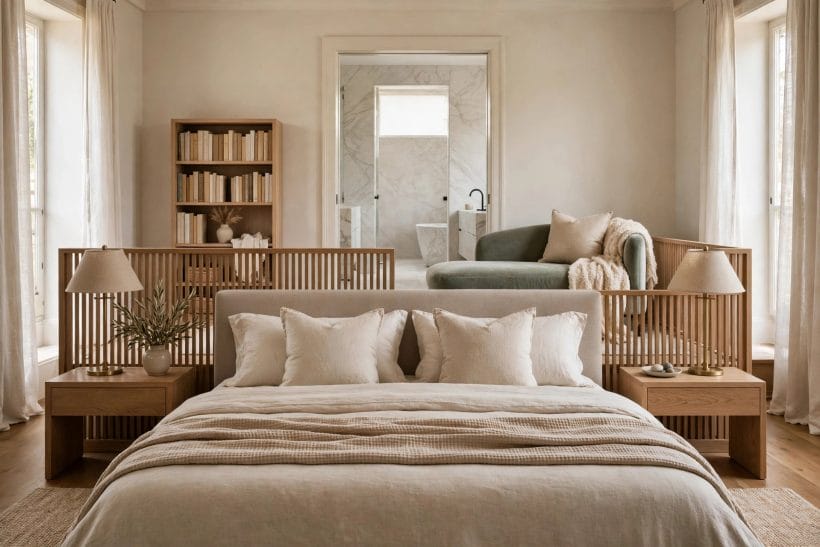
The suite in this photograph is one room reading as three: bed in front, a chaise and shelves behind a low screen, the bathroom door beyond. Zoning is done with furniture and light, not walls.
1. Sleep at the Quiet End
Put the bed in the part of the room farthest from the door and the corridor’s noise, and let every other zone arrange itself between the door and the bed. The sleeper should be the room’s final destination, not its thoroughfare.
2. A Sitting Zone That Is Not the Bed
Two chairs, or one chair and a chaise, with a small table between them — a place to sit that is not the bed keeps the bed for sleeping and gives the suite its second room. It needs its own light and its own rug or change of floor mood.
3. The Low Divider
A bookcase, a screen or the back of a settle at the bed’s foot can split a long room into sleeping and sitting ground without closing either off. The divider should stay below sight-line height from the bed, so the room still reads as one calm space.
4. Dressing on the Way to Bathing
The classic suite sequence — bed, dressing, bathroom — works because it follows the morning’s actual route. Where the plan allows it, put wardrobes on the passage between bedroom and ensuite, as the fuller layouts in our master bedroom ideas arrange them, and the suite organises itself.
5. A Work Corner, Kept Small
If a desk must live in the suite, give it the smallest, most closable corner — a bureau that shuts, a chair that tucks fully under. Work that can be closed away at night does not disturb the room’s purpose; work spread across it does.
6. Doors That Close in the Right Order
A suite’s privacy is layered: the door to the landing, the door to the dressing space, the door to the bathroom. Being able to close one without the others — one partner bathing while the other sleeps — is a layout luxury no finish can substitute for.
3. The Bed as the Centrepiece
Seen from its foot, a tall upholstered bed against a panelled wall carries the whole room. The bed is the suite’s largest object and its reason for existing; everything else is support.
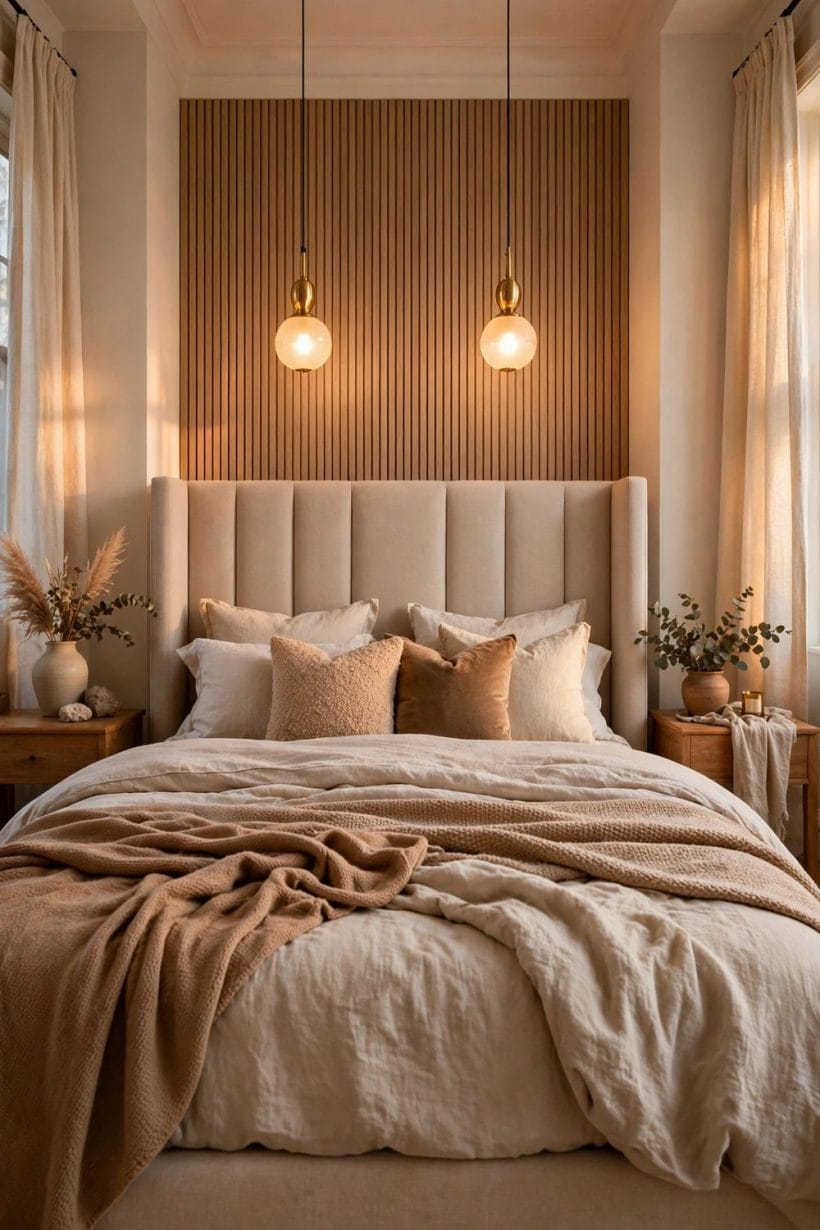
7. A Headboard With Presence
Tall, upholstered and wider than the pillows, the headboard is the suite’s main piece of architecture. It anchors the bed wall, softens sound, and gives the room its focal point without a single picture being hung.
8. Bedding in Layers, Not Sets
Linen or cotton in two or three calm tones, layered — sheet, cover, throw — reads more luxurious than any matched set. Layers also work: the room’s temperature is adjusted by folding, not by machinery.
9. A Bench or Ottoman at the Foot
The foot bench is where the throw sleeps, where shoes are tied, where a tray can land. It finishes the bed’s composition and keeps all three jobs off the bedding itself.
10. Two Real Bedside Tables
Matched or not, the bedside tables should be big enough for a book, a glass and a lamp with room to spare, with a drawer for the untidy rest. Undersized nightstands are the commonest small meanness in otherwise grand rooms.
11. Symmetry, Loosely Held
Matching lamps and roughly matching tables give the bed wall its calm; after that, loosen. A suite that is symmetrical to the last cushion feels like a hotel corridor’s end, not a home.
12. The Bed Faces Something Worth Seeing
A window, the fireplace, the room’s longest view — arrange the bed toward the best of what the room has, as the suites with fireplaces in our bedroom with fireplace collection do. The first sight of the morning is a design decision.
4. Palettes That Stay Calm
Ivory, warm taupe, textured plaster, brass lamps — this room’s palette is a whisper. Suite colours succeed by lowering the room’s voice, so that light and texture do the talking.
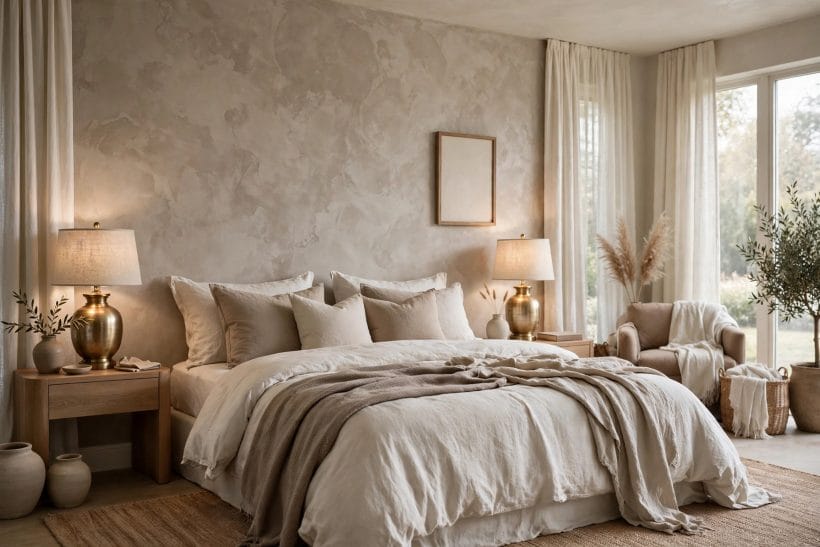
13. Ivory and Warm White
The classic suite ground: warm whites on walls and bedding that make morning light look kind and evening light look golden. Keep the whites warm — blue-whites turn a bedroom into a clinic.
14. Taupe and Greige Layers
Between grey and beige sits the suite’s most forgiving family: tones that accept wood, brass, linen and wool without negotiation. Layer three depths of it — wall, bedding, rug — and the room colours itself.
15. One Deep Accent, Held Back
A single deep note — a forest cushion pair, a navy throw, a dark timber table — gives the pale room its anchor. One accent, repeated twice at most; the second accent colour is where calm goes to die.
16. Texture Instead of Pattern
Plaster, slub linen, bouclé, rough wool, smooth oak: a suite coloured in textures rather than prints stays restful at every distance. Pattern, if it comes, arrives in one place only — a cushion, a curtain edge.
17. Wood Tones Kept in One Family
Mixing pale oak furniture with dark walnut and orange pine is how suites lose their calm. Choose the room’s wood temperature — honeyed, mid or dark — and let every piece, from wardrobe to stool, belong to it.
18. Colour That Flatters Evening Light
Judge suite colours after dark, under the lamps they will actually live with. Many daytime-perfect schemes turn grey or garish at night; the suite is an evening room first, and its palette should be chosen there.
5. The Sitting and Reading Corner
A chair, a floor lamp, a window seat and a small shelf of books — this corner is the suite’s smallest room and, hour for hour, often its most used.
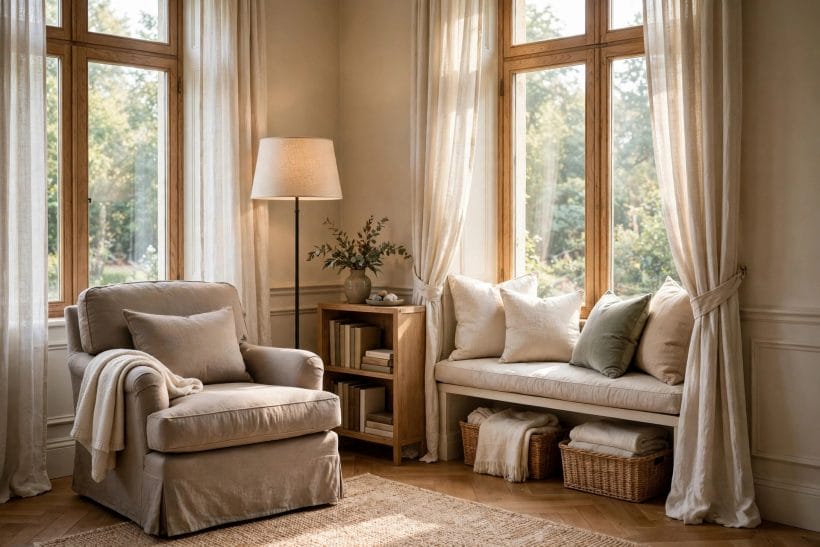
19. One Proper Reading Chair
Not an accent chair — a chair with arms, depth and support enough for an hour’s reading, turned slightly toward the room. It is the suite’s second bed, and should be bought with the same seriousness.
20. A Window Seat Where the Plan Allows
A cushioned seat in the window bay is the suite’s cheapest luxury per hour of pleasure: morning light, garden view, a place that is neither bed nor chair. Deep cushions and a throw make it; storage beneath them is a bonus.
21. A Lamp of Its Own
The corner needs light that belongs to it — a floor lamp or a wall light at reading height — so one person can read while the room sleeps. Light borrowed from the ceiling is light designed for nobody.
22. Books Within Arm’s Reach
A small shelf, a stack on the side table, a basket by the chair — the corner’s library should be reachable without standing. Suites that exile books to another room find their corners used for laundry instead.
23. A Throw Kept There Permanently
The corner’s own throw, in the room’s accent tone, signals that the seat is a destination, not a passing place. It also does honest work on cool evenings when the room’s heating has settled for the night.
24. The Corner Faces Inward or Out
Turn the chair to the window for morning readers, to the room and the fire for evening ones. The mistake is the diagonal compromise facing neither — a corner should declare what it is for.
6. Dressing Space That Works
Fitted wardrobes, a central ottoman, a vanity with its mirror — this dressing area is a small room doing a daily job beautifully. Dressing space is where suite luxury becomes practical or evaporates.
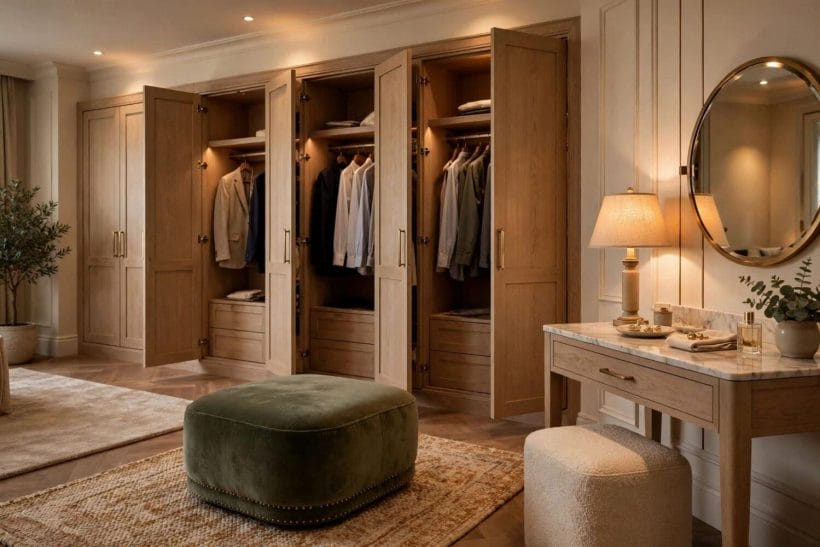
25. Wardrobes That Take the Whole Wardrobe
Fitted storage sized to what is actually owned — hanging, shelves, drawers, shoe space — is the suite’s least photogenic and most valuable luxury. Clothes with a home for everything are clothes that never colonise the chair.
26. A Vanity With Honest Light
A dressing table with a mirror lit from both sides, evenly and warmly, is a tool before it is a ornament. Light from a single overhead point flatters nobody and is the commonest vanity mistake.
27. An Ottoman in the Middle
In a dressing area wide enough, a central ottoman is seat, surface and storage in one upholstered block. It gives the room its centre and its user somewhere to sit that is not the bed’s edge.
28. Drawers for the Small Chaos
Watches, jewellery, chargers, the pocket debris of a day — shallow divided drawers swallow all of it. A suite’s calm is mostly the absence of small objects looking for somewhere to be.
29. A Full-Length Mirror, Well Placed
On a wardrobe door or a wall with clear standing room before it, lit by the room’s general light rather than a spotlight. The mirror’s job is the whole outfit at once, head to shoe, in honest light.
30. Doors on Everything
Open rails photograph beautifully and live dusty. Wardrobe doors — plain, calm, in the room’s wood family — keep the dressing zone restful and the clothes clean, which is the point of the exercise.
7. The Ensuite Connection
Through the doorway, a freestanding bath and marble-look tiles wait in the same calm palette as the bedroom. The ensuite is the suite’s final zone, and the connection between the two rooms is a design problem of its own.
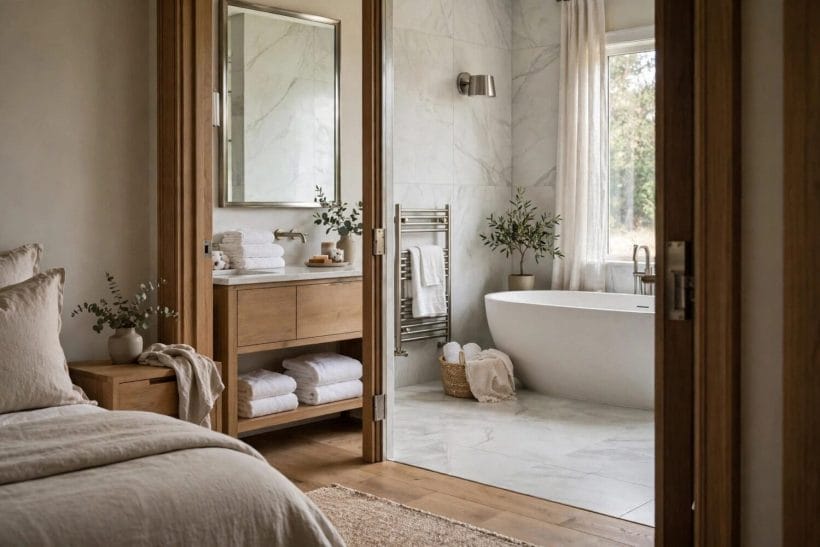
31. One Palette Across Both Rooms
Carry the bedroom’s tones — its whites, its wood temperature, its metal finish — into the bathroom, and the two rooms read as one suite. The ensuite treatments in our luxury master bathroom ideas work on exactly this principle.
32. The Bath as the View
Where the plan allows, place the freestanding bath where it is seen from the bedroom door or the bed — the suite’s second sculpture. A beautiful bath hidden behind its own door is a pleasure halved.
33. Towels and Robes, Hotel-Honest
Thick towels in the room’s palette, warmed where the fitting exists, and robes on hooks by the bath: the spa shorthand of our spa bathroom ideas, borrowed wholesale and none the worse for it.
34. A Door That Earns Its Keep
Between bedroom and bathroom, the door manages steam, sound and early-morning light. A solid, well-fitting door — or a short lobby where the plan gives one — protects the sleeper from the bather’s dawn.
35. Flooring That Changes Politely
Timber or carpet should hand over to tile or stone at the bathroom threshold without a trip strip or a visual shout. The change of material is the zone boundary; it should be felt underfoot, not announced.
36. Plumbing Kept Professional
Everything in this section that involves water or wiring — baths, showers, heated floors, lit mirrors — is specified and fitted by qualified professionals, to the suite’s design but to their standards. Luxury that leaks is neither.
8. Small Suites and Borrowed Luxuries
Not every master bedroom is large, and the suite idea survives smallness better than most: it is a way of arranging, not a quantity of space. The window seat in this photograph — deep cushions in a tall bay, a lamp and books beside it — borrows every luxury that matters from the big-suite playbook at the cost of one bay’s depth: a sitting zone, a reading light, a view, a throw.
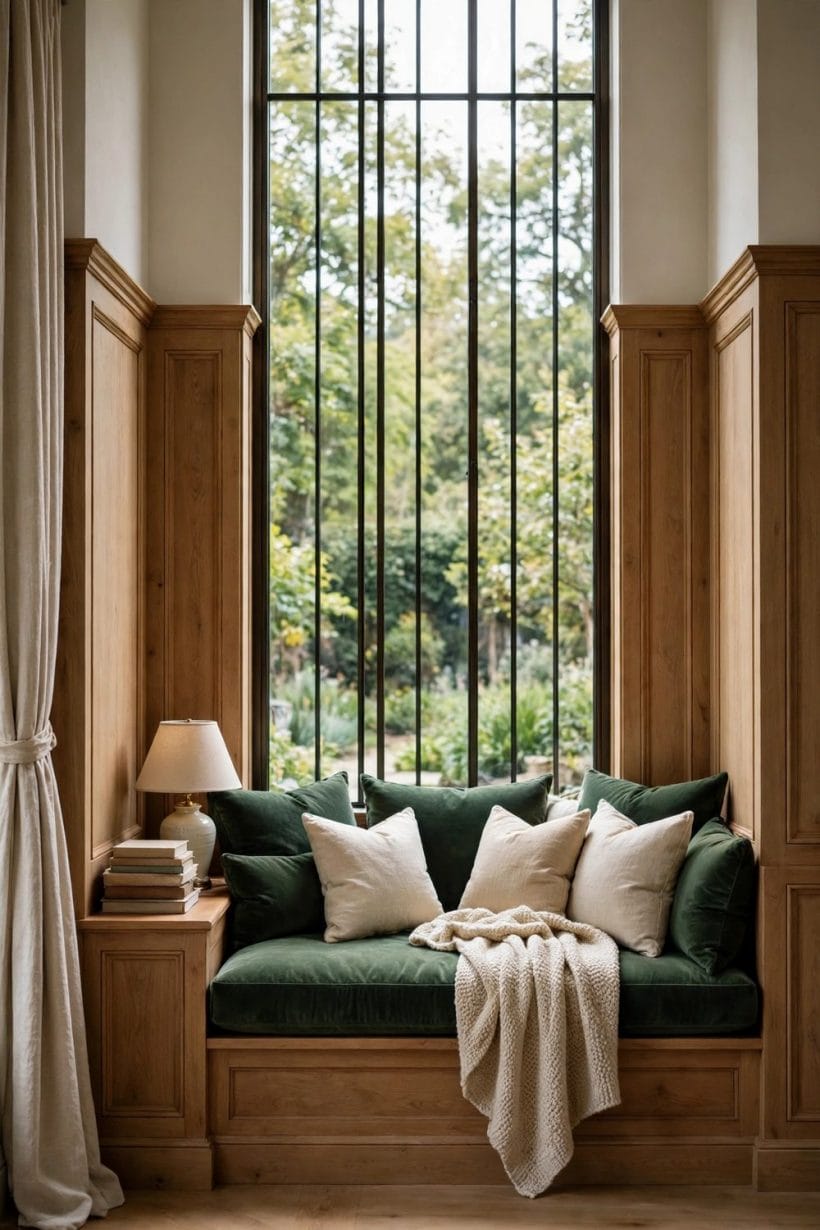
The same borrowing works everywhere. A single proper chair and lamp make the retreat zone in a room with no space for two. A wardrobe wall with a vanity folded into it makes the dressing zone. A curtain or a bookcase makes the divider. What cannot be borrowed is the discipline — one palette, clutter behind doors, the bed as the centre — and that costs no space at all. The complete-room thinking in our complete bedroom ideas applies the same zoning to ordinary bedrooms; the suite simply adds the bathroom door and the second chair.
9. Light, Layers and the Evening Room
At dusk this suite changes character: lamps lit, picture light glowing, curtains half drawn, the daylight zones retired. A master suite is judged at this hour, and its lighting should be designed for it deliberately.
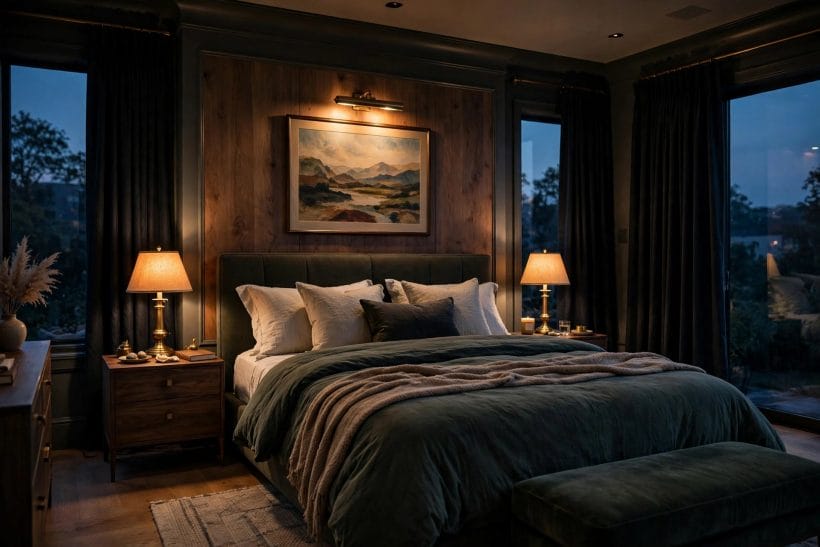
Work in three layers. Ambient light, soft and indirect, for finding your way. Task light — the bedside lamps, the reading lamp, the vanity lights — placed where the tasks are and switched from where they happen, including from the bed. And accent light, the picture light or the lamp in the corner, whose only job is warmth. Every layer dimmable or at least separately switched, and none of it a single ceiling point blazing over the bed. Blackout lining behind the curtains, a small night light’s worth of glow available without full waking, and the room is ready for its real work: the night’s sleep and the morning after it.
10. What It Costs, in General Terms
No honest figure can be printed for a suite, because the spread runs from a coat of paint and a good chair to a full replumbing — but the shape of the spend is consistent. Furniture and the bed take the largest share in a cosmetic suite; storage joinery takes it in a fitted one; and the moment the ensuite is rebuilt, plumbing, tiling and professional fitting become the budget’s centre of gravity. Finishes ladder predictably — textiles and paint at the foot, fitted wardrobes and stone-look surfaces in the middle, marble, bespoke joinery and a full bathroom rebuild at the top — while the things that make the room feel luxurious day to day, the zoning, the palette discipline, the lamps, sit at every level of the ladder including the bottom one.
The sound budgeting rule is sequence: layout and storage first, since both are miserable to retrofit; the bed and its textiles second; the bathroom last and properly, with its professional work quoted as one complete job. A suite built in that order can pause between stages and still feel finished at every pause — the mark, as with the interiors in our luxury home interior ideas, of money spent in the right order.
Final Considerations
The luxury master suite is a small exercise in zoning and restraint: sleep, sitting, dressing and bathing given their own ground inside one calm palette; a bed treated as the room’s centrepiece; storage that swallows the day’s clutter; light layered for the evening. None of it requires a huge room or a huge budget applied all at once — it requires deciding the layout first, holding the palette, and letting each of the 36 ideas take its turn.

0 Comments