

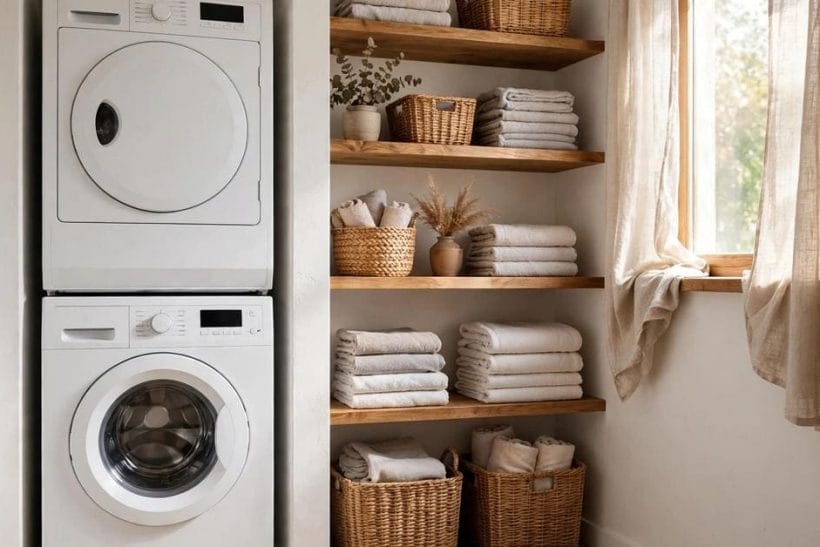
A stacked washer and dryer pair promises a full laundry in the footprint of a single machine — but only when the space, the pairing and the services behind it have all been checked before the order is placed.
This guide is the what-to-check version of buying a stackable front-load pair: fit, capacity, pairing, venting and paperwork, worked through in the order a careful buyer meets them.
1. Stackable Washer Dryers at a Glance
Scope first. This post owns one decision: the machine checks — the stacked pair itself, its fit, its drum, its venting route and its paperwork. The room around the pair is a different subject: the wider laundry room ideas cover whole-room planning, and the stacked-pair room layouts live in the companion layout post rather than here. Everything below serves the machines.
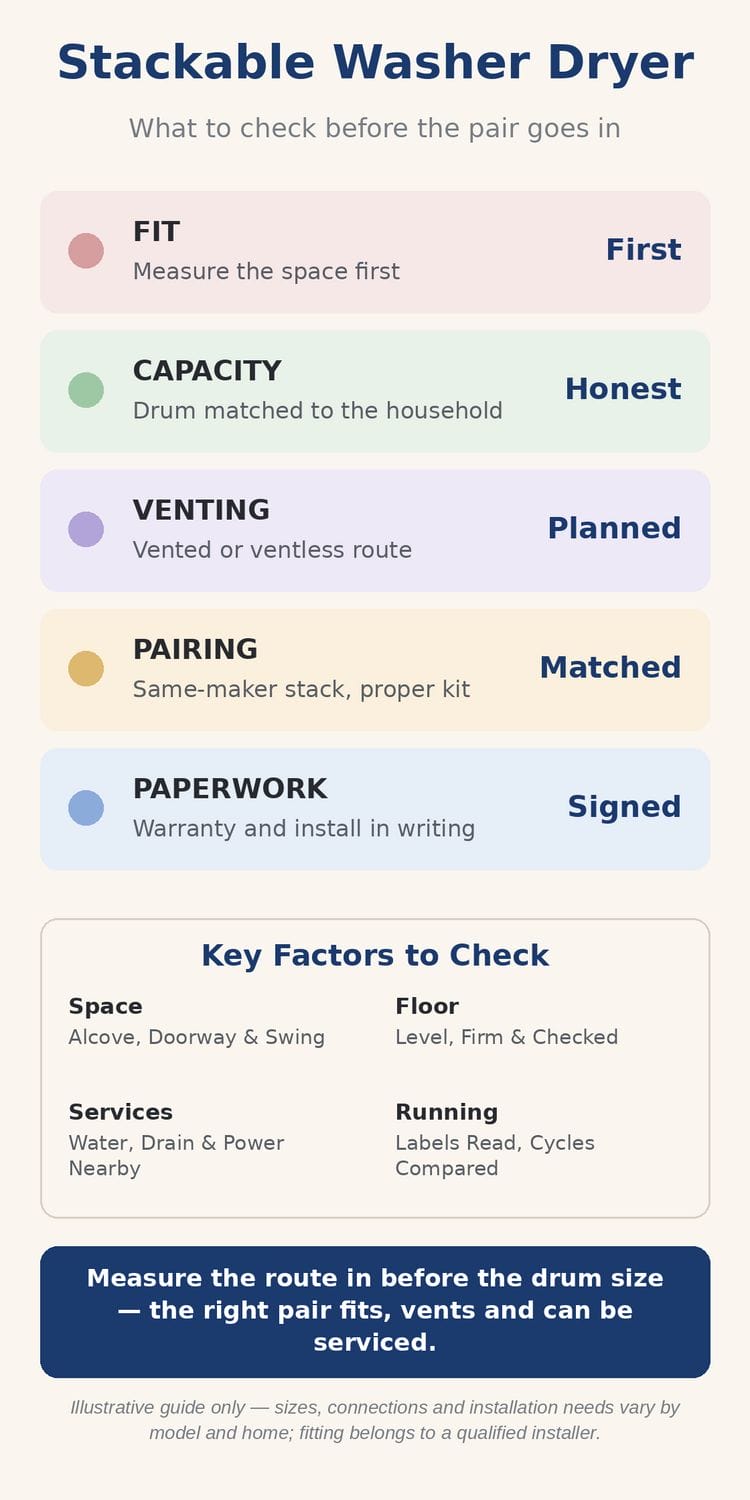
The five checks in the table are the whole purchase in miniature. Work down them in order and most showroom conversations become easy to compare.
| Check | Character | What it means |
|---|---|---|
| Fit | The Space Test | The alcove, the door swing and the route in decide whether the pair can live there at all |
| Capacity | The Drum Match | Drum size judged against the household’s real wash loads, not the showroom’s largest drum |
| Venting | The Air Route | A vented or ventless dryer decides ducting, moisture handling and where the pair can stand |
| Pairing | The Matched Stack | Washer and dryer made to stack together, joined by the proper stacking kit |
| Paperwork | The Written Promise | Warranty, delivery and installation terms settled in writing before money moves |
2. What Stackable Really Means
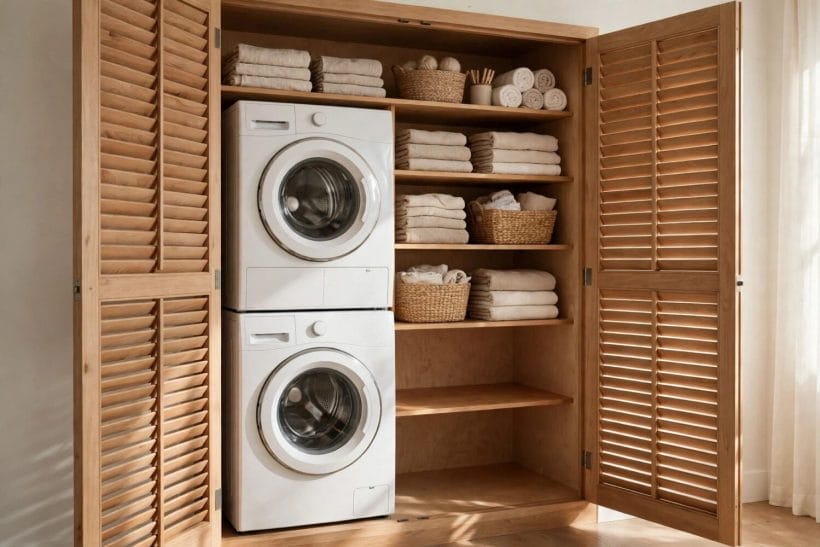
Stackable is a design intention, not a hopeful arrangement. The room layouts that hold these pairs are covered in full in the stacked washer dryer laundry room ideas guide; here the question is narrower — what makes a pair genuinely stackable, and what merely looks stackable in a photograph.
A pair designed to stack
A true stackable pair is built for the job: the washer is made to carry the dryer’s weight on top of it, the dryer’s feet or rails align with the washer’s top panel, and the maker states plainly that the two models may be stacked. That statement, in the maker’s own documentation, is the foundation of every later check in this guide.
Front-load is what makes stacking possible
Stacking works because both machines open at the front. A top-loading washer needs its lid and the headroom above it, so it can never carry a dryer. When you choose a stacked pair, you are also choosing front-load washing — its wash action, its door seal to care for, and its habit of needing the door left ajar between washes to stay fresh.
One tower, two separate machines
A stacked pair is still two appliances, not one. Each has its own controls, its own services and its own lifespan, and either can in principle be serviced or replaced without the other — provided the replacement still pairs with what remains. Buy the pair as a system, but keep the records for each machine separately.
3. Measure First: Space, Access and the Route In
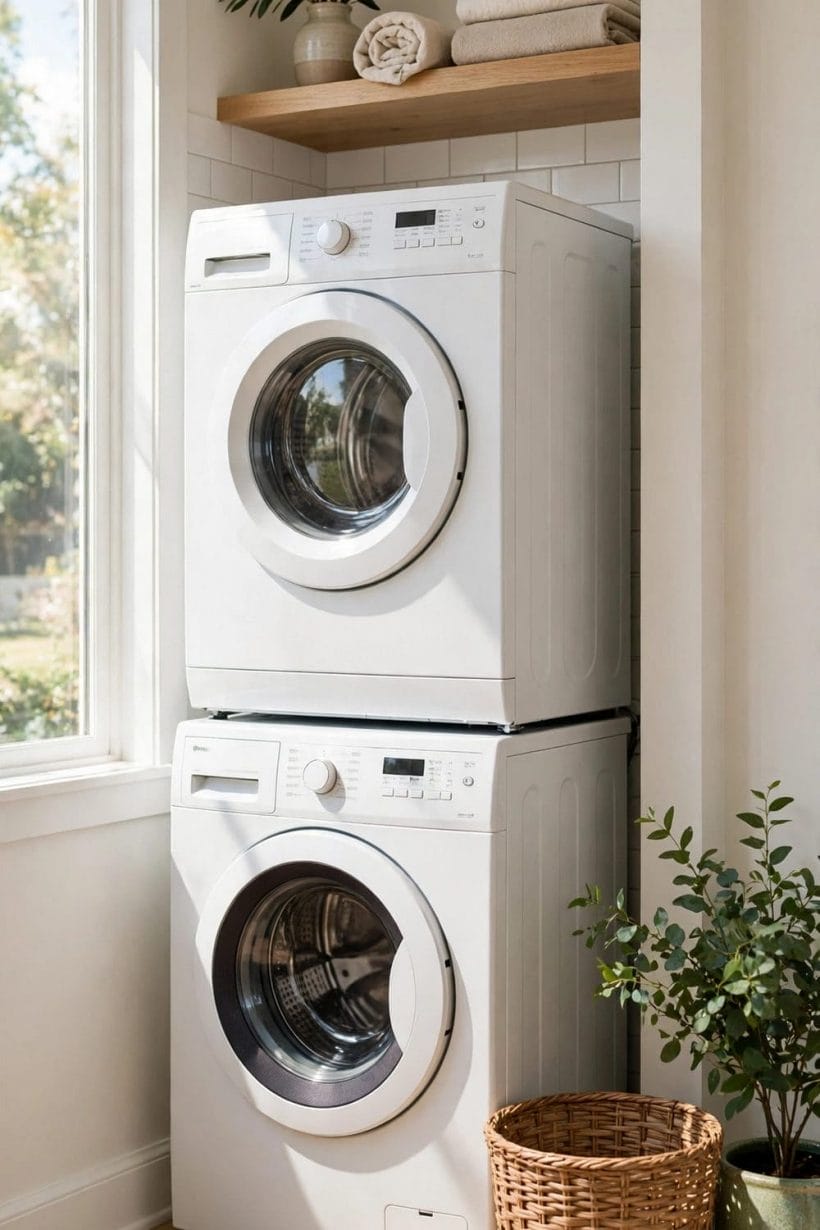
More stacked pairs fail on fit than on features. The discipline below is the same one behind the tiny laundry room ideas — measure the alcove and the doorway route before falling for any drum, cycle or finish, and write every measurement down.
The alcove in three directions
Measure the space the tower will occupy: its width against the pair’s width, its depth against the machines plus the room their hoses, vent and plugs need behind them, and its height against the full stacked height with a working margin above. A pair that fits the tape but leaves no room for connections does not fit.
Door swing and working room
Both doors open towards you, one above the other, and they need clear space in front of the tower — for the doors themselves, for a laundry basket at your feet, and for you standing there loading the lower machine. Check that a cupboard door, a room door or a passage does not fight the machine doors for the same swing.
The route in is a measurement too
The pair has to travel: through the front door, along halls, round corners, up or down stairs and through the laundry doorway, sometimes as two separate machines and sometimes already joined. Measure the tightest point of that route as carefully as the alcove itself. A tower that fits its home but cannot reach it is a delivery-day problem, not a bargain.
4. Capacity and Drum Checks
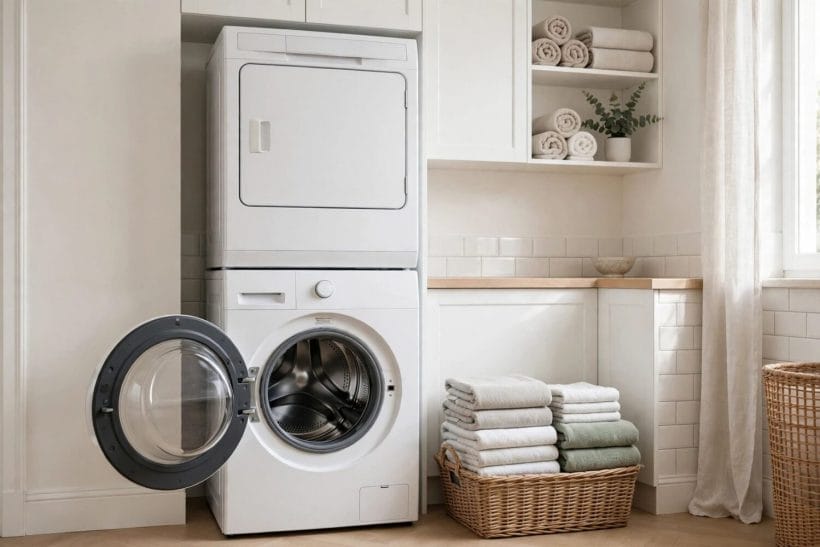
Capacity is where stacked pairs are most often misjudged, because the drum that looks generous in a showroom has to serve a real household, wash after wash. Read the maker’s published rating label for each machine and judge the pair against your own laundry, honestly counted.
Judge the drum by your heaviest week
Picture the household’s demanding loads: bedding, towels, a sports kit backlog, guests staying over. The washer’s drum should swallow the biggest of those without being packed tight, because an overfilled drum washes and rinses poorly. Everyday loads can be smaller than the drum; the heaviest regular load is the one the drum is really bought for.
Washer and dryer drums should agree
A wet load grows heavier and bulkier than a dry one, and everything the washer washes, the dryer must tumble with room to move. If the dryer’s drum is much smaller than the washer’s, you will be splitting wet loads in two — workable, but worth knowing before purchase rather than discovering on the first bedding day.
Small households can choose smaller drums
A compact drum run at its intended fill uses its water, heat and time on a full job; an oversized drum run half-empty out of habit serves nobody well. Singles and couples often find a modest pair, stacked neatly, meets every load they own — and leaves the alcove room for shelves, a sink or storage instead.
5. Pairing, Stacking Kits and Controls
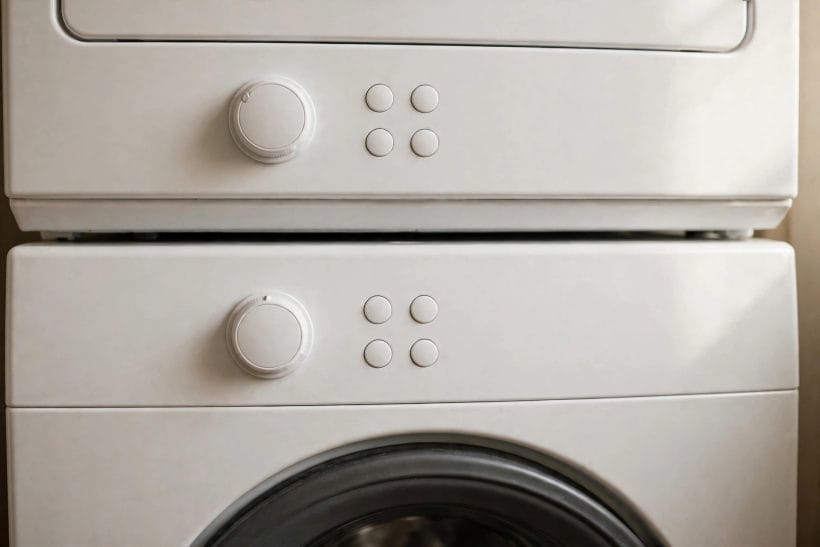
The stack is a joint between two machines, and the joint deserves the same scrutiny as the drums. A pair that was never meant to stand together may look fine in the showroom and behave badly across years of spin cycles.
Same maker, matched models
The safest pairing is the one the maker publishes: a washer and dryer from the same maker, of matching width and depth, listed as stackable together. Matching footprints keep the tower stable and the doors aligned, and a matched pair keeps one maker responsible for how the two behave as a unit.
The stacking kit is not optional
Between the two machines sits a stacking kit — brackets, rails or a frame, sometimes with a pull-out shelf for loading the dryer. It is the part that locks the dryer against walking forward under vibration, so it should be the kit specified for that exact pair, fitted exactly as its instructions say. Improvised stacking is where towers get dangerous; the fitting itself belongs to a qualified installer.
Controls you can reach and read
Stacking puts the dryer’s controls at height. Check them standing at the tower, not in a brochure: can the shorter adults in the household reach the dial, read the display and open the dryer door comfortably and safely? Controls that strain their user get used carelessly, and careless use is how lint filters and gentle cycles get skipped.
6. Venting, Water and Drainage Checks
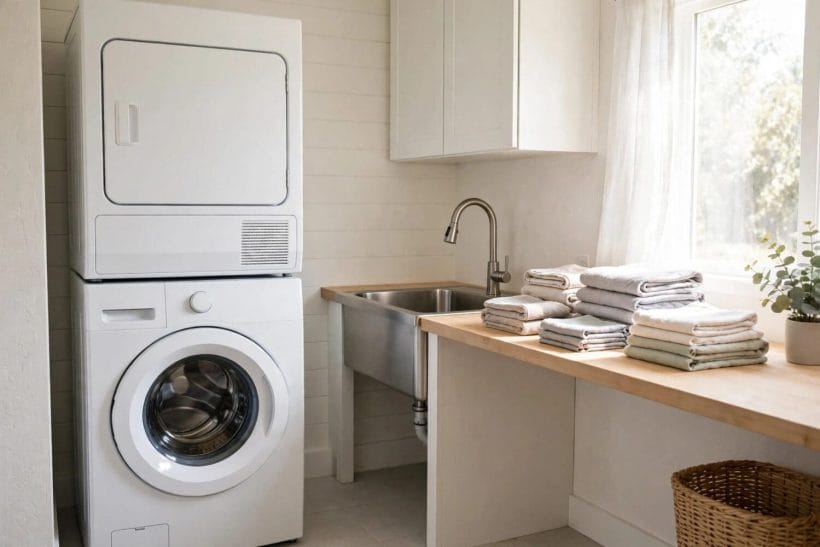
Behind the tidy tower sits the least photogenic part of the purchase: warm air out, water in, water away, power on. Rooms that combine laundry with bathing space, like those in the bathroom laundry room ideas, make these checks stricter still. All of the connections themselves belong to qualified trades — a plumber for water and drainage, an electrician for power — and this section is about the questions, not the fitting.
Vented dryers need a route out
A vented dryer pushes warm, moist air through a duct to the outside. Before choosing one, trace that duct’s whole route on paper: out of the machine, through a wall or window path, with as straight and short a run as the room allows. Every bend slows the air, and a duct that cannot reach outside rules the vented design out, however good the machine.
Ventless dryers move the problem indoors
Condenser and heat-pump dryers collect their moisture in a tank or send it down a drain instead of ducting it away, which frees the pair to stand on an internal wall. In exchange they ask for their own checks: a tank to empty or a drain connection to arrange, a room that can take the warmth they give off, and filters and condensers kept clean on schedule.
Water in, water out, both within reach
The washer needs a water supply it can reach without stretched hoses, a drain that can take its discharge — a standpipe, a laundry sink or a plumbed waste — and shut-off valves you can actually get to in a hurry. Ask where every hose runs once the tower is pushed back, and whether a leak behind the stack would be seen quickly or hide for months.
7. Floors, Vibration and Noise
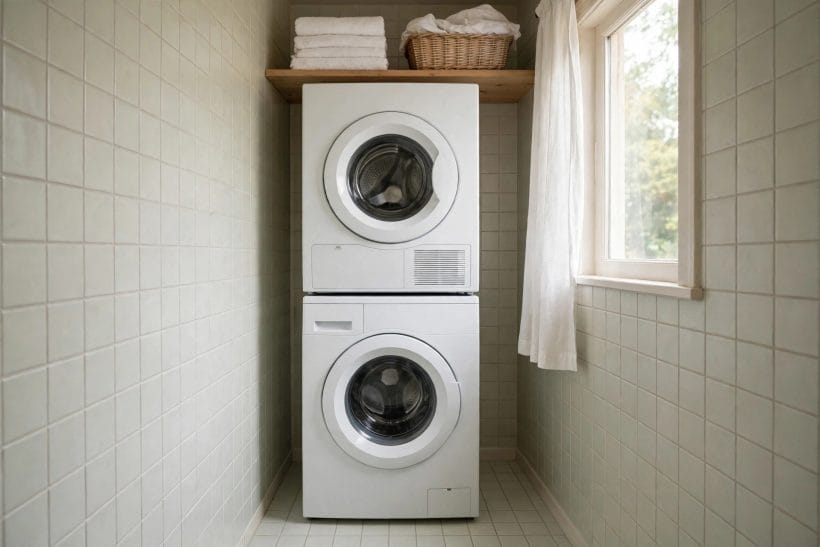
A stacked tower concentrates two machines’ worth of movement in one footprint, and the upper machine’s spin becomes the whole tower’s behaviour. Closet installations like those in the laundry closet guide make the floor and vibration checks below especially important, because the tower often stands near bedrooms and living space.
A level, firm floor is the foundation
The tower wants a floor that is level, firm and unyielding: a springy floor amplifies every imbalance in the drum, and the machine feet can only compensate so far. If the intended floor flexes under a jumping adult, raise the question with the installer before delivery — the remedies belong to the floor, not to the machine’s settings.
Vibration travels in a stack
An unbalanced load in the washer is a nuisance; the same event in a tower is a moving piece of furniture. Anti-vibration pads, correct levelling at installation and the discipline of balanced loads all matter more stacked than side by side. Ask what the maker advises for upper-floor installations, and take the answer seriously if the laundry sits above a ceiling you care about.
8. Cycles, Controls and Energy Labels
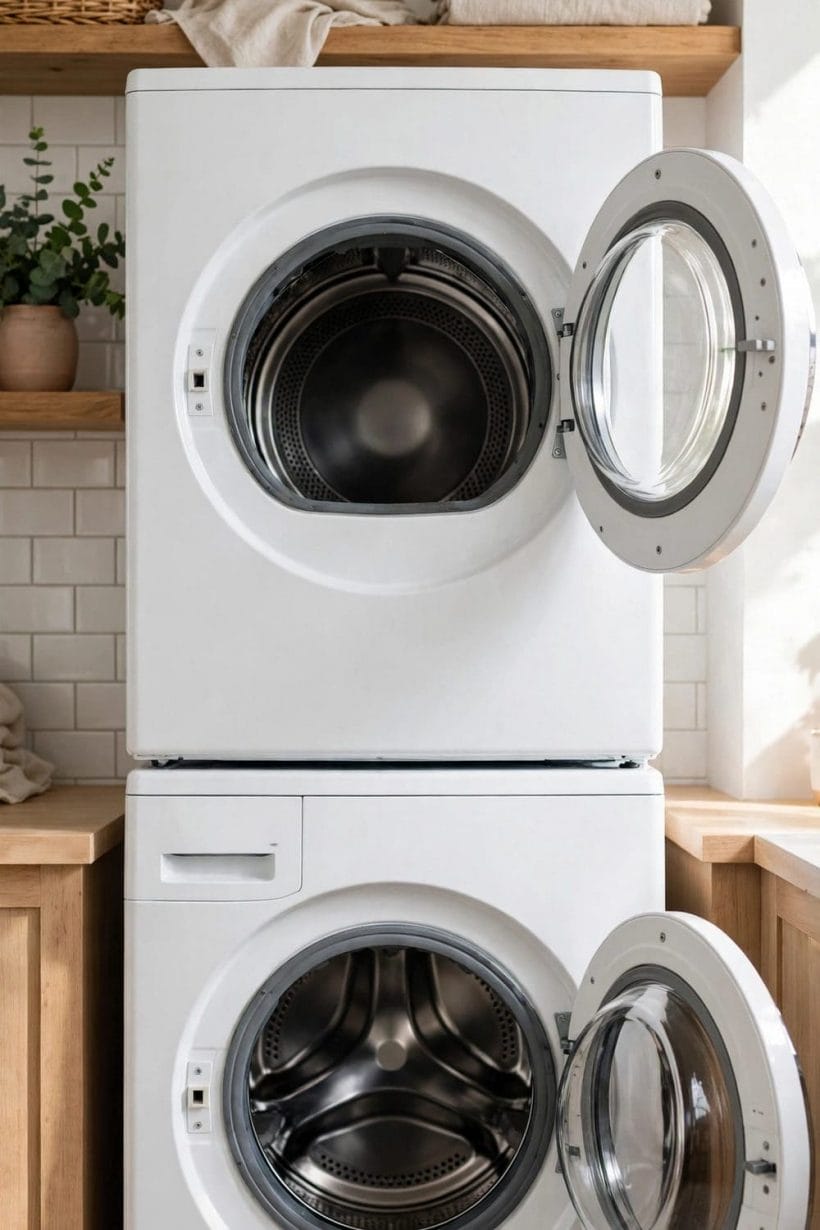
With fit, pairing and services settled, the remaining choice is how the pair washes and dries day to day. Compare these in general terms, using each maker’s published rating label and cycle list, rather than chasing any single figure in isolation.
The cycles a household actually uses
Most households live on a handful of cycles: a daily cotton wash, a gentle cycle for delicates and wool, a quick wash for small urgent loads, and a thorough dry for towels and bedding. Check those exist and are easy to select on both machines. A long list of specialty cycles matters less than the everyday ones being quick to find at the controls.
Read the energy and water labels as published
Every machine carries its maker’s published rating label for energy and water use, tested on a standard cycle. Compare labels between candidate pairs on that like-for-like basis — and remember the label describes the test cycle, so the cycles your household actually runs will shape real consumption just as much as the rating does.
Sensors, delays and small kindnesses
Moisture sensing that ends a dry when the load is dry, a delayed start that runs the washer when the house is awake, an end-of-cycle signal you can silence — these small behaviours decide daily satisfaction more than headline features. Walk through a pretend wash day at the controls in the showroom and note every moment that would annoy you weekly.
9. Delivery, Installation and Warranty Checks
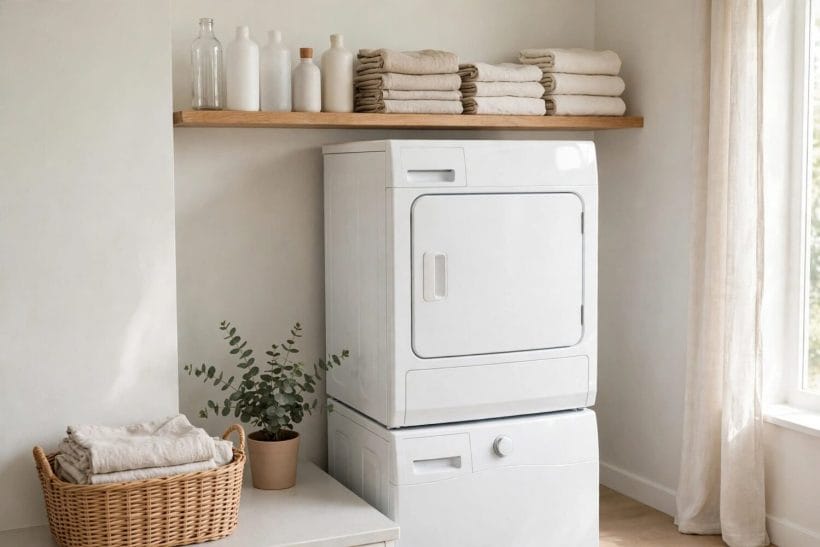
The purchase is not finished when the pair is chosen; it is finished when the tower stands level, plumbed, vented and warranted in your home. The storage that surrounds it, like the laundry room cabinets around many towers, can be planned once the machine decisions below are fixed.
Delivery terms, stated plainly
Confirm what delivery actually includes: carriage to the room or to the door, the route survey if access is tight, packaging taken away, and what happens if the pair cannot be got in on the day. Get the answers into the written order. A tower refused at a narrow doorway is a problem shared properly only when the paperwork already says whose problem it is.
Installation by qualified hands
Stacking, levelling, water, drainage, venting and power are professional work: the kit fitted by a qualified installer, plumbing by a plumber, electrical work by an electrician, each to the maker’s instructions and local rules. Agree who commissions the finished tower — running a first empty cycle, checking for leaks and movement — before anyone signs the job off.
Warranty, read as two warranties
Two machines means two warranties, plus whatever cover applies to the installation itself. Note what each warranty covers, what it asks of you — registration, servicing, keeping receipts — and how a claim is actually made. Keep the manuals, the rating labels’ details and the installer’s paperwork together; the day a tower wobbles or a dryer sulks, that folder is the fastest route to help.
10. Questions to Ask Before You Buy
Finish in the showroom or on the order call with the questions that surface every assumption. A good seller answers them easily, and the answers belong in the written quote — the same care with details that runs through the farmhouse laundry room ideas, applied here to the machines at the room’s heart.
The fit and pairing questions
Are these two models published by their maker as a stackable pair, and which stacking kit joins them? What are the pair’s full measurements, including the space their connections need behind them? Will the seller confirm, in writing, that the stacked height clears your alcove and that the route into your home has been considered?
The services and paperwork questions
Is the dryer vented or ventless, and does your room suit that answer? Who installs, who connects water, drainage and power, and who commissions the finished tower? What exactly do the two warranties cover, and what must you do to keep them valid? If any answer arrives as a verbal wave, ask for it in the paperwork instead.
Final Considerations
A stacked pair is bought twice: once in the showroom, where the tower stands gleaming on a level floor with every service hidden behind it, and once at home, where the alcove is a fraction tighter than remembered, the route in has a corner in it, and the dryer controls sit at their true height. The checks in this guide are aimed squarely at the second purchase.
Measure first, pair properly, plan the venting and the water, and get the paperwork in writing. Do that, and a stackable front-load pair delivers what it promises — a complete laundry standing in a single footprint, working quietly in the smallest room in the house.




0 Comments