

Every bedroom magazine promises the new and the fashionable, but a bedroom that actually works is built from older, quieter certainties: the right bed, honest storage, calm colour and real darkness.
These 75 complete bedroom ideas survey the whole room across styles, sizes and light, so one finished bedroom, not seventy-five opinions, is what remains.
1. Complete Bedroom Ideas at a Glance
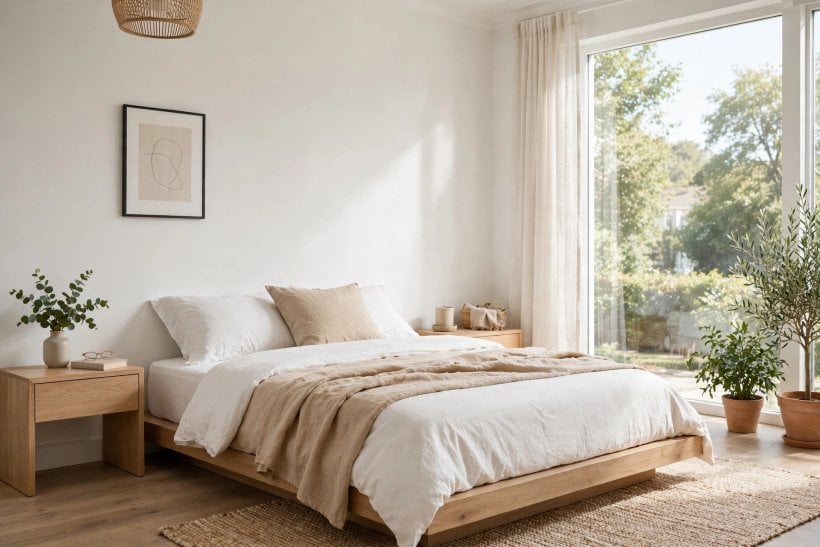
The central entity is the complete bedroom: a sleeping room surveyed whole, whose attributes are its chosen style, its layout and size, the bed at its centre, the storage that houses a life, its palette and pattern, and the light that must serve both morning and midnight. It links up to the bedroom ideas pillar and treats each style lane once, as a survey should.
| Question | Short answer |
|---|---|
| Which style should a bedroom choose first? | The one its light, size and household honestly suit; this survey walks each major style once so the choice is informed, not fashionable. |
| What makes a bedroom feel complete? | A working layout, a properly built bed, storage that closes, one palette and layered light: completeness is systems, not shopping. |
| Small bedroom or large: which is harder? | Large rooms fail by emptiness, small ones by crowding; both are solved by zones, honest circulation and editing. |
| Where should the budget go first? | The mattress, the window darkness and the lighting, in that order; decoration is what remains after sleep is secured. |
2. Every Style, One Room: The Complete Style Survey
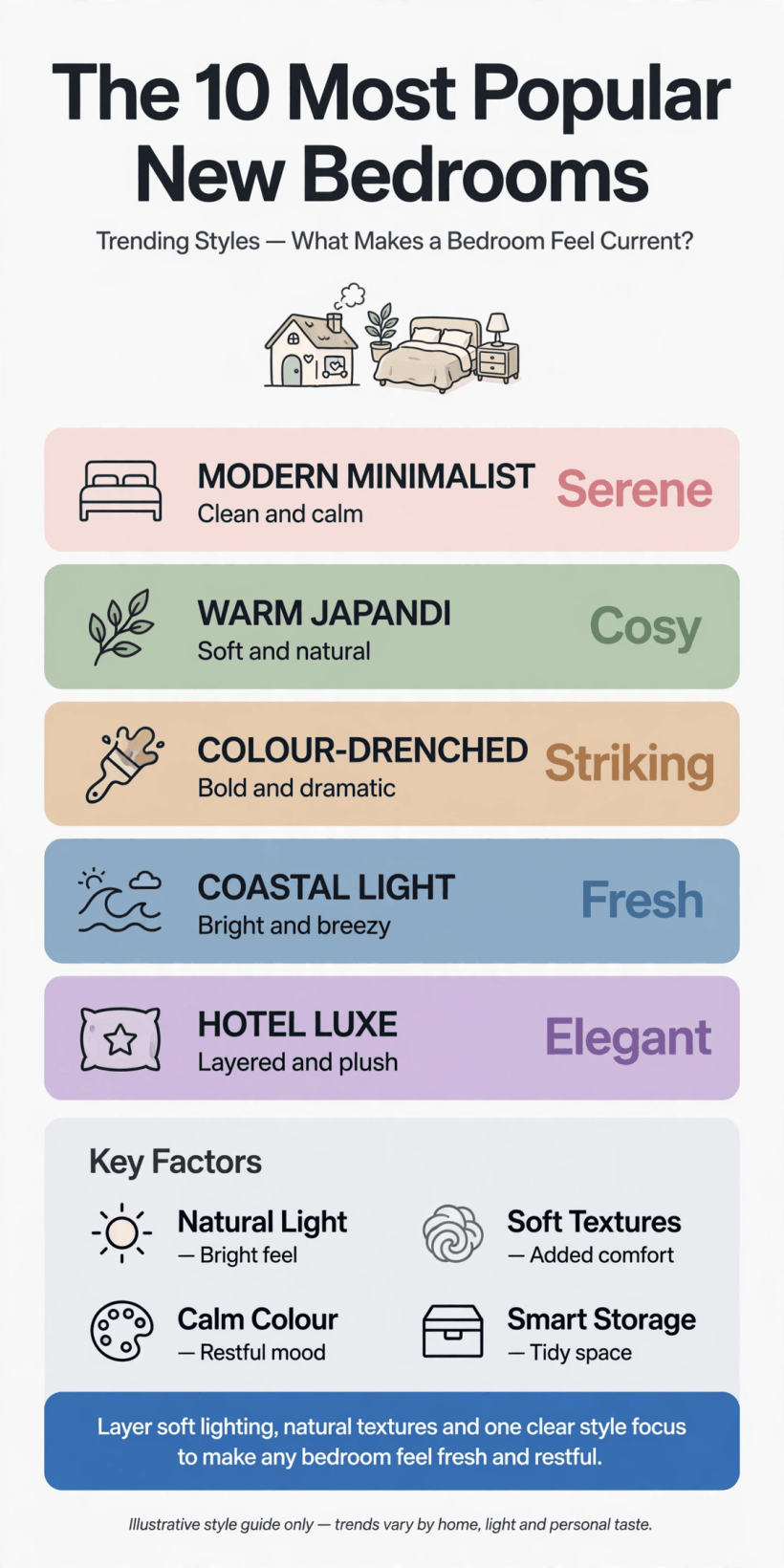
A complete bedroom begins by choosing its character honestly, because style is the decision every later purchase obeys. This survey opens the post as a whole-room companion to the bedroom ideas pillar, walking each major style once, properly, instead of mixing them all into soup. Two lanes are walked in their own depth elsewhere in the cluster, the farmhouse bedroom ideas among them; here each style gets one honest pass.
1. Start With the Calm Neutral Bedroom That Suits Almost Everyone
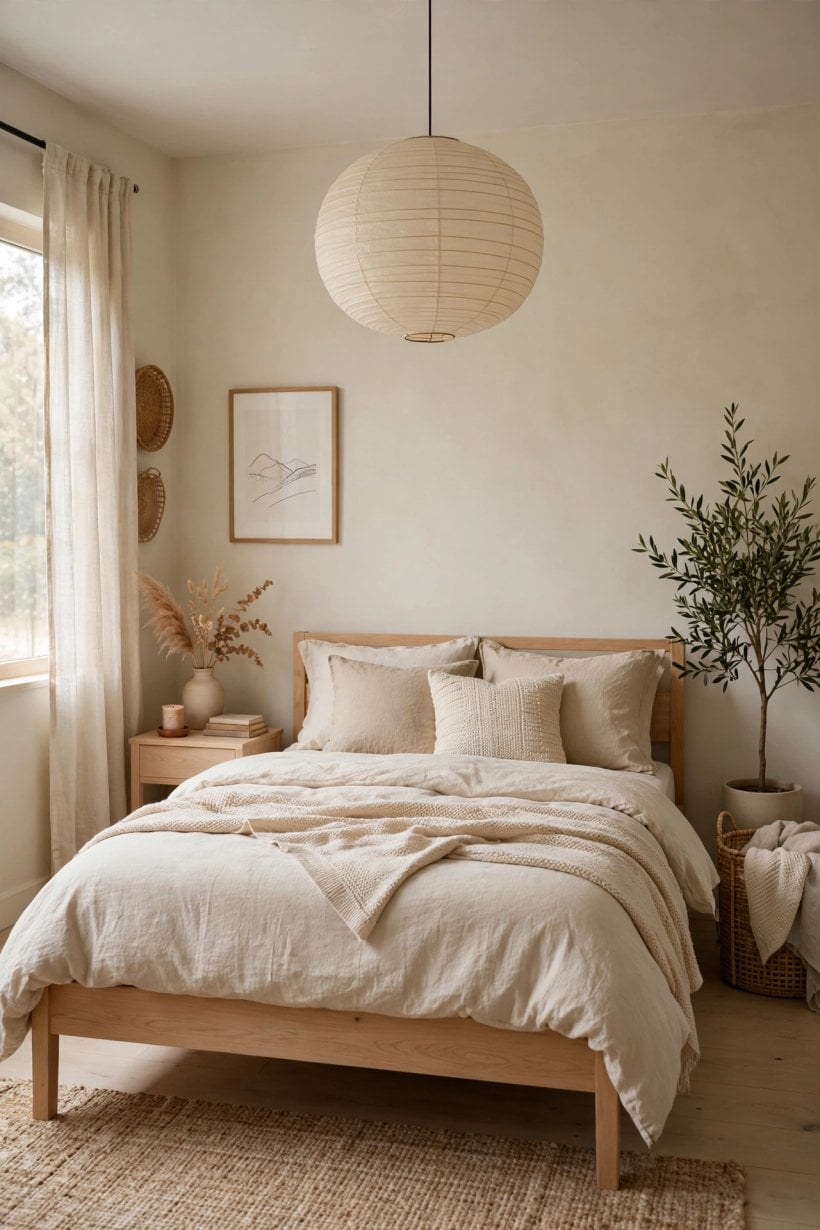
Pale walls, natural timber, white or oatmeal bedding and one soft accent colour make the neutral bedroom the survey’s safest opening.
2. Give the Modern Bedroom Its Clean Lines and Low Profile
Modern bedrooms trade ornament for proportion: low beds, plain fronts, few objects and light used as a design material.
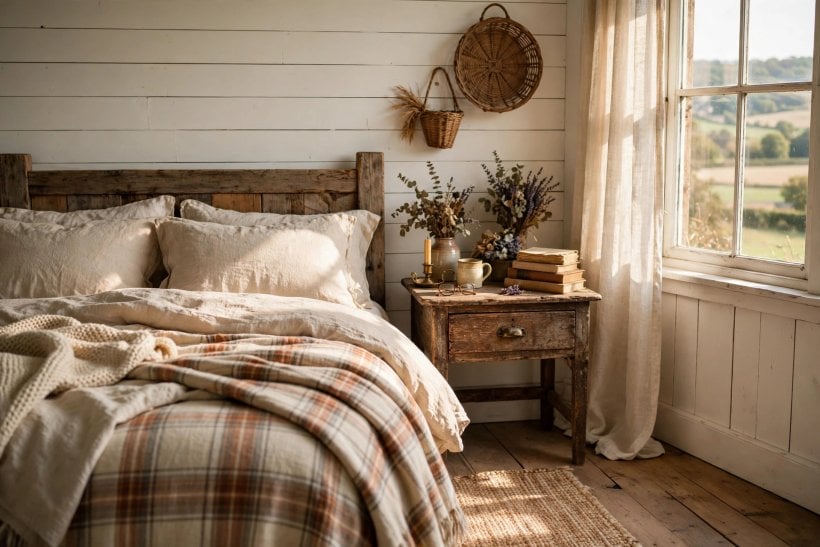
3. Let the Farmhouse Bedroom Wear Worn Timber and Honest Cloth
Farmhouse bedrooms are built on texture rather than pattern: worn wood, linen, quilts and iron or painted furniture with a past.
4. Use the Coastal Bedroom’s Air and Washed Colour
Coastal bedrooms breathe: washed blues and whites, pale timber, loose linen and nothing that would mind sand.
5. Try the Scandinavian Bedroom for Light Above All
Scandinavian bedrooms worship daylight: white and pale gray walls, light wood, minimal furniture and textiles chosen for warmth rather than colour.
6. Let the Traditional Bedroom Keep Its Symmetry and Manners
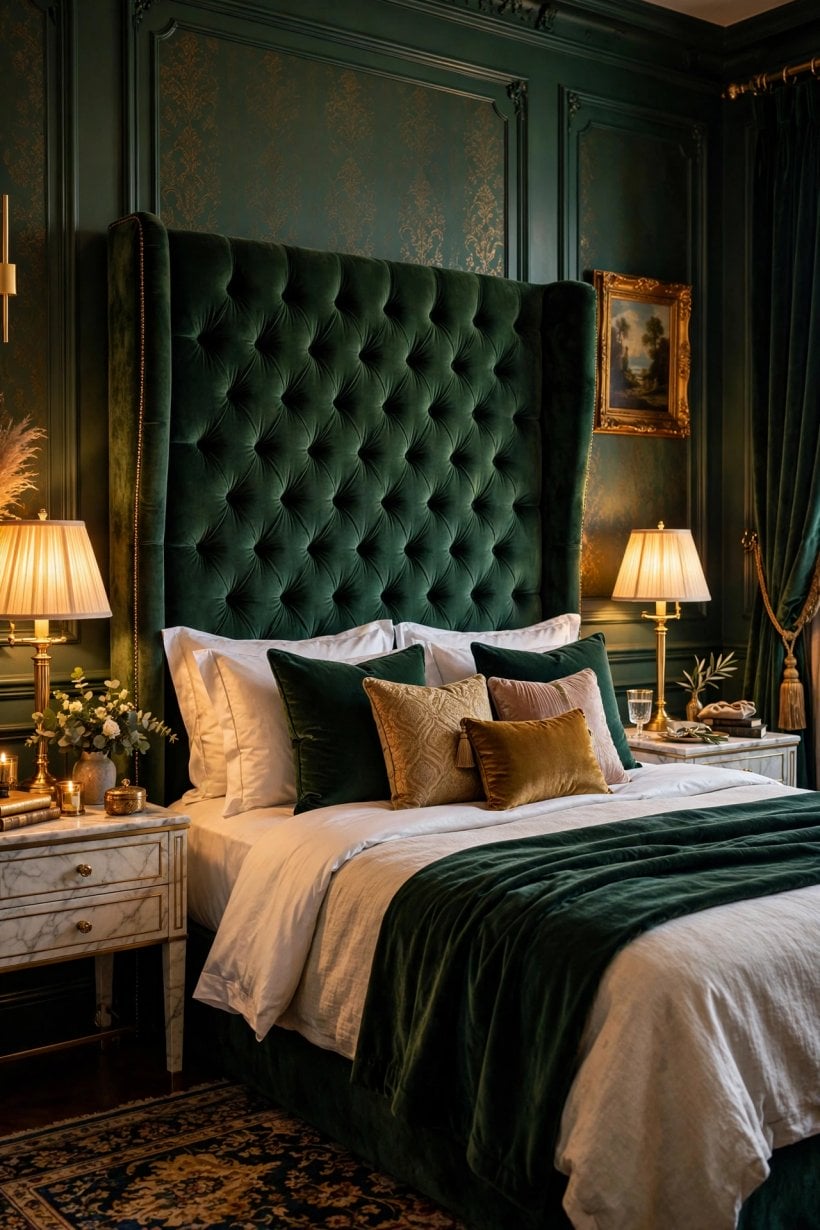
Matched bedside tables, a proper headboard, layered curtains and furniture with finished edges give the traditional bedroom its composed, hotel-like calm. Symmetry does the decorating here, which makes the style forgiving of ordinary furniture arranged with discipline.
7. Give the Rustic Bedroom Stone, Beam and Wool
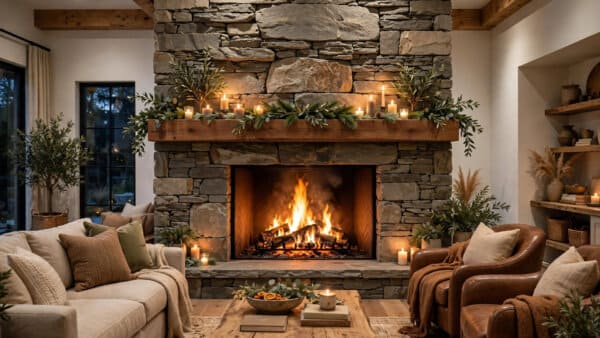
Rustic bedrooms lean on weight and warmth: timber beams or a planked wall, wool blankets, iron details and lamplight with a fireside temper.
8. Use the Industrial Bedroom Sparingly, Softened With Cloth
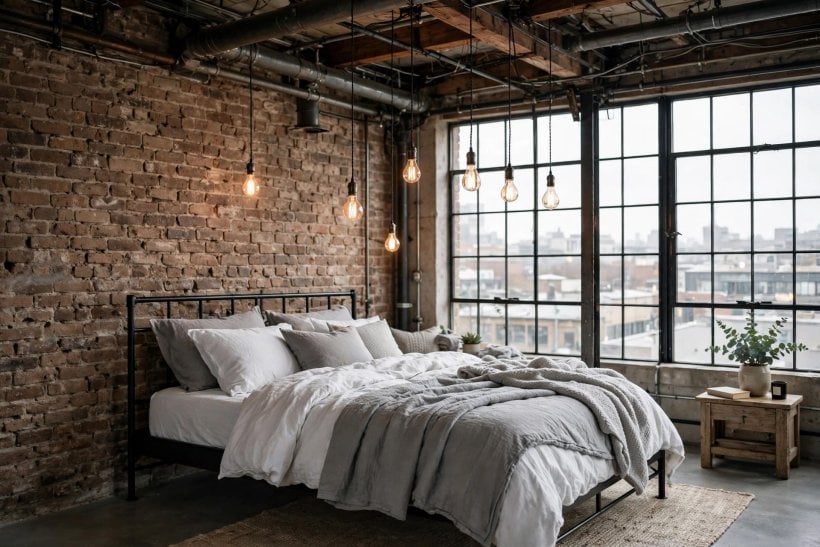
Exposed brick tones, black metal and utilitarian lighting give the industrial bedroom its edge, but the bed itself must stay soft and generous or the room feels like a warehouse with a mattress.
9. Let the Boho Bedroom Layer Pattern With a Light Hand
Boho bedrooms collect: patterned textiles, plants, woven pieces and art gathered over time.
10. Try the Japandi Bedroom Where Two Calms Meet
Japandi blends Scandinavian lightness with Japanese restraint: low furniture, empty surfaces, natural materials and a palette of warm neutrals. It is the survey’s quietest style and the hardest to fake, because every object must earn its visibility.
11. Decide the Style Before the Shopping, and Write It Down
One sentence on paper, calm neutral with timber, coastal and pale, farmhouse and worn, prevents the slow drift that produces bedrooms belonging to no style at all.
3. Sizes and Layouts: Small, Standard, Large and Awkward
With character chosen, the room’s geometry takes its turn, because a complete bedroom is first a layout that works at 7 a.m. with the lights off and one sleeper still dreaming. These ideas size the scheme honestly before a single cushion is discussed, following the compact discipline of small bedroom interior design ideas for tiny houses at the small end.
12. Plan the Bed’s Position Before Anything Else Is Placed
The bed is the room’s sun: everything orbits it.
13. Keep Walking Space Honest Around Three Sides of the Bed
A bed that can be made, reached and escaped from comfortably is the layout’s foundation. Squeezing circulation to gain a decorative chair is the classic complete-bedroom error, paid for daily in bruised shins and unmade beds.
14. In Small Bedrooms, Let the Bed Own the Room Completely
The compact room succeeds by surrender: the bed takes the best wall, storage goes built-in or under-bed, and every other function is edited to a chair, a shelf and a hook.
15. Use a Rug to Give a Large Bedroom a Room Within the Room
Big bedrooms fail by emptiness rather than crowding.
16. Put the Dressing Function Where Morning Light Actually Falls
Dressing in gloom produces mismatched days. Place the wardrobe, mirror and getting-ready surface where the morning light lands, or light them deliberately, because a complete bedroom is judged at the mirror as much as at the pillow.
17. Give Long, Narrow Bedrooms a Zone at Each End
A long room divided into sleep at one end and dress or read at the other stops feeling like a corridor with a bed in it.
18. Work Awkward Corners Into Service Instead of Apology
The alcove becomes the reading nook, the chimney breast’s flank becomes shelving, the eaves become low drawers. Complete bedrooms are rarely perfect rooms; they are imperfect rooms whose awkwardness has been given employment.
19. Keep the Door’s Swing and the Wardrobe’s Doors in the Plan
Layouts drawn without door swings fail on delivery day. Mark every swing, wardrobe doors, drawers and the door itself, on the floor plan, because furniture that cannot open is sculpture, and expensive sculpture at that.
20. Let a Guest Bedroom Double as Something Else Honestly
A guest room that is also an office, a sewing room or a gym corner should admit it in the design: a proper bed or excellent sofa bed, storage that hides the second life, and no apology.
21. Plan Children’s Bedrooms to Grow in Stages
A child’s complete bedroom is a sequence, not a snapshot: floor play now, a desk appearing later, storage that changes contents rather than size. Furniture bought for the sequence, neutral shells with changeable textiles, outlasts three themed redecorations.
22. End Every Layout With the View From the Pillow
Lie down mentally in the planned room: the ceiling, the wall faced at waking, the light’s source, the door.
4. The Bed Itself: Frames, Headboards and Honest Comfort
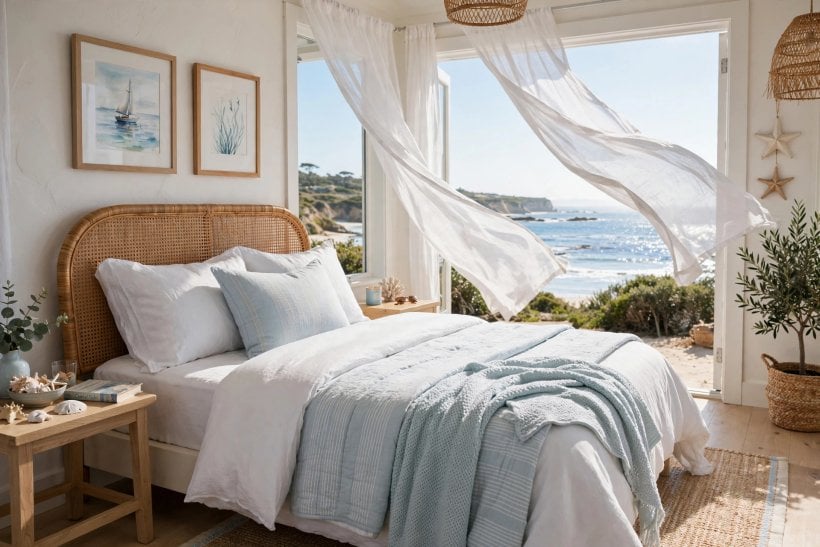
The bed is the entity inside the entity, the one object a bedroom exists to hold. This section builds it properly, frame, headboard, mattress thinking and the pillows question, drawing on the composed end of modern tiny house bedroom design where every centimetre of the bed must justify itself.
23. Choose the Frame for the Room’s Style and the Sleeper’s Habits
Upholstered frames soften, timber frames warm, metal frames lighten and low platform frames modernise.
24. Give the Bed a Headboard, Because Rooms Need a Full Stop
A headboard finishes the bed visually and serves readers, sitters-up and breakfast trays practically. Tall headboards suit tall ceilings and traditional schemes; low, wide ones stretch small rooms sideways and calm busy walls.
25. Let an Upholstered Headboard Carry the Room’s Softness
In rooms of hard floors and plain walls, a padded headboard in linen, velvet or woven wool supplies the softness quota single-handedly. It also swallows sound, which in a sleeping room is a luxury disguised as upholstery.
26. Use a Timber Headboard Where Warmth Must Be Structural
A timber headboard, or a whole timber bed wall, gives rustic, farmhouse and Scandinavian rooms their warmth at the exact point the eye lands first. The wood’s tone then sets the temperature every textile must respect.
27. Treat the Mattress as the Budget’s First Claim
Frames are seen; mattresses are felt, nightly, for years. A complete bedroom spends on the mattress before the cushions, chooses support by sleeping honestly on it where possible, and treats every other purchase as negotiable by comparison.
28. Layer Pillows for Use, Not for a Photograph
Sleeping pillows, a support pillow for readers, and at most a pair of decorative cushions make a bed that serves its night. The ten-cushion arrangements of magazines are dismantled nightly onto floors, which is choreography, not comfort.
29. Size Bedding Generously So the Bed Looks Dressed, Not Stretched
Duvets and throws that drape properly over the mattress edges make even plain bedding look complete. Skimpy covers are the cheapest-looking mistake in the whole survey, and the easiest to fix at the next linen purchase.
30. Keep a Bench, Trunk or Low Chest at the Foot Where Space Allows
The foot-of-bed piece catches throws, books and tomorrow’s clothes, and finishes the bed’s composition like a frame’s bottom edge. In tight rooms a narrow stool earns the same keep without blocking the morning’s barefoot route.
31. Use Runners or Small Rugs Where Bare Feet Land
The first step of the day should land on warmth. Runners down the bed’s sides, or one generous rug beneath, are comfort engineering disguised as decoration, and in cold climates they are simply non-negotiable.
32. Let Two Sleepers Have Two of Everything That Matters
Two bedside surfaces, two lights, two pillow heights and, where winters bite, two duvets in one cover system: the complete double bedroom is a treaty between different bodies, negotiated in furniture rather than in 3 a.m. arguments.
33. Replace and Retire Bedding Before It Shames the Scheme
Yellowed pillows and tired sheets undo a complete bedroom at the exact point of use.
5. Storage and Furniture: Everything Housed, Nothing Shouted
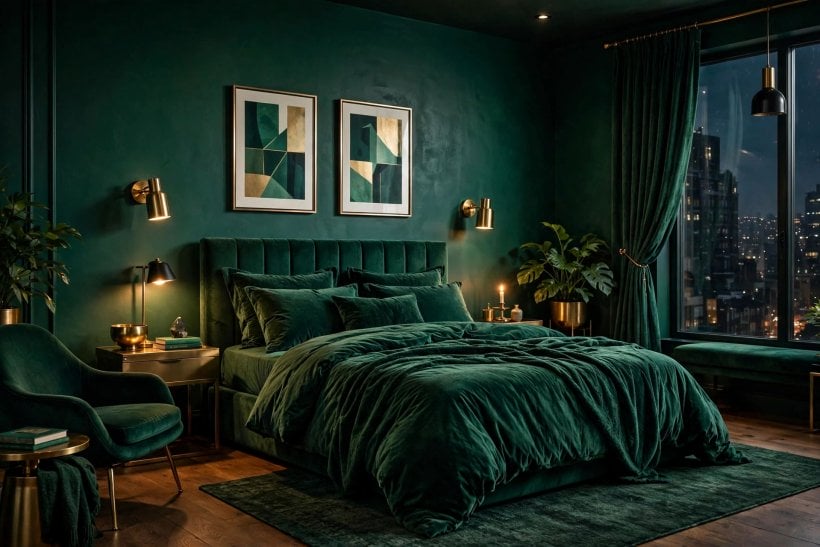
A bedroom fails quietly through storage: clothes on chairs, drawers that will not close, a wardrobe swallowing the room’s best wall. These ideas house everything the sleeper owns while keeping the room’s calm intact, the discipline the room’s master bedroom ideas sibling also keeps at its larger scale.
34. Count the Clothes Before Choosing the Wardrobe
Storage designed before the inventory is guesswork. Count hanging clothes, folded clothes, shoes and the awkward long tail of luggage and out-of-season boxes, then choose or build storage that fits the census with a little mercy to spare.
35. Prefer Built-In Wardrobes Where One Wall Is Mostly Storage Anyway
Fitted wardrobes painted with the walls turn an unavoidable storage wall into architecture: full height, no dust-trapping gaps, doors that disappear into the scheme. For most complete bedrooms this is the single largest visual upgrade available.
36. Divide Hanging Space Honestly Between Long and Short
Most wardrobes waste their lower half beneath shirts while dresses crush. Two short rails and one modest long section, planned from the actual clothes, roughly doubles a wardrobe’s usefulness without adding a centimetre of furniture.
37. Give Drawers the Small Chaos: Underwear, Chargers, Watches, Letters
Drawers with simple dividers absorb the small items that otherwise colonise every surface. A bedside drawer that swallows the night’s pocket debris is the difference between a calm room and a room with a permanent archaeological layer.
38. Use Under-Bed Storage for the Seasonal and the Seldom
Flat boxes or drawers beneath the bed are the right home for winter duvets, spare linen and guest towels: out of sight, dust-managed, reachable twice a year without a ladder or a expedition into the loft’s far country.
39. Choose Bedside Tables by What They Must Hold
A book, a lamp, water, spectacles, a phone on charge: the bedside table is a small workstation.
40. Add One Chair, and Defend It From Becoming a Wardrobe
Every bedroom wants one chair, for shoes, reading and sitting to think. The chair-clothes pile is defeated not by willpower but by a hook rail or lidded basket placed exactly where the pile used to form.
41. Let a Dressing Table Earn Its Place or Leave
A dressing table used daily is a pleasure; one used as a shelf with a stool is a tax.
42. Keep Laundry Invisible With a Lidded Basket in the Room
Laundry that must travel to be washed gets worn again or floors itself. A lidded, handsome basket inside the bedroom removes the journey, hides the evidence and ends the chair’s second career at a stroke.
43. Store Books in a Small, Edited Bedside Stack
A few books, changed as they are read, are character; a teetering tower is storage failing in public.
44. Leave One Surface Completely Empty, on Purpose
One clear surface, a dresser top, a window sill, is the room’s proof of calm. It costs nothing, photographs beautifully and tells the sleeper nightly that the room is finished. Defend it like a border.
6. Colour, Walls and Pattern: The Room’s Weather
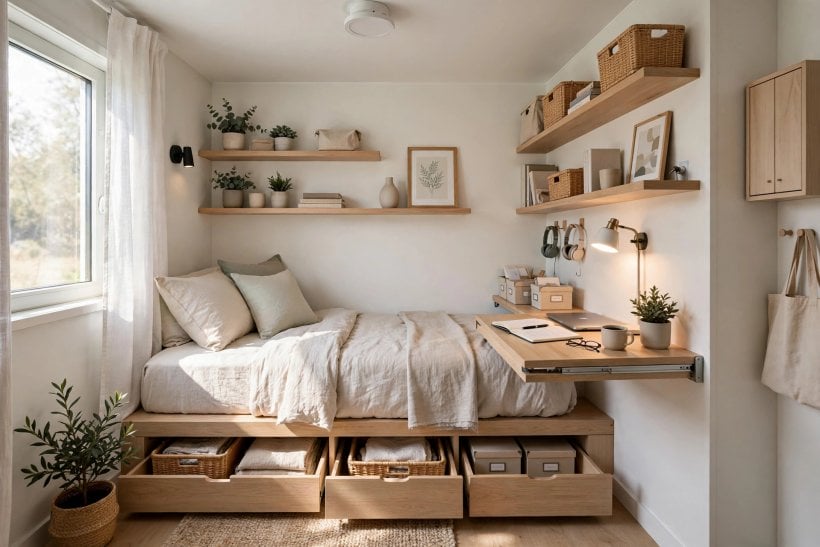
Colour is the bedroom’s weather, felt before it is analysed. This section sets the palette with the same one-family discipline the colour specialists use, at survey scale: walls, ceilings, pattern and the partner-colour rule, including the gray lane the gray bedroom ideas post works in full.
45. Choose the Palette From the Light the Room Actually Gets
North-facing rooms warm their palettes; sun-drenched rooms can afford cool colours and depth. Sampling paint on two walls and living with it through a full day’s light remains the cheapest education in the whole of decorating.
46. Keep Walls the Calmest Version of the Chosen Colour
Bedroom walls reward the muted, greyed, softened version of almost any hue. Saturation belongs in cushions and art, where it can be changed in an afternoon, not in four walls the sleeper must negotiate with nightly.
47. Use One Deep Wall Only Where the Room Wants a Cocoon
A deep wall behind the bed anchors a scheme and photographs magnificently; deep walls everywhere suit only tall, bright rooms and confident sleepers. The survey’s rule is simple: depth as an accent first, a commitment later.
48. Let White Bedding Be the Palette’s Reset Button
Crisp white or undyed bedding against any wall colour reads as freshness and lets the palette be braver elsewhere.
49. Treat Pattern as One Voice, Not a Choir
One patterned element, a curtain, a cushion pair, a wallpapered bed wall, gives a bedroom its print. Two patterns can be married carefully in scale and palette; three are a committee, and committees rarely help anyone sleep.
50. Use Wallpaper Where Texture or Pattern Must Carry a Plain Room
A quiet grasscloth, a fine stripe or a soft botanical on one wall gives furniture-light rooms their interest. Wallpaper earns its keep in bedrooms precisely because the room’s other elements are mostly cloth and calm.
51. Paint the Ceiling as a Decision, Not a Default
White ceilings lift; tinted ceilings cocoon; the wall colour carried overhead wraps. Any of the three can be right, but the complete bedroom chooses deliberately, because the ceiling is the surface the sleeper actually looks at longest.
52. Match Timber and Metal Temperatures to the Palette’s
Warm palettes marry honey timber and brushed brass; cool palettes marry pale ash, chrome and black steel. Mixed temperatures in small metal details are how careful schemes quietly unsettle the people sleeping inside them.
53. Admit One Partner Colour, Repeat It Three Times, Stop
A partner colour in three places, cushion, throw, one object, reads as a scheme; once reads as an accident; everywhere reads as a takeover. Three appearances, then the discipline of stopping, is the decorator’s whole secret.
54. Keep the Floor’s Contribution Calm: Rug Over Noise
A plain, generous rug over a busy or cold floor unifies the palette at its base and warms the room’s acoustics as well as its feet. Where floors argue with everything, the rug is the palette’s peacekeeper.
55. Test the Whole Palette Together at the Day’s Worst Hour
Judge the assembled room on a wet afternoon and again under lamplight. If it feels calm rather than defeated at its worst hour, the weather is right, and brighter hours will only flatter what already works.
7. Light and Windows: Daylight Kept, Darkness Earned
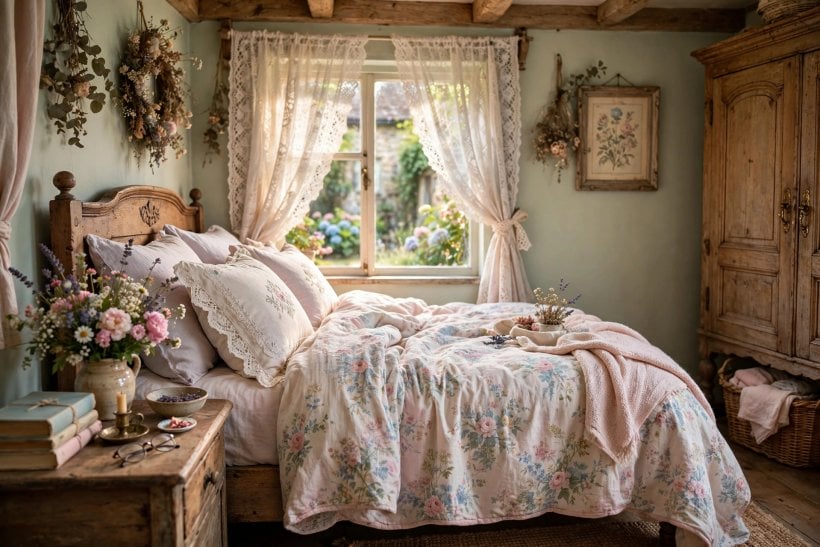
Sleep is a lighting outcome as much as a furniture one. These ideas manage the bedroom’s two opposite duties, welcoming the morning and banishing it at midnight, with the window dressing and lamp decisions that decide both.
56. Dress Windows for Darkness First and Beauty Second
In a bedroom, curtains and blinds have a job: darkness.
57. Layer Sheers or Voiles for Daytime Privacy Without Gloom
A sheer layer keeps the room private and soft by day while the blackout layer waits for night. The pairing costs little, suits every style in this survey and is the window treatment complete bedrooms quietly standardise on.
58. Light the Room in Layers: Ceiling, Bedside, Low and Warm
One overhead light is an interrogation. Layered light, a soft ceiling fitting, matched bedside lamps and one low warm source for night hours, lets the room be bright for dressing and kind for winding down.
59. Match Bedside Lamps in Height and Warmth, If Not in Looks
Uneven bedside light makes composed rooms feel accidental. Similar height, similar warm bulbs, whether the lamps are twins or cousins, keeps the bed’s symmetry and gives both sleepers an equal share of the evening.
60. Put Reading Light Where Readers Actually Sit Up
Reading light should fall on the page from beside or behind the shoulder, bright enough for print and shaded from the other sleeper’s eyes. Clip lights, wall lights and good table lamps all serve; ceiling light serves nobody’s novel.
61. Banish Blue-White Bulbs From the Bedroom Entirely
Cold, blue-leaning light turns bedrooms institutional and skin unkind. Warm bulbs everywhere in the room, without exception, is the survey’s cheapest complete upgrade: an evening’s work that changes every night that follows.
62. Use Mirrors to Borrow Light, Placed With Intent
A mirror opposite or beside a window returns daylight into the room’s centre; a mirror facing the bed returns the sleeper, which not everyone wants at dawn. Placement is the whole art, and the dressing corner usually wins.
63. Give the Morning an Alarm the Light Agrees With
Where early rising matters, light that arrives gradually, a timer lamp or curtains the household opens as ritual, beats any shriek. A complete bedroom treats waking as part of its design brief, not an interruption of it.
64. Hide the Glow: Chargers, Standby Lights and Screens
Tiny standby lights and charging glows colonise dark rooms surprisingly effectively. A charging spot inside a drawer or behind a curtain, and screens kept out entirely where sleep is fragile, restore the darkness the window dressing bought.
65. Add One Low, Warm Light for the Night Hours
A small warm light at low level, for night waking, children and early risers, keeps the room kind at its most-used hours. It is the fitting nobody photographs and everybody blesses at 3 a.m.
8. Finishing the Complete Bedroom: Small Rooms, Guests and Rest
The survey’s last ideas gather the rooms and details that separate a scheme from a sanctuary, including the contemporary lane the modern bedroom ideas post explores, and the one test every finished bedroom must pass: lying in it.
66. In Tiny Bedrooms, Spend on the Bed and Edit Everything Else
The smallest complete bedrooms succeed by concentrating: an excellent bed, pale walls, built-in or under-bed storage, one chair at most. Editing is not deprivation here; it is how a small room becomes restful instead of merely full.
67. Give the Guest Bedroom a Host’s Honest Test: Sleep in It
One night in the guest bed exposes the cold corner, the missing hook, the lamp that cannot be reached. Hosts who sleep in their own guest rooms once a year give better hospitality than any amount of decorative effort.
68. Add a Plant and One Piece of Art, Then Stop
A plant for life and one artwork for soul, chosen with care against the palette. The bedroom that stops there looks curated; the one that continues looks like a shop, and shops are poor places to sleep.
69. Choose Art That Brings the Warmth the Palette Withholds
Art is where a calm bedroom borrows feeling: a golden landscape, a portrait with skin in it, a textile with a past. The frame obeys the room’s metals; the picture supplies the fire the scheme politely declined to.
70. Scent the Room Barely, and Prefer Real Air
Linen spray, a cedar block in the wardrobe, an open window’s worth of actual air: bedrooms suit barely-there scent, the olfactory version of their visual calm. Heavy fragrance in a small calm room shouts in a whisper’s house.
71. Make Bed-Making a Two-Minute Daily Ceremony
Straightened layers, cushions placed, throw folded: the brief making of the bed is the ritual that keeps any scheme in this survey looking complete. A beautiful bedroom unmade is a promise broken daily; the ceremony keeps it.
72. Photograph the Room Once and Judge the Composition Coldly
A photograph flattens a room into its composition and exposes the stray colour, the odd temperature, the lamp that leans. One honest photograph, judged once and acted on, finishes a bedroom better than a month of rearranging.
73. Rotate Textiles by Season Instead of Redecorating
A bedroom changed by its cloth, pale and light for summer, deep and woolly for winter, stays interesting for years on one painted scheme.
74. Let the Scheme Rest a Season Before Extending It
Bedrooms reveal themselves slowly, across weather and light. Live with the finished room before deepening a wall or adopting a bolder partner colour; most rooms discover they were already complete, which is decorating’s happiest ending.
75. Review the Whole Room From the Bed, Where It Is Judged
The final inspection happens lying down: the ceiling’s tone, the wall faced at waking, the light’s kindness, the door closed on the world. If that view is calm, the bedroom is complete, whatever any doorway photograph says.
9. Checks and Mistakes: Before the First Pour or Purchase
Sample and test before committing, because bedrooms punish guesses at night: paint on two walls lived with through a full day, the bed dressed in its intended layers, and one night slept in the room before the scheme is declared finished. The test weekend prevents the repaint-and-replace cycle that unfinished bedrooms specialise in.
Check the room’s temperatures and systems as a set, palette, timber, metals and light, because a bedroom fails by mixture more often than by choice. A warm palette under cold bulbs, or storage that cannot close, will unsettle sleepers nightly while every individual element protests its innocence.
The common mistakes are all in this survey’s sights: style drift, door swings ignored, storage counted after purchase, and decoration bought before darkness. Each is avoided by the survey’s own order, style, layout, bed, storage, colour, light, written down before the first order is placed.
10. Costs and Pulling It Together
Costs stay qualitative, as a survey’s should: a complete bedroom can be as economical as paint, bedding and rearrangement, since editing costs nothing and systems matter more than objects, and the expensive end is fitted wardrobes, upholstered beds and layered lighting installed properly. Spend first on the mattress and the blackout; they decide more nights than any furniture in the room.
Pull it together in the order this post kept: one style, one layout, one properly built bed, storage that closes, one palette, light in layers. Followed in sequence, these seventy-five ideas become the complete bedroom the survey promised, a room that needs nothing added and nothing excused.
Final Considerations
A complete bedroom is not the newest bedroom or the most photographed one; it is the room that asks nothing of its sleeper and gives back rest. Survey honestly, choose once, build in order, and let the quietest room in the house become the one the household loves most.



0 Comments