

The master bedroom is the one room in the house that never has to perform for guests — and it shows, in most homes, where it becomes the spare room, the laundry overflow and the place furniture goes to retire.
These 75 master bedroom ideas treat the suite as what it should be: the household’s best room, planned in zones for sleeping, dressing and unwinding, and finished to a standard the rest of the house can envy quietly.
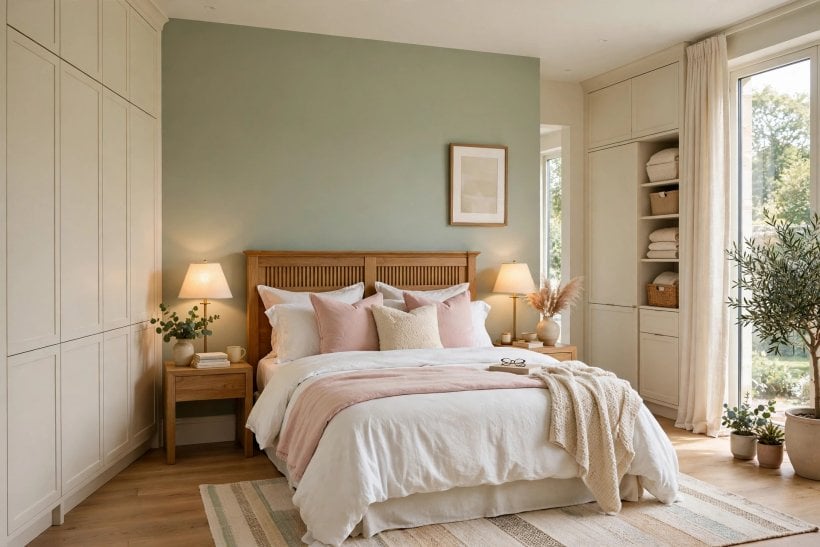
1. Master Bedroom Ideas at a Glance
The central entity is the master bedroom as the home’s primary suite: not just a bigger bedroom, but a small system of connected zones — the sleeping zone around the bed, the dressing zone of wardrobes and drawers, and a quiet corner for reading or morning coffee. Its attributes are layout, the bed, storage, colour, light and textiles, and the order matters: zone the room first, and every later choice has a place to belong.
| What makes a bedroom the master? | Scale and completeness: the largest sleeping room, the household’s main wardrobes, and space — however modest — for more than sleeping. It is a suite of zones, not a bed with extras. |
| Where do I start? | With the zones and the bed wall. Place the bed first, give dressing its own territory, and keep the two from colliding in the middle of the room. |
| What is the most important purchase? | The bed and mattress, by a distance. Then blackout and quiet. Everything decorative comes after sleep itself is secured. |
| How much storage does it need? | Enough that every item of clothing, linen and luggage has a closed home inside the room. A master bedroom that cannot absorb its own clutter can never look calm. |
| What is the biggest mistake? | Spending on decoration before fixing layout, storage and light control — the suite version of painting a room that is still full of boxes. |
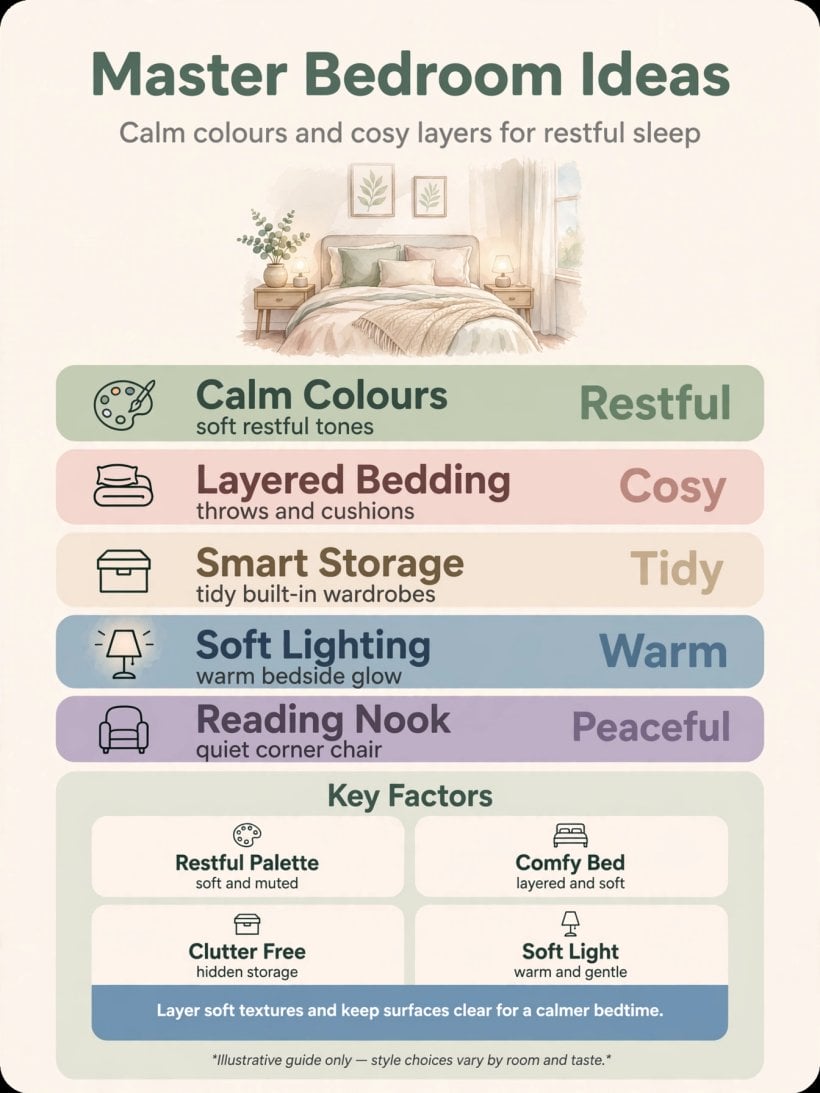
At a glance: zone the suite, centre the bed, give dressing its own territory, design colour and light for sleep, and let textiles carry the luxury.
2. Layouts and Zones: Sleep, Dressing and the Quiet Corner
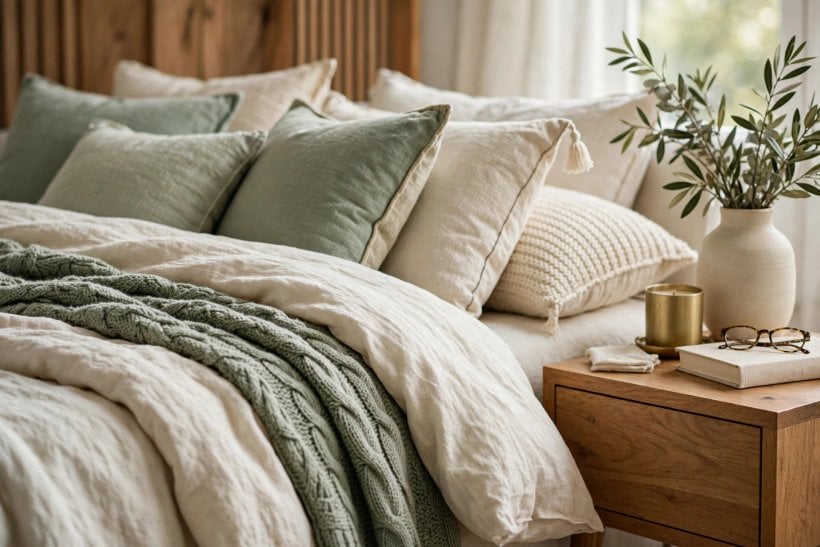
The suite works when its three zones stop interrupting each other: sleep at the quiet end, dressing along its own wall, the corner for everything else. This post is the master-suite companion to the bedroom ideas pillar; the zoning logic holds in a farmhouse suite and in the compact master rooms of these apartment interior design ideas for tiny houses alike.
1. Place the Bed on the Room’s Best Wall
The bed takes the longest, quietest wall — away from the door’s swing and the bathroom’s noise where the plan allows. Every other zone arranges itself around that decision, so make it first and make it well.
2. Give Dressing Its Own Territory
Wardrobes, drawers and the mirror belong together on one wall or in one alcove, with floor space in front for dressing itself. Clothes storage scattered around the room dissolves the suite into a bedsit.
3. Keep a Clear Route from Bed to Door to Bathroom
The night route should be walkable half-asleep: no bench corners at shin height, no rug edges curling, no chair migrating into the path. No room in the house is used in the dark more than this one.
4. Add a Quiet Corner, However Small
One chair, a small table, a lamp: the corner is where the suite becomes more than a sleeping machine — morning coffee, evening reading, the phone call that needs a door closed.
5. Centre the Bed with Matching Sides
Symmetry around the bed is the suite’s calm signature: two tables, two lamps, equal walking space. A bed shoved against a side wall reads as a spare room whatever its size.
6. Face the Bed Toward the Room’s Best Feature
A window view, a fireplace, a garden door — the bed’s outlook is the first and last thing its occupants see. If the outlook is a wardrobe wall, make that wall worth looking at.
7. Separate the Work Corner Completely or Not at All
If a desk must live here, give it the far corner, a screen or a closing cabinet, and a rule: work hides at night. A glowing laptop across the room is the enemy of the suite’s whole purpose.
8. Use a Rug to Define the Sleeping Zone
A large rug under and around the bed marks the sleep territory and gives bare feet a warm landing. It should extend well beyond the bed’s sides or it reads as a doormat.
9. Keep the Door’s Sightline Private
From the open door, the bed should not be the whole view. A screen, a tall plant or the room’s own angle can keep the suite feeling like a retreat rather than a display.
10. Plan the Zones on Paper at Real Scale
Draw the room, cut out the bed, wardrobes and chair, and walk the zones mentally at 7am and 11pm. Suites fail in the imagination long before they fail in the furniture shop.
11. Leave One Wall Undedicated
Not every wall needs a job. An empty stretch gives the room air, a place for the eye to rest, and flexibility when life changes the room’s use.
3. The Bed and Headboard: Scale and Presence
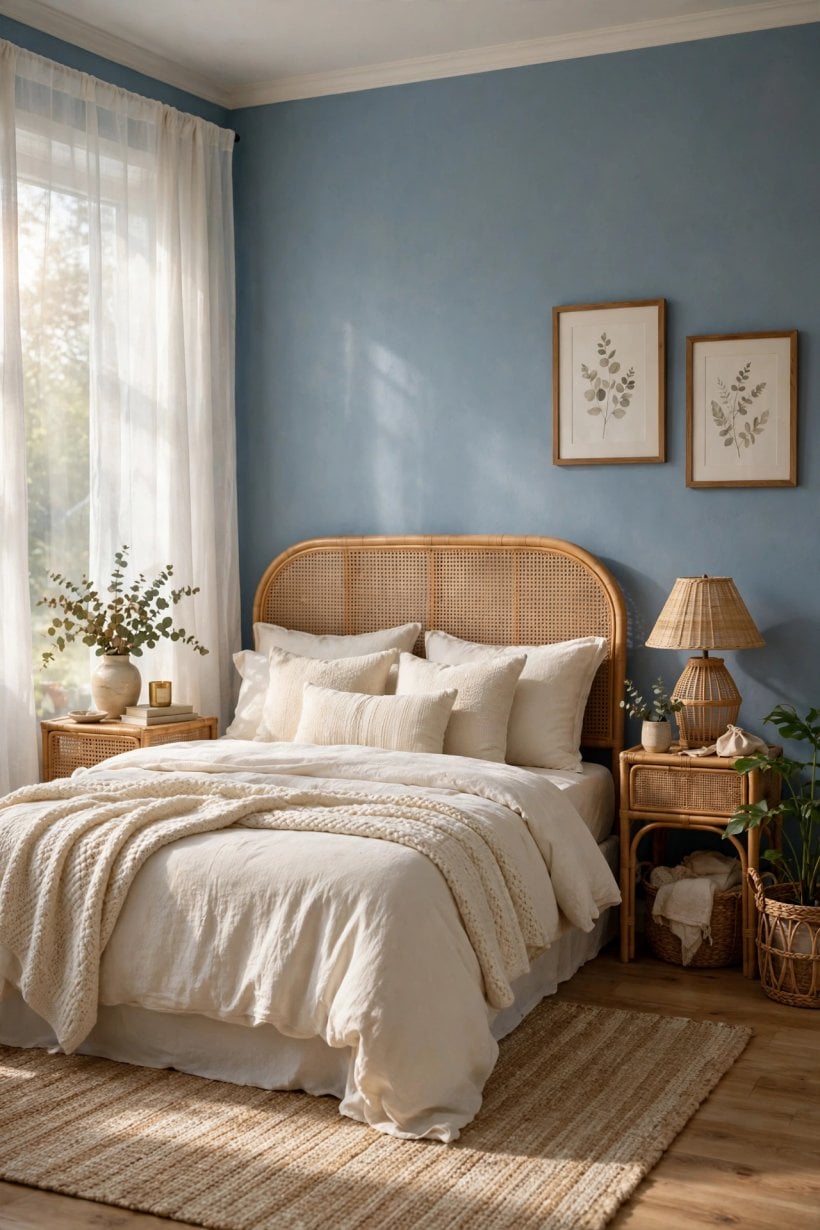
The bed is the suite’s anchor and its landscape. The compact examples in this look at a modern tiny house bedroom show the same truth at small scale: get the bed right and the room forgives almost everything else.
12. Size the Bed to the Room, Generously but Honestly
The largest bed the room takes while keeping clear space on both sides and at the foot. A bed that fills the room wall to wall is not luxury; it is an obstacle course with bedding.
13. Give the Bed a Headboard with Presence
Upholstered, timber or panelled — the headboard is the suite’s main wall decoration and its backrest for reading. It should be wide enough to embrace both pillows and tall enough to matter.
14. Choose the Mattress for Sleep, Not for the Showroom Minute
Firmness is personal and changes over years. Buy for the sleepers’ backs and habits, favour honest materials and a real trial period over a impressive two-minute lie-down.
15. Keep Bedside Tables at Mattress Height
A table level with the top of the mattress puts the book, the glass and the lamp within a blind reach. Too high spills, too low strains — measure before buying.
16. Add a Bench or Ottoman at the Foot
The foot bench catches the throw, the morning clothes and the suitcase, and finishes the bed’s composition. In smaller suites, make it a storage ottoman and earn the space twice.
17. Layer the Bedding in Natural Fibres
Linen or cotton against the skin, wool for warmth: natural fibres breathe through the night in a way synthetics never quite manage, and they age into softness instead of shine.
18. Keep Pillows Honest
Two sleeping pillows per person and at most a pair of cushions in front. A bed that needs a nightly excavation of decorative pillows is styling defeating sleep.
19. Let the Bed Carry the Room’s Colour Confidence
As the largest soft surface, the bedding is where the scheme’s one confident colour belongs — changeable in a wash, committed in effect.
20. Raise or Lower the Frame to the Sleepers
Bed height decides how the day starts and ends: feet flat on the floor when sitting on the edge is the test. Platforms suit the young; higher frames forgive knees.
21. Hide the Bed’s Machinery
Chargers, cables, the alarm clock’s wire — route them behind or inside the bedside tables. The suite’s calm is broken by exactly the small things.
22. Make the Bed Every Morning, Properly
Ninety seconds of straightening converts the room from slept-in to suite. It is the cheapest luxury in this entire list and the one guests of the room — its owners — feel most.
4. Wardrobes and Dressing Storage: The Suite’s Engine Room
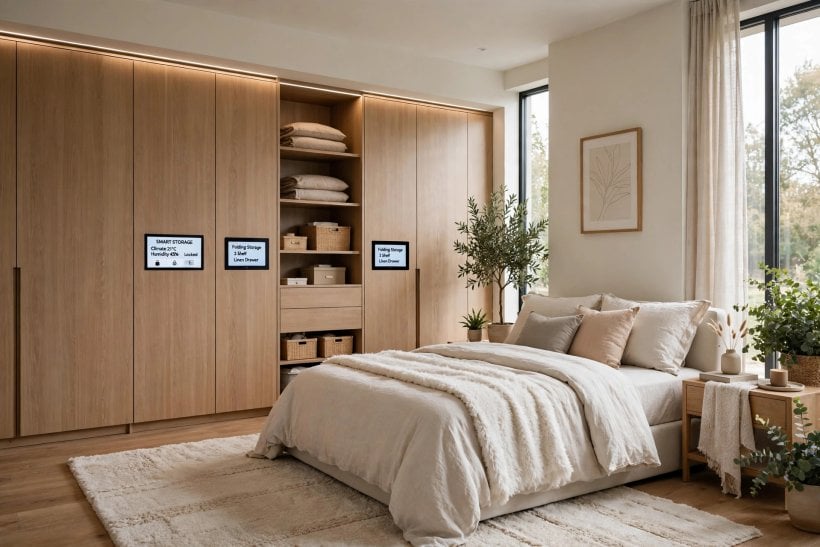
A master suite stands or falls on whether its storage swallows two adults’ clothing, linen, luggage and oddments without a visible trace. The fitted logic in these tiny house closet design ideas — every centimetre assigned — is exactly what a suite’s dressing zone needs.
23. Take Wardrobes Full Height
The space above a standard wardrobe is a dust farm. Full-height fitted storage uses it for the rarely-touched: suitcases, spare duvets, the archive of winter.
24. Divide Hanging Space by Length, Honestly
Count the long clothes before apportioning rails. Most wardrobes need far more short hanging and shelves than the showroom split suggests, and one honest long section.
25. Give Each Person a Defined Territory
Shared suites stay peaceful when the storage map is diplomatic: a side each, drawers each, and common ground only for common things like linen.
26. Put Drawers Inside the Wardrobe Run
Drawers behind wardrobe doors keep the room’s walls free for the bed, the chair and art, and keep clothes dust-free. A chest of drawers in the room is a second choice, not a first.
27. Add One Open Section for the Week’s Clothes
A short open rail or shelf for the clothes in current rotation stops the chair becoming the wardrobe’s overflow — the single most common suite failure.
28. Store Shoes at the Bottom, Out of Sight
Shoe racks or boxes inside the wardrobe’s base keep the floor clear and the room smelling of nothing but linen. Shoes in the open age a suite faster than anything.
29. Keep a Full-Length Mirror in the Dressing Zone
On a wardrobe door or the dressing wall, lit from the sides. The mirror belongs to the dressing ritual, not opposite the bed where it startles the half-awake.
30. Give Linen and Towels a Shelf of Their Own
The suite’s bedding and the ensuite’s towels should live in the suite, not in a hallway cupboard — the whole point of the master arrangement is self-containment.
31. Add a Lidded Laundry Home Inside the Room
A closed laundry basket in the dressing zone ends the floor-pile era. Choose one that looks like furniture and empties without a wrestling match.
32. Light the Wardrobe Interiors
Small automatic lights inside the main sections end the phone-torch search for the navy sock. Cheap to fit, felt every dark morning.
33. Keep One Drawer Completely Empty
The guest drawer, the gift-hiding drawer, the sudden-overflow drawer. A suite with one spare drawer is a suite that can absorb life without visible strain.
5. Colour and Calm: Palettes That Lower the Pulse
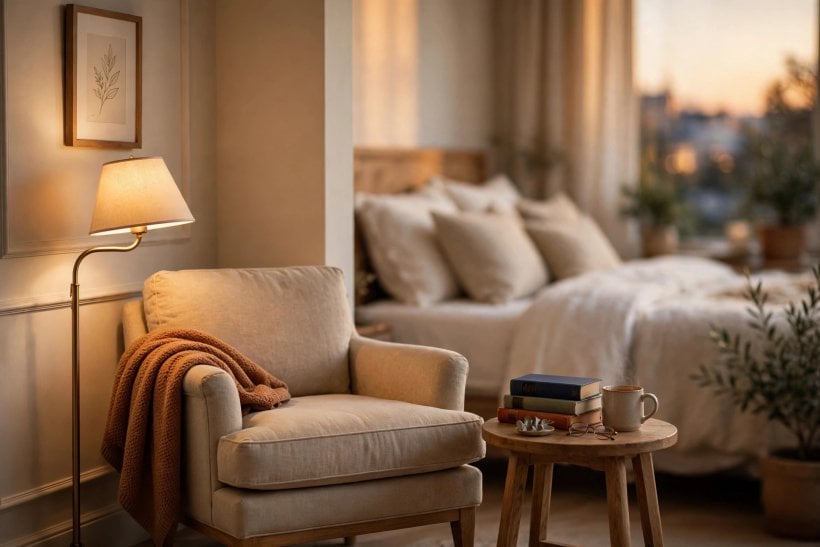
Colour in a sleeping room has one job first: lower the household’s pulse at the door. Muted, nature-leaning tones do it reliably; the suite can take its drama from the bed’s textile layer, which changes with a wash rather than a repaint.
34. Build the Scheme on Muted, Greyed Tones
Sage, fog blue, warm stone, clay — colours with grey in them recede and soothe. Bright, saturated wall colour belongs to rooms that are awake; the suite is for the opposite.
35. Test Colour by Lamplight, Not Daylight
A bedroom lives mostly in morning and evening light. The sample that charms at noon may shout at bedtime; judge the finalists at the hours the room is actually used.
36. Paint the Wall Behind the Bed a Shade Deeper
One deeper wall gives the bed its backdrop and the room its depth, while the remaining walls stay pale enough for morning light. It is the suite’s safest piece of drama.
37. Keep Ceilings Soft White
The ceiling is the last thing seen at night; a soft, warm white disappears kindly. Dark ceilings in sleeping rooms feel like lids except in the very tallest spaces.
38. Match Undertones Across Paint, Carpet and Bedding
Warm greys with warm whites, cool with cool. A suite’s palette is small, so a single undertone fight is audible from the doorway.
39. Let the Bedding Carry the Accent
The scheme’s one confident colour — rust, ink, deep green — belongs on the duvet and cushions, where it can deepen in winter and lighten in summer.
40. Use Timber as the Scheme’s Warm Neutral
The bed frame, the tables, a bench: one timber tone counts as the palette’s warmth and ties the soft scheme to something solid and natural.
41. Keep Pattern Quiet and Large-Scale
A wide stripe, a soft check, a plain weave with slub — pattern at a scale the eye can rest on. Busy small prints in the sleeping room are visual noise at the exact wrong hour.
42. Fit Real Blackout, Whatever the Colour
Blackout lining behind the curtains or a fitted blind layer is non-negotiable for sleep quality. Choose the prettiest curtain you like; the darkness is doing the work.
43. Dress Windows for Privacy and Dawn
A sheer or voile layer keeps the room private at dressing time and softens the first light. Suites that face neighbours need both layers, always.
44. Save Strong Colour for the Ensuite Door’s Other Side
If the household loves a bold bathroom, let the ensuite carry it. The sleeping room stays calm, and the drama gets its own small stage.
6. Lighting: Dim, Warm and Layered
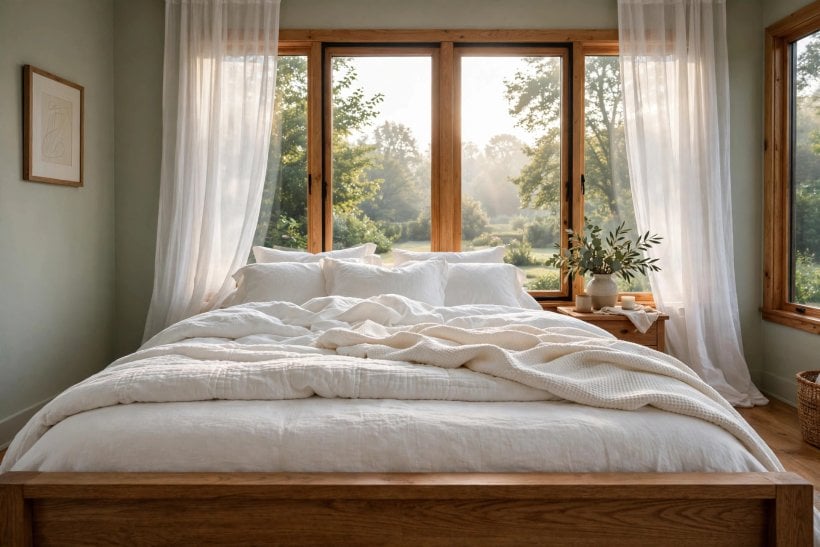
Bedroom lighting is a dimmer with fittings attached. The suite needs bright light for dressing and cleaning, low warm light for the evening wind-down, and a night light path that never fully wakes anyone — three scenes, planned once.
45. Put the Main Light on a Dimmer by the Bed
Control from the pillow is the suite standard: the last light off without a walk across the room. Two-way switching between door and bed is the minimum.
46. Choose Bedside Lamps That Aim Down
Reading light should land on the book, not in the partner’s eyes. Shaded lamps or aimed wall lights at shoulder height, one per sleeper, individually switched.
47. Add Wall Lights to Free the Tables
Where bedside tables are small, wall-mounted reading lights keep the surface for the book, the glass and the clock — and the lines stay clean.
48. Light the Dressing Zone Like a Fitting Room
Vertical light at the mirror’s sides, bright enough to judge colours honestly. Getting dressed by a dim ceiling light is how navy leaves the house as black.
49. Keep Every Bulb Warm
Warm-white throughout the suite, matched across fittings. Cool light in a sleeping room feels clinical at any brightness and fights every calm colour on the walls.
50. Plan a Night Path Light
A low, warm guide light toward the bathroom — a skirting-level fitting or a lamp on a timer — keeps night journeys safe without a full waking.
51. Use the Morning Light Deliberately
East light is the suite’s alarm clock where the plan allows it. If the room faces the dawn, fit blackout that opens easily and let the light do weekday work.
52. Add One Lamp to the Quiet Corner
The reading chair needs its own pool of light, independent of the bed’s. A corner that cannot be used after dark is a corner wasted half the year.
53. Hide Chargers, Show No Cables
Charging lives inside a drawer or behind the bedside table, cables routed once and forgotten. The last screen glow of the night should be a choice, not a trip hazard.
54. Keep One Bright Scene for Cleaning and Packing
Suites are cleaned and suitcases are packed under real light. The dimming scheme must still reach full brightness when life requires it.
55. Match Lamp Shapes to the Room’s Lines
Two matching bedside lamps are the suite’s symmetry made visible. Mismatched lamps read as temporary, and temporary is the opposite of the master room’s promise.
7. Textiles, Bedding and the Soft Layer
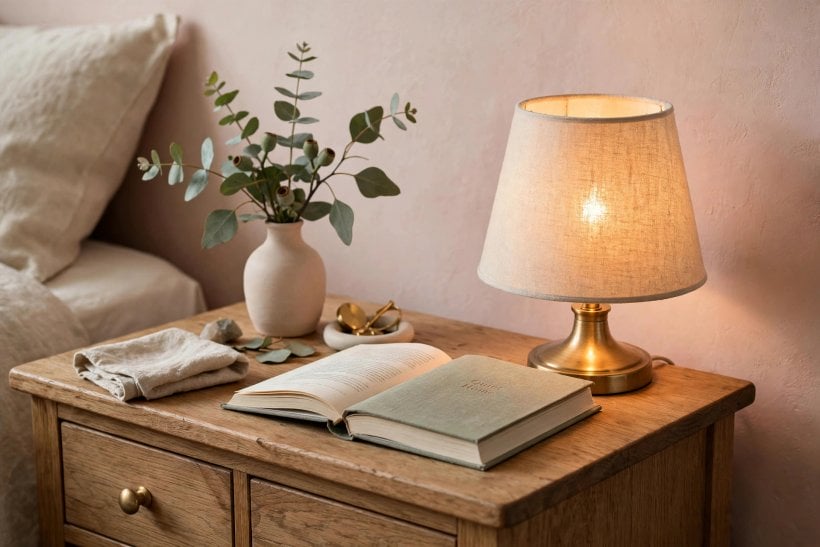
Textiles are where the suite’s luxury actually touches skin. The decorative layer in these tiny house bedroom decor ideas shows how far a small, well-chosen soft layer goes; the master room simply has more room to do it properly.
56. Buy the Best Bedding the Budget Allows
Sheets are touched eight hours a night — more contact than any sofa. Honest cotton or linen, washed soft, is the suite’s highest-value spend after the mattress.
57. Layer Warmth in Washable Pieces
A duvet, a wool throw, a lighter blanket for summer shoulders: layers that can be added, removed and washed beat one heavy, unchangeable cover.
58. Keep a Throw at the Bed’s Foot
For the afternoon nap, the ill day, the book in bed — the throw is the suite’s most-used textile. Choose it for the hand first and the photograph second.
59. Choose Curtains with Weight
Heavy, lined curtains fall in calm folds, block light at the edges and soften the room’s sound. Skimpy curtains make the best suite look underdressed.
60. Put a Soft Rug Where Feet Land
Both sides of the bed, ideally one large rug beneath. The first sensation of the day should be warmth, not cold floor — a small thing felt ten thousand times.
61. Use Cushions Sparingly and Softly
Two cushions beyond the sleeping pillows is plenty. Their job is the chair and the made bed’s finish, not a daily demolition project.
62. Keep a Spare Set of Everything in the Room
Spare bedding and towels stored in the suite mean a sick night or a sudden guest never becomes a hallway expedition at midnight.
63. Let One Textile Be the Heirloom
A real wool blanket, a quilt with a history — one piece with a story gives the suite a soul that newness cannot buy. Keep it in daily use, not in a drawer.
64. Match Textile Tones, Not Sets
Coordinated, not identical: bedding, curtains and rug in the same tone family with different textures. Bought-in-a-set sameness flattens the room it was meant to finish.
65. Wash and Air the Room’s Soft Layer Seasonally
Curtains down, rug out, duvet aired — the seasonal reset keeps the suite fresh and gives the scheme its natural moment to lighten or deepen.
8. Master Bedrooms in Small Homes and Tiny Houses
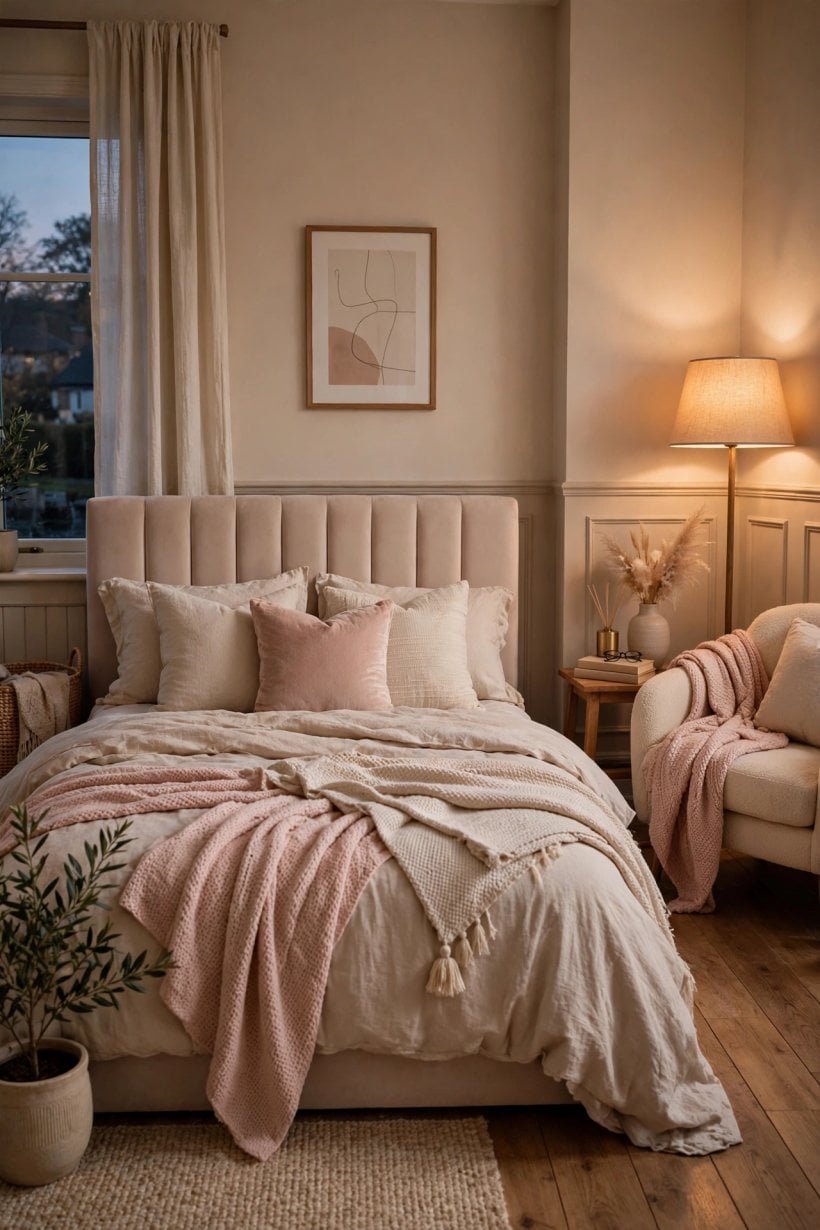
Not every master bedroom is large; in a small home it is simply the household’s main sleeping room, and the suite discipline matters more, not less. The methods in these tiny house bedroom ideas and this guide to small bedroom interior design ideas for tiny houses scale the suite down without surrendering it.
66. Zone by Rug and Light, Not by Walls
In one small room, the rug marks sleep, the lamp marks the corner, and the wardrobe run is the dressing zone. Zones are agreements, not partitions.
67. Take Storage to the Ceiling and Behind the Bed
Full-height wardrobes plus a headboard wall with cupboards reclaim the small suite’s lost volume. The bed’s wall is storage real estate in any room short of floor.
68. Choose a Bed with Storage Inside It
Drawer bases or a lift-up frame hold the spare bedding and the out-of-season clothes that a small suite has nowhere else to put.
69. Keep the Bed the Only Large Object
One big piece per small room. The chair becomes a wall hook and a cushion; the dressing table becomes a shelf. The bed keeps its presence by having no rivals.
70. Use Sliding or Pocket Doors on Wardrobes
Hinged doors need swing space the small suite cannot spare. Sliders and pocket doors return that floor to the room permanently.
71. Mount the Lamps and Skip the Tables
Wall lights and a narrow shelf each side give the small suite bedside function without the furniture footprint. Books and glasses still land within reach.
72. Keep the Palette Pale and the Bedding the Colour
Small sleeping rooms stay calm in pale tones, with the duvet carrying the household’s chosen colour. Dark walls shrink a small suite faster than any furniture.
73. Fit Blackout in the Window Reveal
A blackout blind fitted inside the reveal blocks light without curtain bulk — the small room’s neatest darkness.
74. Fold the Dressing into a Dedicated Nook
Even a wide alcove with a rail, shelves and a mirror curtain behaves like a dressing room if it is defended as one. Territory is a decision before it is a dimension.
75. Keep One Luxury and Do It Properly
The best sheets, the real blackout, the proper lamp: choose the luxury the small suite can hold and refuse the diluted version of five.
9. Checks and Mistakes: Before the Wardrobes Go In
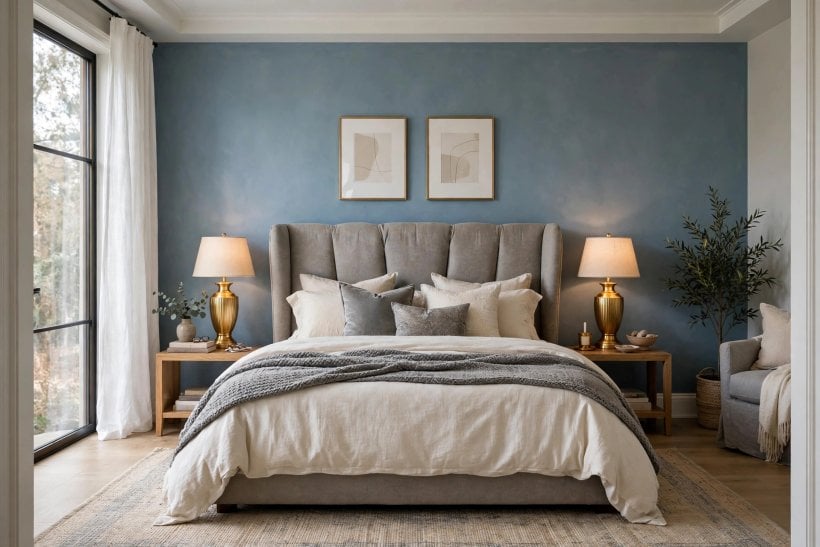
The expensive suite mistakes repeat reliably: wardrobes fitted before the bed’s position is final, so both end up compromised; decoration bought before storage, so the clutter simply gets prettier containers; and light control left as an afterthought in the room where darkness matters most. Every one of them is a sequencing error, not a taste error.
Run the checks in order: zones drawn at scale with the night route walked; wardrobe interiors counted against the actual clothes; blackout tested on the real window through one full night; bedside heights measured against the chosen mattress; and the delivery route — stairs, landing, door — measured for the bed base. This is the household’s longest-used room; an hour of checking protects a decade of sleep.
10. Costs and Pulling It Together
The suite’s money divides into three bands. The sleep band — bed, mattress, bedding, blackout — is where the budget belongs, because it is felt every single night. The storage band — fitted wardrobes and drawers — is mid-priced, permanent and worth measuring twice. The soft band — cushions, art, the corner chair — is where the suite takes its personality cheaply, because every piece can change in an afternoon.
Pull the suite together in the order this guide opened: zones first, bed second, storage third, colour and light for sleep, textiles last. Keep the room self-contained — everything for sleeping, dressing and unwinding within its own walls — and it becomes what a master bedroom promises: the room the household retreats to, rather than the room it stores things in.
One last habit keeps the suite at its standard after the work is done: a five-minute reset each morning — bed made, dressing zone cleared, surfaces empty — and a seasonal hour with the wardrobes, moving what life has outgrown out of the room. Suites stay suites by rhythm, not by renovation, and the household that keeps the rhythm keeps the room it paid for.
Final Considerations
A master bedroom is a promise the house makes to the people who run it: this room, at least, is entirely yours and entirely for rest. The promise is kept by zones that do not collide, storage that swallows its own clutter, and darkness and quiet defended like the luxuries they are.
Start with the bed, build the storage around the life, and let the soft layer carry the beauty. Do that, and these ideas stop being a list and become the suite the household closes the door on, gratefully, every night.


0 Comments