

The best gym in the world is the one that is open at 6 a.m., has no queue, no commute and no opinion about your playlist, and it fits in a spare corner of your own house.
These 75 home gym ideas build that gym properly: the right room, a shell that survives training, iron and cardio chosen honestly, and the habits that keep it used.
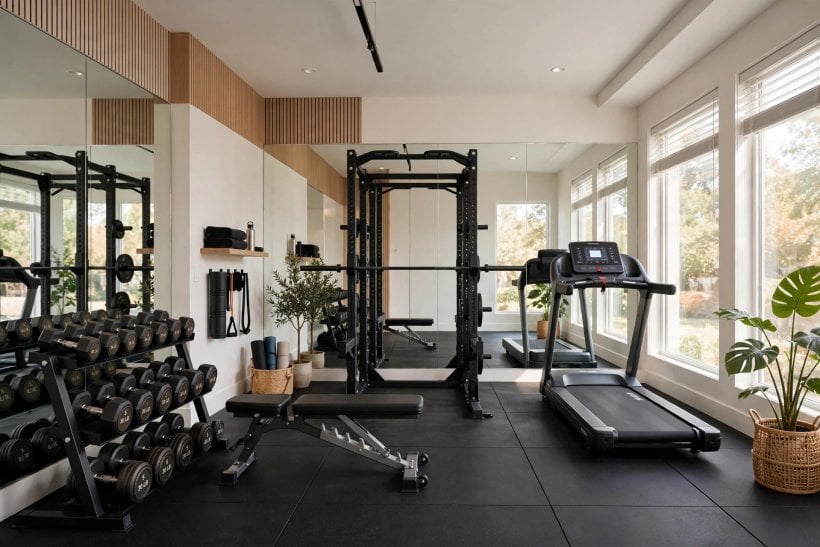
1. Home Gym Ideas at a Glance
The central entity is the home gym: a training room inside a house, whose attributes are its chosen space, its floor, wall and air shell, its strength and cardio equipment, its storage and folding arts for shared rooms, its recovery corner, and the programme that decides whether any of it gets used. It is judged by one test: sessions per week, sustained.
| Question | Short answer |
|---|---|
| Where is the best place for a home gym? | A spare room for light and warmth, a basement for strength and cool, a garage corner for heavy work; the honest room beats the ideal one. |
| What should be bought first? | Matting, adjustable dumbbells or bands, and a mat; racks and machines are earned by months of consistent training. |
| Can a home gym share a room? | Yes, with folding, wheeled and cupboard storage, and a treaty: the room restored in five minutes, every time. |
| What keeps a home gym alive? | A written programme, a fixed hour and a log; equipment maintains fitness far less than habit does. |

2. Choosing the Space: Spare Room, Basement, Garage and Corners
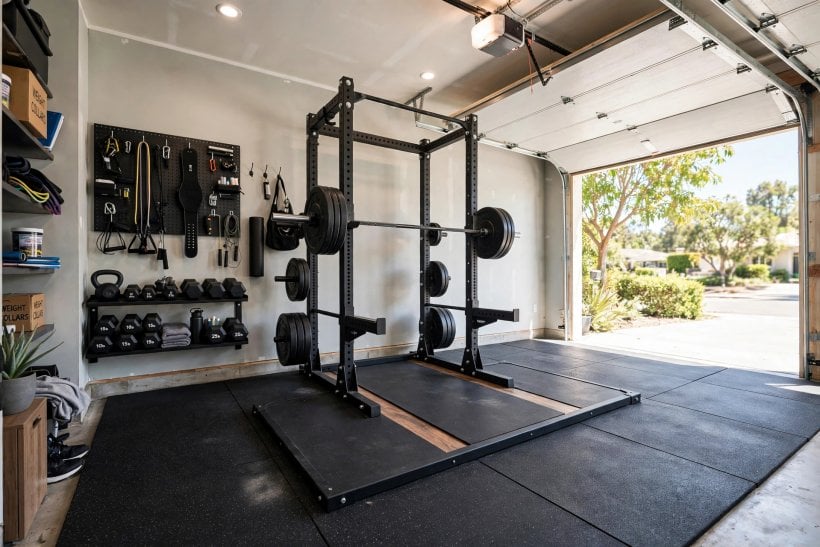
A home gym succeeds or fails at the address, before any equipment is ordered. This section chooses the room honestly, ceiling, floor, light and neighbours considered, with the below-stairs territory of the basement ideas pillar as one of its strongest candidates.
1. Start With the Spare Room for Light, Warmth and Doors That Close
A spare room is the home gym’s easiest home: warm, lit, near a bathroom and closable against the rest of life.
2. Use the Basement Where Headroom and Floor Strength Allow
Basements offer cool air, solid floors and distance from sleeping rooms, which is why the basement cluster treats them as the house’s workhorse level.
3. Give the Garage Corner to Heavy, Loud and Honest Training
Garages forgive dropped weights, chalk and music better than any room in the house.
4. Claim a Living-Room Corner Only With Storage That Swallows Everything
A corner gym in a shared room survives only if every dumbbell, band and mat disappears into closed storage in under two minutes.
5. Use the Sunroom or Brightest Room for Yoga, Mobility and Light-Loving Work
Gentle training thrives on daylight and air, which is why the bright rooms surveyed in the sunroom ideas post suit mats, bands and bodyweight work so well.
6. Measure Ceiling Height for the Work You Actually Do
Overhead presses, pull-up bars and skipping all tax the ceiling differently. Measure the room against your tallest movement with arms and equipment included, because a gym that forbids half your programme is a storage room with ambitions.
7. Check the Floor’s Strength and the Neighbours Below
Weights concentrate load, and downstairs neighbours receive every dropped dumbbell personally. Ground floors, garages and basements carry iron best; upper floors belong to mats, bands and bodyweight unless the structure has been honestly assessed.
8. Prefer a Room With a Window That Opens
Training makes heat and breath; a window that opens is ventilation, cooling and morale in one fitting. Sealed rooms need a fan and a plan, and even then they lose to the humble openable window every summer session.
9. Keep the Gym Near Water, a Shower and the Laundry
Proximity is a programme feature: water, washing and a shower within a few steps make training a routine instead of an expedition.
10. Decide Whether the Room Is Single-Use or a Treaty
A dedicated room allows fixed racks and permanent zones; a shared room demands wheels, folding and diplomacy. Naming which one you have, before buying, prevents the classic error of permanent equipment in a borrowed room.
11. Leave Room to Grow One Step, Not Ten
Plan the space for the next piece of equipment and no more.
3. Floors, Walls and Air: Building the Training Shell
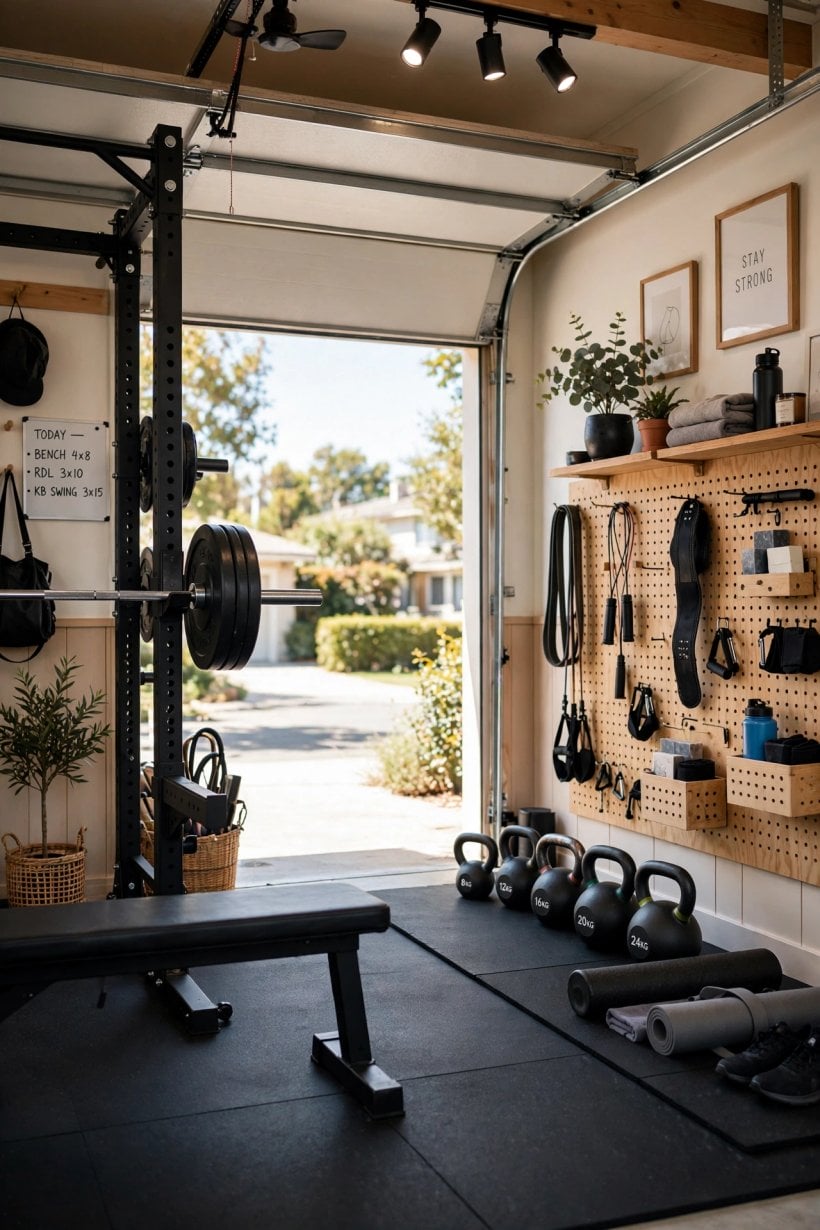
The shell decides what training the room can survive: floors that take impact, walls that carry mirrors and storage, air that stays breathable. These ideas build that shell once, properly, so equipment can change for years without the room being rebuilt around it.
12. Lay Proper Gym Matting Wherever Iron Meets Floor
Dense rubber matting over the training zone protects the floor, quiets impact and gives feet and knees a forgiving surface.
13. Protect the Whole Room’s Floor at the Edges With a Border That Stays Put
Wandering mats and curling edges trip tired athletes in the dark.
14. Build a Lifting Platform Where Heavy Work Is the Programme
A simple platform of layered board and rubber gives deadlifts and heavy work a dedicated, level, sacrificial surface.
15. Fix One Honest Mirror for Form, Not Vanity
A mirror at the training position lets lifters check posture and walkers watch alignment, which is safety equipment wearing a reflective coat.
16. Use Wall Storage to Keep the Floor for Movement
Peg rails, hooks and shelves lift bands, ropes, belts and towels off the floor the training happens on. Wall storage is the home gym’s square-footage miracle: the room’s working area doubles the day its clutter climbs the walls.
17. Ventilate Like the Room Will Host Effort, Because It Will
A fan placed to move air across the training position, plus the openable window, makes hard sessions bearable in warm months.
18. Light the Gym Brightly and Evenly for Safety and Morale
Training light should be bright, even and free of glare in mirrors: the layered, honest lighting the tiny house interior lighting ideas post specifies for small working rooms.
19. Keep One Wall Plain for Video, Timers and a Whiteboard
A plain wall behind the training position serves workout videos, a clock or timer and the humble whiteboard where the week’s programme lives. The whiteboard, updated weekly, does more for consistency than most equipment ever purchased.
20. Soundproof by Courtesy: Mats, Timing and Closed Doors
Most home-gym noise is impact and enthusiasm. Thick matting under impact zones, training hours agreed with the household and a door that closes solve nearly all of it, and cost less than any acoustic panel ever sold.
21. Paint or Finish Walls to Forgive Scuffs, Chalk and Sweat
Gym walls get leaned on, brushed and occasionally hit by equipment. Washable, forgiving finishes in calm colours keep the room looking cared for between deep cleans, and dark lower walls hide the evidence where evidence concentrates.
22. Give the Shell a Cleaning Kit of Its Own
A spray, cloths, a small vacuum and a mat-cleaning routine kept in the room make hygiene a two-minute habit instead of a monthly event.
4. Strength at Home: Racks, Benches and Free Weights
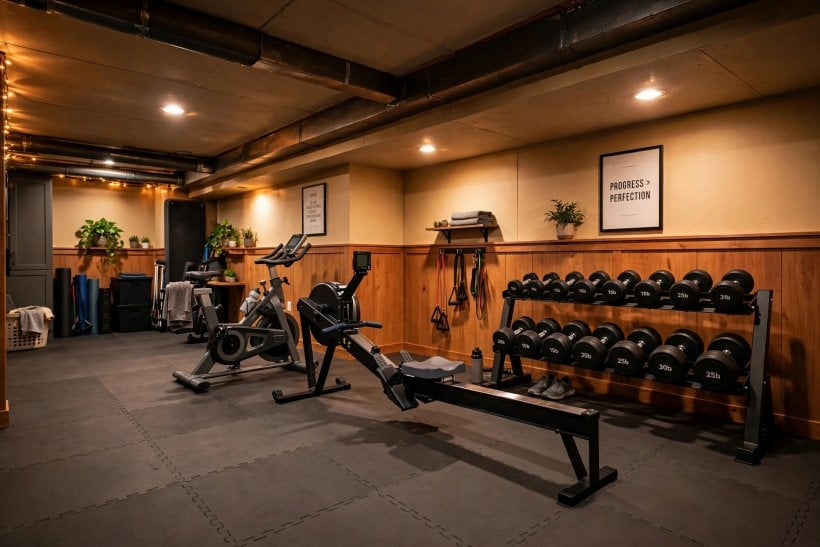
Strength is the home gym’s backbone for most households, and its equipment list is shorter than marketing suggests. This section builds the iron corner in order of usefulness, so money lands on what gets lifted weekly rather than admired annually.
23. Begin With Adjustable Dumbbells or a Small Fixed Set
Dumbbells train almost everything, store almost anywhere and suit beginners and veterans in the same square metre. Adjustable pairs save space and money; small fixed sets trade compactness for speed.
24. Add a Kettlebell or Two for Swings, Carries and Conditioning
One or two kettlebells cover swings, goblet squats, presses and loaded carries, a whole strength-and-conditioning programme in cast iron. Choose weights by honest current ability, because bells bought for an imagined future mostly decorate the floor.
25. Let an Adjustable Bench Unlock Half the Catalogue
A sturdy bench that inclines and declines turns dumbbells into presses, rows, step-ups and split squats. It is the cheapest catalogue expansion in strength training, and it folds or stands aside when the room must be something else.
26. Install a Rack Only When the Programme Has Earned It
A rack, or a pair of stands, makes barbell work safe and serious, and it commits floor space permanently.
27. Choose a Barbell and Plates as a System, Not a Splurge
Bar and plates bought as one compatible system, with collars that hold and storage that keeps plates off the floor, serve for decades.
28. Use Resistance Bands as the Gym’s Lightweight Division
Bands provide pulling movements racks cannot, travel anywhere, rehabilitate gently and cost little.
29. Add a Pull-Up Solution Matched to the Structure
Pulling strength needs a bar, a sturdy doorframe unit, a rack attachment or an outdoor option, chosen by what the building can honestly carry.
30. Keep a Suspension Trainer for Bodyweight Variety Anywhere
Straps hung from a solid anchor train rows, presses, dips and core work with nothing but bodyweight and gravity. They pack into a drawer, which makes them the shared-room gym’s favourite strength tool and the traveller’s insurance policy.
31. Store Weights on a Stand or Rack, Never as Floor Furniture
A weight stand keeps plates and bells ordered, reachable and off the training floor. Floor-stored iron migrates, trips and chips; racked iron invites the next session. Storage is not tidiness here, it is the programme’s daily invitation.
32. Progress Loads in Small, Boring, Reliable Steps
Home training succeeds on small plates and patient increments, the unglamorous arithmetic of getting stronger. Fractional plates and a written log beat heroic jumps, in the home gym most of all, where no coach watches the ego at work.
33. Let Bodyweight Mastery Run Beside the Iron Forever
Push-ups, squats, lunges, planks and their harder cousins cost nothing, travel everywhere and keep training alive when equipment is stored, broken or outgrown. The strongest home gyms treat bodyweight as a permanent department, not a beginner’s waiting room.
5. Cardio Without a Warehouse: Machines, Steps and the Outdoors Clause
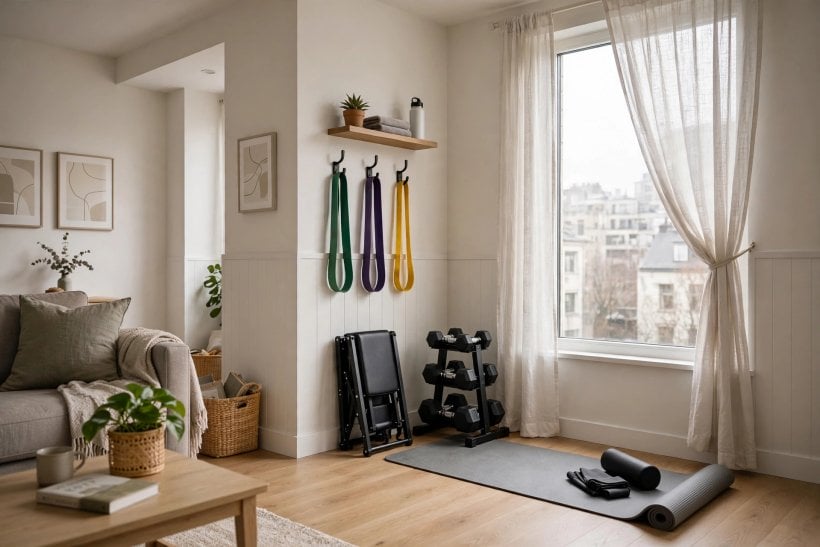
Cardio at home is a space negotiation: machines are large, loud and single-purpose, while the cheapest cardio equipment in the world is a pair of shoes and a front door. This section weighs the machines honestly against the alternatives.
34. Choose One Cardio Machine, Matched to the Joints You Own
One machine, chosen for the body that will use it, beats a showroom. Bikes forgive knees, rowers train the whole body in little floor time, treadmills serve walkers in all weathers.
35. Give the Exercise Bike the Small-Room Cardio Crown
Bikes are quiet, compact, kind to neighbours and usable while reading or watching. For flats and shared rooms they are cardio’s best citizen, and the one most likely to be used at 6 a.m. without a household referendum.
36. Use a Rowing Machine Where Floor Space Folds Away
Rowers train legs, back and lungs together and many stand upright or fold for storage, which flatters small rooms. Their rhythm suits intervals and steady work alike, making them the thinking household’s second machine, after the bike’s citizenship.
37. Treat the Treadmill as a Furniture Commitment
A treadmill is a major appliance: floor space, noise, maintenance and a belt that wants aligning. Households that walk daily in bad climates earn one gladly; everyone else should walk outside, climb stairs and spend the difference on shoes.
38. Keep a Skipping Rope and a Step for Cardio in a Drawer
A rope and a low step or sturdy box deliver intervals, footwork and conditioning in almost no space, at almost no cost. They are the cardio department of the corner gym, and their storage requirement is literally one drawer.
39. Use Stairs, Hills and the Neighbourhood as the Free Fleet
The outdoors clause belongs in every home gym: stairs for intervals, hills for strength, flat routes for long easy work. The home gym exists for the days weather, darkness or time forbid the free fleet, not to replace it.
40. Add a Mini Trampoline or Rebounder for Low-Impact Joy
Rebounders give low-impact cardio that joints forgive and households actually enjoy, which is cardio’s rarest combination. They suit shared rooms, store against walls and serve the whole family, including members who claim to hate exercise.
41. Programme Cardio by Time and Effort, Not by Machine Worship
Steady sessions, intervals and mixed circuits all work on any equipment, including none. A written weekly rhythm, two steady, one intervals, one long, matters more than which machine hosts it, and the whiteboard keeps the rhythm honest.
42. Keep a Fan, a Towel and Water Inside the Cardio Zone
Cardio fails in hot, thirsty rooms.
43. Protect Floors and Downstairs Peace Under Every Machine
A dense mat under each machine catches sweat, steadies the frame and muffles the rhythm for whoever lives below. It is the machine’s licence to operate in a shared building, and it costs less than one apology.
44. Retire Machines That Become Furniture, Without Shame
A machine unused for a season is furniture with a motor. Selling or giving it away frees the room for training that actually happens, and the honesty keeps the home gym a gym instead of a museum of intentions.
6. Small-Space and Shared-Room Gyms: The Folding, Wheeling, Hiding Arts
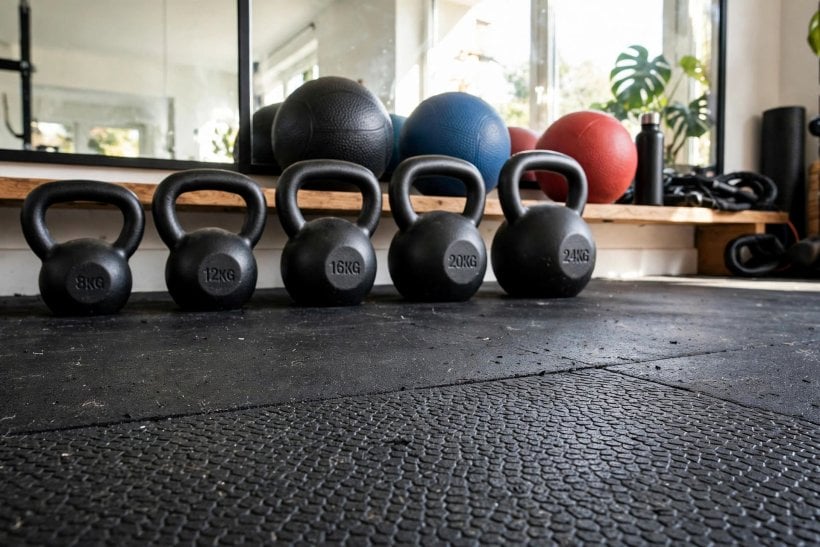
Most home gyms are treaties with other rooms: the spare bed, the desk, the nursery that arrives next year. These ideas master the folding arts, drawing on the storage discipline of tiny house interior storage ideas, so small gyms train fully and vanish completely.
45. Define the Gym’s Footprint With a Mat That Rolls Away
A quality mat marks the training territory when down and returns the room when rolled.
46. Choose Folding and Wheeled Equipment for Treaty Rooms
Folding benches, wheeled racks and collapsible cardio let a room change jobs in minutes. Wheels and hinges are the shared gym’s true technology, worth more than any smart screen, because a room that converts easily gets converted back, daily.
47. Hide the Gym in a Cupboard, Wardrobe or Deep Cabinet
A cupboard gym, bands, bells, mat and a mirror inside the door, is the small home’s masterstroke: full training, zero visual trace.
48. Use Under-Bed and Behind-Door Storage for the Flat and the Light
Mats slide under beds, bands hang behind doors, sliders and discs fill one drawer. Flat and light equipment distributed through a room’s dead spaces gives even a studio flat a complete, invisible gym.
49. Train at the Room’s Quiet Hours and Keep the Treaty
Shared gyms survive on scheduling courtesy: loud work when the house is awake, quiet work, bands, mobility, core, when it is not. The treaty written on the whiteboard prevents the arguments that close small gyms permanently.
50. Let the Home Office and the Gym Share by the Clock
The desk room that trains at lunch and works at nine is the modern spare room’s honest form, a pairing the setups in home office ideas increasingly assume.
51. Keep Children’s Safety as the Small Gym’s First Design Rule
Weights locked or stored high, racks stable, bands and cords out of small hands, machines unplugged or folded: a home gym in a family house is designed around its smallest visitor first, and trained in second.
52. Use Doorway Anchors and Furniture Honestly, or Not at All
Door anchors rated for bands and straps serve treaty rooms well when doors and frames are solid and the door opens away from the pull.
53. Give Small Gyms a Mobility Corner Instead of a Machine
Where space forbids cardio machines, a mobility corner, mat, foam roller, bands, a lacrosse ball, covers the recovery and movement work big gyms neglect. Small gyms that train mobility religiously outlast bigger ones that only chase numbers.
54. Photograph the Room Restored, and Keep That Standard
The restored-room photograph on the whiteboard, gym vanished, room itself again, is the treaty room’s quality standard. If the room cannot return to that photograph in five minutes, the gym has grown beyond its treaty and needs editing.
55. Edit the Small Gym Twice a Year Without Sentiment
Equipment follows the programme, and programmes change. A twice-yearly edit, what was used, what was furniture, keeps the small gym complete at its current size instead of slowly becoming a storage problem with a mat.
7. Recovery, Mobility and the Calm Corner
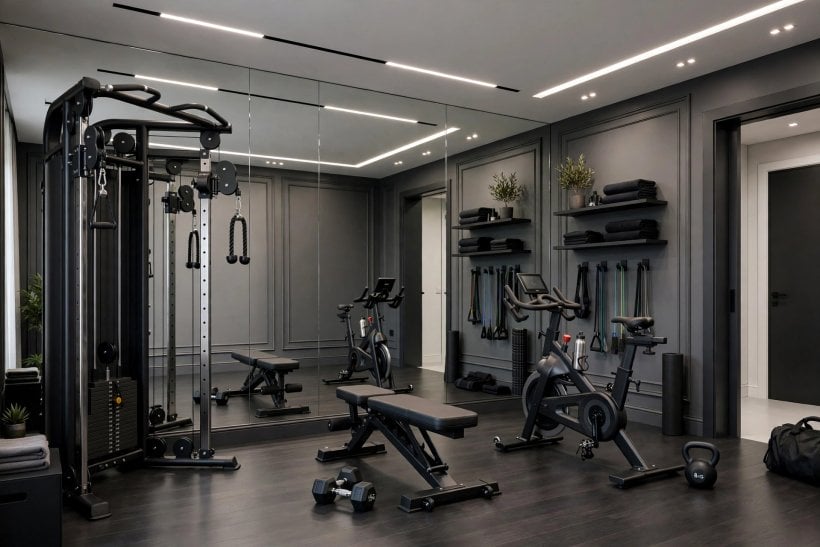
Training breaks the body down politely; recovery is where it rebuilds. This section gives the home gym its quiet department, stretching, rolling, breathing and rest, which the basement workhorse rooms in basement interior design ideas for a tiny house increasingly reserve a corner for.
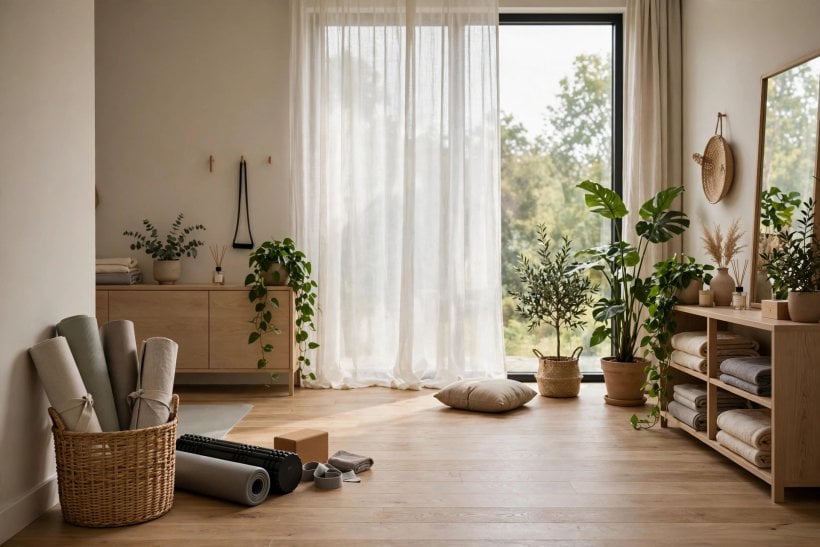
56. Reserve a Mat-Sized Corner for Stretching and Mobility, Permanently
A defined recovery corner, mat down or instantly ready, a roller and bands within reach, makes mobility a place rather than an intention. Places get visited; intentions get postponed, which is why the corner outperforms the resolution every year.
57. Keep a Foam Roller, a Ball and a Strap as the Recovery Trinity
Three cheap tools cover most soft-tissue and mobility work a home athlete needs. They store in a basket, travel in a bag and ask nothing but ten honest minutes, which is the recovery department’s entire budget and glory.
58. Add a Yoga Practice as the Gym’s Built-In Counterweight
Yoga or a simple mobility flow balances strength work, teaches breathing and uses the mat the gym already owns.
59. Use the Calm Corner for Breathwork and Deliberate Rest
A cushion, a timer and two minutes of slow breathing finish sessions the way cool-downs should. The calm corner reframes the gym as a health room rather than a punishment room, and households use health rooms more faithfully.
60. Keep a Plant, a Lamp and Something Beautiful in the Recovery Sightline
Recovery is where the eye rests, so give it something better than the weight rack: a plant, warm light, a picture.
61. Store Towels, Water and a Change of Clothes Like a Small Spa
The recovery corner graduates when it holds the session’s comforts: towels on a hook, water, dry clothes. Small spa thinking turns the post-training ten minutes into a ritual people protect, instead of a corridor they rush through.
62. Programme Rest Days on the Whiteboard With the Same Ink
Rest written beside work gets taken. The home gym’s whiteboard should show the week’s rest as proudly as its sessions, because the body adapts between efforts, and a gym that never rests its owner eventually benches them.
63. Use Heat, Cold and Showers as the House Provides Them
A hot shower, a cold finish, a warm room to stretch in: the house itself is the recovery suite. Elaborate gadgets can wait; the disciplined use of what the bathroom already offers covers most households’ recovery honestly and cheaply.
64. Track Sleep and Soreness Beside the Training Log
A notebook line for sleep and stiffness tells the programme when to push and when to fold. Home athletes coach themselves, and the log is the coach’s memory, kinder and more accurate than any single morning’s feelings.
65. End Every Session Restored: Room Tidy, Body Downshifted
The session ends when the weights are racked, the mat is clean and the breathing is slow, not when the last rep grinds out. Leaving the gym restored is the habit that makes tomorrow’s session start at full willingness.
8. Making It Stick: Programmes, People and the Long Game
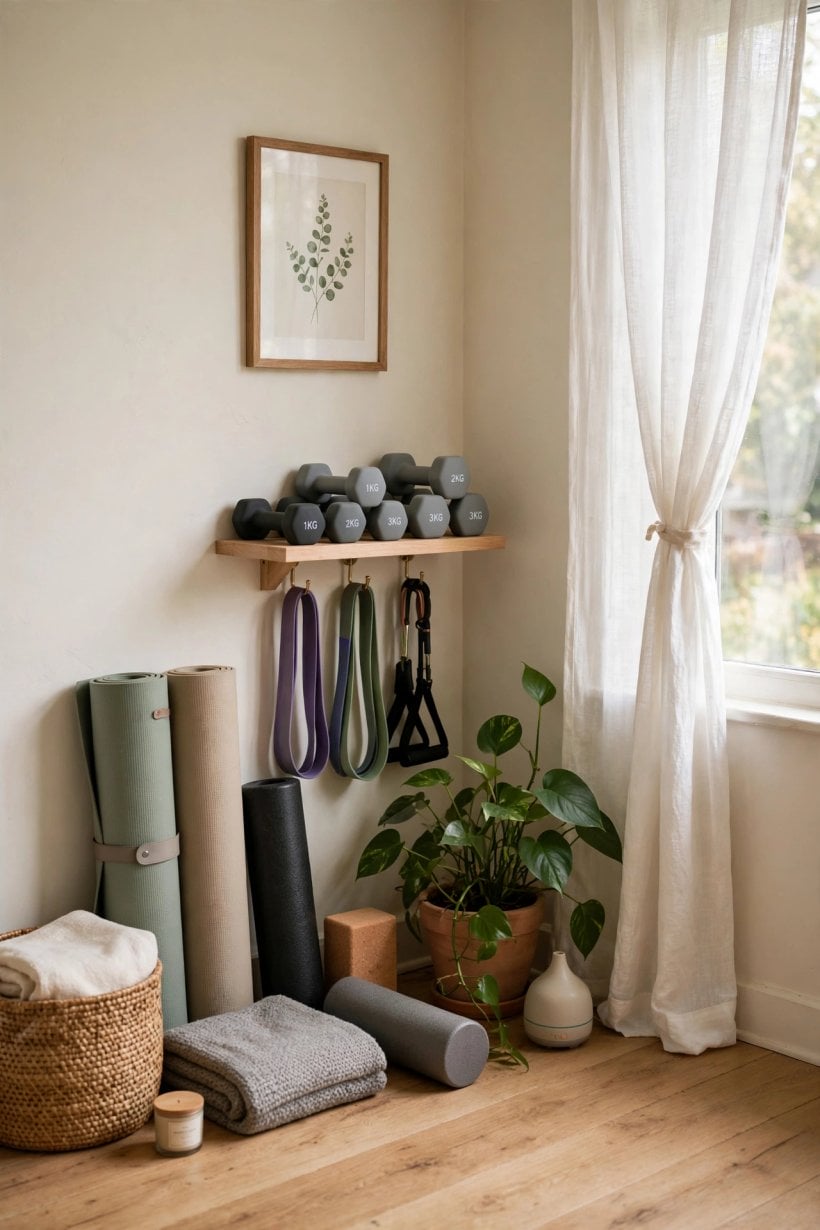
Equipment is easy; decades are hard. The last ideas are about the programme, the household and the habits that keep a home gym training long after novelty dies, because the best home gym ideas are the ones still in use next year.
66. Follow a Written Programme, However Simple, From Week One
Three sessions, written down, repeated and progressed beats a library of improvised workouts. A simple programme gives the home gym its curriculum; without one, the room hosts enthusiasm in January and storage by spring.
67. Train at a Fixed Time and Defend It Like an Appointment
Habit beats motivation, and fixed times are habit’s scaffolding. Morning before the house wakes is the home gym’s classic hour, but any hour kept daily outperforms the perfect hour kept occasionally.
68. Log Every Session in One Notebook That Lives in the Gym
Weights, reps, time, sleep, one line each: the log is proof, progress and coach in a single object. Reviewing it monthly settles every argument about whether the training is working, with evidence instead of feelings.
69. Invite the Household In With Their Own Corner or Hour
A gym shared is a gym defended. Partners, teenagers and guests given their own shelf, hour or programme stop seeing the room as one person’s territory and start protecting its place in the house themselves.
70. Keep One Goal on the Whiteboard, Changed When Met
One current goal, a weight, a distance, a streak, focuses buying, programming and effort. When it is met, celebrate briefly, write the next one, and let the whiteboard’s single line steer the gym’s whole economy.
71. Buy Slowly, One Proven Need at a Time
The home gym that grows by proven need stays used and solvent; the one bought in a single inspired weekend fills with answers to questions nobody asked. A month of consistent training earns each next purchase its place.
72. Maintain Equipment Like the Small Machine Fleet It Is
Belts checked, bolts tightened, mats cleaned, bands inspected for nicks before they snap: ten minutes monthly. Home equipment fails quietly and occasionally dangerously, and maintenance is the rent the gym charges for its safety.
73. Refresh the Room Yearly: Paint, Light, One New Thing
A yearly refresh, a cleaned and re-laid floor, fresh light, one new tool the programme earned, keeps the room feeling like a place the household invests in.
74. Let Seasons Change the Mix: Indoor Depth, Outdoor Breadth
Winter belongs to the rack and the bike; summer to hills, gardens and long light. The home gym that blesses the outdoor season instead of competing with it returns each autumn to an owner who is fitter and fonder.
75. Remember the Point: A Room That Makes Training the Easy Choice
Every idea here serves one sentence: the home gym wins by removing friction, no travel, no queue, no weather veto, until training becomes the easiest healthy decision in the house.
9. Checks and Mistakes: Before the First Pour or Purchase
Check the structure before the iron, because home gyms fail at floors and fixings: ceiling height measured against your tallest movement, floor strength and downstairs neighbours considered, pull-up and anchor fixings into structure only. A professional check where loads are heavy is the cheapest safety equipment in this post.
Check the programme against the equipment before buying, item by item, because showrooms sell futures and households live in presents. If a piece serves no session in the written programme’s next month, it is furniture applying for a job, and the answer, for now, is no.
The common mistakes are all in this post’s sights: machines before mats, racks before habits, gyms that cannot vanish from shared rooms, and recovery treated as an afterthought. Each is avoided by the post’s own order, space, shell, strength, cardio, storage, recovery, written down before the first purchase.
10. Costs and Pulling It Together
Costs stay qualitative, as training posts should: a complete home gym can begin at mat-and-bands economy, since bodyweight and bands train honestly for very little, and the expensive end is racks, machines and dedicated rooms fitted properly. Spend first on the floor and the dumbbells; they serve every session the room will ever host.
Pull it together in the order this post kept: choose the room, build the shell, earn the iron, weigh the cardio, master the folding arts, reserve the calm corner. A home gym ideas list is only useful in that sequence; followed in it, these seventy-five become one room that trains its household for decades.
Final Considerations
A home gym is not a showroom or a resolution; it is a small, honest room that makes the healthy choice the easy choice, every ordinary day. Build its shell properly, buy slowly, train on a written programme, and the quietest room in the house becomes the one that changes the household most.




0 Comments