
Few tiny-house decisions attract stronger opinions than the toilet, and the choice of composting toilet vs septic tiny house setups shapes your budget, your paperwork and your weekly routine more than almost any other system in the home. A composting toilet handles waste inside the house, in a self-contained unit, with no water and no underground plumbing. A septic system is the conventional route shrunk to tiny scale: a normal flush toilet, a buried tank and a drain field that treat everything out of sight. Both work. Both have devoted fans. And both are regularly oversold by people describing only the good half.
This comparison works through the decision the way it actually unfolds: what each system does with waste, what each costs to put in, where each stands with permits and county rules, the maintenance each quietly demands, how each behaves off-grid and in winter, and how guests and future buyers react to each. One warning that applies to both sides from the start: neither system deals with your shower and sink water, and that greywater question gets its own section below. Costs are described qualitatively, regulations as things to verify locally, and brand claims are left to the brands.
Composting Toilet vs Septic Tiny House at a Glance
| Criterion | Composting Toilet | Septic System |
|---|---|---|
| How it works | Waste is contained and broken down in the unit, usually separating liquids from solids, with a bulking medium and venting | A flush toilet sends all waste to a buried tank; solids settle, liquids flow to a drain field for soil treatment |
| Upfront cost pattern | One appliance to buy; little or no groundworks, plumbing or excavation | Tank, drain field, excavation, pipework, design and inspections — a construction project |
| Permits and rules | Varies widely; accepted in some places, restricted or supplementary-only in others | Almost always permitted and regulated; soil tests, setbacks and licensed installers are normal |
| Water and power | No water for flushing; some models use a small fan or heater, many need neither | Needs a water supply for flushing and a working drain field; gravity systems need no power |
| Maintenance | Frequent, small and hands-on: emptying, adding medium, cleaning — minutes at a time, often | Infrequent but bigger: periodic tank pumping by a contractor, plus care about what goes down the drain |
| Off-grid fit | Excellent: no water, no sewer, minimal infrastructure | Possible, but the water supply and installation effort usually tie it to settled, serviced land |
| Greywater | Still needs a legal greywater solution for sinks and shower | Usually handles greywater through the same system, where local rules allow |
| Best for | Wheeled, off-grid, dry or temporary setups, and plots where septic is impossible or unaffordable | Permanent foundation homes on serviced land where a conventional bathroom is the priority |
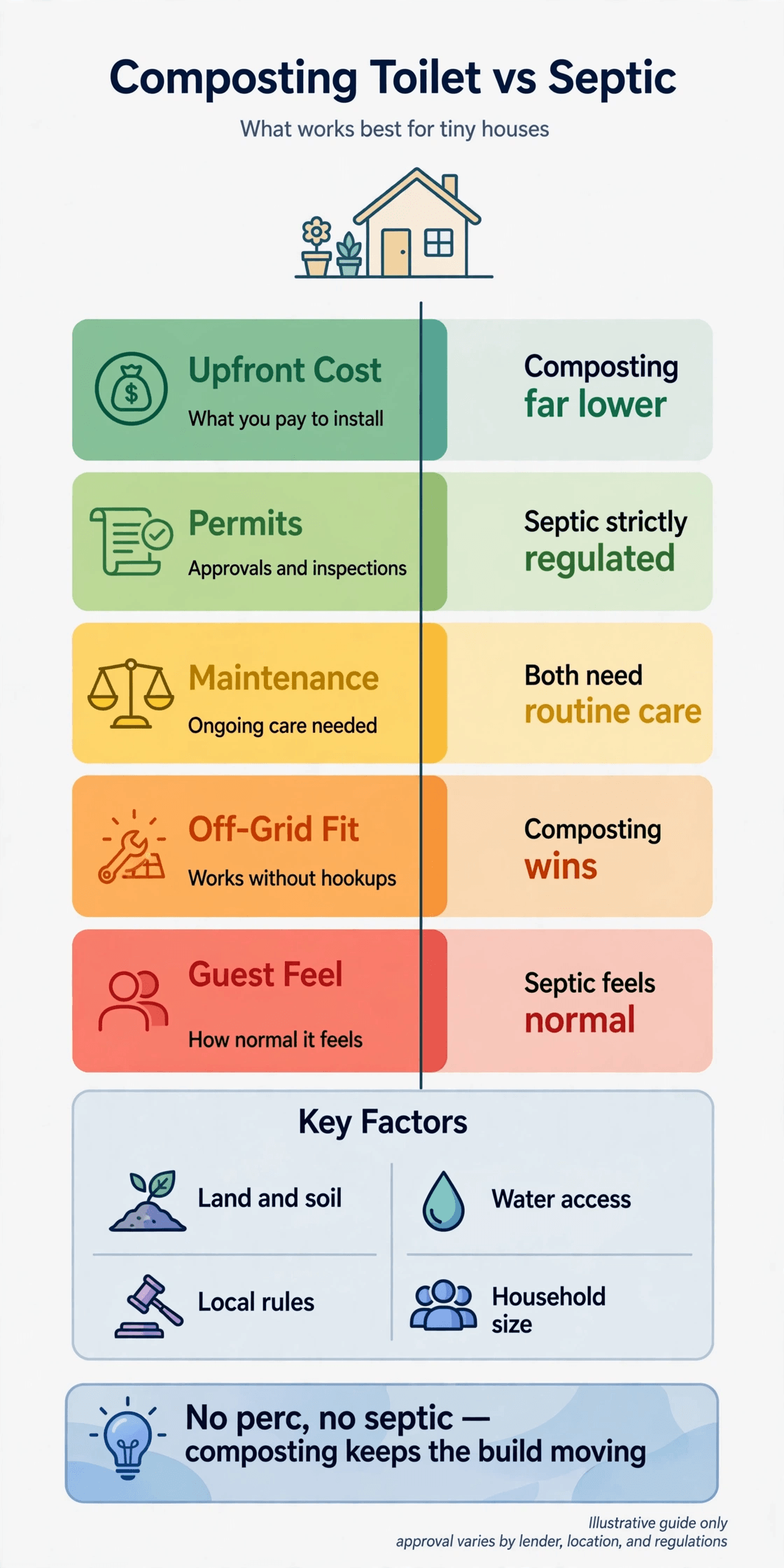
1. The Two Systems Explained: What Happens After You Flush — Or Don’t
A composting toilet keeps the whole process in the bathroom. Most tiny-house units separate urine from solids at the seat, because mixing the two is what creates most odour and most of the mess. Solids fall into a chamber with a carbon-rich bulking medium — coir, peat or similar — where a handle or mechanism mixes and aerates the contents, moisture is vented away through a small pipe, and the material slowly breaks down. Liquids go to a bottle or a diverted drain. What you eventually empty is a small quantity of earthy material, handled according to local rules. Our in-depth look at tiny house composting toilets, commercial vs DIY, compares how the manufactured units and homemade versions approach the same job.
A septic system removes the process from the house entirely. A standard water-flush toilet connects through ordinary drain plumbing — the layout principles in our guide to tiny house plumbing layout and DWV design apply in full — to a buried tank. In the tank, solids settle and are partially digested, grease floats, and the clarified liquid flows on to a drain field where soil finishes the treatment. From the user’s side of the wall it is indistinguishable from mains sewerage: flush, forget, and let buried infrastructure do the work. That familiarity is the septic system’s deepest advantage, and everything else in this comparison hangs off the contrast between a managed appliance indoors and an invisible system outdoors.
2. Upfront Cost: Buying an Appliance vs Building a System
The money comparison is almost unfair in one direction. A composting toilet is a single purchase: manufactured units range from simple DIY assemblies at the low end to polished, full-featured appliances at the high end, and installation can be as little as cutting a vent hole and screwing the unit down. There is no excavation, no tank delivery, no drain field, no inspector’s stages — and on a wheeled tiny house, it may be the only practical option at any price. For a build where the sewage budget is small or the plot is temporary, this cost shape is decisive.
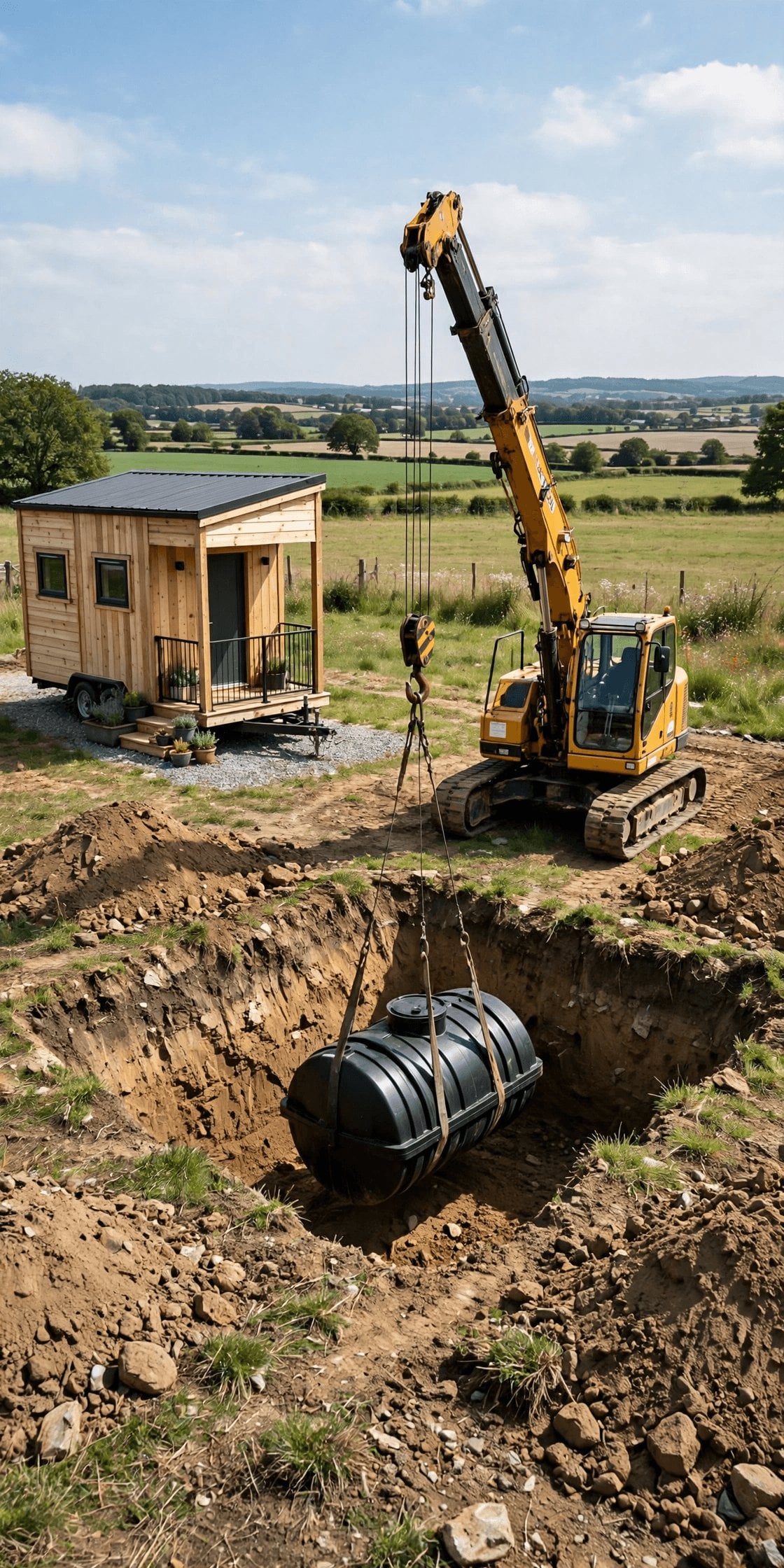
A septic installation is a small construction project with a price to match. The realistic budget lines are the tank itself, excavation and delivery, the drain field’s pipework and aggregate, the percolation or soil evaluation that precedes design, permit fees, and usually a licensed installer whose signature the county requires. Where the ground is kind and access is easy, costs sit at the lower end of the typical range for rural sewage work; where rock, clay, high water tables or tight plots intervene, they climb steeply. Both lines belong in the land budget from day one — our guides to the true cost of tiny houses and how to prepare land for a tiny house show where sewage sits among the other site costs. Get a local installer’s site-specific quote before assuming either figure; septic pricing is famously regional.
3. Permits and Regulation: Where Each System Stands With the County
Septic is the regulated default almost everywhere, which cuts both ways. The path is well marked: soil evaluation, system design, permit, licensed installation, inspection, and a file at the health department saying your plot’s sewage is handled. That paperwork is a burden during the build and an asset forever afterwards — at resale, at refinancing, and in any dispute with a neighbour or the county, an approved septic system is the gold standard answer. Setbacks from wells, watercourses and boundaries are prescribed, minimum lot sizes sometimes apply, and some jurisdictions set minimum dwelling or usage conditions a tiny house must meet before a system will be approved at all.
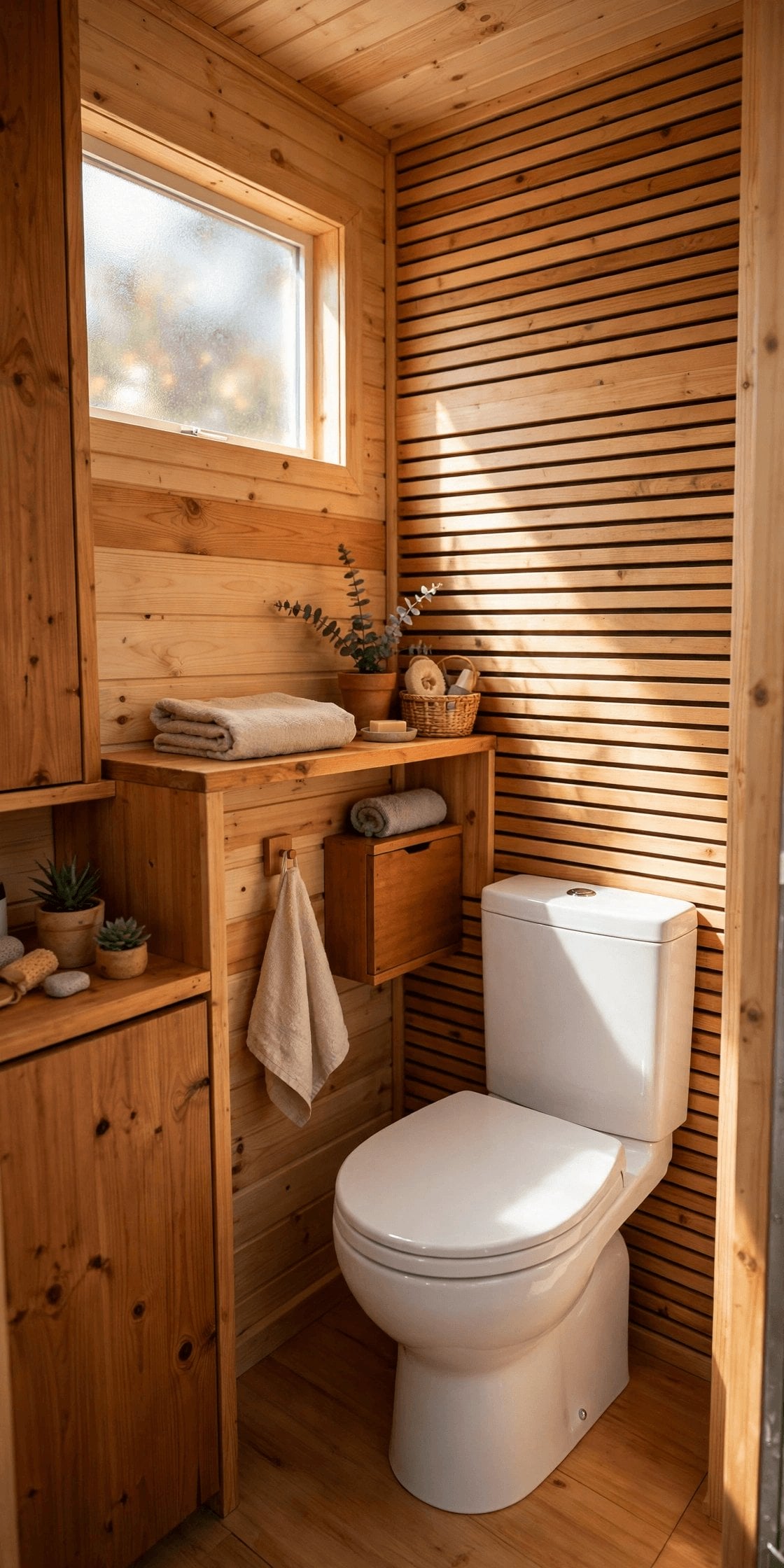
Composting toilets live in a regulatory patchwork. Some states and counties accept certified composting units as a complete toilet solution; others allow them only alongside an approved greywater system, only in recreational or seasonal dwellings, or only as a supplement to a conventional system — and a few prohibit them as a sole solution for a full-time home. Wheeled tiny houses add a further wrinkle, since a vehicle-classed home may sit outside the sanitary code entirely while parked somewhere that tolerates it. None of this is guesswork to be done from the internet: sanitary rules are local, written, and available. Our guide to zoning laws for tiny houses explains how to approach officials and get decisions in writing — do that before you design a bathroom around either system.
4. The Greywater Question: The Half of the Problem Both Sides Share
Here is the point that marketing on both sides prefers to whisper: the toilet is only part of your wastewater. Showers, bathroom basins and kitchen sinks produce greywater every day, and it needs a legal destination whatever toilet you choose. With a septic system, greywater usually joins the blackwater flow into the same tank and drain field, where the rules allow it — one system quietly swallowing everything. That completeness is a genuine practical advantage that rarely appears in the comparison charts.
With a composting toilet, greywater becomes a separate project. Depending on your jurisdiction, legal routes include a dedicated greywater drain field or infiltration bed, a constructed filter and mulch basin, or collection and careful reuse for irrigation where the rules permit it — always with attention to setbacks, detergents and freezing. Our guide to tiny house utilities maps these options alongside power and water, and our look at off-grid tiny house water systems covers collection and treatment thinking in more depth. Budget and design the greywater route with the same seriousness as the toilet itself; a composting toilet with an illegal greywater hose out of the wall is not an off-grid solution, it is a fine waiting to happen.
5. Maintenance and Daily Reality: Little and Often vs Rare and Delegated
Composting toilet ownership is a rhythm of small jobs. The urine container or diversion needs emptying regularly — frequently, in a full-time household. The solids chamber needs its medium topped up, its contents turned or mixed, and emptying on a cycle of weeks to months depending on the unit and its use. The vent fan, if fitted, should be checked; seals and seats cleaned like any bathroom fixture. None of these tasks is large, and owners who chose the system deliberately usually describe them as no worse than taking out the bins. Owners who were sold a fantasy of zero maintenance describe them very differently — which is why honest expectations belong in this section: the work is real, light, and entirely yours.
Septic maintenance is the mirror image: almost nothing, almost never, and then a contractor. Day to day there is no routine beyond sense — don’t treat the drains as a bin, be careful with harsh chemicals and grease, and spread water use out rather than flooding the field. Every few years, depending on tank size and household use, a pumping contractor empties the tank, and the system may need its filter cleaned and its drain field watched for sogginess or odour. For layout ideas that serve either system well, see our roundup of tiny house bathroom layouts, and for the wet-room construction that any bathroom route still needs, our guide to how to waterproof a tiny house bathroom. The summary writes itself: composting asks for your minutes every week; septic asks for your money every few years.
6. Off-Grid Fit: Water, Power and Winter Behaviour
Off-grid, the composting toilet is in its natural habitat. It uses no flush water — a serious saving where every litre is hauled, pumped or caught from the roof — and many models need no power at all, while fan-assisted units sip a small amount that a modest solar setup covers easily. It pairs naturally with a wheeled or dry-cabin build, works the day it is installed, and keeps working through a power cut or a frozen supply line. For genuinely remote land where a septic installation crew and a pumping truck are theoretical concepts, it is often not the greener choice but the only choice.
Septic systems can work off-grid — gravity-fed designs need no electricity — but they presuppose the things off-grid plots lack: a reliable water supply generous enough for flushing, ground suitable for a drain field, and machinery access for installation and eventual pumping. Winter tests both systems in their own ways. A drain field and buried tank are protected by depth and soil, while an indoor composting unit is protected by the house itself but its vent and any exterior liquid lines need freeze thought; our notes on tiny house living in cold climates cover the pipe-freezing side of that story. If your off-grid plan is phased — compost now, services later — section 10’s hybrid thinking may matter more than either pure option.
7. Smells, Guests and the Honest Acceptance Test
Let us deal with the question every reader actually has: does a composting toilet smell? A correctly installed, correctly used unit — vent drawing air out, urine properly separated, medium kept right — should smell of very little beyond a faint earthy note when opened, and owners are near-unanimous that a badly maintained conventional bathroom is worse. The failures people report trace back to the known causes: a failed or absent vent fan, urine getting into the solids chamber, too much moisture, or a unit overwhelmed by guests who were never told how it works. Which brings us to guests: a composting toilet needs a thirty-second briefing and a small sign, and some visitors will still be quietly horrified. A septic bathroom needs nothing explained to anyone, ever.
Acceptance is a legitimate design criterion, not a vanity. If your tiny house will host elderly parents, paying guests, young children or a partner who did not choose this lifestyle, the flush toilet’s invisibility has real value in daily peace. If your household is you, your co-adventurer and visitors who think the whole project is brilliant, the composting unit’s small rituals become part of the home’s character. Be honest about which household is yours — the wrong call here is the one owners actually regret, far more than any difference in cost or convenience.
8. Resale and Rental: What the Next Owner — and the Platform — Thinks
Selling a tiny house means selling its systems. A permitted septic installation is legible to everyone in that transaction: buyers, lenders, insurers and agents all know what it is, the health department has a record of it, and it supports the property’s value the way any approved infrastructure does. A composting toilet, by contrast, is legible mainly to the tiny-house community. Within the off-grid and wheeled market it can be a selling point; to a conventional buyer it reads as an absence — a house without a “real” toilet — and some will price in the cost of adding septic before they have finished the viewing.
Rental sharpens the same point. Short-stay guests expect a normal bathroom, and listing platforms and local short-term-rental rules often assume conventional sanitation; our guide on how to rent your tiny house on Airbnb covers the legal and practical expectations hosts run into. A composting toilet in a rental means instructions, mid-stay maintenance questions and a guest-experience risk you must manage deliberately. If you do buy or sell a tiny house with either system, our checklist for how to inspect a used tiny home before buying includes the system-specific questions — pumping records for septic, unit condition and venting for composting — that protect both sides.
9. Health, Safety and Environmental Claims — Assessed Honestly
Both camps make environmental claims, and both deserve a calm reading. The composting case is straightforward: no flush water, no buried effluent, nutrients contained and manageable, and a system whose entire footprint is a bathroom appliance. The septic case is quieter but real: a well-sited, well-maintained septic system is a proven public-health technology that has protected groundwater for generations, and its failure mode — an overloaded or neglected drain field — is a maintenance failure, not a design inevitability. The genuinely poor environmental outcomes come from neglected versions of either: the composting unit whose contents are dumped carelessly, and the septic system never pumped in twenty years.
On health and safety, the rules are practical rather than theoretical. Composted material must be handled and disposed of exactly as your local rules require — many jurisdictions want it buried, bagged to landfill, or further treated, and assuming it can go straight on the vegetable garden is the single most common beginner error. Septic effluent is handled by soil and distance, which is why the setback rules in section 3 exist and are enforced. Neither system is the “safe” or “dangerous” one in the abstract; each is safe when installed, used and maintained as designed, and questionable when it is not. Choose the one whose discipline you will actually keep.
10. Hybrid Setups and Phased Plans: The Third Answer
A large share of real tiny-house builds end up choosing both, in sequence or in parallel — and this is often the wisest answer of all. The phased version runs a composting toilet first: it gets a wheeled or newly bought plot liveable immediately, with no groundworks, while the owners save for, permit and install a septic system in a later season if the land becomes permanent. Nothing about a tidy composting installation prevents the later upgrade, and the unit itself resells well within the community when it is retired.
The parallel version keeps both systems in one property: a conventional bathroom on septic for the main dwelling, and a composting unit in a guest cabin, studio or wheeled spare where extending the plumbing would cost more than the building. Designing for either path means thinking about the plumbing layout early — vent routes, space for a future bathroom refit, and drain runs that do not box you in; our comparison of tiny house plumbing, PEX vs copper, is a useful companion read at that planning stage. The lesson of this section is that the decision is not a marriage. It is a sequence, and you are allowed to let the land’s permanence decide the order.
Final Considerations
So, who should pick which? Choose the composting toilet if your tiny house is on wheels, off-grid, on dry or temporary land, or on a plot where septic is impossible, prohibited by ground conditions, or simply beyond this year’s budget — and if your household will happily own its small weekly routine. Choose the septic system if your home is a permanent foundation build on serviced land, if a completely conventional bathroom matters for family, guests or rental plans, and if you want the permitted-infrastructure asset on your property’s record. Accept, in the first case, the greywater project and the regulatory homework; accept, in the second, the construction cost and the pumping contractor’s diary.
Before deciding, run the same three checks used throughout this series. First, ask the county health or environmental department, in writing, what each system requires and allows on your specific plot — sanitary rules are the most local rules in this entire comparison. Second, price the whole picture: for composting, the unit plus a legal greywater solution; for septic, the installed, permitted, inspected system — not the tank alone. Third, picture the routine a year from now, in February, with guests in the house: emptying a container or forgetting a tank exists. The system that still looks right in that picture is the one that works best — for your tiny house, on your land, with your life in it.


0 Comments