

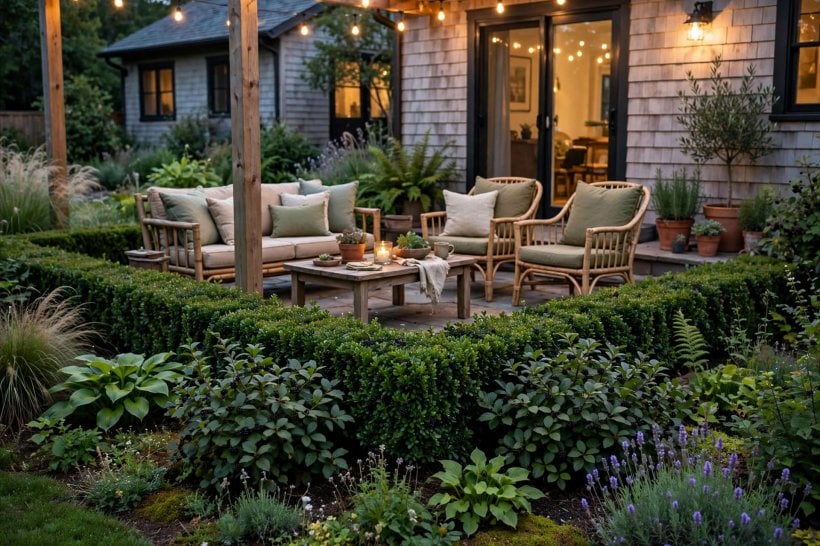
A good boundary hedge should mark the line, soften the view and never start a feud. The secret is choosing plants that stay low by nature: dwarf hedges give you a green edge, a little privacy and plenty of light left over for both gardens.
Here are nine low growers worth knowing, plus the planting, trimming and etiquette that keep them — and your neighbours — happy.
1. Dwarf Hedges At a Glance
| Hedge | Character | Light | Trimming Rhythm |
|---|---|---|---|
| 1. Dwarf box | Classic, dense, formal | Sun or partial shade | Little and often in the growing season |
| 2. Japanese holly | Box-like, small glossy leaves | Sun or partial shade | One or two tidy-ups a year |
| 3. Dwarf lavender | Scented flowers, soft grey-green | Full sun, sharp drainage | Clip after flowering; never into bare old wood without advice |
| 4. Germander | Neat herb hedge, tiny leaves | Full sun | Regular light clips keep it crisp |
| 5. Dwarf berberis | Colourful foliage, thorny | Sun for best colour | Shape once a year; gloves on |
| 6. Hebe | Rounded evergreen mounds, flowers | Sun or light shade | Light trim after flowering |
| 7. Compact pittosporum | Glossy domes, smart and modern | Sun or partial shade | Rarely needs more than a tidy |
| 8. Santolina | Silver foliage, button flowers | Full sun, dry soil suits it | Clip after flowering to stop legginess |
| 9. Dwarf rosemary | Evergreen herb, edible, fragrant | Full sun, sheltered spot | Pinch and snip for the kitchen |
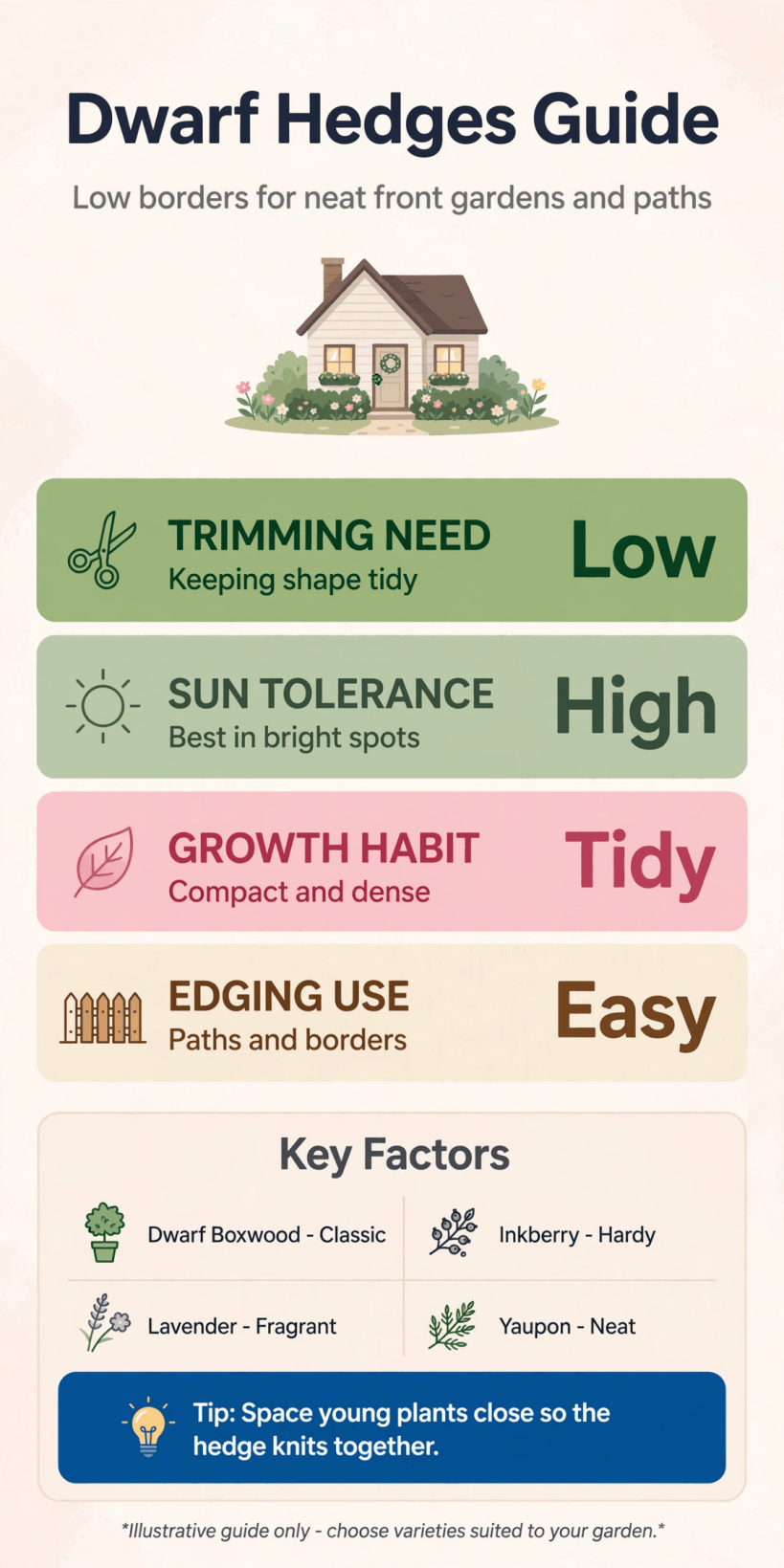
The nine low growers at a glance: character, light and how often each likes a trim.
Two cautions before the details. First, “dwarf” describes a plant’s habit, not a promise on a label: always check the stated mature size for the exact variety you are buying, and ask the nursery how it behaves in your soil and climate, because a hedge that outgrows its welcome helps nobody. Second, low hedges mark boundaries rather than block views, which is precisely their neighbourly charm — they divide a line without stealing light, and they give both gardens a finished edge to mow, plant and live against.
2. Ideas 1–2: Dwarf Box and Japanese Holly for Formal Edges
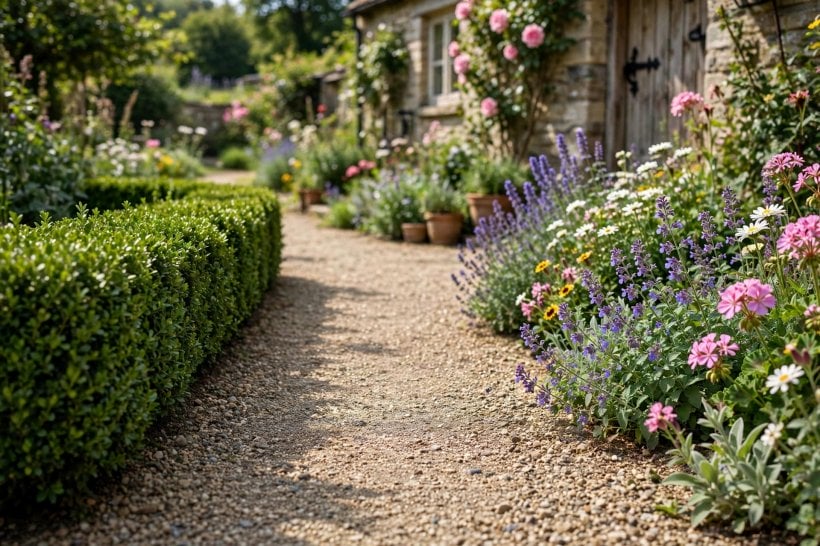
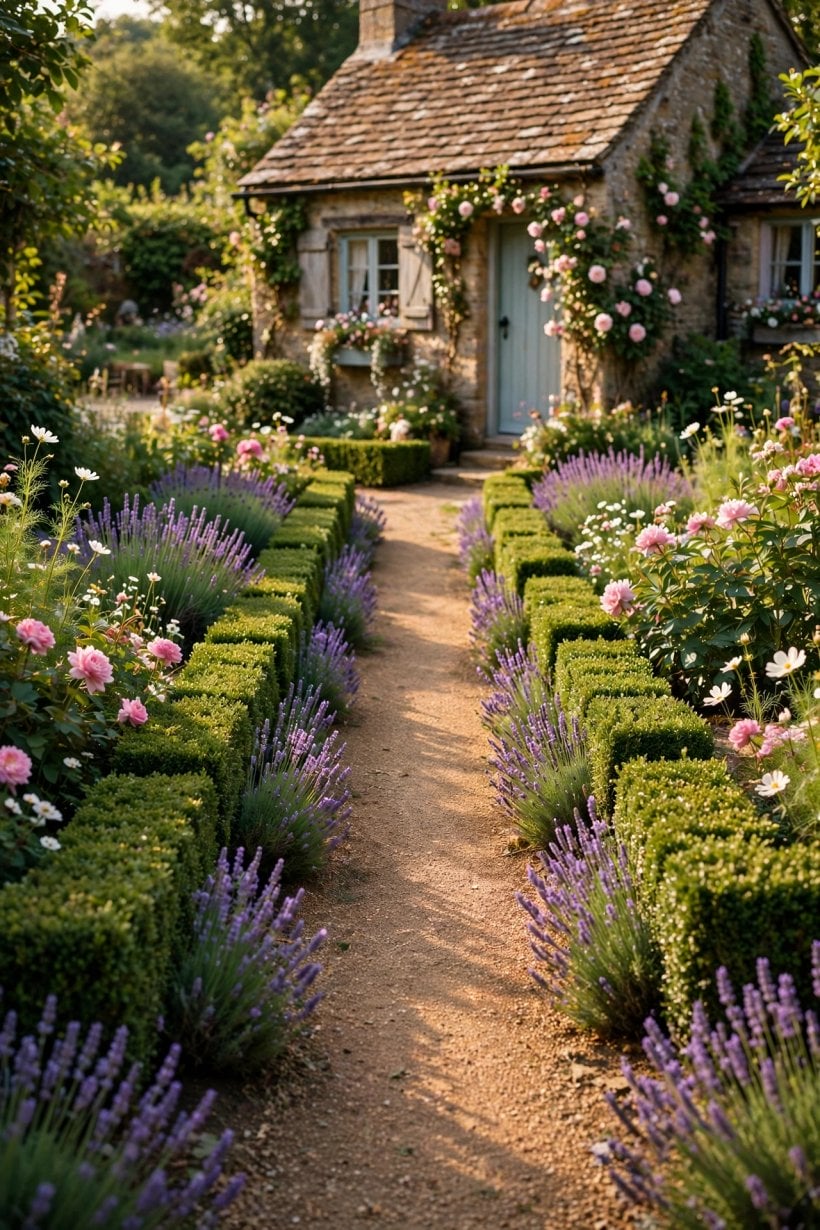
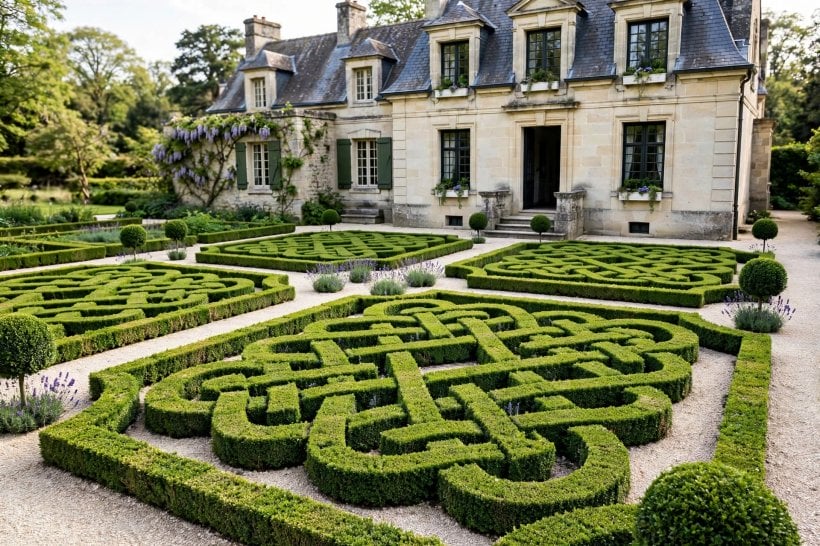
Idea 1 is dwarf box, the traditional edging plant of knot gardens and cottage paths. Chosen in a genuinely compact variety and clipped little and often, it makes the crispest low hedge of the nine: dense, dark green and happy in sun or partial shade. Box asks for decent drainage and an eye kept open for problems — if box plantings in your area struggle with disease, ask a local nursery what they recommend now, because advice and resistant varieties change. Idea 2, Japanese holly, is box’s understudy and increasingly the lead actor: tiny glossy leaves, a similar neat habit, and a reputation for shrugging off the troubles that dog box in some regions.
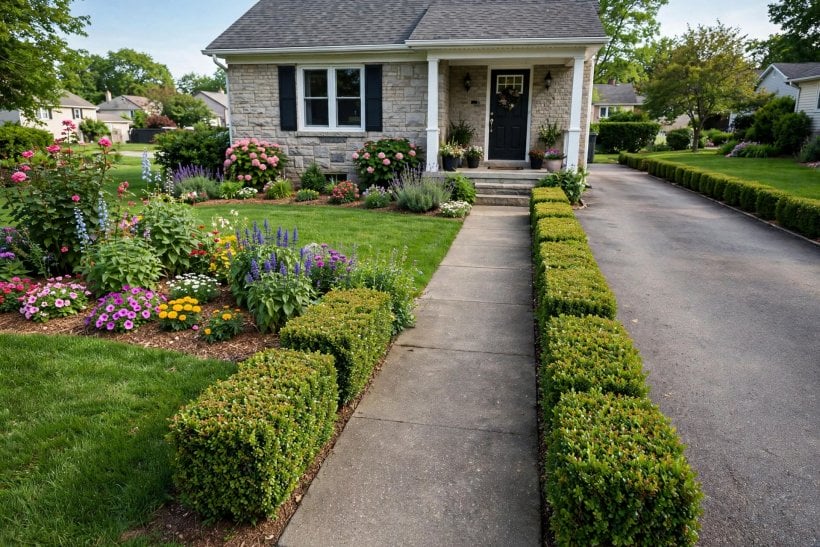
Both suit the front garden, where a formal low edge flatters the whole street, and both take kindly to being planted as a double row for quick density in small spaces — the same small-space discipline that runs through these tiny house landscaping ideas. Plant them where you can reach both sides for clipping without trampling beds, and remember the neighbour test: a formal hedge looks best, and causes least friction, when its face on the other side is kept just as tidy as your own.
3. Ideas 3–4: Dwarf Lavender and Germander for Scent and Bees
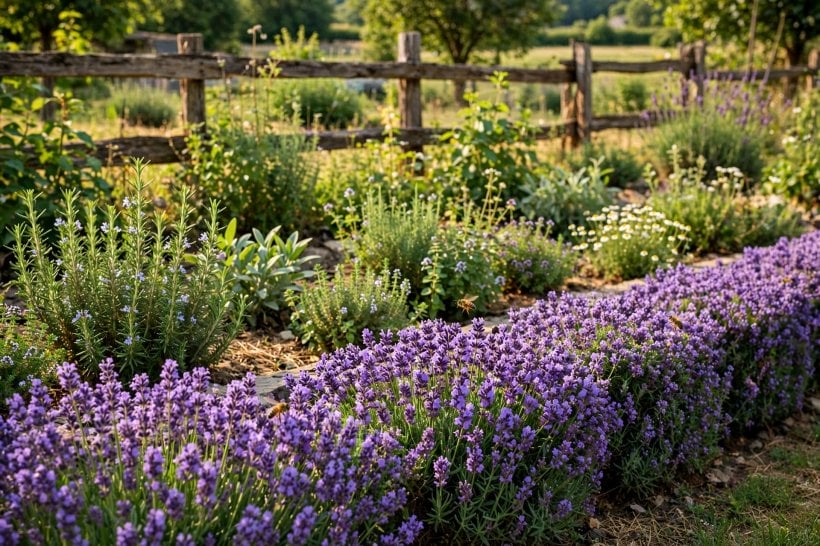
Idea 3, dwarf lavender, turns a boundary into a summer event. Compact varieties stay in a tidy mound, carry scented flowers that bees work from morning to evening, and release fragrance every time someone brushes past with the bins. Lavender is honest about its needs: full sun and drainage it can trust. In heavy soil, raise the planting line or improve the ground as gardening guidance for your soil type suggests, and clip after flowering to keep the mound dense — cutting hard back into bare old stems is a risk, so take local advice if a plant has grown leggy.
Idea 4, germander, is the herb hedge gardeners used before box ruled: tiny evergreen leaves, a naturally neat outline and a tolerance for regular clipping that makes it ideal for edging paths and kitchen gardens. It is less familiar at the garden centre, which is part of its charm — visitors always ask what it is. Both of these scented choices suit sunny front boundaries and low divisions between patio and lawn, and both repay a position where their fragrance is on a route people actually walk, a placing trick borrowed straight from the scent-aware planting in this tiny house and small-space interior design guide, where every element has to earn its spot twice over.
4. Ideas 5–6: Dwarf Berberis and Hebe for Colour and Mounds
Idea 5, dwarf berberis, is the colour merchant of the nine: compact forms carry foliage in burgundy, rose-gold or fresh green-gold depending on variety, and the colour deepens in sun. It is also thorny, which cuts both ways. A thorny low hedge politely discourages shortcut-taking feet and wandering pets, but on a shared boundary those thorns reach toward your neighbour’s side too — so set berberis a little back from the line, mention it before you plant, and keep its overhang clipped. Idea 6, hebe, takes the opposite temperament: soft, rounded, evergreen mounds, often with flowers, and not a thorn in sight.
Hebes are the friendly filler of the group, ideal where a boundary needs softening rather than defining — around a seating corner, between a lawn and a play area, or along a shared drive where nothing should snag a passer-by. Choose a genuinely compact variety, because hebes range from ground-hugging to small trees, and give them the drainage and shelter the plant label describes; in cold, exposed gardens, ask the nursery which hebes they see thrive locally. Pairing one colourful hedge with calmer green planting follows the same balance you will find in these apartment interior design ideas for tiny houses: one star, quietly supported, never a shouting match.
5. Ideas 7–8: Compact Pittosporum and Santolina for Sun
Idea 7, compact pittosporum, is the modern designer’s low dome: glossy, rounded leaves in tight mounds that look almost clipped even when they have not been touched. Dwarf forms sold for small gardens hold a neat ball shape with minimal attention, which makes them perfect for low-maintenance front boundaries and for repeating along a path to give a garden rhythm. They appreciate a sheltered position in colder areas — again, the label and local nursery knowledge are your guides — and they partner beautifully with gravel, pale paving and ornamental grasses.
Idea 8, santolina — cotton lavender — brings silver. Its finely cut, aromatic foliage makes a soft metallic ribbon in full sun, with small button flowers in summer if you let them come. Santolina loves dry, poor, free-draining ground and sulks in wet winter soil, so it is the answer for that sun-baked strip where other plants crisp. Clip it after flowering to stop the centre going woody and open, and treat it as a plant to renew every few years rather than a lifetime hedge. In a sunny small garden it echoes the pale, Mediterranean mood that these tiny house living room ideas chase indoors: light colours, natural texture, nothing heavy or dark.
6. Idea 9: Dwarf Rosemary — and Choosing Among the Nine
Idea 9, dwarf rosemary, is the hedge you can eat. Compact, upright forms make a fragrant evergreen edge for a kitchen garden or a sunny path, every clipping perfumes the air, and the snippings go straight into dinner. Like lavender and santolina it wants sun, drainage and shelter from the coldest winds, and like them it should be trimmed with restraint — snip green growth, and check guidance before cutting into old wood. A rosemary boundary beside the kitchen door might be the hardest-working metre in the whole garden, as anyone who follows the grow-your-own spirit in this tiny house kitchen design guide will appreciate.
Choosing among the nine comes down to four questions. What does your soil do in winter — stay wet, or drain freely? How much sun does the boundary actually get, hour by hour? Do you want formality, flowers, colour or scent most? And how much clipping will you honestly enjoy? Answer those, check the mature size and hardiness of the exact variety at the nursery, and the right plant usually names itself. When in doubt, plant a short trial run for a season before committing to the whole boundary.
7. Planting a Low Hedge That Settles In Quickly
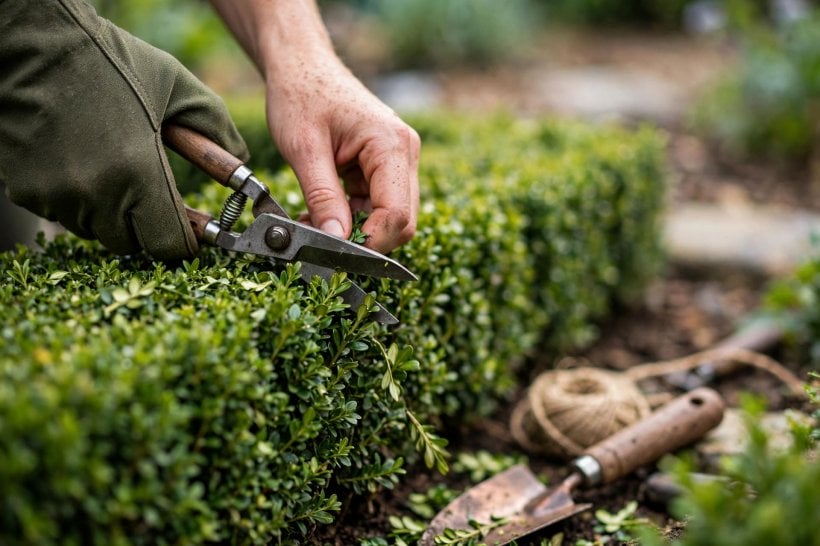
Low hedges fail early or not at all, and the difference is usually dug in on planting day. Prepare the whole trench, not individual holes: loosen the soil along the line, mix in organic matter if your soil needs it, and check drainage by seeing how the ground behaves after rain rather than guessing. Set the plants at the spacing the nursery advises for a hedge of that variety — closer for quick density in small plants, wider for naturally broad ones — and plant at the same depth they grew in their pots, firming gently and watering in well.
Then mulch, keeping the mulch off the stems, and water through the first dry spells while roots establish, following the care guidance that came with your plants. Stagger planting in a shallow zigzag if you want thickness fast in a narrow bed, and mark the boundary line with string while you work so the hedge grows straight — a wonky low hedge announces itself forever. The patient preparation here mirrors the groundwork-first approach in these home designing ideas for a tiny house: the unglamorous hour with the spade decides how the next ten years look. Finally, keep strimmers and mower edges away from young stems; more low hedges are wounded by tidiness than by weather.
8. Trimming Little and Often
The whole charm of these nine plants is that they ask for a teacup of trimming, not a weekend of it. The rhythm is little and often: light clips through the growing season for the formal pair, a post-flowering tidy for the scented and flowering kinds, and an annual shape-up for the relaxed mounds. Always trim a hedge very slightly narrower at the top than the base so light reaches the lower growth and the bottom stays furnished — a top-heavy hedge shades out its own ankles and goes bare where you least want gaps. Sharp, clean tools make the job quicker and kinder to the plants.
Timing deserves one neighbourly thought. Hedge trimming and nesting birds do not mix, so check your local guidance on trimming during the nesting season and look carefully before you clip; a low garden hedge is a favourite small-bird address. And because a boundary hedge has two faces, agree the arrangement with your neighbour like adults: many gardeners happily clip both sides, some prefer to do their own face, and either works if it is said out loud. The etiquette costs nothing and buys years of goodwill — the same spend-a-little-effort logic that these kitchen ideas for tiny houses and small spaces apply indoors, where small courtesies of design prevent daily friction.
9. Boundary Etiquette: Light, Roots and Shared Care
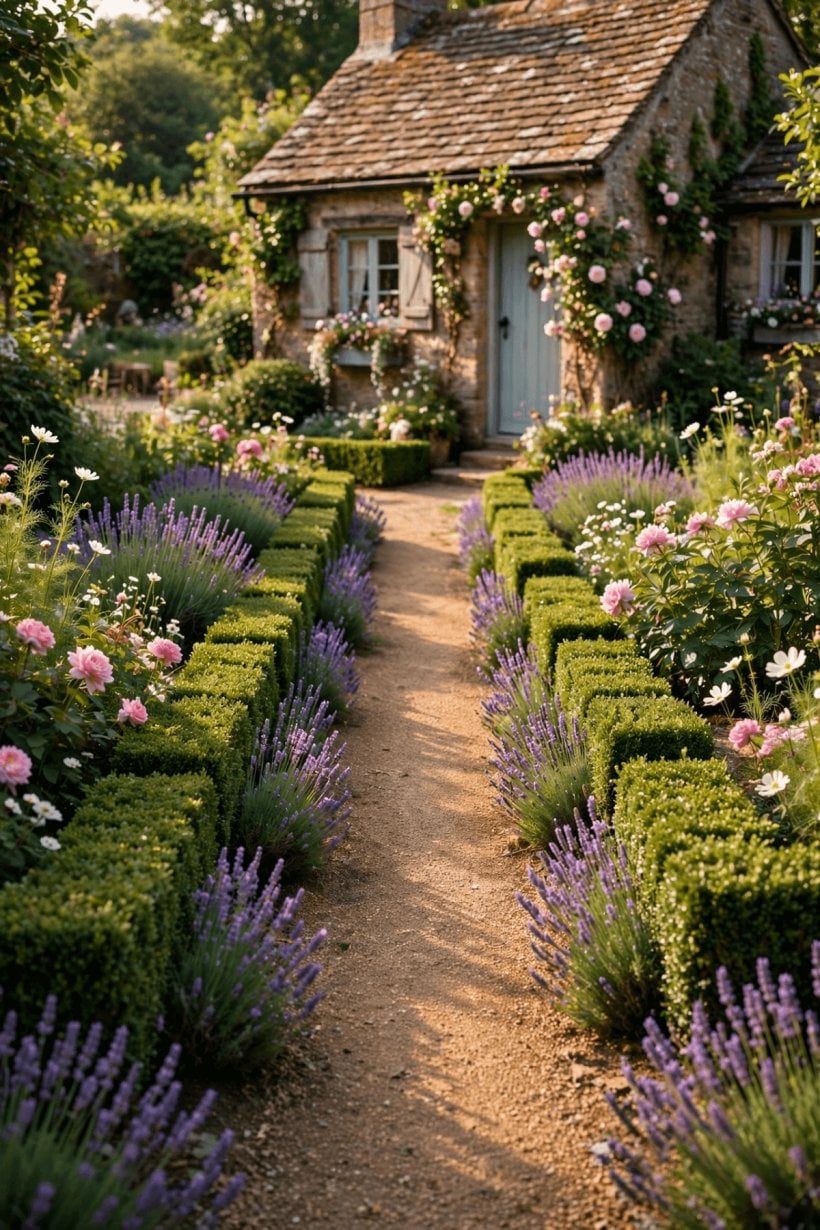
A low hedge is a diplomat. It stays below fence height, so it rarely steals meaningful light or sparks the disputes that tall conifers cause — but diplomacy still has details. Plant on your own side of the line unless you have agreed otherwise, and know where the boundary actually runs before the spade comes out; deeds, existing fences and a friendly conversation are better sources than assumptions. Keep growth on your neighbour’s side trimmed back to the line, or offer to do it, because nothing sours a hedge like one household maintaining a face the other household has to look at.
Roots and water deserve the same honesty. Any hedge drinks from shared soil, so in a dry garden, water your hedge rather than letting it mug the neighbours’ border — and expect the same courtesy back. Falling leaves and clippings on the other side are your hedge’s litter; a quick sweep after trimming keeps the peace. These small decencies are why low planting suits terraces and new-build plots so well, where gardens are close and goodwill is infrastructure, much like the shared-space sense running through these living room paint ideas for a tiny house, where the finish you choose is the finish everyone lives alongside.
10. Troubleshooting: Gaps, Shade and Tired Plants
Even the best-kept low hedge has off years. A gap at the base usually means shade — from the hedge’s own top-heavy shape, a fence, or a neighbouring plant — so correct the shape first, thin what overshadows it if you can, and feed and mulch as plant care guidance suggests while new growth fills in. A single dead plant in a run should come out promptly and be replaced with the same variety at the largest size you can find, planted with extra care, so the line knits back together instead of advertising the loss.
Dry, crisping foliage in the scented sun-lovers usually points to winter wet rather than summer drought, so review drainage before reaching for the hose. Yellowing or sparse growth across a whole run suggests the soil is tired: mulch annually, avoid scalping the plants with over-trimming, and if problems persist, take a photo and a leaf to a good local nursery — advice rooted in your region’s conditions beats any general article, including this one. Most of all, be patient: a low hedge is a five-year friendship, not a one-season purchase, and the gardeners who enjoy theirs longest are the ones who chose slowly, planted carefully and trimmed kindly.
Final Considerations
Pick the plant for your soil, your sunlight and your appetite for clipping, check its true mature size before you buy, and plant it on a line you have agreed with the people on the other side. Do those things and a low hedge gives you everything a boundary should — definition, greenery, a home for small birds — while asking almost nothing of your neighbours. That is what makes a hedge a good neighbour: it shares the line instead of arguing about it.



0 Comments