

A home bar earns its place in the first five minutes of a party: somewhere to mix, pour, perch and chat. Get the bar top right, and everything around it — shelving, lighting, stools — falls into place.
These 75 ideas group into ten practical themes, from solid surfaces that shrug off spills to shelving that turns bottles into the decoration.
1. Bar Top Choices At a Glance
| Material | Feel | Care Note | Suits |
|---|---|---|---|
| Solid surface (acrylic-based) | Seamless, warm, contemporary | Non-porous; follow the maker’s cleaning guidance | Curved runs and integrated sinks |
| Quartz | Polished, consistent, stone-like | Wipe spills promptly; use mats under hot items if the maker advises | Busy households wanting low fuss |
| Granite | Natural, cool, one-of-a-kind | May need sealing as the supplier advises | Classic and rustic schemes |
| Marble | Elegant, veined, luxurious | Acidic drinks can mark it; coasters become a habit | Occasional-use, dressy bars |
| Butcher block timber | Warm, friendly, tactile | Oil or seal as directed; expect a lived-in patina | Cottage, farmhouse and pub styles |
| Concrete | Industrial, weighty, bespoke | Sealing matters; check care with the fabricator | Loft and modern spaces |
| Stainless steel | Professional, bright, hygienic-feeling | Shows fingerprints; wipes clean quickly | Contemporary and outdoor bars |
| Laminate | Budget-friendly, huge pattern range | Protect from standing water at joints | First projects and rentals |
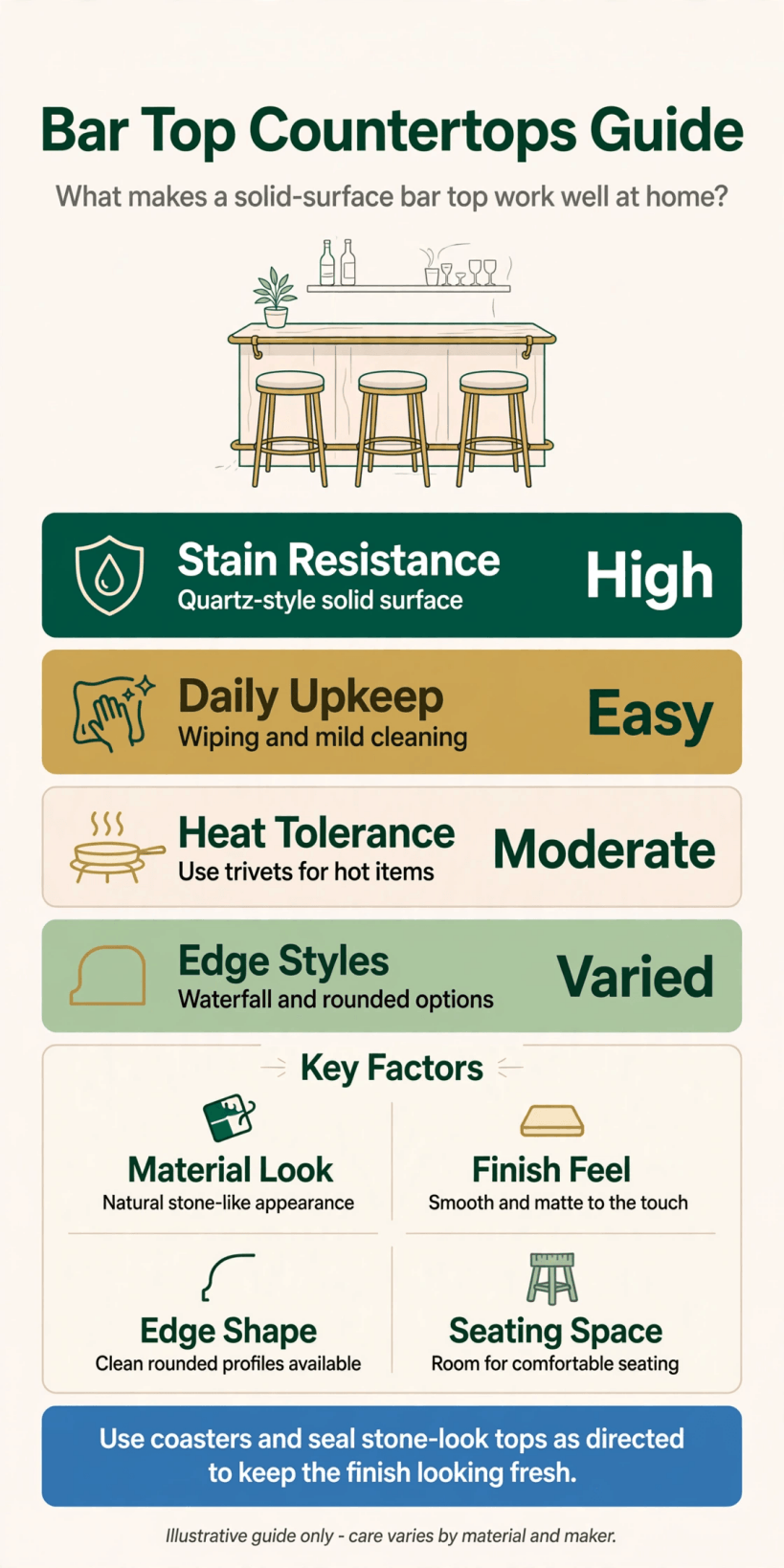
At a glance: eight counter materials compared by feel, care and the homes they suit best.
Read the table alongside your habits, not your hopes. A surface that needs coasters is a fine choice for a careful household and a poor one for a house full of teenagers mixing drinks. Think, too, about how the counter meets the wall, the sink and the shelving: the smartest schemes repeat one material or colour across at least two of those elements, so the bar reads as one designed piece of furniture rather than a collection of purchases. Sample pieces are worth ordering — rest a glass, a lemon slice and a coffee mug on each overnight and see what the morning tells you.
2. Solid Surface Countertops: Seamless and Sensible
Solid surface materials — the acrylic-based sheets sold under various brand names — are the quiet achievers of home bars. They can be joined almost invisibly, shaped around curves, and formed with an integrated sink or a raised edge that keeps spills where they belong. Because the material is consistent all the way through, many makers describe it as renewable: light marks can often be dealt with following the manufacturer’s own guidance, which is more than can be said for a chipped veneer. Check the specific product’s care and repair advice before you buy, because ranges differ.
The feel matters as much as the practicality. Solid surfaces are warmer to the touch than stone and quieter when glasses land, which suits a bar tucked into a living room where clatter carries. Colour choice is wide, from plain whites to stone-effect patterns; a mid-tone with a gentle fleck hides the everyday evidence of a good evening better than stark white or jet black. Pair the counter with the relaxed entertaining spaces in these home theater room design ideas and you have the bones of a proper movie-and-drinks night at home.

3. Stone, Quartz and Marble Looks
Stone brings ceremony. A granite counter carries the flecks and movement of the quarry it came from, so no two bars are quite alike, while engineered quartz offers stone’s polish with a more predictable pattern — helpful when a long run needs several slabs to match. Marble is the romantic: luminous, veined and forever linked with elegant hotel bars. It is also the most honest about its needs, because citrus, red wine and tonic can etch or stain a marble surface; if that patina sounds like character to you, marble rewards you, and if it sounds like stress, choose quartz and sleep well.
Whichever stone family you pick, ask the fabricator about sealing, edge profiles and support for any overhang where knees will tuck under. A chunky edge profile reads luxurious and is kinder to forearms; a slim profile reads modern and pairs with handleless cabinetry. Order a sample and live with it next to your paint and flooring choices — the layering approach in these living room interior design ideas for a tiny house works for bars too, because the counter is rarely seen alone. It is seen in lamplight, at midnight, surrounded by everything else you chose.
4. Timber Counters and Warm Finishes
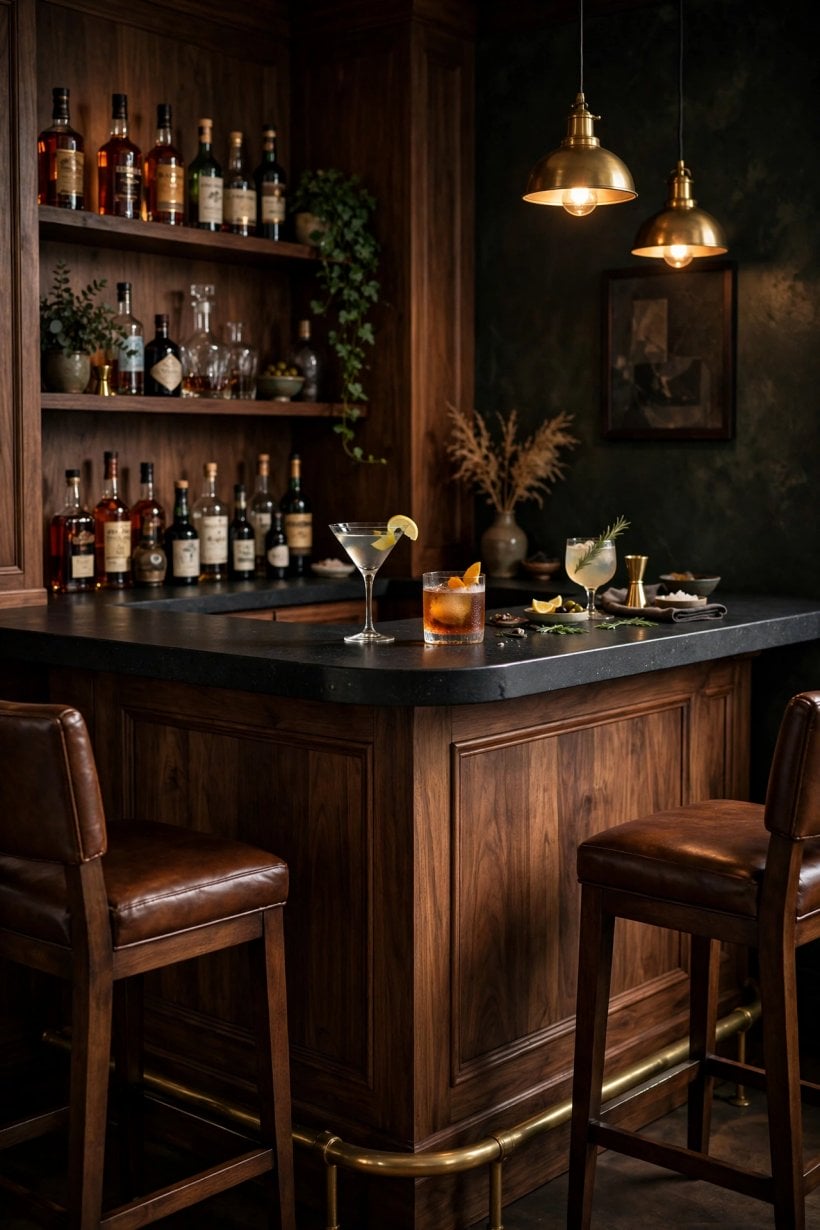
Timber is the friendliest counter material ever to host a drink. Butcher block — strips of hardwood laminated into a thick slab — brings the warmth of a country pub, suits farmhouse and cottage schemes, and ages with a patina that many owners grow to love. It asks for a little loyalty in return: a finish maintained as the maker recommends, puddles wiped rather than left, and trivets under anything hot or dripping with ice. Reclaimed timber adds story and texture, though it needs careful preparation so the serving surface is smooth, clean and splinter-free.
Timber also plays peacemaker between styles. It softens stainless appliances, warms black cabinetry and stops a stone-floored room feeling cold. If a full timber counter feels like too much maintenance near a sink, use timber for the raised serving shelf and a harder-wearing material for the wet working zone behind it — a two-level arrangement many professional bars use instinctively. The same warm-wood logic anchors the schemes in this tiny house kitchen design guide, where one natural material repeats to make a small space feel deliberate rather than accidental.
5. Shelving: Floating, Glass and Back-Bar Storage
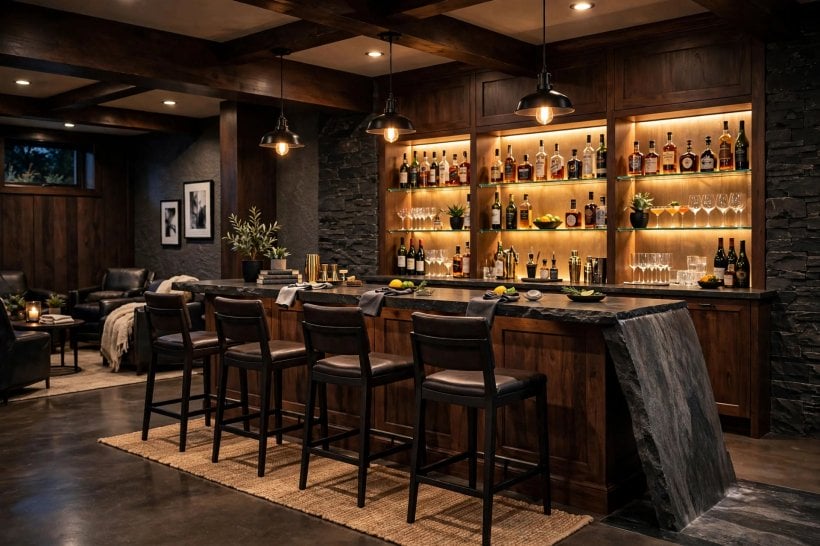
Shelving is where a home bar becomes theatre. Open shelves behind the counter display bottles and glassware at working height, floating shelves keep the look light in a small room, and glass shelves with discreet lighting turn a collection into a glow. The working rules are simple: keep everyday bottles on the lowest, easiest shelf; put the tall, rarely used pieces high; and leave breathing room — a shelf crammed edge to edge looks like storage, while a shelf with gaps looks like a display. Secure fixings matter, because bottles are heavy, so follow the shelf maker’s guidance for your wall type.
Closed storage earns its place too. A cupboard or drawers below the counter hide the clutter — measures, cloths, spare tonic, the blender — so the open shelves can stay handsome. Mix the two: glassware on show, working kit out of sight. In a compact home, the dual-purpose thinking in this tiny house and small-space interior design guide is gold: a bar that stores neatly is a bar that gets used weekly instead of admired monthly. Add a small rail or lip to open shelves if your household includes enthusiastic pets, curious toddlers or the occasional earthquake of a slammed door.
6. Layouts: Straight Runs, L-Shapes and Islands
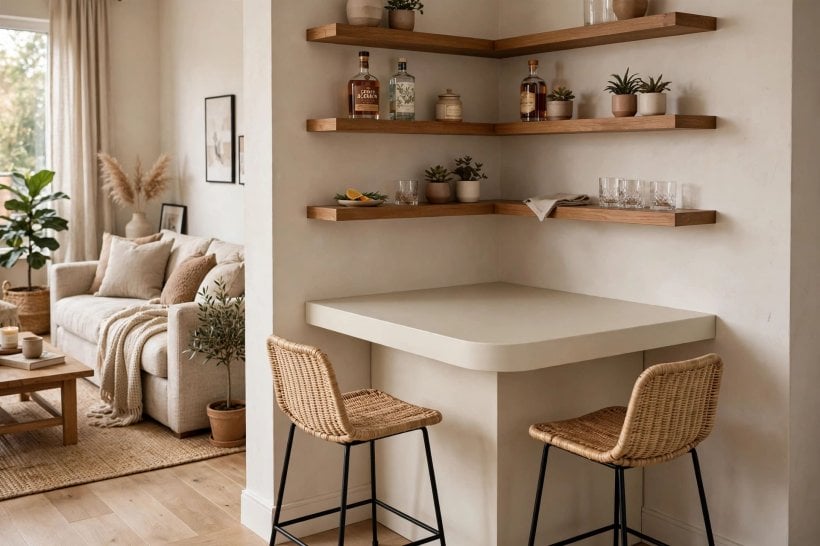
Layout decides whether the host joins the party or is exiled behind the counter. A straight run against a wall is the simplest and suits narrow rooms: counter in front, shelves behind, stools along the face. An L-shape wraps a corner and creates a natural serving point at the short end, while a peninsular or island bar lets the host face the room — the arrangement to choose if your evenings are conversational. Whichever you pick, leave comfortable standing room behind the counter for the person mixing, and check that fridge doors, cupboards and knees all clear each other before anything is fixed.
Height and overhang deserve a tape measure, not a guess. Your stools, the counter height and the knee space beneath the overhang are a system: choose the stools and the height together, and confirm dimensions against the furniture maker’s guidance rather than assuming one standard fits all. If the bar shares a room with dining or lounging, borrow the zoning tricks from these tiny house living room ideas — a change of flooring, a rug boundary or a lighting shift tells guests where the bar’s territory begins without a single wall being built.
7. Sinks, Taps and the Working Details
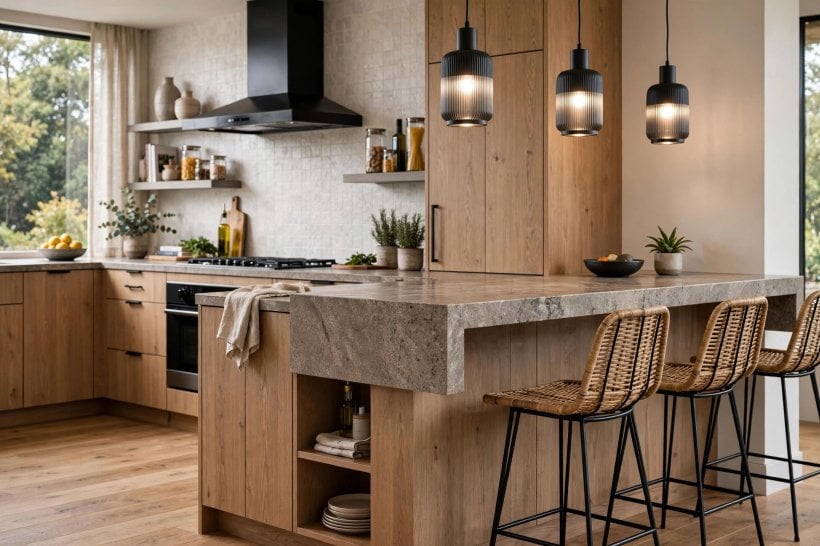
A small sink transforms a decorative bar into a working one. Rinsing glasses, discarding ice, washing a jigger — tasks that otherwise mean trips to the kitchen all happen in arm’s reach. A compact inset or undermount sink suits most home bars, and a simple mixer tap is usually all the plumbing heroics required, but any new water supply or waste run is a job to plan with a qualified plumber and to check against your local requirements. If plumbing to the spot is unrealistic, a well-chosen no-plumb arrangement — a handsome ice bucket, a water dispenser, a tray for rinsing trips — still keeps the bar functioning gracefully.
The details around the sink separate a good bar from a great one: a draining mat or inset grooves so glasses dry where they are washed, a bin within pivot distance, a shelf for washing liquid that does not spoil the display, and a towel rail that is actually reachable with wet hands. Under-counter refrigeration follows the same logic — measure the cabinet opening against the appliance maker’s stated dimensions, allow the ventilation they specify, and think about noise if the bar shares a room with sleepers or film-watchers, a consideration these kitchen ideas for tiny houses and small spaces return to often, since small homes forgive no noisy, ill-fitting appliance.
8. Lighting and Back-Bar Styling
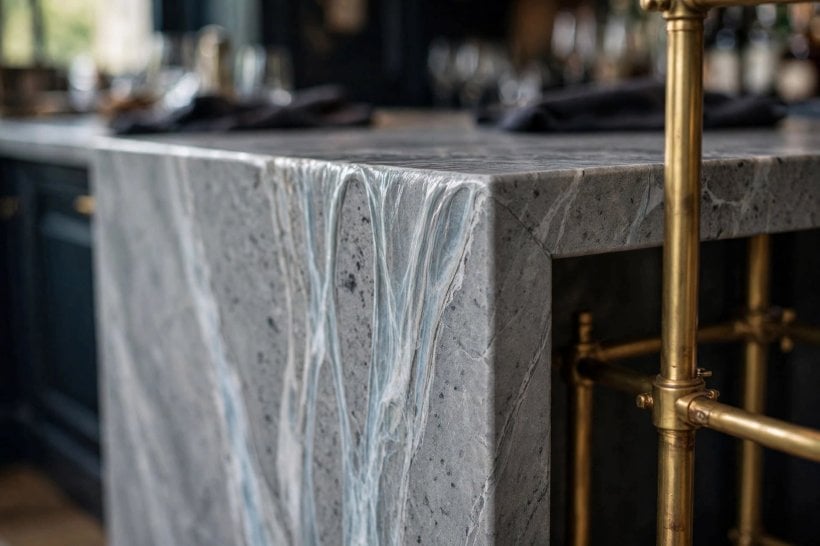
Lighting is the cheapest luxury in any bar. A warm light source under the shelves washes bottles in a glow and doubles as task light for labels; a pair of pendants over the counter marks the bar’s territory and gives faces a flattering light to gather under; and a dimmer — humble, inexpensive — lets the same room be bright for board games and low for a late nightcap. Avoid harsh overhead light directly above the stools, which flatters nobody, and keep bulbs warm-toned for evening use, checking fittings and any electrical work with a qualified electrician where required.
Styling then becomes easy, because light has done the heavy lifting. Group bottles by height, keep labels facing out, and leave one shelf mostly empty except for a plant, a stack of cocktail books or a single beautiful decanter — restraint reads as confidence. A mirror or a darker paint colour behind the shelves deepens the scene and makes a small bar feel like a destination. The styling discipline mirrors the advice in these apartment interior design ideas for tiny houses: fewer objects, chosen well, arranged with air around them.
9. Stools, Foot Rails and Comfort Details
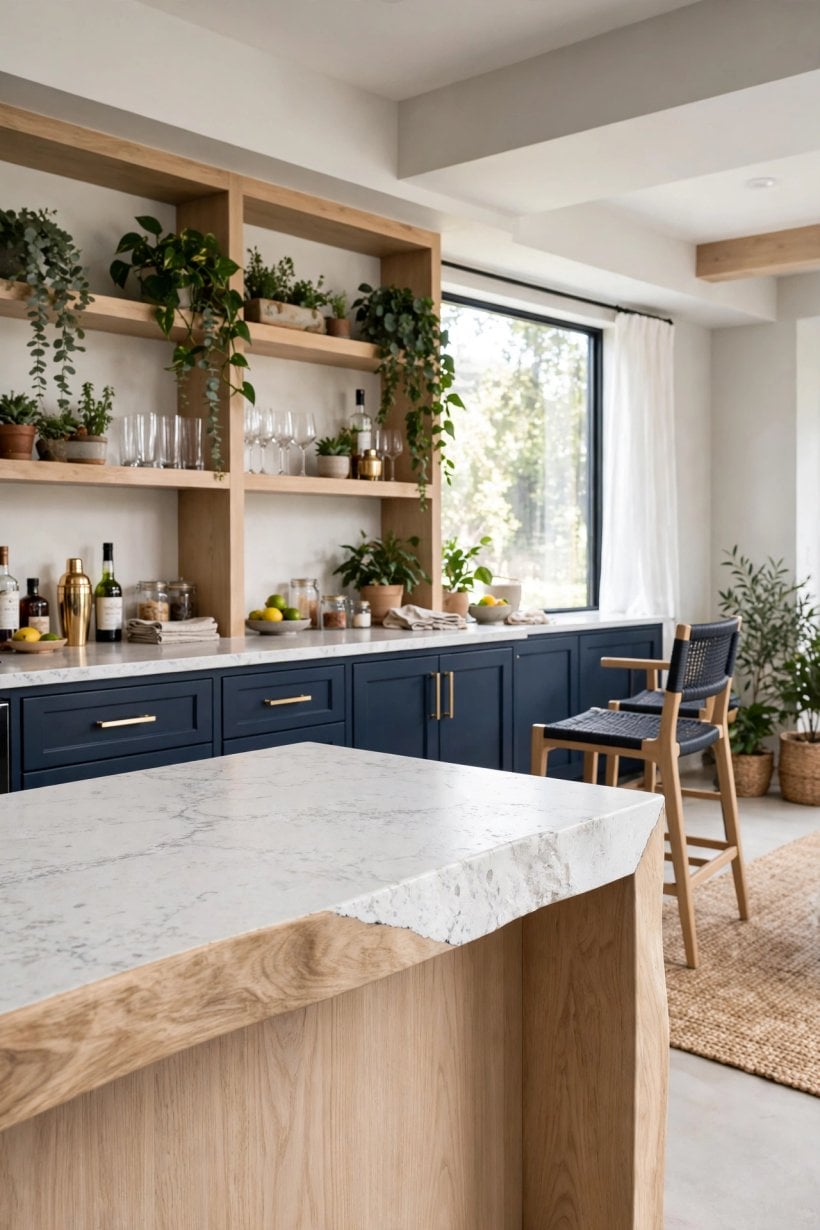
Nobody lingers on an uncomfortable stool, and lingering is the entire point. Choose stools with a rung or rail at a natural resting height for feet, a seat wide enough to settle into, and a finish that survives heels, boots and the occasional spill. Swivel seats help guests turn toward conversation; backs help them stay for one more. Space stools so elbows are not a contact sport — the furniture maker or retailer can advise on spacing for the counter length you have — and if children join family gatherings, one or two lower seats at the counter’s end keep everyone at the same party.
The foot rail along the bar’s face is the detail guests notice with their feet before their eyes. A metal rail — brushed brass for warmth, blackened steel for edge, chrome for shine — protects the cabinet front from scuffs and gives standing guests somewhere to lean. It is the kind of finishing touch that makes a built bar feel like furniture rather than kitchen units, in the same way the finishing choices in these home designing ideas for a tiny house turn basic boxes into rooms with character: small, considered, repeated details doing quiet work everywhere you look.
10. Care, Stains and Everyday Hosting
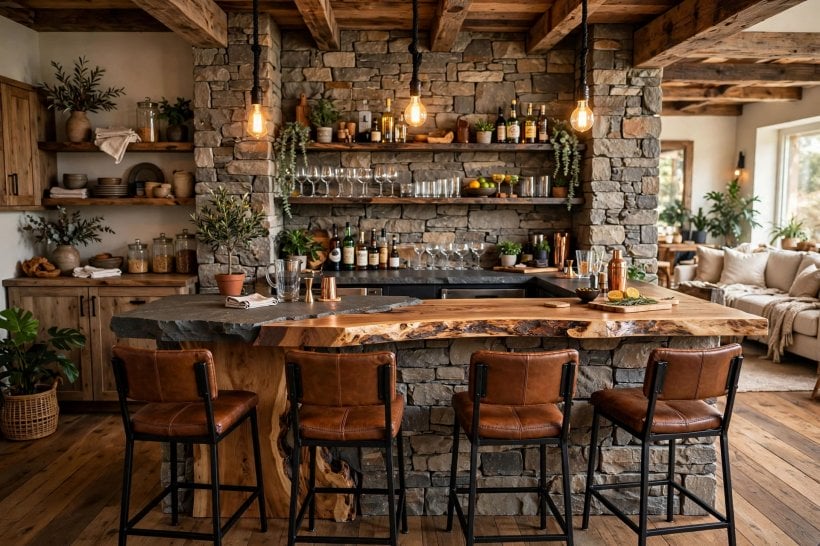
A bar that hosts well is a bar that cleans easily, so plan the care routine before the first party. Keep a soft cloth and a suitable cleaner under the counter, a small stack of coasters within everyone’s reach, and a lidded bin for citrus peel and bottle tops. After a party, the ten-minute reset — glasses washed, counter wiped, bottles back in their groups — keeps the bar inviting instead of reproachful. For the counter itself, follow its maker’s care guidance: stone, timber, laminate and solid surfaces each have products they love and products they hate, and the manufacturer’s word outranks any general tip.
Stock thoughtfully and the bar stays joyful rather than cluttered: a modest, well-chosen set of bottles you actually use, glassware matched to those drinks, and fresh citrus and ice treated as seriously as the spirits. Rotate display bottles seasonally if you enjoy styling, and keep the working kit — measure, shaker, strainer, opener — in one drawer so any guest-helper can find it. A home bar is hospitality made permanent; the care you give it is simply the party, continued by other means, much like the way a well-kept room rewards its owners daily in these living room paint ideas for a tiny house, where the finish you maintain is the finish you get to enjoy.
Final Considerations
Choose the counter for your real life — your drinks, your guests, your appetite for upkeep — then let shelving, light and stools support it. Repeat one material or colour so the bar reads as furniture, plan the working details like the sink and bin before the decorative ones, and sample everything in evening light. Do that, and your bar will not just photograph well; it will gather people well, which is the only review that matters.

0 Comments