

Soft colour, gentle texture and a layout that slows you down the moment you walk in — that is the promise of a well-planned feminine bedroom, and it is easier to achieve than most people expect.
This guide gathers 75 ideas across layouts, colour palettes, storage and styling, so you can borrow one detail or rebuild the whole room with confidence.
1. Feminine Bedroom at a Glance
| Element | What to Choose | Why It Works |
|---|---|---|
| Colour palette | Blush, ivory, dusty rose, sage or powder blue with warm white | Soft hues lower visual noise and help the room feel restful |
| Bed | Upholstered headboard, layered linen and cotton bedding | Texture at the bed creates the focal point without clutter |
| Layout | Bed centred on the longest wall, clear walking space both sides | Symmetry calms the eye and makes small rooms feel ordered |
| Storage | Closed wardrobe, bedside drawers, under-bed boxes | Hidden storage keeps surfaces clear and the mood serene |
| Lighting | Warm bedside lamps, a dimmable ceiling light, fairy lights sparingly | Layered light supports reading, dressing and winding down |
| Finishing touches | Fresh flowers, a soft rug, framed prints, a scented candle | Small sensory details complete the calm, personal feel |
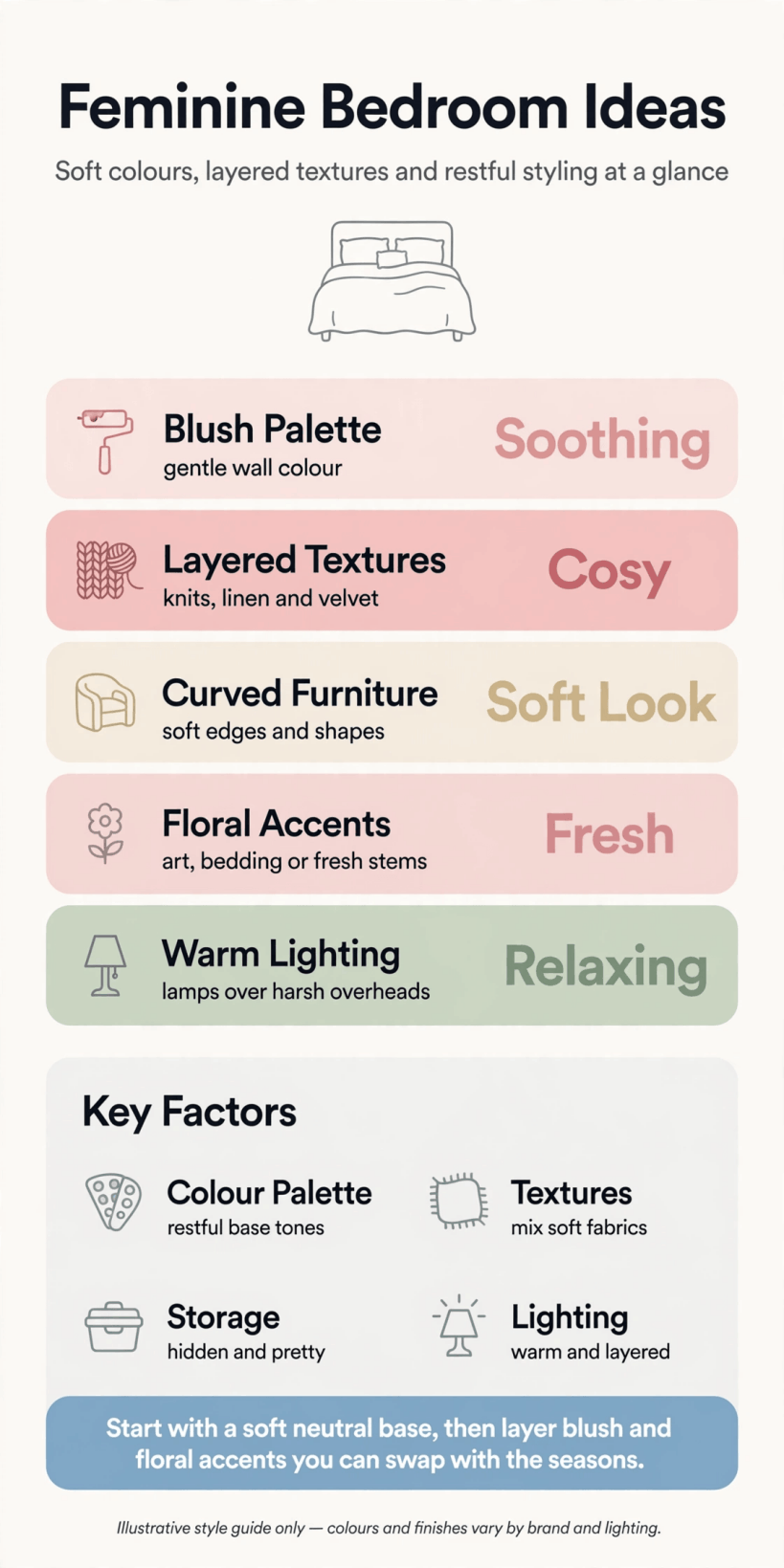
A quick visual summary of the palettes, layers and layout choices covered in the sections below.
Every room in this collection balances three things: comfort you can feel, storage you cannot see, and colour that flatters natural light. Keep those three tests in mind and even a rental room or a compact box room can take on the same restful character. The sections that follow break the look down into layout, colour, furniture, fabric, lighting, storage, walls, small spaces and seasonal updates, with practical notes on care and budget along the way.
2. Layouts That Put the Bed First
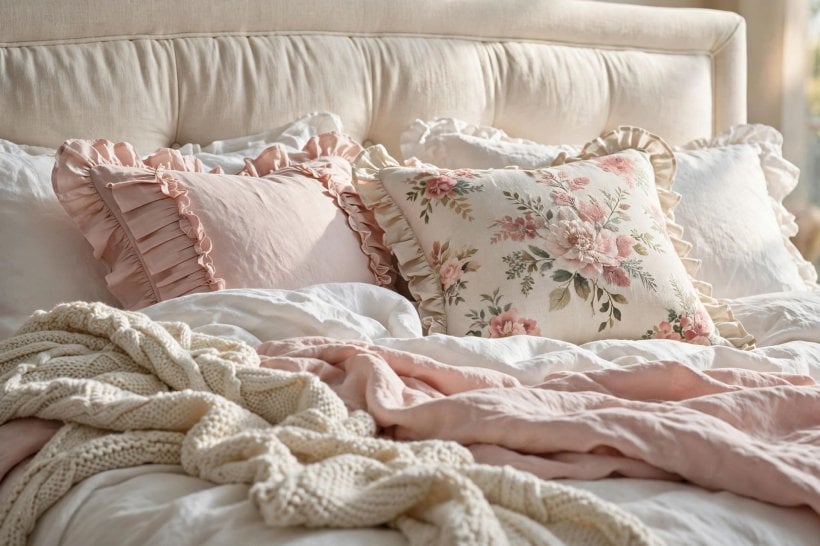
Start with the bed, because every other decision hangs off its position. Centring the bed on the longest uninterrupted wall gives you matching space for two bedside tables, and that symmetry is the quiet engine behind most restful schemes. Leave enough room to walk around the foot of the bed without turning sideways; if space is tight, push the bed into a corner and dress the long side with cushions so it doubles as a daybed-style lounging spot.
Think about the view from the pillow as well as the view from the door. A calm wall opposite the bed — a framed print, a shelf with plants, or simply an uncluttered stretch of colour — settles the mind last thing at night and first thing in the morning. Keep the route from door to wardrobe and door to window clear, because a room that flows well feels larger than a room that is merely bigger. In compact homes this matters even more, and the layouts in tiny house bedroom ideas show how disciplined placement makes a small sleeping space feel generous.
Finally, anchor the arrangement with a rug placed two-thirds under the bed. The rug defines the sleeping zone, softens footsteps and gives bare feet a warm landing in winter, all while tying the colour palette together in one move.
3. Colour Palettes That Feel Soft, Not Sugary
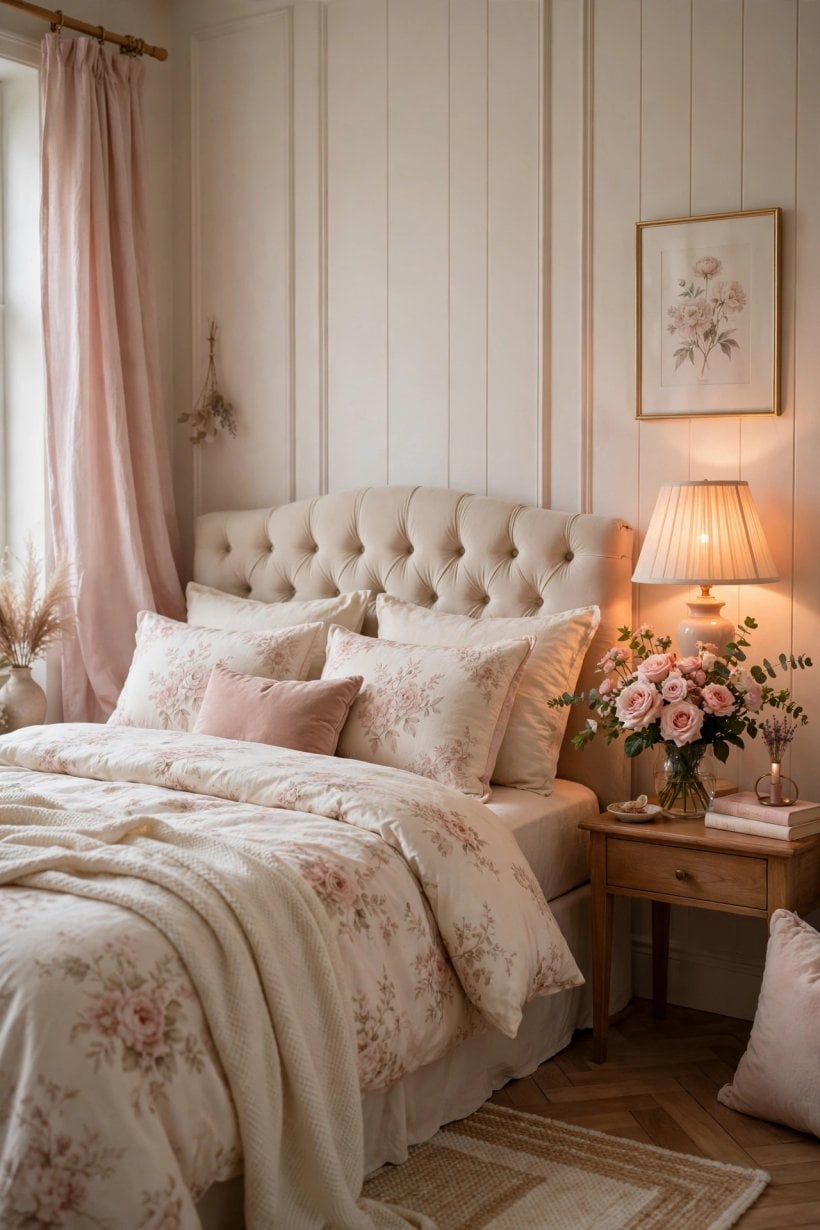
Gentle colour is about undertone, not just lightness. Blush pink with a grey undertone reads sophisticated, while a yellow-based pink can feel childish in a grown-up room. Dusty rose, mauve, powder blue, sage green and warm ivory all deliver the same softness with different moods: rose is romantic, sage is botanical, powder blue is airy, and ivory is timeless. Test paint on the wall that gets the least light, and check it morning and evening before committing.
A reliable formula is sixty percent main colour, thirty percent a supporting neutral and ten percent an accent such as antique brass, rattan or a deep berry cushion. That accent matters, because an all-pastel room can look washed out in photographs and in real life. Depth can come from a single charcoal frame, a walnut side table or a navy throw — small doses of contrast keep soft colour looking intentional.
If you rent, put the colour into textiles instead of paint. Bedding, curtains and a rug can carry the whole palette, and they move with you. The gentle schemes in tiny house bedroom decor prove how much atmosphere fabric alone can create in a small footprint.
4. Beds, Headboards and Layered Bedding
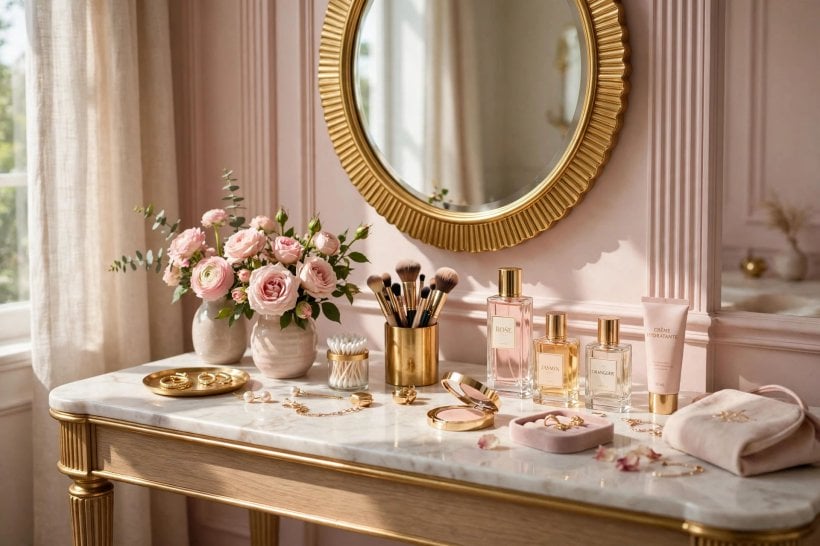
The bed is the largest piece of furniture in the room, so its dressing does most of the styling work. An upholstered headboard in linen, velvet or a woven fabric instantly softens hard walls and gives you a comfortable backrest for reading. Buttoned and channel-stitched designs add pattern without print, which suits calm schemes. If a new bed is not an option, a large fabric-covered panel or a row of oversized cushions against the wall creates a similar effect for far less.
Layer bedding the way hotels do: a fitted sheet, a flat sheet folded back, a duvet with a breathable cover, then a folded throw at the foot. Mix two textures — smooth cotton with washed linen, or matte percale with a knitted blanket — rather than many colours. Two sleeping pillows plus two decorative cushions is plenty; more than that becomes a daily chore rather than a pleasure.
Natural fibres help regulate temperature and wash well, which matters because soft styling should never mean high maintenance. Check the care label and the manufacturer guidance for any filled bedding before washing, and air the bed each morning by folding the duvet back for a while. Small habits like that keep the whole arrangement feeling fresh, and the styling notes in modern tiny house bedroom ideas show the same layering working in very compact rooms.
5. Fabrics, Texture and Pattern
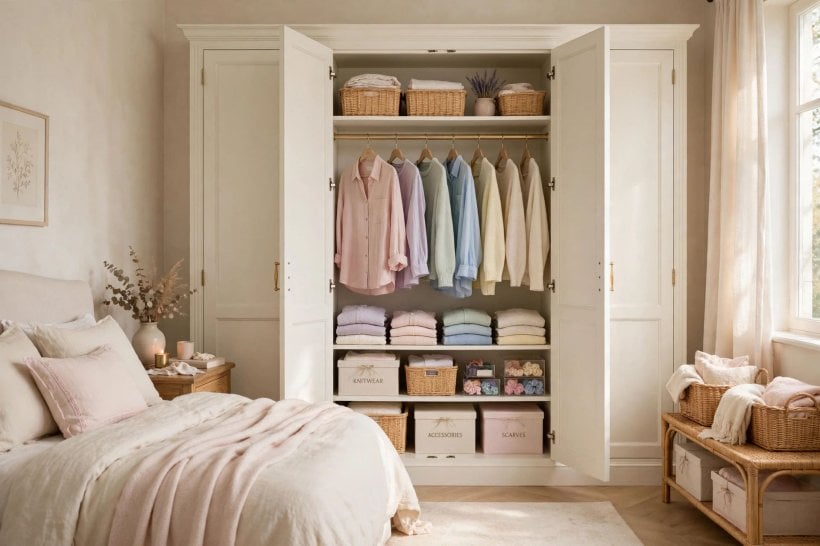
Texture is what stops a pale room from feeling flat. Combine at least three: a nubby woven throw, smooth cotton sheets and a plush rug, for example, or linen curtains, a velvet cushion and a rattan basket. Each surface catches light differently, so the room gains depth while the palette stays quiet. Sheer curtains are a classic choice because they filter daylight into a soft glow and add privacy without blocking the sun.
Pattern works best in small, repeated doses. A ditsy floral on one cushion, a stripe on a lampshade or a subtle check on a throw keeps the eye interested without competing with rest. If you love bold botanical prints, confine them to a single statement — one wall panel of removable wallpaper or a duvet cover — and keep everything else plain.
Think seasonally too. Cotton and linen breathe in summer, while a wool-blend throw and heavier curtains make the same room feel cocooning in winter. Swapping two or three textiles twice a year refreshes the whole scheme at very little cost, a trick that also works across the home, as the stylists behind living room interior design ideas for tiny houses demonstrate with the same fabric-first approach.
6. Storage That Keeps the Calm
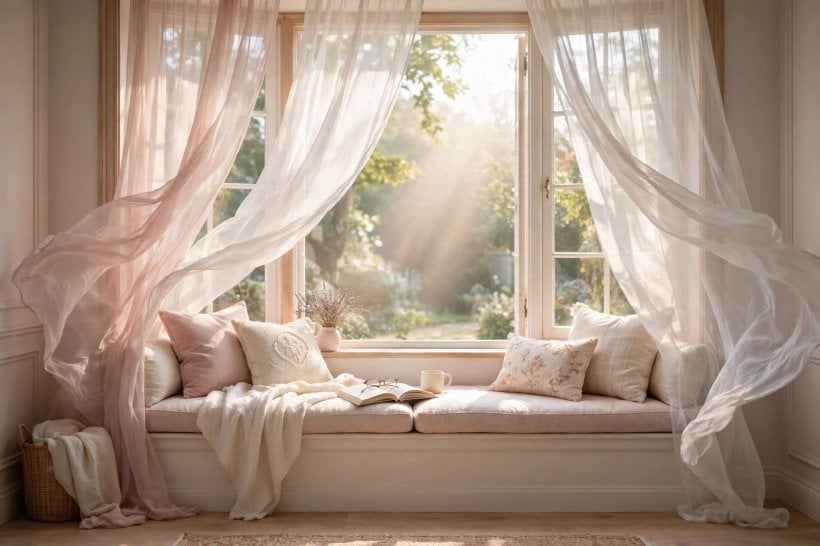
Clutter is the enemy of a restful room, so plan storage before decoration. Closed storage — a wardrobe with solid doors, drawers rather than open shelves — hides visual noise and dust in one move. Inside the wardrobe, matching slim hangers, a hanging organiser for knitwear and a small box for accessories keep the order effortless rather than effortful.
Use the hidden spaces. Under-bed drawers or lidded boxes hold spare bedding and out-of-season clothes; the back of the door takes hooks for robes and tomorrow’s outfit; a bedside drawer swallows chargers, hand cream and reading glasses so the table surface stays clear. A lidded basket at the foot of the bed catches the throw and cushions at night.
Be honest about what you own. A gentle edit — donating clothes unworn for a year, keeping only skincare you actually use on the dressing table — does more for the room than any new furniture. Review the wardrobe twice a year when you swap seasonal textiles, and the system maintains itself.
7. Lighting for Mood and Practical Tasks
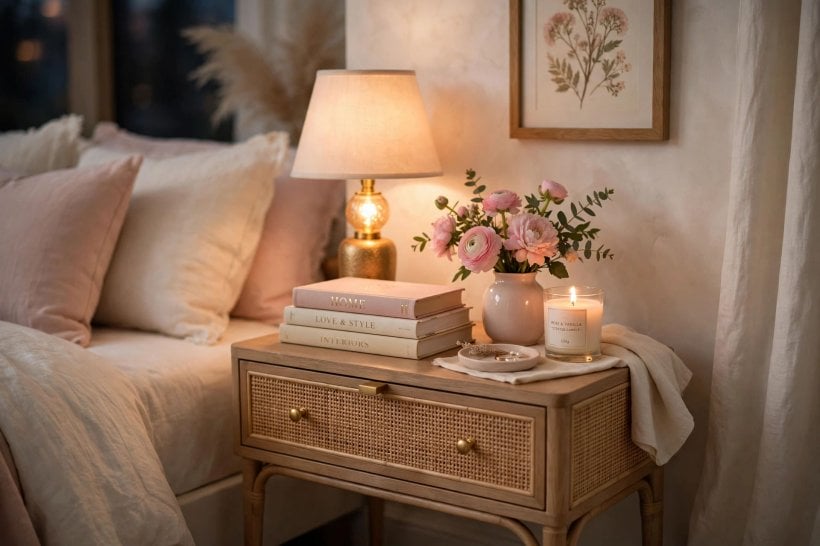
One ceiling light is rarely enough. Aim for three layers: ambient light from a ceiling fitting or wall lights, task light from bedside lamps and a dressing-table lamp, and accent light from fairy lights, a candle or a small uplighter in a corner. Warm-toned bulbs flatter skin and soft colour; check the bulb packaging for colour temperature and choose the warmer end of the range for sleeping areas.
Bedside lamps should sit at a height that puts the shade roughly level with your shoulder in bed, so the light falls on a book rather than in your eyes. Matching pairs reinforce the calm symmetry of the layout, but mismatched lamps in the same finish can look collected and personal. Dimmer switches or smart bulbs let the same room shift from bright dressing light to a low evening glow.
Blackout lining or a sleep mask solves early summer dawns if street light or sunrise wakes you. Keep charging cables in a drawer with a cable slot, or use a small charging station on the dressing table, so the bedside stays a place for a book and a glass of water rather than a tangle of wires.
8. Walls, Art and Personal Details
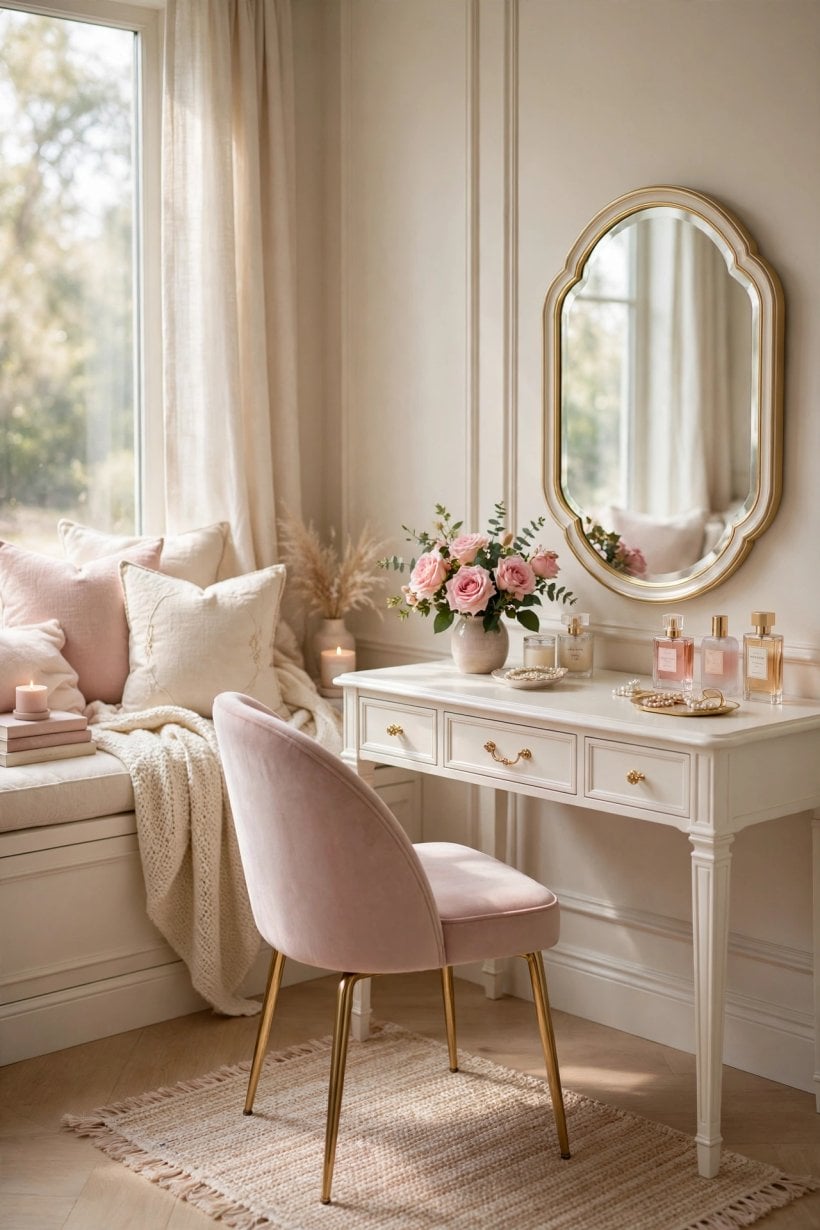
Walls carry the mood quietly. A single framed print above the bed, a small gallery of three or five frames, or a woven wall hanging adds personality without visual noise. Keep frames in one finish — white, pale wood or thin brass — so varied artwork still reads as one calm collection. Hang the centre of the arrangement at roughly eye level when standing, and leave breathing room between the frame and the headboard.
Personal details separate a styled room from a showroom. A stack of favourite books, a ceramic dish for jewellery, a framed photograph and a plant you actually enjoy caring for all tell your story in small ways. Fresh flowers are the classic finishing touch; even a supermarket bunch split between a bedside vase and the dressing table lifts the whole room for days.
Mirrors earn their place twice over: they bounce daylight into corners and provide a practical dressing spot. A round mirror softens straight lines, while an arched design echoes traditional dressing-room style. Position a mirror opposite or beside a window for the best light, and the decorative ideas in bedroom decor styling collections show how one well-placed mirror changes a small room.
9. Small Rooms and Rental-Friendly Ideas
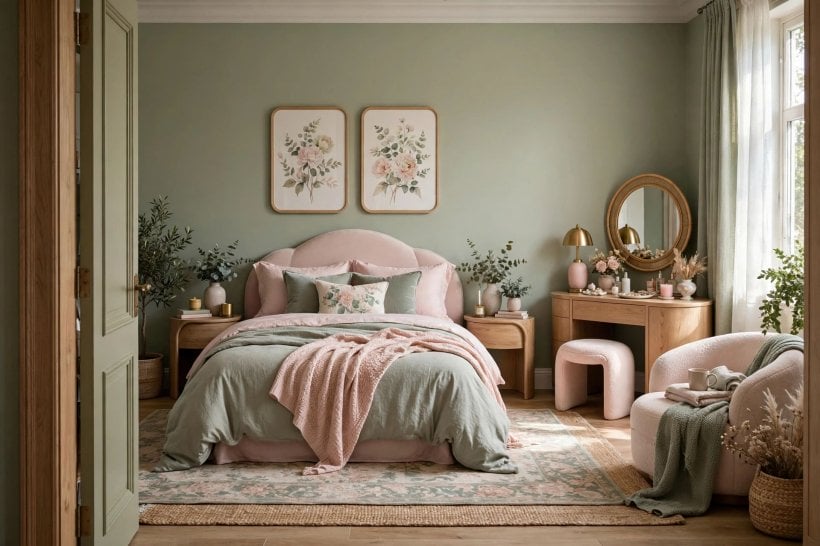
Small rooms suit this style beautifully, because pale colour, closed storage and layered textiles all make compact spaces feel bigger. Choose furniture with legs so the floor shows through, keep the palette to two or three colours, and use the full height of the room with a taller, narrower wardrobe rather than a wide, low one. A wall-mounted bedside shelf replaces a table where floor space is precious.
Renters can achieve almost everything without touching the structure. Removable wallpaper or fabric wall panels, rugs over tired flooring, tension-rod sheer curtains and plug-in wall lights all reverse in an afternoon. Always check your tenancy agreement before fixing anything to walls, and keep the landlord’s rules ahead of any decorative urge — most landlords accept picture hooks, but it is worth asking first.
Box rooms and guest rooms benefit from a daybed approach: dress the bed with cushions along the wall by day, and the room works as a reading nook or dressing space, then converts back in minutes. The multi-use thinking in small bedroom layout guides applies the same one-room-many-jobs logic at every size.
10. Care, Budget and Seasonal Refreshes
Soft rooms stay soft with simple care. Wash bedding weekly, rotate the mattress according to the manufacturer’s guidance, and vacuum upholstered headboards and rugs with an upholstery attachment to lift dust. Air the room daily where possible, even for ten minutes, because fresh air does more for a sleeping space than any scented product. Keep a small repair habit too: a loose button, a wobbly lamp or a chipped frame fixed promptly keeps the room feeling loved rather than tired.
Spend in the order of touch: bedding first, then lighting, then paint and textiles, then furniture. The items your skin meets every night deserve the budget; decorative objects can arrive slowly, found second-hand or made by hand. Qualitatively, a few well-chosen natural-fibre pieces will outlast a roomful of bargain synthetics, and they wash and age more gracefully too.
Refresh seasonally with tiny changes — lighter curtains and a cotton throw in spring, a deeper cushion colour and a wool blanket in autumn. Store the off-season set in the under-bed boxes and the swap takes minutes. For whole-home continuity, the gentle palettes in tiny house living room designs pair naturally with the schemes in this guide, so your sleeping space and living space can share colours and textures.
Final Considerations
A restful, pretty sleeping space is built from ordinary decisions made consistently: the bed placed well, colour kept gentle, storage closed, light layered and textiles chosen for touch as much as looks. None of it requires a large room or a large budget, and most of it can happen one corner at a time. Start with the view from the door, then the view from the pillow, and let every change pass the same simple test — does it make the room calmer to be in? If it does, it belongs. Sleep well, and enjoy the room you have made.


0 Comments