
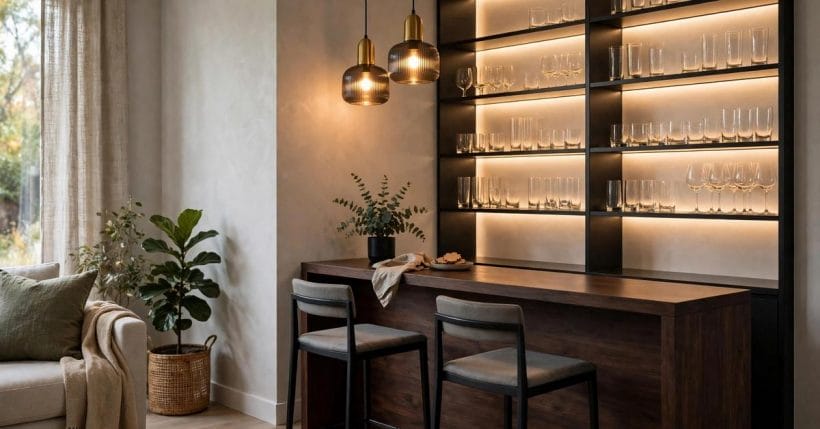
A modern home bar is not a room. It is a corner, a wall, a cabinet, or a cart that knows its job: a place to keep glassware, pour a drink, and sit for a while. The modern part is the restraint. Clean lines, a small palette, and nothing on show that is not used. This post gathers seventy-five modern home bar ideas, from full walls of shelving to a single tray on a sideboard.
The bar set has its own neighbours. A wine cellar is about storage conditions, a corner bar is about placement, and this post is about the modern style itself. Where those neighbours help, they are linked. The ideas below stay on the modern bar: what it looks like, where it sits, and how it works.
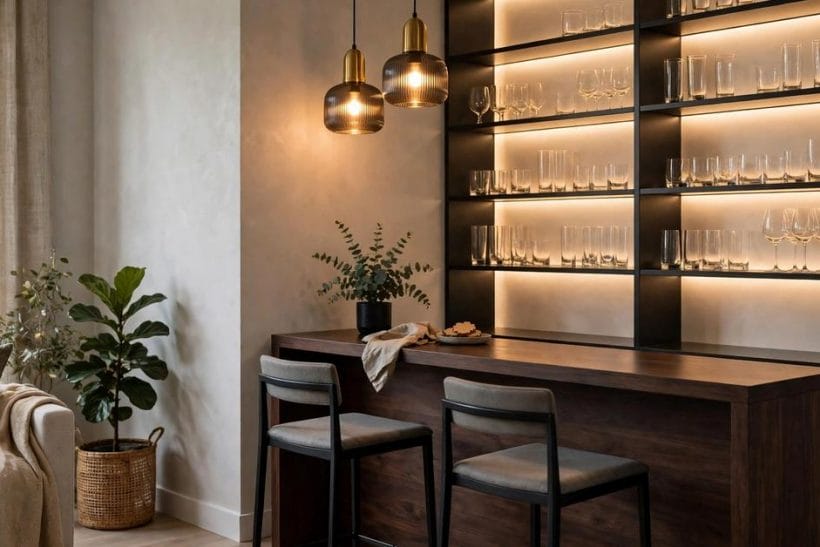
1. Bar Layouts and Placement
Where a bar sits decides how it is used. A bar beside the seating gets used. A bar hidden behind a door gets forgotten. The layouts below put the bar where the room already gathers.
| Item | What it is |
|---|---|
| The Living-Room Wall Bar | Give one living-room wall to the bar: shelving above, counter below, stools in front. |
| The Dining-Room Side Bar | Place the bar on the dining room's side wall, so drinks are poured where they are served. |
| The Kitchen-End Bar | Put the bar at the kitchen's end, where cooking meets sitting. |
| The Hallway Niche Bar | A shallow hallway niche, fitted with a shelf and a small counter, makes a bar from dead space. |
| The Under-Stair Bar | The space under a stair is often wasted. |
| The Room-Divider Bar | A bar counter between living and dining areas divides the rooms while keeping them connected. |
| The Window-Wall Bar | A bar under a window borrows daylight and a view. |
| The Fireplace-Side Bar | A bar beside a fireplace shares the room's warmest corner. |
| Backlit Open Shelves | Backlighting turns plain shelves into a display. |
| Floating Wood Shelves | Floating shelves in a warm wood keep a modern bar from feeling cold. |
| Glass-Front Cabinets | Glass fronts protect glassware from dust while keeping it visible. |
| The Single Statement Shelf | One long shelf, well styled, can carry a whole bar wall. |
| Mirrored Splashback Shelving | A mirrored splashback doubles the light and the display. |
| Recessed Wall Niches | Niches cut into the wall hold bottles and glasses without taking floor space. |
| The Cellar Link | A bar that pours should know where its bottles sleep. |
| Rotating Display Trays | A rotating tray on a shelf brings the back row forward. |
| The Stone Counter | A stone counter gives a bar permanence and an easy wipe. |
| The Wood Counter | Wood warms a modern bar and suits rooms with timber floors. |
| The Waterfall Edge | A waterfall edge, where the counter material drops down the side, makes a bar look built rather than placed. |
| The Brass Foot Rail | A brass foot rail adds a classic note to a modern bar and gives standing guests somewhere to rest a foot. |
| The Concrete Counter | Cast concrete gives an industrial modern bar a solid, matte surface. |
| The Two-Level Counter | A two-level counter separates serving from sitting: a higher shelf for pouring, a lower counter for guests. |
| The Fold-Down Counter | A fold-down counter flap turns a cabinet into a bar and back again. |
| The Sink Question | A small sink makes a bar self-sufficient, but it needs plumbing. |
| The Drainage Groove | A shallow groove routed near the counter edge catches drips before they reach the floor. |
| Backless Stools That Tuck Away | Backless stools slide fully under the counter, so the bar disappears when not in use. |
| Low-Back Stools for Longer Stays | A low back gives support without blocking the view across the bar. |
| Leather Stool Seats | Leather seats wear well and wipe clean. |
| The Bench Seat Alternative | A bench along the bar side seats more people in less space than separate stools. |
| Swivel Stools for Conversation | Swivel stools let guests turn between bar and room without standing. |
| Counter-Height Dining Chairs | Proper chairs at counter height suit bars that double as dining spots. |
| The Standing Ledge | A narrow standing ledge, with no seating at all, suits bars for quick drinks before dinner. |
| The Armoire Bar | A tall armoire with doors that open to shelves and a counter hides a full bar in a furniture piece. |
| The Sideboard Bar | A sideboard with a raised back shelf and a drawer for tools makes a dining-room bar from furniture the room already owns. |
| The Sliding-Panel Bar | Sliding panels hide a bar wall behind a flat, modern face. |
| The Pantry Bar | A pantry corner fitted with a counter and glass storage becomes a bar that borrows the kitchen's plumbing and light. |
| The Bookcase Bar | A bookcase with one shelf cleared for glassware and a tray on top makes a quiet bar in a study or library corner. |
| The Dream-Home Bar | Dream homes often hide bars inside larger entertaining rooms, where the bar is one pleasure among many rather than the room's subject. |
| The Lockable Cabinet Bar | A lockable cabinet suits houses with children or shared spaces. |
| The Under-Counter Fridge Bar | A small under-counter fridge keeps drinks cold at the bar itself, so nobody walks to the kitchen mid-conversation. |
| Pendant Lights Over the Counter | Two or three pendants over the counter give the bar its own pool of light. |
| Shelf Strip Lighting | A strip light under each shelf lights the glassware from within the display. |
| The Dimmer Rule | Every bar light should dim. |
| Candlelight on the Counter | A few candles on the counter add flicker that electric light cannot copy. |
| The Backlit Mirror | A backlit mirror behind the bar doubles the light and the room. |
| Uplighting for Atmosphere | Uplights hidden on top of cabinets wash the ceiling with warmth. |
| The Neon Accent, Used Sparingly | A single neon word or shape gives a modern bar a playful note. |
| Daylight by Day, Lamplight by Night | A bar near a window should work in both lights: daylight for a morning coffee, lamplight for an evening drink. |
| The Tray Bar | A tray on a sideboard, with glasses and a bottle or two, is a complete bar for a small room. |
| The Wall-Mounted Fold-Down Bar | A wall-mounted cabinet that folds down into a counter gives a small room a bar without giving up floor space. |
| The Kitchen-Cart Bar | A kitchen cart with a top shelf for pouring and lower shelves for storage rolls where it is needed and parks where it is not. |
| The Windowsill Bar | A deep windowsill with a tray and a few glasses makes a bar for one or two, with a view included. |
| The Kitchen-Adjacent Bar | Kitchen ideas show bars borrowing kitchen counters and storage, which is the honest small-space answer: share, don't duplicate. |
| The Hallway Console Bar | A narrow console table in a hallway, topped with a tray, serves as a bar for guests arriving and leaving. |
| The Balcony Rail Bar | A rail-mounted shelf on a balcony turns the railing into a bar counter for two, with the outdoors as the room. |
| The Single-Shelf Bar | One shelf, a few glasses, and a bottle is a bar. |
| The Classic Two-Tier Cart | Two tiers — pouring on top, storage below — are the cart's whole logic. |
| The Outdoor Cart | A cart with weather-resistant finishes moves between kitchen and garden. |
| The Compact Round Cart | A small round cart fits corners and narrow gaps where a rectangular cart cannot turn. |
| The Cart as Side Table | Between parties, a bar cart is a side table. |
| The Vintage Cart, Restored | A restored vintage cart brings character a new cart cannot copy. |
| The Cart With a Wine Rack | A cart with a built-in rack keeps bottles on their sides and within reach. |
| The Serving Trolley Bar | A larger serving trolley, with a cutting board and a waste bowl, turns a bar into a food station too. |
| The Cart Corral | Give a cart a home: a corner, a nook, or a marked floor spot. |
| The Patio-Door Bar | A bar beside patio doors serves the garden without leaving the house. |
| The Garden-Room Bar | A bar in a garden room or sunroom enjoys daylight and planting. |
| The Poolside Counter | A poolside counter needs waterproof surfaces and unbreakable glasses. |
| The Balcony Bar Shelf | A fixed shelf along a balcony rail gives a small outdoor bar without furniture. |
| The Fire-Pit Bar | A low counter near a fire pit keeps drinks close to the evening's centre. |
| The Outdoor Kitchen Link | An outdoor kitchen with a bar counter merges cooking and pouring outside. |
| The Edited Glass Collection | Keep the glasses you use and store the rest. |
| The Single Plant | One plant on or beside the bar softens wood, stone, and steel. |
| The Framed Print Above | A single framed print above the bar gives the wall a subject beyond bottles. |
| The Suite Mini-Bar | Luxury master suite ideas show the bar at its smallest: a tray and a few glasses in a suite, for a quiet drink before bed. |
| The Living-Room Link | Coffee table pictures close the bar's story, because the drink poured at the bar ends up on the coffee table, in the room where people actually sit. |
1. The Living-Room Wall Bar
Give one living-room wall to the bar: shelving above, counter below, stools in front. The wall becomes a feature without needing a separate room.
2. The Dining-Room Side Bar
Place the bar on the dining room’s side wall, so drinks are poured where they are served. A sideboard with a raised shelf does this job neatly.
3. The Kitchen-End Bar
Put the bar at the kitchen’s end, where cooking meets sitting. Guests can gather without standing in the cook’s way.
4. The Hallway Niche Bar
A shallow hallway niche, fitted with a shelf and a small counter, makes a bar from dead space. Keep it narrow so the hall still flows.
5. The Under-Stair Bar
The space under a stair is often wasted. A counter and a few shelves turn it into a compact bar with a story.
6. The Room-Divider Bar
A bar counter between living and dining areas divides the rooms while keeping them connected. Stools on one side make the division social.
7. The Window-Wall Bar
A bar under a window borrows daylight and a view. Keep shelving low here, so the window stays the feature.
8. The Fireplace-Side Bar
A bar beside a fireplace shares the room’s warmest corner. Keep glassware clear of the fire’s heat, and let the fire be the light.
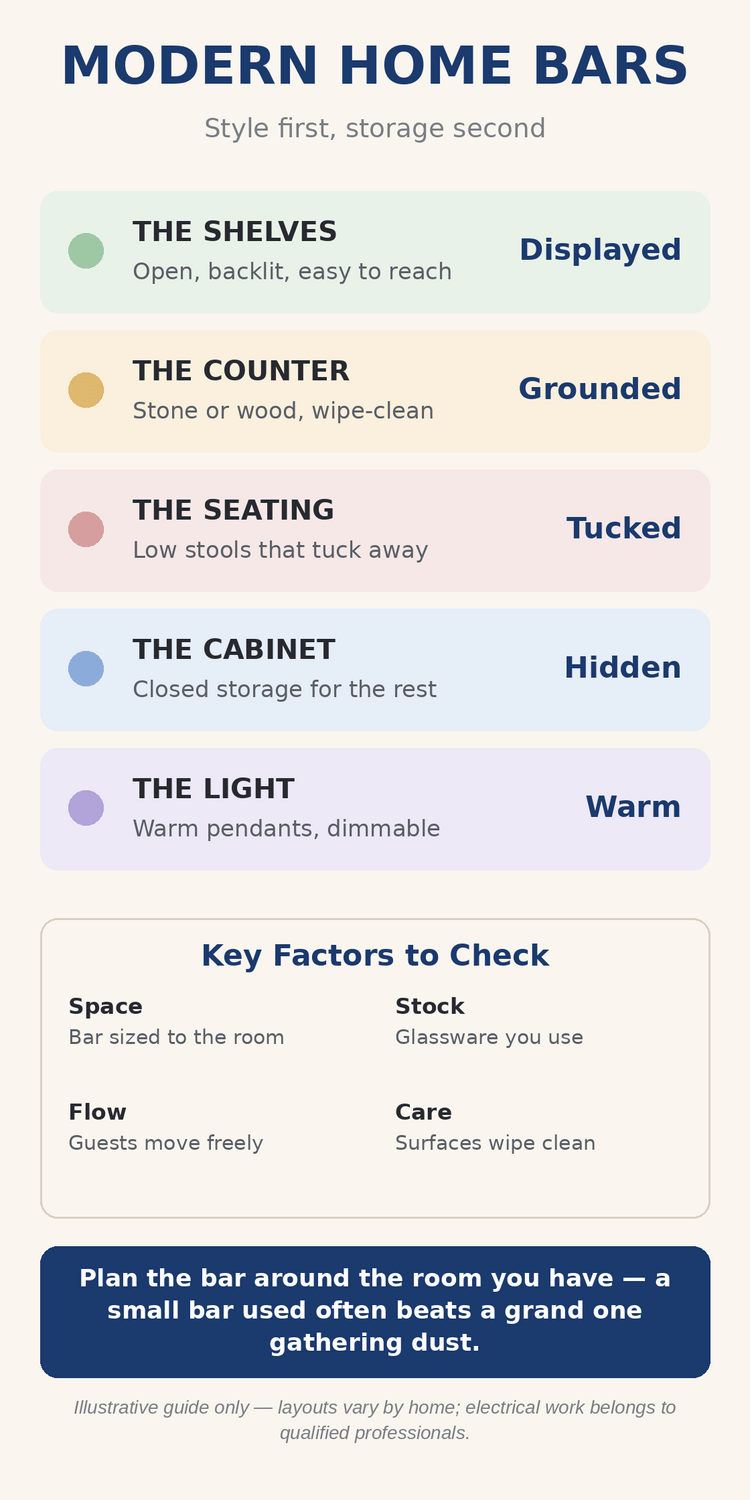
Traffic flow decides whether a layout works. A bar should sit beside the room’s main seating, not across its main walkway, so guests reach it without crossing the path to the kitchen or the door. Keep the bar clear of door swings and out of the cooking route, and leave enough open floor in front of the counter for two people to stand with glasses without blocking anyone. A bar that forces a queue across a doorway will be used less, however handsome it looks. Water matters too: a bar near the kitchen borrows its water for washing, while a bar far from water needs a tray and a plan for carrying glasses back.
2. Shelving and Display
Shelving is the bar’s face. Open shelves show the glassware. Closed cabinets hide it. The best modern bars mix both, showing a little and storing the rest.
9. Backlit Open Shelves
Backlighting turns plain shelves into a display. A warm strip light behind the shelf edge is enough; the glass does the rest.
10. Floating Wood Shelves
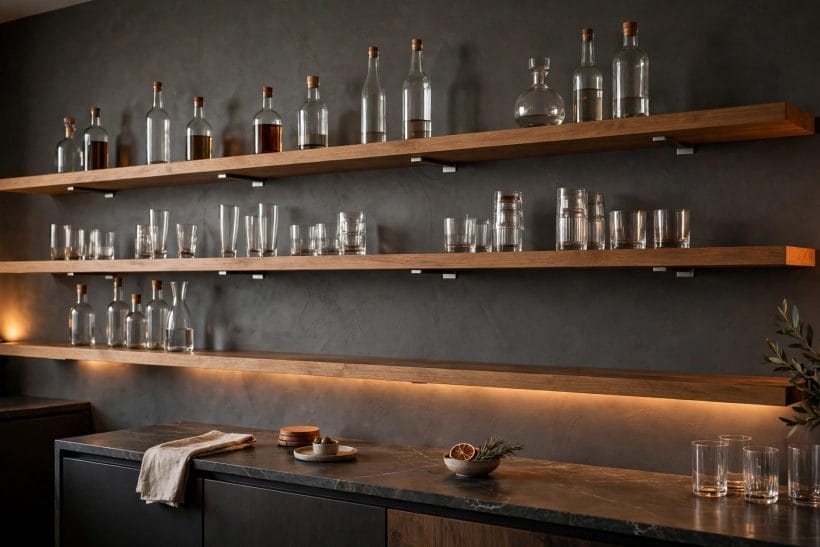
Floating shelves in a warm wood keep a modern bar from feeling cold. Two or three shelves are plenty; more becomes clutter.
11. Glass-Front Cabinets
Glass fronts protect glassware from dust while keeping it visible. They suit bars near kitchens, where cooking steam travels.
12. The Single Statement Shelf
One long shelf, well styled, can carry a whole bar wall. Choose the best glasses, leave space between them, and stop there.
13. Mirrored Splashback Shelving
A mirrored splashback doubles the light and the display. It suits small bars, where every reflection adds depth.
14. Recessed Wall Niches
Niches cut into the wall hold bottles and glasses without taking floor space. They suit modern rooms, where flat walls matter.
15. The Cellar Link
A bar that pours should know where its bottles sleep. Small wine cellar ideas cover the storage end: cool, dark, and still, while the bar itself stays bright and social.
16. Rotating Display Trays
A rotating tray on a shelf brings the back row forward. It suits deep shelves, where the back row is otherwise forgotten.
Shelving also has a weight and safety story. Glassware is heavy in a group, so shelves must be fixed into solid wall, not just plasterboard, and brackets should be rated for the load they will actually carry. A shelf that bows under glasses is a shelf that will fail, and a shelf that fails above a counter breaks more than glass. Glass shelves, where used, should be thick and properly supported, and the display should be edited so no shelf carries more than it was meant to hold. Dust is the other shelving habit: open shelves gather it, so a bar with open shelving needs a weekly wipe, or the display slowly turns grey.
3. Counters and Materials
The counter is where the bar is used, so it should be hard-wearing, wipe-clean, and at a comfortable height for standing or perching.
17. The Stone Counter
A stone counter gives a bar permanence and an easy wipe. Keep the stone sealed, and rings will not become part of the pattern.
18. The Wood Counter
Wood warms a modern bar and suits rooms with timber floors. A hard, sealed wood resists rings and knocks.
19. The Waterfall Edge
A waterfall edge, where the counter material drops down the side, makes a bar look built rather than placed. It suits island-style bars best.
20. The Brass Foot Rail
A brass foot rail adds a classic note to a modern bar and gives standing guests somewhere to rest a foot. Keep it polished or let it age; either is a choice.
21. The Concrete Counter
Cast concrete gives an industrial modern bar a solid, matte surface. Seal it well, and it will take daily use without complaint.
22. The Two-Level Counter
A two-level counter separates serving from sitting: a higher shelf for pouring, a lower counter for guests. It suits bars that host often.
23. The Fold-Down Counter
A fold-down counter flap turns a cabinet into a bar and back again. It suits small rooms, where a permanent counter would crowd the floor.
24. The Sink Question
A small sink makes a bar self-sufficient, but it needs plumbing. If plumbing is a stretch, a carafe and a tray do the same job with less commitment.
25. The Drainage Groove
A shallow groove routed near the counter edge catches drips before they reach the floor. It is a small detail that saves a mop.
Counter care decides how a bar ages. Stone needs sealing on a cycle, and a seal left too long lets rings and stains settle in. Wood needs oiling or sealing too, and it shows heat marks where hot things sit without protection. Concrete stains unless sealed, and even sealed concrete dislikes strong acids. The habit that protects every counter is the same: coasters under glasses, mats under hot things, and spills wiped when they happen, not when they are noticed. Edge profiles matter as well: a rounded edge is kinder to hips and to glasses than a sharp one, and a small overhang gives standing guests somewhere to put their knees.
Counter height is another quiet decision. A bar counter should suit the stools that serve it, so the two should be chosen together, not apart. Sit on the stool at the counter before buying either, and check that knees clear the counter’s underside and feet reach the rail or the floor. A counter that is comfortable to lean on and a stool that lets you sit comfortably are the pair that makes a bar usable for an evening, rather than a perch for a few minutes. If the bar doubles as a breakfast spot, that comfort matters even more, because mornings are longer than drinks.
4. Seating
Bar seating should invite a short stay, not a long sit. Stools that tuck away, chairs that stack, and perches that suit the counter height all work.
26. Backless Stools That Tuck Away
Backless stools slide fully under the counter, so the bar disappears when not in use. They suit small rooms and clean lines.
27. Low-Back Stools for Longer Stays
A low back gives support without blocking the view across the bar. It suits bars where guests linger over a second drink.
28. Leather Stool Seats
Leather seats wear well and wipe clean. They warm a modern bar that might otherwise feel hard and cold.
29. The Bench Seat Alternative
A bench along the bar side seats more people in less space than separate stools. It suits family rooms where the bar is also a breakfast spot.
30. Swivel Stools for Conversation
Swivel stools let guests turn between bar and room without standing. They suit island bars, where conversation moves around.
31. Counter-Height Dining Chairs
Proper chairs at counter height suit bars that double as dining spots. They are kinder to backs than stools over a long evening.
32. The Standing Ledge
A narrow standing ledge, with no seating at all, suits bars for quick drinks before dinner. It keeps the bar social without inviting a crowd to settle.
Seating comfort is about height first. Stools should let a guest sit with feet supported, either on the floor or on a foot rail, because dangling feet tire quickly. Test stools at the counter before buying, with the counter height the bar will actually have, not the height in the shop. Floor protection matters too: felt pads under stool feet save wooden floors, and a rug under the bar area catches the rest. For older guests, a stool with a back and a stable base is kinder than a backless perch, and a proper chair at counter height is kinder still. A bar that seats everyone seats more people, more often.
5. Cabinets and Hidden Bars
Not every bar wants to be seen. A hidden bar keeps the room calm and the bottles close, and it suits houses where a bar is used occasionally.
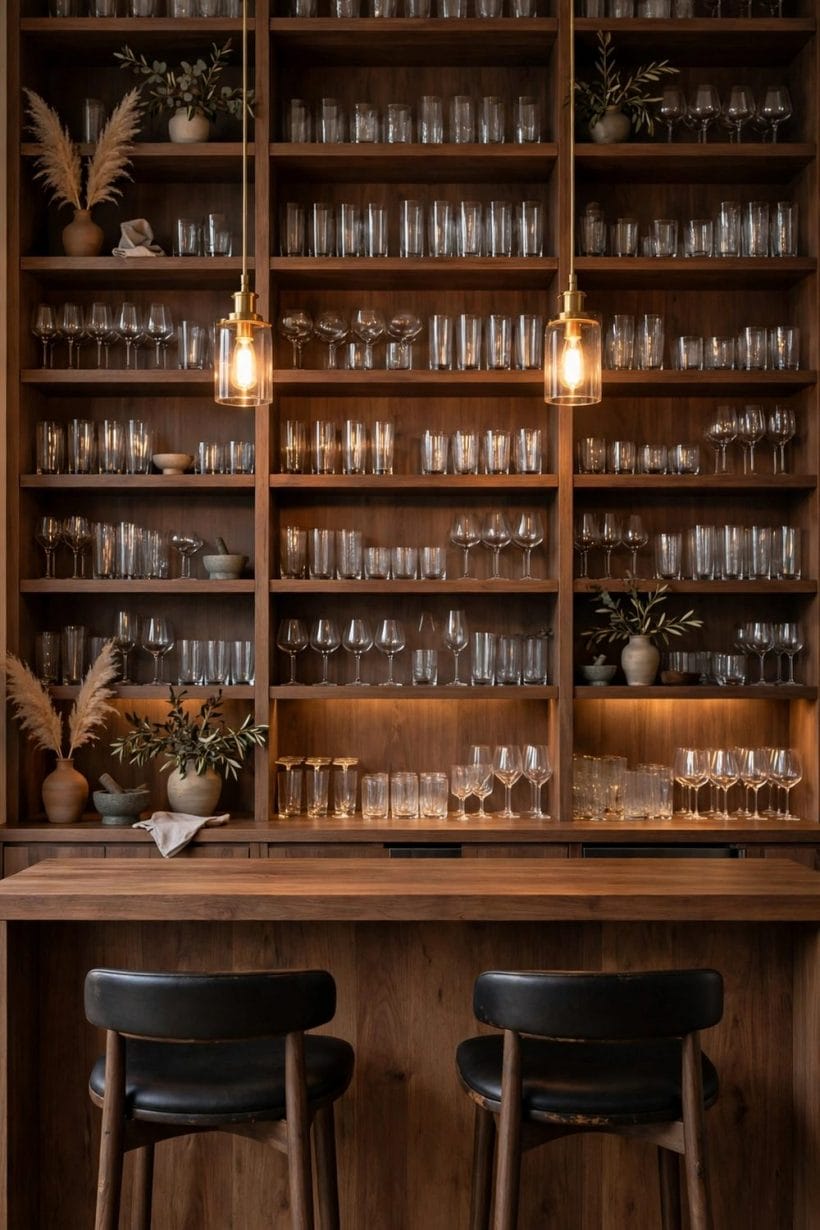
33. The Armoire Bar
A tall armoire with doors that open to shelves and a counter hides a full bar in a furniture piece. Closed, it is just a cabinet.
34. The Sideboard Bar
A sideboard with a raised back shelf and a drawer for tools makes a dining-room bar from furniture the room already owns.
35. The Sliding-Panel Bar
Sliding panels hide a bar wall behind a flat, modern face. Open, the bar appears; closed, the wall is calm again.
36. The Pantry Bar
A pantry corner fitted with a counter and glass storage becomes a bar that borrows the kitchen’s plumbing and light.
37. The Bookcase Bar
A bookcase with one shelf cleared for glassware and a tray on top makes a quiet bar in a study or library corner.
38. The Dream-Home Bar
Dream homes often hide bars inside larger entertaining rooms, where the bar is one pleasure among many rather than the room’s subject.
39. The Lockable Cabinet Bar
A lockable cabinet suits houses with children or shared spaces. The bar stays available to adults and invisible to everyone else.
40. The Under-Counter Fridge Bar
A small under-counter fridge keeps drinks cold at the bar itself, so nobody walks to the kitchen mid-conversation. Size it to the bar, not the household.
Hidden bars have their own practical needs. A cabinet bar with doors needs clearance to open fully, so the cabinet should not sit against a wall that blocks a door’s swing. An under-counter fridge needs ventilation around it, or it will work harder and die younger, and it needs a power point that is reachable without pulling the whole cabinet out. A lockable cabinet needs its key kept somewhere adults know and children do not, and a pantry bar needs the kitchen’s agreement, because it borrows space the kitchen may want back. The hidden bar’s virtue is invisibility, and invisibility only works when the practicalities are planned before the doors close.
6. Lighting
Bar lighting should be warm, low, and dimmable. Bright overhead light kills a bar’s mood; a few warm points make it.
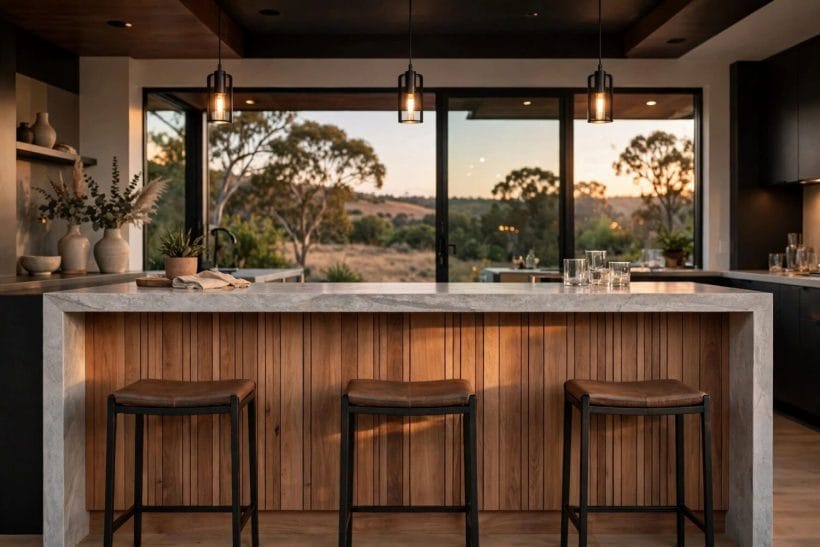
41. Pendant Lights Over the Counter
Two or three pendants over the counter give the bar its own pool of light. Hang them low enough to feel intimate, high enough to see under.
42. Shelf Strip Lighting
A strip light under each shelf lights the glassware from within the display. Warm white suits wood and brass; cool white suits stone and steel.
43. The Dimmer Rule
Every bar light should dim. A bar at full brightness feels like a shop; the same bar dimmed feels like an evening.
44. Candlelight on the Counter
A few candles on the counter add flicker that electric light cannot copy. Keep them clear of shelving and never leave them burning unattended.
45. The Backlit Mirror
A backlit mirror behind the bar doubles the light and the room. It suits narrow bars, where depth is precious.
46. Uplighting for Atmosphere
Uplights hidden on top of cabinets wash the ceiling with warmth. They suit bars in rooms with high ceilings and plain walls.
47. The Neon Accent, Used Sparingly
A single neon word or shape gives a modern bar a playful note. One accent is a joke; three is a fairground.
48. Daylight by Day, Lamplight by Night
A bar near a window should work in both lights: daylight for a morning coffee, lamplight for an evening drink. Plan both, not just one.
Lighting layers make a bar, and one light never does. Combine a pendant or two over the counter, strip light on the shelves, and a dimmer that governs both, so the bar can be bright for pouring and low for talking. Bulb warmth matters: warm light flatters wood, brass, and skin, while cool light flatters stone and steel but can feel clinical in a living room. Glare matters too: a bare bulb at eye level across a bar is a nuisance, so shades and positioning should keep light on surfaces, not in eyes. Candles add a final layer, but they need a stable surface, clear of shelving and draughts, and they should be blown out when the evening ends, not left to burn down unnoticed.
7. Small-Space Bars
Small bars need the same ideas at a smaller scale. The trick is choosing fewer pieces and letting each one work harder.
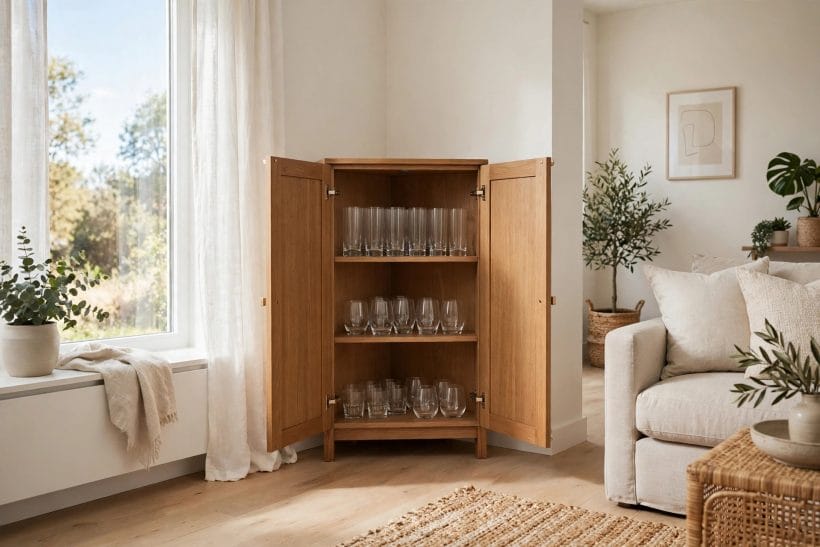
49. The Tray Bar
A tray on a sideboard, with glasses and a bottle or two, is a complete bar for a small room. Move it when the room needs the surface back.
50. The Wall-Mounted Fold-Down Bar
A wall-mounted cabinet that folds down into a counter gives a small room a bar without giving up floor space.
51. The Kitchen-Cart Bar
A kitchen cart with a top shelf for pouring and lower shelves for storage rolls where it is needed and parks where it is not.
52. The Windowsill Bar
A deep windowsill with a tray and a few glasses makes a bar for one or two, with a view included. It suits flats and small houses.
53. The Kitchen-Adjacent Bar
Kitchen ideas show bars borrowing kitchen counters and storage, which is the honest small-space answer: share, don’t duplicate.
54. The Hallway Console Bar
A narrow console table in a hallway, topped with a tray, serves as a bar for guests arriving and leaving. Keep the hallway clear around it.
55. The Balcony Rail Bar
A rail-mounted shelf on a balcony turns the railing into a bar counter for two, with the outdoors as the room. It suits flats with small balconies.
56. The Single-Shelf Bar
One shelf, a few glasses, and a bottle is a bar. Minimalism is not a compromise here; it is the modern bar at its clearest.
Small-space bars live or die by dual purpose. A tray bar is also a sideboard display. A fold-down bar is also a wall cabinet. A cart bar is also a side table. The rule is that every bar piece should earn its floor space twice, or it should be small enough not to need to. Vertical space helps: a wall shelf above a tray bar adds storage without taking floor, and a tall narrow cabinet holds more than a low wide one in the same footprint. The room’s main job comes first: a living room that cannot seat its household because a bar took the corner has its priorities backwards, however good the bar looks.
8. Bar Carts and Movable Bars
A bar on wheels goes where the party is. Carts suit houses where the bar moves between rooms, seasons, and occasions.
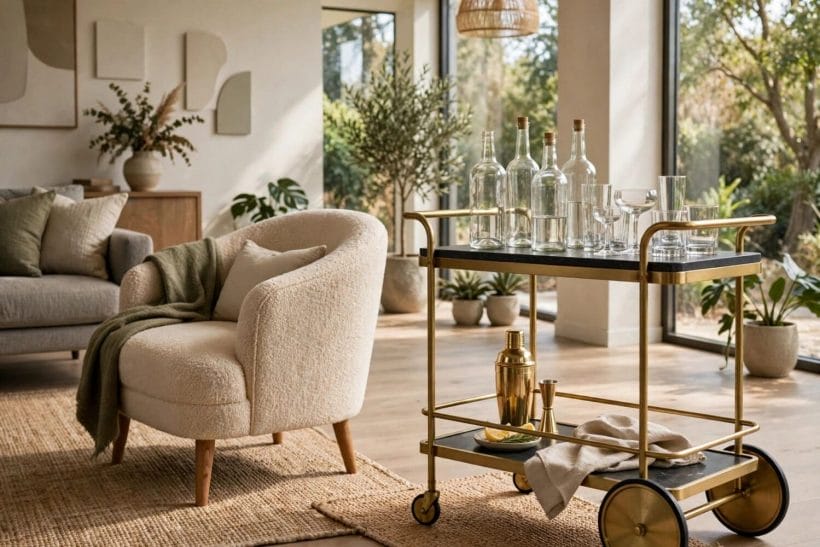
57. The Classic Two-Tier Cart
Two tiers — pouring on top, storage below — are the cart’s whole logic. Brass frames suit traditional rooms; black steel suits modern ones.
58. The Outdoor Cart
A cart with weather-resistant finishes moves between kitchen and garden. Patio furniture checks cover the outdoor half: frames, finishes, and fit for the garden it serves.
59. The Compact Round Cart
A small round cart fits corners and narrow gaps where a rectangular cart cannot turn. It carries less, and that is its discipline.
60. The Cart as Side Table
Between parties, a bar cart is a side table. A lamp or a book on top keeps it useful, so it is never just waiting for a drink.
61. The Vintage Cart, Restored
A restored vintage cart brings character a new cart cannot copy. Check its wheels and joints before trusting it with glassware.
62. The Cart With a Wine Rack
A cart with a built-in rack keeps bottles on their sides and within reach. It suits houses where wine is the bar’s main business.
63. The Serving Trolley Bar
A larger serving trolley, with a cutting board and a waste bowl, turns a bar into a food station too. It suits long evenings with food.
64. The Cart Corral
Give a cart a home: a corner, a nook, or a marked floor spot. A cart without a home drifts, and a drifting cart blocks a path.
Bar carts have a balance rule: heavy below, light above. Bottles on the lower tier keep the cart stable, while glasses on the top stay light and reachable. A cart loaded top-heavy tips when it rolls over a rug edge, and a cart without wheel locks drifts on a hard floor. Check the wheels before buying: they should roll smoothly, lock firmly, and suit the floors they will cross. A cart’s parking spot matters as much as its wheels: a corner, a nook, or a marked place where the cart lives between uses, so it never blocks a path or a door. Outdoor carts need finishes that tolerate damp and sun, and they should be brought in or covered when the weather turns.
9. Outdoor-Adjacent Bars
Bars near doors to the garden serve both rooms. They need finishes that tolerate damp air and traffic between inside and out.
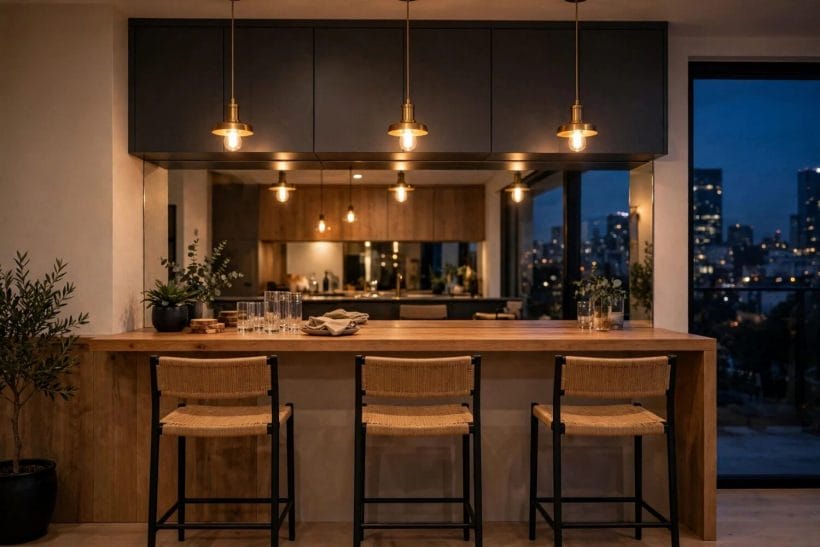
65. The Patio-Door Bar
A bar beside patio doors serves the garden without leaving the house. Guests step out with a drink and step back for another.
66. The Garden-Room Bar
A bar in a garden room or sunroom enjoys daylight and planting. Keep glassware out of direct sun, which heats bottles and fades labels.
67. The Poolside Counter
A poolside counter needs waterproof surfaces and unbreakable glasses. It is a bar for wet hands and bare feet, planned accordingly.
68. The Balcony Bar Shelf
A fixed shelf along a balcony rail gives a small outdoor bar without furniture. It suits flats where floor space is the constraint.
69. The Fire-Pit Bar
A low counter near a fire pit keeps drinks close to the evening’s centre. Keep the counter clear of the fire’s heat and sparks.
70. The Outdoor Kitchen Link
An outdoor kitchen with a bar counter merges cooking and pouring outside. The bar half should stay simple: a counter, a few stools, shade.
Outdoor-adjacent bars face weather, and weather always wins eventually. Surfaces should tolerate damp air and the odd splash, and anything fabric should be removable for washing or for winter. Shade matters: a bar in full sun heats bottles and fades labels, while a bar under a canopy stays usable through the afternoon. Wind matters too: light glasses and paper napkins blow, so heavier glasses and a lidded container for small things save chasing them across the garden. Insects are a general nuisance around sweet drinks, so keeping food covered and clearing glasses promptly is part of the outdoor bar’s routine, not an afterthought.
10. Styling and Finishing Touches
The last ideas are the smallest and the most visible. Styling is what guests notice, so it should be deliberate and light.
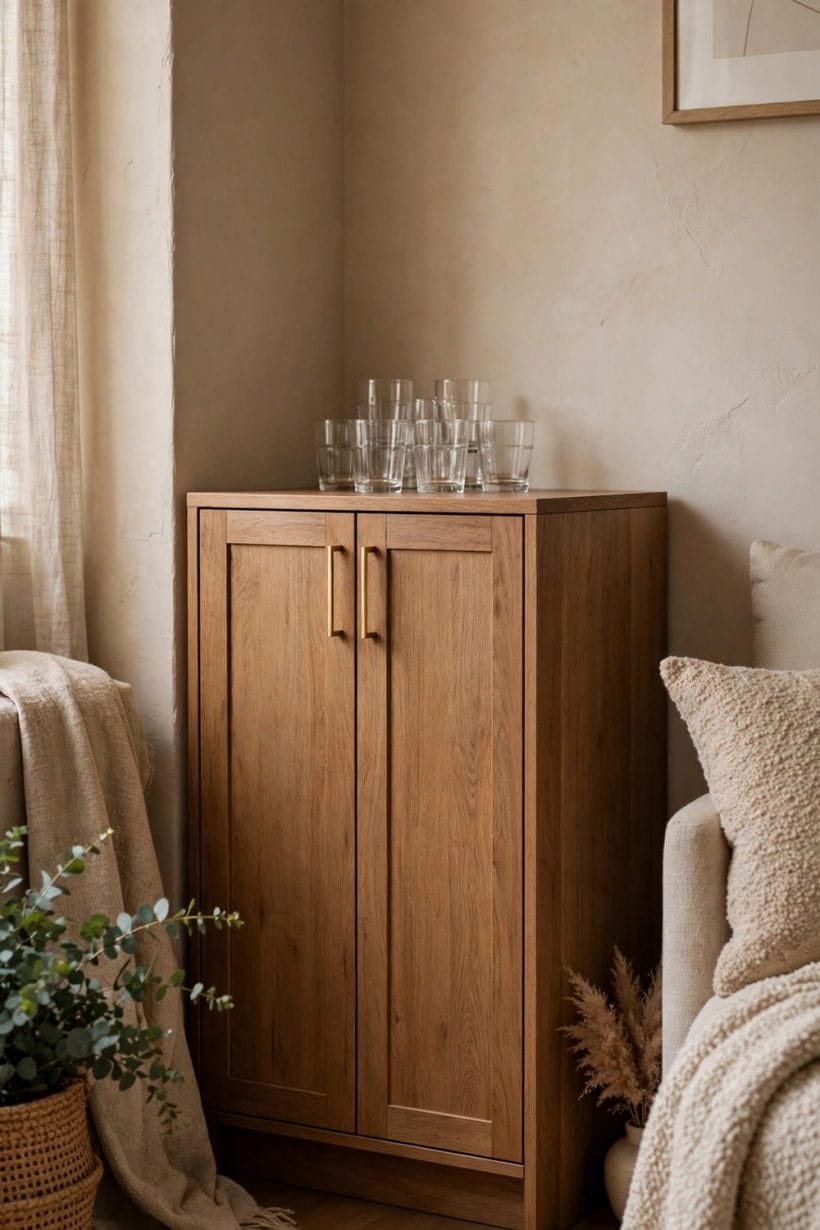
71. The Edited Glass Collection
Keep the glasses you use and store the rest. An edited collection looks better and pours faster than a crowded shelf.
72. The Single Plant
One plant on or beside the bar softens wood, stone, and steel. A trailing plant on a high shelf suits bars best.
73. The Framed Print Above
A single framed print above the bar gives the wall a subject beyond bottles. Choose something calm; the bar is lively enough.
74. The Suite Mini-Bar
Luxury master suite ideas show the bar at its smallest: a tray and a few glasses in a suite, for a quiet drink before bed.
75. The Living-Room Link
Coffee table pictures close the bar’s story, because the drink poured at the bar ends up on the coffee table, in the room where people actually sit.
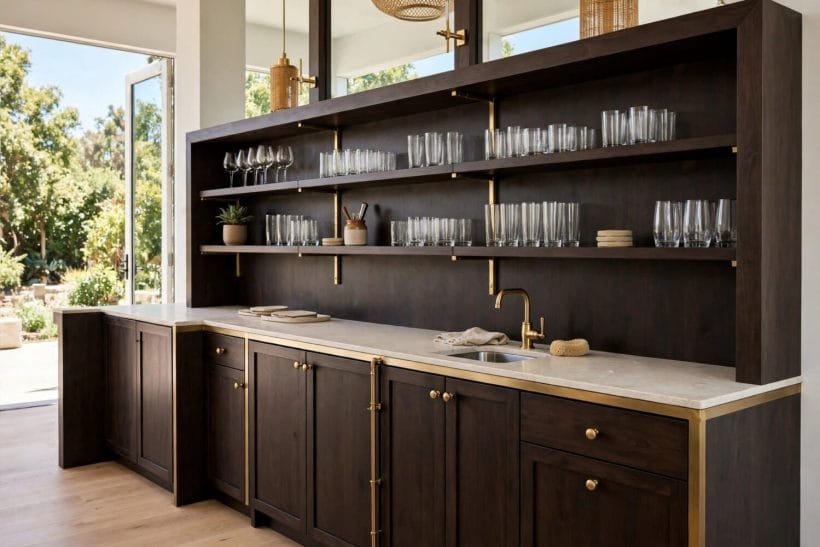
Styling should have a rhythm, not just a look. Rotate the display with the seasons: heavier glasses and darker tones in winter, lighter glasses and greenery in summer, so the bar feels current rather than staged. Personal pieces — a inherited decanter, a travel glass, a handmade tray — give a bar character that bought sets cannot, but they should be few, or the bar becomes a museum shelf. The one-in-one-out habit keeps styling honest: every new piece in means one piece out, so the bar never creeps toward clutter. A weekly tidy, glasses washed and returned, bottles faced forward, takes minutes and keeps the bar ready for a guest who drops by unannounced.
Final Considerations
Seventy-five ideas, one rule: a modern home bar should be as easy to use as it is to look at. The layout should put it where people gather. The counter should wipe clean. The seating should tuck away. The light should dim. Everything else — the cart, the cabinet, the neon word — is decoration on top of a working thing.
Start with the space you have, not the bar you imagine. A tray on a sideboard is a bar. A wall of shelving is a bar. A cart in a corner is a bar. What makes each one modern is not its size or its price, but its restraint: fewer pieces, chosen well, kept where they are used, and cleared when they are not.
Finally, a bar is a hosting habit as much as a furniture piece. Keep a small stock of what you actually serve, not what a catalogue suggests, and restock it when it runs low rather than before a party in a panic. Keep the tools you use — opener, measure, cloth — in one drawer or tray, so pouring never becomes a hunt. And keep the bar’s surroundings ready: seating pulled out, light dimmed, glasses clean. A bar that is ready in five minutes gets used weekly. A bar that needs an hour’s preparation gets used at Christmas, and a bar used only at Christmas is a cupboard with pretensions.
The bar’s upkeep is part of its design, not an afterthought. Glasses should be washed and returned after use, not left to film over. Bottles should be faced forward and checked for levels, so a guest is never offered an empty bottle. Shelves should be wiped when dust shows, not when it settles thick. These small habits take minutes and keep the bar at the standard its styling promises. A bar that is maintained looks intentional every day, while a bar that is only tidied before guests looks intentional only on those evenings.
When guests arrive, the bar should already be part of the evening, not a performance. Glasses out, bottles in reach, light low, seating pulled up — and then the host can stop tending the bar and join the room. A bar that demands constant attention from its owner is a bar that separates the host from the guests, which defeats its purpose. The best compliment a home bar can earn is to be forgotten as furniture and remembered as part of a good evening, where the drinks were easy, the seating was comfortable, and nobody noticed the bar working at all.

0 Comments