
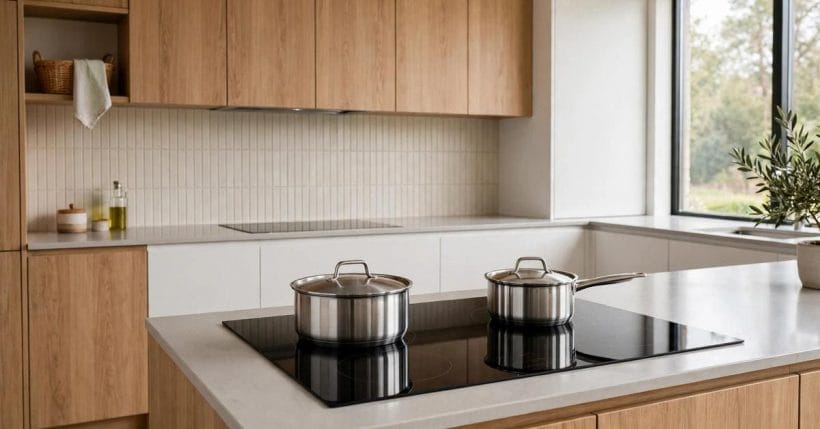
Induction cooking works differently from gas or a traditional electric ring. The hob itself does not get hot in the usual way. Instead it creates a magnetic field, and a pot with a magnetic base turns that field into heat in the pot itself. That is why the pot matters more than the hob brand, and why the same hob can cook beautifully with one pan and barely warm another.
This guide is not a ranking and names no winner. No cookware brand appears here, and no price or performance figure is quoted as fact, because both vary by model and by shop. What follows is what to check before buying: the base, the material, the size, the lids, and the care. Those five checks decide almost every induction question.
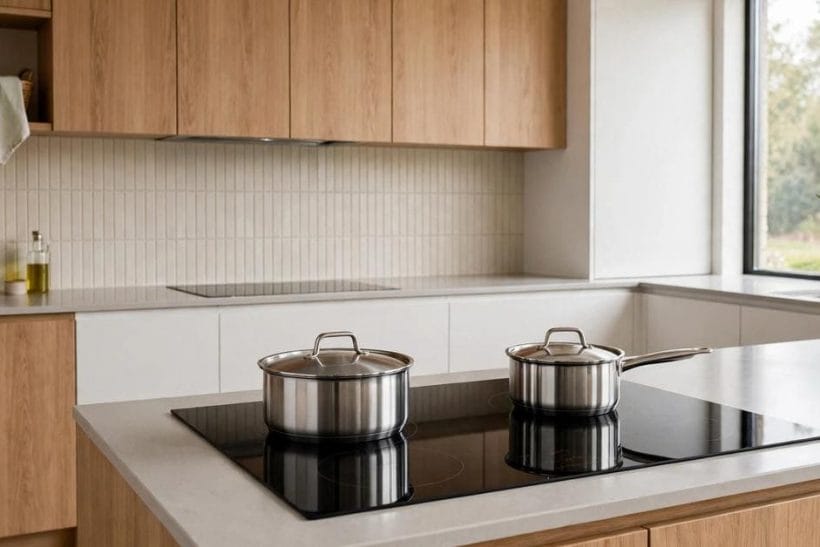
1. How Induction Decides What Works
An induction hob only heats cookware whose base is magnetic. Hold a fridge magnet to the base: if it grips firmly, the pan is very likely to work. If it slides off or barely holds, the pan will not heat properly, however good it looks. That magnet test is the single most useful check in this whole guide, and it costs nothing.
The base must also sit flat against the hob. Induction needs full contact between base and glass, so a warped or bowed base heats unevenly or not at all. Set the pan on a flat surface and check for rocking before buying. A pan that rocks on a shop counter will rock on the hob too.
Kitchen ideas show induction hobs inside full kitchen plans, which helps when the question is not which pan, but how the hob sits in the room as a whole.

Before buying anything, test what you already own. Gather every pan in the cupboard, run a fridge magnet across each base, and set the magnetic ones aside. Many kitchens already hold more induction-suitable pans than their owners expect, and the magnet test turns a shopping trip into a short list. Keep a magnet in a kitchen drawer afterwards, so every future pan gets the same test before it reaches the hob.
2. The Base Comes First
Everything about induction starts at the base. A flat, magnetic base that covers the cooking zone well gives even heat and a fast response. A base that is too small for the zone heats a narrow patch. A base that is warped leaves cold spots. A base that is not magnetic leaves nothing at all.
Some pans carry a base made for induction: a magnetic layer bonded to the bottom. Others are magnetic through and through, like cast iron. Both approaches work, as long as the magnet grips and the base sits flat. The construction label matters less than those two physical checks.
When a pan already owns a home in your kitchen, test it before replacing it. Many stainless steel pans are magnetic, and many are not, and the difference is invisible from the outside. The magnet test settles it in seconds.
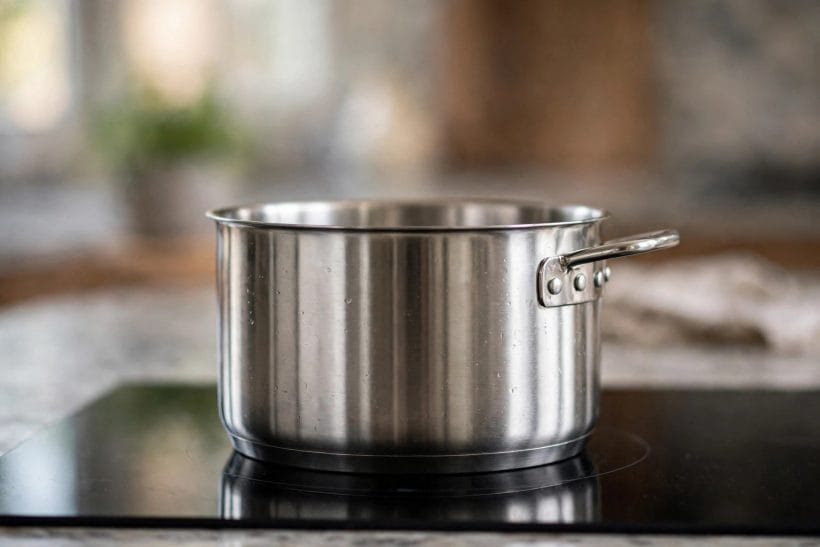
Base thickness also matters, in general terms. A very thin base heats fast and cools fast, which suits quick jobs but can scorch delicate sauces. A thicker base spreads heat more evenly and forgives a moment’s inattention. Neither is better for every dish, which is why a kitchen benefits from a mix: thin for boiling, thick for simmering, and both tested flat and magnetic before they earn a place.
3. Materials, Stated Generally
Stainless steel is the most common induction-suitable material, and it varies. Some stainless pans are magnetic and some are not, depending on the steel used. The magnet test, again, is the decider, not the word “stainless” on a label.
Cast iron works on induction because iron is magnetic. It is heavy, it holds heat well, and it needs care against rust. Enamelled cast iron gives the same magnetic benefit with a coating that is easier to live with. Both are slower to heat and slower to cool than thin steel, which suits slow cooking and suits fast stir-frying less.
Aluminium and copper on their own are not magnetic, so a plain aluminium or copper pan will not work on induction. Pans made for induction sometimes bond a magnetic base to an aluminium or copper body, and those work if the base grips a magnet and sits flat. The body material then matters for weight and handling, not for whether the hob responds.
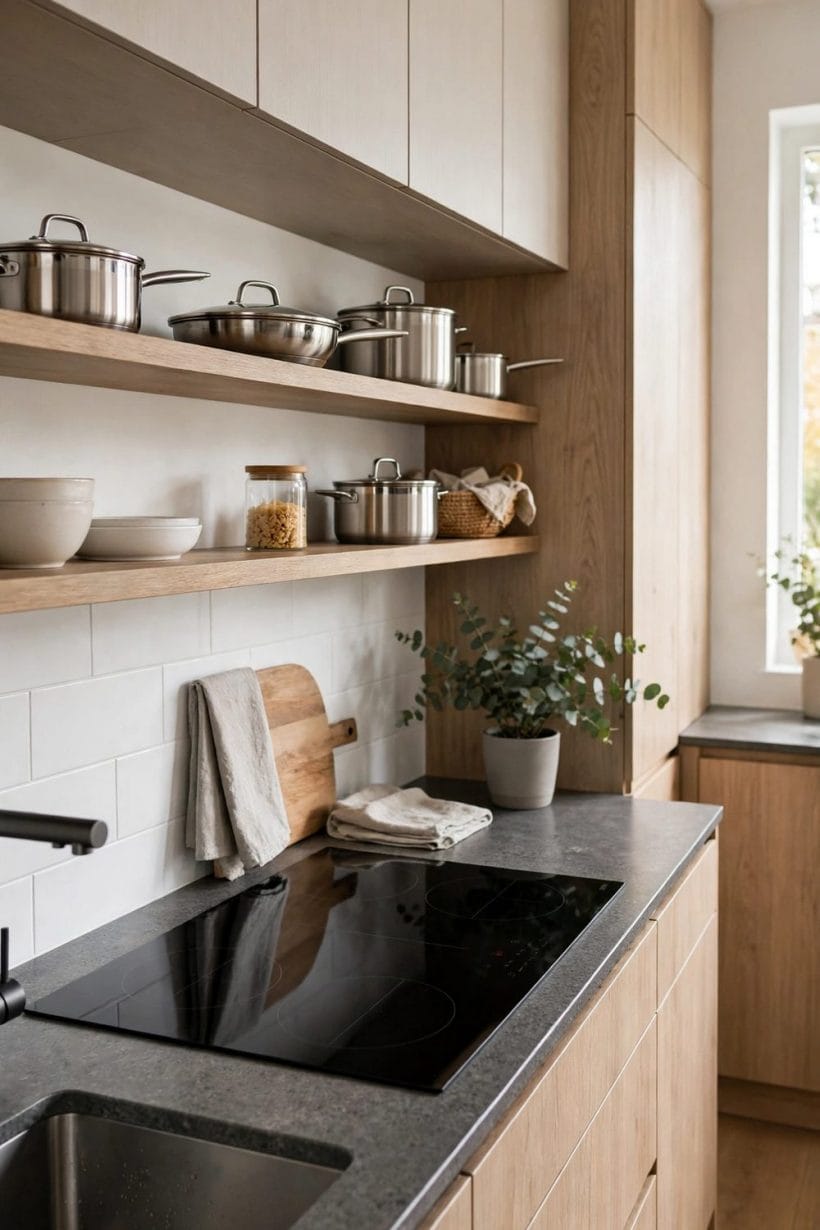
Non-stick pans follow the same rules as everything else on induction. A non-stick pan only works if its base is magnetic, and the coating itself adds a care rule: gentle tools, no overheating while empty, and no harsh scouring. A non-stick pan treated that way lasts; one scraped with metal tools or heated empty does not, whatever it cost. The base decides whether it heats, and the coating decides how long it keeps working.
4. Size Against the Cooking Zone
Each cooking zone on an induction hob has a size, and the pan should match it reasonably well. A pan much smaller than its zone heats a small patch and wastes the rest. A pan much larger than its zone heats unevenly at the edges. Neither is dangerous; both are disappointing.
Match the pans you use most to the zones you use most. A daily saucepan should fit a daily zone. A large stockpot can live on the largest zone. If the hob has a flexible zone that joins two rings, that flexibility suits an oblong pan, but the same flat-and-magnetic rules still apply.
White cabinets and dark floors show kitchen finishes around hobs and worktops, which is the other half of the size question: the kitchen should look coherent, not just cook well.
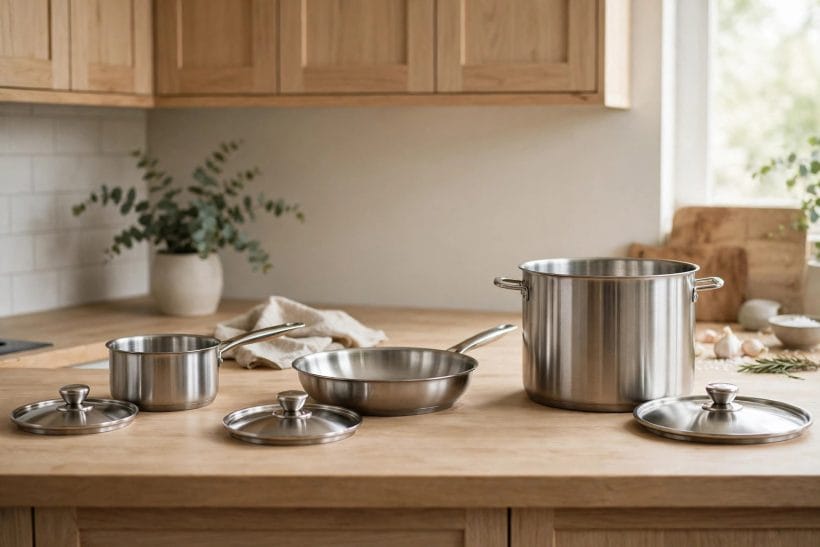
Hob markings help with size matching. Most induction hobs print rings or zones on the glass, and the pan should sit sensibly within its ring. A pan far smaller than its ring may not register at all on some hobs, which is the hob’s way of saying the match is wrong, not a fault. If a pan will not register, try it on a smaller zone before concluding the pan is unsuitable.
5. Lids, Handles and Weight
Lids matter more than they get credit for. A tight lid keeps heat and moisture in, which shortens cooking and keeps the hob cleaner. A glass lid lets you see without lifting. A solid lid lasts longer and stacks better. Either is fine, as long as the lid fits the pan it belongs to and does not rattle loose.
Handles should stay cool enough to hold and feel secure in the hand. A handle that twists, or that sits over another zone’s heat, is a daily annoyance. Lift the pan by its handle in the shop, with the lid on, and judge the balance. A pan that feels nose-heavy empty will feel worse full.
Weight is a genuine trade-off. Heavy pans hold heat steadily. Light pans are easier to lift and pour. Neither is better in the abstract; the right weight is the one the cook in your house can handle comfortably, full, at arm’s length, over a hot hob.
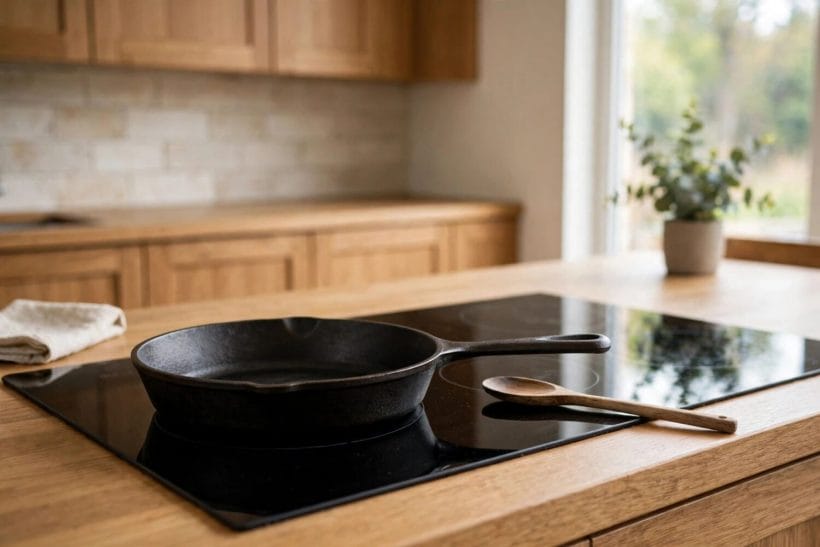
Test a lid the way you test a pan. Set it on, lift it by its knob, and check it sits flat without rocking. A lid that rocks lets steam escape and rattles while cooking. A knob that gets hot defeats the lid’s purpose, since it cannot be lifted safely. Glass lids have the advantage of visibility, and solid lids have the advantage of durability; either is fine, as long as it fits and lifts comfortably.
6. Sets Against Singles
A set gives matching sizes and a single storage story, and it suits a kitchen starting from scratch. Singles suit a kitchen that already has most of what it needs, or a cook who knows exactly which pan is missing. Neither approach is wiser; the waste comes from buying a set and using two pieces of it.
If buying a set, check every piece with the magnet test, not just the first pan. Sets sometimes mix magnetic and non-magnetic pieces, and a single non-magnetic pan in a set is a pan that will never heat. If buying singles, buy the pan for the dish it will cook most, and let the rest of the cupboard stay as it is.
Small wine cellar ideas show the storage half of kitchen planning: cool storage sits beside hot cooking, and both deserve the same check-first habit.
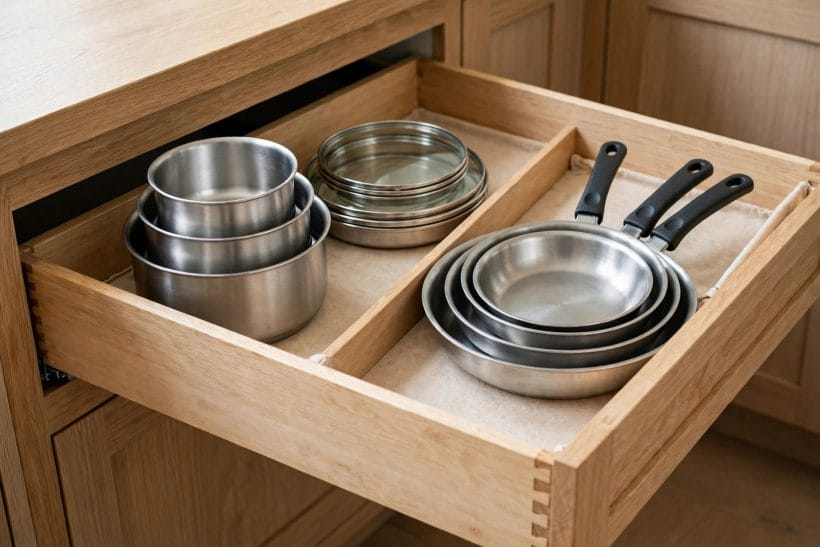
A set also brings a storage question. Every piece needs a home that is reachable without unstacking three others, or the least-used pieces will never be reached at all. Before buying a set, look at the cupboard or drawer it will live in, and check the set fits it. A set that fits the shop display but not the kitchen cupboard is a set that will live on top of the fridge.
7. Care and Cleaning
Induction hobs are easy to wipe because spills do not bake onto a hot ring the way they do on other hobs. The glass still needs care: wipe it cool, not hot, and keep grit off the surface, because grit under a pan can mark the glass over time. A soft cloth and a little patience beat any aggressive scrub.
Pans need the care their material asks for. Stainless steel tolerates a normal wash. Cast iron wants drying promptly and a light oiling habit. Non-stick coatings, where fitted, want gentle tools and no overheating when empty. The maker’s care guidance for the specific pan is the rule, not a general habit carried over from another pan.
Storage protects both pans and hob. Stacking without scratching means lids apart or protected, and bases kept clean so grit does not travel to the glass. A drawer with dividers, or a rail with hooks, beats a tall stack where the bottom pan is never reached.
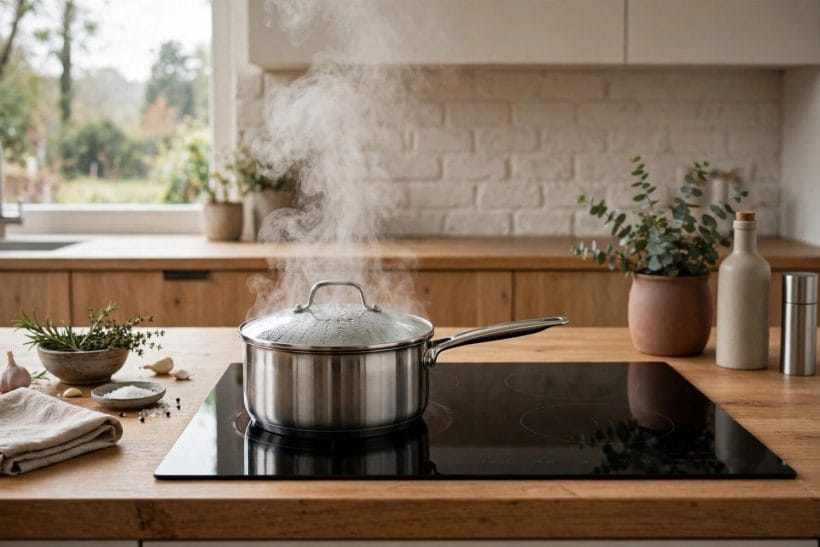
Hob cleaning has one rule above all: wipe spills promptly, following the hob maker’s guidance. Sugary spills left to cool can bond to glass and become hard to remove, while ordinary spills wipe away easily when fresh. A soft cloth, used often, keeps the glass clear, and a dedicated hob cleaner used as directed handles the rest. Never use a tool the maker warns against, however tempting a stubborn mark looks.
8. What Induction Changes in Cooking
Induction responds fast. Turn the control down and the heat in the pan drops quickly, much faster than a heavy electric ring cooling. That responsiveness suits sauces and simmering, where small adjustments matter. It also means a pan left empty on a high setting heats fast, so the habit of heating a pan before adding food needs less time than on other hobs.
The hob surface stays cooler than other hob types, because the heat is made in the pan. That makes wiping easier and makes the kitchen more comfortable in summer. It does not make the hob safe to touch casually: the glass above a hot pan is still hot from the pan, and a pan fresh from cooking is hot wherever it sits.
Patio furniture checks borrow the same check-first habit for outdoor cooking spaces, where the questions are about weather and fit rather than magnetism, but the method is the same.
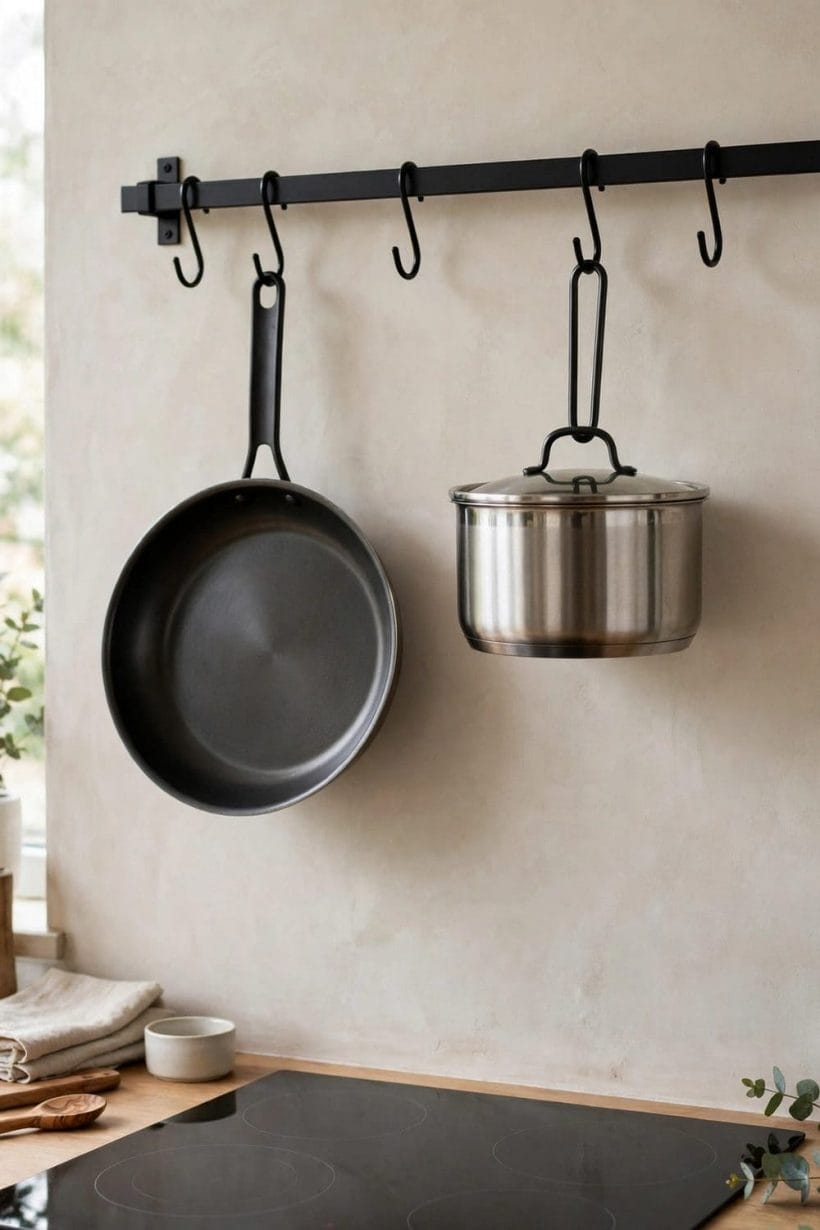
Cooking on induction asks for a small adjustment in habit. Heat arrives fast, so a pan left on a high setting reaches temperature sooner than on other hobs, and a sauce that simmers gently elsewhere may boil over if the setting is not turned down. The adjustment is quick to learn: start lower than you think, watch the first minutes, and let the hob’s responsiveness work for you rather than against you.
9. Common Mistakes, Avoided Cheaply
The most common mistake is buying before testing. A pan that looks right and is not magnetic is a decoration, not cookware. Test with a magnet, in the shop or at home before the return window closes, and keep the receipt until the pan has cooked a real meal.
The second mistake is size. A beautiful stockpot that overhangs its zone will heat unevenly and frustrate every soup. A tiny milk pan on a large zone wastes energy and heats patchily. Match pan to zone, and let the zones you have shape the pans you buy.
The third mistake is assuming all steel is equal. It is not. Two pans that look identical can differ in magnetism, and only the magnet tells them apart. Test every pan, even in a set, even from a maker whose last pan worked.
The return window is part of the buying method, not an afterthought. Buy from a seller whose return terms you understand, keep the packaging until the pan has cooked a real meal, and test every piece in the first days. A pan that fails the magnet test or rocks on the hob should go back promptly, with the receipt and the packaging intact. A pan kept past the window out of politeness is a pan kept forever.
10. A Sensible Buying Order
Start with the pan you use most. Test what you already own, and replace only what fails the magnet test or rocks on the hob. Then buy the missing piece for the dish you cook most: a saucepan for sauces, a frying pan for searing, a stockpot for soups. Let the rest of the cupboard earn its replacement one pan at a time.
When a set tempts you, run the whole set through the magnet test and the flatness check before the return window closes. When a single pan tempts you, check its size against your most-used zone and its handle in your hand. Those checks take minutes and save the cost of a pan that never cooks.
Coffee table pictures close the loop from kitchen to table: the food the pans cook ends up served in the room next door, and that room deserves the same calm attention.
When buying for someone else, the magnet test is a kindness. A gifted pan that does not work on the recipient’s hob is a well-meant disappointment, so test before gifting, or give a voucher and let the recipient choose. For a wedding or a new-home list, magnetic, flat, and zone-matched are the three words to write beside every pan, and they will serve the recipient better than any brand name.
Final Considerations
Induction cookware is not a brand decision. It is a physics decision with a kitchen habit attached. A flat, magnetic base that fits its zone will cook well whatever name is on the box, and a non-magnetic or warped base will not, whatever it cost. The magnet test, the flatness check, and the size match are the whole method, and they fit in a pocket.
Buy the pan for the dish, test it before the window closes, and let the cupboard grow one good pan at a time. The hob will do the rest, quietly, without flame, and without fuss. Dream homes show kitchens where that quiet competence sits at the heart of the house, which is exactly where it belongs.




0 Comments