

A modern gate is the calmest kind of first impression: clean lines, honest materials and nothing added that the entry does not need. Flat steel, horizontal slats and smooth aluminium do the work, and the house behind stays the picture.
These seventy-five ideas stay firmly in that contemporary lane, from driveway pairs to slim pedestrian entries, with colour, layout, movement and everyday practical details in general terms throughout.
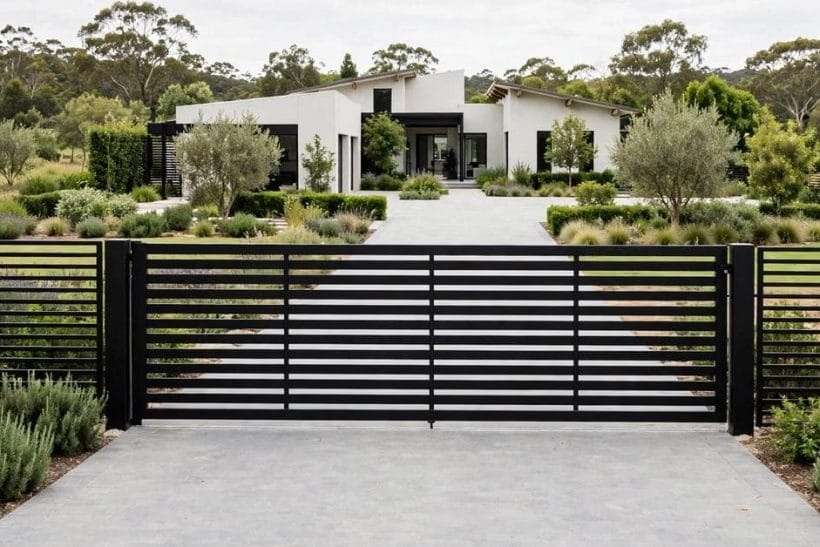
1. Modern Gate Ideas at a Glance
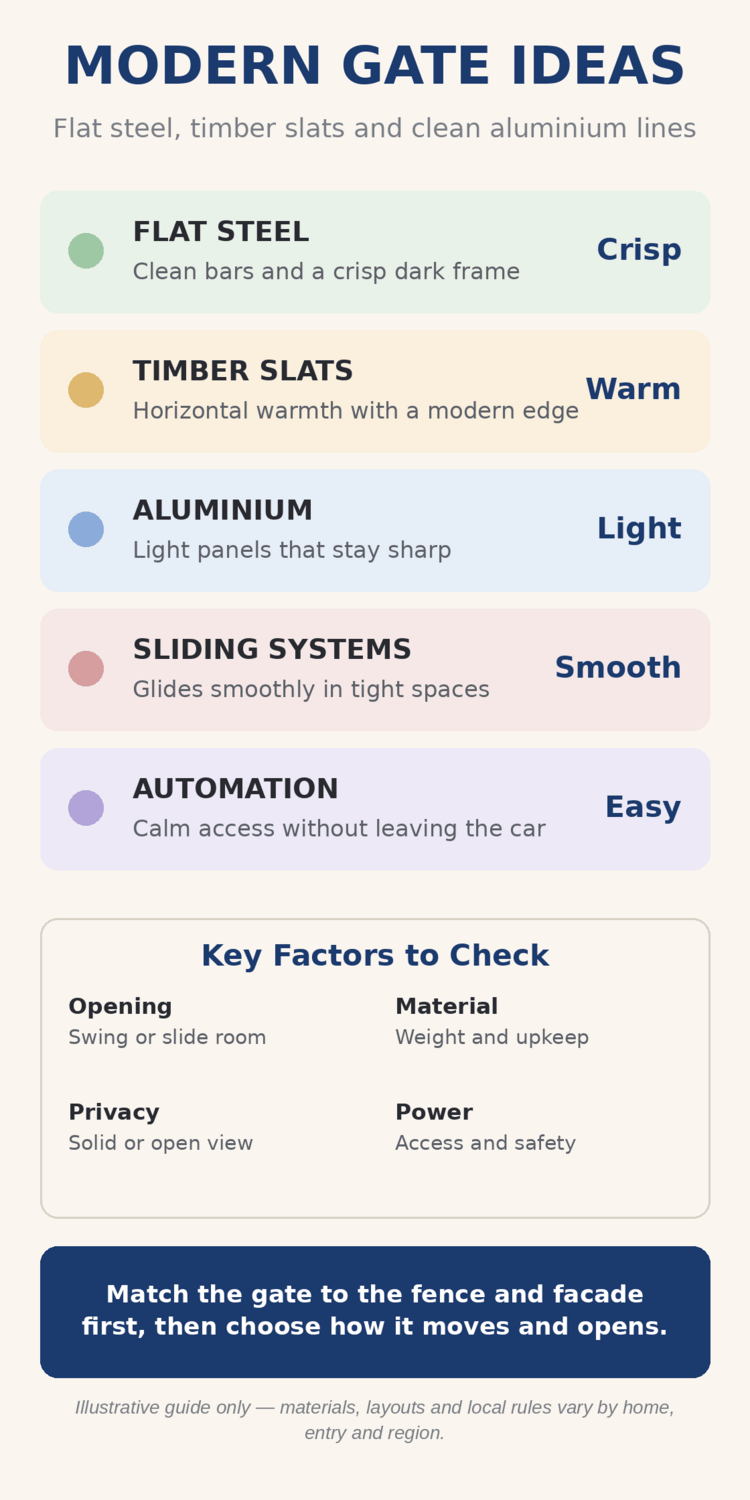
A modern gate belongs to one of five families: flat steel, timber slats, aluminium panels, sliding systems and calm automation. Choose the family first, then the colour and the movement, and the entry reads as one designed piece rather than an afterthought fitted to a gap.
For the wider family in full, start with gate ideas, the general pillar this post sits under; everything here narrows that ground to the modern styles, materials and clean-lined details only.
| Family | Character | What it means |
|---|---|---|
| Flat Steel | Clean bars and a crisp dark frame | Crisp |
| Timber Slats | Horizontal warmth with a modern edge | Warm |
| Aluminium | Light panels that stay sharp | Light |
| Sliding Systems | Glides smoothly in tight spaces | Smooth |
| Automation | Calm access without leaving the car | Easy |
Scope, so the lanes stay clear: general gate ideas belong to the pillar linked above, traditional wrought iron belongs elsewhere on the site, and garden-scale timber gates are a separate conversation entirely. This post does not re-teach gates in general; it stays with contemporary flat steel, horizontal slats, aluminium, clean-lined timber and automation in general terms. For the companion design language in more depth, see modern gate design, which covers the underlying design thinking this collection applies.
Costs are handled in general terms only throughout: material weight, panel size, movement type and automation all shift what a gate costs, and honest comparison means weighing those drivers rather than chasing a headline figure. The sections that follow move from steel and timber through aluminium, movement and colour to privacy, pedestrian entries, automation and the layouts that suit wide, narrow and sloping ground.
2. Flat Steel and Clean Lines
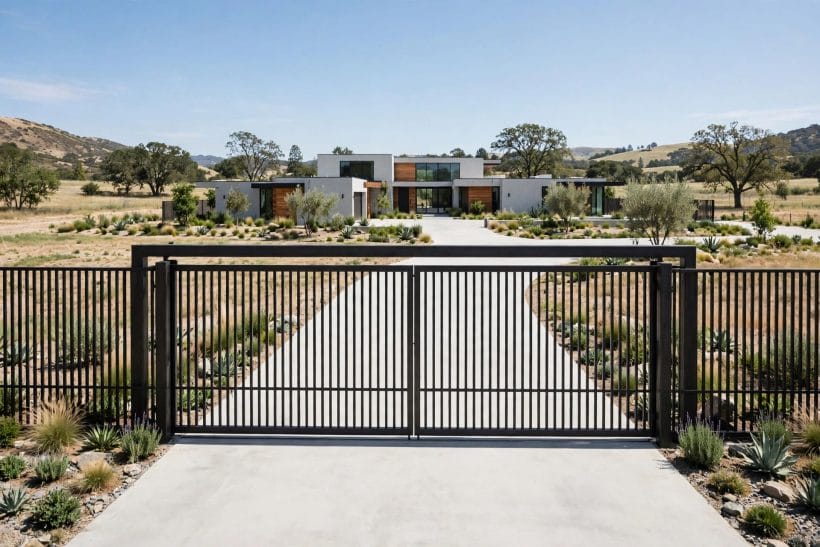
Flat steel is the backbone of the modern look: strong, slim and happy left plain. Paired with the drive it crosses, it sets a crisp tone, and driveway ideas shows the surfaces that sit best beneath it.
1. A Flat-Bar Steel Driveway Pair
Two flat-bar steel leaves meeting cleanly at the centre give a broad entry its calm, symmetrical face. Keep the bars evenly spaced and the frame square, and the gate reads as architecture rather than barrier.
2. A Matte Dark Steel Frame
A matte dark finish takes the shine off steel and lets the lines speak. It hides daily dust well, frames planting beautifully and pairs with almost any facade colour.
3. Vertical Bars with a Level Top
Vertical bars under one level top rail are the simplest modern statement there is. The level line keeps the street face tidy, while the spacing decides how open the view stays.
4. A Wide Steel Gate for a Broad Entry
A broad opening needs a gate with enough presence to hold it. Wider frame sections, calm spacing and a strong centre meeting keep a large steel pair from looking stretched.
5. A Steel Frame with a Fine Mesh Infill
Fine mesh inside a slim steel frame softens the modern look without losing its edge. From the street the gate reads almost solid, yet light and air still pass through gently.
6. A Low Steel Gate for a Short Frontage
Where the frontage is shallow, a lower steel gate keeps the house open to the street while still marking the line clearly. Keep the pattern simple and the top level, and the small gate looks deliberate.
7. Twin Steel Gates Meeting Cleanly
The centre meeting is where a pair of gates shows its quality. Aligned bars, an even gap and hardware that sits quietly make the closed face read as one panel.
8. A Steel Gate Kept Plain, With No Extra Trim
Plain is a decision, not a lack of one. A steel gate with no added trim, no scrolls and no fuss lets proportion do all the talking. It ages gracefully, suits new and older houses alike, and never fights the planting or the facade for attention.
3. Horizontal Slats and Timber Warmth
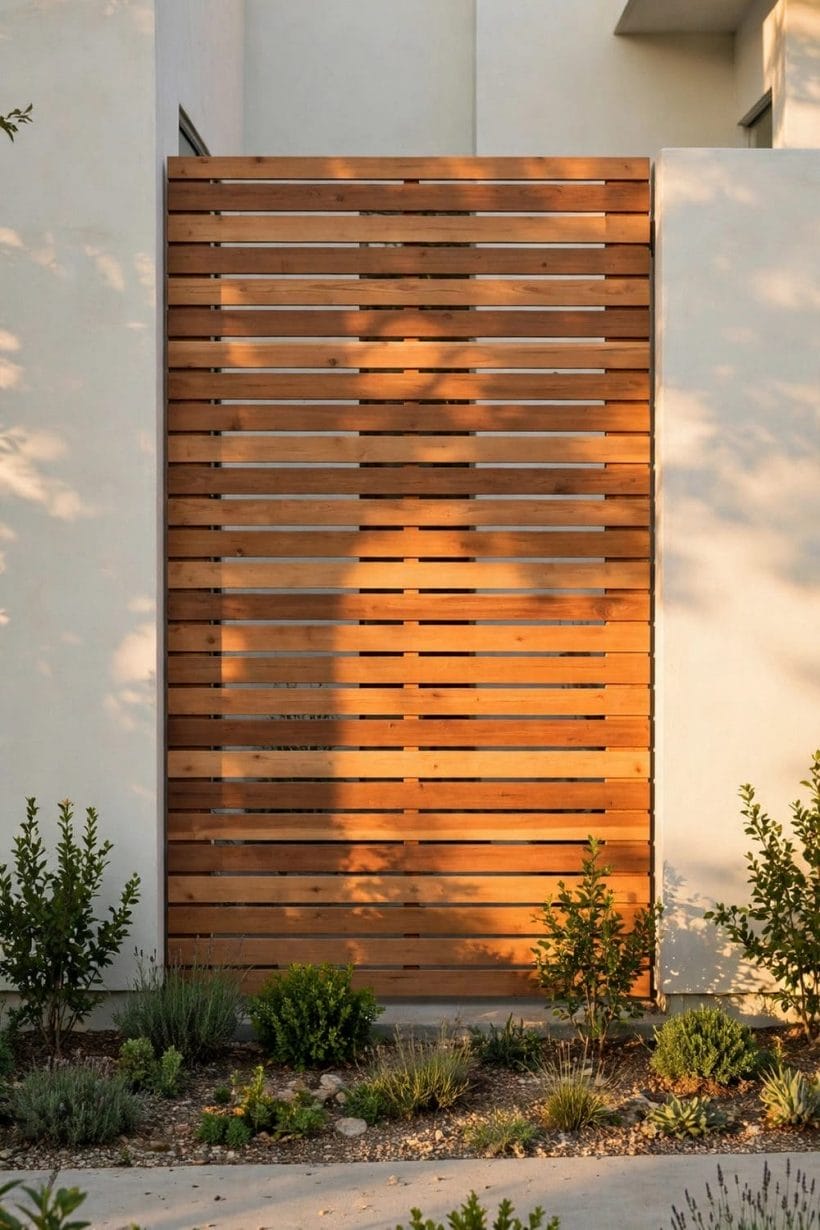
Horizontal slats bring warmth to the modern lane: the lines stay contemporary, but the material softens everything it touches. Timber, or a timber-toned finish, works especially well where the house itself is pale, plain or strongly geometric.
9. Horizontal Timber Slats with Narrow Gaps
Narrow gaps between horizontal timber slats give screening with a breath of light through it. The rhythm of the lines draws the eye along the frontage and makes a modest entry feel wider.
10. Wide Timber Boards in a Dark Stain
Wide boards stained dark read as rich, quiet panels from the street. The broad faces show the grain softly and pair well with pale walls and green planting. A dark stain needs refreshing over time, so choose this look with its upkeep happily accepted.
11. Pale Timber Slats for a Light Facade
Pale timber against a light facade keeps the entry bright and relaxed. The slats add shadow lines that stop a plain wall from feeling blank, without introducing a heavy colour.
12. Timber Slats over a Dark Backing
Slats fixed over a dark backing panel give warmth at the front and privacy behind it. The shadow gap between slat and backing adds depth that a flat panel cannot match.
13. A Slatted Gate that Follows the Fence Line
When gate and fence share the same slat rhythm, the whole frontage becomes one continuous line. The gate almost disappears when closed, which keeps the street face serene. Hinges and handles need care here, placed so the pattern is barely interrupted.
14. Timber Slats in a Slim Steel Frame
A slim dark steel frame holding timber slats combines the strengths of both materials. The frame keeps wide panels true and square, while the timber keeps the face warm.
15. Angled Slats for Soft Screening
Slats set at a gentle angle filter views rather than blocking them outright. Passers-by catch light and shadow instead of the garden, and the gate gains a subtle texture.
16. Warm Timber for a Minimal White House
A plain white house can feel stark at the street; a warm timber gate is the kindest correction. The natural tone gives the entry a heartbeat while the horizontal lines keep it modern.
4. Aluminium and Lightweight Panels
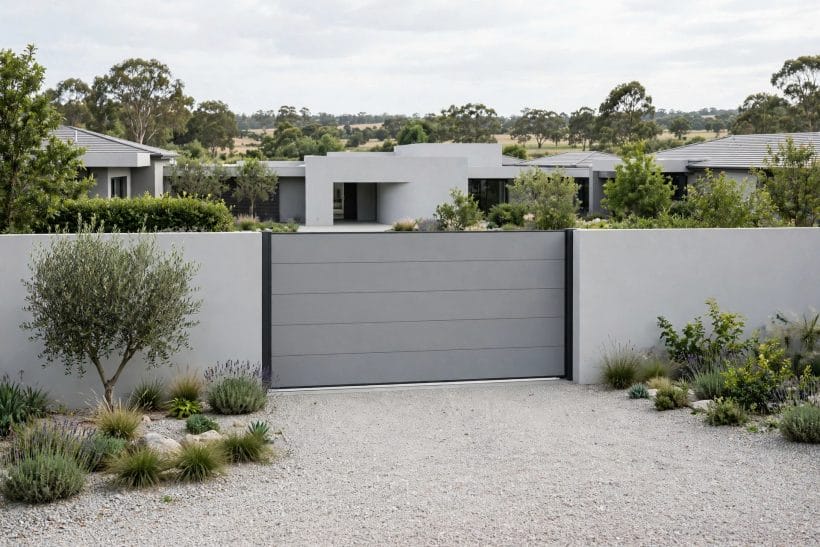
Aluminium is the practical modern choice: light to move, calm to look at and easy to live with. Flat panels, slats and perforated sheets in this material hold a sharp line year after year with very little asked in return.
17. A Flat Aluminium Panel Gate
One flat aluminium panel is modern design at its most honest. The surface is smooth, the edges are crisp and the colour carries the whole effect. It suits houses that already speak in panels and planes, and it wipes clean with almost no effort.
18. Aluminium Slats with a Smooth Powder Finish
Aluminium slats in a smooth powder finish give the slatted look without timber upkeep. The colour stays even, the lines stay straight and rain simply runs off. Choose the gap width for the balance of view and screening the entry needs most.
19. A Perforated Aluminium Sheet Gate
Perforated aluminium screens while it sparkles faintly in changing light. The pattern of small openings keeps the face interesting at close range and calm from a distance. It is a strong choice where privacy matters but a solid panel would darken the entry.
20. A Louvred Aluminium Gate for Air and Shade
Louvred blades tilt the balance toward air and dappled shade. The gate screens the view at street level while letting breezes pass, which keeps a small front garden fresher.
21. Aluminium in a Soft Grey Tone
Soft grey aluminium is the quiet diplomat of gate colours. It sits happily beside stone, render, timber and brick, and it never shouts over the planting. For a frontage with several materials already present, grey is often the tone that unifies them.
22. A Tall Aluminium Gate for a Narrow Entry
A narrow entry gains presence from height rather than width. A tall, light aluminium gate keeps the proportions elegant and is still easy to swing or slide. Keep the design plain so the extra height feels calm rather than imposing at the pavement.
23. Aluminium Framing with Frosted Infill Panels
Frosted infill panels inside an aluminium frame borrow light without giving away the view. The glow softens the gate at dusk and keeps the garden private behind it. It is a refined answer for overlooked entries that still want a bright, open feeling.
24. A Two-Tone Aluminium Gate
Two calm tones, one on the frame and one on the infill, give a flat gate quiet depth. Keep the pairing close in character, such as charcoal with soft grey, so the effect stays modern.
5. Sliding, Swinging and Space-Smart Movement
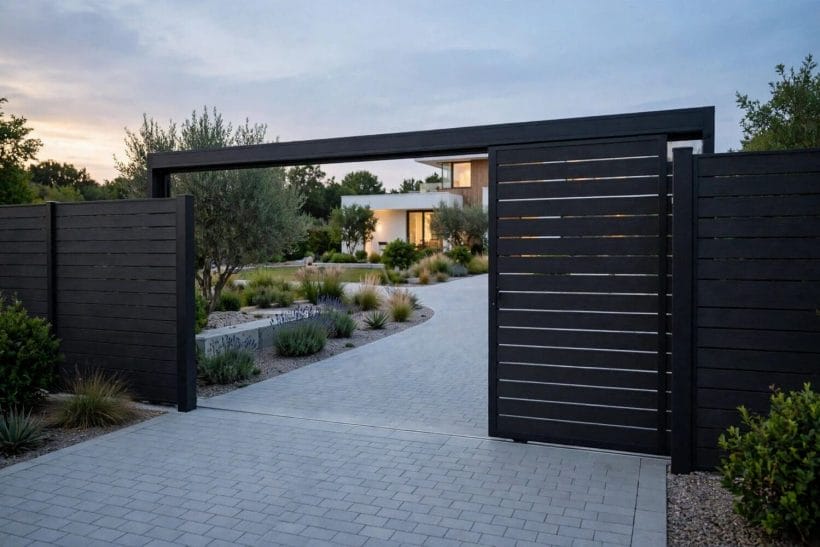
How a gate moves shapes daily life more than how it looks. Sliding suits short or sloping drives, swinging suits open ground, and the right choice makes every arrival and departure feel effortless rather than negotiated with the layout.
25. A Sliding Gate Along the Boundary
A sliding gate travels sideways along the boundary and asks for nothing from the drive itself. Cars can wait close, the opening stays clear and the movement looks calm and deliberate.
26. A Single Swing Gate for a Compact Drive
One swinging leaf is the simplest answer for a compact entry. It is easy to hang, easy to automate later and easy to use by hand every day. Make sure the swing arc stays clear of parked cars, bins and planting before committing.
27. Double Swing Gates for a Formal Arrival
A pair of swinging gates opening inward gives an arrival a small sense of ceremony. The symmetry suits wider, level drives and houses with a composed facade. Keep both leaves balanced and well hung so the pair closes to one clean line.
28. A Track-Free Sliding Gate
A sliding gate carried from a side post, with no track crossing the drive, keeps the surface clean and unbroken. Leaves and gravel stay where they belong, and nothing catches a wheel.
29. A Gate that Parks Behind the Fence
The neatest sliding gates disappear completely behind the fence when open. The entry then reads as open ground with no gate in sight, which keeps a small frontage feeling generous.
30. Split Sliding Gates Meeting in the Middle
Two sliding leaves meeting in the middle suit very wide openings where one panel would be cumbersome. Each leaf travels a shorter distance, and the closed face stays symmetrical.
31. A Gentle Self-Closing Entry Gate
A pedestrian gate that closes itself, gently, is a small daily kindness. Children, pets and post are all safer for it, and the gate never stands forgotten and open.
32. A Sliding Look on a Swinging Gate
Where sliding is impossible, a swinging gate can still borrow the sliding look. Long horizontal panels, a low frame line and minimal visible hardware give the same streamlined face.
6. Colour, Finish and Frontage Harmony
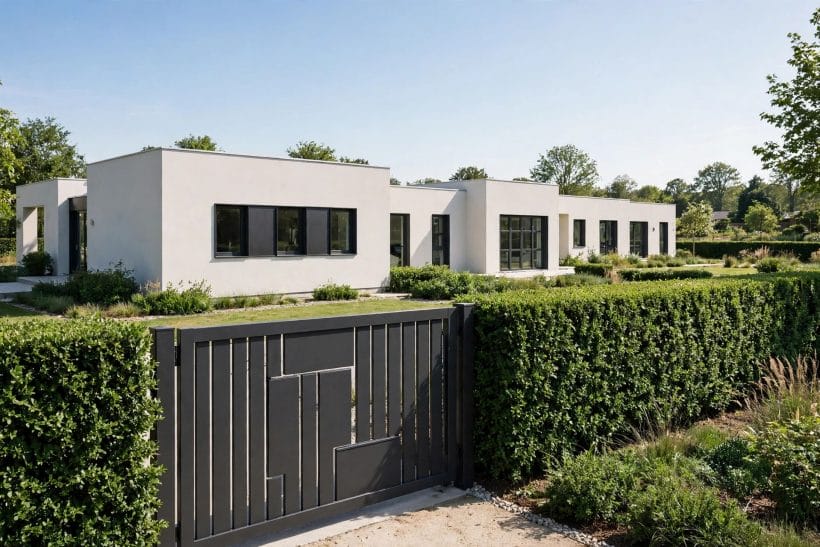
Colour is where a modern gate either joins the house or argues with it. The calmest entries repeat a tone already present in the facade, frames or planting, and let finish and texture carry the interest instead of contrast.
33. A Charcoal Gate Against Pale Render
Charcoal against pale render is the modern pairing that rarely fails. The dark gate grounds the light wall, sharpens every line and makes green planting look richer. It also hides the marks of daily use better than any pale finish can.
34. A Crisp White Gate for a Bright Facade
A white gate on a bright facade keeps the entry feeling open and coastal in spirit. The trick is matching the white to the house trim so nothing looks slightly off.
35. A Deep Green Gate with Planting in Front
Deep green lets a gate half-vanish into planting while still reading as designed. Hedges, grasses and shrubs in front soften its base and blur the boundary kindly. It is the colour for gardeners who want the gate present but never the headline.
36. Natural Timber Left to Weather Softly
Timber left untreated weathers to a soft silver-grey that many modern schemes quietly rely on. The change is gradual and even, and it suits coastal and rural frontages especially.
37. A Gate Colour Matched to the Front Door
Repeating the front door colour at the gate ties the whole approach together. A visitor reads the pairing at once, and the path between the two feels intentional. Keep the finishes similar in sheen so the match reads as one decision.
38. A Gate Colour Matched to the Window Frames
Window frames offer a ready-made colour story for the gate. Echoing their tone makes the gate feel built with the house rather than added to it. This works with dark frames on pale walls and with pale frames on darker cladding alike.
39. A Warm Bronze-Toned Finish
A warm bronze tone brings quiet richness to flat metal without any ornament. It flatters warm brick, timber cladding and autumn planting, and it changes gently with the light.
40. Two Finishes on Frame and Infill
A matte frame with a slightly smoother infill, in the same colour, adds depth that flat single finishes lack. The difference shows in raking light and rewards a closer look.
41. A Finish Chosen for Low Upkeep
The best finish is the one the household will actually maintain. Smooth powder-coated metal asks for a wash now and then; natural timber asks for acceptance or oil. Decide honestly at the start and the gate keeps its looks with no resentment attached.
7. Privacy, Screening and Perforated Metal
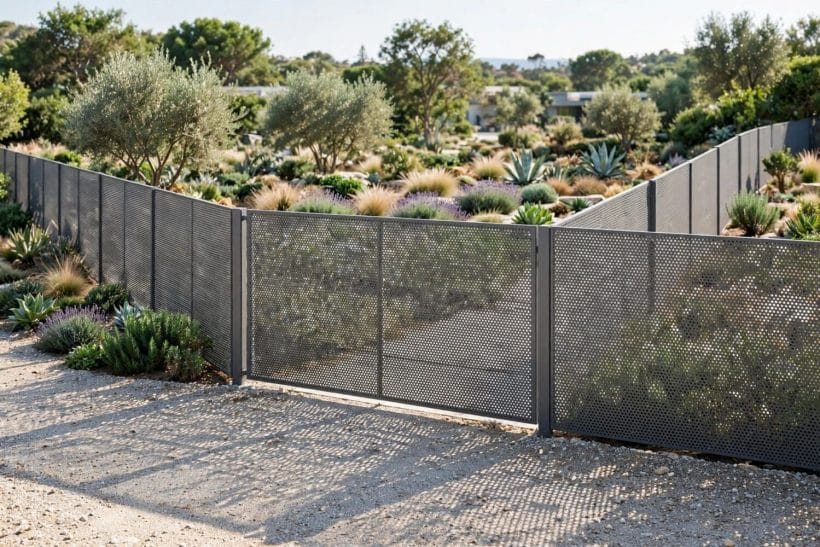
Privacy at the gate is a balance: enough screening to feel at ease, enough light to stay welcoming. The fence thinking behind it sits in modern fence ideas and privacy fence ideas; here the gate itself carries that balance.
42. A Solid Panel Gate for Full Screening
A solid modern panel gives complete screening with one calm, unbroken face. It suits busy streets and overlooked gardens where openness is not a luxury available. Keep the panel well framed so its size feels composed, and soften its base with planting inside.
43. A Perforated Metal Gate that Filters Light
Perforated metal is privacy with a pulse: the pattern blocks a clear view while letting light pattern the ground behind it. From the street the gate looks solid enough; from inside, the garden stays bright.
44. A High Gate with a Level, Calm Line
Height brings privacy, and a level top line keeps that height polite. A tall gate with a straight, quiet profile screens without looming over the pavement. Pair it with fencing of the same height and line so the whole boundary agrees.
45. Layered Screening with Planting Behind
A semi-open gate with planting layered behind it screens more softly than any solid panel. Leaves fill the gaps in the view, movement keeps it alive and the entry stays green.
46. Gate and Fence as One Continuous Screen
When the gate continues the fence material, height and line exactly, the boundary becomes one serene screen. The opening is found by its handle rather than by a change of design.
47. Slats Set Close for a Quiet Street Face
Closely set slats give near-solid screening while keeping the texture that flat panels lack. Tiny shadow gaps keep the face from feeling blank and let a whisper of air through.
48. Frosted Panels for a Side Entry
A side entry gate with frosted panels guards the working side of the house without darkening it. Bins, bikes and storage stay hidden, while borrowed light keeps the passage pleasant.
49. A Privacy Gate that Still Lets Breeze Through
Louvres and angled slats prove privacy and breeze are not enemies. The view is blocked at standing eye level while air moves freely, which matters in sheltered, sun-trap gardens.
8. Pedestrian Gates and Porch Entries
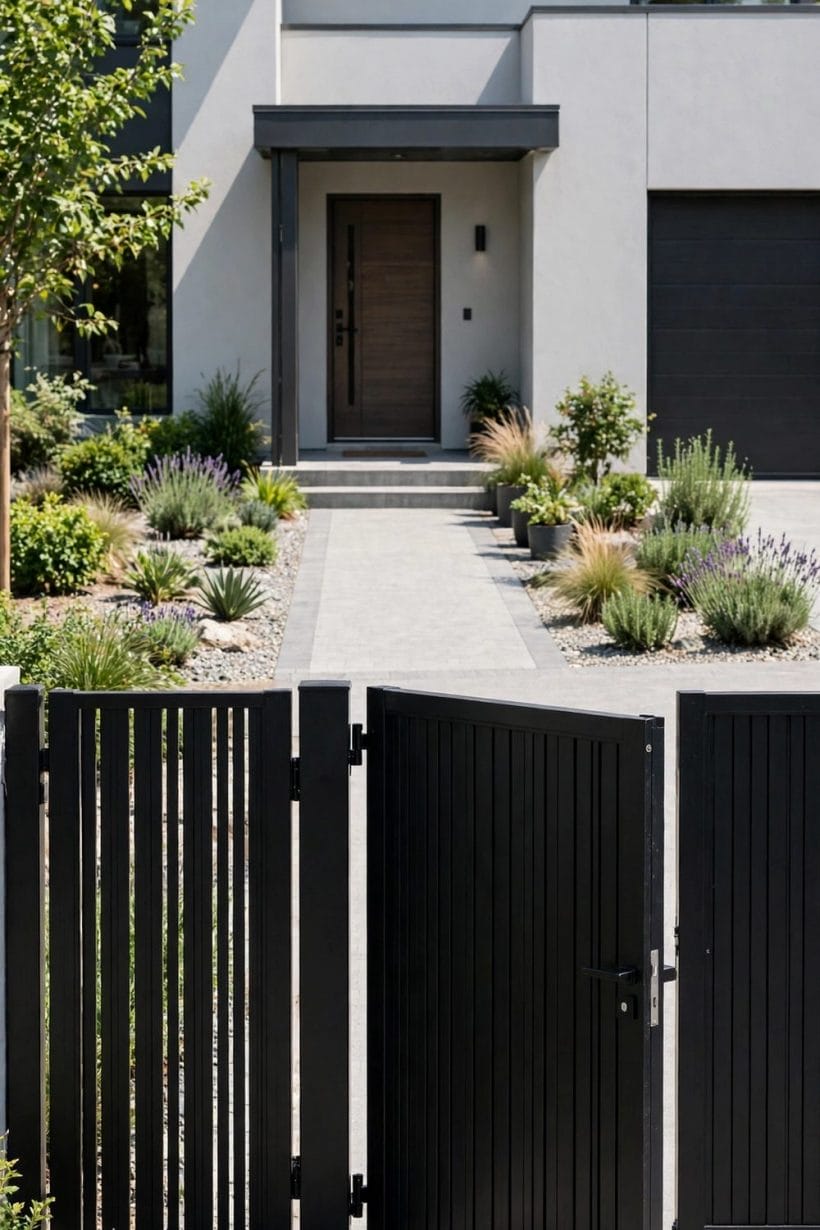
Most days, the pedestrian gate is the one actually used, so it deserves the same design care as its larger partner. Its natural partner indoors-out is the entry it leads to, and front porch ideas covers that welcome in depth.
50. A Slim Pedestrian Gate Beside the Drive Gate
A slim pedestrian gate in the same material as the drive gate makes daily coming and going easy. Post, parcels and prams pass without opening the big leaves. Matching the two keeps the frontage composed, however often the small gate is used.
51. A Front-Path Gate in Matching Slats
The gate on the front path is the handshake of the house, met at close range. Matching its slats to the main gate keeps that handshake consistent with the street face.
52. A Pedestrian Gate with a Simple Lever Handle
A plain lever handle suits the modern gate better than any ornate latch. It works with shopping in both arms, gloves in winter and children in a hurry. Choose a finish that echoes the frame so the hardware reads as part of the design.
53. A Low Pedestrian Gate that Keeps the View
A lower pedestrian gate marks the boundary without interrupting the view of the house. It suits frontages where the garden itself is part of the street picture. Keep its pattern identical to the taller fencing nearby so the change of height looks planned.
54. A Pedestrian Gate Framed by Planting
Planting gathered at the pedestrian gate turns a daily passage into a small pleasure. Scented leaves near the handle, soft grasses at the base and one small tree nearby do the work.
55. A Side Entry Gate in Flat Steel
A flat steel side gate brings the same clean language to the passage between houses. It is strong, private and entirely unbothered by weather against a wall. Matching its colour to the front gates makes the whole property feel considered from every angle.
56. A Gate Opening onto a Small Porch Landing
Where the path meets a porch, the gate and landing should be planned as one arrival. Aligned lines, a level threshold and room to pause with bags make the sequence feel easy.
57. Drive and Entry Gates Bought as a Set
Choosing the drive gate and pedestrian gate together, in one material and finish, settles every question of matching at once. The pair arrives with the same lines, the same colour and the same hardware family.
9. Automation, Access and Daily Ease
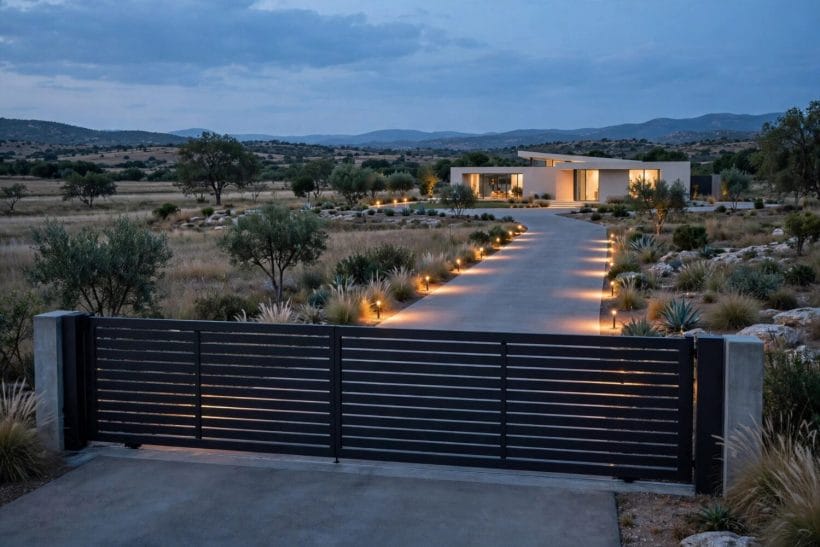
Automation in general terms is about ease, not gadgets: a gate that opens as you arrive and closes safely behind you. Planned from the start, it stays invisible in the design and simply removes a daily friction.
58. An Automated Swing Gate for Daily Arrivals
Automating a swing gate turns a wet-weather chore into a pause and a glide. The leaves open as the car approaches and close quietly behind it. Planned with the layout from the start, the working parts stay discreet and the face stays clean.
59. An Automated Sliding Gate for a Busy Household
A sliding gate on automation suits households coming and going all day. The movement is steady, the opening is complete and no swing arc needs guarding. It pairs naturally with a short drive, where a swinging leaf would always feel in the way.
60. Remote Access Kept Deliberately Simple
The calmest access systems are the simplest: a remote in the car, a control in the hall and nothing more to learn. Guests and family all manage without instruction. Resist extra features that nobody requested; ease is the entire point of automating a gate.
61. A Keypad Entry on a Clean Post
A keypad on a slim, matching post gives regular visitors and deliveries a way in without keys changing hands. Set the post at a comfortable height from a car window and from the path.
62. An Intercom Post Set into the Pier
An intercom set into a gate pier keeps conversation with callers private and the hardware protected. The pier gives the entry a sense of arrival that a lone post cannot.
63. Sensor Lighting that Greets an Arrival
Lighting that wakes as the gate opens makes evening arrivals feel easy and safe. A soft wash along the path and a gentle light at the latch are usually enough.
64. A Manual Release Planned from the Start
Every automated gate needs a calm plan for the day power fails. A simple manual release, known to the household and easy to reach, turns a potential drama into a minute of effort.
65. A Quiet Opening for Early Starts
Households that leave early learn to value a quiet gate. Smooth movement, well kept hinges and a gentle motor pace keep departures considerate of sleeping neighbours. Quiet is a quality worth weighing alongside speed when the system is chosen.
66. Easy Access for Deliveries and Guests
A gate system earns its keep on the days guests and deliveries arrive. A caller button at a natural pausing place, a clear view of the house and an opening wide enough for comfort make visits easy.
10. Layouts for Wide, Narrow and Sloping Entries
Layout is the last decision and the first one to get right: opening width, ground slope and waiting space shape everything else. For the grandest version of the wide layout, circular driveway ideas shows the arrival such gates serve.
67. A Wide Double Gate for a Sweeping Arrival
A sweeping arrival deserves a wide double gate that opens the full view of the house. Symmetry, generous leaves and a level top line give the moment its calm ceremony.
68. A Narrow Entry with a Single Sliding Panel
One sliding panel is the narrow entry solved elegantly. It takes no swing room, opens the full width and keeps the street face uncluttered. A plain panel or calm slats suit the tight proportions best, with hardware kept as quiet as possible.
69. A Sloping Drive with a Level-Top Gate
On a slope, a gate with a level top and a shaped bottom edge keeps the design tidy. The closed face reads straight and calm while the lower edge follows the ground closely.
70. A Corner Entry Gate Angled to the Street
Corner plots often meet the street at an angle, and the gate should embrace that geometry. An angled gate line with matching angled fencing turns an awkward plot shape into a deliberate design.
71. A Gate Set Back for a Safer Pause
Setting the gate back a little gives arriving cars a safe place to pause off the road while it opens. That small apron of space changes the whole feeling of arrival from rushed to calm.
72. A Folding Gate for a Short Drive
Where a short drive leaves no room to swing or slide, a folding gate concertinas neatly to one side. The panels stack compactly and the full width still opens for cars.
73. Split Levels Handled with Stepped Fencing
Where the boundary steps down a slope, let the gate stay level and the fencing step beside it. The gate keeps its calm horizontal line while the steps absorb the change of ground.
74. A Gate Aligned with the Garage Face
Aligning the gate line with the garage face creates one clean architectural plane across the plot. Cars pass from street to garage in a single straight, unhurried movement. Matching the gate tone to the garage door completes the sense of one designed frontage.
75. A Measure-Twice Layout for the Whole Entry
The final idea is a habit: measure the opening, the swing or slide run, the slope and the waiting space before choosing anything. A layout proven on paper first makes every later decision easier.
Final Considerations
A modern gate succeeds when its family, colour and movement were chosen together, for the actual opening, slope and household that will use it every day. Flat steel, timber slats and aluminium each bring a different calm; none needs ornament to earn its place at the street.
Start with the layout, match the gate to the fence and facade, and keep the details plain and well made. Do that, and the gate stops being a barrier at the boundary and becomes what it should be: the quiet, confident first line of the house itself.

0 Comments