

The best-dressed room in the house is the one nobody visits: a small room where every shirt can be seen, reached and put back with one hand, in the dark, half asleep.
These 75 walk-in closet ideas plan that room properly: layout first, then rails, drawers, accessories, light and finishes, with small-space versions kept honest at the end.
1. Walk-In Closet Ideas at a Glance
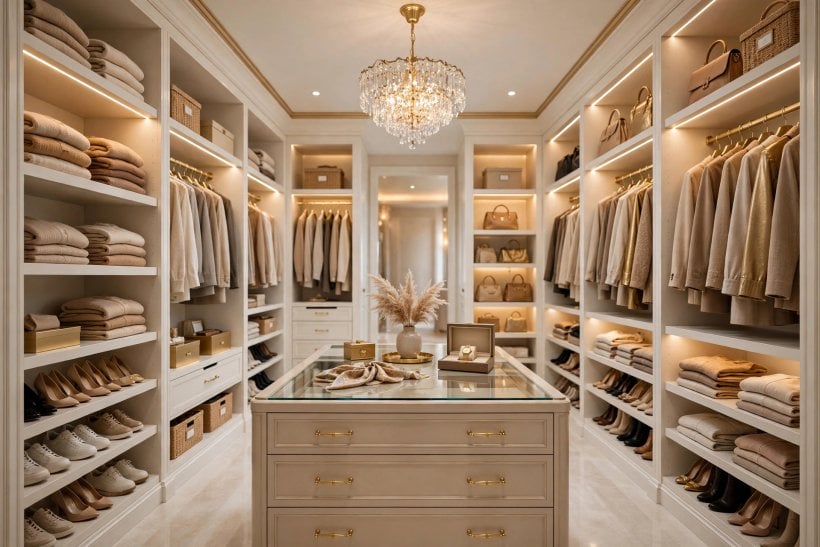
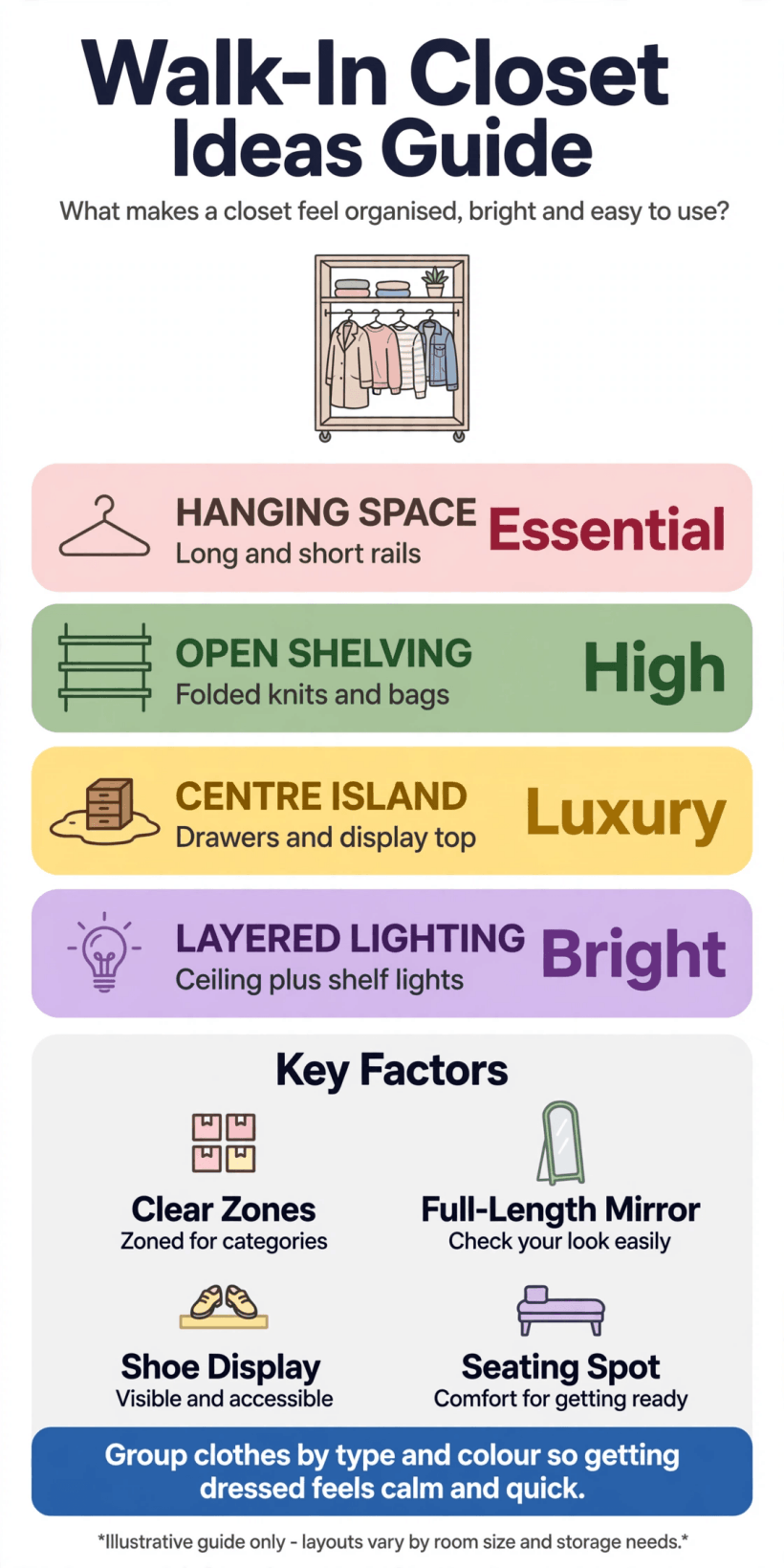
The central entity is the walk-in closet: a small dedicated room for clothes whose attributes are its layout shape, its hanging and shelving system, its drawers and dressing furniture, its accessory storage, its light and mirrors, and its finishes. It is judged by one test: a complete outfit, found and returned without a search.
| Question | Short answer |
|---|---|
| What layout suits most rooms? | An L or U of fitted storage with a clear centre; single-wall for narrow rooms. |
| What is the highest-yield fitting? | Double hanging for short clothes, which doubles a wall’s rail capacity at a stroke. |
| What do most walk-ins lack? | Drawers, honest light at the rails, and a legal home for worn-once clothes. |
| How does a small walk-in succeed? | Pale finishes, strong light, fittings to the ceiling and a wardrobe edited to what is worn. |
2. Layout First: The Shape of the Room
A walk-in closet is a small room whose whole job is retrieval: everything visible, everything reachable, nothing stacked on the floor. Its parent in the closet cluster is the closet ideas pillar; this post owns the walk-in form itself, in the lane the cluster agreed.
1. Run Rails Along One Wall in the Simplest Walk-In
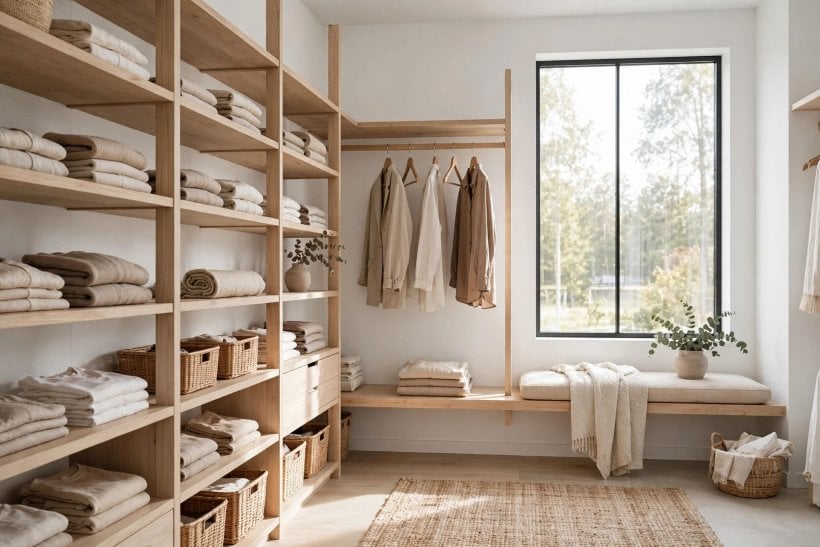
A single-wall layout suits a narrow room or a wide alcove: rails and shelves along one side, clear floor along the other. It is the easiest walk-in to build and to keep honest, because nothing can hide.
2. Turn the Corner With an L-Shape for Two Users
An L-shape gives two walls of storage and a natural division, one side each, without a word being said. The corner itself takes shelves or a hanging bay, planned carefully so neither user’s clothes fight for it.
3. Use a U-Shape Where the Room Allows Three Walls
Three fitted walls make the classic dressing room, with the door in the fourth. The U wraps its user in order: hanging, shelves and drawers within a turn. It needs a genuinely room-sized space to stay graceful.
4. Build a Galley With Rails Facing Each Other
Two facing runs with a clear walkway between them feel efficient and faintly luxurious, like a well-run shop. The walkway must stay truly clear; a galley that narrows with baskets and boxes has failed at its only job.
5. Place an Island in the Centre of a Generous Room
A central island earns its floor only when the room can spare it: drawers below, a surface for folding and laying out outfits above. In a smaller room the same island is just an obstacle wearing good joinery.
6. Use a Peninsula Where a Full Island Will Not Fit
A peninsula counter jutting from one wall gives island benefits, drawers, surface, a place to perch, at half the floor cost. It suits long rooms where the far end would otherwise be a corridor to nowhere in particular.
7. Give the Window End to Dressing, Not Storage
A walk-in with a window should spend its best light on the person, not the clothes: a dressing table or mirror at the window end, storage along the shaded walls. Daylight is the truest colour check any wardrobe owns.
8. Work Under a Sloped Ceiling by Height, Tall to Low
Sloped ceilings defeat standard fittings unless the layout follows the slope: long hanging where the ceiling is high, shelves and drawers stepping down beneath it. Planned this way, an awkward attic room becomes a characterful dressing space.
9. Leave the Entry Doorless for a Room That Flows
A doorless entry, from bedroom through an open arch, makes the walk-in feel like part of the suite and removes the daily door dance.
10. Separate a Dressing Bay From the Storage Walls
A small bay with mirror, stool and good light, distinct from the storage runs, turns getting dressed from a search into a ritual. Even a metre of dedicated dressing space changes how the whole room feels to use.
11. Split a Shared Closet by Zone, Not by Argument
Shared walk-ins stay peaceful when the split is architectural: a wall each, an end each, or long hang versus shelves, decided by the clothes themselves. The shared middle, linen, seasonal storage, belongs to whoever reaches it first and tidiest.
3. Rails, Shelves and the Hanging System
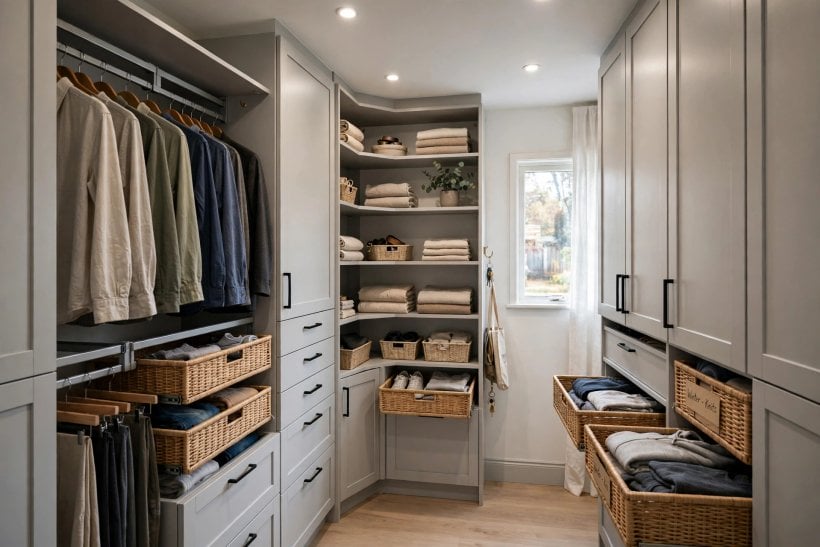
Hanging does most of a wardrobe’s work, and the system’s quality is measured on a dark Monday morning: can a shirt be found, reached and returned without disturbing its neighbours? Adjustable beats fixed, and visible beats deep.
12. Double-Hang Short Clothes to Double the Rail
Shirts, jackets and folded trousers hang short, so two rails, one above the other, double the capacity of the same wall. This single decision is the highest-yield move in most walk-in designs, provided everyday reach stays comfortable.
13. Reserve One Bay for Long Hanging, Honestly Measured
Dresses, coats and long garments need one uninterrupted bay, sized by the longest thing actually owned.
14. Break the Rails With a Shelf Tower
A vertical tower of shelves between hanging sections stores folded knitwear, bags and boxes, and gives the eye a resting rhythm along the wall. Towers also end rails at sensible lengths, so no single rail sags under a crowd.
15. Keep Open Shelves for the Things Used Weekly
Open shelves suit folded clothes, baskets and everyday bags: visible, grabbable, honest. What lives on open shelves should earn the dust it gathers by being used constantly; the rarely touched belongs behind a door or in a labelled box.
16. Put Some Storage Behind Doors for Visual Calm
A run of closed cupboards among the open rails calms the whole room and hides the categories that never look tidy. The balance is personal, but few people regret a third of their walk-in being quietly shut away.
17. Choose an Adjustable System That Can Change Its Mind
Wardrobes change with jobs, climates and lives. Rail-and-upright systems that re-space in minutes let the closet be re-planned on a Sunday afternoon instead of rebuilt. Fixed joinery looks finer; adjustable systems forgive more.
18. Let Corner Shelves Turn, or Accept the Corner Tax
Corners are where walk-ins lose space. Turning shelves, angled rails or a simple hanging bay given to the corner all beat the dead triangular void.
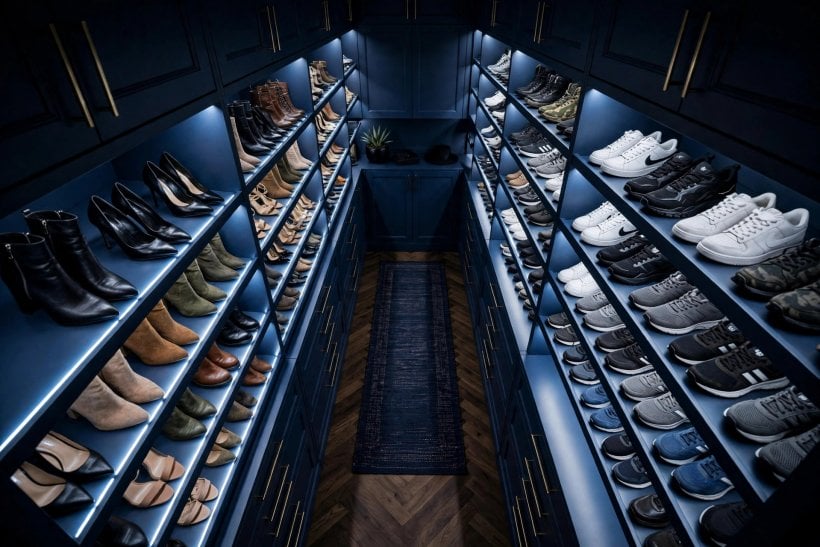
19. Store Shoes on Angled or Flat Shelves, Visible at Once
Shoes stored in pairs, visible in one glance, get worn; shoes in stacked boxes get forgotten. Angled shelves display heeled shoes well, flat shelves suit everything, and the everyday pairs deserve the eye-level places of honour.
20. Give the Top Shelf to the Seasonal and the Rare
The highest shelf is the closet’s archive: out-of-season clothes, occasion pieces, luggage. Accessed by a small step kept in the room, it stays useful. Anything needed weekly that migrates up there is a layout failure announcing itself.
21. Keep One Rail Section Empty on Purpose
A little deliberate emptiness, for new purchases, guests’ coats or the week’s planned outfits, keeps a walk-in from the stuffed-to-the-rail state where clothes crease and tempers follow. Capacity planning should include the breathing room.
22. End Each Run With a Hook Rail for the In-Between Clothes
Worn-once clothes are the true enemy of closet order. A short hook rail at the end of a run gives them a legal home, off the floor and out of the clean sections, and quietly abolishes the bedroom chair-drobe.
4. Drawers, Islands and Dressing Furniture
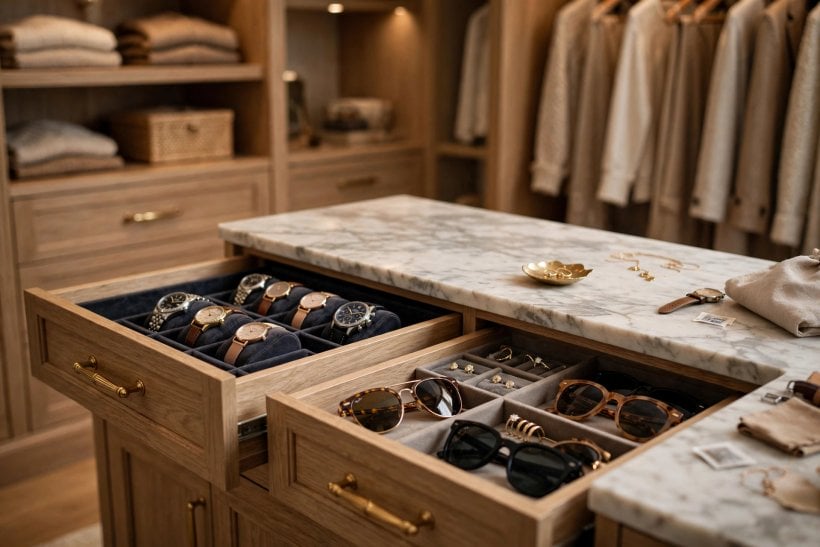
Drawers are the walk-in’s engine room: small things, folded things and private things all live better in drawers than anywhere else. The island, where one fits, is simply drawers with a view and a useful top.
23. Put Drawers at the Centre of the Morning Routine
Underwear, socks, watches and the small machinery of dressing belong in drawers near where the user stands to dress. Shallow drawers suit small items; deep drawers swallow knitwear. The morning should involve walking steps, not laps.
24. Top an Island With a Cushioned Bench Surface
An island whose top is part worktop, part cushioned seat gives the room a place to sit and pull on shoes, lay out tomorrow’s clothes and set down a case for packing.
25. Use Glass-Front Drawers for the Beautiful Small Things
Scarves, sunglasses and watches stored visibly behind glass get chosen; stored invisibly, they get forgotten. One or two display drawers add the boutique pleasure that makes a walk-in feel designed rather than merely fitted.
26. Divide Drawers From the Start, Not After the Jumble
Dividers, trays and small boxes fitted when the drawers are new prevent the archaeological layers that form within a month. The system can be simple, but it must exist before the first handful of small things is tipped in.
27. Add a Pull-Out Valet Rail for Tomorrow’s Outfit
A short pull-out rail holds the next day’s clothes, aired and ready, then disappears. It is a tiny fitting with an outsized effect on mornings, and on the temptation to drape everything over the nearest chair instead.
28. Give Jewellery and Watches One Locked, Lined Drawer
One secure, soft-lined drawer gathers the valuables that otherwise scatter across dressers and pockets. Felt lining protects finishes, a lock discourages casual hands, and singleness of place means nothing precious is ever officially lost again.
29. Fit a Fold-Down Ironing or Steaming Surface
A small fold-down board, or at least a planned place and socket for a steamer, keeps finishing touches inside the closet where the clothes are. Garments go from rail to ready without a tour of the house’s other rooms.
30. Keep a Laundry Sorter Inside the Room
A divided hamper in the walk-in, darks, lights, delicate, catches clothes at the moment they come off, beside the storage they return to. It quietly abolishes the bedroom-floor laundry drift that dressing rooms were invented to prevent.
31. Use the Island’s Ends for Books, Boxes or a Safe
Island ends and corners take the odd citizens: a small safe, hat boxes, a shelf of fashion books that genuinely get opened. Odd items planned for are decoration; odd items unplanned for are clutter with good public relations.
32. Choose Drawer Runners That Close Softly and Fully
Drawers are opened thousands of times; runners that glide and soft-close make the room feel expensive every single day, whatever the fronts are made of. This is the fitting to fund first when the budget forces a choice.
33. Leave One Deep Drawer for the Bulky and Awkward
Sweaters in winter, beach towels, the heated blanket: every wardrobe owns bulky things that fit nowhere gracefully. One deliberately deep drawer, or a lidded box bay, gives them a home that is not the top of the wardrobe.
5. Shoes, Bags and the Accessory Problem
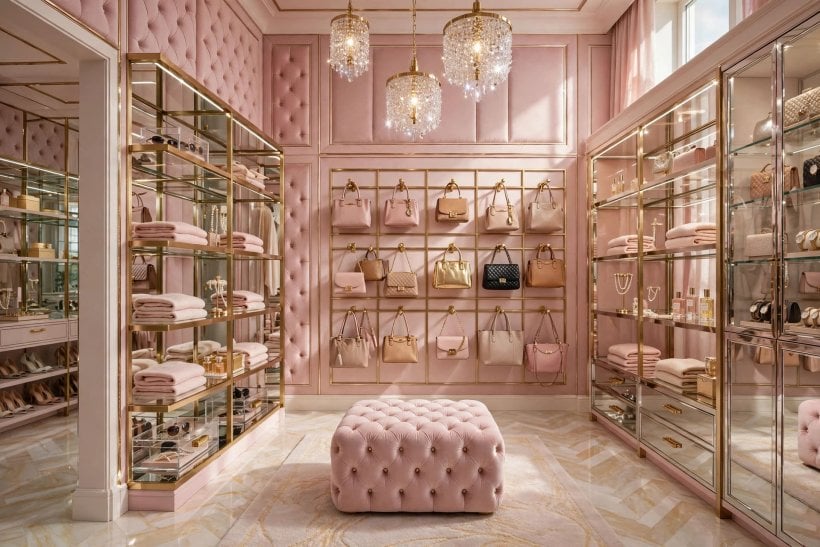
Accessories are where walk-ins succeed or descend: dozens of small, loved, awkwardly shaped things that defeat flat storage. The rule throughout is one glance, one grab, with nothing stored behind anything else.
34. Give Everyday Shoes the Eye-Level Shelves
The pairs worn weekly belong where the eye lands first, not on the floor or the top shelf. Rotating them with the season keeps the prime shelves honest and sends the rest to quieter storage without guilt or ceremony.
35. Store Boots Upright With Their Shape Kept
Boots flop, crease and age badly when left collapsed. Upright storage on a low shelf or boot rail, with simple inserts to hold their shape, keeps a costly pair looking costly and easy to pull on in a hurry.
36. Hang Bags on Hooks Where Their Shapes Survive
Handbags keep their shape hung by their handles or shelved upright, never stacked in a crushing pile.
37. Keep Clutches and Small Bags in Divided Cubbies
Small bags vanish in big spaces. Divided cubbies or clear-front boxes, one bag per compartment, keep them visible and uncrushed. The cubby wall also adds the small-scale pattern that large plain closet walls often lack.
38. Roll Belts and Ties Where They Can Be Seen Whole
Belts and ties stored rolled in a shallow divided drawer show their whole length and colour at a glance. Hung in a dark corner they tangle and hide; the drawer turns a fiddly category into a satisfying one.
39. Give Scarves a Rail, a Ladder or a Divided Drawer
Scarves suit a slim rail with gentle clips, a leaning ladder shelf, or rolled rows in a drawer.
40. Store Hats on a High Shelf or Their Own Hooks
Hats need air, shape and gentleness: a high shelf with room per hat, or individual hooks on an end wall.
41. Keep Sunglasses and Glasses in One Shallow Tray
Eyewear scattered across a house is eyewear lost. A single shallow, lined tray in a drawer near the door side of the closet gathers pairs where dressing begins and ends, and makes choosing them part of the ritual.
42. Make a Home for Sports and Travel Gear at the End
Gym bags, sports kit and travel accessories deserve the far end of the walk-in, together, where their bulk and occasional odours sit away from formal clothes. Zoning by smell and frequency is unglamorous and extremely effective.
43. Box the Rarely Worn, Label the Box, Photograph the Contents
Occasion shoes, fancy dress and heirloom pieces can live boxed on high shelves if each box is labelled, and ideally carries a small photo of what is inside. The label is what separates an archive from a mystery.
44. Audit Accessories Twice a Year With the Seasons
Accessories multiply silently. A twice-yearly pass, when seasonal clothes rotate, returns the broken, the duplicated and the never-chosen to charity or repair, and keeps every category at the size the storage was honestly built for.
6. Light, Mirrors and Seeing Yourself Properly
A walk-in closet is judged in its mirror. Light that flatters the clothes but lies about colours is a daily small betrayal, so this section treats light as a fitting, not an afterthought, in a room that, as the large walk-in closet ideas post also insists, must show colours truly.
45. Layer Ceiling Light With Light at the Rails
One ceiling light leaves rails in their own shadow exactly where clothes are chosen. Add light along or above the storage runs themselves, so colours read on the hanger, not just in the middle of the room.
46. Choose Light That Tells the Truth About Colour
Colour-true light matters more in a closet than in almost any other room: navy must not read as black at the rail and blue in the street.
47. Put the Main Mirror Where Daylight Can Help It
A full-length mirror placed to borrow window light, without staring straight into glare, gives the truest morning verdict. Where there is no window, light the mirror from both sides at face height to avoid the dressing-room horror shadows.
48. Add a Second, Smaller Mirror for the Back View
Outfits have backs, and a hand mirror or a hinged second panel on a door lets the wearer check them without acrobatics.
49. Light the Island and Dressing Bay Like a Stage, Gently
The dressing bay deserves the room’s kindest light: even, warm and shadow-soft, because this is where the final judgement happens. Harsh downlights serve the clothes; soft layered light serves the person wearing them.
50. Use Sensor Lights Inside Deep Cupboards
Deep cupboards and long rails swallow light. Small sensor lights that wake when a door opens turn the back of a cupboard from a rumour into storage, and cost little compared with the space they redeem.
51. Keep a Stool or Ottoman in the Light’s Best Pool
A seat placed where the light is best becomes the room’s natural dressing point for shoes, socks and decisions. Furniture follows light in a good walk-in; the morning routine gathers where seeing is easiest.
52. Avoid Single Downlights Over the Mirror
One overhead spot above a mirror carves eye sockets and invents grey hairs.
53. Let a Window Bring Morning Into the Routine
Where a walk-in has a window, dress by it.
54. Check Colours Once More at the Doorway
Keep one habit, not a fitting: glance at the chosen outfit in the doorway’s different light before leaving.
55. Dim the Evening Light for a Calmer Room
Closets are used at the day’s two ends.
7. Colour, Materials and the Door Question
A walk-in is a room of surfaces seen at arm’s length, so materials must survive close inspection and daily touch. The palette should calm the clothes’ own colours into order, which is why this child of the bedroom ideas pillar borrows the bedroom’s restraint rather than the boutique’s drama.
56. Start With a Calm, Pale Base That Lets Clothes Be the Colour
White, warm off-white or pale timber cabinetry keeps the room bright and lets the wardrobe itself supply the colour. Strong cabinet colours date quickly and argue with half the clothes they are meant to serve.
57. Use Timber Where Warmth Is Wanted, Honestly Finished
Natural timber fronts or shelves bring the warmth that all-white fittings can lack, especially in a windowless room. Honest finishes age gracefully; printed imitations at arm’s length rarely survive the same daily scrutiny.
58. Add One Dark Accent Run for Contrast and Ceremony
A single run in a deep tone, the island, a drawer bank, the closed cupboards, gives the room a composed, tailored feeling. One accent is tailoring; accents everywhere is noise, and clothes already bring enough pattern.
59. Choose Handles and Rails as the Room’s Jewellery
Handles, rail finishes and hooks are touched daily and seen constantly. One metal, chosen once and repeated, unifies mixed cabinetry; quality here is felt in the hand long after the eye stops noticing the doors.
60. Decide Doors by Dust, Honesty and Space
Open storage is quicker and more demanding; doors hide and protect but eat swing space and slow the morning.
61. Use Sliding or Pocket Doors Where Swing Space Is Short
Where a hinged door would sweep through the dressing space, sliding or pocket doors keep the room’s floor truly usable. Their tracks and guides must be good quality, because a wobbling door is a daily irritation in miniature.
62. Mirror a Door Front to Double Light and Duty
A mirrored door or cupboard front earns its keep twice, reflecting light into a small room and serving the dressing check without taking wall space.
63. Lay a Runner or Rug for Warmth Under Bare Feet
Dressing happens barefoot at both ends of the day. A washable runner down the walkway softens sound, warms the floor and adds the room’s one textile gesture, in a colour that can change when tastes do.
64. Keep the Ceiling Plain and the Light Fittings Quiet
Nobody looks up in a closet except the light fittings’ designer. A plain ceiling with calm, well-placed fittings keeps attention at rail height, where the room’s whole purpose lives, and avoids visual fuss in a small volume.
65. Let the Room Smell Faintly of Something Real
Cedar blocks, lavender or simply clean air from good ventilation: scent is part of a closet’s materials. Ventilation matters beyond pleasure, keeping stored clothes fresh; a closed, still room eventually smells like one, whatever is hung in it.
8. Small Walk-Ins, Tiny Houses and Honest Limits
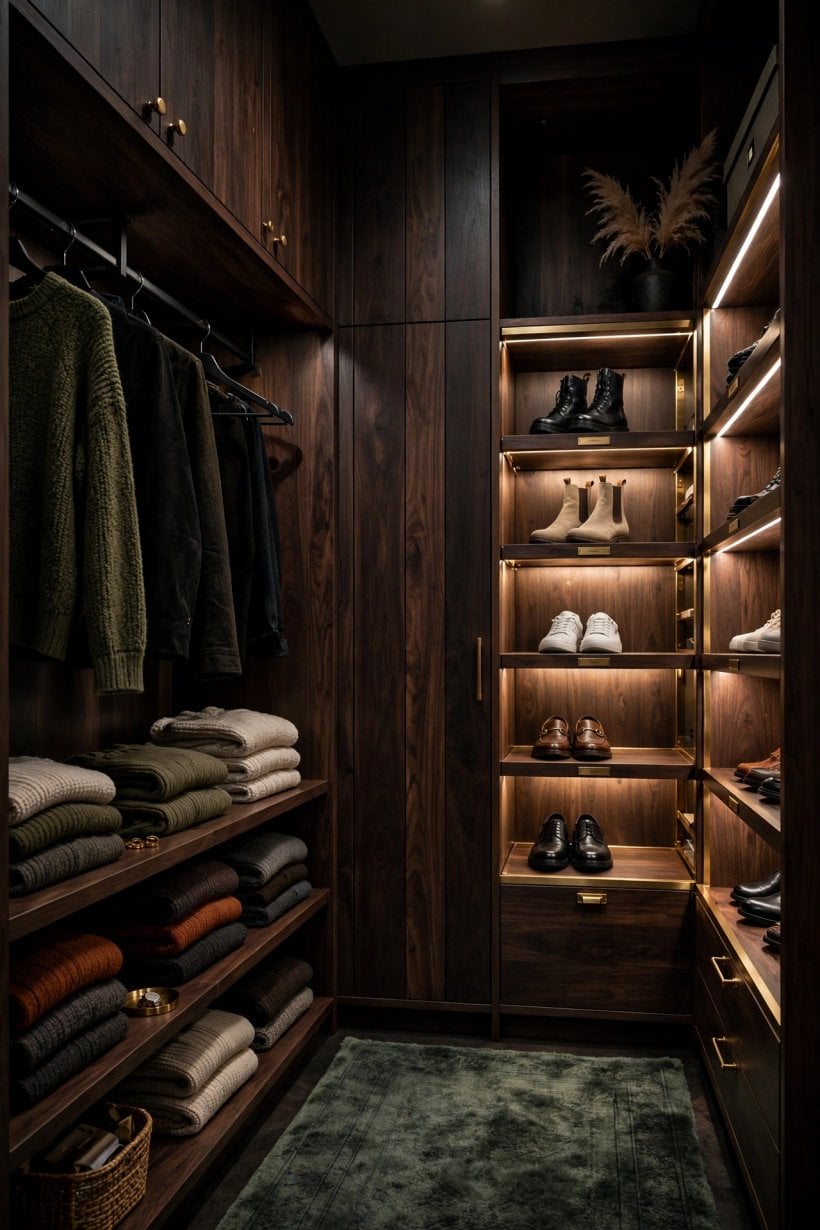
Not every walk-in is a suite. A wide alcove, a box room or the end of a bedroom can all work as a small walk-in if the same rules, visibility, reach, zones, are kept at miniature scale — the same first-impression discipline the foyer ideas post applies to the house’s entrance, applied here to the wardrobe’s — as the small-space thinking in tiny house closet design ideas shows at its most disciplined.
66. Claim a Wide Alcove With Rails and a Curtain
An alcove deep enough to step into is a walk-in in embryo: rails across the back, shelves up one side, a curtain or folding doors across the front. It delivers most of the walk-in experience at wardrobe prices.
67. Turn a Box Room Into the House’s Dressing Room
The small spare room that fits neither bed nor desk gracefully often makes a superb walk-in.
68. Steal a Strip From a Generous Bedroom, Lightly
A stud partition or even a run of tall cupboards can carve a walk-in strip from an oversized bedroom, as the layouts in master bedroom ideas often show.
69. In Tiny Houses, Make the Walk-In a Corridor That Works
A passage to a bathroom or loft can be lined, carefully and safely, with shallow storage so the route itself is the closet. Depth is the constraint: clothes storage must never narrow a route below comfortable, safe passage.
70. Keep Small Walk-Ins Pale, Lit and Ruthlessly Edited
Small versions succeed on light colours, generous light and a wardrobe edited to what genuinely gets worn.
71. Use Vertical Space to the Ceiling in Small Rooms
In a small walk-in the walls are the floor’s compensation: fittings carried high, with the archive above and the daily at hand height, plus a safe step kept in the room.
72. Choose One Rail, One Tower, One Drawer Bank as the Kit
A reliable small walk-in formula is a double-hang rail run, one shelf tower and one drawer bank, plus hooks. This kit, in that order, covers most wardrobes; anything beyond it should argue its way in against the formula.
73. Let the Door Side Hold the Mirror and Hooks
In tight rooms the back of the door, or the wall beside it, is prime dressing territory: mirror, hooks for tomorrow’s outfit, a slim shoe rack.
74. Ventilate Small Closets Like the Rooms They Are
A small enclosed closet with no air movement grows stale and can trouble stored clothes.
75. Admit When a Wardrobe Wall Beats a Bad Walk-In
A step-in room so tight that clothes brush both shoulders is worse than a well-planned wardrobe wall in the bedroom itself, a point the small-room specialists in small bedroom interior design ideas for tiny houses make often.
9. Checks and Mistakes: Before the First Pour or Purchase
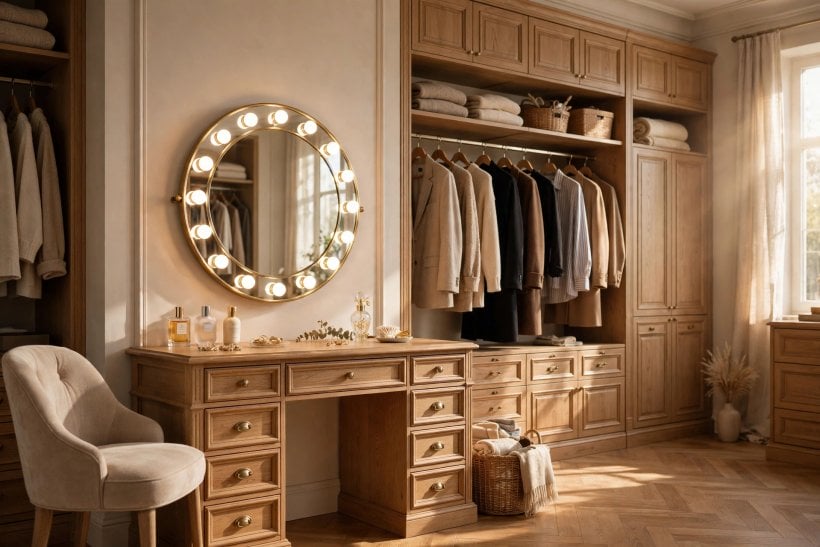
Plan the closet from the wardrobe outward: count the long hang, the short hang, the folded and the small before choosing a single fitting, because systems bought by the metre meet clothes measured by the life. A rough inventory, honestly done, prevents both the over-built and the under-drawered walk-in.
Check reach, light and air in the finished room before celebrating: the top shelf needs a step, the rails need light that tells the truth, and the room needs ventilation. Where building rules, electrics or structural changes are involved, use qualified local professionals; a closet is small, but it is still a room.
The classic mistakes are a centre island in a room too small for one, rails with no drawers beneath the morning’s small necessities, and storage planned for the wardrobe wished for rather than the one owned. Each is avoided by measuring the clothes, the room and the routine, in that order.
10. Costs and Pulling It Together
Costs stay qualitative here, as they should for a room whose price is mostly joinery: adjustable rail systems are the economical end, bespoke fitted cabinetry the expensive end, and islands, glass fronts and premium runners each move a project upward. The order of spending matters more than the total: runners, light and drawers first, doors and display last.
Pull the room together by deciding layout, then system, then drawers, then light, then finishes. A walk in closet planned in that sequence serves silently for years, which is the highest praise a storage room can earn.
Final Considerations
A walk-in closet is a promise the house makes to every morning: your clothes, visible, reachable and calm. Keep the promise with honest layout and truthful light, and the smallest room in the house becomes the one that starts every day well.

0 Comments