

There is a moment, just after a fire pit is lit, when a whole garden rearranges itself around it — chairs turn, conversations lower, faces take the firelight and keep it. No other garden feature earns its circle so quickly, or holds it so long after dark.
These 75 beautiful fire pit pictures and ideas stay on the visual side: shapes, materials, settings and the pictures they make, from a stone circle in a meadow to a sleek bowl on a city terrace. When you are ready to build one, the companion guide how to make a stacked stone fire pit carries the making; this post carries the looking.
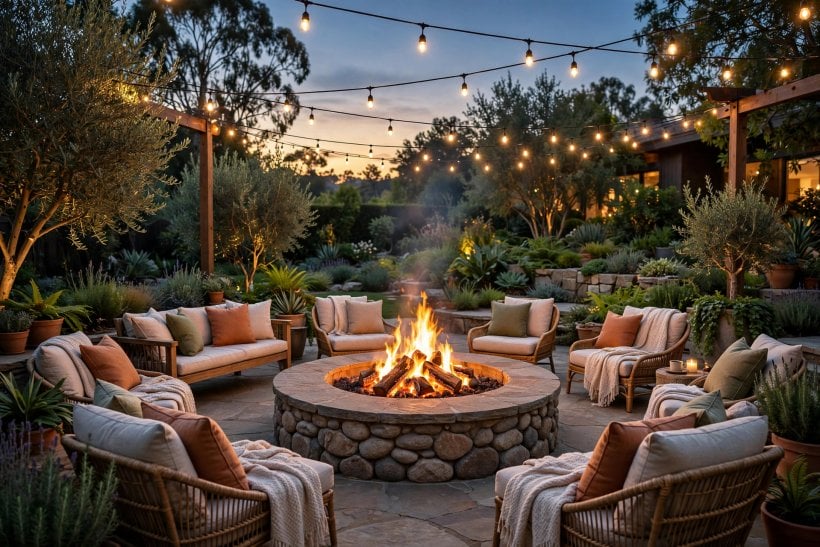
1. Fire Pit Ideas at a Glance
The central entity is the fire pit as a garden picture: an outdoor fire feature whose attributes are its shape and silhouette, its material and finish, its setting in the garden, the seating circle it commands, and its behaviour across the day — sculpture by daylight, hearth by night. It is judged by one test: whether the garden composes around it beautifully in both states, lit and unlit.
| Question | Short answer |
|---|---|
| What makes a fire pit photogenic? | A clear silhouette, honest material, and a setting — seating, planting, backdrop — composed around it. |
| Which shape suits which garden? | Round for informal and social gardens, square and linear for formal and modern ones. |
| What completes the picture? | The circle: seating at conversation distance, a level surround, and a backdrop that darkens kindly behind the flames. |
| What is this post not? | A building guide — construction and safety framing live in the stacked-stone companion post, linked throughout. |
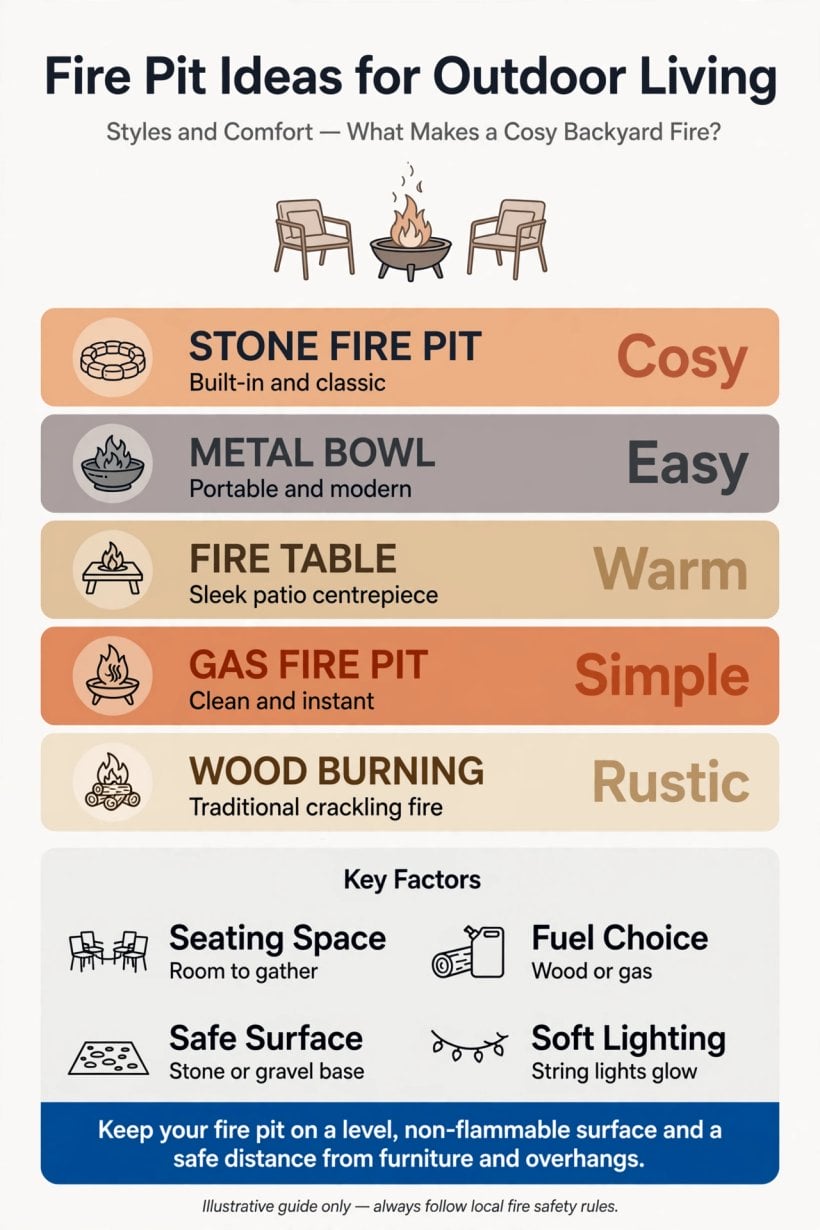
2. Shape and Silhouette: The Picture Before the Fire
Shape is the first thing a photograph reads and the last thing a garden forgets. Choose the silhouette for the garden’s temperament first and the fire’s convenience second — the shapes catalogue in backyard landscaping ideas shows how features anchor whole plots.
1. Let a Round Stone Pit Be the Timeless Centre
The circle is the oldest fire shape there is, and still the most sociable: every seat equidistant, every face lit, no head of the table. In stone, it reads as if the garden grew around it.
2. Choose a Square Pit for Formal Gardens
Straight edges answer straight paths, clipped hedges and geometric planting. A square pit in a formal garden looks inevitable — the fire given architecture rather than apology.
3. Run a Linear Fire Line Through a Modern Terrace
A long, low ribbon of flame suits contemporary houses and long views: less campfire, more hearth-wall tipped on its side. Photographed at dusk, it is the modern garden’s signature picture.
4. Set a Bowl on a Pedestal for Sculpture by Day
A raised metal or stone bowl reads as garden sculpture even unlit — a vessel waiting for evening. On small terraces it gives the fire presence without eating the floor.
5. Sink a Sunken Pit Into a Conversation Hollow
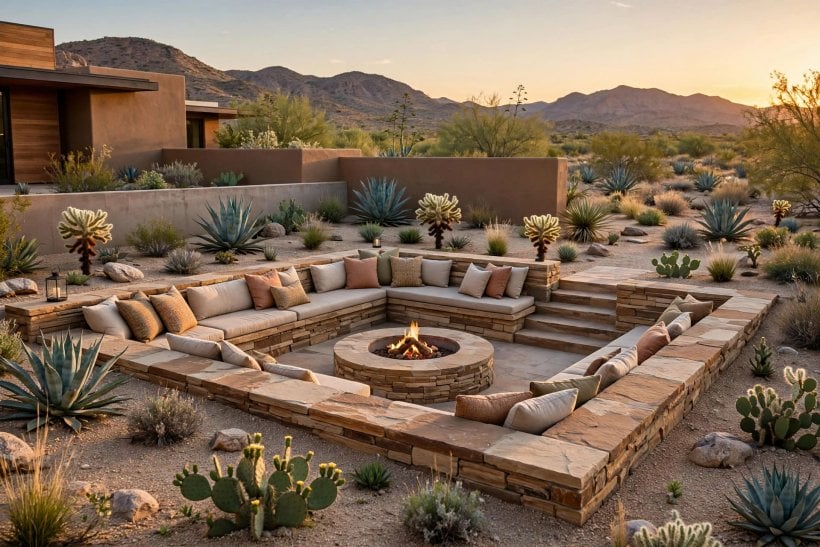
A pit set into a lowered circle, with built-in seating around its rim, makes the fire a room below the garden’s horizon — sheltered, intimate, and dramatic to arrive at.
6. Let a Copper Bowl Age Into the Garden
Copper begins bright, browns, then greens at the edges, recording the seasons on its own surface. For gardeners who love patina, no painted finish competes with time itself.
7. Choose Cast Iron for Weight and Gravitas
A heavy iron bowl or pit sits like it means it. The material suits traditional gardens, woodland edges and any picture that wants the fire to feel permanent rather than portable.
8. Try a Table-Height Fire Table for Dining Terraces
Flame at table height, behind glass, with dinner around it: the fire table trades the campfire’s crouch for the dining room’s posture, and photographs like a restaurant garden.
9. Give a Chiminea Its Corner Where Gardens Are Small
The chiminea’s chimney draws the eye up and the smoke away, and its single opening makes a directional picture — a fireplace’s portrait, made for corners and small patios.
10. Let a Simple Steel Ring Serve the Honest Campfire
At the informal end, a plain steel ring in a gravel circle is the picture of every good camping memory, brought home. Unpretentious is a style, and this is its purest form.
11. Match the Pit’s Scale to the Circle It Commands
Too small, and the fire is a candle the garden ignores; too large, and the seating is pushed beyond conversation. The right size is the one whose circle still talks easily across it.
3. Materials and Finishes: What the Camera Sees
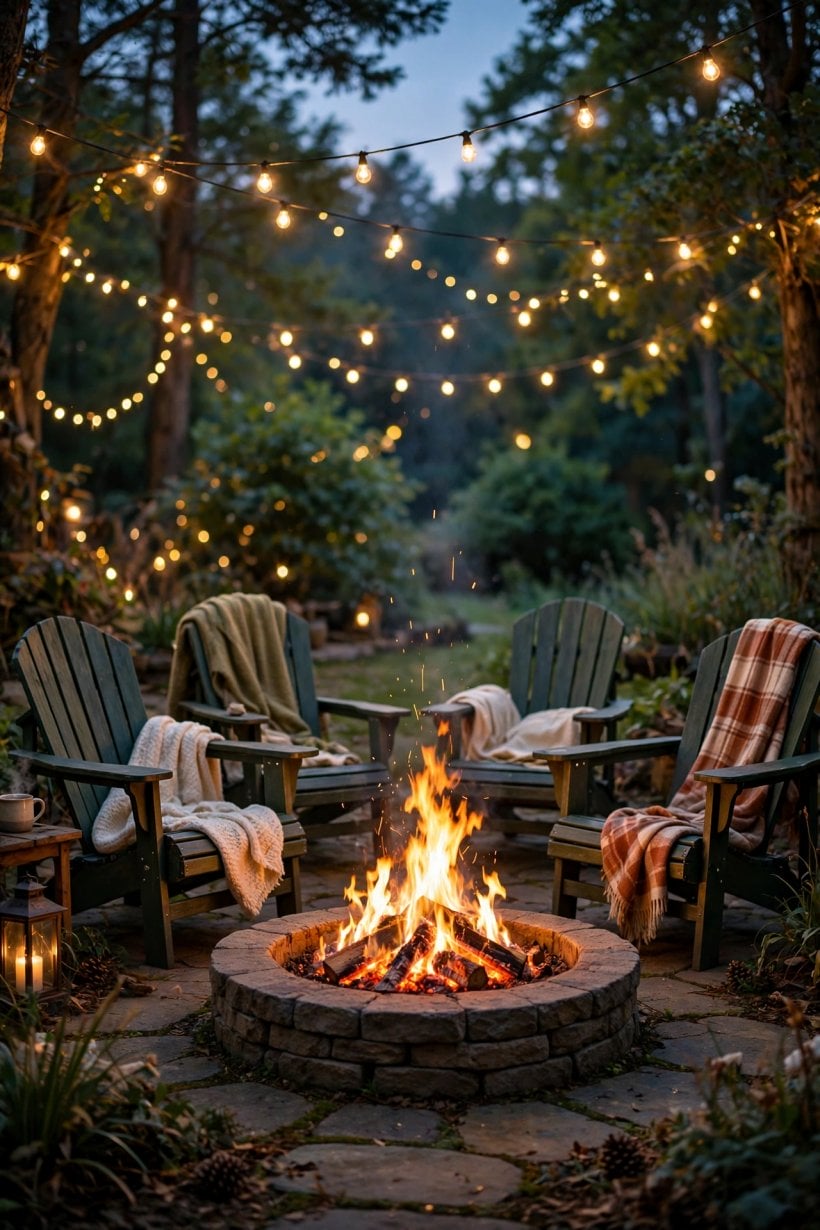
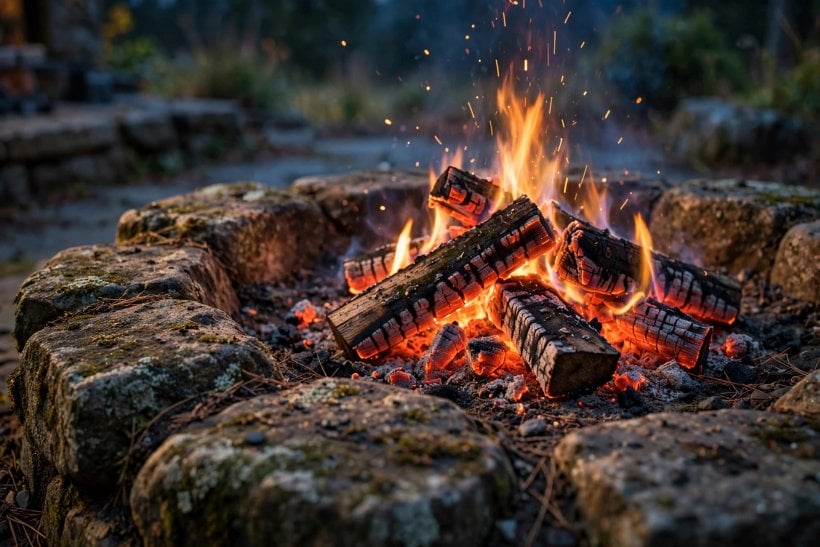
Material is where a fire pit’s character lives — stone’s permanence, steel’s edge, concrete’s calm. The camera reads texture before it reads form, so choose the surface you want to look at on the three hundred days a year the fire is not lit.
12. Build the Picture in Stacked Natural Stone
Layered stone gives a pit its most photographed look: irregular, warm, and at home in planting. The full making of this style is the subject of how to make a stacked stone fire pit.
13. Choose Smooth Concrete for a Calm, Modern Surface
Cast concrete’s quiet, even surface suits minimalist gardens and lets planting and flame supply the texture. In pale tones it photographs almost like sculpture against green.
14. Let Brick Bring the Cottage Garden With It
Brick’s small scale and warm variation flatter traditional houses and cottage planting. A brick pit looks built by the same hands as the house — belonging, in one material.
15. Pick Weathering Steel for a Living Rust Finish
Weathering steel arrives orange-brown and deepens slowly, a colour autumn gardens are already wearing. Against green lawns and pale stone it is unmistakably deliberate.
16. Use Boulder and Fieldstone for the Wild Edge
Large, rough stones suit gardens that run to meadow, woodland or rock planting. The pit reads as a found place — a clearing — rather than a built one.
17. Contrast a Dark Pit Against Pale Surrounds
Blackened steel or dark stone on pale gravel or light paving gives the fire a stage and the photograph its drama. Contrast is the cheapest composition tool there is.
18. Let Pale Stone Glow in Evening Pictures
Light-coloured stone catches firelight and returns it, doubling the glow in the circle’s faces. For gardens used mostly after dark, pale surrounds earn their keep nightly.
19. Mix Materials Where the Garden Already Mixes Them
Stone base, steel rim, timber seating: a pit that borrows the garden’s existing materials looks planted rather than installed. Echo first, introduce second.
20. Keep the Rim Wide Enough to Read as a Ledge
A generous rim gives the pit its finished silhouette, a place for cups and feet at a safe social distance, and the photograph its strong horizontal line.
21. Let the Inner Bowl Stay Honestly Blackened
A fire-blackened interior is not dirt; it is the record of use, and it deepens the flame’s colour by contrast. Pictures love it even when tidiness instincts argue.
22. Choose a Finish That Ages at the Garden’s Pace
Paint that peels in a season fights the garden; materials that weather — stone, iron, copper, weathering steel — settle further in every year. Design for the tenth photograph, not the first.
4. Settings: Where the Fire Sits in the Garden
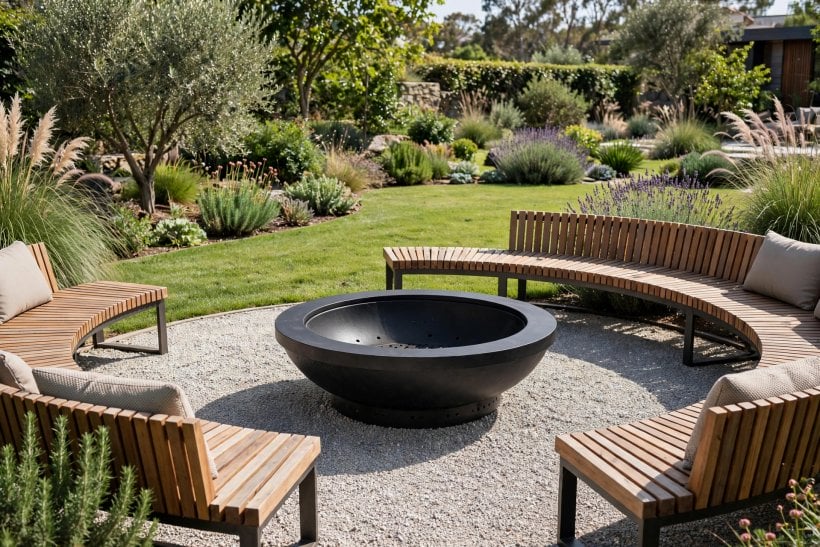
The same pit is a different picture in every setting: destination at the garden’s end, punctuation on a terrace, hearth for a lawn circle. Setting is composition — the work patio ideas does for paved rooms applies doubly where flame is the furniture.
23. Make the Pit a Destination at the Garden’s End
A pit at the far end, reached by a path, turns lighting-up into an expedition and the evening into an event. Distance is drama the garden gives for free.
24. Centre the Pit on a Terrace Like a Hearth Indoors
On a paved terrace, the pit takes the fireplace’s old role: furniture arranged to it, backs to the house, faces to the flame and the view beyond.
25. Set a Circle Into the Lawn for the Classic Picture
A gravel or stone circle cut into lawn, pit centred, chairs around: the postcard composition. The green frame is what makes the fire’s orange sing in photographs.
26. Give a Woodland Edge Its Clearing
At a garden’s wild edge, a pit in a small clearing among trees borrows the forest’s own atmosphere. Keep planting low at the circle and let the dark beyond do the rest.
27. Let a Courtyard Hold the Fire Close
Walled courtyards concentrate warmth, scent and firelight — the pit as the courtyard’s heart, its walls returning every flicker. Small, enclosed gardens suit fire best of all.
28. Place a Pit to Answer the Water
Fire beside a pool, pond or fountain sets element against element, and the reflections double both. The pairing is an old garden trick because it never stops working.
29. Use a Pit to Finish a Pergola’s Room
Under or beside a pergola, a fire pit completes the outdoor room: roof above, flame below, seating between. The structure frames the picture like a proscenium.
30. Set the Pit Where the Sunset Already Performs
An evening-facing spot lets sunset and firelight share the hour — the sky’s show handing over to the garden’s. West-facing circles are booked first by every guest.
31. Give a Rooftop or Balcony a Compact Bowl
City gardens get their fire in miniature: a small, contained bowl on a terrace, with the skyline as the backdrop no country garden can match. Scale down, drama intact.
32. Let the Pit Anchor a Gravel Garden
In gravel and drought planting, a stone or steel pit sits naturally among the textures, and the pale ground throws its firelight back up into the circle’s faces.
33. Tuck a Pit Into a Garden Room’s Far Corner
Divided gardens gain a secret: the fire room discovered last, through the hedge gap, already glowing. Surprise is a setting effect no centrepiece can buy.
5. The Seating Circle: Composing the Audience
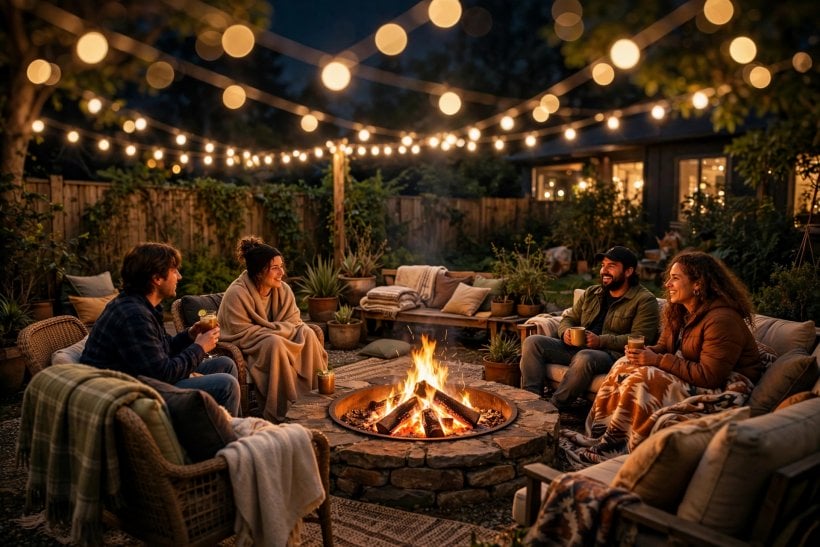
A fire pit without its circle is a sculpture; with it, a society. The seating in these pictures is never accidental — its shape, material and distance are what make one fire photograph intimate and another merely lit, a discipline shared with fire pit seating in natural materials.
34. Curve a Built Bench Around the Fire’s Arc
A curved stone or timber bench following the pit’s own geometry is the most composed seating of all — permanent, generous, and always ready before the guests are.
35. Set Adirondack Chairs at Their Relaxed Angle
The low, leaned-back classic aims its sitter at the fire and the sky in equal measure. In a loose circle, painted or plain, it is the informal garden’s signature seat.
36. Use Stumps and Logs Where the Garden Is Wild
Stump stools and a log bench keep a woodland or meadow circle honest — seating that looks gathered, not bought. Their irregularity is exactly the picture’s charm.
37. Let a Swing Seat Add the Evening’s Motion
A porch-style swing or hanging chair at the circle’s edge adds gentle movement and the best seat in the garden — the one every photograph and every guest finds first.
38. Arrange Chairs in a Broken Circle, Not a Ring
A gap for arriving, a pair turned slightly toward each other: real conversation circles are imperfect. Pictures composed with a deliberate gap read warm, not staged.
39. Give the Circle a Low Table or Two
Small side surfaces for drinks and snacks keep hands free and glasses off the ground. In photographs, they complete the circle’s furnished, lived-in look.
40. Keep a Blanket Basket at the Circle’s Edge
Evening chill is the fire circle’s only critic. A basket of blankets at hand extends every session and adds the texture photographs of firelit evenings always show.
41. Mix One Statement Chair Into Honest Company
A single sculptural chair — a woven egg, a designer lounger — among simple seats gives the composition its focal point and the circle its host’s seat.
42. Let Built Seating Double as the Pit’s Retaining Edge
On slopes, the seating wall can hold the terrace the pit stands on: structure, seat and composition in one line of stone. Economy that looks like design.
43. Face Some Seats Outward to the Night Garden
Not everyone wants the fire’s face all evening. A seat or two turned to the dark garden, the stars or the view lets the circle breathe in both directions.
44. Keep the Circle Small Enough for One Conversation
The best fire pictures hold six to eight faces in one talk. Larger circles split into factions; the intimate circle is the one memory and camera both prefer.
The seating circle also changes with the seasons in ways a photograph rarely admits. In high summer the chairs sit back, the circle widens, and the fire is mostly light and theatre; in the cold months the same chairs creep closer, blankets appear, and the pit becomes a hearth the garden huddles to. Composing the setting with both circles in mind — room to widen, ground firm enough to sit close — is what makes one arrangement serve the whole year instead of a single month’s picture.
6. Planting, Backdrops and the Frame Around the Flame
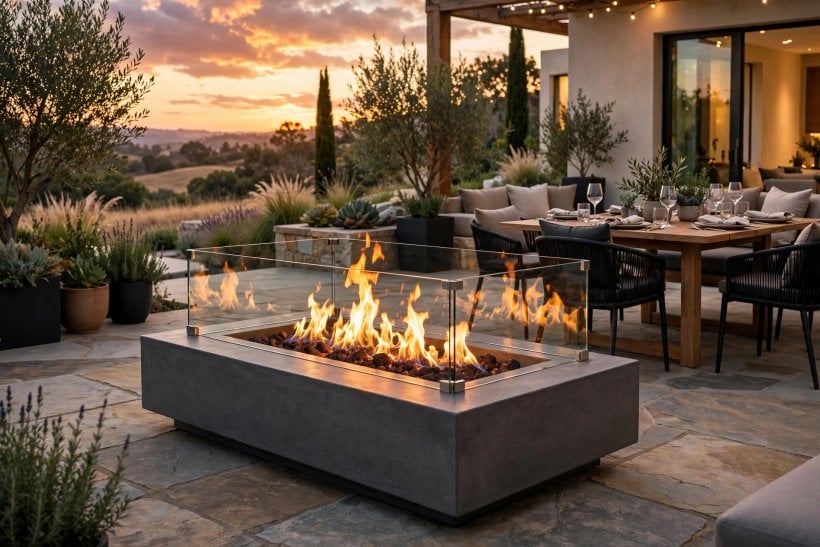
Firelight needs a frame and a backdrop: planting that stays low at the circle, darkness behind it, and one or two tall notes to catch the light’s edge. The frame is gardening, but its purpose here is purely pictorial.
45. Keep Planting Low and Loose at the Circle’s Rim
Grasses and low perennials at the edge soften the surround’s line without crowding the seats. Their movement in firelight and breeze is the picture’s living border.
46. Give the Fire a Dark Backdrop to Burn Against
A hedge, a dark fence or deep foliage behind the pit makes flame read brighter and faces warmer. Fire against pale walls washes out; fire against darkness glows.
47. Let Ornamental Grasses Catch the Firelight
Feathery grasses at the backdrop’s edge flicker gold with every flame movement — the garden apparently burning, safely, in sympathy. Plant them where the light reaches.
48. Frame the Circle With One Small Tree
A single multi-stem tree beyond the seating gives the composition its vertical and its dappled shade by day. At night its trunk and lower branches take the firelight like scenery.
49. Use Pots to Soften a Terrace Pit’s Geometry
On hard terraces, big planted pots break the paving’s grid around the circle and carry the garden into the fire’s room. Group them in threes at the composition’s corners.
50. Let Climbing Plants Dress the Backdrop Structure
A pergola post or fence panel clothed in a climber turns a plain backdrop into a green wall that firelight models beautifully. The structure disappears; the glow remains.
51. Add Scented Planting for the Evening Shift
Night-scented flowers and herbs near the seating release their perfume as the air cools — invisible in photographs, unforgettable in person, and half the reason guests linger.
52. Keep the Surround’s Ground Texture Photogenic
Gravel, stone setts, decking boards or close grass: the ground inside the circle is in every picture. Choose the texture that suits the pit’s material and keep it clean-lined.
53. Borrow the View Beyond the Garden
Where a garden looks to hills, water or skyline, turn the circle to it. The fire becomes the foreground of a view no planting could manufacture.
54. Let Night Lighting Whisper, Not Compete
A few low garden lights on the path and steps — never floodlights — let the fire remain the garden’s brightest thing. In every good fire photograph, the flame wins.
55. Plant for the Unlit Months Too
Evergreen structure around the circle keeps the setting composed in winter, when the pit is sculpture and the garden is bare. The picture must survive its own off-season.
Daylight deserves a sentence of its own in any honest account of these pictures. By day the pit is judged as an object — its rim line, its material, the neatness of its surround — and the settings that photograph well at noon are the ones whose composition never depended on flame. Stone cleaned of ash, seating squared, planting fresh: the unlit picture is the design’s examination, and the firelit one is its reward.
7. Evenings, Seasons and Firelight Effects
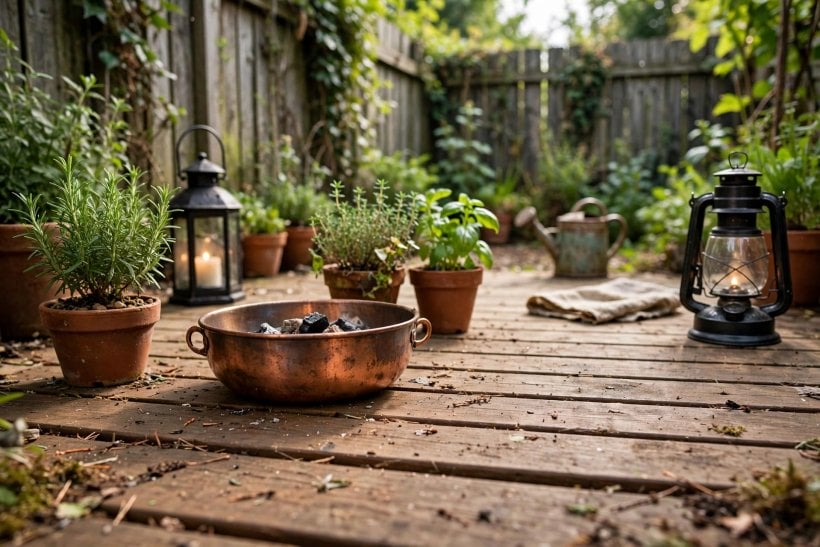
The fire pit’s great subject is time: the blue hour, the first sparks, the long ember phase, the seasons turning around a constant flame. These are the effects the most-shared pictures capture — and the social evenings backyard pool ideas designs around water, answered here in fire.
56. Photograph and Plan for the Blue Hour
The twenty minutes when sky and firelight balance are the fire circle’s portrait hour. Settings that face the evening sky give their owners that picture nightly.
57. Let Sparks Be the Wild Garden’s Fireworks
In informal settings, a lively wood fire’s sparks are part of the show — the picture every guest takes. Composed gardens choose calmer flames; wild ones, the sparkle.
58. Design the Ember Phase, Not Just the Flames
Evenings end in embers: a wide, shallow pit holds a glowing bed that warms and lights long after flames fade. The ember picture is the connoisseur’s favourite.
59. Give Winter Its Own Fire Ritual
A winter fire — midday, brief, with hot drinks — uses the garden in its quietest season and makes the pit a year-round feature rather than a summer guest.
60. Let Autumn Leaves Ring the Circle
Fall’s colours around a stone circle need no arranging; the season decorates the setting itself. Autumn is the fire pit’s most photographed season for a reason.
61. Add a Fire to the Outdoor Dining Picture
A pit near, not under, the dining terrace lets dinner end at the fire without moving far. The two-stage evening — table, then circle — is outdoor living’s classic plot.
62. Use Flame to Warm a Poolside Evening
Swimmers emerge to firelight like sailors to a harbour lamp. A pit placed for the pool’s exit side doubles both features’ evening value in one composition.
63. Keep a Stargazing Seat at the Circle’s Dark Side
One reclined seat, placed where the fire lights faces but not eyes, lets the circle’s astronomer work. Darkness is a design material; spend it deliberately.
64. Let Candles and Lanterns Echo the Main Fire
Small flames on tables and steps rhyme the pit’s glow across the terrace, tying the composition together in photographs like punctuation in a sentence.
65. Make the First Fire of the Year an Occasion
Settings designed well invite ritual: the season’s first lighting, the solstice fire, the birthday circle. A pit that hosts rituals becomes the garden’s calendar in stone and steel.
8. Small Gardens, Terraces and Compact Pictures
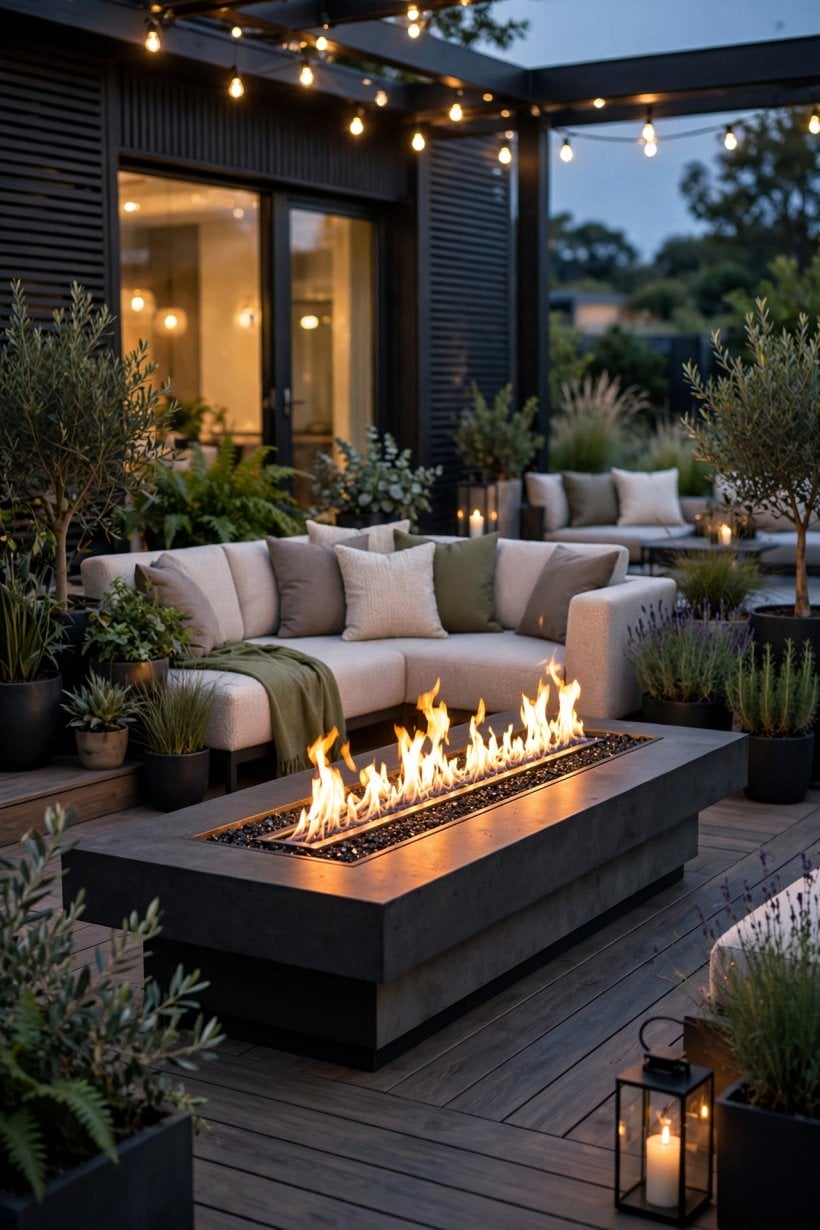
Small gardens photograph fire beautifully precisely because everything is close: the backdrop is nearer, the circle tighter, the glow stronger. Compact is not a compromise here — it is an intensity the big garden has to work for, as deck ideas shows for small platforms.
66. Choose a Compact Bowl and Let It Be Generous in Spirit
A small bowl, well made and well placed, gives a tiny terrace its whole evening. Spend on material and finish rather than size the space cannot seat around anyway.
67. Build the Seating Into the Terrace’s Edges
Bench walls and steps as seats keep a small circle furnished without a single loose chair. The architecture sits down, and the picture stays uncluttered.
68. Let a Fire Table Serve a Balcony’s Dining and Warmth
On balconies and roof terraces, the fire table’s contained, table-level flame suits the setting’s scale and its furniture — one piece doing the work of hearth and table.
69. Use a Corner Chiminea to Open a Small Picture Diagonally
A corner placement lengthens a small garden’s diagonal and leaves its centre free. The chiminea’s height draws the eye along that diagonal like a pointer.
70. Keep the Small Circle’s Palette Tight
Two materials, one planting mood, repeated: small settings read composed when they resist variety. Restraint is the tiny garden’s luxury finish.
71. Mirror Firelight With a Dark Water Feature Nearby
Even a small still basin near the circle doubles the flame in reflection and cools the composition’s colours. Fire and water in miniature, garden theatre at table scale.
72. Let Folding Chairs Be the Small Garden’s Honest Answer
Good folding or stacking chairs, brought out for fire nights, keep a small garden uncluttered by day and fully seated by night. Permanence is not the only virtue.
73. Hang Festoon Lights to Complete the Small Terrace Picture
A single strand above a compact circle gives the photograph its ceiling and the evening its festival. In small spaces, overhead dressing does the work planting does elsewhere.
74. Choose a Pit That Stores or Covers Discreetly
Where the terrace must return to breakfast by morning, a lidded or coverable pit keeps the setting tidy between performances — the fire as a guest, not a squatter.
75. Accept the Small Fire as the Garden’s Whole Evening
In the smallest gardens the honest design lets the fire circle be the evening entire: no tour, no second act. A whole-hearted small fire outperforms a diluted large garden every night it is lit.
9. Checks and Mistakes: Choosing the Picture Honestly
This post is deliberately the visual half of the subject. Before any building is planned, the making post — how to make a stacked stone fire pit — carries the planning and fire-safety framing in general terms: clearances from structures and planting, a stable non-combustible base, and checking the local rules that govern open fires where you live. Keep those questions with that guide. The visual mistakes, though, belong here: a pit scaled for a photograph rather than the circle that must sit around it; seating placed for the camera and never for conversation; a backdrop that washes the flame out; materials that fight the house; and a setting with no thought for the unlit months, when the pit is pure sculpture. Compose for faces first, seasons second, and photographs last — the pictures will take care of themselves.
10. Costs and Pulling It Together
Costs on the visual side divide into the pit, its setting and its circle. The pit itself ranges from a simple steel ring to a built stone feature, and its price follows material and permanence far more than size. The setting — surround, backdrop planting, ground texture — is the quiet band that decides whether the result photographs as a feature or an appliance. The circle — seating, blankets, small tables — is mostly furniture the household may already own, rearranged with intent. Pull the picture together in order: setting chosen for backdrop and evening light, silhouette matched to the garden’s temperament, material picked for the unlit days, seating composed for one conversation, and planting framed last. Designed that way, a fire pit stops being an object placed in a garden and becomes what the best pictures show — the garden’s hearth, around which everything else has quietly arranged itself.
Final Considerations
A fire pit is the garden’s oldest idea, and its most reliable picture: a circle of faces, a darkening garden, a flame doing the decorating. The designs that endure are the ones composed like rooms — silhouette, material, setting and seating all answering to the same temperament.
Choose the picture you honestly want to live in, then let the building guide carry the making. Lit or unlit, summer or winter, the right fire pit will be composing your garden’s evenings for years.


0 Comments