

A game room earns its name on the loudest night of the year — cousins around a table, a final being shouted at, someone’s grandfather quietly winning at cards in the corner. Rooms that were planned for that night work every ordinary Tuesday too. Rooms that were just filled with equipment work for neither.
These 75 game room ideas plan the room before the kit: the anchor game first, seating for players and watchers, light that flatters faces and boards alike, and storage that swallows the whole hobby in minutes. The relaxed end of the house belongs with family room ideas; this post owns the play.
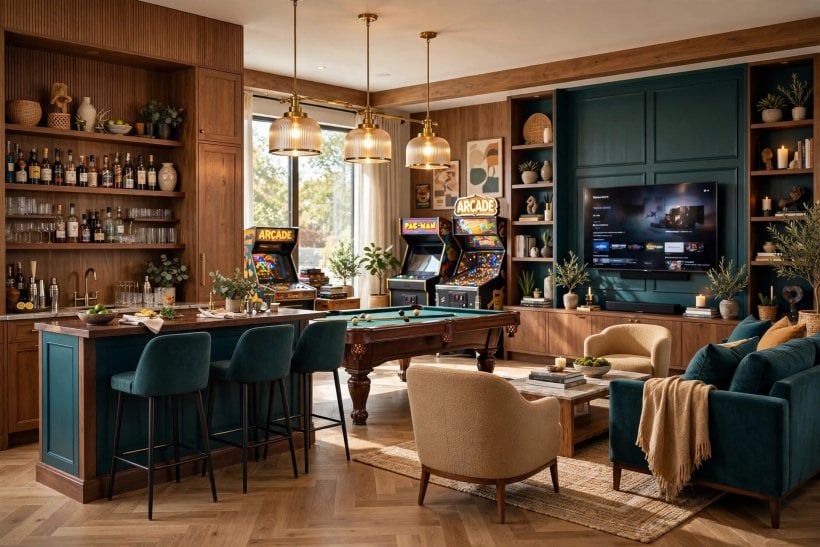
1. Game Room Ideas at a Glance
The central entity is the game room: a dedicated leisure room whose attributes are its anchor game, its table and seating geometry, its lighting for faces and playing surfaces, its sound behaviour, its storage for equipment, and the food-and-drink support that keeps play in the room. It is judged by one test: how many different groups — children, teenagers, grandparents, the serious league — can use it in the same week without moving furniture.
| Question | Short answer |
|---|---|
| What should be chosen first? | The anchor game — pool, table tennis, board games or screens — because its size and clearances plan everything else. |
| What do most game rooms lack? | Seating for watchers and storage for kit; the game itself is rarely the problem. |
| Where do game rooms work best? | Where noise is welcome: basements, spare rooms away from bedrooms, and converted garages. |
| What is the biggest mistake? | Buying the biggest table first and discovering the room cannot hold players around it. |
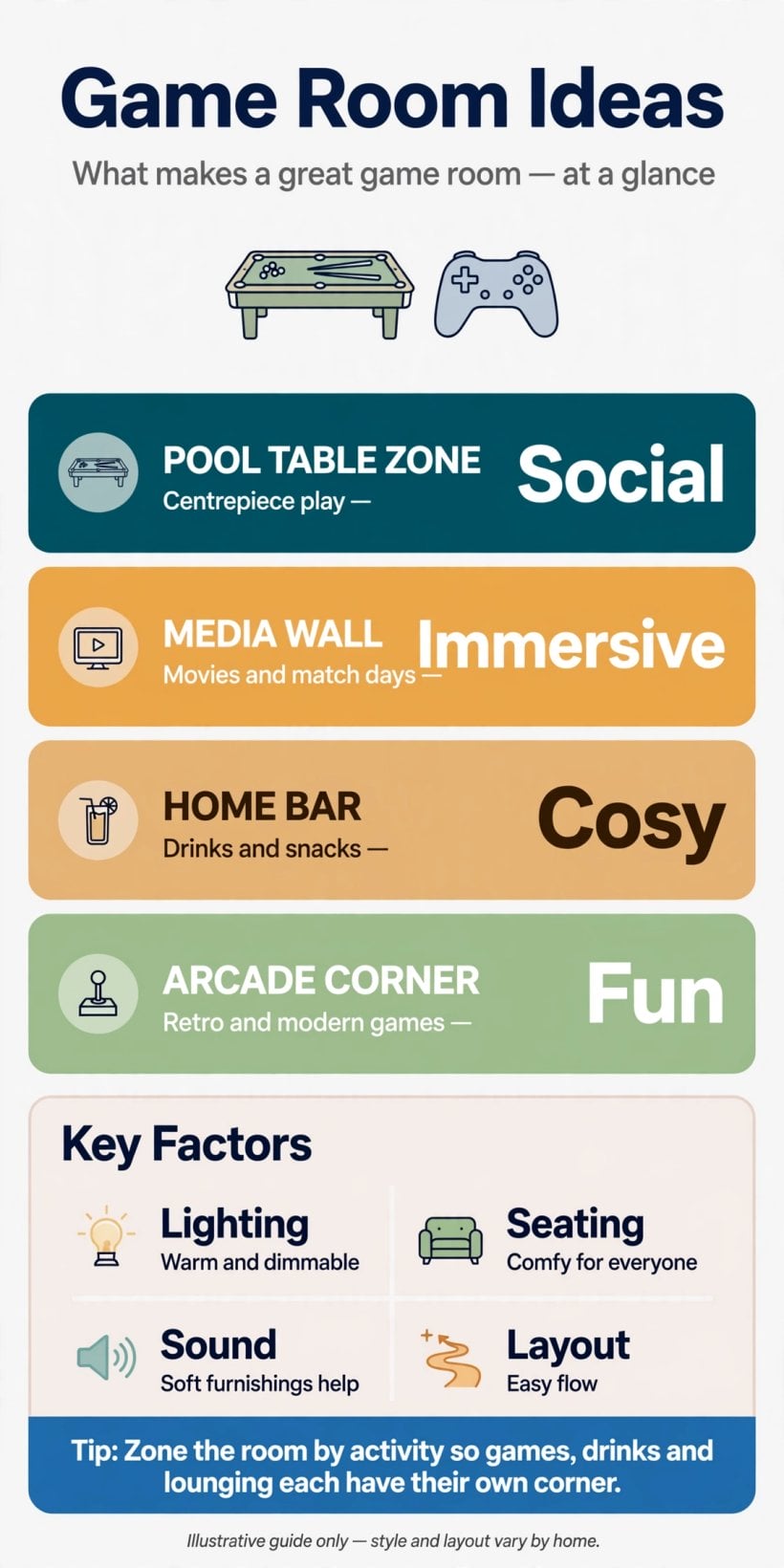
2. The Anchor Game: Plan Around One Star
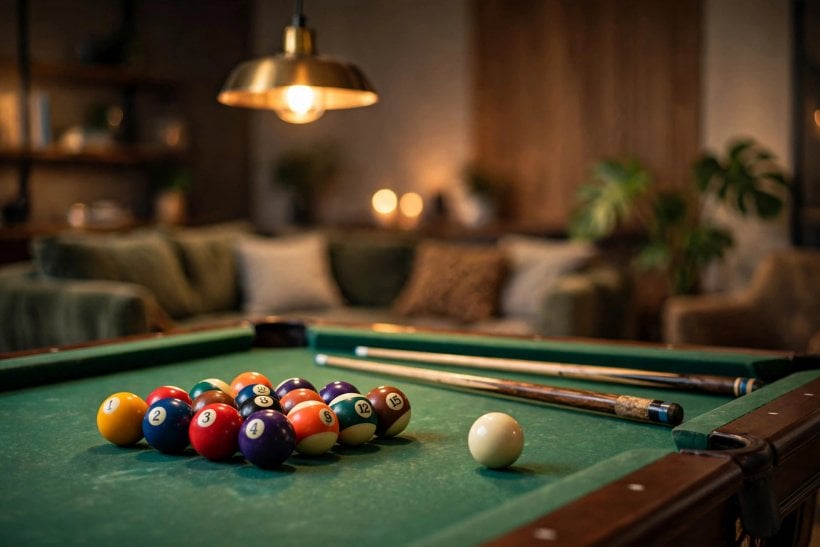
Every good game room has a star and a supporting cast. The star takes the centre, the light and the clearance; everything else — cards, boards, darts, screens — arranges itself around that decision, the same discipline the basement ideas pillar applies to underground rooms.
1. Let a Pool Table Own the Centre Where Cue Sports Rule
A pool or snooker table is furniture, sport and sculpture in one. Centre it, light it from above, and give every side the full cue swing the game honestly needs — a table you cannot play properly from one side is an ornament, not a game.
2. Choose a Games Table That Converts for Mixed Households
Tables that turn from dining to pool to table tennis serve households whose games change with the guests. The conversion must be genuinely easy, or it will happen exactly once.
3. Give Table Tennis a Folding, Stowable Home
A fold-and-roll table tennis top earns its floor only on game nights and disappears for everything else — the flexible anchor for rooms that also host guests, exercise or homework.
4. Build Board Games Around a Proper Table, Not a Coffee Table
Board and card games deserve elbow height, elbow room and light that reaches the middle. A sturdy table with comfortable chairs converts casual players into regulars faster than any game library.
5. Let a Card Table Be the Room’s Second Anchor
Poker, bridge and family card schools need a smaller, quieter stage than the main event. A folding card table with its own chairs lets two games run at once without negotiation.
6. Give Darts a Wall, a Board and a Safe Lane
Darts needs one honest wall, a clear throwing lane and a surround that forgives beginners. Cabinet boards that close away keep the room civilised between matches.
7. Anchor Screen Play on a Wall, Not a Corner
Console and racing play belong centred on a wall with seating at a comfortable distance, blackout control for daytime sessions, and cables planned out of sight from day one.
8. Keep One Floor Game for the Youngest Players
A corner for floor puzzles, building blocks or a play mat means small children belong in the room too — supervised by the game, included by the plan, not exiled from it.
9. Let Chess and Quiet Games Have a Window Seat
Not every game is loud. A two-chair corner by the light, with a small table and the good chess set, gives the room its contemplative gear.
10. Choose Retro Arcade Only If It Will Truly Be Played
A cabinet or pinball machine is a joyful anchor for households that love it and a heavy sculpture for those that merely like the idea. Test the love before the purchase.
11. Leave One Flexible Square of Floor Deliberately Empty
Motion games, party games, a train set at Christmas, a dance mat: the empty square is the room’s future. Guard it against storage creep with your life.
3. Seating: Players, Watchers and the Corner Crowd
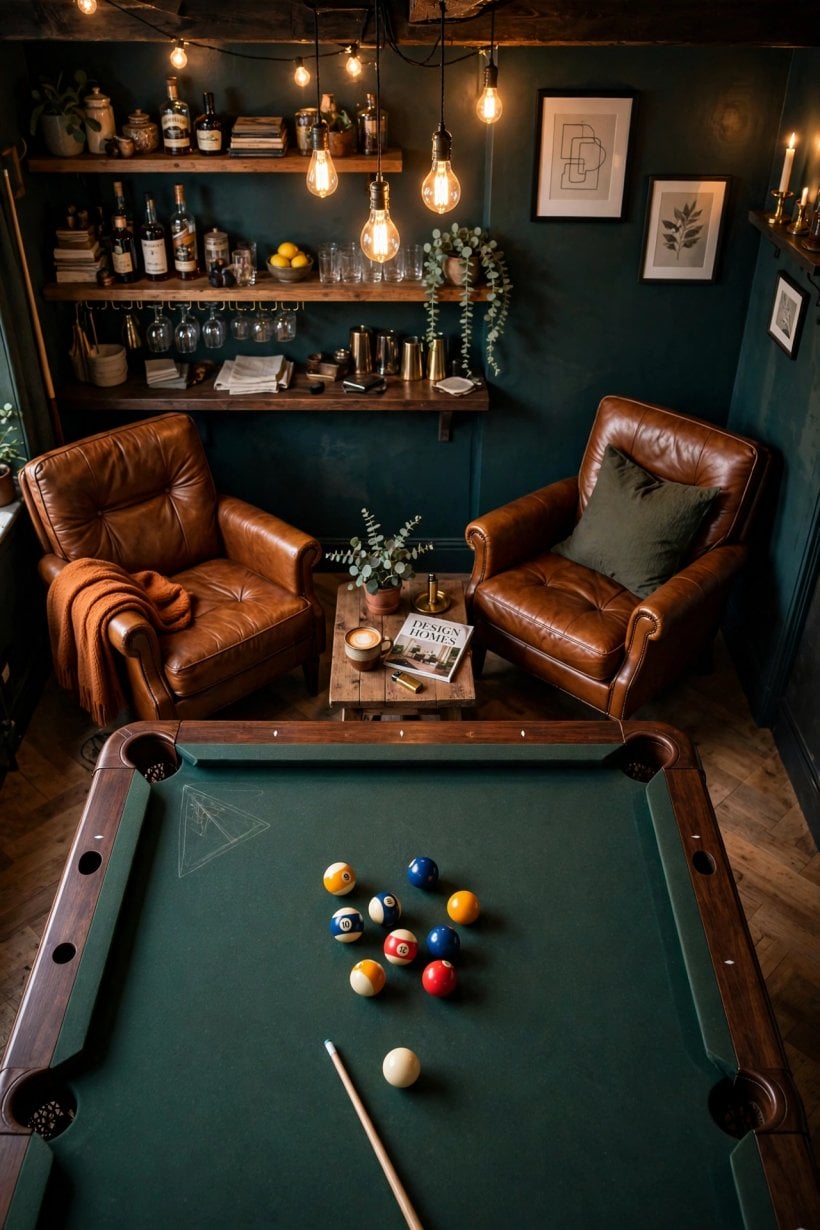
Games create audiences, and audiences abandoned to standing leave early. Seating is planned in three rings — players at the game, watchers near it, and the social crowd with drinks at the edge — the layering small living room ideas uses in tighter rooms.
12. Give Watchers a Bench Along the Playing Wall
A long bench or banquette against one wall seats the audience, the substitutes and the snack-holders in one sweep, and stores cushions and blankets underneath.
13. Choose Chairs Players Can Sit In for Hours
Card and board sessions outlast dining. Upright, padded, arm-height-correct chairs are a game purchase, not a comfort luxury — test them with a full evening before committing.
14. Add a Small Sofa for the Between-Games Crowd
Half of a game night happens between games. A compact sofa facing the action gives that half a home and stops the crowd colonising the playing chairs.
15. Keep Stools Mobile for Shifting Formations
Light stools and poufs move to wherever the current game needs bodies — extra players, a scorekeeper, a grandchild on a cushion throne. Mobility is seating capacity in disguise.
16. Build a Raised Spectator Edge in Larger Rooms
In a big basement room, a slightly raised platform or bar-height ledge behind the main table lets watchers see over players’ heads — stadium thinking at domestic scale.
17. Give the Scorekeeper a Proper Perch
Every serious game grows a scorekeeper, referee or quizmaster. A designated chair, small side table and the good light make the role an honour rather than an exile.
18. Keep One Quiet Chair Away From the Action
Someone at every gathering wants the room’s company without its competition. A reading chair at the edge, with its own lamp, keeps them in the evening.
19. Choose Upholstery That Forgives Snacks and Enthusiasm
Game rooms feed people near felt, cards and screens. Washable covers, forgiving fabrics and darker patterns in the splash zones are realism, not pessimism.
20. Let Seating Double as Storage Wherever It Can
Ottomans that swallow board games, benches that hold cues and blankets: in a room defined by equipment, every seat that stores is floor space returned to play.
21. Arrange Seats So Nobody’s Back Is to the Room
Conversation dies when half the seating faces a wall. Angle the social seats toward both the game and each other, and the room works even when no game is running.
22. Keep a Folding-Chair Reserve Honestly Stored
Tournament nights need more chairs than Tuesday does. A slim rack or closet for folding chairs, planned rather than improvised, keeps the reserve invisible until it is glorious.
Seating also decides who returns. The friend who spent last time perched on a stool’s edge remembers it in the body, not the mind, and finds reasons to miss the next night; the grandparent given a proper chair with arms, near the warmth and the conversation, becomes the league’s most reliable player. When the seating plan is drawn, put names to the seats — the regulars, the elders, the children, the occasional guest — and check that every one of them has been given somewhere genuinely comfortable to land.
4. Light and Screens: Seeing the Game Clearly
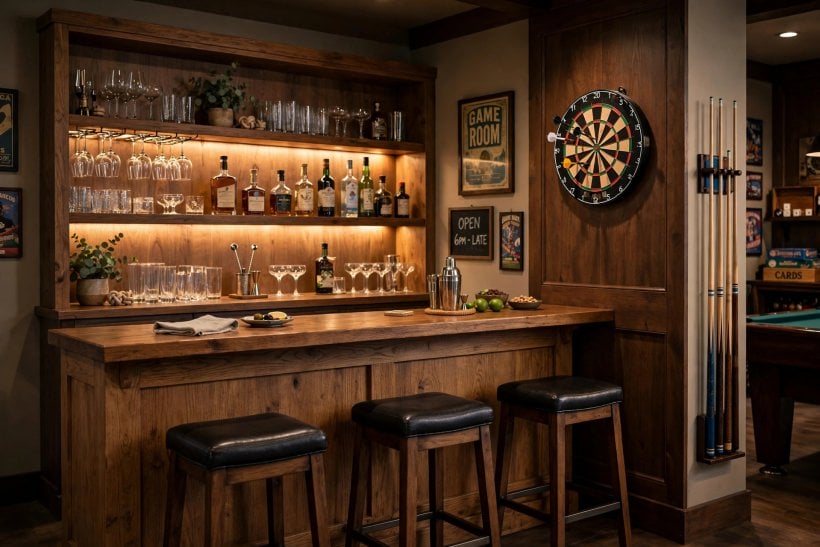
Game light has two jobs that fight each other: bright, even light on the playing surface, and soft, flattering light on faces. Solve them separately — task light for the game, ambient light for the people — the way home bar ideas layers light for evenings.
23. Hang a Pendant or Bar Light Directly Over the Main Table
The anchor game gets the anchor light: centred, glare-free, bright enough to read small print and judge colours honestly. Everything else in the room can be mood; this one is equipment.
24. Put Playing Light and Mood Light on Separate Switches
One switch for the game, one for the room, dimmers on both. The ability to lower the room while the table stays bright is the whole atmosphere trick of the great game rooms.
25. Banish Screen Glare With Curtains and Angles
Screen play dies by reflection. Face screens away from windows, give the window honest blackout or heavy curtains, and test the seat at the sunniest hour before fixing anything.
26. Light the Dartboard Like a Stage
A dedicated board light removes shadows from the scoring surface and makes evening darts feel professional. Keep the throwing lane’s floor light low and even.
27. Use Warm Light at the Social Edge
Lamps and warm-toned bulbs where people sit and talk keep faces kind and drinks golden. Cool white light belongs in workshops; game rooms are evening rooms.
28. Give Card Players Light That Reaches the Table’s Middle
Cards are read at the centre of the table, where pendant shadows gather. A wide, diffused fitting — or two smaller ones — keeps every hand equally readable and equally honest.
29. Plan Power for Screens, Chargers and the Scoreboard
Consoles, soundbars, phone chargers, a small fridge: the socket plan is a game-room plan. Place power where the equipment lives and the cable tangle never starts.
30. Add a Small Scoreboard or Chalkboard for Leagues
Families that keep score keep playing. A chalkboard, whiteboard or simple framed scoreboard gives tournaments a memory and the room a sense of ongoing story.
31. Keep One Lamp Lit for the Room’s Idle Hours
A game room that is pitch dark except in use feels like a cupboard. A low lamp on a timer keeps it a room the house passes through and enjoys daily.
32. Hide the Wiring Before It Becomes the Decor
Trunking, in-wall runs or furniture that conceals the console spaghetti: decide it at setup. Visible cables are the fastest route from games room to storage room in the household’s mind.
33. Let Natural Light Be Controlled, Not Worshipped
Daylight is lovely for puzzles and poisonous for screens and felt. Blinds that genuinely darken, chosen at the start, let the room serve both shifts.
5. Sound, Walls and Atmosphere
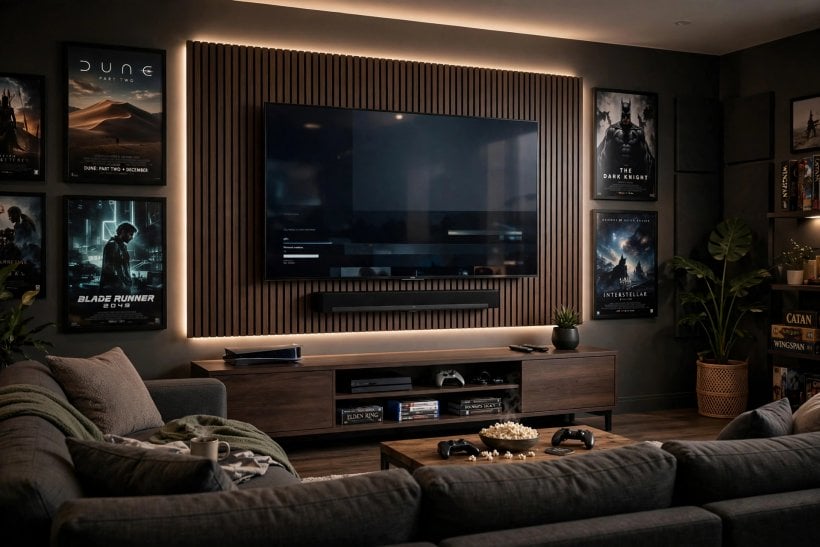
A game room’s atmosphere is mostly sound: laughter contained, music present, the click of the game itself. Hard empty rooms shout; soft furnished rooms glow. Finishes do that work before any speaker is switched on.
34. Lay a Rug Under the Main Game to Tame the Echo
A large, low-pile rug under the anchor table absorbs the room’s hardest noises, defines the playing zone, and protects the floor from chair legs and dropped enthusiasm.
35. Use Curtains and Upholstery as Sound Treatment
Full curtains, upholstered benches and cushions are acoustic treatment wearing domestic clothes. A room with soft surfaces can be loud inside and merciful outside it.
36. Give the Room a Confident Colour It Could Not Wear Elsewhere
Game rooms forgive drama: deep green, oxblood, navy, a chalkboard wall. The playful room is where the house’s bravest colour finally gets its chance.
37. Hang the Room’s History on Its Walls
Team colours, framed scoresheets, the tournament trophy, photographs of famous family victories: the walls should tell players whose room this is and what has happened here.
38. Keep One Wall Honest for the Board and the Bracket
League tables, knockout brackets and the house rules belong on a wall everyone can read. The ritual wall turns occasional games into a season.
39. Choose Flooring That Survives Chairs, Drinks and Dropped Darts
The floor takes the room’s whole life. Hard-wearing, repairable surfaces in the playing zone, with rugs doing the softening, outlast any beautiful-but-delicate choice.
40. Add Music That Serves the Game, Not Itself
A modest speaker, placed once and aimed at the room, at conversation-friendly volume. Game rooms are social first; the soundtrack should never need shouting over.
41. Mind the Neighbours Above, Below and Beside
Basement rooms carry sound up; spare rooms carry it through walls. Rugs, door seals and a house agreement about late sessions keep the peace the games need.
42. Let a Theme Be a Light Touch, Not a Costume
A sports bar, retro arcade or library-games theme works as palette and a few strong pieces. Theme carried into every object becomes a set the household tires of by spring.
43. Keep Ventilation in the Atmosphere Budget
Six excited people in a closed room need air as much as light. A window that opens, a fan, or proper ventilation planned early keeps long sessions comfortable.
44. Give Coats, Bags and Shoes a Landing Strip
Guests arrive with stuff, and stuff colonises playing surfaces. Hooks and a bench near the door keep the game’s territory clear and the evening uncluttered.
A game room also lives or dies by its reset. The rooms that stay loved are the ones that return to tidy in five minutes: cues racked, cards boxed, pieces counted into their trays, chairs pushed back to their marks. Build that reset into the room itself — a home for every object, visible and reachable — and tidying becomes part of the game’s closing ritual rather than a punishment after it. The room that is hard to reset is the room that quietly becomes storage, one abandoned tournament at a time.
6. Storage: The Invisible Game
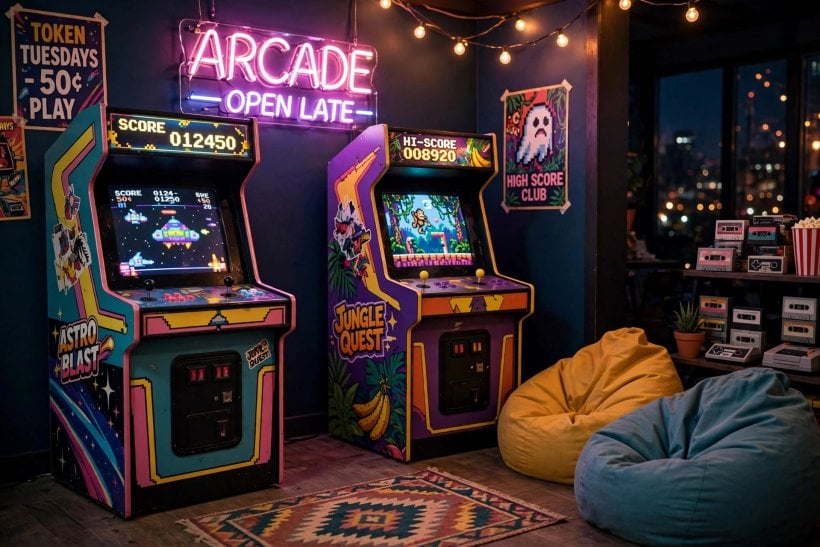
Every game arrives with pieces, and every piece without a home becomes clutter that eats playing space. Storage planned as a wall, a system and a habit is what separates a game room from a toy explosion — the organisational cousin of tiny living room ideas.
45. Build One Storage Wall and Let It Be Generous
Cupboards, shelves and cue racks along one wall hold the whole hobby in order. A single, deep, well-planned store beats ingenious hiding places scattered around the room.
46. Store Board Games Visible, Upright and Reachable
Games shelved like books, spines out, get chosen; games stacked in a cupboard get forgotten. Visibility is the library’s whole trick — what is seen is played.
47. Give Small Pieces Trays, Boxes and Labels
Counters, dice, cards and tokens in labelled trays end the ten-minute setup hunt and the missing-piece tragedy. The labelling session is an afternoon; the peace is permanent.
48. Rack Cues, Racquets and Bats Vertically
Long equipment warps and tangles on floors. A simple wall rack keeps cues straight, racquets findable and the room’s edges calm.
49. Keep a Charging and Controller Dock by the Screens
Controllers that live in a dock are charged, paired and findable. Controllers that live anywhere are flat on game night — this is a law, not a tendency.
50. Store the Folding Games Near the Floor They Serve
The table tennis top, folding chairs and party games should store within a few steps of where they are used, or their setup friction quietly cancels them.
51. Give Snacks and Drinks a Non-Playing Surface
A sideboard, trolley or small bar counter keeps food and glasses off felt, cards and boards. One house rule — nothing wet on the playing surface — enforced by design, not nagging.
52. Add a Small Fridge Only Where Evenings Run Long
A compact fridge earns its hum in rooms hosting long sessions far from the kitchen. Near the kitchen, it is a noise and a bill in search of a purpose.
53. Keep a Repair and Spares Drawer
Spare tips, chalk, batteries, a bulb, the Allen keys everything needs: one drawer of spares saves more game nights than any single purchase in the room.
54. Let Storage Furniture Carry the Room’s Style
The storage wall is the room’s largest surface; its colour and handles set the tone. Build it like furniture, not like a garage that wandered indoors.
55. Review the Collection Yearly and Retire Honestly
Games nobody has opened in a year are shelf rent. A yearly cull — donate, lend, store deep — keeps the visible collection alive and the room’s energy current.
7. Food, Drink and the Long Evening
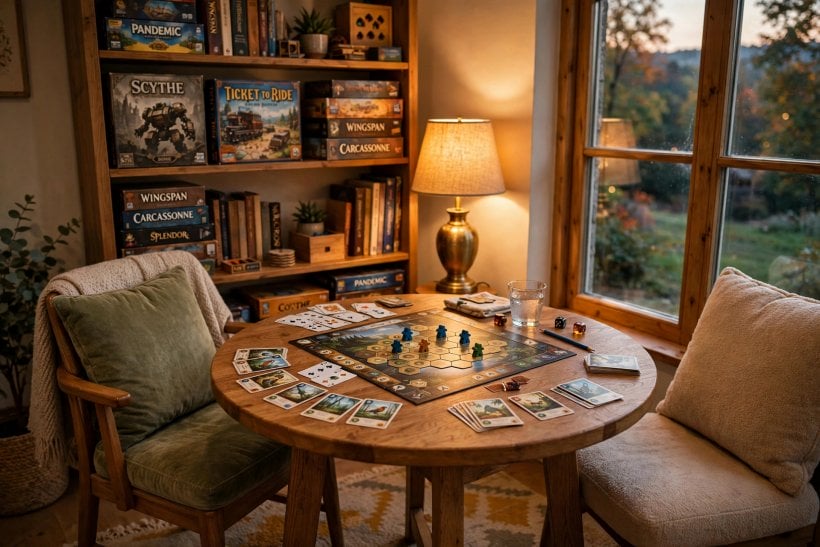
Game nights run on snacks, and snacks are a design problem: they must be close, spill-resistant and never on the playing surface. Plan the refreshment station like a position on the team, alongside the hosting lessons in how to decorate a tiny living room for smaller spaces.
56. Give Every Seat a Place to Park a Drink
Side tables, a ledge behind the sofa, cup holders in the bench: drinks with homes do not migrate onto the game. Count seats, then count drink spots, and make the numbers match.
57. Serve Finger Food That Leaves Hands Clean
Cards, pieces and controllers all hate grease. The great game-room menus — nuts, fruit, wrapped and skewered things — are chosen by the games as much as the cook.
58. Keep a Bin and a Cloth Within the Room
Wrappers, napkins and spills handled in the room keep the evening flowing. A small, decent bin is hospitality equipment, not an afterthought.
59. Let a Drinks Trolley Do the Rounds
A trolley serves the room without a permanent bar, parks in a corner between duties, and carries the evening’s theatre with it. In small rooms it replaces a whole furniture category.
60. Plan a Tea and Coffee Answer for Long Sessions
Not every long night runs on cold drinks. A kettle point or flask station at the sideboard keeps the card school fuelled without kitchen expeditions breaking the game.
61. Keep Glass Away From the Playing Zone’s Floor
Bare feet, dropped balls and excitement argue for sturdy tumblers and cans in the playing area, with the good glassware living at the social edge. Design the rule kindly.
62. Give the Room a Closing Ritual for Food Too
Snacks boxed, surfaces wiped, bin out: the two-minute close keeps the room fresh for tomorrow and stops last night’s crisps becoming this week’s atmosphere.
63. Seat Eating Away From Felt and Screens
A small eating perch — the bench, a side table for two — keeps meals and games in separate territories, and both survive the evening in better condition.
64. Stock the Room’s Own Basics
Napkins, bottle opener, coasters, a spare set of glasses: the room that holds its own basics never sends a player upstairs mid-game. Self-sufficiency is the luxury here.
65. Let the Host Play Too
Every refreshment decision above serves one end: the host sits down. A room that runs itself — stocked, reachable, tidy by design — gives its owner the game night as well as the guests.
8. Small Rooms, Spare Rooms and Tiny Houses
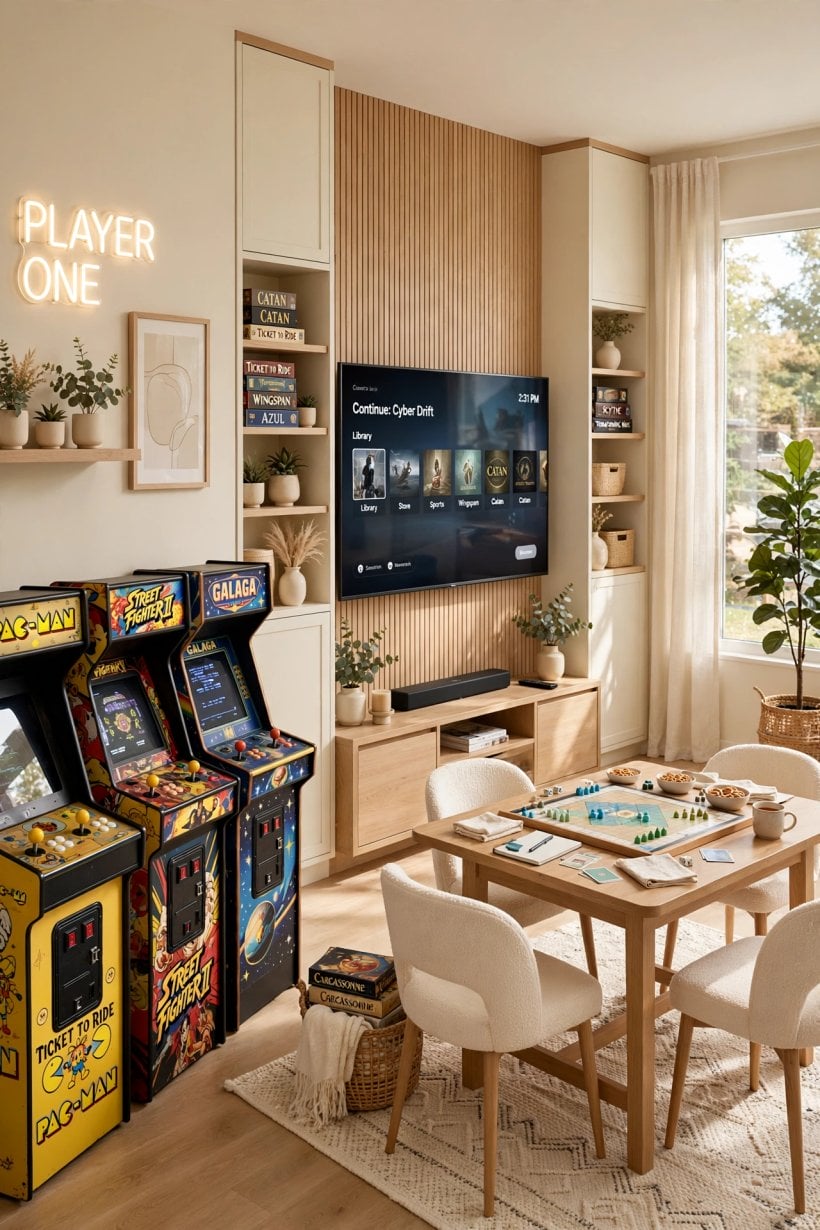
Most game rooms are not ballrooms; they are spare bedrooms, box rooms, garage corners and, in tiny houses, a table that earns its place daily. Small changes the menu, not the principle — the anchor shrinks, the storage grows cleverer, and the room doubles its duties honestly, as living room ideas shows at pillar scale.
66. Let a Drop-Leaf or Folding Table Be the Small Room’s Anchor
A table that seats six for games and folds to a console against the wall gives a small room two lives. Choose the mechanism sturdy; it will work weekly for years.
67. Choose Wall-Mounted Games Where Floor Is Precious
Darts, a wall scoreboard, a fold-down table tennis top: vertical games give a tiny room a full menu at zero floor cost. The walls are the small room’s spare square metres.
68. Make the Guest Bed and the Game Room Share Honestly
A sofa bed, games stored in the wardrobe, and a table that folds: the spare room can host guests monthly and games weekly if the changeover takes minutes, not an afternoon.
69. Use the Garage Corner With Weather Honesty
Garage game corners work where cold and dust are answered — a rug, a heater, sealed storage. Pretending a garage is a room without answering either is how equipment quietly dies.
70. Let a Tiny House Play at the Dining Table, Beautifully
In the smallest homes the game room is a ritual, not a room: the good board out, cushions down, a lamp moved close. Planned storage for the games keeps the ritual easy to start.
71. Keep One Game Out as the Room’s Invitation
A chess set mid-game, a jigsaw under way on its board: one game left visibly in progress invites the household in daily. Completion can wait; invitation cannot.
72. Borrow Light and Seating From the Whole House
Small game spaces should plan their borrowings: the dining chairs, the hallway lamp, the kitchen trolley. A room designed to borrow gracefully never feels under-equipped.
73. Choose Compact, High-Quality Versions of Favourite Games
Travel and compact editions of the household’s real favourites beat full-size versions of games nobody loves. Quality of play outranks size of box in every small room.
74. Keep Noise Diplomacy in the Small-Room Plan
Thin walls and sleeping children set the small room’s curfew games: cards and boards late, the loud tournament earlier. Scheduling is a design feature in close quarters.
75. Protect the Small Room’s Second Job
Study, guest room, nursery-to-be: the small game room usually has another duty. Keep that duty’s essentials stored and reachable, and both jobs will be done well instead of resentfully.
9. Checks and Mistakes: Before the First Purchase
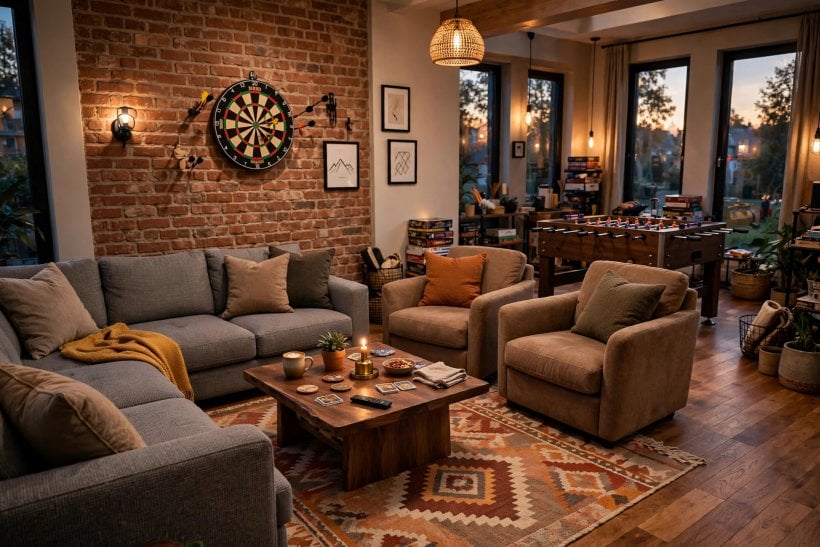
Measure the room for the game, not the catalogue photograph: the anchor’s footprint plus players in motion around it, doors opening, chairs pulled out. Check the route in — large tables have failed at stairwells and doorways more often than at any other test — and check the floor’s level and the ceiling’s height for cues and lamps. Then the mistakes, which are reliable: the biggest table bought first; seating only for players; light that flatters nobody; storage postponed until the clutter wins; and a screen corner with no blackout planned. Choose the anchor honestly, seat the watchers, light the table, store the hobby — the games look after themselves.
10. Costs and Pulling It Together
Costs divide into the anchor, the room and the running. The anchor — table, machine or screen setup — is the headline band and varies enormously with ambition and second-hand luck; good used tables are this category’s great bargain. The room band — seating, light, rug, storage wall — is where comfort is actually bought, and it rewards steady spending over seasons. The running band is small: felt, bulbs, batteries, snacks and the occasional repair. Pull the project together in order: room measured and route checked, anchor chosen, seating and light planned around it, storage built before the collection grows, and the refreshment corner last. Built that way, the game room stops being a pile of equipment and becomes what the best ones are — the house’s loudest, happiest room, with a game always ready.
Final Considerations
A game room is a promise the house makes to its people: there is a place here where play is taken seriously. Keep that promise with an honest anchor, seats for everyone the game creates, light that serves faces and boards alike, and storage that makes starting easy and finishing quick.
Start with the game your household already loves, in the room where its noise is welcome, and let every later purchase answer to that first decision. The room will grow the way good games do — one well-played evening at a time.


0 Comments