

Sunlight is free, silent and, on a clear day, strong enough to cook dinner. A solar oven simply gives that light a well-insulated place to gather, turning an ordinary midday into a slow cooker that never needs fuel.
This guide explains how the heat builds, compares the three classic designs, and walks through what to cook, from first rice to confident bread, in plain, practical order.
1. At a Glance: Designs, Heat and Best Cooking
The whole method rests on one central entity, captured sunlight, and three designs that capture it differently. The summary below compares their typical heat and best uses before the sections ahead explain the physics, setup and cooking in full.
| Box Oven | Typical heat 200–300°F |
| Parabolic | Typical heat 400°F+ |
| Panel Oven | Typical heat 200–250°F |
| Best Cooking | Slow and steady: stews, bread, rice |
| Sun | Strong direct sunlight best |
| Reflectors | Boost heat concentration |
| Pots | Dark, thin, lidded preferred |
| Timing | Peak hours 10am–3pm |
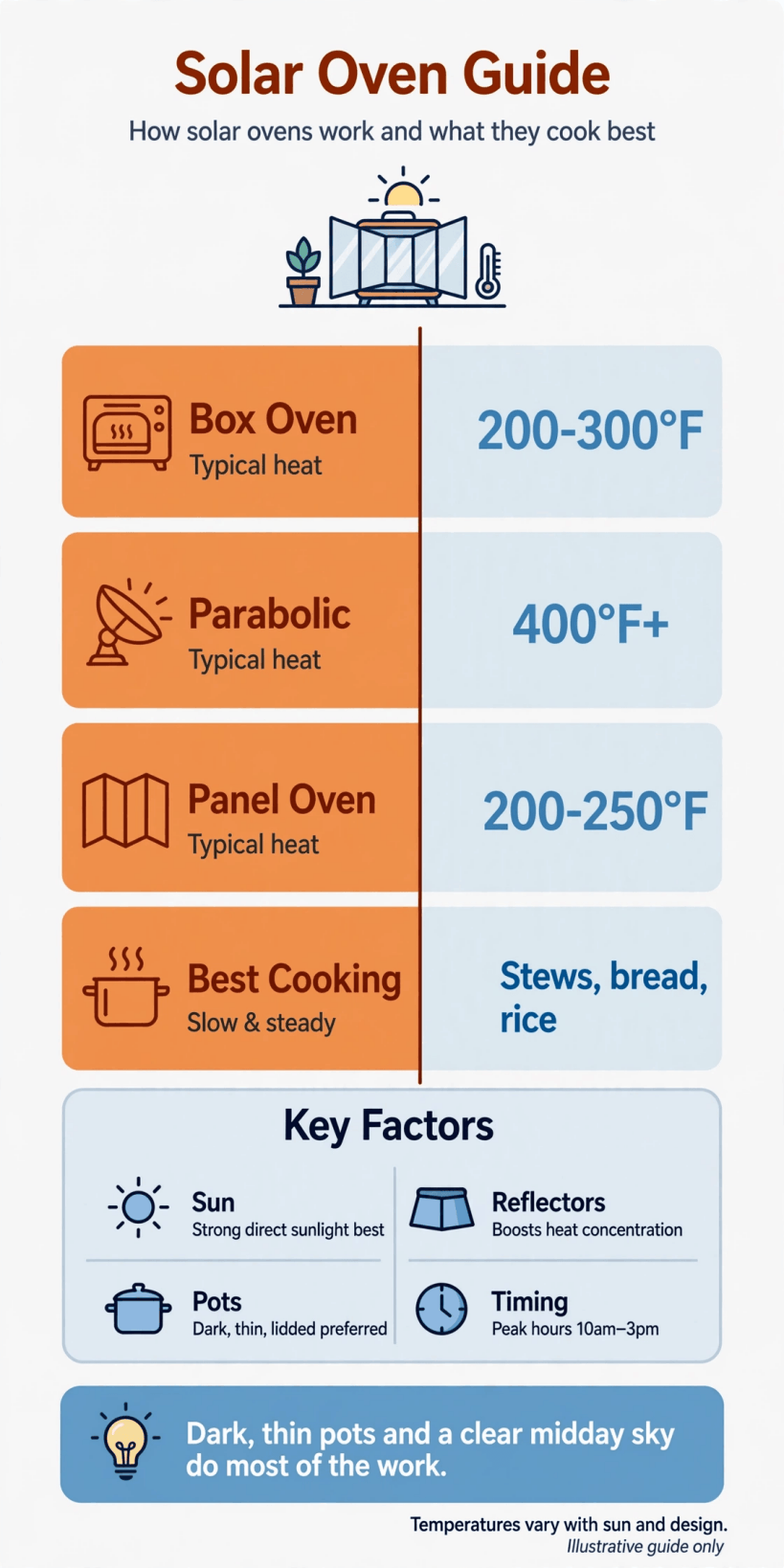
The designs at a glance: box ovens cook at a typical 200–300°F, panel ovens at 200–250°F, and parabolic designs reach 400°F+, with stews, bread and rice as the best cooking.
Hold on to the summary’s parting tip as you read: dark, thin pots and a clear midday sky do most of the work. The temperatures shown vary with sun and design, so treat them as honest guides to what each style does best rather than promises for a particular afternoon.
2. How Sunlight Becomes Cooking Heat
Three simple things happen inside every solar oven, whatever its shape. First, reflectors gather extra light and throw it toward the cooking area, concentrating what the sky provides. Second, a dark surface absorbs that light and converts it to heat, which is why the cookware, not the box, is the real engine of the system. Third, insulation and a transparent cover trap the heat where it lands, slowing its escape until the temperature builds high enough to cook.
Think of it as a greenhouse for a pot. Light enters easily through the glazing, but the warmed air and surfaces cannot shed their heat as freely, so warmth accumulates the way it does inside the sunken greenhouse (walipini) build described in its own guide. The steadier the sunlight and the better the trapping, the higher and more even the cooking temperature, which is why design quality shows up as patience saved rather than novelty.
This also explains the method’s character. Solar cooking is gentle and forgiving because the heat builds gradually and rarely scorches, and it is weather-bound because no sun means no cooking. Once you accept those two facts, everything else in this guide is simply technique: position the cooker to gather the most light, choose pots that absorb it best, and give food the unhurried time the method prefers.
3. The Three Designs: Box, Panel and Parabolic
The box design is the steady all-rounder of the summary, a typical 200–300°F from an insulated box with a glazed lid and usually a reflector flap. It cooks like a slow oven, holds several dishes at once, forgives imperfect aim, and keeps working through light cloud. For most households learning the method, this is the design that teaches the craft with the fewest disappointments, and the one best matched to the stews, bread and rice the summary calls its best cooking.
The panel design is the lightweight traveller, folding flat, weighing little, and delivering a typical 200–250°F by wrapping reflective panels around a pot inside a heat-resistant bag or cover. It excels at gentle cooking for one or two, packs into a tiny-house cupboard or a backpack, and asks the cook to reposition it a little more often. Treat it as the minimalist’s cooker: modest heat, modest food quantities, unmatched convenience.
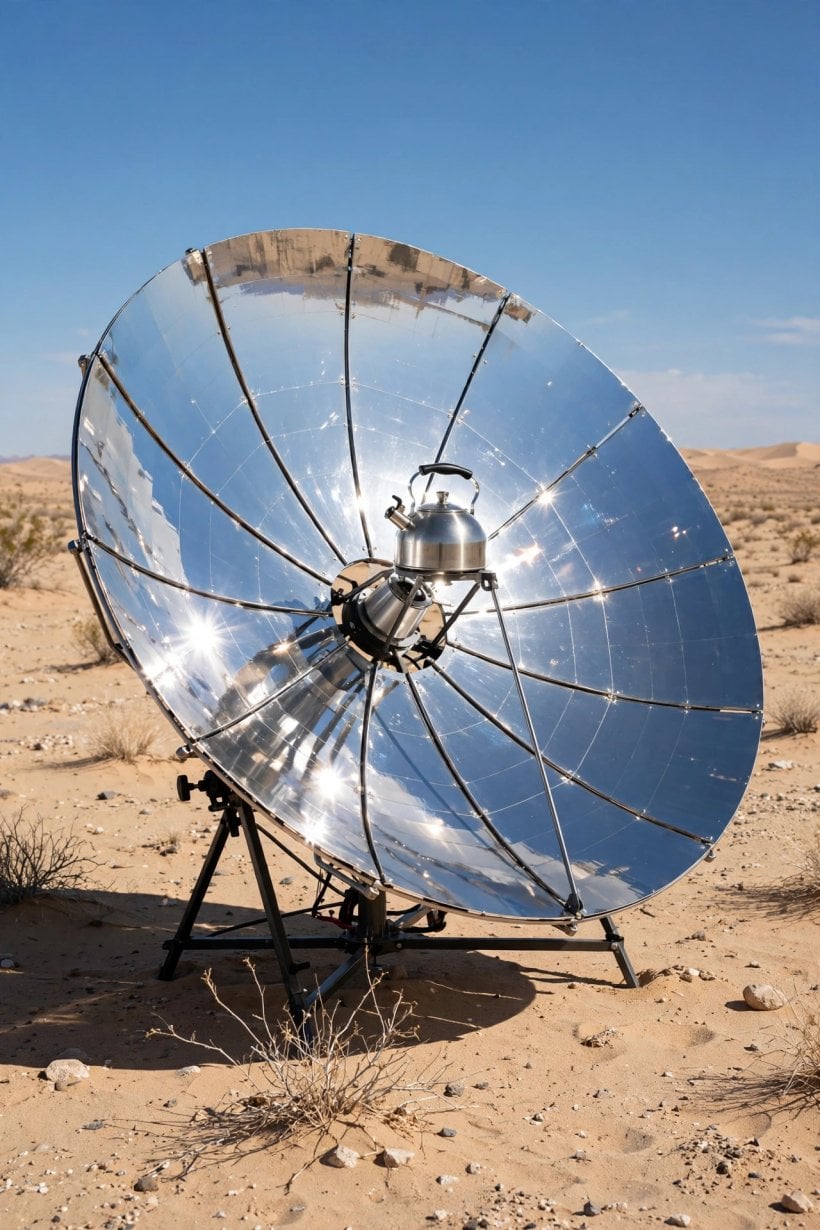
The parabolic design is the specialist, a curved reflective dish focusing light onto a single point to reach a typical 400°F and beyond. That intensity fries, sears and boils in ways the gentler designs cannot, but it demands respect and attention: the focus must track the sun, the cook works around concentrated glare and heat, and leaving it unattended is unwise. Choose it deliberately, for the fast, hot jobs, rather than as a first cooker.
4. Setting Up: Sun, Angle and Timing
Setup begins with the summary’s first key factor: strong direct sunlight is best, and the peak cooking window runs from about 10am to 3pm, when the sun rides highest and shadows shrink. Place the cooker on level, dry ground in the open, away from walls, fences and trees that will throw shade as the hours pass, because a cooker that starts in sun and ends in shadow delivers a half-cooked meal and a lasting lesson.
Angle the reflectors to pour light onto the pot, using the brightness inside the cooking area as your gauge: when the reflections converge on the food rather than scattering past it, the aim is right. Turn the cooker to follow the sun at intervals through the cooking time, more often for parabolic designs, less for forgiving box designs, and prop or weight everything against the breeze, since a gust at the wrong moment costs both heat and temper.
Plan the meal backwards from the light. Long, slow dishes go in as the peak window opens; quick items and reheats fit late in the window; and anything that must be ready at a fixed hour deserves a head start on a bright morning. Growers who already plan a plot around the sun’s path, following the thinking in herb garden layouts by bed size and sun, will find the same solar logic running their kitchen.
5. Pots, Lids and the Dark, Thin Rule
The summary could not be plainer: dark, thin, lidded pots are preferred, and dark, thin pots do most of the work. Dark surfaces absorb sunlight instead of reflecting it away, thin walls pass that heat quickly to the food instead of hoarding it in heavy metal, and a close-fitting lid keeps steam, heat and flavour inside the pot where they belong. A shiny, thick, open vessel breaks all three rules at once and cooks accordingly.
Size the pot to the meal and the cooker. A pot that fills the cooking area sensibly, without touching glazing or blocking reflectors, heats more evenly than an oversized one, and two small pots usually serve a household better than one giant one, since they allow a main dish and a side to cook side by side in a box design. Keep handles heat-aware, remember that every part of the pot reaches cooking temperature, and lift lids away from your face, because the first rush of steam is genuinely hot.
Where a design uses a cooking bag or cover around the pot, treat it as part of the insulation system: intact, clean and properly closed, it traps the layer of hot air that does the cooking. Small habits compound here. Pre-warm the empty cooker in the sun while you prepare ingredients, dry pots thoroughly so energy goes into food rather than evaporating drips, and resist opening the lid to peek, since every look costs heat that slow sunlight needs time to repay.
6. What to Cook: Slow and Steady Winners
The summary names the champions directly: stews, bread and rice, slow and steady cooking that suits a heat which builds gently and holds evenly. Stews are the natural first dish, forgiving of timing, happy with inexpensive, flavourful ingredients, and better for the long, melded cooking the method provides. Add the tougher elements earliest, hold delicate vegetables for later, and let the covered pot do what it does in any slow kitchen, only without a watt of power.
Rice and grains cook beautifully by absorption, grains and hot water sealed under a lid and left undisturbed until tender, and the same sealed-pot logic serves lentils, beans and other patient staples that anchor off-grid cooking. Because the heat is even and the lid keeps moisture circulating, grains emerge separate and fluffy rather than scorched at the base, the common fate of a rushed pot on a fierce flame.
Bread surprises newcomers most. A box design at its typical heat bakes loaves and flatbreads with a gentle, even crumb, especially in dark, lidded pots that mimic a Dutch oven’s steamy interior. Expect a paler top than a fierce conventional oven gives, and prize what solar baking does offer: no fuel, no overheated tiny kitchen in summer, and the deep satisfaction of a loaf cooked entirely by the weather, an emblem of the wider lifestyle in how much solar power a tiny house needs.
7. Baking, Roasting and Gentler Cooking
Beyond the headline dishes, the gentle designs roast vegetables sweetly, concentrating their flavours as moisture slowly leaves them, and they bake tray dishes, gratins and fruit desserts with the same unhurried kindness. Cut pieces evenly so they finish together, give denser vegetables a head start over delicate ones, and season assertively, because slow cooking melds flavours thoroughly and rewards a confident hand at the start.
Eggs, fish and other quick, delicate foods belong to the edges of the peak window or to the parabolic design’s focused heat, handled attentively and cooked through with care. Whole meals assemble gracefully in a box cooker: a main pot, a grain pot, and a small dish of vegetables sharing the space, all finishing within the same sunny spell, which is exactly the rhythm that makes this method feel like a kitchen rather than an experiment.
Use the cooker for the kitchen’s quiet background work too. It dries herbs and fruit slices on its gentlest settings of time and airflow, warms bread, melts, proof-rises dough in its warm, sheltered interior on cooler days, and keeps a cooked dish hot while the rest of a meal comes together. A tool that only cooked stews would earn its place; one that quietly handles a dozen small jobs becomes infrastructure, in a tiny or off-grid home where every appliance must justify its shelf, as the plot itself must in how to buy land for a tiny house.
8. Cooking Through the Day: A Practical Rhythm
A good solar cooking day has a rhythm set by the sun. In the morning, set the cooker out to pre-warm while you prepare ingredients, so the peak window is spent cooking rather than heating an empty box. As the window opens, in go the long dishes, stews, beans, grains, the backbone of the meal, and the cook is free for hours, needing only to turn the cooker toward the sun now and then.
Toward midday, use the strongest light for baking and for any dish that wants the day’s best heat, sliding bread or a roast of vegetables in beside the morning’s pots. Later, as the light softens, the cooker becomes a keeper and finisher: holding food hot, cooking quick sides, and warming the evening’s drinks or desserts. The day ends with the cooker wiped, dried and stored out of the weather, ready to repeat the performance whenever the sky allows.
Build the household menu around this rhythm rather than fighting it. Cook double quantities of grains and stews on the brightest days and let the following day’s meals lean on them; shift the main cooked meal toward the sunny hours where your routine allows; and keep a cheerful backup plan for cloudy days, because solar cooking rewards planners and gently teases improvisers. Kept simple and routine, it pairs naturally with the calm, low-input habits in marie kondo folding for tiny wardrobes.
9. Safety, Food Care and Weather Judgement
Solar cooking is safe cooking when two kinds of care are kept. The first is heat care around the equipment: parabolic focus points and dark pots reach genuinely high temperatures, reflectors throw serious glare, and steam waits under every lid. Use eye protection around focused designs, handle pots with proper mitts, keep children and pets briefed and supervised, and never leave a focused cooker unattended where a passer-by might meet its beam.
The second is food care. Cook food through thoroughly, serve it promptly or keep it properly hot, and be wary of holding cooked dishes for long periods in a cooling cooker as the sun fades, because lukewarm storage is no friend to any meal. On weakening light, finish a dish by other means or serve it while it is properly hot rather than hoping for the best; the method’s slowness is a virtue only while the heat is honestly there.
Weather judgement ties both cares together. Read the sky the way gardeners do, cook boldly under a clear, settled sky, choose quick dishes under a bright but changeable one, and stand the cooker down without regret when cloud wins the day. A season of this judgement teaches more than any chart: you learn your plot’s sun, your cooker’s temperament, and exactly how much dinner a given sky can be trusted to deliver.
10. Choosing Your Design: Which Cooker Suits Your Life
Choose by the life the cooker must fit, not by the highest temperature on a chart. Households wanting relaxed, family-size, unattended cooking should start with the box design, whose typical 200–300°F, generous space and forgiving aim cover the widest range of real meals. Solo cooks, travellers and tiny-space minimalists should look first at the panel design, whose typical 200–250°F arrives with the smallest storage footprint and the lightest carry of the three.
Keen cooks wanting flame-like performance, searing, frying and fast boiling, are the parabolic design’s natural audience, accepting its need for attention, tracking and care in exchange for a typical 400°F and beyond. Many settled solar kitchens end up owning two designs in time, a box for the daily rhythm and a panel for trips or a parabolic for high-heat treats, because the designs complement rather than replace one another.
Keep a small cooking log through your first season and the method becomes predictable remarkably quickly. Note the dish, the pot, when it went in, how the sky behaved, and how it turned out, in a single line each time. Patterns emerge that no general guide can give you, because they belong to your plot, your cooker and your latitude: the corner of the garden that loses light first in autumn, the pot that always runs hottest, the dishes your household asks for again. Within a few bright weeks the log turns guesswork into routine, and routine is what makes a fuel-free cooker feel less like an experiment and more like the ordinary, dependable heart of an outdoor kitchen, ready whenever the morning sky is clear and the day’s menu is planned with the sun in mind rather than against it.
Building your own is a honourable route for the box and panel styles, where insulation, glazing and reflectors reward care more than expense, while parabolic dishes demand geometric precision that favours a well-made bought or kit version. Judge every option qualitatively, by fit with your sun, your space, your meals and your patience, and let one bright season of cooking, not a specification sheet, confirm the choice, the same evidence-first spirit as best dumb phones for minimalists applies to simpler technology.
Final Considerations
A cooker that runs on light alone changes a household’s sense of what is possible: dinner without fuel, baking without heating the kitchen, and a daily, pleasant appointment with the weather. Start with the forgiving designs, dark and thin and lidded pots, and the slow and steady dishes, stews, bread and rice, that the method loves most. Cook through one sunny season, turning the cooker with the sun and planning meals around the peak hours, and the skill becomes second nature, another quiet pillar of off-grid and tiny-house life that asks for sunlight and gives back supper.


0 Comments