

Three hundred days of sun a year, desert land that stays affordable, and an established tiny scene spread from Phoenix to Tucson and out into the rural counties — Arizona was practically designed for small living. This guide walks the whole decision in order: why the state works, where the communities are, what they cost, how joining works, and how the desert life actually feels once you are in it.
Tiny House Community in Arizona: At a Glance
Finding the right tiny house community in Arizona is a matching exercise: the state offers metro convenience, artsy alternatives and rural freedom in the same desert, and each comes with its own costs, rules and climate demands. This guide follows the decision in its real order — why Arizona works, the community landscape, the costs, joining and the questions to ask first, zoning and the heat, the lifestyle and the seasons, solar and water, land and the ten commandments, builders and the move — and closes with the neighbours and the payoff that make the desert worth it.
| Topic | What It Covers | Key Fact or Figure |
|---|---|---|
| 1. Why Arizona | Sun, desert beauty and an established scene | 300 days of sun a year |
| 2. The Community Landscape | Phoenix, Tucson and the rural counties | Three kinds of setting |
| 3. The Costs | Lot rent and affordable desert land | $400–$800 a month |
| 4. How to Join | The tour, the application, the questions to ask | The visit is essential |
| 5. Zoning & Rules | City and county checks, the THOW question, the heat | Rules vary by jurisdiction |
| 6. Lifestyle & Seasons | Sunsets, hiking and stars; wildflowers to mild winters | Year-round outdoors |
| 7. Solar & Water | Panels, off-grid potential, planned water | The sun is free |
| 8. Land & Commandments | Community, leased or owned land; the ten rules | Never commit unseen |
| 9. Builders & the Move | Desert-savvy builders, fall timing, monsoon prep | Move in the milder fall |
| 10. Neighbors & Payoff | Like-minded neighbors, snowbirds, the good life | The desert gives generously |
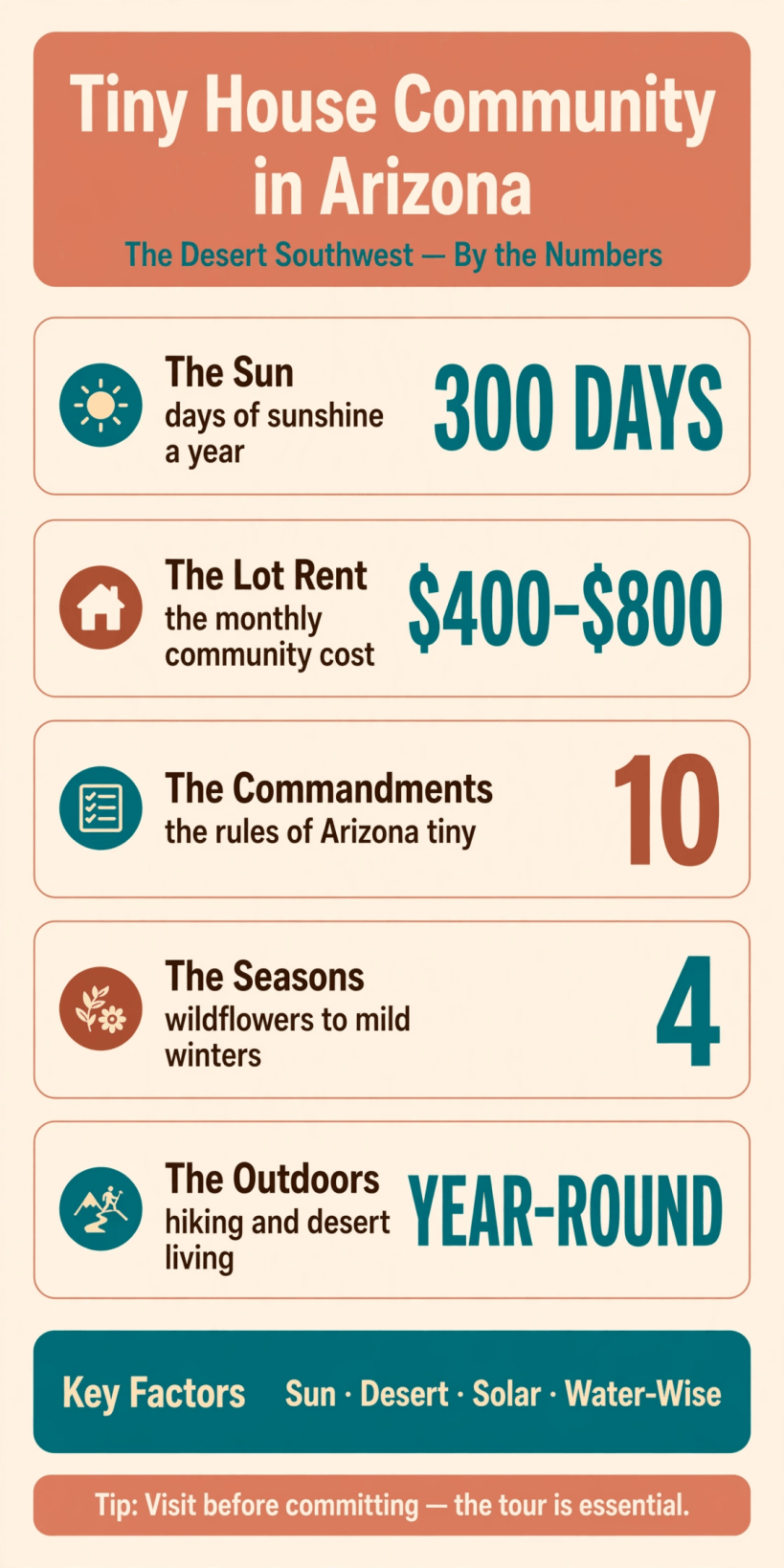
The desert by the numbers: 300 days of sun a year, lot rents of $400–$800 a month, 10 commandments — and four seasons that run from spring wildflowers to mild winters.
1. Why Arizona for Tiny Houses
Three things make Arizona the tiny house state of the Southwest. The sun comes first: 300 days of it a year, the solar endowment that powers panels, warms winter mornings and defines the whole rhythm of desert life. The desert follows — the beauty and the space, a landscape that gives a small home a vast front garden it never has to mow. And the scene completes the case: the established, the welcomed — a tiny house culture already here, already proven, ready to receive the next arrival. The rule underneath all three: Arizona is the tiny — the Southwest.
Are there communities here at all? Yes — the Phoenix and Tucson areas plus rural options host an established scene, and the honest advice is to verify the current options directly, as communities evolve. Is the state tiny house friendly? The established scene and the rural freedom say yes — but verify the specific city and county rules, because friendly is decided jurisdiction by jurisdiction. The scene is real; the paperwork is local. Both halves of that answer shape everything that follows.
2. The Community Landscape: Phoenix, Tucson and the Rural Counties
The landscape comes in three settings, each with its own character. The Phoenix setting is the metro — the options: the widest choice of communities, the shortest drives to everything a city provides. The Tucson setting is the artsy — the alternatives: a creative, independent flavour for the dweller who wants culture with their cactus. And the rural setting is the freedom — the researched: land, quiet and room to breathe, found by those willing to verify the details county by county. The rule: the landscape evolves — the current: check what exists now, not what a listing said last year.

Choosing between the three is choosing a daily life, not just an address. The metro dweller trades a little freedom for convenience; the rural dweller trades convenience for space and stars; the Tucson dweller splits the difference with an arts degree. Other regions organise the same choice differently — our guides to tiny house communities in North Texas and the tiny house community in Fort Collins, Colorado show how the landscape reads where the desert gives way to plains and mountains.
3. The Costs of Arizona Tiny Living
The costs are the reasonable — the original’s own verdict, and the figures support it. The lot rent is the headline: $400–$800 a month, the monthly cost of a serviced place in a community. The land is the affordable — the desert: buying or leasing ground outside the metros stays within reach in a way coastal land never is. And the total is softened by the climate itself: the sun is the free — the harnessed, heating and powering the home for much of the year.
How much does tiny living cost here, asked plainly? Lot rents typically run $400–$800 a month; desert land stays affordable; the total is the reasonable, because the sun is the free. Total the costs the way section 4 insists — the all, the totaled: rent, utilities, the water plan and the move itself, counted before commitment rather than discovered after it. Keeping a whole build or buy inside a small budget is the discipline worked through in our guide to how to make a cheap tiny house.
4. How to Join — and What to Ask Before You Do
Joining runs on a simple sequence. The visit comes first: the tour — the essential, the step that cannot be skipped, replaced or rushed, because a community is a vibe and a set of neighbours before it is a contract. The application follows: the process — the followed, the community’s own steps completed in its own order. And the rule presides over both: the community chooses — the joined. Joining is mutual: you are choosing them, and they are choosing you.
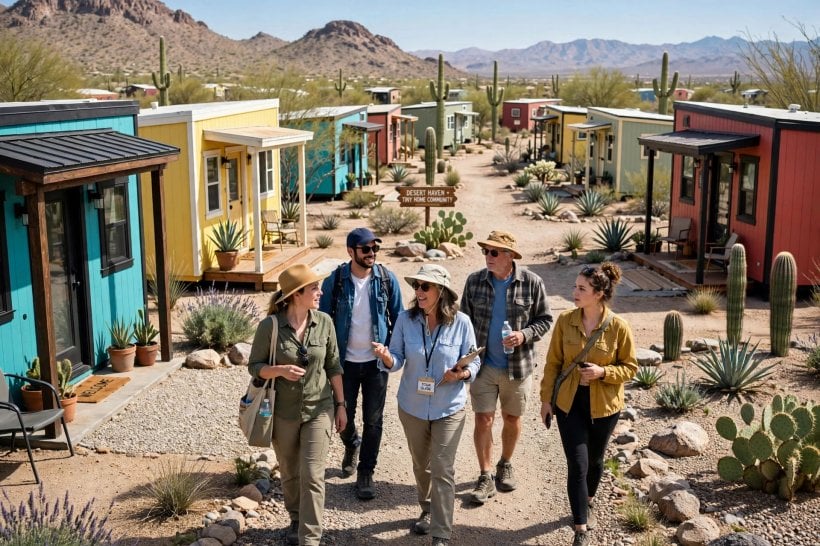
How do you join, in the FAQ’s compressed answer? Visit, apply, fit — the mutual. The tour is essential: the vibe, the neighbors, the rules. Before the application, three questions deserve written answers. The lease: the terms — the read, every clause understood before signature. The water: the source — the known, because desert water is a plan, not an assumption (section 7 returns to it). The costs: the all — the totaled. The mutual-fit pattern is the same one worked through in our guide to Florida tiny house communities — different climate, identical discipline.
5. Zoning, Rules and Beating the Heat
The rules layer is where Arizona rewards the verifier. The cities are the varied — the checked: each municipality treats tiny houses its own way, so the specific city’s current position is the only one that counts. The counties are the rural-friendly — the verified: outside the cities, county rules are often the friendlier path, which is why the rural landscape in section 2 exists at all. The THOW is the wheels — the questioned: a tiny house on wheels sits in a different legal category from a foundation home, and its treatment varies. The rule over the whole layer: the rules change — the current. Verify now, because last year’s permission is not this year’s.
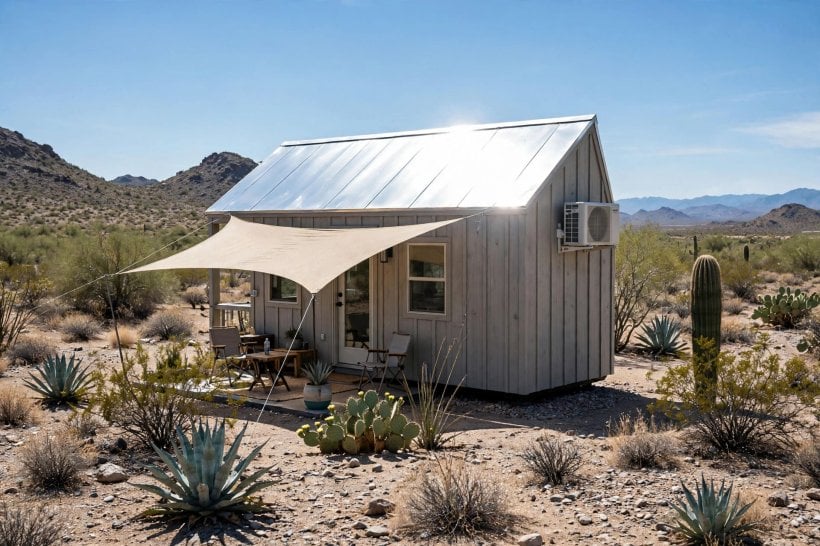
Can you put a THOW here? Check the current city and county rules — the treatment varies; the rural counties are often friendlier; verify before committing. Woven into the zoning section of the original sits the climate rule: the heat — the cooled, the shaded. How do you cool a tiny house in this desert? The shade (the orientation), the mini-split (the efficient), the reflective roof, the thermal mass — and, in the FAQ’s fuller answer, the desert landscaping. The desert-cooled tiny is the designed tiny: cooling is drawn on the site plan, not bolted on in July.
6. The Desert Lifestyle and the Four Seasons
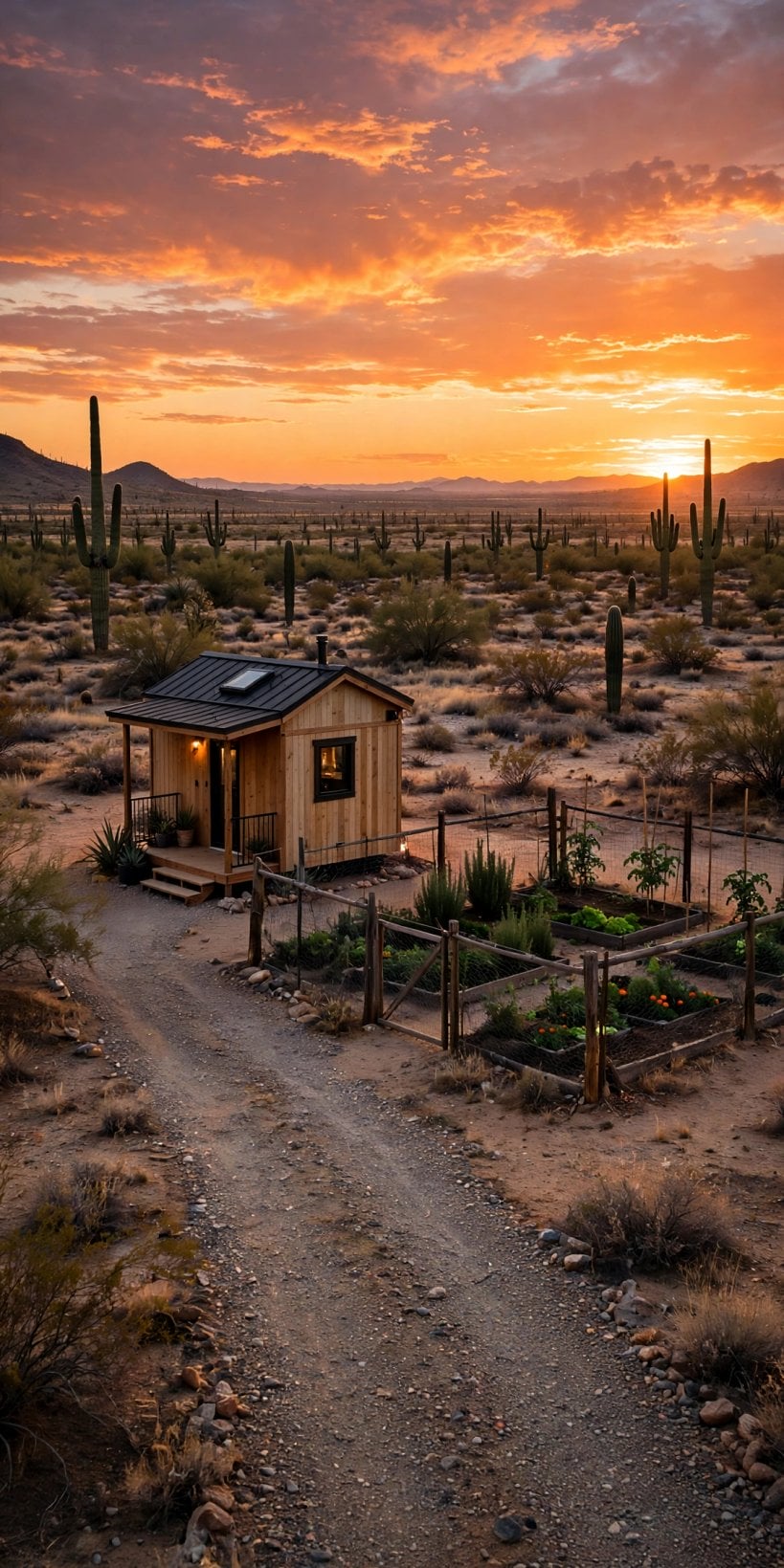
The lifestyle is the big — the lived, generously. The sunsets are the legendary — the daily, a show the desert stages every single evening over the mountains. The outdoors is the year-round — the hiking, trails that begin where the community’s gravel ends. The stars are the desert — the brilliant, undimmed by city glow. The truth: the desert lives — the big. Small house, enormous life: that is the exchange Arizona offers.
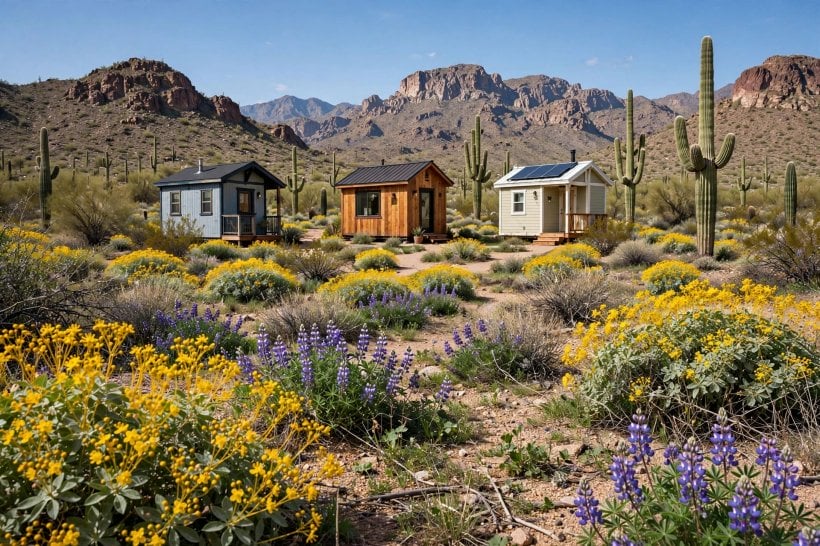
The seasons give that life its dramatic rhythm — the original calls them the dramatic, the desert. The spring is the wildflowers — the perfect, the bloom that carpets the desert floor. The summer is the heat — the monsoon, the season section 9 prepares for. The fall is the relief — the golden, the exhale after summer. The winter is the mild — the snowbirds, the gentle season that draws the seasonal neighbours south. And what is the best part of living tiny here? The sun (the daily), the outdoors (the year-round), the freedom (the rural). The best is the lived: the desert gives generously.
7. The Solar Advantage and the Water Question
The solar advantage is arithmetic before it is ideology. The 300 days are the panels — the powered: a sun that shows up three hundred days a year turns a modest array into a serious power station. The off-grid is the possible — the designed: independence built deliberately, not stumbled into. The rule: the sun is the free — the harnessed. Can you go off-grid here with a tiny house? The sun makes it possible — the solar, the water plan, the county rules. The off-grid desert is the dreamed: the designed makes it real.
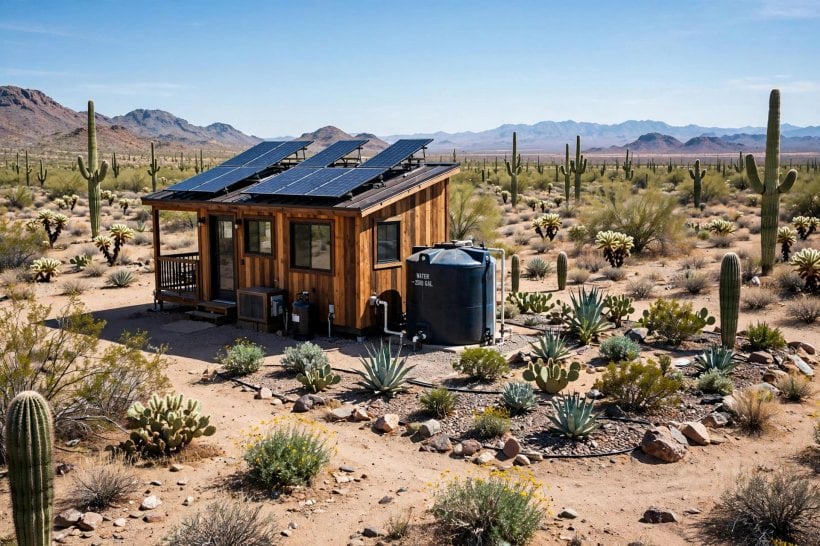
The water question is the solar advantage’s serious twin. The source is the well — the hauled: know exactly where your water comes from, a well on the land or water hauled in, before the house arrives. The conservation is the low-flow — the xeric: fixtures that sip and landscaping that asks for almost nothing. The rule: the water is the precious — the planned. In the desert, water is never a utility you assume; it is a system you design, and the communities and counties that thrive here are the ones that designed it first.
8. Land Options, the 10 Commandments and the Mistakes to Avoid
Land comes three ways, and the choice frames everything else. The community land is the joined — the social, a lot among neighbours with the infrastructure provided. The rural land is the leased — the free, ground rented outside the communities with room around it. The owned land is the affordable — the desert, a parcel of your own while desert prices still allow it. The rule: the options are the weighed — the chosen. None is best in the abstract; each is best for a different dweller.
The 10 commandments of Arizona tiny compress the whole guide into a checklist: visit before committing; verify the zoning; total the costs; shade the efficiently; solar the maximum; water the planned; meet the neighbors; explore the desert; know the exit; love the sunsets. And the mistakes are the commandments broken. The unseen commit is the regretted — the visited: joining a community you never toured. The heat blind is the miserable — the cooled: arriving without a cooling design. The assumed zoning is the fined — the verified: trusting that permission exists because nobody objected yet. The rule under all three: the verified avoids — the regretted.
9. Builders, the Move and the Monsoon Season
The builders here are a specialisation, not just a trade. The local is the researched — the toured: visit the workshops, walk the finished houses, ask the desert questions. The desert-savvy is the heat-wise — the chosen: a builder who designs for 300 days of sun and summer heat because they live in it. The rule: the builder is the vetted — the chosen. A house built for the desert by people who understand it is the foundation every other section stands on.
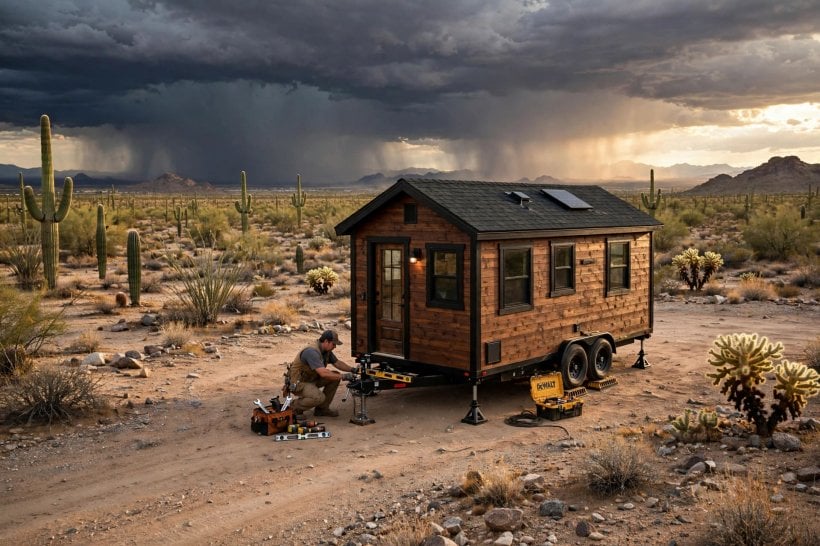
The move itself is planned like a small expedition. The timing is the fall — the milder, arriving as the heat breaks rather than at its peak. The route is the planned — the towed, surveyed before the house rolls. The setup is the leveled — the shaded, the house seated and shaded in its final position. The rule: the move is the planned — the smooth. What should you know before moving a tiny house here? The heat plan, the water plan, the county rules, the monsoon prep. The known is the ready: the desert rewards the prepared. And the monsoon deserves its own respect: the summer storms are the dramatic; the roof is the sealed — the drained; the rule: the monsoon is the respected — the prepared.
10. The Neighbors, the Payoff and the Desert Good Life
The neighbors are the community — the visited, in the original’s phrase, because you met them on the tour before you ever signed. The like-minded are the desert — the chosen: people who picked this life on purpose. The snowbirds are the seasonal — the welcomed, returning each mild winter like the season itself. Around them the desert keeps its own residents: the saguaro, the giant — the standing, the centuries — the symbol of the desert, of Arizona itself, watching over the tiny; the desert garden, the xeric — the native, the water-wise — where the cactus is the sculptural, the free; and the wildlife — the roadrunners, the daily, the delighted; the javelinas, the respected, the fenced. The truth: the wildlife is the neighbor — the wild.
The payoff gathers the whole case. The sun: the daily — the free. The desert: the beauty — the lived. The tiny: the freedom — the Southwest. The truth: the payoff is the life — the designed. The invitation: visit, verify, join — the desert awaits. The decision that earns it is the researched — the verified, the visited; the fitted — the matched, the chosen. Then the welcome: the greeted — the neighbors, the warm; the oriented — the trails, the shared. The horizon beyond is the wide — the desert, the seen; the tiny is the home — the loved. The good life is the simple — the tiny, the chosen; the desert is the gifted — the daily. The homecoming is the sweetest — the tiny: the arrived, the finally, the desert; the exhaled, the deeply, the home. And it lasts: the stayed — the years, the rooted; the loved — the daily, the desert. The forever is the chosen — the desert.
The original closes in a cadence worth keeping whole. The last word is the first visit — the always: the said — the visit, the verify; the done — the researched, the joined. The invitation stands — the forever: the open — the desert, the always; the tiny — the welcomed, the home. The sun always: the risen — the daily, the 300; the powered — the panels, the free. The soul is the Southwest — the always: the felt — the deeply, the desert; the tiny — the home, the soul. The dream is the desert — the tiny: the dreamed — the years, the now; the lived — the daily, the desert. The golden hour is the daily — the Arizona: the light — the magic; the desert — the glowing, the gold. And the summer is the endless — the Arizona: the long — the warm, the lived; the tiny — the shaded, the cool. Sibling journeys end the same way in other states — the village life in our tiny house communities in Florida guide and its companion on living in tiny house communities in Florida, the mountain version in our tiny house communities in Asheville NC guide, and the heartland version in our Tulsa tiny house community guide.
Final Considerations
The right tiny house community in Arizona is the one you have visited in person, verified against the current city and county rules, and costed honestly — lot rent, water plan and heat plan included. The state offers the sun, the desert and an established scene; the decision rewards the researched and the prepared. Note, as the original insists: community details, costs and zoning rules change — verify all current information directly before making decisions. The Southwest is waiting.

1 Comment