

A koi pond changes a garden completely, adding movement, reflection and a calm focal point that draws people outside. This roundup gathers the layouts, colours and practical details that make a pond work beautifully day after day.
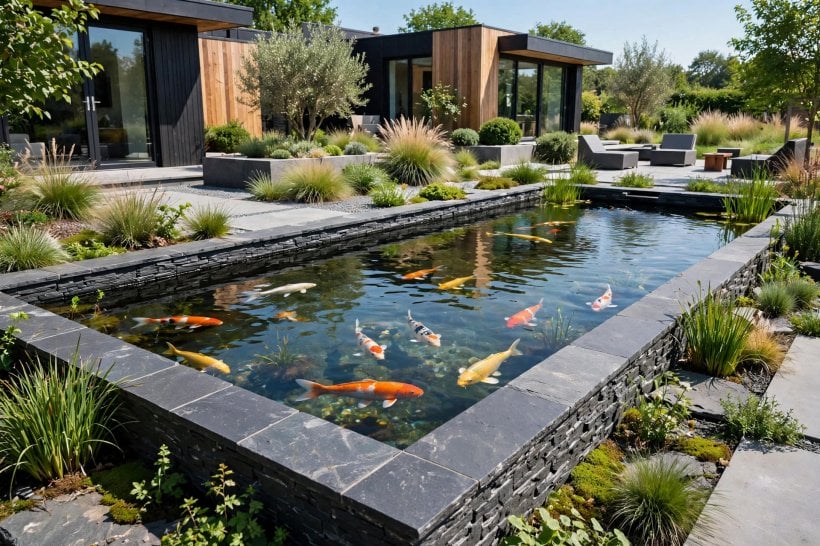
1. Start With the Site and the At-a-Glance Plan
The strongest koi pond designs start long before any digging, with an honest look at sun, shade, slope and access. Watch how light moves across the garden through the day, because a pond in gentle morning sun with some afternoon shade is far easier to keep clear and comfortable than one baked from dawn to dusk. Note where fallen leaves collect in autumn, where heavy rain runs, and how close the site sits to trees whose roots and debris will shape your maintenance routine for years.
Think, too, about how the pond will be seen and reached. A pond placed on the view from the kitchen window or beside the main seating area gets enjoyed daily, while one hidden behind a shed becomes an out-of-sight chore. Leave comfortable room to walk around at least two sides for netting, pruning and filter care, and plan the route for a wheelbarrow before you commit. If the wider plot is still evolving, it helps to set the pond within your broader home designing ideas so paths, planting and seating grow around it rather than competing with it later on.
| At a Glance | What to Decide | Practical Note |
|---|---|---|
| Best first step | Sun, shade, slope and access survey | Observe the site across a full day before digging |
| Layout options | Formal, naturalistic, raised or sunken | Match the style to the house and the garden’s shape |
| Colour direction | Stone, water and planting palette | Quiet surroundings make the fish the brightest element |
| Main cost drivers | Excavation, liner or shell, filtration, edging and planting | Finishes and filtration usually outweigh the hole itself |
| Ongoing care | Feeding, netting leaves, filter rinsing and water top-ups | Little and often beats occasional marathon clean-outs |
| Good fit for | Gardens of most sizes with a level, reachable spot | Raised layouts suit patios and very small plots best |
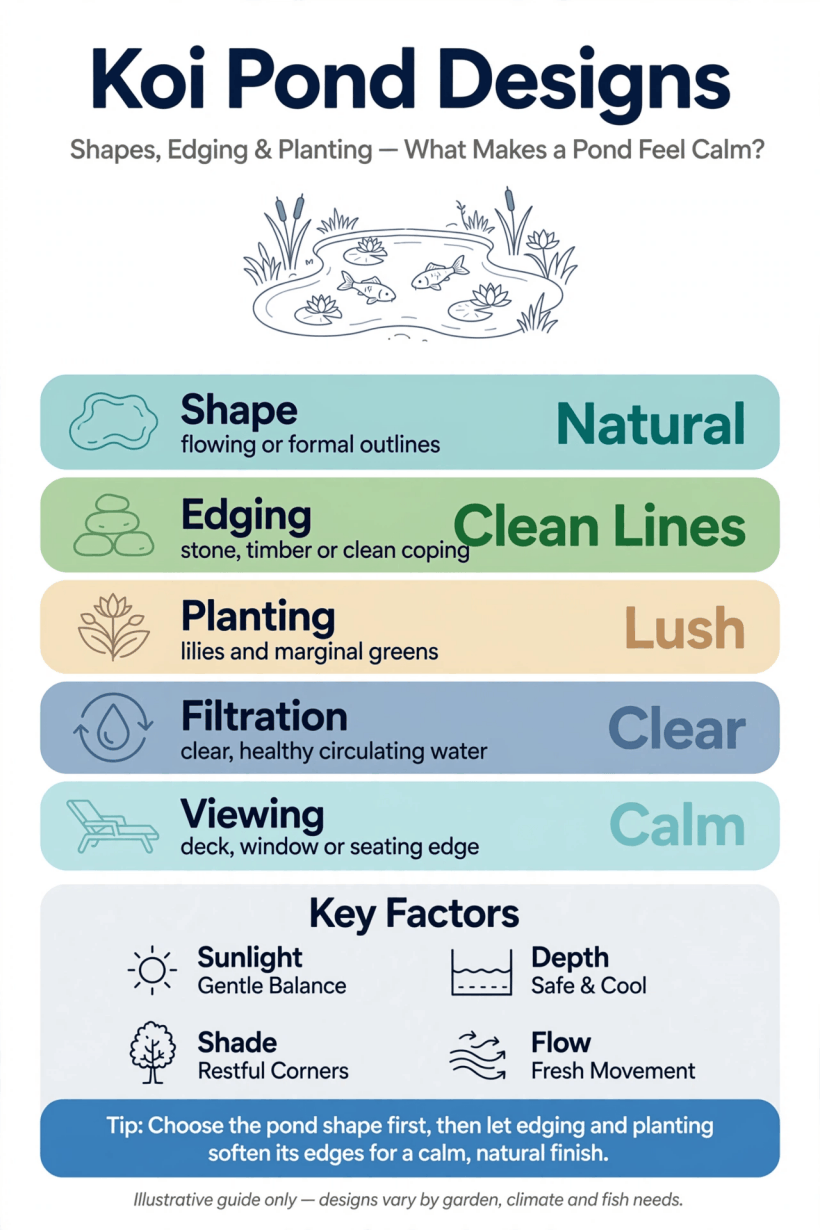
At a glance: the layout, colour, cost and care decisions to settle before a modern koi pond is built.
2. Formal Rectangular Ponds for Clean, Modern Gardens
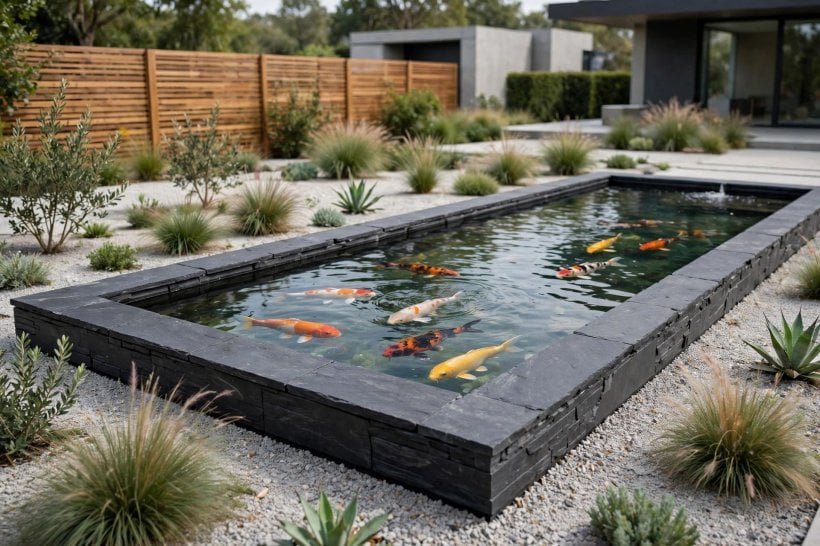
A crisp rectangle is the classic modern choice, echoing the lines of the house and giving the water a calm, architectural stillness. Straight edges are easier to build neatly, easier to edge with stone or porcelain, and easier to cover with a net in leaf season. Run the long side parallel to a terrace or facade so the pond reads as part of the architecture, and keep the coping level and consistent all the way round for that tailored finish.
Formal ponds pair naturally with restrained planting: a single row of grasses, clipped mounds or one sculptural small tree rather than a tumble of mixed flowers. Repeat the materials used elsewhere in the garden so nothing jars, an approach that also suits new home exterior design ideas where kerb appeal depends on a few confident lines. Add a simple sheet of falling water on one short side if you want gentle sound without the fuss of a stream, and let the fish themselves supply the pattern and movement.
3. Naturalistic Ponds With Soft Edges and Planting
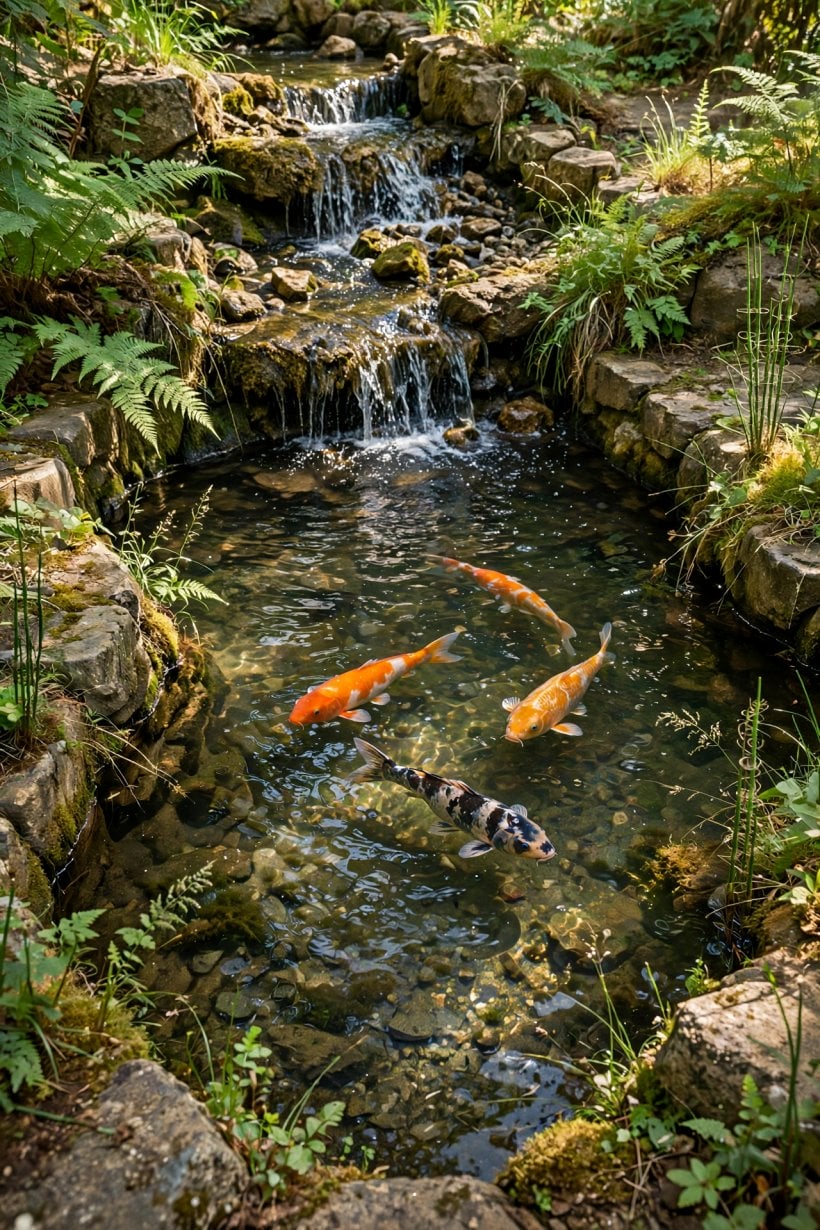
At the other end of the spectrum, a naturalistic pond curves and shelves like something a stream might have left behind. Irregular outlines soften a cottage garden beautifully, and a shallow beach edge of pebbles lets birds bathe and wildlife climb out safely. Vary the depth with submerged shelves for marginal plants, keeping the centre deep enough for the fish to shelter from herons and summer heat alike.
The planting does most of the styling work here: loose grasses, iris at the margins and a backdrop of shrubs blur the boundary between pond and garden. Take colour cues from calm, layered schemes such as zen interior design ideas, translating that same restraint outdoors with greens, stone greys and one or two flowering accents. Keep some open water in the middle so the koi remain visible, and resist filling every shelf, because crowded planting steals swimming room and makes netting out debris a weekly battle.
4. Raised Ponds for Small Gardens and Patios
Raising the water up solves several small-garden problems at once. There is far less digging, the fish come closer to eye level when you sit beside them, and the wall itself doubles as extra seating. A raised pond also suits anyone who finds kneeling at ground level uncomfortable, since feeding, netting and simply watching all happen from a chair-height perch. Build the walls from rendered block, sleepers or stone to match nearby structures.
Because the water sits above ground, think carefully about structure and insulation. The walls carry real weight, so they need proper footings and reinforcement rather than a decorative skin, and in colder gardens a layer of insulation behind the liner helps soften temperature swings. Finish the top with a wide cap that is comfortable to sit on and slightly overhangs the water, throwing a line of shade that the fish appreciate. Keep filtration compact and hidden inside a bench or a matching timber box beside the pond.
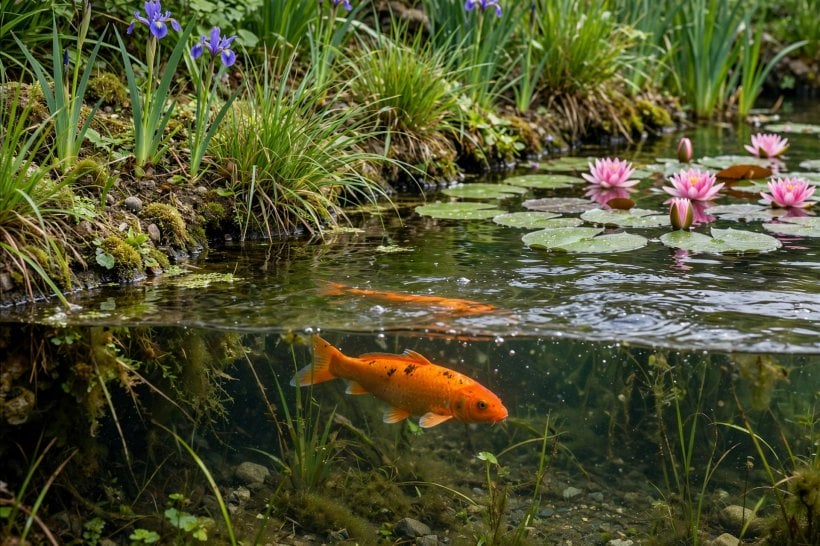
5. Sunken Ponds With Viewing Windows and Seating Edges
A sunken pond set into a terrace creates a striking moment: water at your feet, fish drifting past below the paving line. Some designs add a viewing window in the side wall of a raised section, which delights children and gives you a rare underwater look at your fish. That glass needs specialist supply and fitting, so treat it as a professional job rather than a weekend experiment, and keep the specification simple and well sealed.
Even without glass, a sunken layout earns its keep when the edge is designed for lingering. A broad stone rim at sitting height, a low bench along one side or a couple of flat boulders turn the pond into the garden’s favourite seat. Plan safe footing all around, since wet stone can be slippery, and choose a slightly textured finish for the coping. At night the still, dark surface reflects planting and sky, doubling the sense of depth in even a modest plot.
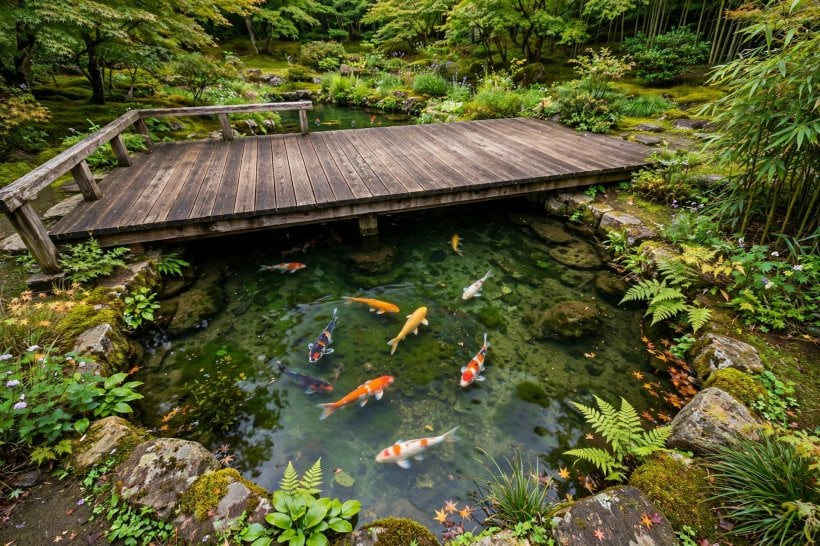
6. Colour Palettes: Stone, Water and Planting
Colour around a koi pond works best when it stays quiet, because the fish bring orange, white, gold and scarlet with them. A dark pond floor deepens the water colour and makes pale fish glow, while charcoal or slate edging keeps the frame modern. Pale gravel and light stone push the mood coastal and bright, echoing the relaxed palettes in beachy interior design ideas, though very light surrounds can show algae marks more readily.
Planting colours should stay mostly green, with texture doing the talking: glossy leaves beside feathery grasses, upright iris against low mounds. Add flowers sparingly and in one family at a time, such as white in early summer or purple later on, so the scheme always feels deliberate. Repeat the pond’s stone in a nearby step or plinth to tie the composition together, and avoid bright painted fences directly behind the water, which fight with reflections and make the whole scene feel restless.
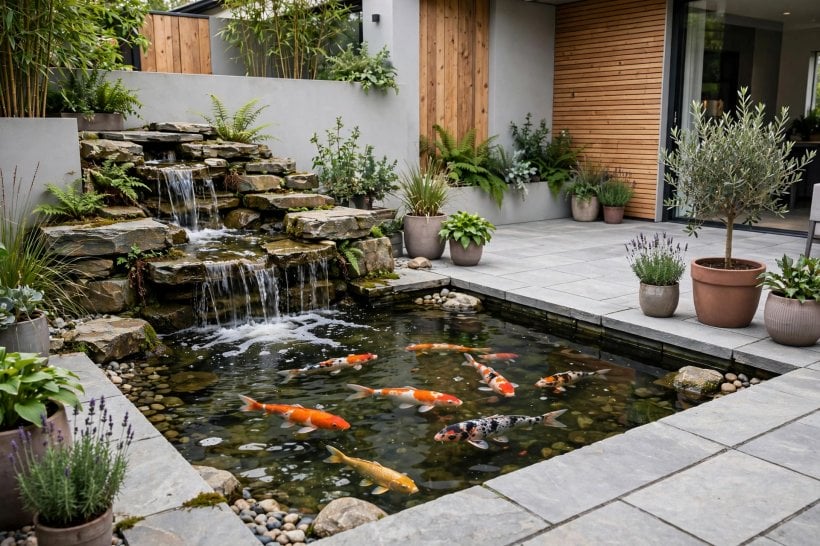
7. Bridges, Stepping Stones and Focal Points
A small bridge gives a pond a storybook quality and, more practically, a new viewing angle from directly above the fish. Keep it low, wide and firmly anchored, with a non-slip surface, and angle it across a narrower point so it looks inevitable rather than decorative. On smaller ponds, a run of broad stepping stones achieves a similar crossing with less structure, provided each stone sits solidly and the gaps stay comfortable for an unhurried stride.
Focal points need the same restraint. One handsome lantern, a single weathered boulder or a small multi-stem tree reflected in the water is enough; a crowd of ornaments turns the pond into a display shelf. Place the feature where it catches evening light and where its reflection lands in open water, not tangled planting. Sound counts as a focal point too: a modest spout or bamboo-style fountain adds movement and masks distant traffic, helping the garden feel further from the street than it really is.
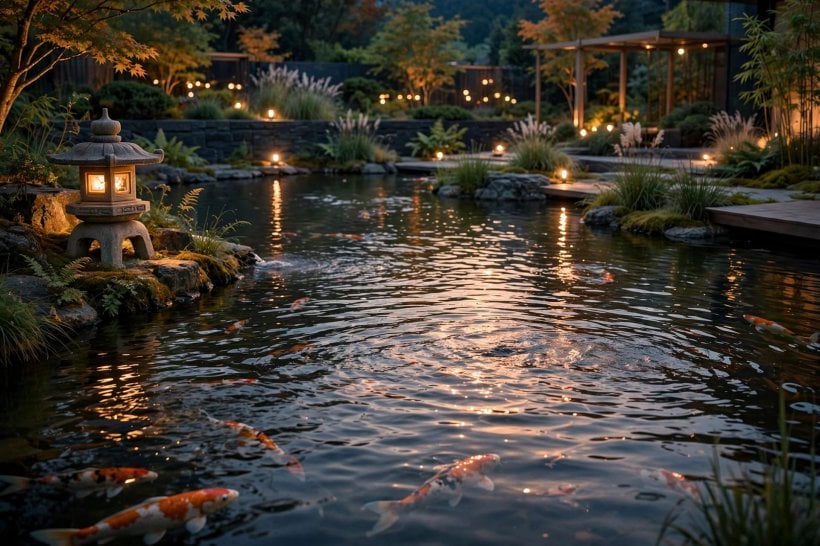
8. Filtration, Depth and Water Clarity Basics
Clear water is made by equipment and habits, not by luck. Koi produce a lot of waste, so the filter needs to be generously sized for the pond’s volume and stocked fish numbers, and it should run continuously through the warmer months. A bottom drain or a well-placed pump feeding a filter, ideally with a surface skimmer to catch leaves before they sink, keeps the system ahead of the debris rather than chasing it.
Depth matters just as much. A pond that is too shallow swings in temperature, grows algae readily and leaves fish exposed to predators, while a sensible deeper zone gives them refuge in both heatwaves and frosts. Shade part of the surface with planting or a pergola edge if the site is very open. Test the water regularly, change a little of it often rather than a lot at once, and feed sparingly, since uneaten food is clarity’s fastest enemy. None of this is glamorous, but it is what keeps the water gin-clear.
9. Lighting a Koi Pond After Dark
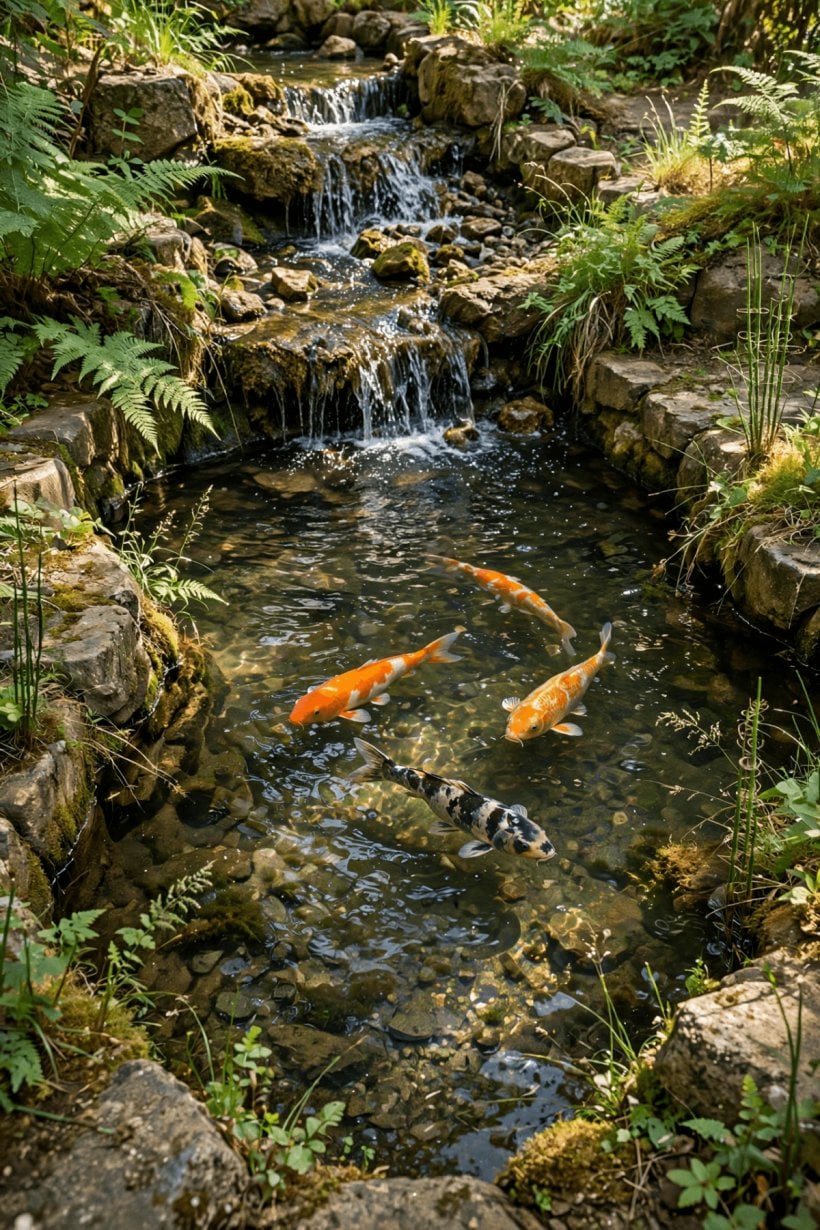
Good lighting extends the pond’s life long past sunset. A few warm lights aimed across the water from low planting create shimmer without glare, while a submerged light near a waterfall turns falling water into the evening’s centrepiece. Keep fittings few and purposeful, because a pond ringed with bright spots looks like a runway and leaves the fish with nowhere dim to rest.
Think about the view from indoors as much as from the garden. A softly lit pond seen through a window becomes living artwork on winter evenings, much like the glow planned in modern living room interior design ideas where layers of light matter more than any single bright source. Put pond lighting on its own switch or timer so it is easy to enjoy and easy to turn off, and choose fittings rated for outdoor and underwater use, installed by someone qualified if mains power is involved.
10. Planting Around the Edges Without Crowding the Fish
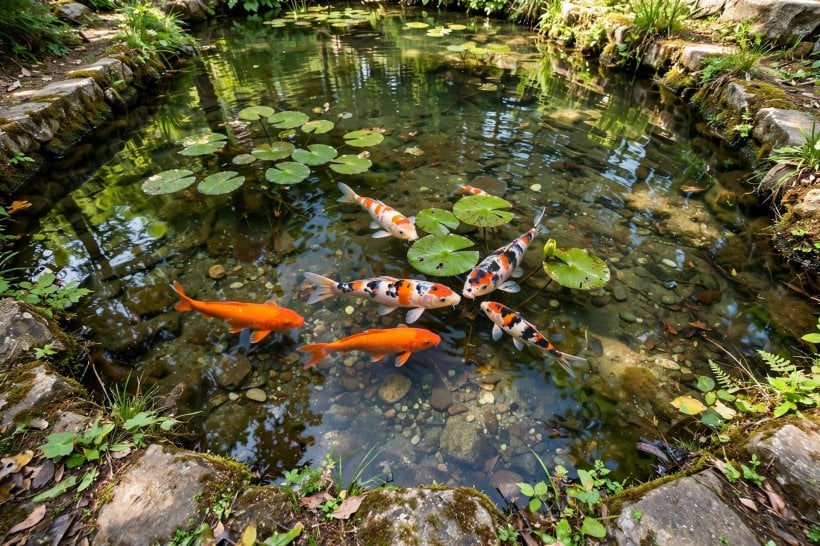
Edge planting frames the water, hides the liner line and softens stone, but it should never take over. Keep true aquatics in baskets on the shelves so they can be lifted, divided and removed easily, and favour a handful of reliable plants repeated around the pond over a collector’s mixture. Leave deliberate gaps where you feed and net, and where you simply want an uninterrupted view of the fish gathering.
On the banks, low planting in front and taller grasses or shrubs behind create a natural gradient into the rest of the garden. In community or shared settings, such as those described in tiny house communities in Washington State, a shared pond planting scheme works best when one person oversees it, so the edges stay tidy and the fish keep their space. Whatever the setting, cut back growth before it collapses into the water in autumn, because decaying leaves are the single biggest burden most ponds carry into winter.
Final Considerations
Well-chosen koi pond designs reward patience at every stage: patience in picking the site, in sizing the filter generously and in letting planting settle before judging the result. Budget honestly for the unglamorous parts, the excavation, liner, pipework and filtration, because those decide whether the pond stays clear and the fish stay healthy, while decorative finishes can always be upgraded later. Decide who will feed and check the pond during holidays before you build, not after.
Above all, plan for the daily pleasure of it. A pond that sits where you naturally pause, with a seat at its edge and clear water over bright, unhurried fish, will be used and loved far more than a grander scheme tucked out of sight. Start with the layout that fits your garden and your routine, keep the colours calm, stay on top of small maintenance jobs, and the pond will mature into the most peaceful corner of your home.

0 Comments