

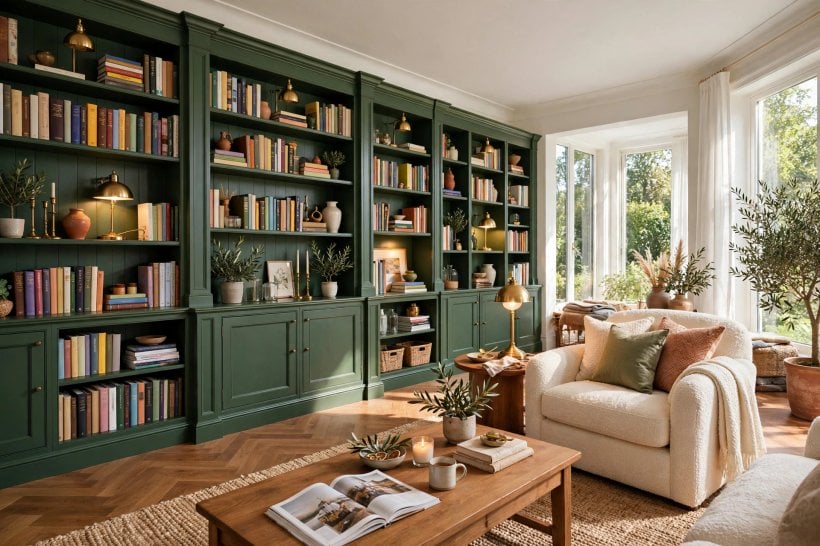
A tired bookcase is rarely worn out; it is usually just the wrong colour in the wrong place. One coat of well-chosen paint can turn it into the room’s anchor, brighten a dark corner and make old shelves look deliberately, expensively bespoke.
1. At a Glance: Why Paint Works So Hard
| Question | What to know |
|---|---|
| Why does paint transform a bookcase? | Because a bookcase is often the largest piece of furniture in the room. Changing its colour changes the wall it stands on, the light around it and the mood of everything near it. |
| Where do painted shelves ideas work best? | Anywhere a case looks tired, mismatched or too heavy for the room: living rooms, hallways, bedrooms, home offices and the alcoves nobody knows what to do with. |
| Do I need a solid wood case? | No. Sound laminate and veneered cases paint well with the right preparation and primer. Wobbly, water-damaged or peeling pieces are the ones to pass on. |
| What finish should I choose? | A washable, low-to-mid sheen finish suits most cases: it wipes clean, hides minor flaws and does not glare under lamps the way gloss can. |
| What is the biggest mistake? | Skipping preparation. Paint over dust, grease or a shiny unprimed surface will chip at the edges within months, however good the colour is. |
| Can I change my mind later? | Yes. That is the joy of paint. A well-prepared case can be repainted when the room changes, which no stain or veneer allows so cheaply. |
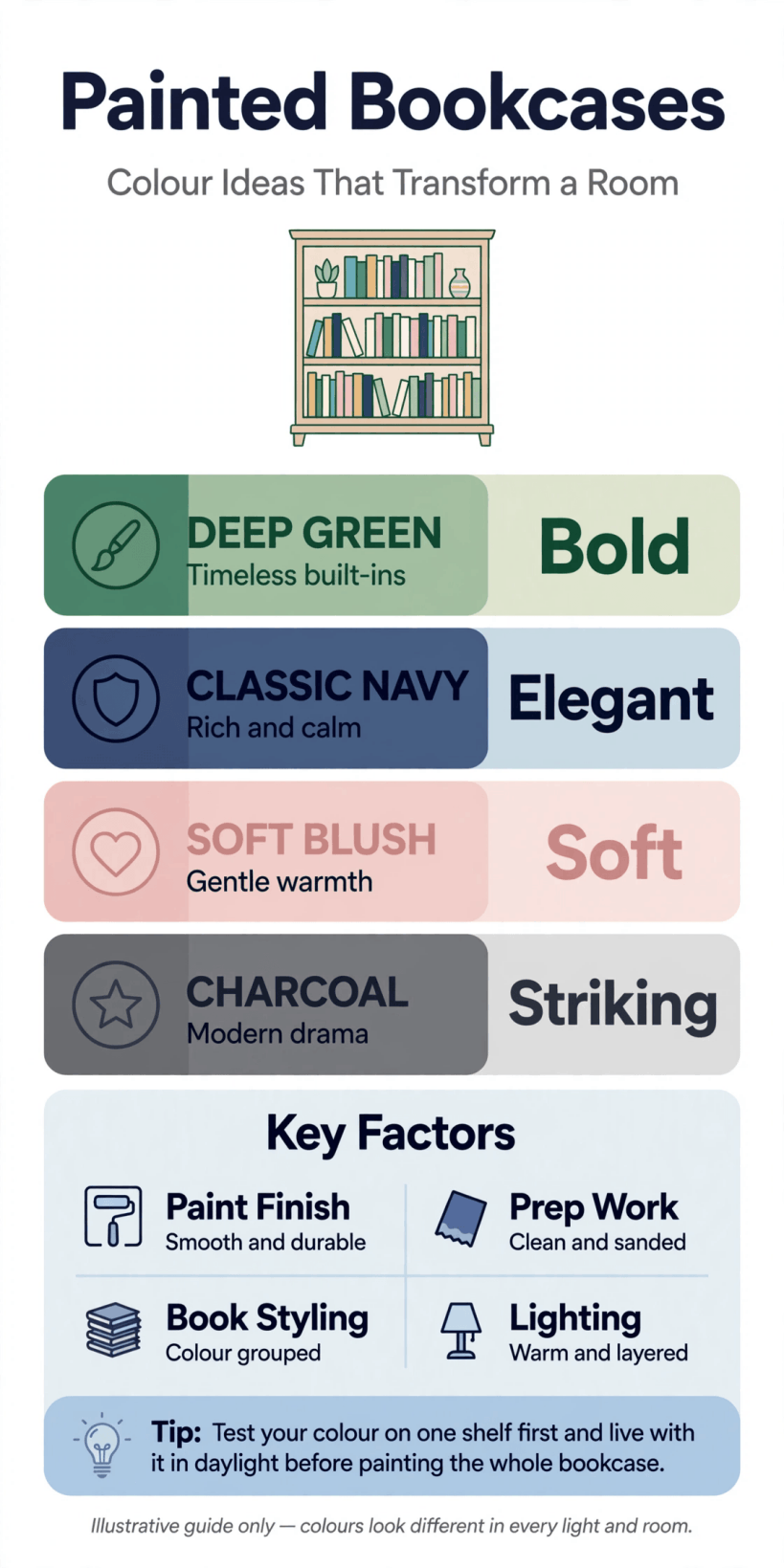
A quick visual summary of how colour, preparation and styling turn an ordinary bookcase into the room’s focal point.
Everything in this article follows one order of work: choose the colour with the room, prepare like a professional, paint patiently, then style the shelves so the case earns its new status. If you are still at the colour-confidence stage, work through the sampling advice in living room paint ideas for tiny houses first; the method of testing real paint in real light matters even more on furniture, which catches light from more angles than a wall ever does.
2. Why Paint Changes Far More Than the Colour
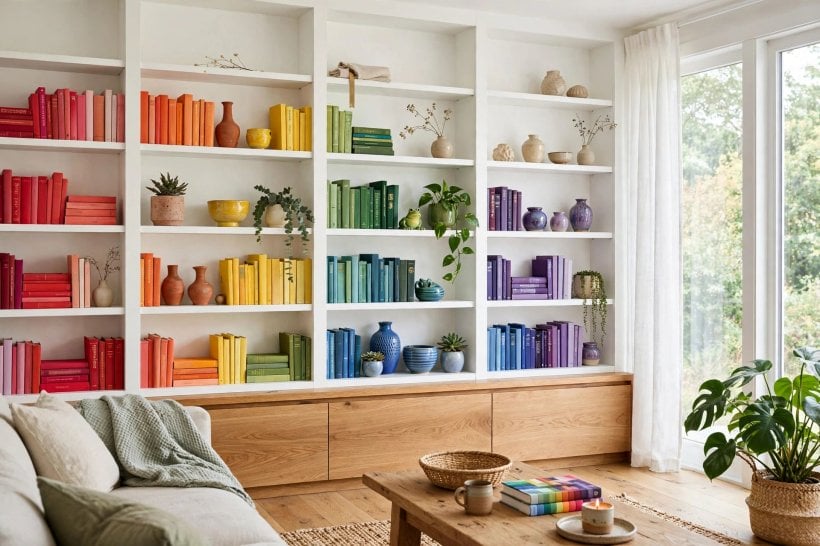
A bookcase is architecture disguised as furniture. It occupies a full stretch of wall, it frames everything you put on it, and its vertical lines organise the room around it. Painting it does not just recolour an object; it redraws that whole section of wall. A dark case on a pale wall becomes a deliberate, library-like feature. A pale case on a coloured wall lightens the room’s heaviest corner. Matching the case to the wall colour makes it nearly disappear, so a small room suddenly feels calmer and larger, with the books providing the pattern instead of the furniture.
Paint also rescues the mismatched. Inherited cases, flat-pack shelves and second-hand finds rarely share a finish, and a room full of competing wood tones looks unsettled however good each piece is alone. One shared colour unifies them into what reads as a single, planned library wall. That trick is gold in small homes, where the eye takes in the whole room at once. The coordinated approach in modern living room design for tiny houses, one palette, repeated calmly, is exactly what a painted case delivers for the price of a single tin.
3. Choose the Colour With the Room’s Light, Not the Tin
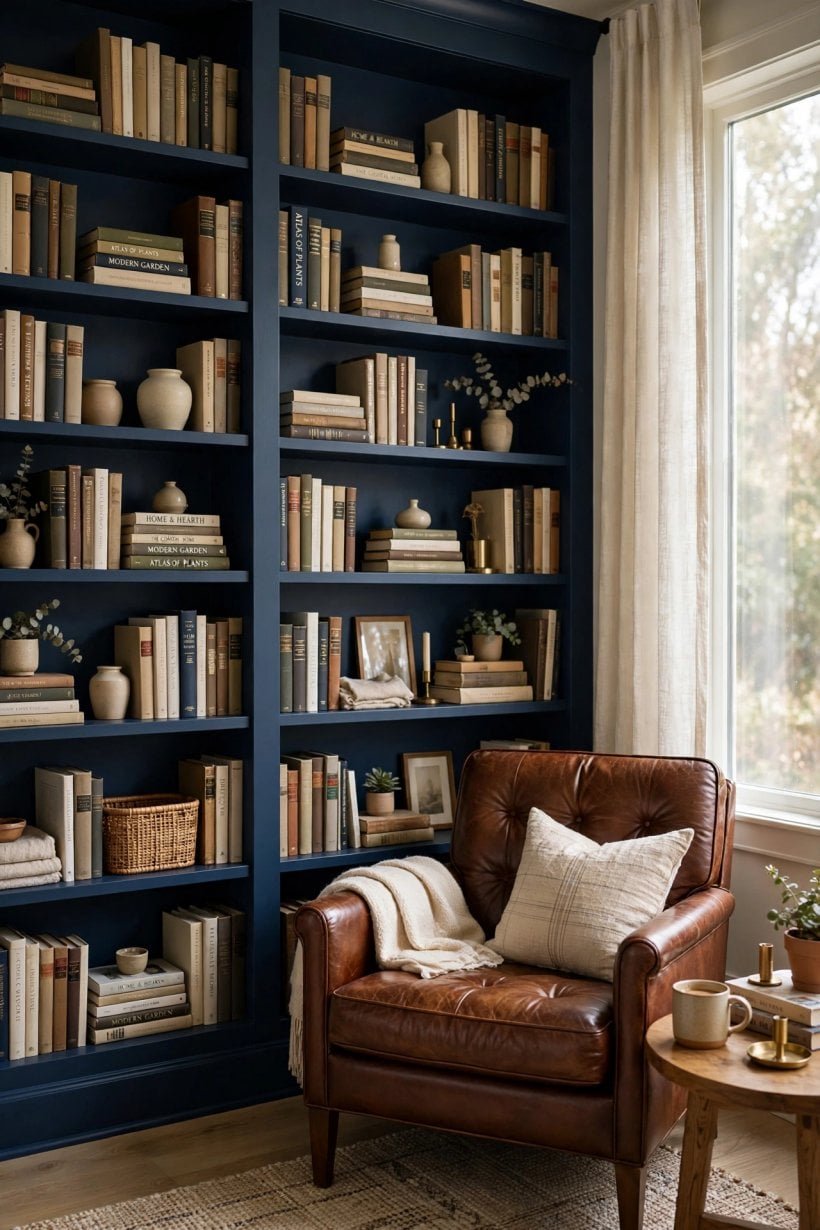
Colour on a bookcase behaves differently from colour on a wall because the shelves throw it into shadow. The inside back and the undersides of shelves sit in permanent semi-shade, so a colour that looks gentle on a flat sample will read noticeably deeper inside the case. Treat that as an asset if you want a moody, enclosing library feel, or compensate with a shade lighter than your first instinct if you want the shelves to feel airy. Books add their own colours on top, which means a strong case colour works best when the surrounding walls stay quiet.
Test properly before committing. Paint a large board or the inside of one shelf, live with it for a day, and look at it in morning light, lamplight and the grey in-between. Deep greens, inky blues and warm charcoals are forgiving, classic choices that flatter book spines; soft whites and pale greys brighten dark corners and suit rented rooms where the walls cannot change. If the room faces the sea-light end of the spectrum, the palettes in beachy interior ideas for tiny houses show how far white, sand and washed blue can lift a heavy piece without turning it stark.
4. Decide the Design: Whole Case, Back Panel, or Frame Only
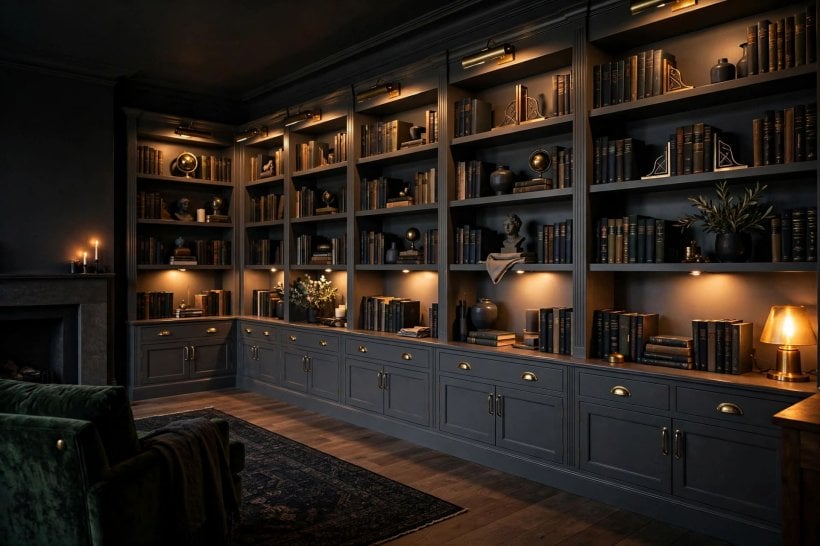
You have more options than painting the whole thing one colour. Painting everything, inside and out, gives the strongest transformation and suits cases whose wood has nothing left to say. Painting only the back panel, leaving the frame in wood or white, creates a display cabinet effect: objects and books stand forward against colour, and a dark back makes pale ceramics and glassware glow. Painting the frame while leaving shelves natural splits the difference, formal outside, warm inside, and hides the contrast when doors or baskets close the lower sections.
Two-tone schemes reward boldness in small doses. A colour inside with a neutral exterior looks designed rather than decorated, and it lets you use a strong shade without committing the whole room to it. Consider the top of a tall case too: in most rooms nobody sees it, so it is the perfect place your test colour can live while you decide. Whatever you choose, decide before the primer comes out, because the order of masking and painting changes with the design, and mid-project changes of heart are where crisp lines go to die.
5. Prepare the Surface Like the Finish Depends on It
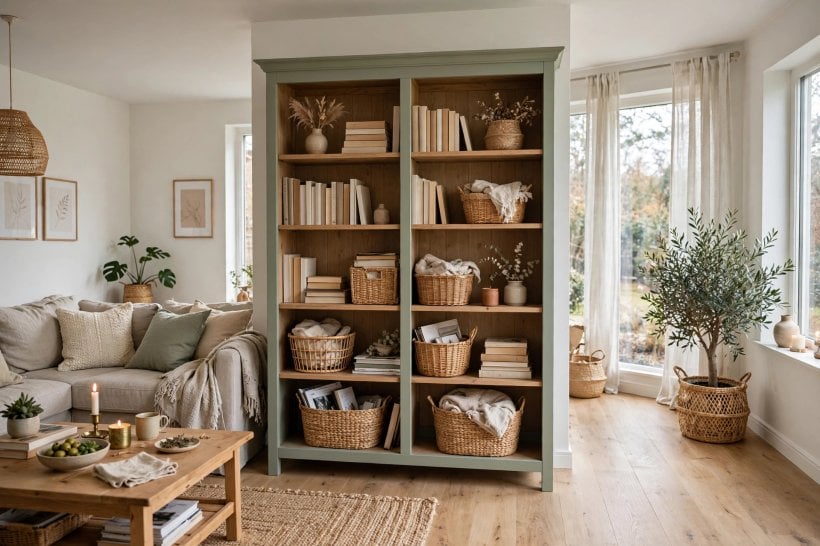
Preparation is the unglamorous ninety percent of a painted finish that lasts. Empty the case completely, take off any doors, knobs and adjustable shelves, and label shelf positions with tape so everything returns to its place. Wash the whole piece with a degreasing cleaner, because years of polish, cooking air and handling leave an invisible film that paint hates. Rinse, dry thoroughly, then sand lightly to dull the shine and give the primer something to grip. You are not stripping the piece, just scuffing it honestly, and that distinction saves you an entire weekend.
Repair before you prime. Fill dents and old screw holes, let filler dry fully, and sand it flush, because paint advertises every bump you hoped it would hide. On laminate or very glossy surfaces, a bonding primer made for slick surfaces is the difference between a finish that lasts years and one that peels in sheets by spring. Prime the repaired areas at minimum, the whole case at best, and let it cure for the time the tin states rather than the time your patience prefers. Every professional-looking painted case you have ever admired was, underneath, a well-washed, well-sanded, patiently primed one.
6. Pick a Finish That Survives Books, Hands and Time

Shelves are abrasive places. Books slide in and out, ornaments get dusted and shifted, and the front edges take knocks from everything carried past. Your paint finish needs to be washable and tough at the edges, which is why a satin or low-sheen eggshell-style finish is the usual sweet spot for bookcases: hard enough to wipe, soft enough not to spotlight every brush mark. Very matt paints look beautiful for a month and then polish shiny in streaks where hands land. Full gloss is dramatic and durable but shows every flaw in the wood and in your technique.
Whatever finish you choose, buy enough of it in one go, from the same batch where possible, and decant what you need rather than painting from the tin all week. Keep the leftover, labelled with the colour and the date, because a bookcase that can be touched up in five minutes never needs repainting in a panic. Let the final coat cure properly before the books go back; paint that feels dry can still be soft underneath, and a row of heavy books pressed into a half-cured shelf will leave a perfect, permanent imprint of your impatience.
7. Paint Patiently: Thin Coats, Right Order, Crisp Edges
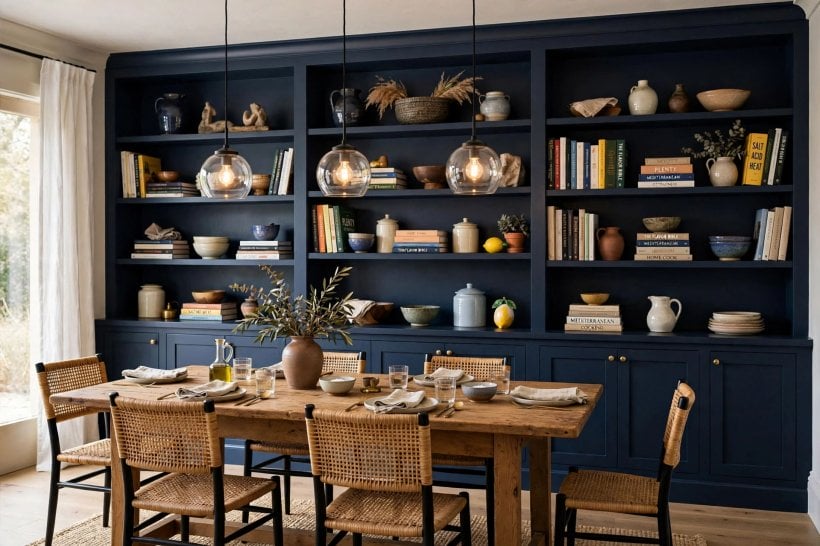
Work in an order that keeps you out of your own wet paint. Inside first, starting at the top and working down: the back panel, the undersides and tops of shelves, then the inner sides. Then the exterior, then the doors and loose shelves separately, laid flat so drips have nowhere to run. Thin coats are the whole secret. Two or three thin layers, each allowed to dry as the tin directs, give a harder, smoother result than one thick coat, which skins over, sags at the edges and stays soft for weeks. A small roller on the flat panels and a brush for the corners beats either tool alone.
Mind the details that separate a makeover from a transformation. Paint the front edges of shelves with particular care, because they are the lines your eye follows. Keep a damp cloth beside you for immediate drips rather than archaeological ones. Remove masking tape while the last coat is still slightly tacky for the crispest line, and resist the reveal-photo moment until the paint has cured. If a case is part of a working reading corner, the set-up in tiny house library and office ideas will help you plan what goes back onto the shelves, and where the lamp and chair belong, before you lift a single book.
8. Style the Shelves So the Paint Gets Its Moment
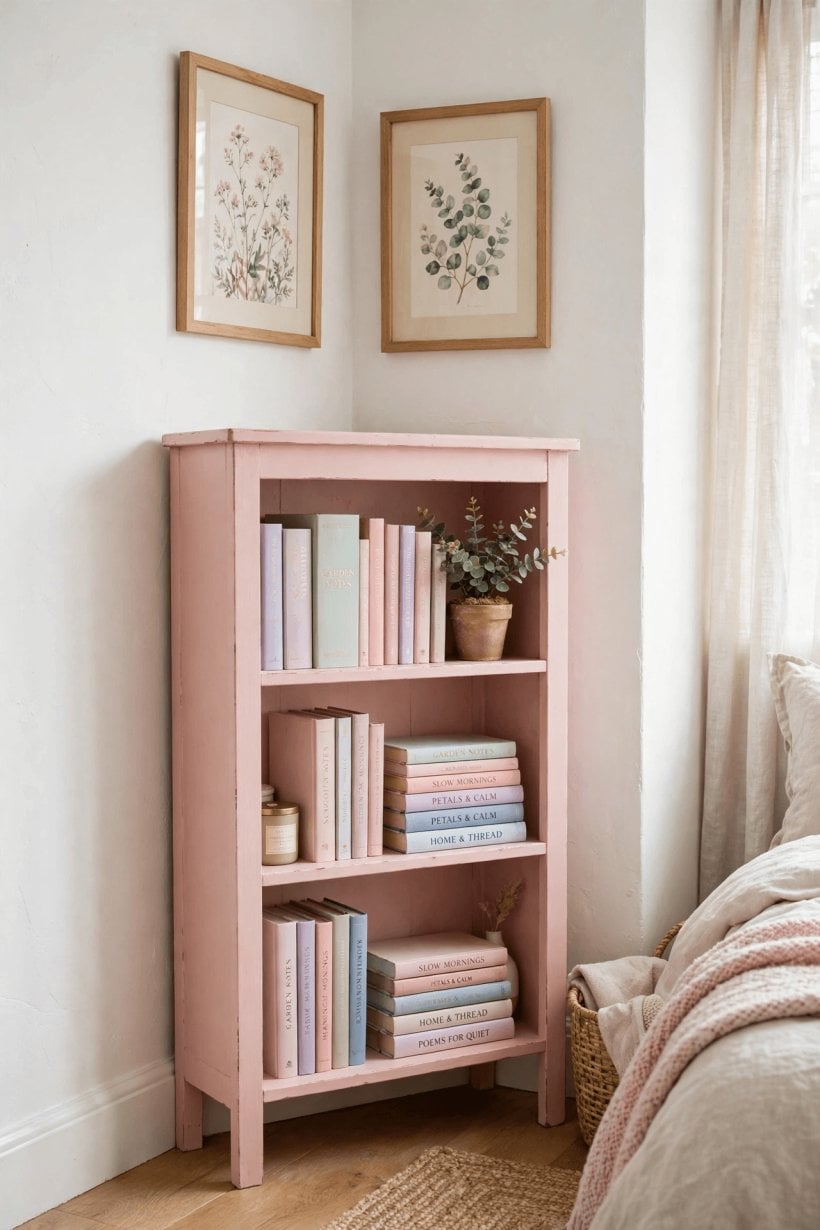
Fresh paint deserves a thoughtful reload, not everything dumped back where it lived. Work shelf by shelf, grouping books in a mix of upright runs and horizontal stacks, which act as bookends and resting places for small objects. Leave breathing room: a shelf that is eighty percent full looks curated, while a shelf at a hundred and ten percent looks like storage wearing a costume. Put the largest, heaviest books low, where they ground the case visually, and keep the eye-level shelf for the combination you most enjoy looking at, favourite spines, one plant, one object with a story.
Use the colour you created. Against a deep case, pale ceramics, brass, glass and cream book cloth glow; against a pale case, dark spines and one strong accent colour do the work. Repeat a material or colour three times across the whole case and the arrangement suddenly looks intentional. Baskets or boxes on the lowest shelf hide the necessary clutter, chargers, remotes, the board games with broken boxes. Stand back at the doorway, the view you will actually live with, and edit from there. Styling is subtraction: the last thing you remove is usually what makes it.
9. Let the Case Anchor the Rest of the Room
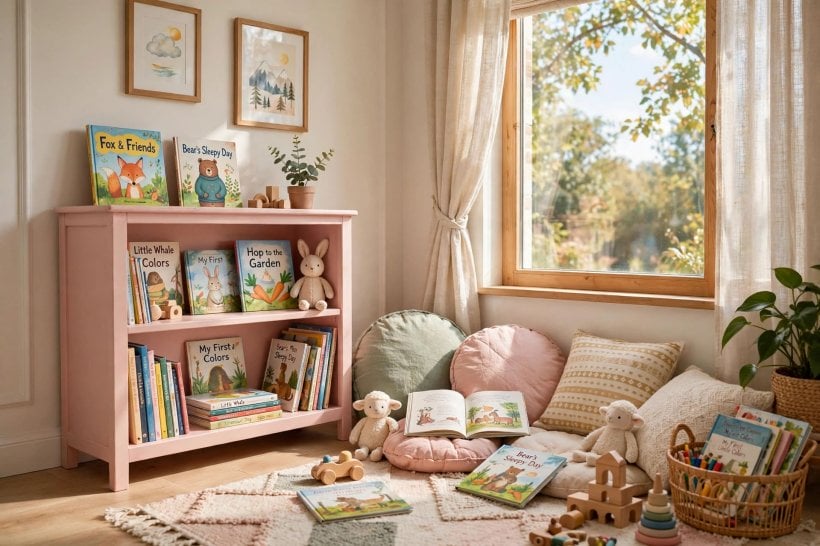
A painted bookcase is rarely just a bookcase for long. It becomes the room’s reference colour, the note everything else can harmonise with. Pull one tone from it into a cushion, a lampshade or the frame of a picture, and the room reads as designed rather than accumulated. In an open-plan small home, a painted case can quietly mark a zone, reading corner here, living space there, more gracefully than a screen or rug alone. Flank it with a comfortable chair and a real reading light and you have built the corner everyone in the house will negotiate for.
The same piece can work a second job. Low painted cases make excellent room dividers, media units and hallway storage for post, hats and the everyday landing strip. Add a desk beside it and the case becomes the storage wall of a study corner, exactly the arrangement explored in tiny house home office ideas, where shelves earn their place by holding work life invisibly. This is the quiet power of the painted case: it is never only storage. Chosen well, it is furniture, architecture and colour scheme in a single, affordable gesture.
10. Keep It Beautiful: Touch-Ups, Restyles and Second Lives
Painted furniture asks little, but not nothing. Dust shelves with a soft cloth rather than a wet one, lift objects instead of sliding them, and use felt pads under anything heavy or rough-based. When an edge inevitably chips, and on a much-used case one will, clean it, dab in the labelled leftover paint with a small brush, and the repair vanishes in minutes. That five-minute fix, done early, is the whole difference between a case that looks loved for a decade and one that drifts back to tired within two years.
Restyling is the other renewal. When a room starts to feel flat, you rarely need new furniture; you need a shelf edit. Swap the art, regroup the books by colour for a month, clear one shelf entirely and let the paint breathe. And when a bigger change eventually calls, remember the case can simply be painted again, as kitchen units are, following the same wash, sand and prime routine that worked the first time; the transformation logic in our guide to kitchen design for tiny houses proves painted joinery can reinvent a room more than once. Few home improvements offer a second and third life so cheaply.
Final Considerations
Everything here rests on three habits: test the colour in the room’s real light, prepare the surface as if the finish depends on it, because it does, and style the shelves with a little restraint so the colour can be seen. This is the second time the phrase painted shelves ideas has appeared in full in this article, and that restraint is the point: the ideas work because the case, not the keyword, does the talking. Choose a colour you love at arm’s length and across the room, in daylight and lamplight alike.
Start with the case you already own and your least-used room if you are nervous. One weekend, one tin, one transformed piece of furniture, and you will understand why painted bookcases are the oldest trick in the decorating book: nothing else changes a room so completely, so reversibly, for so little. The books go back, the chair moves closer, and the room has a heart it did not have on Friday.


0 Comments