

An awkward corner can become the hardest-working spot in the living room once the television moves in. This guide covers the layouts, sofas, colours and layered lighting that turn a compromise into a deliberate, comfortable focal point.
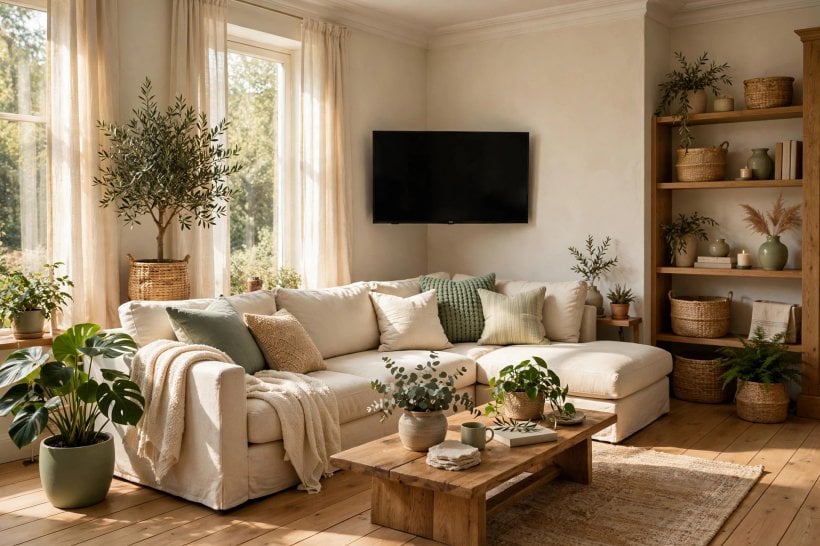
1. Start With the Corner: Viewing Angles and the At-a-Glance Plan
Putting the tv in corner only works when the seating agrees with it, so begin by sitting where people will actually sit and checking the view. You want the centre of the screen roughly at eye level from the main seats, no extreme sideways twist for anyone, and no window directly opposite the screen pouring reflections across it at the hour you watch most. Tape the screen’s outline on the wall first and live with it for an evening before drilling anything.
Next, measure the corner itself. Note skirting, sockets, radiators and any door swing that crosses the space, because a corner unit that blocks a heat source or a walkway will annoy you daily. Decide early whether the screen will sit on a stand, float on a bracket or rest inside a bespoke unit, since that choice drives cost, cable routes and how much floor you give up. It also helps to place the screen within your wider home designing ideas, so the corner scheme matches the palette and furniture shapes used through the rest of the home.
| At a Glance | What to Decide | Practical Note |
|---|---|---|
| Best first step | Tape the screen outline and test from every seat | Watch one full programme before fixing anything |
| Layout options | Angled sofa, sectional wrap or single statement chair | Angle the seating, not just the screen |
| Colour direction | Blend the corner in, or make it a dark feature | A dark corner hides the black screen best |
| Main cost drivers | Bracket or unit, seating changes, lighting and cable work | Furniture moves usually cost more than the bracket |
| Lighting plan | Ambient, task and accent layers on separate controls | Keep light sources off the screen itself |
| Good fit for | Long, narrow or multi-use rooms and open-plan spaces | Corner placement frees the main wall for art or storage |
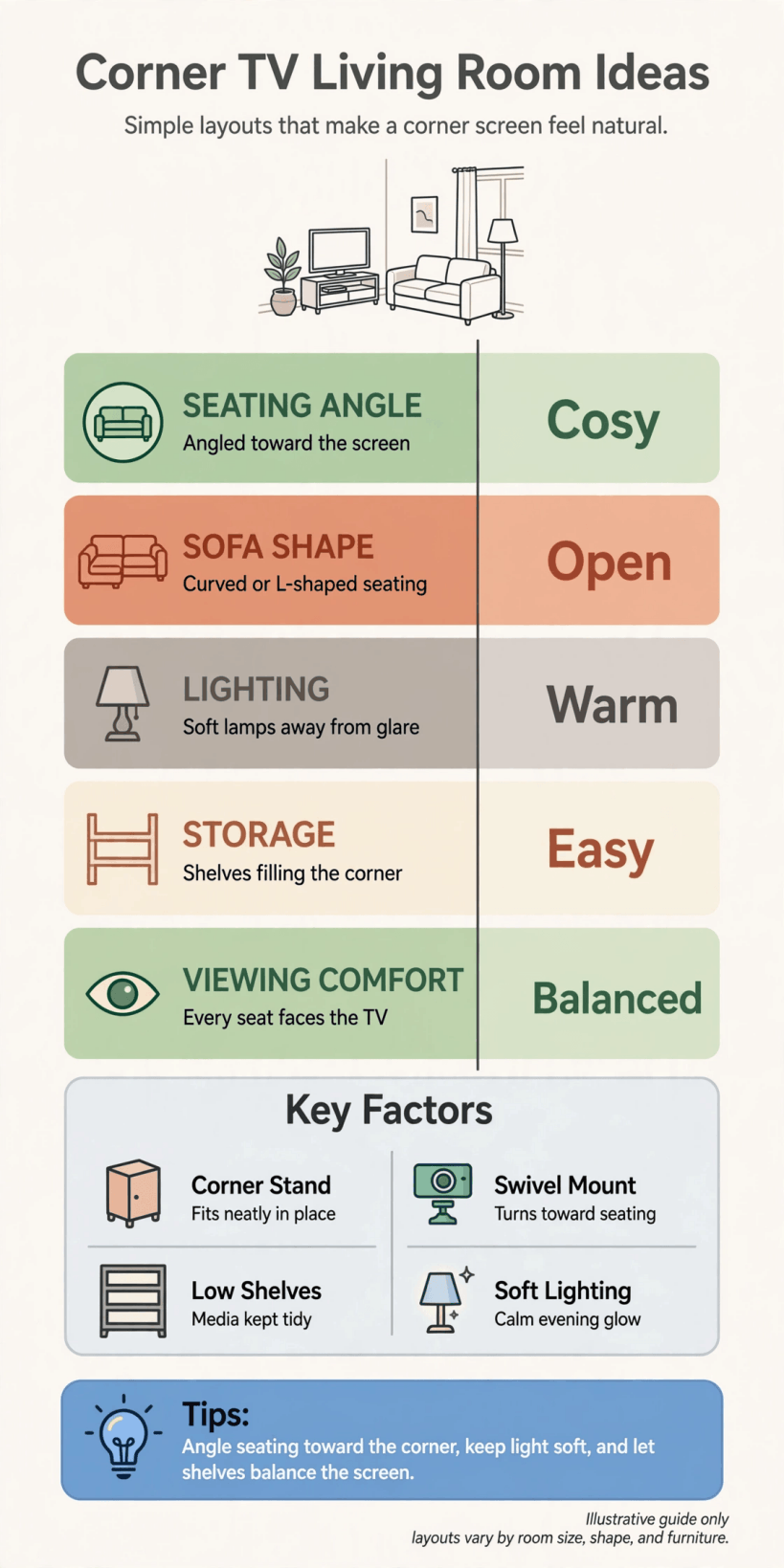
At a glance: angles, seating, colour and lighting decisions for a living room built around a corner screen.
2. Angle the Sofa Toward the Corner for a Natural Layout
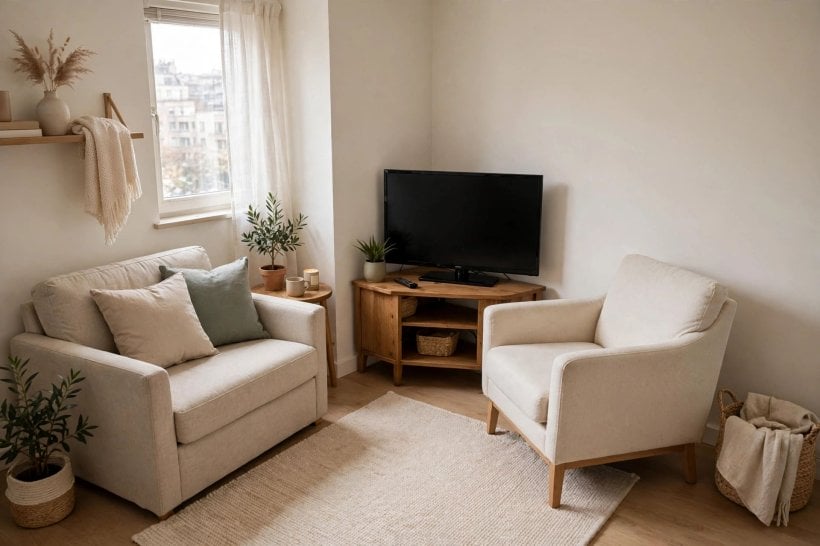
The simplest successful layout turns the main sofa to face the corner at a diagonal, so everyone looks straight at the screen without craning. A diagonal sofa also softens a boxy room, breaking the grid of parallel walls and creating a cosy, enclosed feeling in the seating zone. Anchor the arrangement with the sofa’s front legs on a generous rug, and let a pair of side tables or a single floor lamp mark the ends of the arrangement.
Diagonals do create triangular gaps behind the sofa, so plan a use for them: a tall plant, a basket of blankets or a slim console for books keeps the space deliberate rather than dusty. Keep a clear route past the sofa ends for everyday traffic, and test the walk-through with the room’s real users in mind. The same angled thinking appears in modern living room interior design ideas, where furniture often floats away from walls to define zones within one open space.
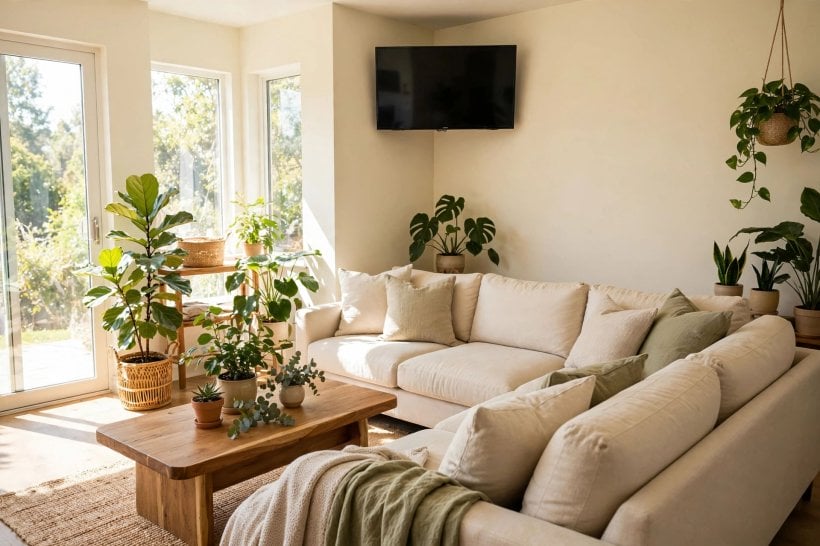
3. Sectionals That Wrap the Corner Without Blocking Walkways
A corner sectional earns its keep in this layout because its L shape mirrors the geometry of the room. Place the longer run facing the screen and the shorter return along the side wall, and the whole household gets a fair view, including whoever stretches out on the chaise end. Choose a low-backed design so the piece does not tower over the screen or cut the room in half visually.
Size is everything. A sectional that is too deep will push the viewing distance uncomfortably close to a large screen, while one that is too small leaves the corner feeling under-furnished. Sketch the footprint in tape on the floor and walk the paths around it for a day. Leave breathing room between the sectional and the screen unit so the corner never feels stuffed, and pick upholstery that can handle feet, snacks and the occasional film-night sprawl without showing every mark.
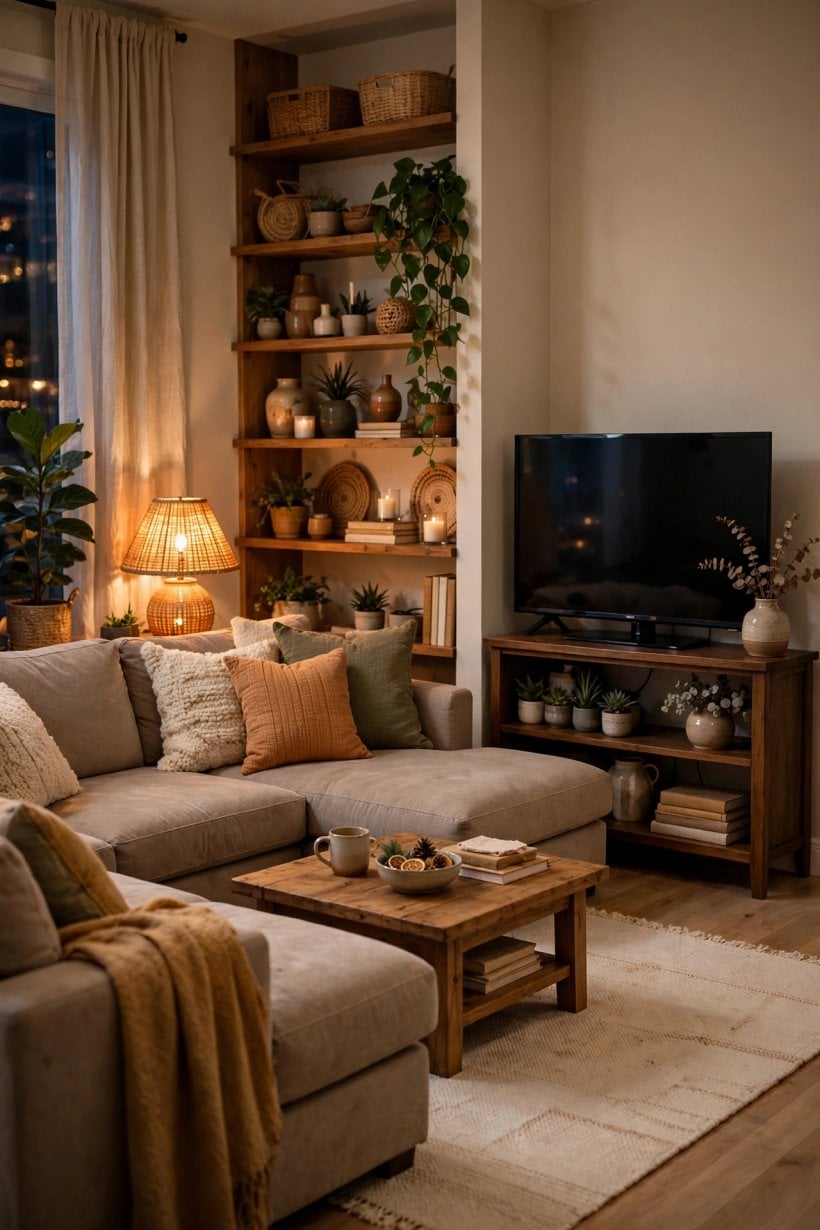
4. Swivel and Corner-Mounted Screens for Flexible Viewing
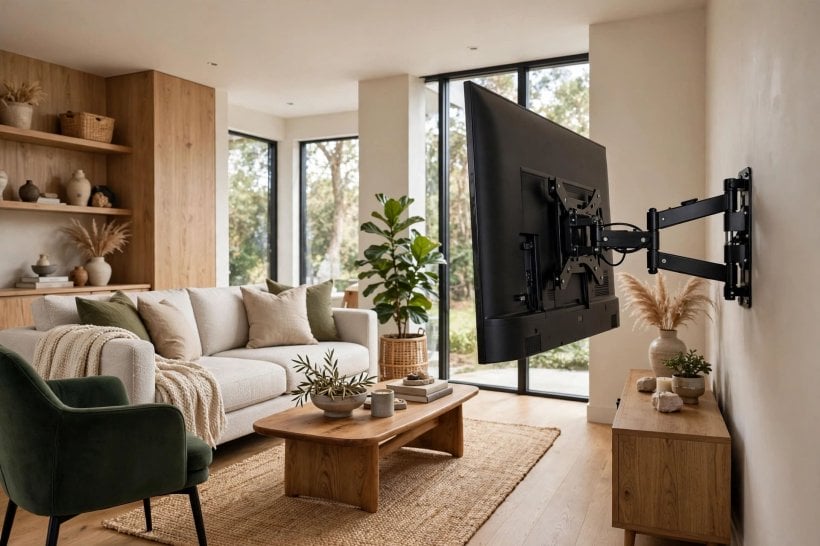
A full-motion bracket is the corner layout’s best friend, letting the screen sit flat against one wall for everyday tidiness, then pull out and angle toward the seating for films. Fitted into the corner itself, a bracket also lets you fine-tune the tilt to dodge a reflection that only appears at certain times of year. Always fix into studs or solid masonry as the bracket maker directs, because an extended arm multiplies the load on its fixings.
If mounting is not possible, a corner stand with an angled front does a similar job and brings storage with it. Look for stands whose shelves genuinely fit your boxes and soundbar rather than trusting the photograph, and check the stand’s depth at its widest point against your corner. A middle option is a simple swivel base beneath the screen on a low unit, which gives a few degrees of adjustment each way for group viewing without any wall work at all.
5. Low Media Units and Floating Shelves Beneath the Screen
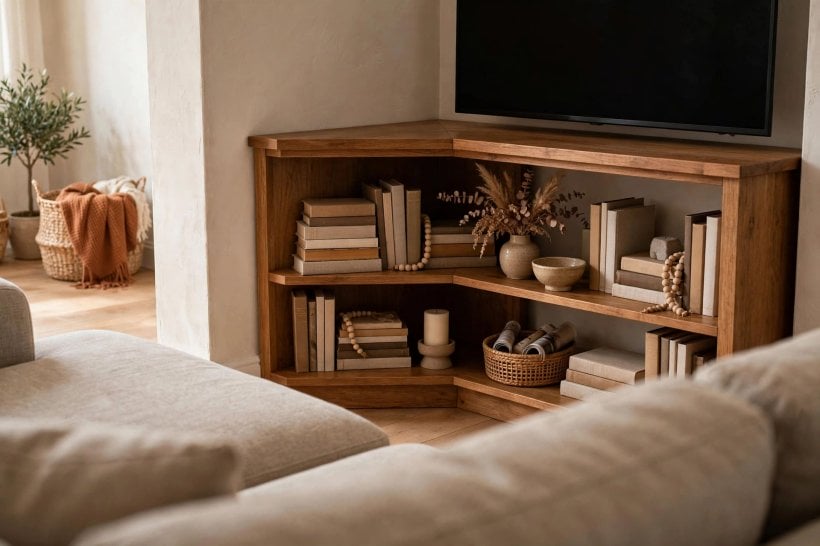
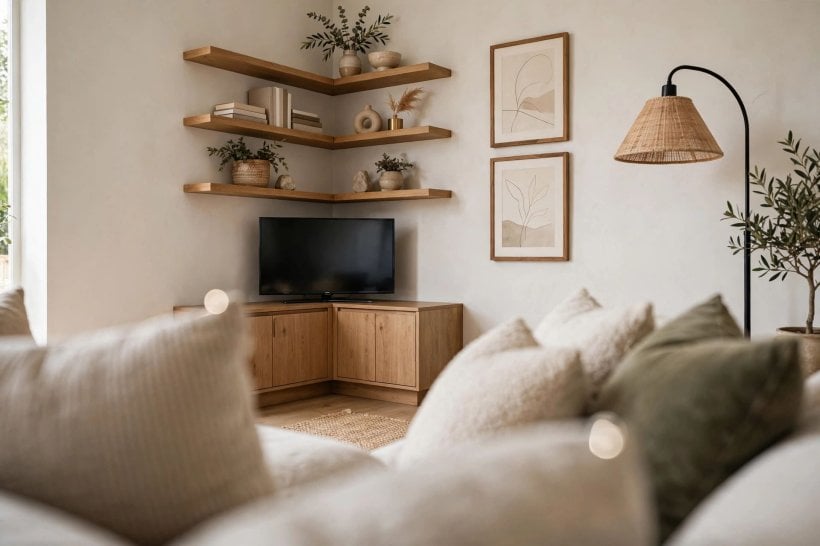
What sits beneath the screen decides whether the corner looks designed or improvised. A low, wide media unit grounds a wall-mounted screen, swallows the boxes and gives remotes and games a home, while floating shelves keep the floor clear and suit a smaller screen in a tight room. In the spirit of small living room interior design ideas, choose the lightest option that still hides everything you own, and no lighter.
Mind the proportions. A unit much narrower than the screen looks perched and unstable, while one that stretches a little beyond the screen on both sides reads calm and intentional. Floating shelves should step with the corner rather than stopping dead at it, and they need honest fixing into solid structure if they will carry books or a soundbar. Keep the top surface mostly empty: a plant trailing at one end and a small stack of books is plenty beside the screen’s own visual weight.
6. Colour Palettes That Make a Corner Screen Disappear
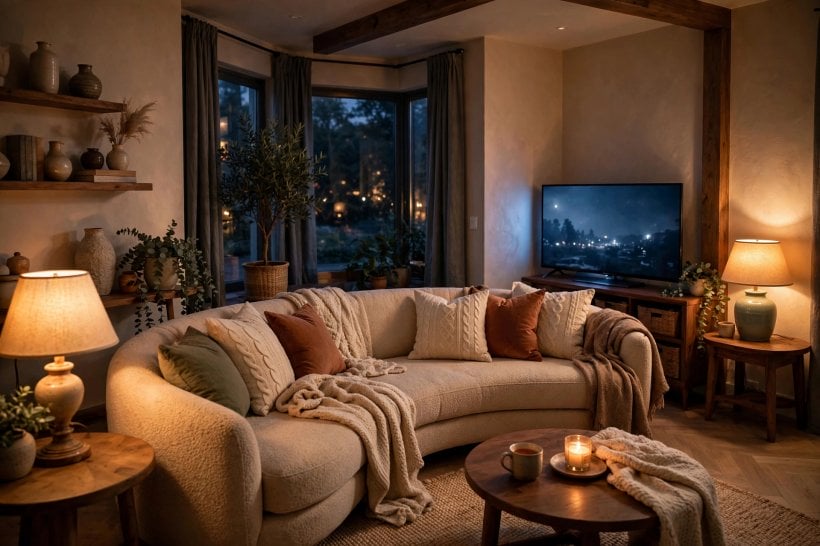
A powered-off television is a big black rectangle, and colour is how you stop it shouting. Painting the corner walls in a deep shade, charcoal, ink blue or forest, lets the screen melt into its background so the room reads restful even when nothing is playing. The trick borrows from calm, tonal schemes like zen interior design ideas: limited colours, plenty of texture, and contrast used only where it earns its place.
If dark walls feel like too much commitment, blend instead. Choose a mid-tone for the corner that matches the sofa or rug, then carry the screen’s black into a few small accents, picture frames, a lamp base, cushion piping, so the rectangle feels like part of a pattern. Pale, beachy palettes can work too, especially with a light wood unit and woven textures softening the technology. Whichever direction you take, test the colour beside the switched-off screen at night as well as in daylight, because that is when the corner is most on show.
7. Rugs, Coffee Tables and Traffic Flow Around an Angled Layout
Angled seating needs the rug to angle with it. A large rug turned to match the sofa ties the whole arrangement together and tells visitors, without a word, where the room’s centre now is. Round rugs are the peacemakers of corner layouts, softening every diagonal and leaving no corner of carpet pointing accusingly at the walls. Choose a size that takes the front legs of all the main seats, so nothing wobbles half-on, half-off.
For the coffee table, round or oval shapes keep shins safe on the diagonal paths people actually walk, and a lighter, movable table beats a heavy block when the room hosts games or exercise videos. Keep the everyday routes, door to sofa, sofa to kitchen, clear of table corners and lamp cables. The relaxed, layered feel in beachy interior design ideas translates well here: natural textures, nothing too precious, and furniture that can shift a few inches without the scheme falling apart.
8. Layered Lighting That Kills Glare and Adds Atmosphere
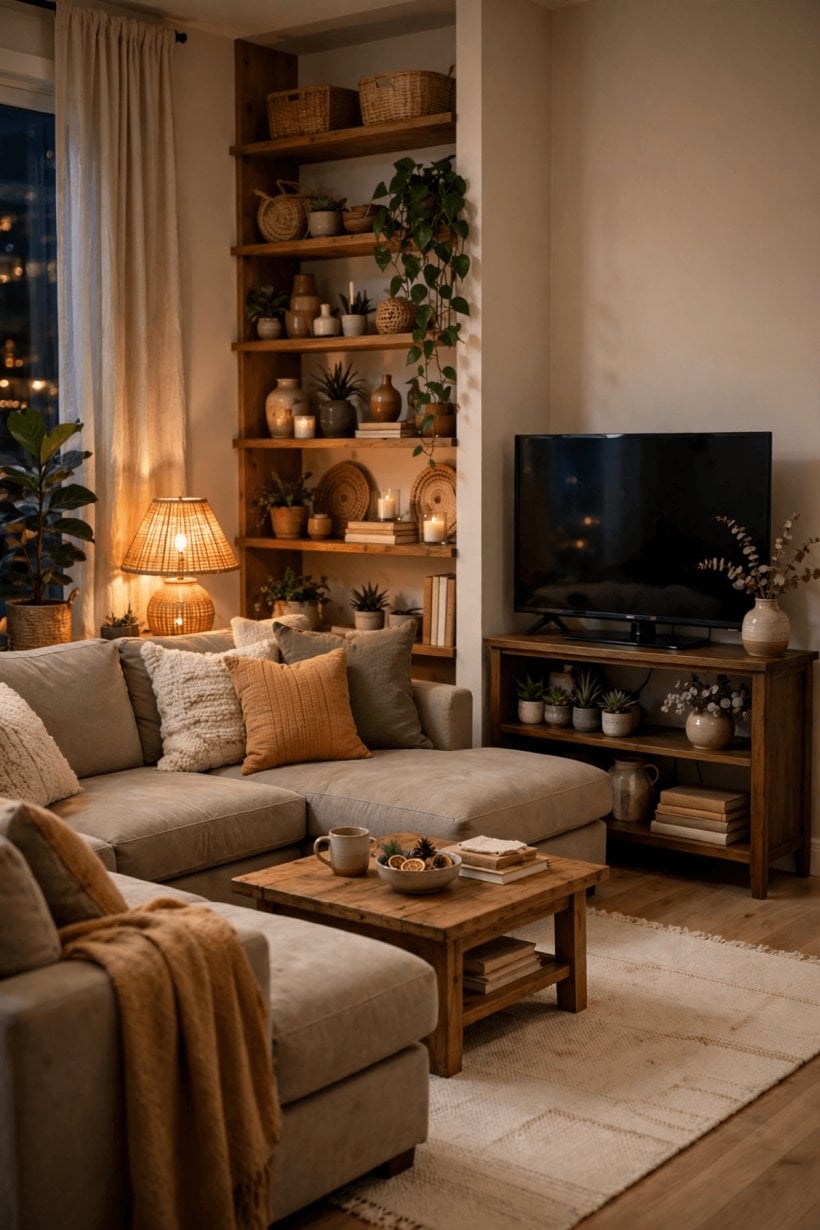
Layered lighting is what separates a corner that works at night from one that fights you. Start with a soft ambient layer, a dimmable ceiling light or wall washers, that lifts the whole room without aiming at the screen. Add a task layer where people read or knit, usually a lamp beside the main seats, and keep every bulb shaded so no bare source reflects in the glass.
The accent layer brings the evening magic: a gentle glow behind the screen or along a shelf washes the corner in light, raises perceived contrast and is widely felt to ease eye strain during long films. Warm colour temperatures suit living rooms far better than stark daylight bulbs, and separate switches or a simple smart plug routine let the room shift from bright family use to film mode in seconds. Test the full setup with the screen both on and off, adjusting angles until the corner glows and the picture stays clean.
9. Hiding Cables, Boxes and Speakers Gracefully
Nothing undoes a smart corner faster than a waterfall of cables. Plan the cable route at the same time as the bracket or unit, using trunking painted to match the wall, an in-wall route fitted by a professional, or a unit with a proper cable back and ventilation. Coil surplus length neatly rather than stuffing it behind boxes, and label the plugs once; future you, swapping a console at midnight, will be grateful.
Boxes and speakers need air as much as tidiness, so avoid sealing consoles into unventilated cupboards where they cook quietly. Mesh-fronted or slatted units hide the clutter while letting heat and remote signals through. Small speakers can sit on the unit’s ends angled toward the sofa, or on low stands flanking the corner; a soundbar centred under the screen is the tidiest option of all. Finish with a plant or a stack of art books softening the unit’s end, and the technology corner becomes furniture again.
10. Small Living Rooms: Corner Screens That Save Precious Space
In a small living room, the corner is often the only place a screen can go without stealing the one good wall. Tucking the television diagonally frees that wall for a sofa, storage or art, and stops the screen dominating every sightline. As shown in living room interior design for a tiny house, compact rooms work best when every piece does two jobs, so let the media unit double as the room’s main closed storage.
Keep the rest of the furniture light on its feet: an armless chair that can swing round for viewing, a nesting side table, a sofa with raised legs that lets the floor show through. Mounting the screen, even on a simple flat bracket, returns the top of the unit for a plant and a lamp, which makes the corner feel furnished rather than technical. And measure the viewing distance honestly; a slightly smaller screen watched comfortably beats an oversized one that fills your whole field of view.
Final Considerations
Treating the tv in corner as a design decision rather than a defeat is the whole secret. Once the seating turns to meet the screen, the colours quieten the black rectangle and the lighting is layered for the evening, the corner stops being the room’s leftover space and becomes its most deliberate one. Live with taped outlines and shifted furniture for a few days before buying or drilling, because small angle changes make a surprising difference to comfort.
Budget for the unglamorous parts, a sound bracket, safe fixings and tidy cable work, before the statement rug or the new lamp, since those invisible pieces decide whether the layout lasts. Then enjoy what a corner arrangement gives back: a freed wall, a sociable seating group and a screen that is exactly where everyone wants to look, without the room revolving around it all day.

0 Comments