

A lakeside plot is a gift and a responsibility at once: the view does half the work, but water, wind and wildlife shape everything you plant and build. This guide covers the layouts, colours, costs and practical details of a shoreline garden that looks settled and stays healthy.
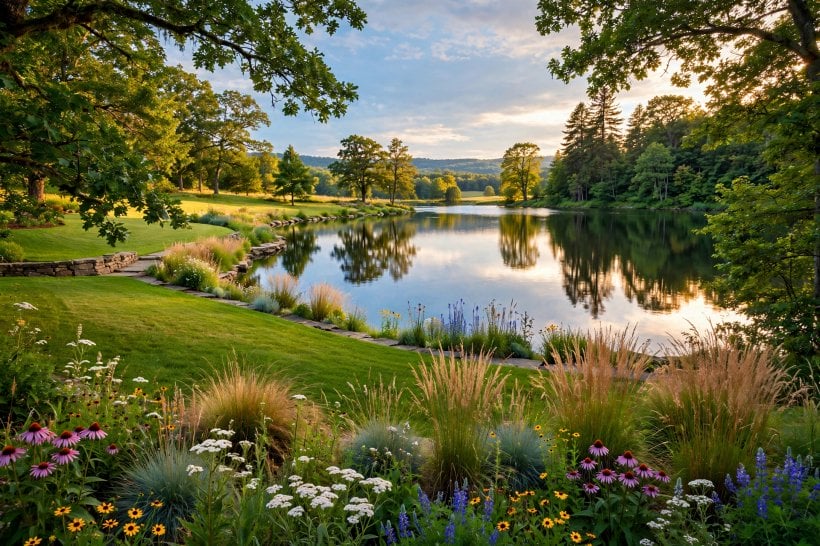
1. Know Your Shoreline: Water Levels, Soil and the At-a-Glance Plan
Good lakefront landscaping starts with a season of watching, or at least a very honest afternoon. Note where the water reaches in a storm, where it falls in a dry spell, and which stretches of bank are sand, clay, rock or boggy soil. Those high and low marks decide where paths can run, what will thrive at the waterline and which areas should simply be left to grasses that love wet feet.
Check the practical rules before the pretty ones. Many shorelines have protected buffer zones where building, dredging and even mowing are limited, and rules vary widely between lakes and regions, so confirm what applies to your plot with the local authority before ordering materials. Walk the bank after rain to find where runoff enters the water, because those flow lines become your drainage plan. In shared settings like those described in tiny house communities in Washington State, agree the shoreline plan with neighbours early, since one cleared bank changes the view and the wildlife corridor for everyone along the water.
| At a Glance | What to Decide | Practical Note |
|---|---|---|
| Best first step | Map high and low water marks and soil types | Observe the shore after storms and in dry spells |
| Layout options | Terraced, gently sloped or natural and wild | Let the bank’s steepness choose the approach |
| Colour direction | Water, stone and sky tones with green structure | The lake supplies the blues; you supply the frame |
| Main cost drivers | Retaining work, stone, decking, dock and planting area | Shoreline engineering outweighs planting costs |
| Golden rule | Keep a planted buffer between lawn and water | Roots hold the bank and filter runoff naturally |
| Good fit for | Any lakeside plot, from wild cabin shores to village gardens | Scale the hard landscaping to the wildness of the setting |
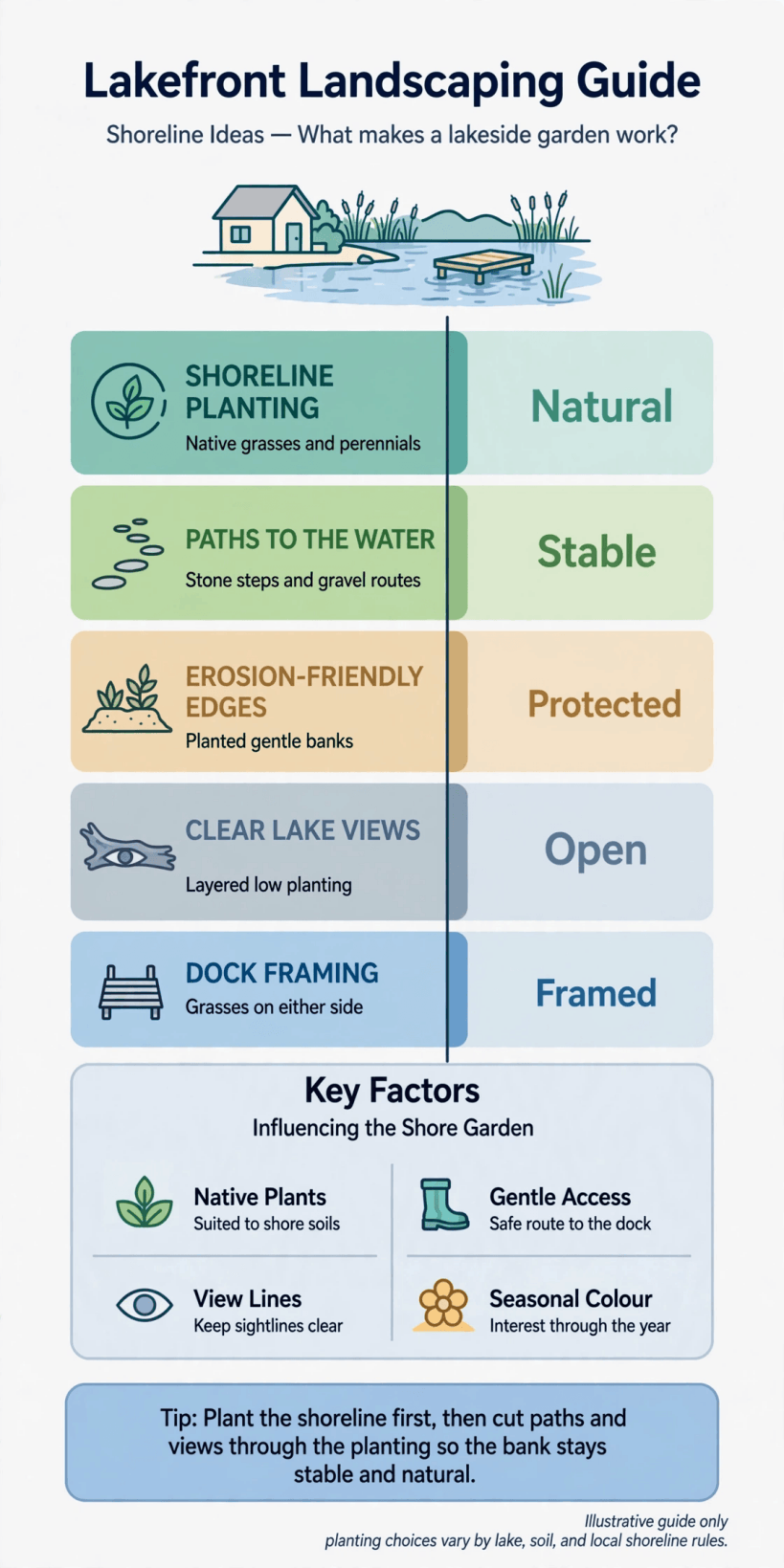
At a glance: the surveys, buffers, layout and cost decisions to settle before shaping a shoreline garden.
2. Gentle Paths and Landing Steps Down to the Water
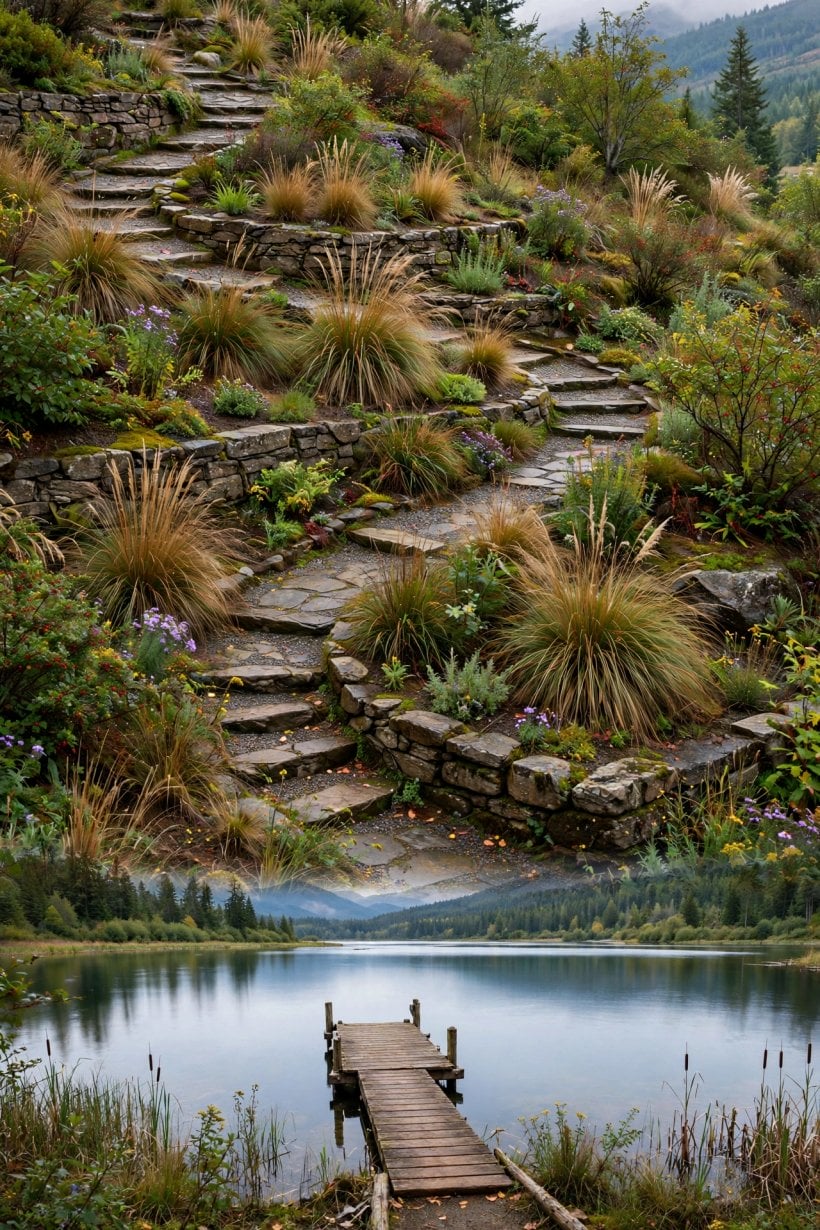
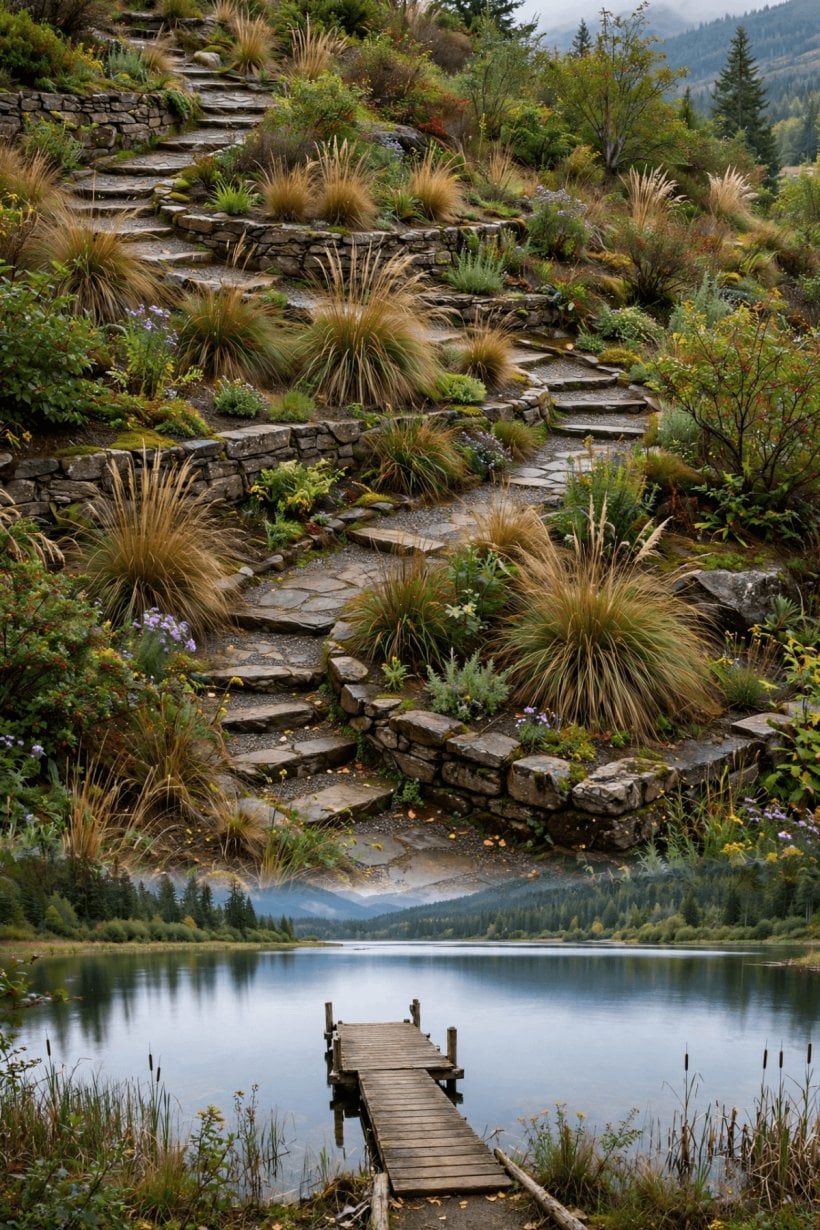
Access decides whether the water is part of daily life or just a view. A path that zig-zags gently down a slope is kinder to knees, trolleys and wheelbarrows than a steep straight stair, and it reveals the lake in stages as you descend. Surface it in something that grips when wet and suits the setting: packed gravel with stone edging in a natural plot, or wide timber treads where the bank is shaded and mossy.
Finish the descent with a landing: a small, level platform or a couple of broad steps at the water’s edge where you can set down a chair, a fishing rod or a morning coffee. Build steps generously, with deep treads and a handrail on the exposed side, because shoreline steps are used by everyone from toddlers to grandparents, often with wet feet. The welcoming-arrival thinking behind new home exterior design ideas applies here too: the approach should feel like part of the design, not an afterthought bolted to the bank.
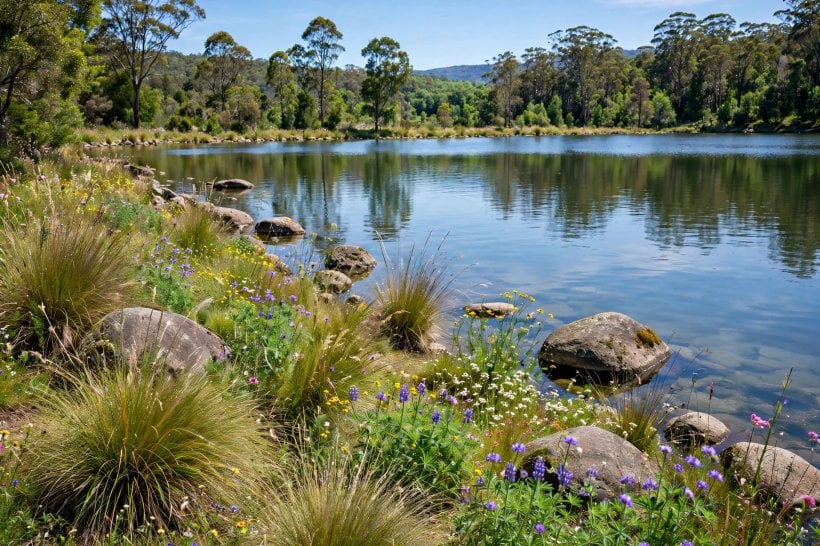
3. Native Shoreline Planting That Protects the Bank
The most important planting on a lakeside plot is the buffer strip along the waterline, and it does three jobs at once: roots knit the bank together against wave wash, foliage slows and filters runoff from the garden, and the whole strip becomes a corridor for birds, frogs and pollinators. Choose plants native to your region and suited to wet ground at the water’s edge, graduating to drier-ground species a few steps up the bank.
Plant in drifts and layers rather than rows: sedges and rushes at the waterline, flowering perennials behind them, then shrubs whose roots and canopy stabilise the upper bank. Leave a mown or gravelled access gap where you launch a boat or swim, but resist tidying the whole edge into lawn, because short grass has shallow roots and lets the bank crumble a little more each winter. Within a couple of seasons a native buffer mostly looks after itself, asking for a yearly cut and the removal of any thuggish invaders rather than weekly care.
4. Decks and Terraces That Frame the View
A deck at the top of the bank is the shoreline garden’s living room, and its placement matters more than its size. Set it where the view opens widest, angle it toward the best sunset or the longest stretch of water, and keep its railing as visually light as local safety rules allow so the lake stays the picture and the deck merely the frame. Timber warms bare feet; composite boards reduce upkeep in a damp climate where everything stays wet longer.
Terracing a slope into two smaller levels often works better than one tall deck on stilts, giving you a dining level near the house and a quieter sitting level near the water. The relaxed, layered approach in beachy interior design ideas translates beautifully outdoors here: pale weathered wood, woven textures, nothing too formal. Build in shade from the start, a pergola, a sail or a well-placed tree, because a deck you cannot sit on at midday in July is only half a room.
5. Boulder Edges and Natural Stone for a Settled Look
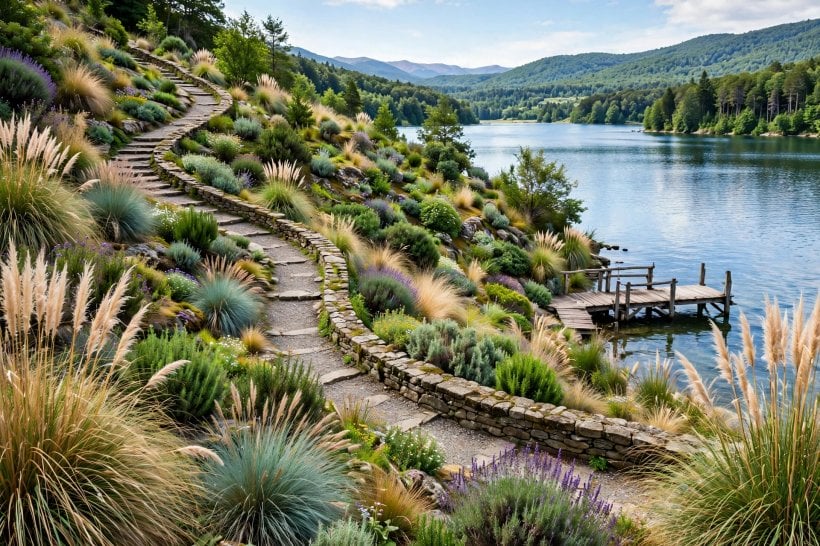
Stone is the shoreline’s native language, and a well-placed line of boulders settles a bank faster than any timber edging. Half-bury each stone so it looks as though the hill pushed it up rather than a truck dropped it, vary the sizes, and step them with the slope instead of forcing a level line. Between and behind the boulders, plant the gaps so roots and stone work together against erosion.
Stone also makes the most durable steps, stairs and low retaining on a lakeside plot, shrugging off frost, flood and constant damp that shorten timber’s life. It costs more to buy and far more to move, so plan delivery and machine access before falling for the biggest rocks, and reuse any stone already on the plot first. Where the setting is gentler, a simple cobble or shingle beach edge can replace boulders entirely, though it needs raking back into place after storms, a small ritual most owners come to enjoy.
6. Colour Palettes Drawn From Water, Stone and Sky
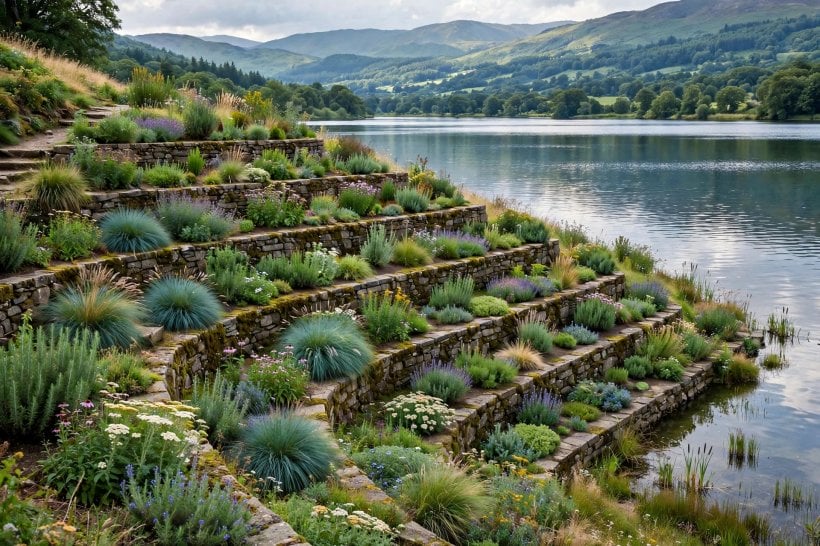
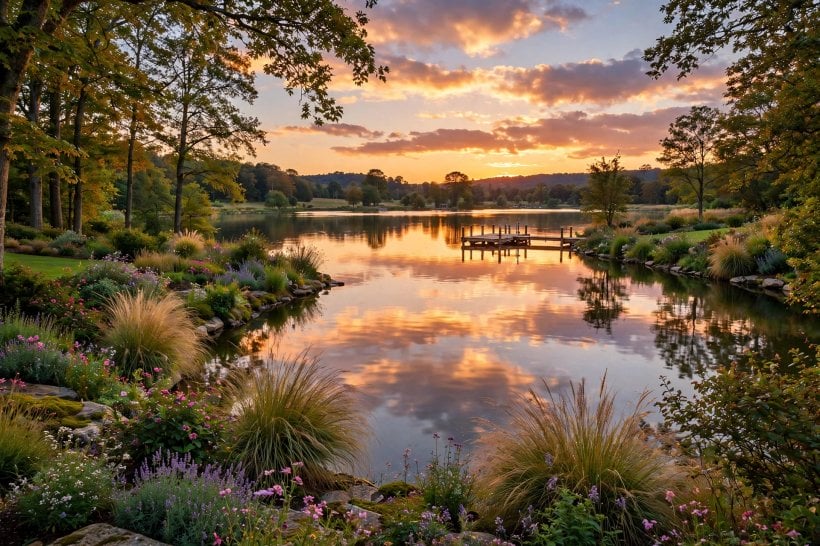
The lake already owns the colour palette; the garden just has to agree with it. Blues and silvers from the water, greys from stone, and the many greens of shoreline planting make a scheme that never fights the view. Flowering plants in white, soft blue and pale pink sit happily inside it, while hot colours are best kept in small, deliberate doses near the house, where they belong to the building rather than the water.
Foliage colour does most of the work: silver-leaved plants near pale stone, deep green shrubs as a backdrop to the sparkle of the water, grasses that bleach to straw and gold in autumn. The restrained, tonal approach of zen interior design ideas works outdoors too, letting texture and light carry the design. Paint fences, stores and the dock furniture in the same family as the house trim or the stone, and avoid bright white hard landscaping at the waterline, where glare off the lake will make it shout twice as loudly.
7. A Small Beach and Fire Pit Zone for Long Evenings
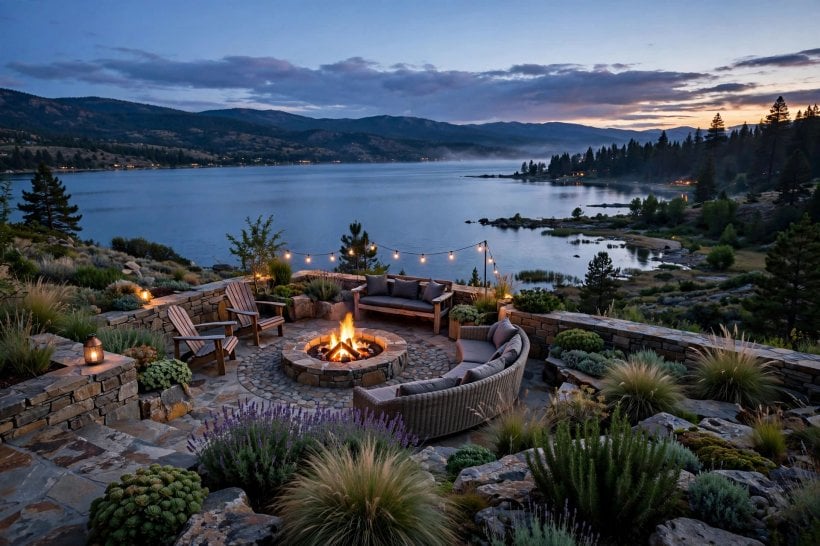
If the plot allows it, a pocket of sand or fine shingle at the water’s edge becomes the most loved square metres of the whole garden: a launch for paddles, a landing for swimmers and a warm seat in the evening sun. Keep it modest and contained, edged with stone or timber so the material stays where storms would rather move it, and top it up occasionally rather than fighting the lake for every grain.
Just above the beach, a fire pit zone extends the shoreline day into the night. Ring a simple stone or metal pit with a crescent of seating on ground that drains well, store wood dry nearby, and check local rules on shoreline fires before the first match, since they vary and some lakes restrict them in dry spells. As with the gathering spaces in home designing ideas, the layout succeeds when the seating, the light and the view are planned together: here the fire is the lamp, the lake is the view, and the seating needs nothing more than a clear sight of both.
8. Docks, Lighting and Safety Along the Water’s Edge
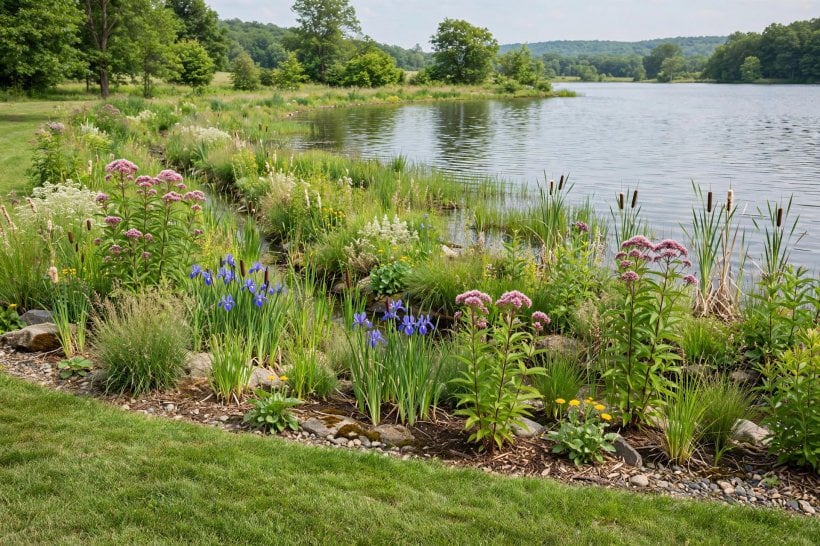
A dock, jetty or simple swimming platform is often the largest single cost on the shore, and the most regulated, so design it with the permit process rather than against it. Floating docks ride out changing water levels and winter ice more forgivingly than fixed ones in many lakes, while a modest fixed jetty suits sheltered, stable shores. Keep the footprint honest: enough for the boat, the swimmers and a bench, not a second garden hovering over the water.
Light the water’s edge for safety first and beauty second: low, shielded fittings on steps and the dock edge, a gentle wash where paths meet the shore, and nothing glaring across the water to spoil the dark or dazzle boaters. Warm light keeps insects calmer and neighbours happier. Add the unglamorous essentials with the same care: a reachable life ring, non-slip surfaces where people climb out, and clear depth markers if children swim. A beautiful shore that is also obviously safe is the one guests relax on.
9. Rain Gardens and Drainage That Keep the Lake Clean
Every roof, path and lawn on the plot eventually drains toward the water, and a thoughtful garden intercepts that journey. A shallow rain garden, a planted hollow placed where runoff naturally gathers, slows water down, lets sediment settle and gives roots time to absorb nutrients before anything reaches the lake. Site it on the flow lines you mapped in your first survey, and plant it with the same wet-tolerant natives used at the shoreline.
Support it with small habits of construction: permeable surfaces for paths and parking so rain soaks in where it falls, gutters directed to planted areas rather than straight down the bank, and no fertiliser on any slope that drains to the water. These are quiet, invisible decisions, but they are the ones that keep the lake clear and swimmable for the next owners as well as for you, and they often cost less than the engineered drainage they replace.
10. Seasonal Care: Storms, Ice and Shoreline Upkeep
A shoreline garden is maintained by seasons rather than weeks. Spring asks for storm repairs, a check of steps, dock fixings and retaining stone, and the cutting back of last year’s buffer growth before birds nest in it. Summer is mostly enjoyment, with watering for new planting and a watchful eye on any bank that waves are undercutting. Autumn’s job is leaves: keep them out of the water where paths cross, but let the buffer keep its share for the wildlife that shelters in it.
Winter, where lakes freeze, means lifting or securing anything ice can crush or carry away, and marking the dock edge before snow hides it. This rhythm suits the indoor-outdoor life in modern living room interior design ideas, where the view through the glass is part of the room: a cared-for winter shore, grasses standing, stone dark with rain, is a picture worth framing. Keep a simple shoreline notebook of water levels, storm dates and repairs, because next year’s decisions get easier with every line of it.
Final Considerations
The best lakefront landscaping feels less designed than discovered, as though the paths, stone and planting had always been the obvious way to live beside this particular water. Achieve that by spending first on the unglamorous essentials, stable banks, safe steps, a healthy planted buffer and drainage that protects the lake, and letting decks, beaches and fire pits arrive once those bones are sound. Resist clearing the shore into a lawn with a view; the wild edge is both the protection and the beauty.
Work with the water’s moods rather than against them, choose plants and materials that already belong in the landscape, and maintain the shore a little every season instead of rescuing it every few years. Do that, and the garden will give back what lakeside owners treasure most: mornings on the steps with the mist lifting, long evenings by the fire, and a shoreline that looks better, and holds together better, with every year that passes.


0 Comments