

Walls are the biggest canvas in any home, and most of them are wearing plain paint and good intentions. One well-chosen finish can do more for a room than a van full of furniture.
Here are 75 finishes to steal — panels, paint effects, plaster, paper and stone — organised so you can plan one brave wall first and build your confidence from there.
1. Before You Begin: The Wall At-a-Glance
Every great wall starts with three decisions: how much texture, how much colour commitment, and how reversible the finish needs to be. Panels and plaster feel architectural, paint effects change mood for the cost of a weekend, and wallpaper delivers pattern nothing else can. Whatever you choose, test it on the actual wall and live with the sample through morning and evening light — the same patience that makes Zen interior design ideas for tiny houses feel so calm, and the reason rooms in living room interior design ideas for tiny houses layer one feature wall against quiet ones.
| Finish family | Best for | Reversibility |
|---|---|---|
| Timber panels and battens | Warmth, rhythm and hiding uneven walls | Removable with patching; check fixings before you start. |
| Paint effects | Colour depth on a budget | Paint over it whenever you are ready for change. |
| Plaster and limewash | Soft, cloudy, movement-filled surfaces | Usually painted over or re-coated; ask the supplier. |
| Wallpaper and murals | Pattern, story and instant atmosphere | Strippable types remove cleanly; check the label. |
| Stone, brick and tile | Weight, texture and a sense of permanence | The most permanent choice; plan it as a keeper. |
| Fabric and upholstery | Softness and quieter rooms | Panels remove easily; stretched fabric is a bigger job. |
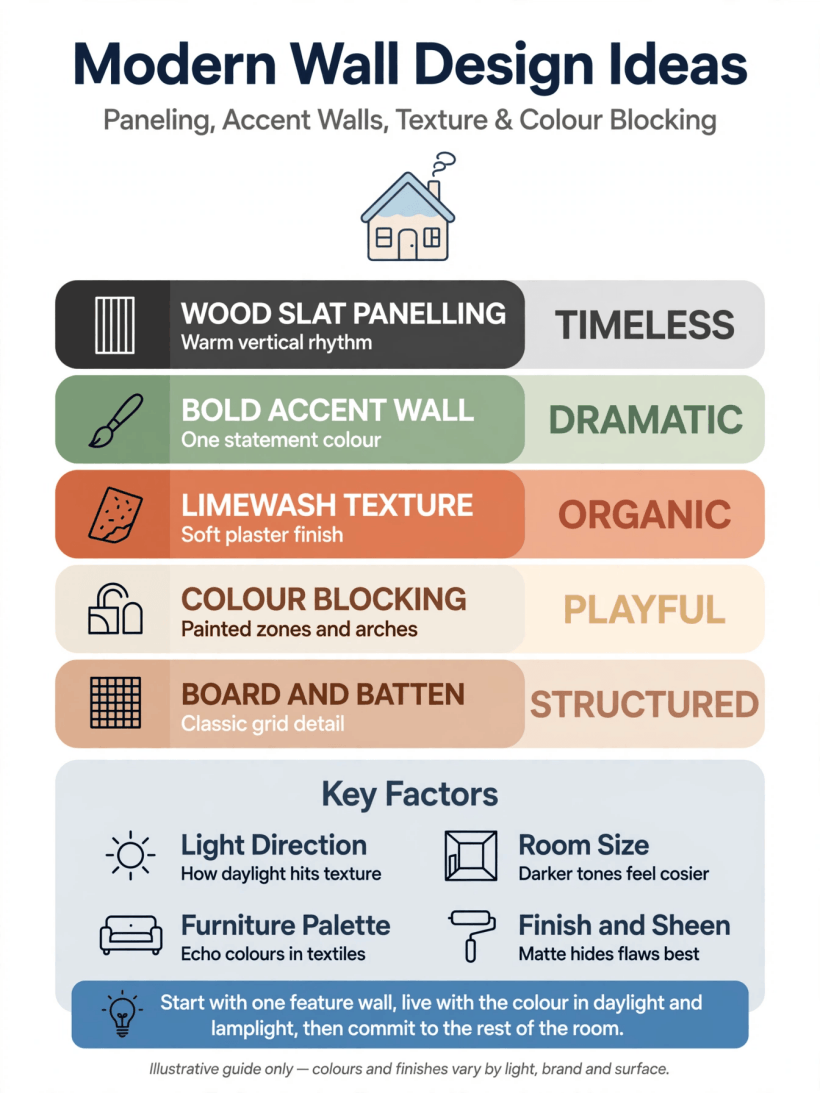
At a glance: the finish families in this collection — pick by texture, commitment and how easily you may want to change your mind.
2. Timber Panels, Slats and Battens
Timber brings rhythm to a flat room. Vertical battens stretch ceilings taller, wide boards calm a busy space, and a half-height panel line gives furniture something to lean against. In small homes especially, a single timber wall adds the architecture the room was missing, which is why it appears so often among modern tiny house interior ideas. Check board sizes, finishes and fire or moisture suitability for your room with the retailer before ordering.
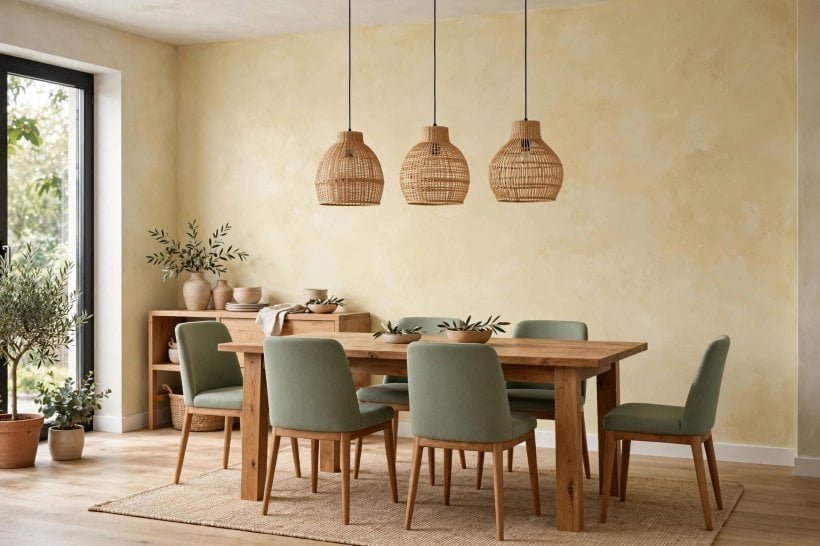
- Floor-to-ceiling battens. Slim vertical battens with shadow gaps between them turn a plain wall into rhythm and shadow, stretching the room taller while hiding minor unevenness behind their lines.
- Half-height panelling. Panel the lower half and paint it deep, leaving the top light. The line grounds sofas and beds, protects the splash zone of daily life, and keeps small rooms feeling open.
- Wide horizontal boards. Broad boards run horizontally to widen a narrow room visually, their grain adding warmth that paint alone cannot imitate.
- Chevron timber feature. Boards laid in a chevron behind the bed make a headboard wall with real movement, especially in warm oak tones against white bedding.
- Slatted room divider wall. An open slat wall zones an open-plan space without stealing light, giving the living area its own identity while air and daylight flow through.
- Dark-stained panels. Near-black stained timber behind shelves or a media unit makes objects glow against it and gives evenings a cocooned, cinema mood.
- Whitewashed planks. Pale washed boards bring coastal softness to bedrooms and bathrooms, brightening north-facing rooms while the grain still shows through.
- Panelled hallway. A run of simple framed panels turns a pass-through hallway into a designed moment, especially with a picture ledge of art above.
- Curved slat corner. Flexible battens bending around a corner dissolve the boxiness of small rooms, a detail worth checking with the supplier for bendable options.
3. Paint Effects and Colour Techniques
Paint is the bravest budget finish there is: a weekend, a roller and the willingness to live with a tester for a week. Effects add the depth flat colour lacks — brushed, sponged, split or ombré — and when you tire of them, the next chapter is one coat away. Sample generously; colours shift dramatically between the tin, the wall and your evening lighting.
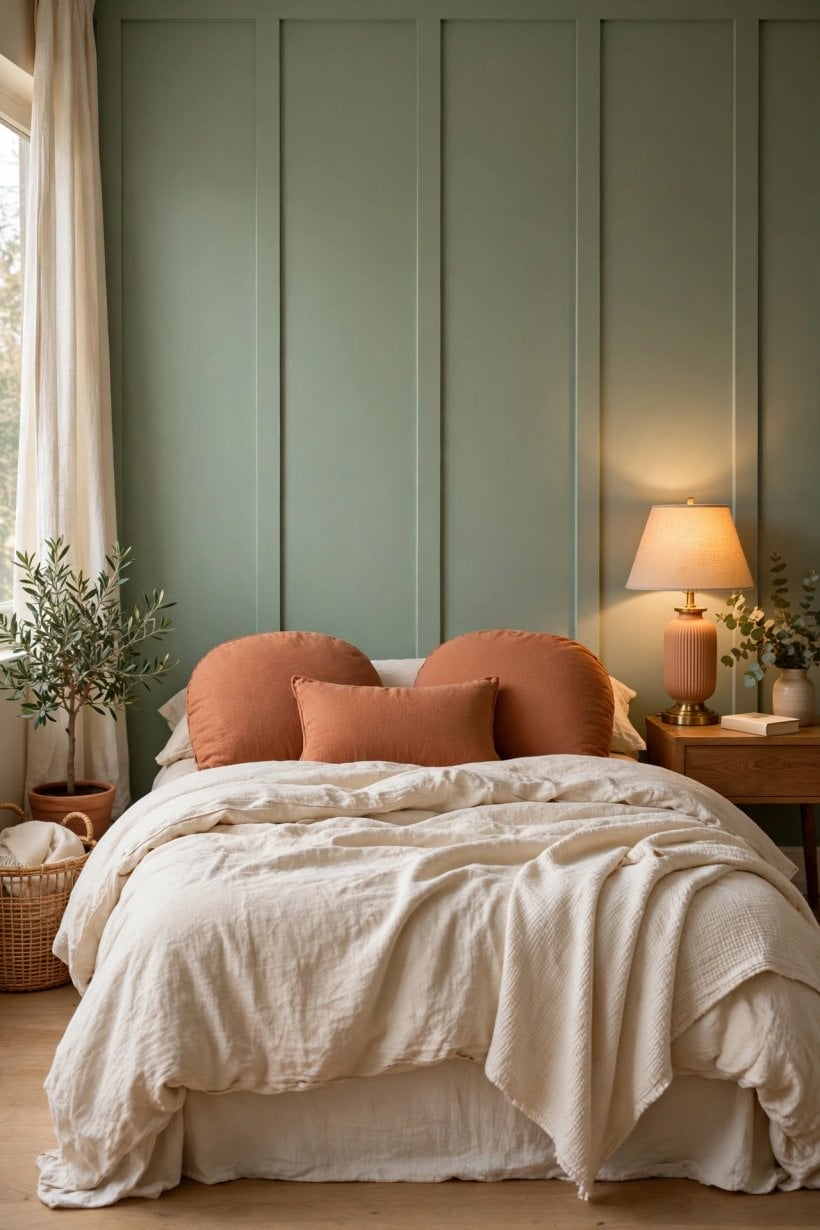
- Colour-drenched room. One colour across walls, woodwork and ceiling wraps a room in mood; small spaces especially gain coherence instead of visual chopping.
- Two-tone split wall. A crisp horizontal split — deep below, pale above — lowers tall ceilings politely and gives artwork a natural hanging line.
- Ombré fade. Colour melting from deep at the floor to pale at the ceiling makes low rooms breathe and bedrooms feel like dusk settling in.
- Brushed limewash effect. Cloudy, cross-hatched paint layers imitate old plaster beautifully; technique matters more than tools, so practise on board first.
- Sponged texture. A natural sponge stipples two close tones into soft depth that hides a multitude of wall sins in older homes.
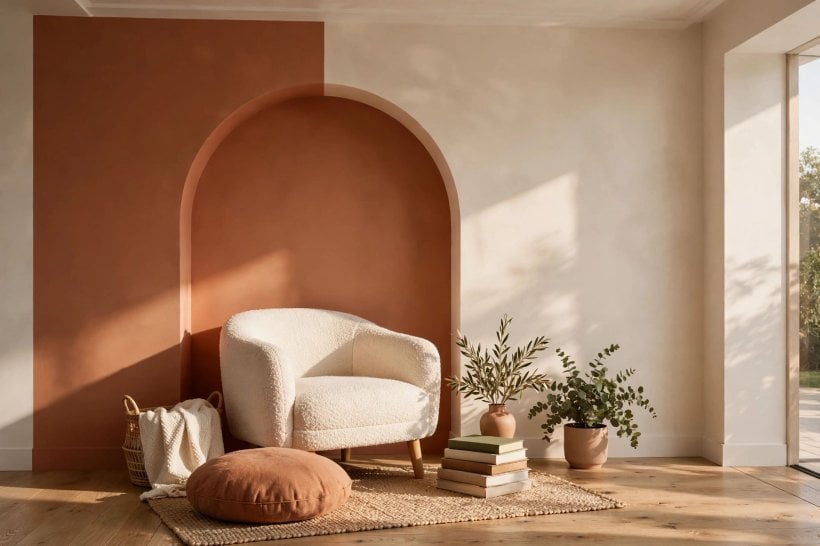
- Painted arch. A single arch painted behind a desk, bed or console frames the furniture, fakes architecture, and costs one small tin.
- Ceiling colour wrap. Bringing the wall colour up and over the ceiling by a border’s width softens the room’s edges like a lid of colour.
- Stripes, wide and tonal. Wide stripes in two sheens of the same colour read as texture rather than pattern, elegant in hallways and dining rooms.
- Checkerboard paint. Hand-painted checks in two soft tones give kitchens and playrooms a bistro wink without a single tile.
4. Plaster, Limewash and Textured Coatings
Some walls should feel like weather: cloudy, mineral and alive in changing light. Limewash, clay paints and fine plasters deliver that softness, and they flatter imperfect older walls instead of fighting them. Because these finishes are specialist, confirm preparation, sealers and bathroom suitability with the manufacturer, and consider a professional for whole-room applications.
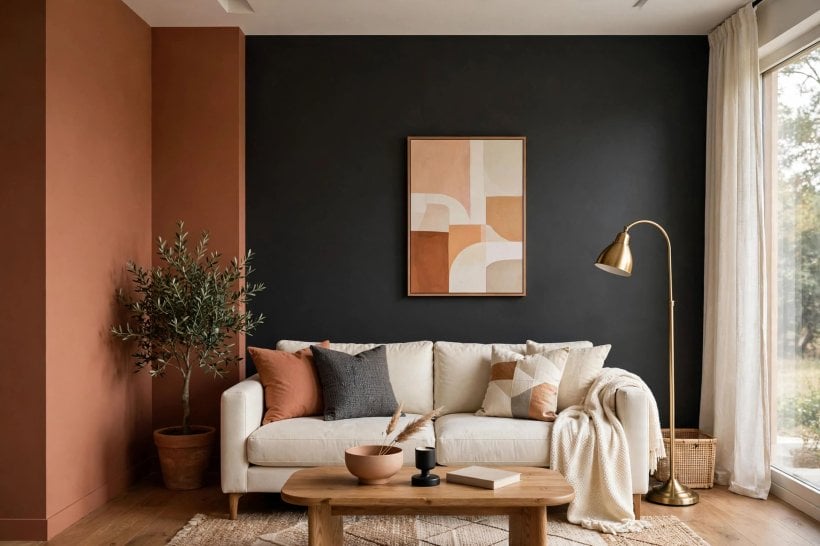
- True limewash. Applied in big crossed strokes, limewash dries into cloudy movement that changes with the hour — the finish behind half the calm bedrooms on your saved boards.
- Clay paint softness. Clay-based paints give a velvety, ultra-matt surface with earthy depth, kind to light and lovely in reading corners.
- Polished plaster sheen. A smooth, stone-cool polished finish behind a bath or basin feels quietly luxurious and wipes clean; ask about sealing for wet zones.
- Textured feature band. One band of rough plaster at picture height adds touchable contrast to an otherwise smooth room, catching lamplight in ridges.
- Tadelakt-style bathroom walls. The Moroccan polished plaster look brings soft curves and sheen to showers; it is a specialist job, so hire experience rather than enthusiasm.
- Stucco-effect living wall. A sandy, Mediterranean texture warms minimalist rooms and pairs beautifully with linen, timber and arched openings.
- Concrete-look coating. Microcement-style finishes give industrial calm to kitchens and floors-to-walls bathrooms; check system build-ups with the supplier.
- Venetian shimmer. Subtle metallic movement in a polished plaster makes dining rooms glow at candlelight without a single mirror.
- Rough-skip trowel texture. A light skip-trowel texture hides wavy old plaster and adds farmhouse honesty to kitchens and hallways.
5. Wallpaper, Murals and Pattern
Pattern does what paint cannot: it tells stories at scale. One mural wall can replace art, furniture drama and colour scheme in a single decision, while quiet grasscloth adds texture with manners. Modern paste-the-wall and peel-and-stick papers have made the whole family renter-kinder too — check removability claims on the label, and order samples to view beside your flooring.
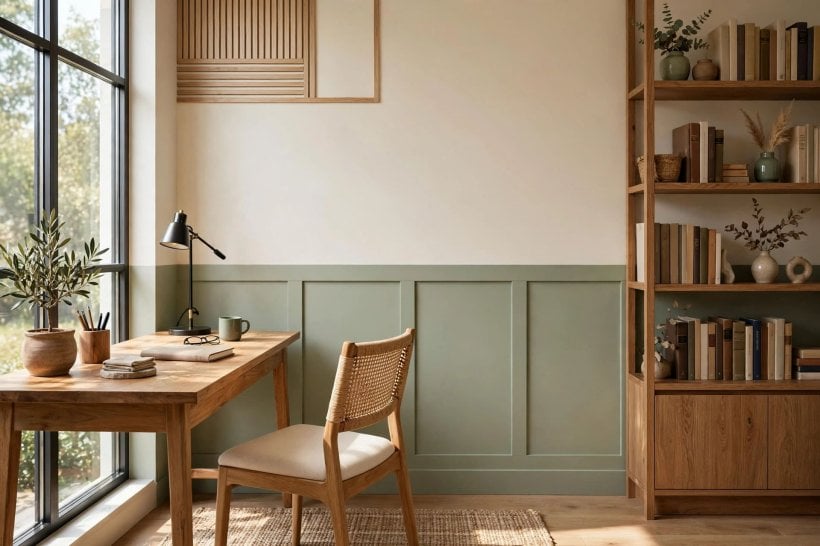
- Landscape mural. A misty landscape behind the sofa stretches the room’s horizon, a trick small living rooms borrow from stage design.
- Botanical statement paper. Oversized leaves or branches on one wall bring the garden in; keep the other walls in the paper’s quietest colour.
- Grasscloth texture. Woven natural fibres add warmth you can almost hear, softening echoes in dining rooms and home offices alike.
- Geometric retro print. Mid-century geometry energises hallways and loos, small spaces where a bold print feels intentional rather than overwhelming.
- Striped paper, hung horizontally. Horizontal stripes widen narrow rooms and stairwells, a simple optical trick with tailored results.
- Ceiling paper surprise. Papering the ceiling of a small bedroom or loo turns the forgotten fifth wall into the room’s whole personality.
- Bookcase-backed paper. Lining the back of open shelves with patterned paper makes everyday objects look curated and gives renters a reversible upgrade.
- Map or blueprint wall. A vintage-style map mural suits studies and children’s rooms, sparking stories long after the decorating is forgotten.
- Quiet micro-print. A tiny, tone-on-tone print reads as texture from across the room and pattern up close — the diplomat of wallpapers.
6. Stone, Brick and Tile Statements
Weight is a finish too. Stone, brick and tile walls carry a sense of permanence that anchors open-plan rooms and gives fireplaces, kitchens and bathrooms their backbone. Veneers and slips make many of these achievable without structural work, but weights, fixings and wet-area suitability must be checked with the supplier and, where needed, a professional installer.
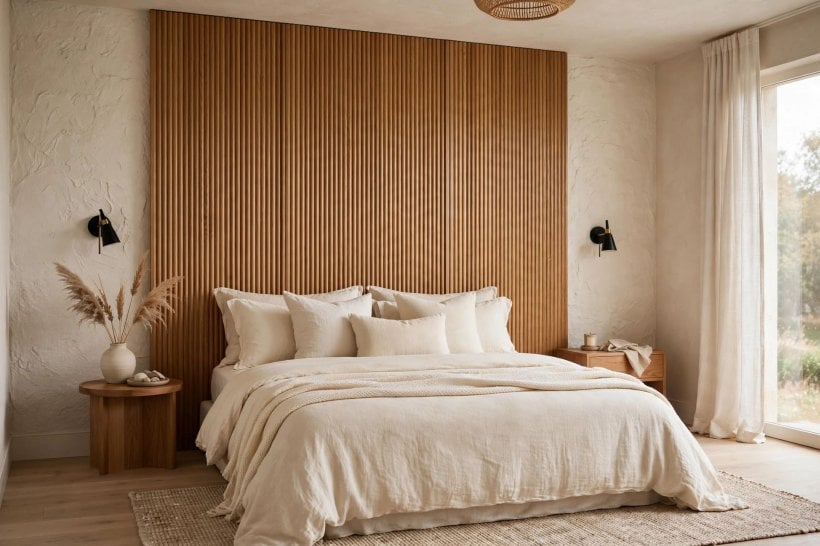
- Stacked stone fireplace wall. Floor-to-ceiling stone around a fireplace makes the hearth the room deserves to gather around, with ledges of shadow in every joint.
- Exposed brick, kept honest. Real brick revealed and sealed brings history no wallpaper can fake; in kitchens, confirm sealing against grease with the product maker.
- Brick slips, painted white. Thin brick slips with a whitewash give the texture of brick with a brighter, softer face for small rooms.
- Full-height kitchen tile. Taking splashback tile to the ceiling turns a practical surface into architecture, especially in simple glossy rectangles.
- Zellige-style shimmer tiles. Handmade-look tiles with varied glaze bounce light unevenly and beautifully around bathrooms and kitchen walls.
- Terrazzo-look panels. Large terrazzo-pattern panels deliver stone energy in bathrooms without grout lines every few centimetres.
- Slate wall drama. Dark slate tiles behind a stove or bath bring spa weight; pair with warm timber to stop the chill.
- Pebble texture band. A band of pebble mosaic at bath height adds touchable nature to plain tiled bathrooms.
- Limestone-look calm. Pale, stone-effect large-format tiles make small bathrooms feel like boutique hotel spas — grout kept tonal and minimal.
7. Wainscoting, Mouldings and Picture Rails
Moulding is wall jewellery: cheap, transformative and forgiving of plain architecture. Applied boxes, chair rails and picture-frame mouldings give flat new-build walls the shadows and proportions of older houses. Measure your wall, sketch the boxes at full scale in tape first, and let the furniture plan — like the layouts in tiny house living room ideas — decide where the pattern should pause for doors and sofas.
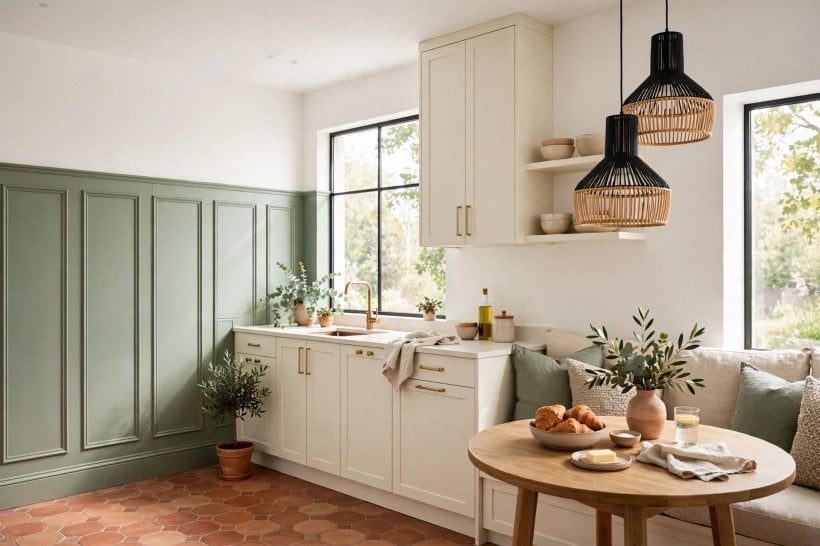
- Picture-frame moulding. Slim applied frames across a wall create instant panelled elegance; paint them the wall colour for subtlety or contrast for theatre.
- Classic wainscot and cap. A capped lower wall in hallways and dining rooms protects plaster from chair backs while looking permanently tailored.
- Board-and-batten grid. A full grid of battens gives bedrooms and entries a crafted, Shaker honesty that suits almost any furniture.
- Tall hallway panelling. Raising the panel line in a hallway adds grandeur to the most walked-through, least loved space in the house.
- Picture rail revival. A high rail lets you hang and rehang art on hooks and cords without new holes — galleries that evolve with you.
- Ceiling medallion and coving. Framing the ceiling edge finishes rooms the way a frame finishes a painting, especially above statement lighting.
- Panelled door wall. Continuing moulding across a hidden door makes the wall read as one panelled sweep and the door disappear.
- Half-wall colour block with trim. A trim strip dividing two paint colours gives the polish of panelling at a fraction of the carpentry.
- Staircase wall panelling. Panels marching up the stairs turn a climb into a procession, echoing the steps in satisfying rhythm.
8. Fabric, Acoustic and Soft Walls
Soft walls change how a room sounds as much as how it looks. Fabric panels hush echoes in media rooms and open-plan spaces, warm up bedrooms, and make rental-friendly statements when mounted as separate panels. The softness-first thinking in tiny barn house interior ideas applies here too: natural fibres, honest textures and nothing that fights the room’s peace. Check any acoustic product’s ratings and fire suitability with the manufacturer.
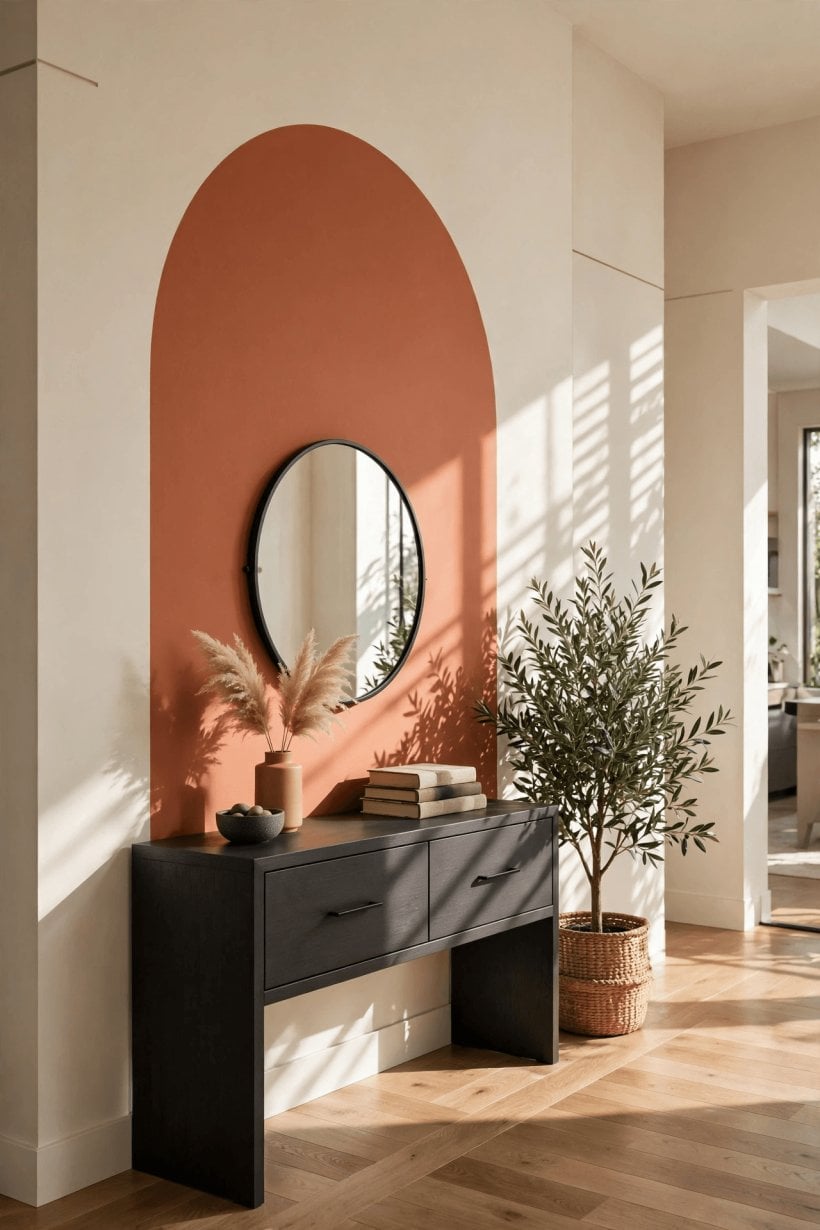
- Upholstered headboard wall. Fabric panels across the bed wall soften sound and sight at once, making small bedrooms feel like boutique hotel suites.
- Acoustic timber-felt panels. Slatted panels backed with felt tame television echo in open-plan rooms while looking like designer joinery.
- Linen-wrapped panels. Loose-weave linen on boards brings a calm, tactile grid to home offices and reading nooks.
- Velvet panel glamour. Deep velvet panels behind a bar cart or dressing table add evening richness nothing glossy can match.
- Cork wall. A whole cork wall in a study pins ideas, absorbs sound and brings honey colour; check tile thickness and adhesive with the supplier.
- Leather-look panels. Stitched faux-leather tiles warm a library corner or cinema room with club-room confidence.
- Woven hanging backdrop. A large woven textile hung flat becomes art, insulation and texture in one removable gesture — perfect for renters.
- Felt tile mosaic. Modular felt tiles in close tones build a soft geometric mural you can rearrange whenever the mood changes.
- Padded nursery wall. Low padded panels at toddler height make play corners safer and softer; choose wipeable covers and check materials with the maker.
9. Gallery, Shelving and Living Walls
Sometimes the finish is what the wall carries. Shelves, rails, art and plants turn a plain surface into the room’s hardest-working feature, and they evolve as you do. Plan the wall’s jobs first — storage, display, greenery, light — using the small-space logic of home interior design ideas for tiny houses, and confirm shelf loads and fixings for your wall type before drilling.
- Floor-to-ceiling library wall. Books wall-to-wall make their own pattern and colour story, with a rolling ladder if you are feeling romantic.
- Picture ledges, layered. Two or three ledges let art lean and rotate casually, the gallery that never needs a level or a new hole.
- Salon-style gallery hang. Frames filled edge to edge in mixed sizes turn a stair or sofa wall into a collected-over-time story.
- Floating shelf styling wall. Thick floating shelves with breathing room between objects keep small rooms airy while displaying the good stuff.
- Plant wall with rails. Rails and hooks hold trailing plants at varied heights, bringing the softness of a conservatory to a kitchen wall.
- Plate and platter display. A rack of beautiful plates makes kitchen walls useful art, changing with charity-shop luck and holidays.
- Mirror mosaic wall. A cluster of mirrors of different ages bounces light around dark rooms and doubles every candle.
- Woven basket gallery. Flat baskets in natural tones build a warm, textural composition that weighs almost nothing — landlords approve.
10. Small Walls, Rentals and Brave Finishing Touches
The last ideas are for the walls everyone forgets: the loo, the entry, the rental you cannot paint, the awkward slice beside the fridge. Small walls are where bravery is cheapest, because a bold choice across two square metres is a delight instead of a commitment. Finish with these, then stand back and plan the big wall with your new confidence.
- Powder-room goes bold. The tiny loo is the classic place for the dramatic paper or deepest paint you love but fear elsewhere.
- Peel-and-stick everything. Removable papers, tiles and panels let renters have pattern now and deposits back later; check removability on the label.
- Door painted as the feature. A single interior door in a jewel colour becomes the wall’s artwork, especially with walls kept quiet around it.
- Chalkboard slice. A narrow chalkboard strip in the kitchen carries lists, menus and children’s masterpieces in rotating exhibition.
Final Considerations
Whatever wall design you choose first, let it be the wall you see most and love least — that transformation will teach you more than any sample board. Test finishes at full light range, live with them for days, and check preparation, suitability and coverage with the manufacturer or retailer rather than guessing; walls reward patience and punish haste at exactly the scale of the wall itself. In small homes especially, one confident wall usually outperforms five tentative ones.
Build your confidence in order: paint before paper, paper before panels, panels before plaster and stone — each step reversible until you are sure. And keep the other walls quiet company, because a statement finish only sings when the room lets it. The best walls in this collection are not the most expensive ones; they are the ones chosen honestly for the light, the room and the life that happens in front of them, then finished with care.


0 Comments