
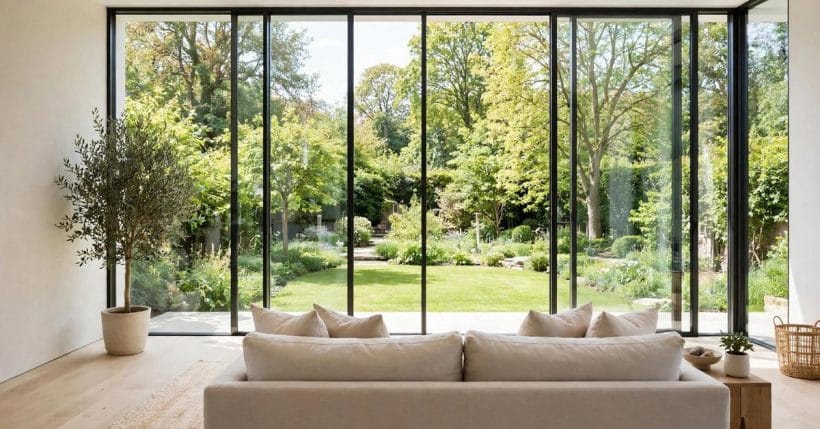
Modern windows are less about glass than about decisions: how much of the wall to give away, where the frame lines fall, and what the room gains in exchange — light, view, air, or one unforgettable seat in the sun.
These 36 modern home window ideas run in the order rooms ask for them — the big picture pane, walls of glass, dark-framed grids, high clerestories, corners and bays — with fitting and glazing kept where they belong throughout: in professional hands, to local rules.
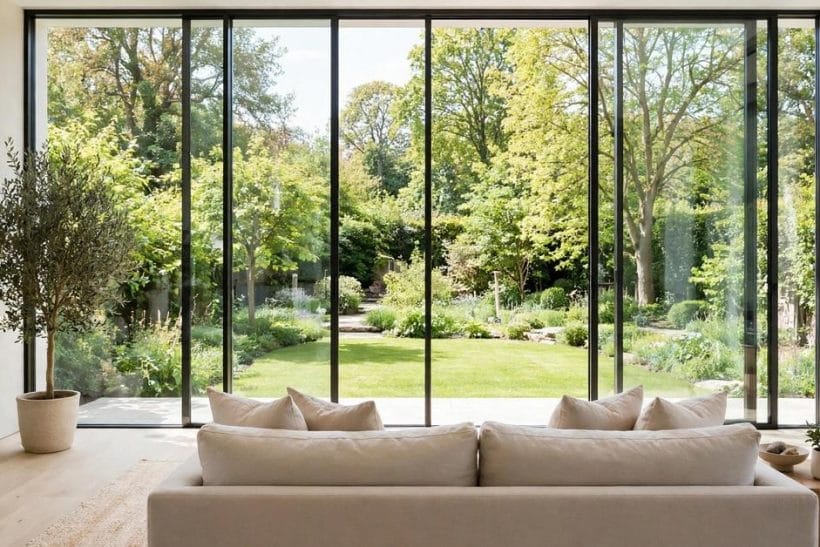
1. Modern Home Windows at a Glance
The central entity is the modern window: a glazed opening designed as part of the room’s composition, not a hole filled afterwards. This post treats shape, framing and placement; the wider house they light is gathered in our home design ideas hub.
| Aspect | What to know | In a word |
|---|---|---|
| The Picture | One wide pane, a framed view | Framed |
| The Grid | Dark frames, even divisions | Crisp |
| The Clerestory | High glass, private light | Lifted |
| The Corner | Glass that turns the room | Open |
| The Bay | A seat inside the light | Curved |
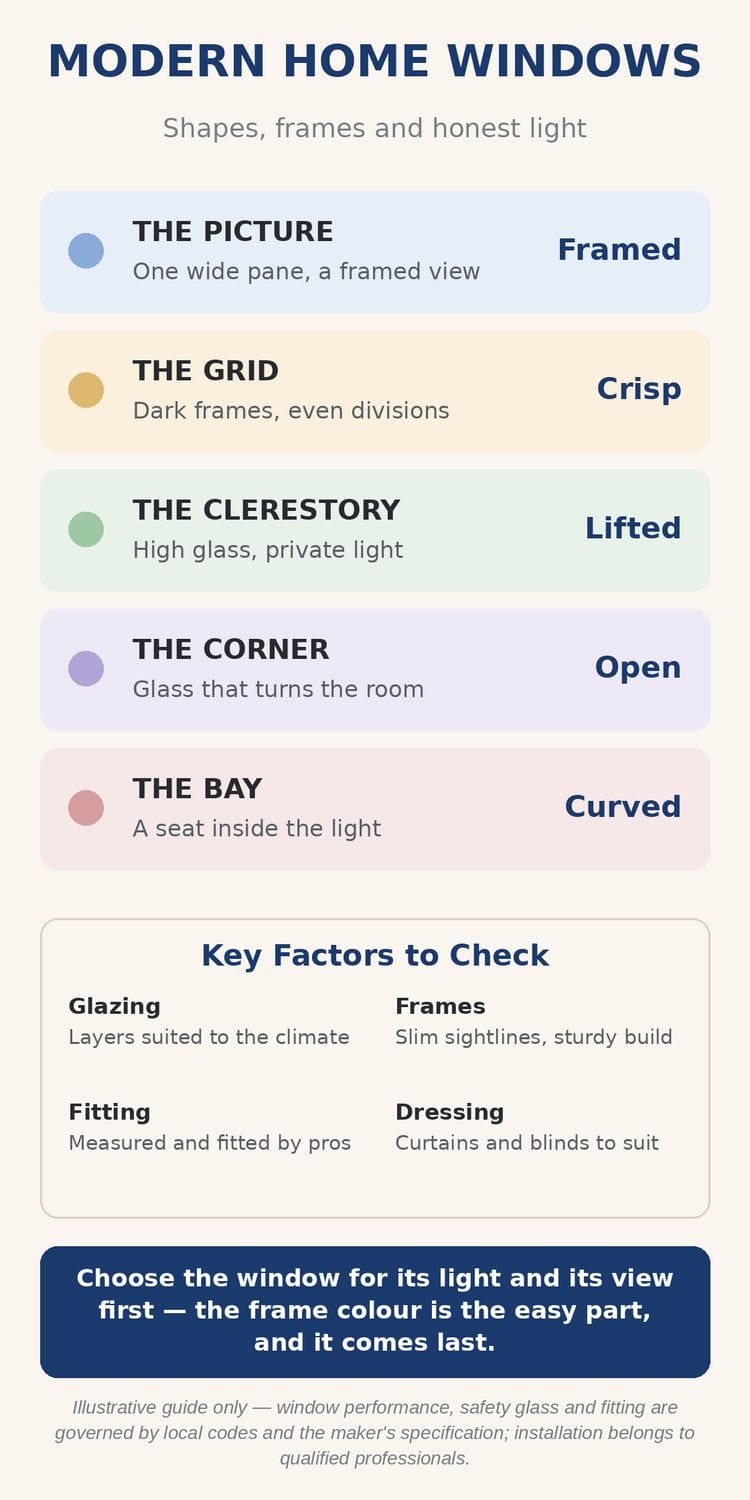
Choose the window for its light and its view first — the frame colour is the easy part, and it comes last. The four factors behind the table: glazing, whose layers are suited to the climate with the maker’s specification, not a slogan; frames, where slim sightlines and sturdy build are both available and both worth asking for; fitting, measured and installed by professionals throughout; and dressing, the curtains and blinds that finish the glass for evenings and privacy.
One honesty governs the numbers in this post: there are none. Window performance figures belong to tested products and local codes, quoted by manufacturers and fitters — so the ideas below speak of light, shape and proportion, which are the things a photograph can truthfully teach.
2. Picture Windows and the Framed View
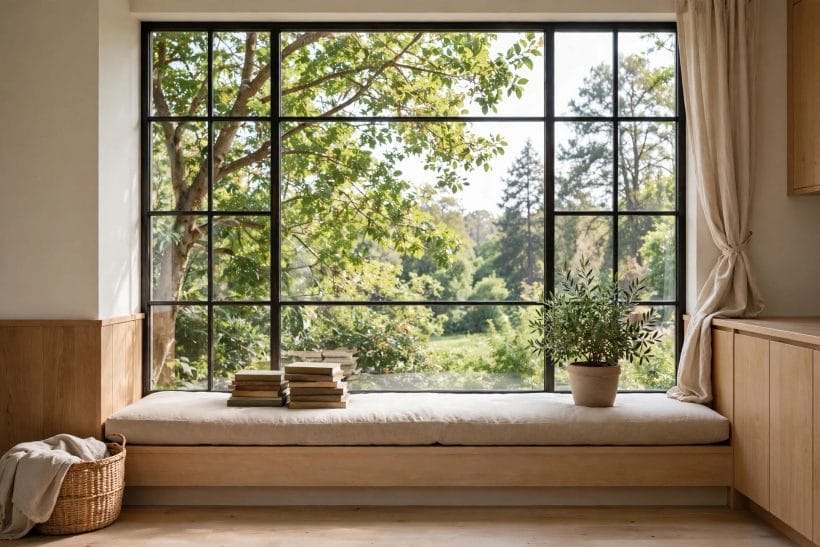
The window seat in this photograph sits inside the simplest modern idea of all: one wide pane, nothing dividing it, the landscape hung in the frame like the picture the room was missing.
1. The Single Wide Pane
One uninterrupted sheet of glass aimed at the best view the plot owns. Fixed panes go widest because nothing has to move; the opening for air is placed elsewhere in the room, on a side wall or a door.
2. The Seat Inside the Pane
A low, deep sill built out as a seat puts the household inside the picture. Cushions, a throw and a tolerant attitude to afternoon naps complete the specification; it becomes the most contested seat in the house.
3. The Low Horizon Window
A wide pane set low frames the garden rather than the sky — grass, planting and weather at ground level. It suits single-storey rooms and turns rain into a floor show for everyone seated nearby.
4. The High Horizon Window
The same wide format lifted high frames treetops and sky and leaves the wall below free for sofas and shelves. Privacy comes free with the height, which is why this placement rescues overlooked rooms.
5. Picture Glass in the Kitchen
A wide fixed pane behind the worktop trades the traditional small window over the sink for a landscape to wash up to. Splashes argue for easy-clean placement of openers elsewhere — the fitter and the kitchen designer settle that between them.
6. The Framed View, Shared
Aligning a picture window with a doorway or hall gives the view to the whole house, not just the room. Sightlines like this are planned on drawings, and they are why architects walk a plot before they sketch a wall.
3. Walls of Glass
The tall window wall in this photograph takes the idea to its limit: frame minimal, glass maximal, the conservatory’s promise rebuilt in the living room’s clothes. These are the windows that reorganise how a house is lived in.
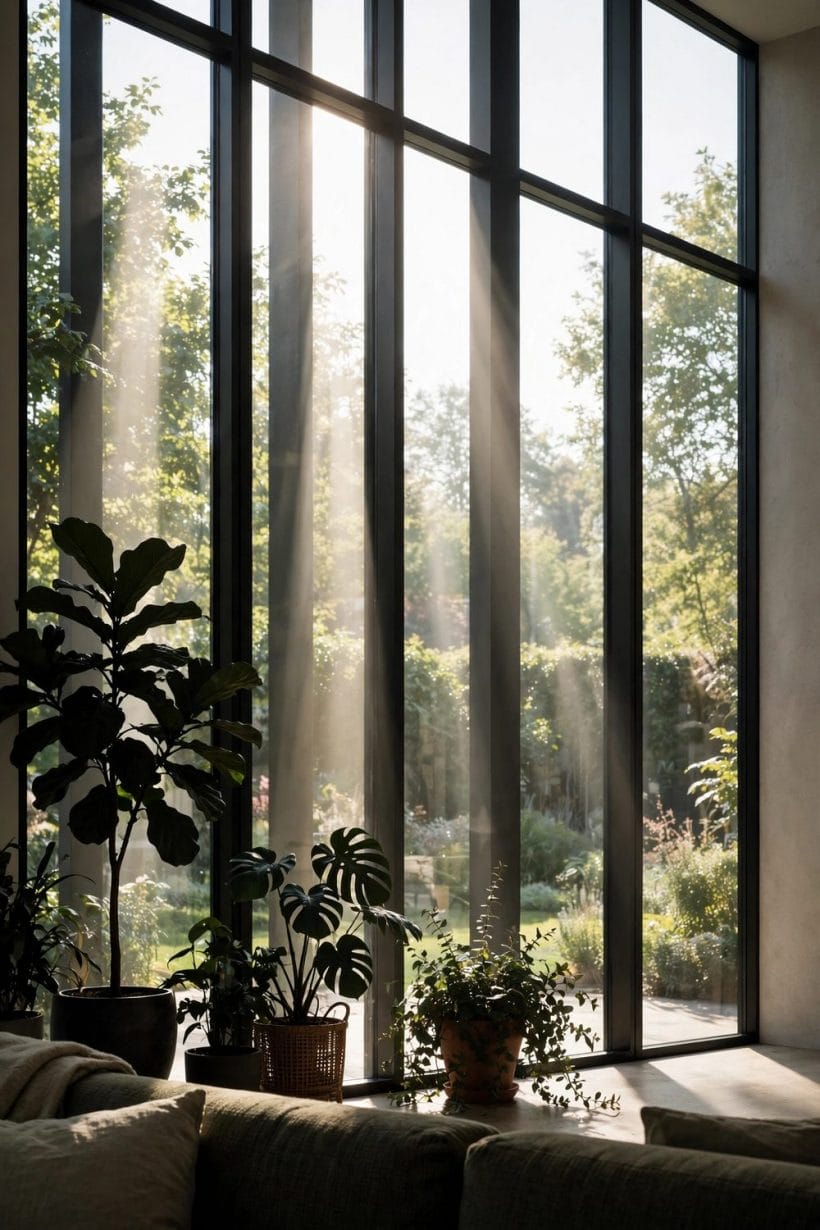
7. The Full-Height Living Wall
Floor-to-ceiling glass across the living room’s garden side is the signature of the modern house — and the arrangement our modern living room ideas are styled around. Furniture turns outward, evenings end at the glass, and the garden becomes the room’s fourth wall and best picture.
8. Sliding Walls
Panels that slide away stack the indoors and outdoors into one space for the warm months. Tracks, drainage and structure are engineered as one system by the supplier; the photograph shows the party, the paperwork is load-bearing.
9. Folding Walls
Bi-folding panels concertina to one side, opening a whole elevation. They ask for honest conversation about weather sealing and daily effort — a wall you fold twice a year is a picture window with hinges, and there is nothing wrong with that if it is chosen knowingly.
10. The Glass Gable
Following the roof pitch with glass turns a gable end into a lantern. Interiors gain a cathedral note and a stargazing ceiling’s sidekick; the glazing of shaped panes is specialist work from measuring to fitting.
11. Two-Storey Glass
A window wall rising through both floors lights hall and landing as generously as the room below. It is the modern stairwell’s best friend and a structural conversation from the first sketch.
12. The Ribbon of Glass
A continuous horizontal band running the length of a wall — the modernist classic — gives even light, long views and a house that reads unmistakably contemporary from the street.
4. Grids and Dark Frames
The kitchen in this photograph is ruled by its windows: black frames in a crisp grid, repeated across the wall until the glass becomes the room’s wallpaper. Division, done deliberately, is as modern as the single pane.
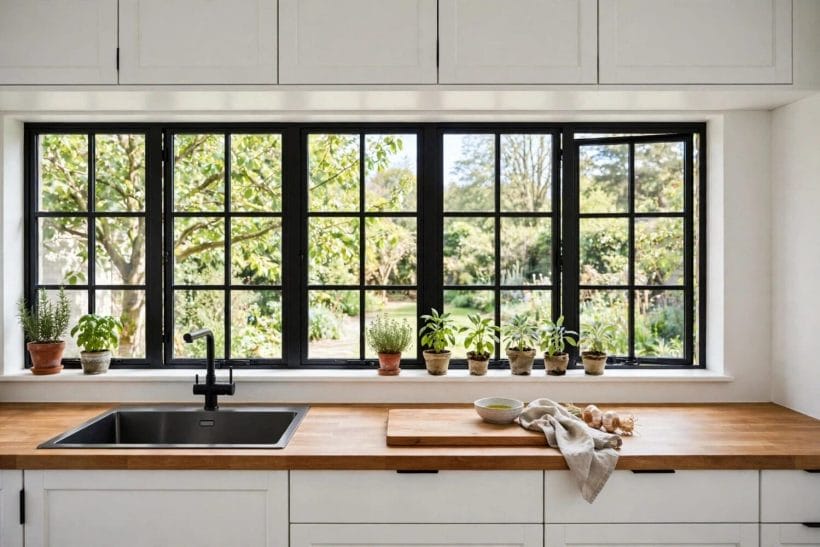
13. The Black Grid
Dark frames divided into even panes give industrial crispness and forgive the busy view — a grid organises whatever lies beyond it. Kitchens and studios wear this best; the lines echo shelving, rails and tile joints.
14. The Slim Steel Look
Fine dark profiles with minimal sightlines borrow the old steel window’s elegance in modern materials. The look is in the slenderness, so compare profiles in the hand, not in photographs, before choosing.
15. White Frames, Divided Light
The same grid in white or cream turns coastal and calm — cottage proportions with modern manners. It is the grid for houses that want the order without the edge.
16. The Oversized Grid
Few, large divisions instead of many small ones keep the grid’s discipline with the picture window’s openness. This middle path suits most rooms better than either extreme, which may be why it is quietly the most built.
17. Mismatched Grids, Matched Frames
Different windows around a house can share one frame colour and profile while dividing differently — wide panes to the view, fine grids to the street. Consistency of frame, variety of division: the designer’s actual rule.
18. The Door in the Grid
Glazed doors detailed to match the window grid let the pattern run unbroken across doors and glass alike. From the garden, the whole elevation reads as one composition — the surest sign the frames were chosen as a family.
5. Clerestory and High Glass
The bright room in this photograph is lit from a band of glass near the ceiling, washing the angled wall below while the room’s privacy stays intact at eye level. High glass is the courteous window: it takes light and gives nothing away.
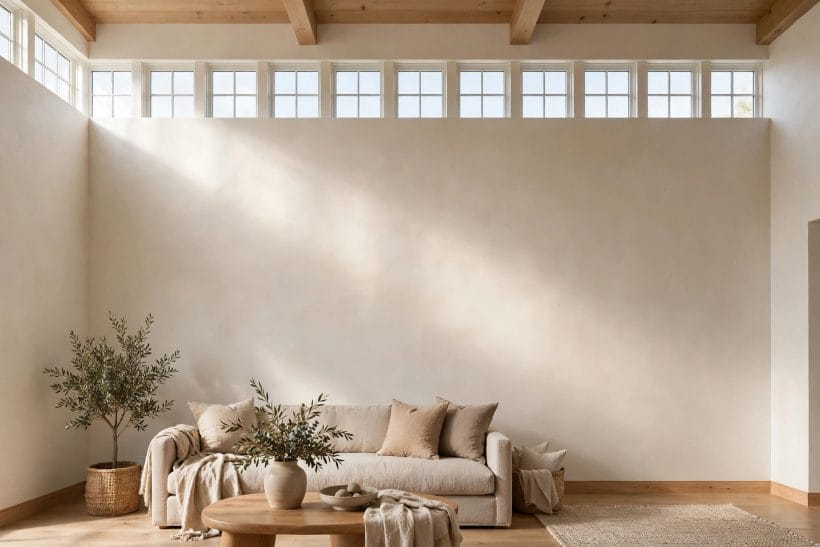
19. The Classic Clerestory Band
A continuous high band under the roofline lights deep rooms evenly and leaves every wall free for furniture, art and storage. The full design family is gathered in our clerestory windows guide; this section keeps to its modern uses.
20. High Glass Over the Kitchen
Where wall units eat the usual window’s place, a clerestory above the cupboards returns daylight to the worktops. Kitchens planned this way feel twice their size by lunchtime.
21. The Bathroom’s High Window
High glass is the bathroom’s oldest trick — light without exposure, steam escaping where openers are fitted. Frosting becomes optional rather than compulsory, and the room keeps a view of the sky.
22. Borrowed Light Between Rooms
Internal high glass passes light from a bright room to a landlocked one — hall, dressing room, ensuite. The borrowed-light window makes floor plans work that plumbing and plots otherwise forbid.
23. The Angled Clerestory
Under a sloping roof, glass that follows the pitch or steps above it washes the ceiling with light and stars. Shaped and overhead glazing is the specialist end of the trade; admire freely, specify professionally.
24. Privacy Without Curtains
The clerestory’s real gift is a room that never needs its windows covered — valuable on tight urban plots where the alternative is living behind blinds. Bright, private and undressed: a combination no curtain can offer.
6. Corner Windows
The dining space in this photograph is wrapped in glass on two sides, corner post seemingly vanished, garden on both elbows. Corner windows are the modern house’s party trick — and an engineer’s signature underneath.
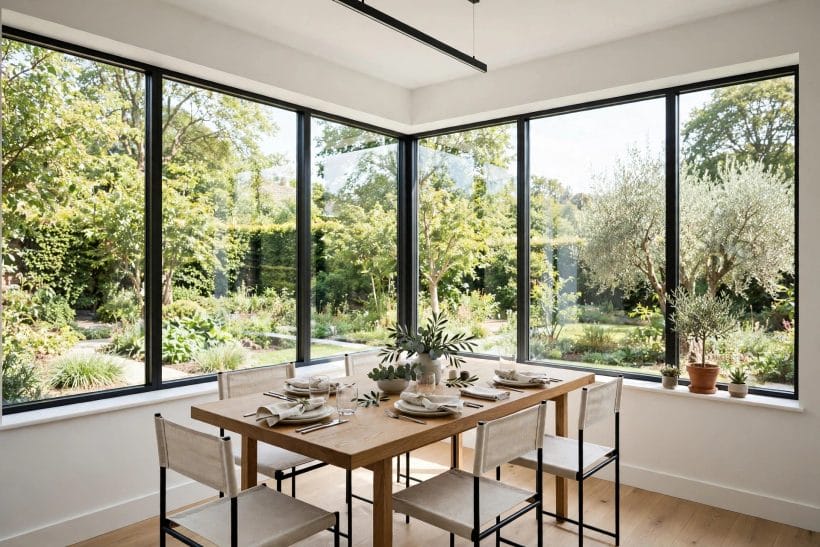
25. The Wrapped Corner
Glass meeting glass at the corner, with structure hidden in the frame, opens a panorama no single wall can offer. Dining tables and desks claim these corners first, and rightly — every seat gets two views.
26. The Corner Seat
Build the window seat around the corner and the house gains its observatory: morning light from one side, evening from the other, weather arriving in surround sound.
27. Corner Glass in the Kitchen
A corner window over an L-shaped worktop kills the dark corner cupboard’s gloom and puts the cook at the garden’s edge. Sinks migrate to these corners as if pulled by the light.
28. The Framed Corner Post
Where structure must show, a slim honest post at the corner keeps the price and the engineering sane while losing little of the effect. Many fine corners are framed, not frameless — the view does not grade the difference.
29. Upstairs Corners
A corner window in a bedroom or study lifts the whole floor: two outlooks, cross-light, and a desk position that makes work feel like a lookout post. Privacy is planned with the same care as the view.
30. The Corner as Landmark
From outside, a lit corner window is how a modern house signs its name at dusk. Architects place them where the street can see — a small civic gift of warm light on a winter evening.
7. Bays and Window Seats
The bay in this photograph pushes the room’s edge into the garden and fills the new floor with cushions: a bay is a window you can sit inside, architecture’s way of enlarging a room by one beloved seat.
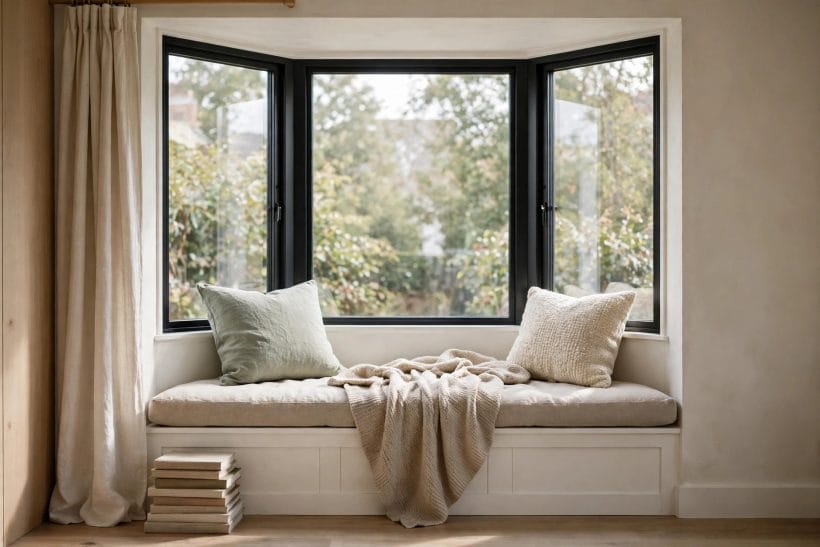
31. The Modern Box Bay
Square, flat-roofed and crisp, the box bay is the bay rebuilt in modern language — the family our bay windows survey covers in full. It adds floor, light and a seat without touching the house’s main roofline.
32. The Cantilevered Oriel
A bay that projects without reaching the ground — the oriel — adds the seat and the light upstairs, where extensions cannot go. Structure cantilevers; the reading nook floats; everyone approves.
33. The Kitchen Bay
A bay behind the sink or housing a small breakfast table gives the hardest-working room the house’s softest corner. Plants colonise the sill, herbs first, then everything green the household owns.
34. The Bay as Home Office
Deep enough for a desk, a bay becomes the smallest possible study — enclosed by light, separated by a curtain’s width from the room behind. Post-pandemic floor plans have quietly made this a standard request.
35. Bays With Storage Below
The seat’s base hides the household’s overflow — board games, blankets, the good candles. A bay that stores is a room extension and a cupboard in one footprint.
36. The Curved Bay
The final idea bends: a gently curved bay softens a modern elevation and widens the panorama further. Curved glass is specialist and priced accordingly; the photograph earns its place by showing why people pay it.
8. Dressing Modern Glass
The seat nook in this photograph shows modern glass at its most domestic: cushions deep, curtains drawn to the sides, the view treated as the room’s art. Big glass still needs dressing — for evenings, for privacy, for the softness rooms ask of fabric.
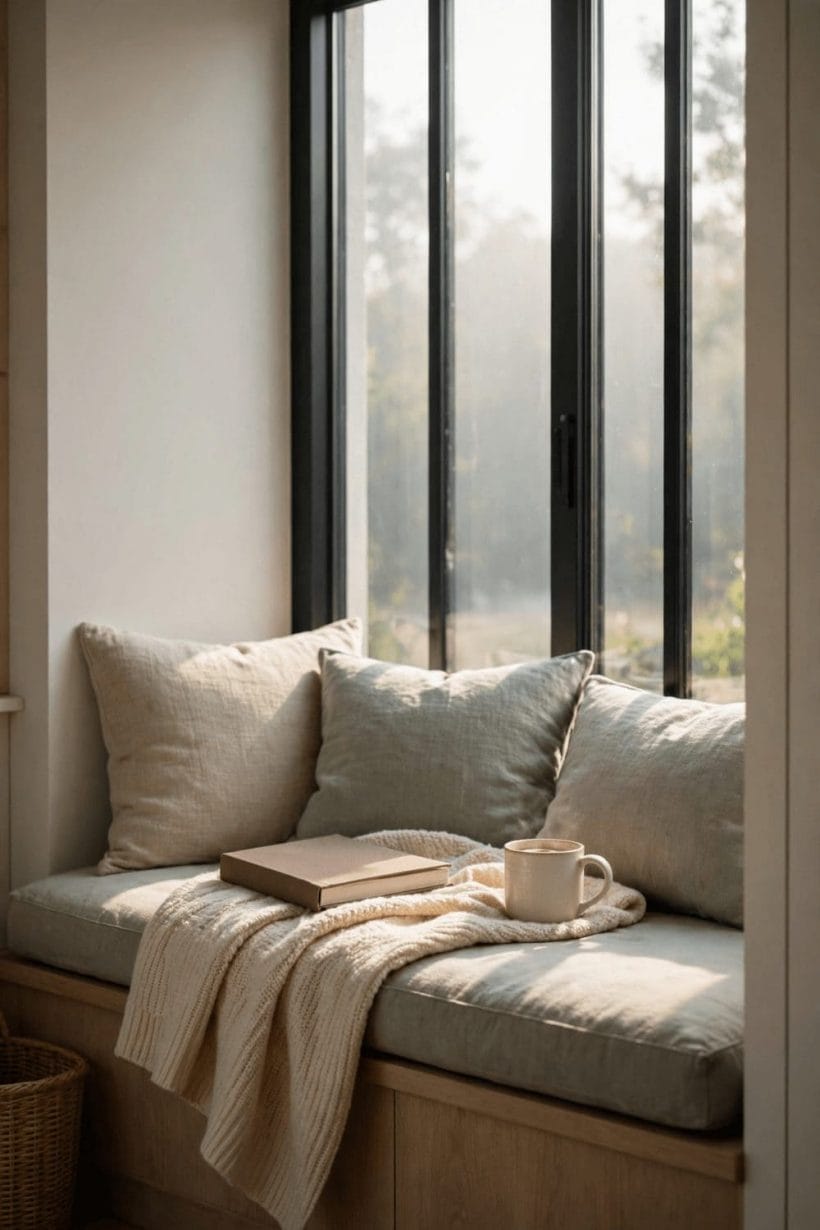
The modern manner is restraint with options: sheer panels for daytime privacy that keep the light, heavier curtains or blinds for the night, all hung to clear the glass rather than cover it. Our window treatments cover the full wardrobe; the small-house version of the same judgement, where every centimetre of curtain is negotiated, lives in our tiny house curtain ideas.
Heat and glare are dressed too — external shading, blinds between the panes and considered orientation, discussed with the fitter at specification stage rather than discovered in the first summer. A window chosen for its light deserves a plan for too much of it.
9. The House From Outside
The house in this photograph at dusk is a lantern with rooms in it: warm glass across both floors, the modern elevation explained in one look. Windows are the house’s face, and this final photographic idea is the one the street reads.
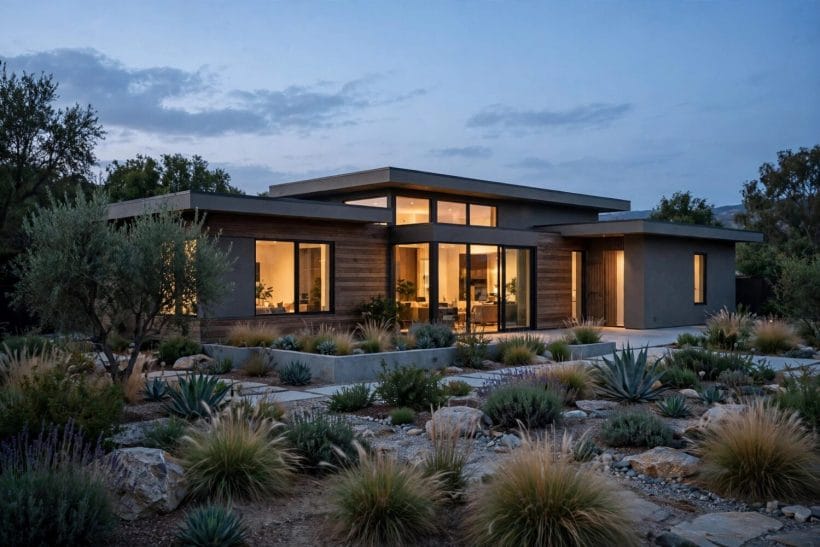
From outside, frame colour does the talking — dark frames draw the modern elevation’s lines, pale frames soften it — and consistency across every opening matters more than any single window’s beauty. One replaced window in the wrong profile is visible from the pavement forever; the whole family’s replacements are planned together, a theme our exterior home ideas return to often.
Street-facing glass also plans its privacy at the drawing stage: heights, frosting where honestly needed, and planting in front of the glass, which softens a facade and a view in one move.
10. Fitting, Glazing and the Rules
Everything beautiful in this post stands on unglamorous correctness. Windows are structural holes in weatherproof walls: their sizes are governed by the building’s frame, their safety glass by the rules for doors, low panes and critical locations, their opening lights by escape and ventilation requirements, and all of it by your local building code and the manufacturer’s tested specification. This post prints no performance figures because the honest figures are the ones on the product your fitter specifies for your opening — ask for them there, in writing.
Three habits keep a window project honest. Measure professionally — modern frames are made to the opening, and the opening is measured by the people who will fit them. Specify as a family — profiles, colour and hardware matched across the house. And fit professionally — the best-tested window in the catalogue fails in a badly sealed hole, and succeeds for decades in a correct one.
Old windows deserve one question before replacement: can they be repaired, draught-proofed or secondary-glazed into another decade of service? Often they can, and the character they keep is the kind new glass spends years trying to fake.
Final Considerations
Choose the windows the way the infographic advised: for light and view first, the frame’s line second, its colour last. Give the best view the widest pane, the overlooked room the highest glass, the corner a chance to turn, and some lucky seat a bay to sit in. Then let professionals measure, specify and fit — and let the first dusk, when the house lights up like a lantern, deliver the verdict.

0 Comments