

Muddy paws, wet coats and a dog who has found every puddle on the walk: a good mudroom wash corner turns that chaos into a five-minute routine by the back door.
This guide covers layouts, colours, realistic cost drivers and the practical plumbing and cleaning details, so you can plan a wash space that suits your dog and your home.
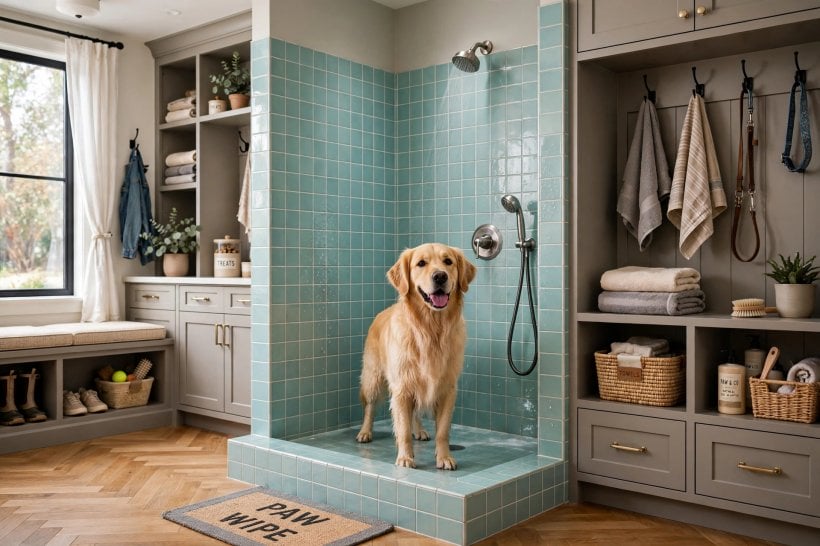
1. At a Glance
A dog wash in a mudroom is usually a low, tiled shower area with a hand-held spray, a drain and finishes that can be rinsed and wiped without fuss. It can be as small as a raised tray in a corner or as generous as a full wet wall with room to turn a large dog around. The right size depends on the dog, not the photograph: measure your dog standing and turning, allow room for you to kneel or stand beside them, and leave a dry spot for a towel and a treat. Waterproofing and drainage matter more than expensive fittings, because this corner will be wet most days of the year. The table below gathers the main decisions in one place before the detailed sections that follow.
Plan the order of work carefully. Choose the position first, then check the plumbing routes, then set the size, then pick finishes, and only then order fixtures. If the mudroom is part of a bigger remodel, agree the wash corner early so floor levels, drainage falls and wall protection are built in rather than added on. Take honest notes about how muddy your walks really get, how many dogs use the space, and whether you also want to rinse boots, sports kit or muddy wheels there, because a wash area that serves several jobs earns its floor space every single week of the year.
| Question | Short answer |
|---|---|
| How big should it be? | Big enough for your dog to stand and turn, plus room for you alongside. |
| What matters most? | Drainage, waterproofing and a floor finish with grip, even when wet. |
| Can it go in a small mudroom? | Yes, as a corner tray or alcove, or with a portable alternative. |
| What drives the cost? | Plumbing changes, tiling, drainage and how much building work is needed. |
| What keeps it smelling fresh? | Ventilation, a washable finish and a routine that dries the area daily. |
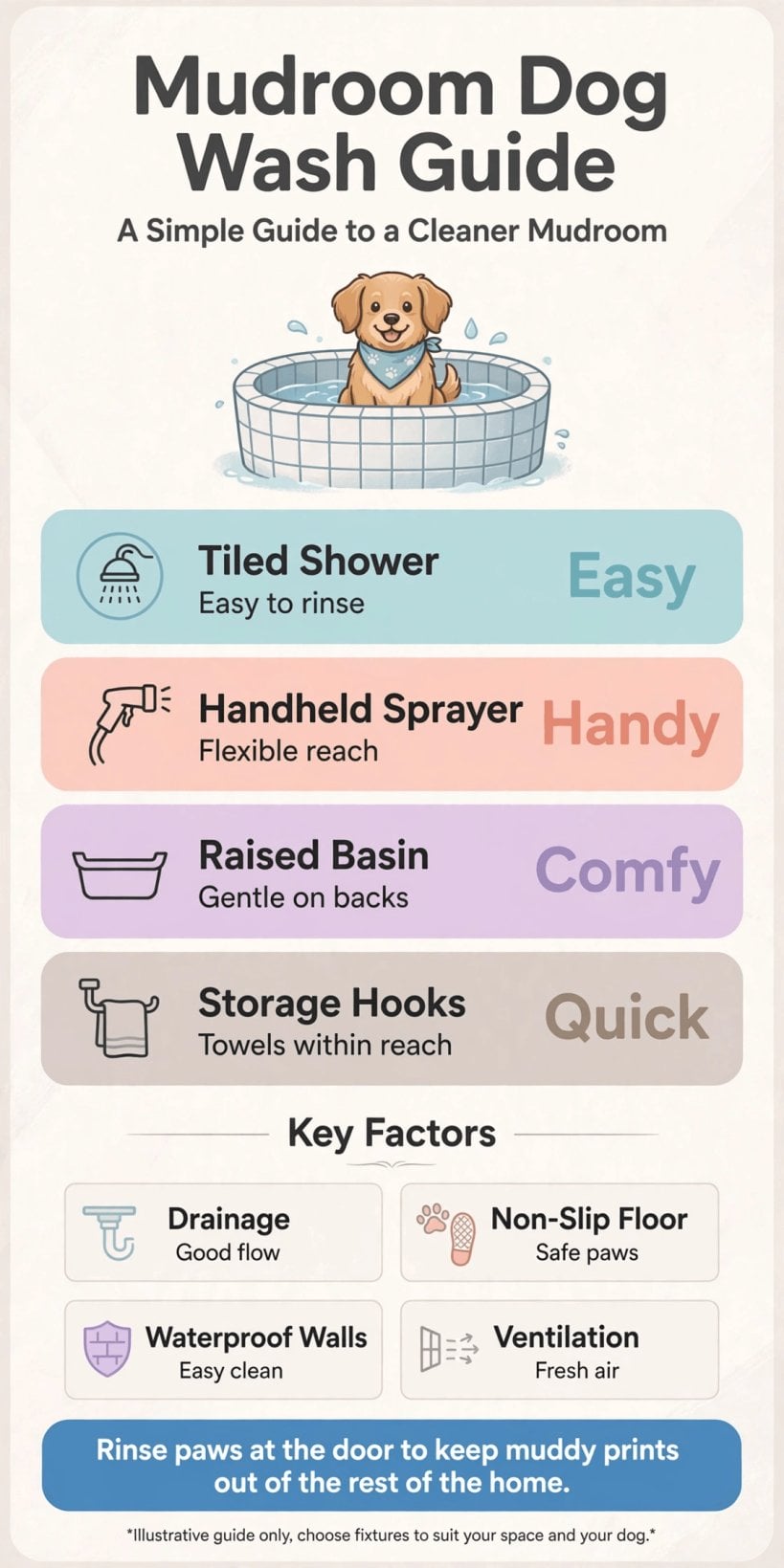
A mudroom dog wash at a glance: position, plumbing, finishes and daily routine.
2. Choose the Right Spot in the Mudroom
The best dog shower in mudroom planning starts with the route from the door, because a wash corner only works if a muddy dog reaches it without crossing clean floors. Place it as close to the entrance as the plumbing allows, ideally on the same wall run as other water in the house to keep pipe routes simple. Check what sits below and behind the wall before you commit, since new drainage is far easier where it can join an existing line. Leave clear floor in front of the wash for a wet dog to stand while you reach for a towel, and keep the path to the garden or street door unobstructed for the rest of the family. Think about noise and splashes too: a wash corner tucked behind the door swing feels private and calm for a nervous dog, and it keeps spray away from coats, shoes and post. If the mudroom doubles as a laundry, sharing water and drainage with the utility sink can be sensible, as long as the dog still has a simple, step-free route in.
3. Layouts: Alcove, Corner or Full Wet Wall
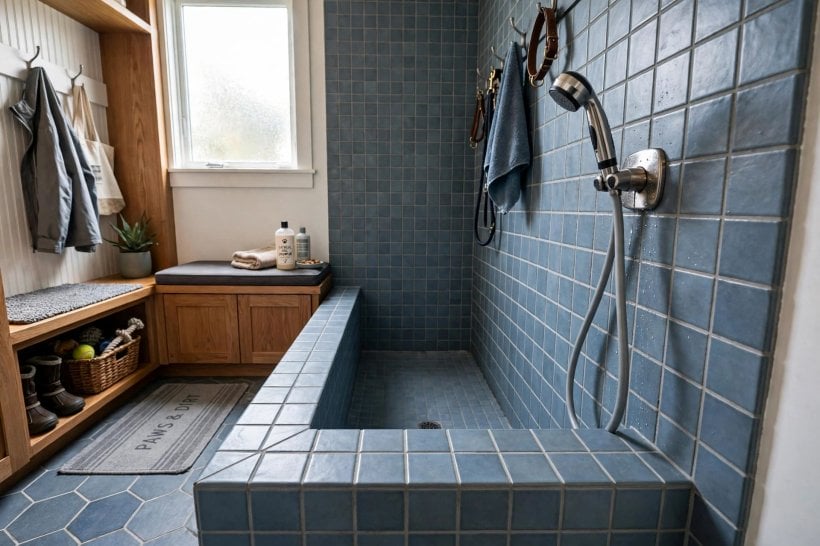
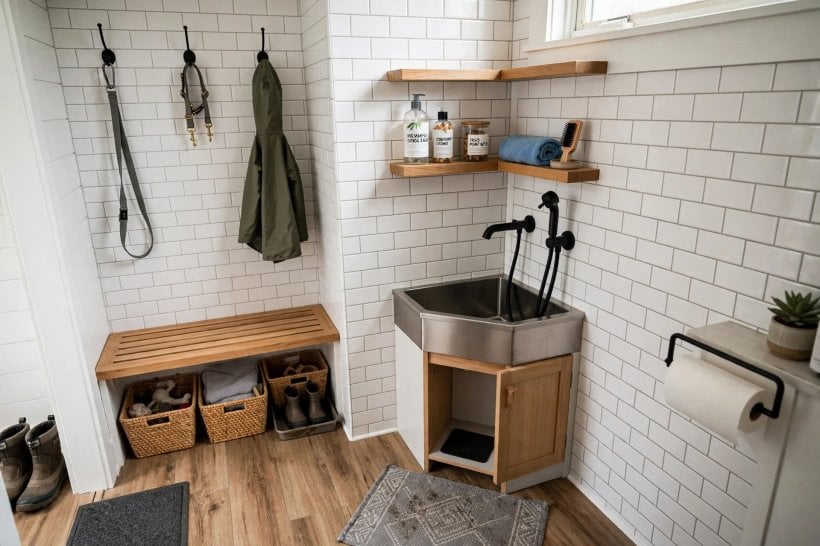
An alcove layout suits most homes: a three-sided tiled bay, open at the front, with a low step or a level entry. It contains splashes, gives you plumbing walls on at least one side, and can double as a boot-rinsing spot. A corner layout uses two walls and a simple tray or tiled base, which keeps costs and tiling down and works well in squarer rooms. A full wet wall takes one end of a longer mudroom, with the floor sloping gently to a drain and no tray at all; it is the easiest for large dogs and for hosing the whole area down, but it asks for careful waterproofing across a bigger surface. Raised trays help small dogs, because you wash at a comfortable height, while floor-level areas suit big or elderly dogs who should not be lifted or asked to step up. Whichever layout you choose, sketch it with the door, the bench, the hooks and the storage you already have, and walk the route with your dog in mind. The calm, well-zoned layouts in our bathroom interior design ideas collection show how a small wet area can feel deliberate rather than squeezed in.
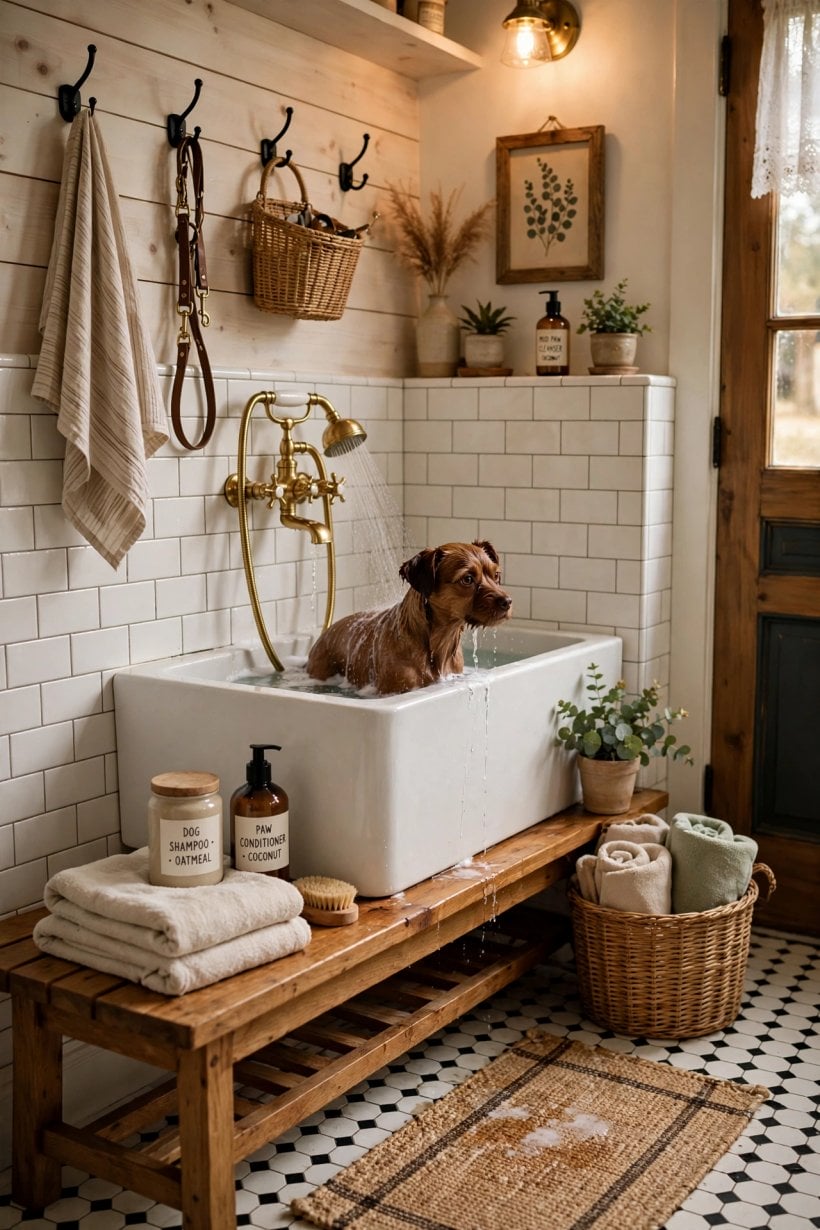
4. Plumbing, Drainage and Waterproofing
Water has to arrive warm, leave quickly and never sit where it can damage the building. A thermostatic or carefully set mixer keeps the temperature safe and steady, because dogs cannot tell you the water is creeping too hot. The drain needs a gentle fall towards it from every part of the base, and a trap that can be cleared easily, since hair will collect there no matter how good your grooming is. A simple hair catcher over the drain, emptied as part of the routine, protects the pipework better than any gadget. Behind the tiles or panels, proper waterproofing is what separates a wash corner that lasts from one that quietly rots: sealed boards or a tanking system, flexible sealant at every change of plane, and no raw plaster or timber left exposed in the splash zone. Floors need the same care, with a continuous waterproof finish turned up at the edges. Ask your plumber and tiler to agree who is responsible for each layer before work starts. For more on planning wet services in tight spaces, see this kitchen and tiny house small-space design guide, where water, waste and access are planned together from the first sketch.
5. Fixtures: Hand Shower, Controls and Seating
A hand-held spray on a flexible hose is the one fixture that matters most, because you wash paws, bellies and muddy legs from every angle without turning the dog. Choose a hose long enough to reach the far corner comfortably, and a spray head that changes from a gentle shower to a stronger rinse without fiddly parts. Controls should be reachable from outside the wettest zone, at a height you can manage with wet, soapy hands, and simple enough for anyone in the house to use safely. A small fold-down seat or a low bench helps with older dogs and longer grooms, and a built-in step or ramp can help a heavy dog get in without being lifted. Hooks and a rail inside or just beside the wash keep the lead, a towel and a drying coat within reach, so you are never dripping across the room mid-wash. If your dog dislikes spray noise, look for a quieter, softer spray pattern and introduce it gradually with treats, because a wash corner the dog trusts will be used far more than one that has to be endured.
6. Floors, Walls and Finishes That Wipe Clean
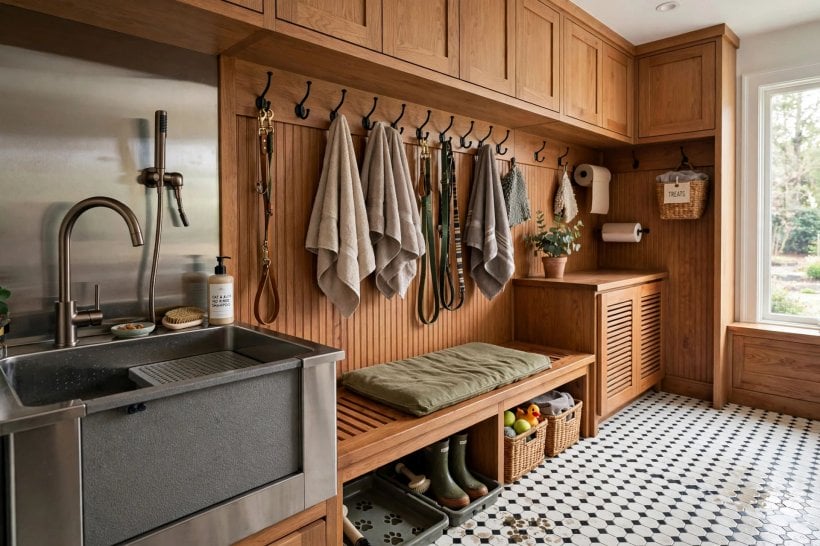
Every surface in the splash zone should shrug off water, mud and the odd shake. Porcelain tiles with a matt, grippy finish are a common choice for floors, with smaller tiles or mosaics giving extra grip because of their many grout lines. Large-format wall tiles or waterproof wall panels reduce grout in the wettest area, and panels have the advantage of smooth, quick cleaning with no grout to discolour. Choose grout and sealant in mid tones that forgive muddy marks between cleans, and avoid pale, glossy floors that show every paw print and turn slippery when wet. Outside the wash itself, a washable paint and a boot tray with a raised lip protect the rest of the mudroom. Skirting in the wet zone is best avoided or replaced with a tiled upstand, because painted timber at floor level will not survive daily splashing. The practical finish lessons in our tiny house kitchen design guide apply directly here: smooth where you clean most, textured where feet and paws need grip, and nothing precious within splash range of the daily routine.
7. Colour Schemes That Hide the Mud
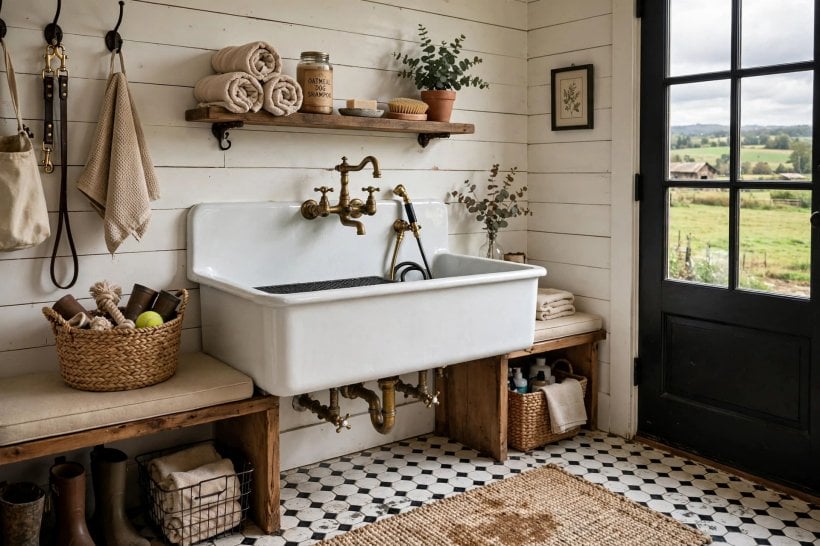
Colour in a working mudroom has two jobs: to feel welcoming when you come home, and to stay forgiving on the wettest, muddiest days. Mid-tone colours earn their place here. Warm greys, sage, clay, stone and soft blues hide splashes and paw marks far better than bright white, while still feeling fresh with white woodwork and good light. A darker floor with paler walls balances the room and grounds the wet zone visually, and patterned tiles in the wash area disguise marks between cleans in a way plain tiles never will. Repeat your colour in the bench cushion, the dog towels and the storage boxes so the wash corner looks planned rather than purely practical. If the mudroom leads straight into a kitchen or hall, borrow one colour from that room to join the spaces together. The relaxed schemes in these beachy interior design ideas show how natural tones, texture and washable fabrics keep a hardworking room calm, which is exactly the feeling you want when you walk in wet, tired and holding a muddy lead.
8. Costs and Where the Money Goes
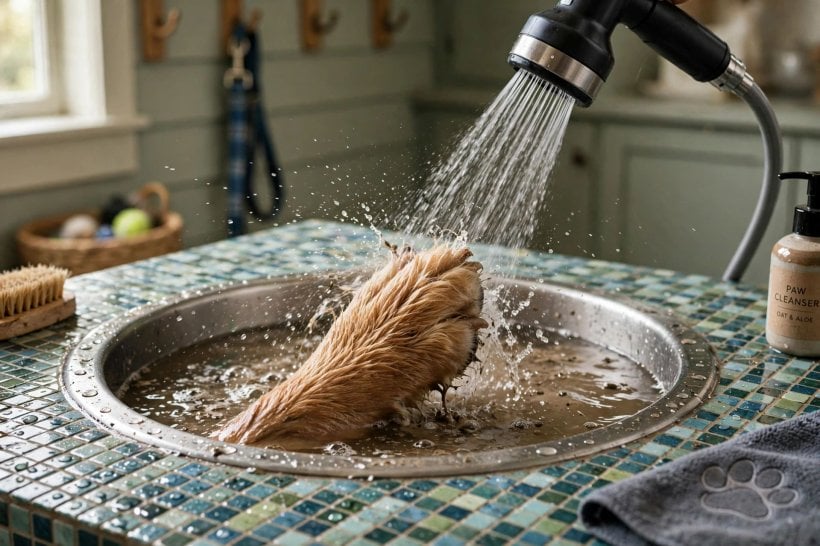
As with most home projects, it is wiser to plan by cost drivers than by any single figure. Plumbing is usually the biggest variable: a wash corner on an existing water and waste run is a very different job from one that needs new drainage across the house. Waterproofing and tiling come next, driven by the size of the wet area and the finishes you pick, followed by fixtures, where a good mixer and hand shower are worth prioritising over decorative extras. Building work, such as forming an alcove, raising a tray or levelling a floor with the right fall, adds labour, and finishing costs include sealants, trims, making good and redecoration. Ask for quotes that separate plumbing, tiling and fixtures so you can see where your money goes and where a simpler choice would not hurt the result. Keep a contingency for what opening up a floor can reveal, especially in older homes. A modest corner, plumbed simply and finished well, will serve a family better than an ambitious wet room that squeezes the budget before the waterproofing is properly done.
9. Storage, Towels and the Daily Routine
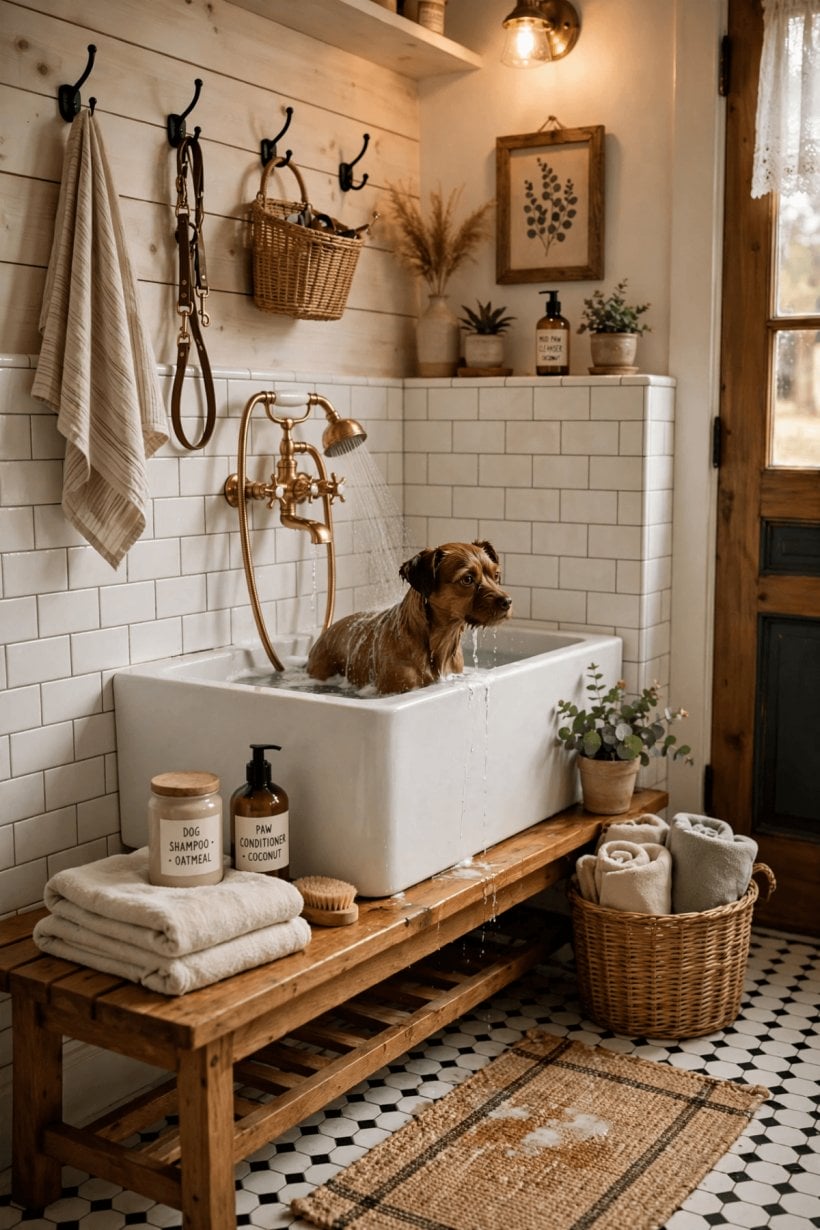
A wash corner succeeds or fails on the small things within arm’s reach. Keep dog towels on open hooks or a rail right beside the wash, shampoo in a wall-mounted holder rather than on the floor, and a lidded bin or a washable bag for muddy cloths. A bench with storage gives you somewhere to sit while you dry paws, and a boot tray under it keeps the dry zone dry. Store a spare lead, poo bags and a brush by the door so the whole walk routine begins and ends in one place. Build a simple daily rhythm: rinse, shake, towel, then a quick squeegee of the base and a wipe of the controls, with the hair catcher emptied before it slows the drain. Once a week, wash the towels hot, check the sealant and let the whole area dry out fully with the door open or the extractor running. These habits take minutes, and they are what keep a wet corner fresh rather than musty. For more compact storage thinking, the ideas in our living room interior design for a tiny house piece show how every item earns a named home in a small space.
10. Small Mudrooms and Gentler Alternatives
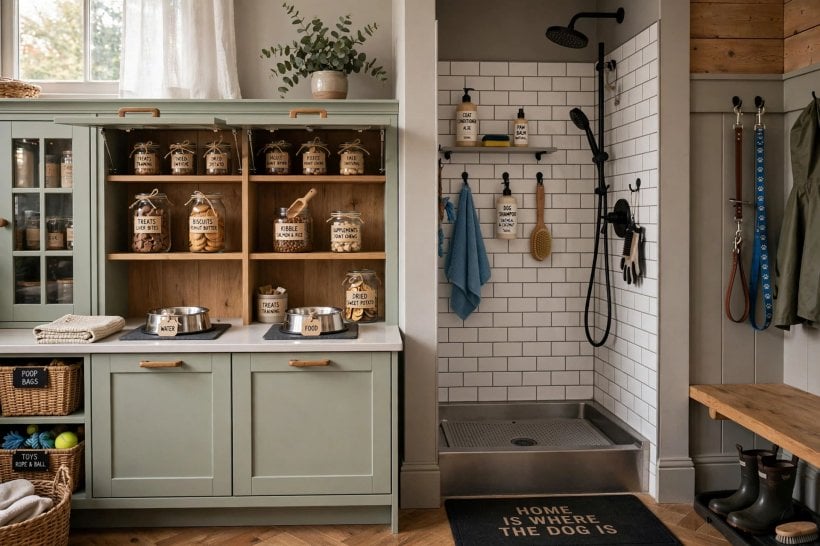
A small mudroom can still wash a dog well with honest compromises. A corner tray with a hand spray plumbed into an existing line, a folding screen or curtain to catch splashes, and a big washable mat outside the tray cover most of the job. Where plumbing is impossible, a portable wash station, a pressurised garden sprayer kept for paws, or a good-quality mud brush and bowl routine by the door will handle all but the worst days, especially with a drying coat to finish. Think about the dog in front of you: a small, calm dog may be happiest washed in a raised tray or even the utility sink with a protective mat, while a large or anxious dog needs floor space, a non-slip base and an exit route that never traps them in a corner. Puppies and rescue dogs may need short, treat-filled practice sessions in the dry wash area before any water appears. The small-room planning in these small bedroom interior design ideas and this modern tiny house bedroom tour makes the same point in other rooms: measure honestly, keep the essentials, and let go of anything that only looked good in a photograph.
Final Considerations
A well-planned dog shower in mudroom life is not a luxury extra; it is the difference between a home that copes with muddy walks and one that dreads them. Put it near the door, keep the plumbing simple, waterproof it properly and choose finishes that forgive mud and clean in minutes. Add the hooks, towels and storage that make the routine easy, and introduce your dog to the space kindly and gradually. Do that, and the wash corner will quietly pay for itself every wet week, in cleaner floors, calmer arrivals and a dog who trots to the wash because good things, and treats, happen there. Before the first real wash, do one full practice run with everything in place, note anything that is missing or awkward, and fix it while the room is still dry and the tools are still out.



0 Comments