

It is the smallest room in the house, and for a year or two it will be the most used: slept in, fed in, changed in and paced in, around the clock.
Seventy-five nursery ideas for that room — cot, chair, changing station and storage, planned for the night shift first: these nursery ideas begin in the small hours and work outward.
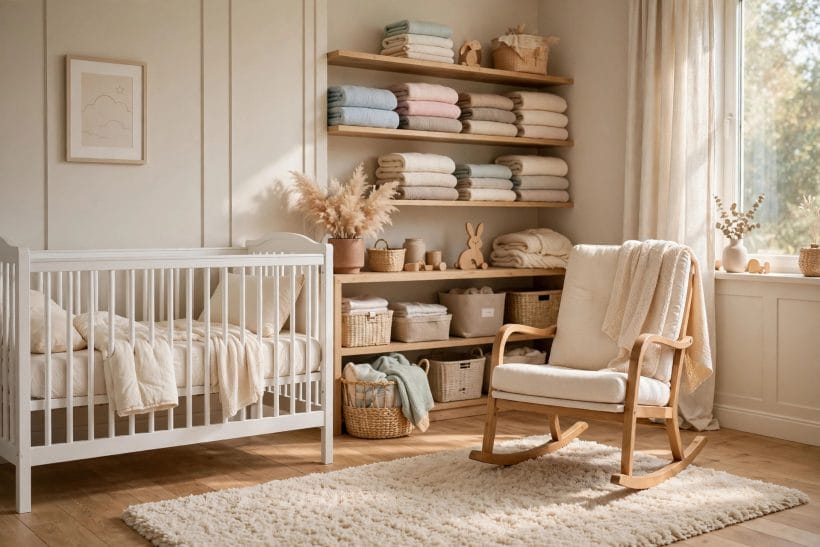
1. Nursery Ideas at a Glance
The nursery is a baby’s first room organised as three working stations — sleep (cot, darkness, quiet), feeding (chair, table, dim lamp) and changing (a surface over storage, the full kit in one reach) — around a defended patch of floor, with storage at each station and the whole room layered in safety that defers, always, to current official guidance and makers’ instructions. Its attributes are the night test (everything findable in the dark, one-handed), conversion (furniture and storage designed to become the child’s room), and restraint (a soft palette, few things, all of them used).
| Question | Short answer |
|---|---|
| What are the nursery’s three jobs? | Sleep, feeding and changing — planned as three stations in one small circuit. |
| Which room makes the best nursery? | The quietest, darkest, closest one — usually the smallest, and that is fine. |
| What governs safety here? | Current official guidance and makers’ instructions, always over any survey. |
| How long should it last? | By design it converts: cot to bed, changing dresser to drawers, chair to story chair. |
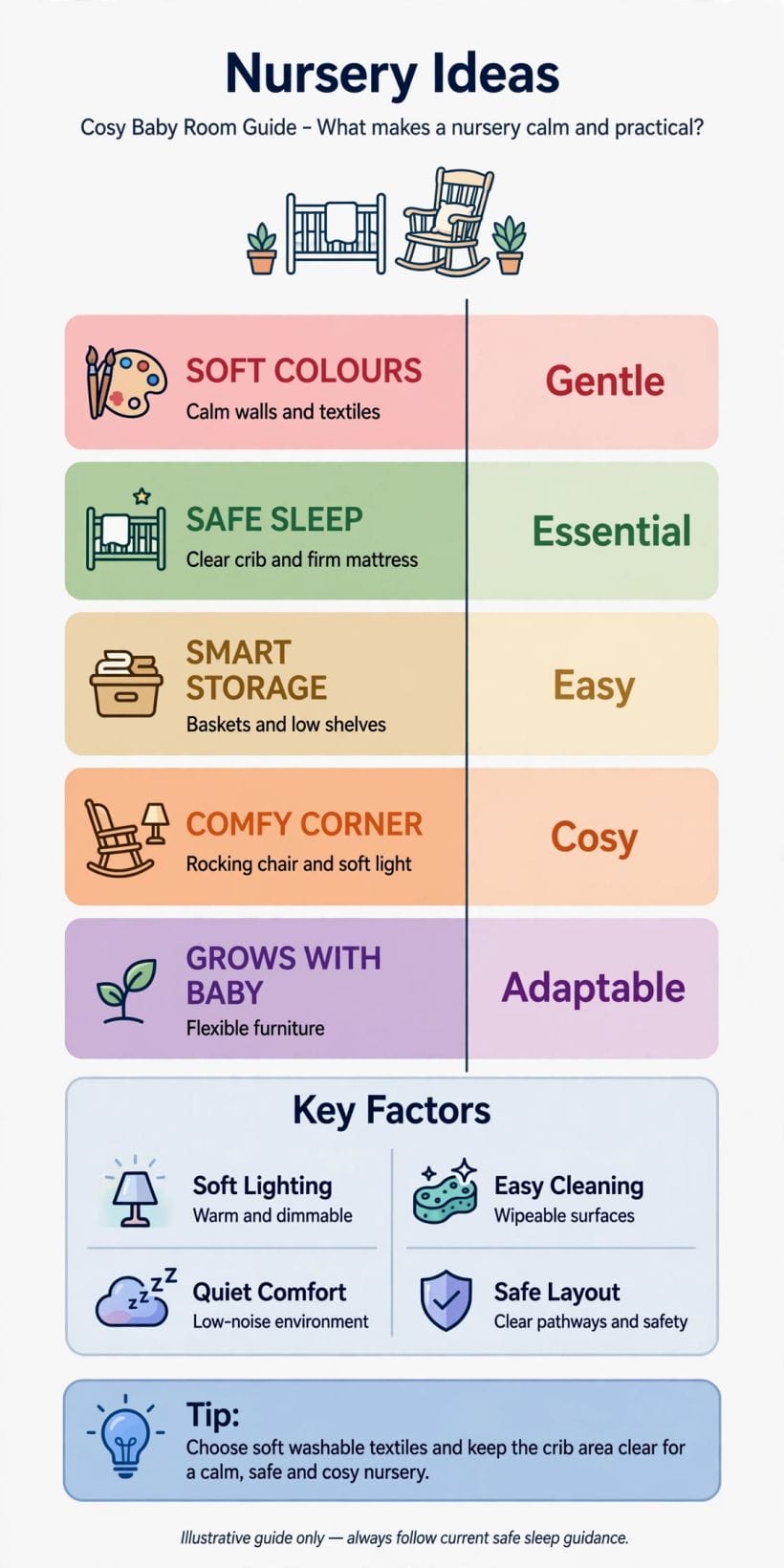
2. The Nursery Itself: A Room With Three Jobs
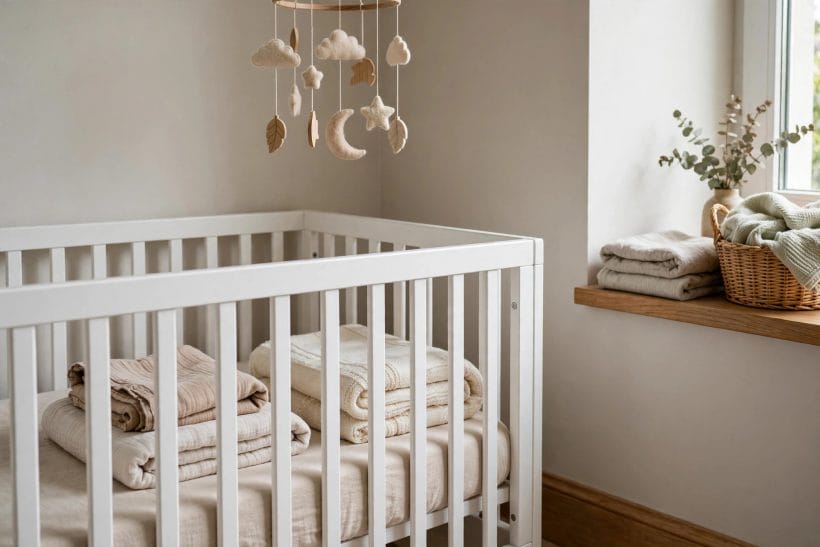
A nursery is not a small bedroom with cute furniture; it is a workplace for three jobs — sleep, feeding and changing — performed at all hours by tired experts. It belongs to the bedroom family surveyed in the bedroom ideas pillar and planned across the whole house in the home design ideas survey, but its rules are its own, and they begin with the night, not the photograph.
1. Plan for the small-hours version of the room
Every decision in this post is tested against one scene: half-asleep, baby in one arm, everything findable in the dark with the other hand.
2. Three stations, one small circuit
Cot, feeding chair, changing surface: the nursery’s whole geography. Place them in a small triangle with clear floor between, because the room’s work is a circuit walked hundreds of times, often carrying its entire reason for existing.
3. Floor space is the fourth station
The empty middle of the room — for tummy time, crawling circuits and a parent lying down in solidarity — is a working surface, not a gap in the design.
4. Choose the room by its nights, not its size
The best nursery is the room that is quietest, darkest and closest to the parents’ bed — often the smallest room in the house, which suits it perfectly. Proximity beats floor area at every age this room serves.
5. Keep the door’s swing and the path silent
Oil the hinges, clear the door’s arc, and keep the path from door to cot free of anything that clicks, rolls or topples.
6. One room, two climates of light
The room needs bright, honest light for changing and dressing, and near-darkness for sleep and night feeds — two light climates, planned separately, never a compromise bulb that serves neither. Sections below give each its own ideas.
7. Storage within the arm’s reach of each station
Wipes at the changing surface, a spare cloth at the chair, bedding at the cot: each station carries its own small store, because a parent holding a baby is a one-handed workforce.
8. Buy the furniture in the order of the nights
Cot first, chair second, changing storage third, decoration last and optionally. The nursery’s famous unfinished look in real homes is simply this correct order, photographed before the optional part — the room was already complete.
9. Leave a parent’s landing strip
One small surface — a shelf or table edge — for the water glass, phone, book and spectacles of the adult on duty. Nurseries designed only for the baby exile their actual workforce to the floor.
10. Plan the room’s second and third lives now
This room becomes a toddler’s, then a child’s, then perhaps the kids’ room surveyed later in this cluster. Choices that convert — a cot that becomes a bed, storage that outgrows nappies — are noted throughout; the nursery designed to be outgrown gracefully is the one that serves longest.
11. Start with safety as the floor, not a section
Safe sleep, safe furniture and safe fittings are not one topic among ten; they are the ground every idea in this post stands on, stated generally here and governed always by current official guidance and the makers’ instructions.
3. The Sleep Corner: Cot, Darkness and Quiet
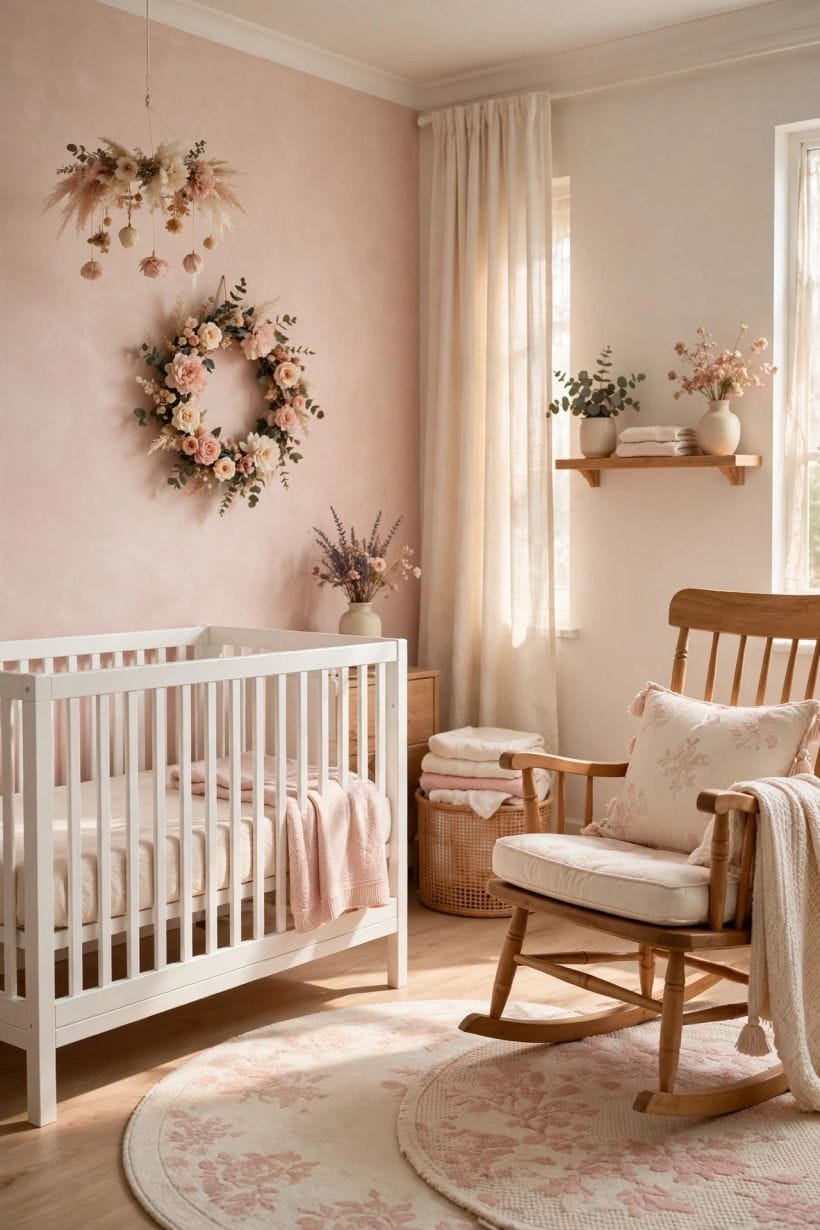
Sleep is the nursery’s first job and its hardest currency. The sleep corner is planned as a small machine for darkness, quiet and sameness — the same view, the same sounds, the same dim sequence, every night, until the baby can run the routine alone.
12. The cot against the calmest wall
Place the cot away from windows’ draughts and radiators’ heat, on the wall the room’s noise reaches last.
13. Follow safe-sleep guidance exactly
A firm, flat sleep surface, a clear cot, the baby on their back: the current official safe-sleep guidance governs the cot without exception or decoration.
14. Blackout is a system, not a curtain
Darkness deep enough for daytime naps comes from layers: a blind at the glass, curtains over it, gaps at the edges closed.
15. A night light for the parent, not the baby
One low, warm, dim light placed for the adult’s path and tasks — never aimed at the cot — is the night shift’s tool.
16. White noise covers the house’s sounds
A steady, soft sound source masks doors, pipes and siblings, and becomes part of the sleep routine’s sameness. Keep it at the volume and distance current guidance and the maker advise — a background, not a performance.
17. The same view from the cot
What the baby sees on waking should be calm and constant: a plain wall, one picture, the curtain’s edge. Mobiles and decorations belong to play time and other walls; the sleep corner’s art direction is boredom, lovingly maintained.
18. A chair-side stack for the transfer
The journey from feeding chair to cot, asleep, is the nursery’s most practised manoeuvre. Keep the path between them short, clear and carpet-quiet, and the cot’s side mechanism — if any — known by touch in the dark.
19. Spare bedding within one dark reach
A full change of cot bedding, stored at the cot, turns the midnight catastrophe into three silent minutes. It is the cheapest insurance in the room and the one most often forgotten until the night it is needed.
20. Temperature: dress the baby, not the room’s extremes
Keep the room comfortably cool rather than warm, and dress the baby for the room you have, following current guidance on bedding and sleepwear.
21. Curtains and blinds with safe cords
Window coverings near a cot are a known hazard area: cordless fittings or cords kept high, short and secured are the only acceptable answers, per current guidance.
22. Grow the sleep corner toward the first bed
When the cot’s days end, the same corner — darkest, quietest, most constant — takes the first small bed. Keeping the geography while changing the furniture is how the room tells a growing child that sleep still lives here.
4. The Feeding Chair and the Night Shift
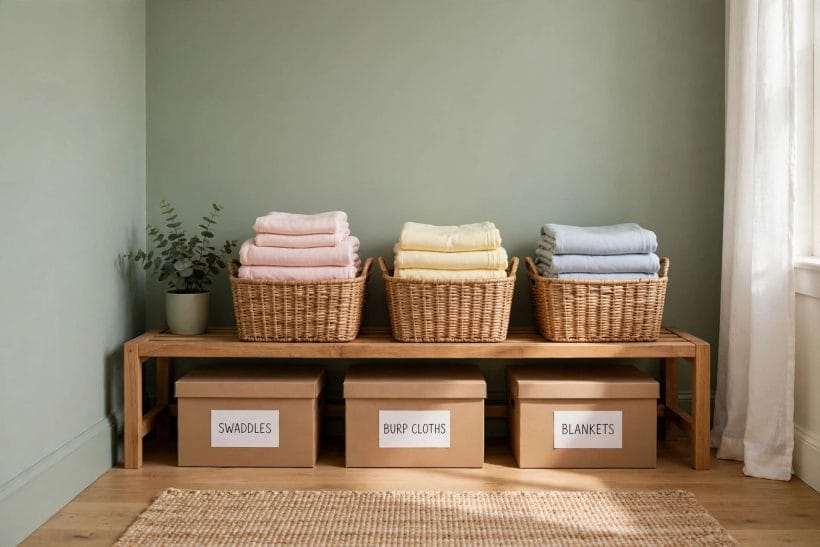
Somewhere in the house, one chair will be sat in for hundreds of hours, mostly in the dark, mostly one-handed. It deserves the same seriousness as the cot — and in many houses this station, not the sleep corner, is where the nursery’s design succeeds or fails.
23. Choose the chair by the small-hours sit
Test chairs as you will use them: feet supported, back upright enough to feed, arms at a height that carries a feeding arm without a shrug.
24. A side table inside the same reach
Water, a cloth, the phone, a snack, the book: the table at the chair’s elbow holds the night shift’s whole kit.
25. The dim lamp belongs to this station
The nursery’s night light lives here: warm, low, switched by touch at the chair. Feeds lit kindly stay sleepy; feeds lit like an operating theatre wake the whole cast, including the feeder.
26. A shelf for the one-handed library
One shelf at the chair’s shoulder for the book, the tablet, the water refill. Night feeds are long, and the parent’s mind is also being fed — a small consideration that returns large sanity.
27. Cushions as adjustable furniture
Feeding positions change as the baby grows and the parent heals. A chair plus two firm cushions adapts weekly; a sculpted chair fits one month perfectly and the next not at all. Buy adaptability, not sculpture.
28. A blanket that lives on the chair
One washable throw, resident on the chair’s arm, for the parent’s shoulders in winter and the baby’s shade in summer. It will be washed more than any textile in the house — choose it like a uniform.
29. Rocking, gliding or still: an honest preference
Movement soothes some pairs and unsettles others. Borrow before buying if you can, and remember the chair’s second life: it will read stories in this room for years, so its comfort outlives the feeding phase it was bought for.
30. The spare-clothes hook by the chair
A hook or small rail at the chair for the parent’s spare layer and the baby’s spare suit. Night feeds involve weather from both bodies; the hook is two minutes of foresight that saves a soaked hour.
31. Twins and tandem feeding change the chair, not the rules
Two babies widen the chair, double the table’s stores and make the spare-bedding reach closer — the station logic is identical. Plan the geometry for two, and every other idea in this section holds unchanged.
32. When the chair’s work ends, it stays
The feeding chair graduates to the story chair without moving a metre. Choosing it in a fabric and form the room can keep is the difference between a nursery piece and a family heirloom in the making.
33. The night shift ends with a reset
Chair straight, table cleared, cloth in the basket, water refilled: a two-minute close restores the station for its next performance, whoever is on duty. Nurseries are kept by resets, not by deep cleans.
5. Changing, Dressing and the Storage Wall
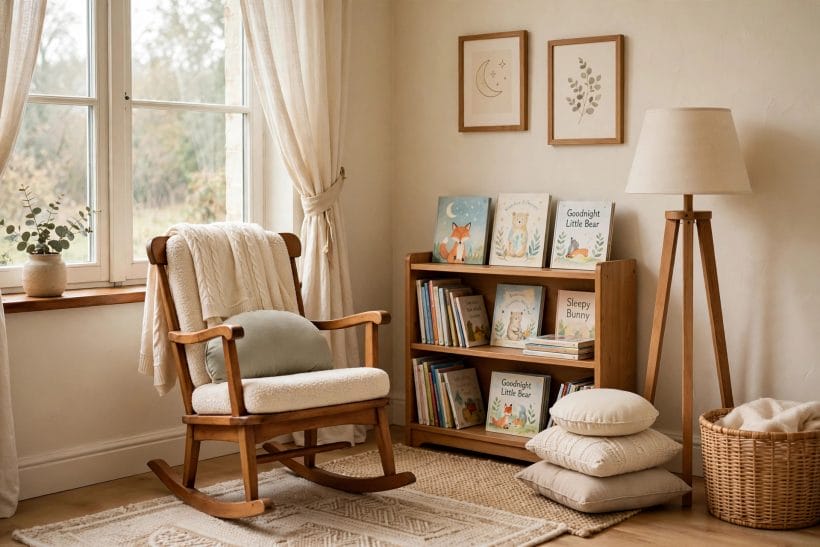
The nursery’s third job is logistics: a small person producing laundry at industrial rates, outgrowing clothes quarterly, and needing everything findable one-handed. Most nurseries are the house’s smallest bedroom — the angle the small bedroom ideas survey works at full size — and this section treats that smallness as a storage design brief.
34. Change on top of storage, always
The changing surface sits over drawers or a dresser, so the hands that change are above the clothes that replace.
35. Everything for one change in one pull
Nappy, wipes, cream, fresh suit: the full kit reachable from the changing position without a step or a free hand. Lay it out left-to-right in the order of use, and restock the station like a pit lane.
36. Never leave the station — design so you never must
The layout’s safety rule is simple: nothing a change needs may live outside the changing position’s reach, because a baby on a raised surface is never left, not for a second.
37. Clothes by size, in labelled boxes
The wardrobe’s flood is managed in boxes: now, next size up, outgrown.
38. The laundry basket lives at the station
A basket at the changing surface’s foot catches the day’s several changes of everything. Laundry logistics decide a nursery’s tidiness more than any storage product: shorten the throw and the room stays sane.
39. Hang the week’s clothes, fold the rest
A short rail of this week’s outfits, chosen in one calm moment, ends the daily drawer archaeology.
40. A low shelf for the baby’s own reach, later
One shelf at crawling, then standing, height holds the safe toys and books the child may fetch alone. It is the storage wall’s first gift of independence, planned now and stocked when the reach arrives.
41. Keep medicines and creams in one closed box
Everything medicinal lives in one closed, latched container, high and out of the room’s play geography, per the products’ own guidance. The nursery’s openness stops, deliberately, at this one box.
42. The pram, seat and gear live elsewhere
Bulky travelling equipment colonises small rooms fast. The nursery’s border policy: gear sleeps in the hall, the car or the cupboard under the stairs — the room keeps only what its three jobs use daily.
43. A mirror at changing height, for the baby
A safe mirror where the changed baby can study the world’s most interesting face is the station’s one decoration — and it buys the changer whole extra minutes of peace, which at this station is a currency.
44. Restock day is part of the design
Ten minutes weekly: boxes rotated, kit refilled, outgrown bagged for its next owner. The storage wall is a machine whose maintenance is scheduled, light and — when it runs — invisible.
6. Colour, Light and Sound for Small Senses
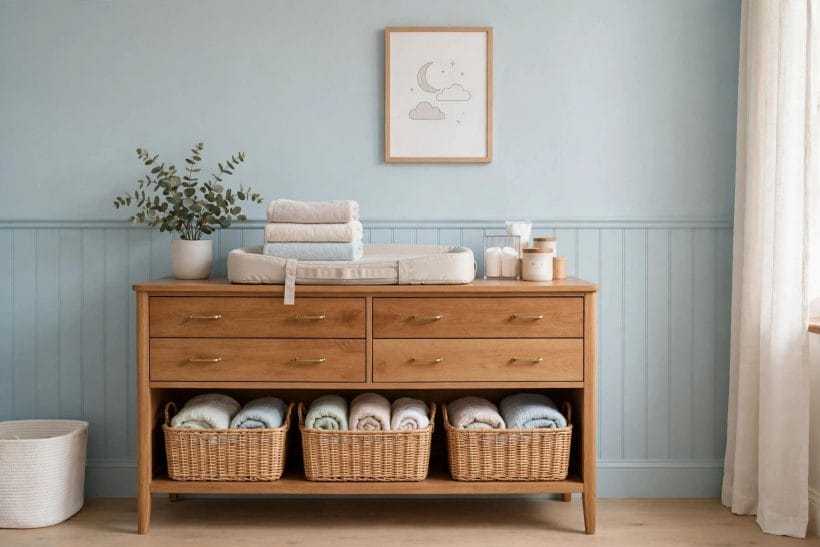
The nursery’s palette serves two clients in sequence: a newborn who sees contrast and calm, and a toddler who will shortly have opinions. This section paints for both — and borrows its small-room daylight discipline from the tiny house bedroom ideas, where bedrooms are smallest and calmest of all.
45. Soft walls, strong accents
Walls in a soft, warm neutral keep the room restful and let the accents — one strong picture, one patterned blanket, one beloved toy — carry the colour story.
46. Contrast where the baby looks
Newborns read bold contrast best: a black-and-white picture near the changing station, a strong-edged mobile over the play mat (never the cot) gives young eyes honest work. The nursery’s gallery is developmental equipment in disguise.
47. One wall allowed to be joyful
If colour calls, give it one wall — the one behind the feeding chair, where the parent looks longest. A joyful wall and three calm ones is the palette’s treaty between the room’s two clients, signed in paint.
48. Daylight controlled, not excluded
The play hours need the room’s full daylight; sleep needs its absence.
49. Warm light in the evening, bright in the morning
The day’s rhythm in light: bright and cool for morning dressing and play, warm and low from the evening feed onward. Two bulbs and a dimmer rehearse the body clock more kindly than any gadget.
50. Sound softness is a finish
Rug, curtains, upholstered chair: the nursery’s soft surfaces tune its acoustics, so sounds land gently and the sleeping corner stays asleep through a household’s evening. Hard, bare nurseries are loud nurseries, however pretty.
51. Pictures at two heights
Art low by the play mat for the baby’s floor-level world, art at adult height by the chair for the parent’s. The room’s walls serve two galleries at two altitudes, and both change as their audiences grow.
52. Keep pattern off the sleep sightline
Pattern excites; the cot’s view stays plain. Put the busy prints — the wallpaper sample, the patterned curtain — where play happens, and let the sleep corner’s walls be the room’s quietest surfaces.
53. A rug that defines the play country
One washable rug draws the play territory: mat, toys and sprawling all happen on it, and its border teaches even a crawler the room’s geography. Under the feeding chair, its corner catches the night shift’s spills.
54. Scent: the nursery’s is ‘clean’
Skip fragrances in a baby’s room; the palette of smells is fresh air and clean laundry.
55. Let the room be photographed in your head at age five
Before fixing any decor, picture the same room for a five-year-old. The choices that survive the picture — palette, storage, the chair — are the ones to fund. The rest is rented charm, and should be priced as such.
7. Safety and Sense: The Room That Guards Itself
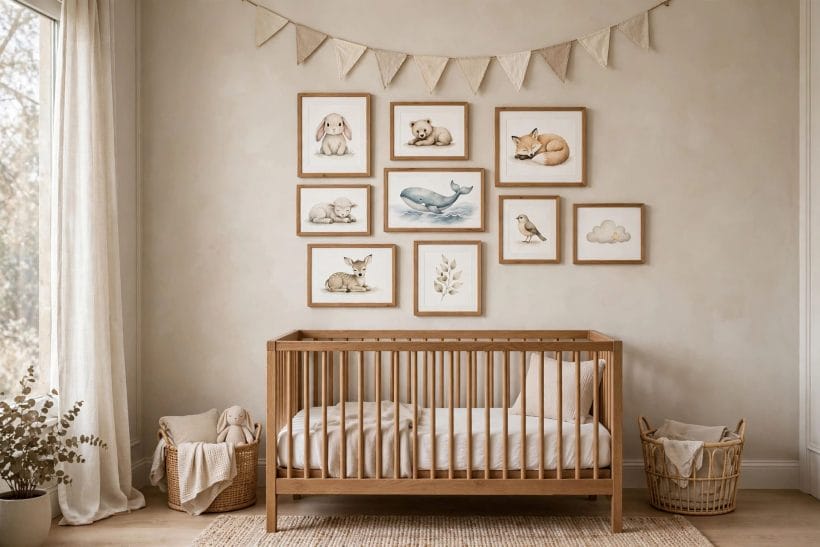
Safety in a nursery is a design layer, not a shopping list: furniture that cannot tip, cords that cannot reach, surfaces that forgive exploration, and every claim in this section stated generally — the authority is always current official guidance, the makers’ instructions and, for fixed installations, qualified professionals.
56. Anchor everything that can climb or tip
Dressers, shelves and the storage wall are fixed to the wall behind them, from day one, before any baby arrives to test them. Furniture anchoring is the nursery’s least visible and most important installation, done to the makers’ instructions.
57. Cords, strings and loops out of the room’s life
Blind cords cordless or secured high and short; no strings, ribbons or loops within reach of cot, mat or chair. The rule is absolute and simple, and it is rechecked whenever anything in the room moves.
58. The cot’s neighbourhood stays empty
Nothing hangs over the cot, no shelf stands where its contents could fall into it, no heavy picture shares its wall. The sleep corner’s emptiness, already its aesthetic, is also its safety plan.
59. Small things live high or elsewhere
Buttons, batteries, coins, older siblings’ treasures: the floor-level world must contain nothing small enough to be interesting to a mouth. A daily floor-level audit — literally at baby height — finds what adult tidying misses.
60. Gates and doors at the room’s thresholds
When crawling becomes cruising, the room’s exits and the house’s stairs are managed with proper gates, fitted to the makers’ instructions. The nursery stays the safe base from which expeditions are launched and to which they return.
61. Heat, water and electrics kept boring
Radiators guarded or low-temperature, hot water at safe settings per local guidance, sockets covered where guidance advises, cables routed out of reach.
62. Toys chosen by age, kept by condition
Age guidance on toys is read and kept; broken things leave the room the day they break, because edges and detachments are born in that moment. The toy library is small, sound and entirely mouth-audited by its owner daily.
63. The cleaning shelf is a locked idea
Cleaning products never live in the nursery at all — not high, not latched, not ‘just for a minute’. The room’s rule is total: what cleans the room visits it in an adult’s hand and leaves with them.
64. Plan the evacuation you hope to waste
A clear path from cot to door, a door that opens freely, the household’s ordinary fire safety in place and checked. Thirty seconds of planning, reviewed when the room changes, for the exit everyone is glad to never use.
65. Re-audit at every new power
Rolling, crawling, pulling up, climbing: each new ability rewrites the room’s hazard map.
8. From Nursery to Child’s Room: Designed to Grow
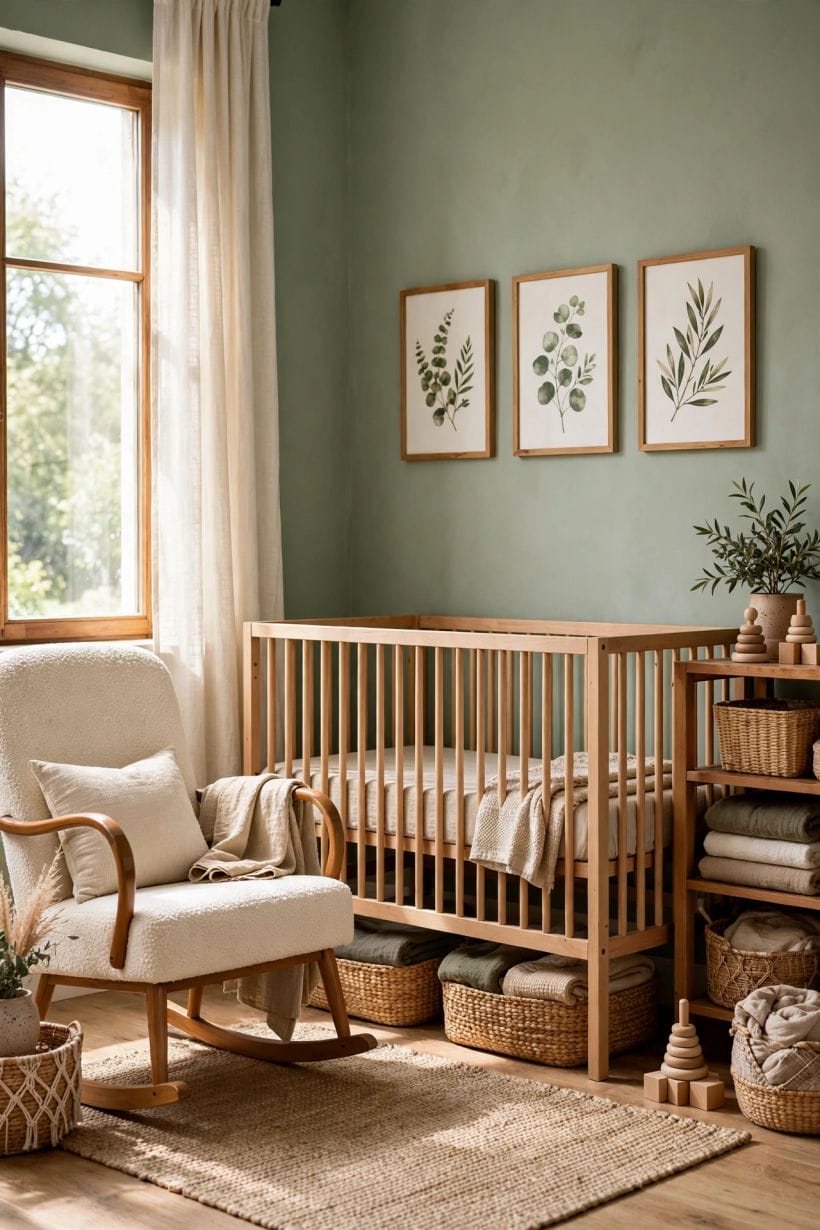
The nursery’s final attribute is its own disappearance, gracefully managed. Families living small know this room’s long game best — the world of the living in a tiny house with kids story on this site — where every room must earn its keep through every age, not just the first.
66. The cot that becomes a bed, or leaves kindly
Convertible cots serve the same corner for years; simple cots pass to the next family while value remains. Either is a good plan; the bad plan is the expensive cot that does neither, outgrown in a blink and stored forever.
67. Storage sized for toys arrives disguised as storage sized for clothes
The labelled boxes that held sizes will hold bricks, trains and art supplies in turn. Buy the storage wall for a decade of contents, not for the nappy years that merely inaugurate it.
68. The changing dresser becomes the child’s own drawers
When the last nappy leaves, the changing top lifts off and the dresser begins its long second career. This is the storage wall’s founding argument, fulfilled: furniture chosen for conversion never needs replacing, only emptying.
69. The feeding chair becomes the reading chair
Already planned in its section, the chair’s graduation is the room’s happiest continuity: the same seat, the same lamp, a taller reader and a smaller listener who now turns the pages. Rooms grow kindly around furniture that stays.
70. Walls repaint at the child’s request, once
The soft nursery palette yields, in time, to one chosen colour — the child’s first act of interior authorship, celebrated and bounded by the one-wall treaty. The room that can change its wall can survive its owner’s childhood.
71. Play territory becomes homework territory
The rug’s country becomes the desk’s: the play mat’s floor becomes the study floor, in the same clear patch the first section defended. Rooms whose floor was kept clear never need a revolution, only a rotation.
72. Hand the room over in stages
Each birthday transfers one decision — the picture, the bedding, the shelf’s contents — to the room’s resident. The nursery that began as the parents’ design becomes the child’s by instalments, which is how homes change owners without battles.
73. Keep one nursery thing, deliberately
One blanket, one picture, one small chair, kept by choice rather than by storage failure.
74. Photograph the nursery before it goes
The room at its first-night readiness is a family document. Take the pictures; then let it grow without guilt. The nursery’s success is measured by how completely it can be outgrown — its ideas passing up the cluster toward the teen room ideas at the journey’s far end.
75. What the nursery teaches the house
A room planned around nights, stations and growth leaves the whole house smarter: every later room gets planned by its worst hour, its real circuit and its next life.
9. Checks and Mistakes: Before the First Purchase or the First Stone

Run the night test before the baby arrives: lights low, arms full of a cushion, walk the circuit and perform each job one-handed in the dark. Every reach that fails is a shelf to move; every sound is a hinge to oil; every missing store is a basket to place. An hour of rehearsal buys months of silent competence.
The common mistakes are kindnesses misplaced: the beautiful mobile over the cot, the changing kit split between two rooms, the chair chosen by daylight. Keep the stations complete, the sleep corner plain, and guidance — safe sleep, anchoring, cords — obeyed to the letter, and the room will carry its small resident and its tired experts safely through the first years.
10. Costs and Pulling It Together
A nursery’s money divides by lifespan. The cot, the chair and the storage wall are decade purchases disguised as baby purchases, and they deserve the budget’s first and best share — bought for conversion, comfort and anchoring, they are still serving when the room has changed its name twice. The changing station costs little because it is a dresser wearing a temporary top.
Everything else — decor, toys, the famous layette — is either small, borrowed, gifted or outgrown at terrifying speed, and should be funded accordingly. Spend where the nights are spent: on the chair sat in for hundreds of hours, the darkness that buys the sleep, and the storage that keeps the system honest. The rest is garnish, and garnish can wait.
Final Considerations
This survey closes the frontier’s six hundred: the nursery stands in the bedroom family between the pillar and the children’s rooms that follow it, linked at both ends — the room a child starts in, planned from the start to hand them onward.
Plan it by its worst hour, keep its three stations complete, let safety be boring and thorough, and design every piece to be outgrown. The smallest room in the house, done this way, is also the most instructive — and for a while, in the middle of the night, the most important place in the world.




0 Comments