

It is one of the most common questions in home upkeep: can you paint vinyl windows, or will the paint peel, crack and void every promise the installer made? The honest answer is that it depends — on the warranty, the frame’s condition, the colour you choose and the paint you use. This guide is a checklist of everything to verify first, so you can decide with facts in hand instead of finding out the hard way on a whole house of frames.
1. At a Glance: Quick Questions, Straight Answers
Start here. Each answer is deliberately conditional, because the right response depends on your windows, your documents and the products in front of you. Where an answer says check, it means exactly that: the information exists — in your warranty paperwork, on the paint tin, or from the window manufacturer — and it is worth the ten minutes it takes to find it before a brush touches a frame.
| Question | What to check |
|---|---|
| Can vinyl windows be painted at all? | In many cases yes, with the right preparation and a paint confirmed suitable for vinyl — but check the points below before assuming your frames qualify. |
| Will painting void my warranty? | Read your warranty documents and ask the window manufacturer directly; cover for painted frames varies and should be confirmed in writing. |
| Can I go from white to a dark colour? | Treat dark colours as a special case: ask the paint and window manufacturers about heat build-up on sun-facing frames before committing. |
| What paint should I use? | Only a paint whose label or technical sheet states it is suitable for vinyl or uPVC surfaces; check the manufacturer’s guidance, not just the colour chart. |
| Do I need a primer? | Follow the paint maker’s own system instructions — some paints are self-priming on vinyl, others specify a bonding primer first. |
| Which parts must stay unpainted? | Weatherstripping, seals, tracks, locks and meeting rails need to stay paint-free so the window keeps moving and sealing properly. |
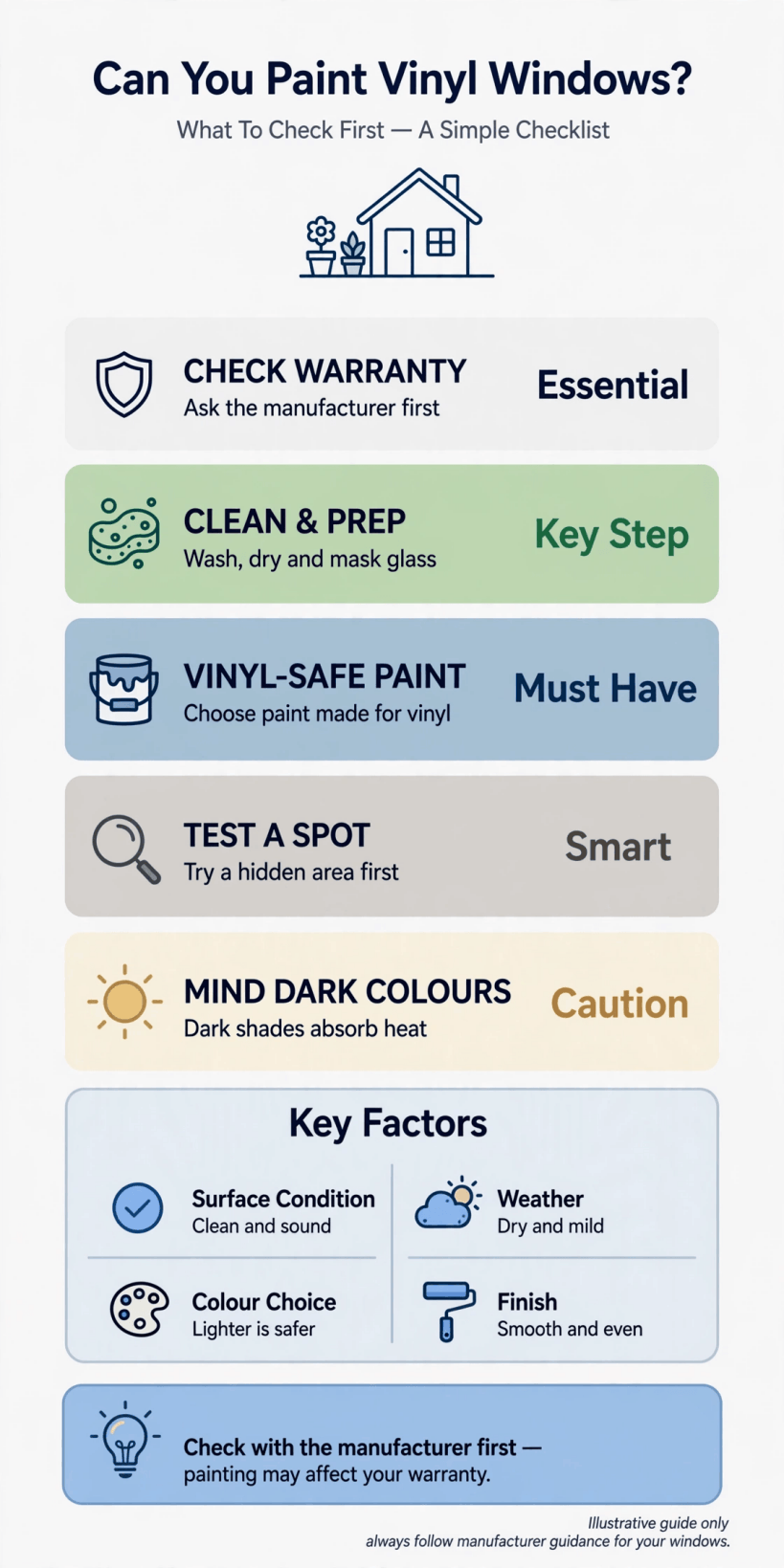
The pre-paint checks at a glance — warranty, condition, colour, paint choice, preparation and the parts to protect, in a safe order.
2. Check the Warranty Position Before Anything Else
The warranty check comes first because it costs nothing and can change everything. Find the documents from when your windows were supplied or installed and read what they say about altering the surface. Some manufacturers treat painting as a modification that limits cover on the frame; others allow it with conditions. If the paperwork is silent or unclear, ask the manufacturer or installer directly and keep their answer in writing.
While the documents are out, note the frame maker, the range and the installation date — you will want all three if you later need parts, seals or advice. Homeowners planning wider refreshes often do this paperwork pass for the whole house at once; the same record-keeping habit serves interior projects too, as readers of bedroom interior design for tiny houses know: knowing exactly what you have is the first step to changing it safely.
- Locate the window warranty and read its surface-alteration wording.
- Ask the manufacturer whether painting affects cover, in writing.
- Check whether conditions differ for interior and exterior faces.
- Record the frame brand, range and installation date in one place.
- Ask the installer who fitted the windows for their view as well.
- Check any home insurance implications your policy mentions.
- If the windows are nearly new, weigh the warranty value before painting.
- Keep every answer with the property’s permanent paperwork.
3. Check the Frame Condition Honestly
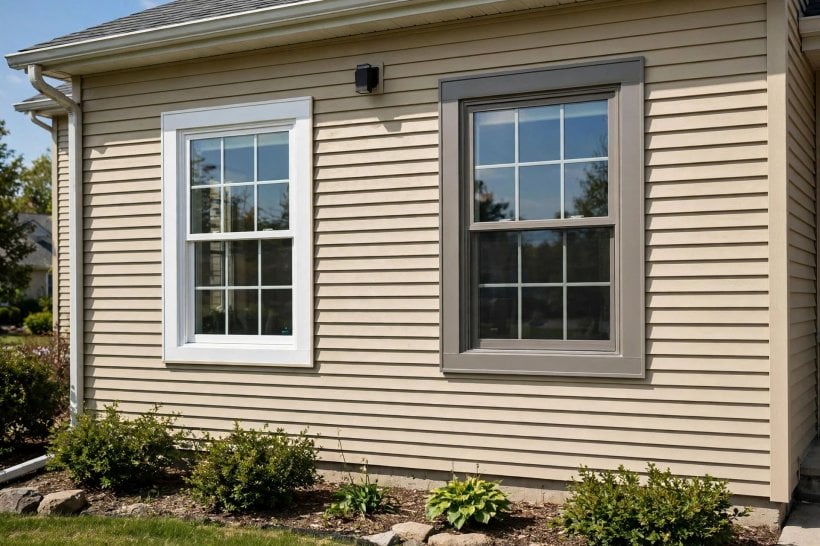
Paint refreshes colour; it does not repair damage. Walk every frame you plan to paint and inspect it at arm’s length and then closely: look for cracks, chips, brittleness, warped sections, failed seals between panes and frames that have gone chalky or rough on the surface. A frame that is physically failing needs repair or replacement first, because fresh paint over a failing surface simply fails more colourfully.
Pay special attention to sun-facing elevations, which live the hardest life, and to older installations in converted buildings — the kind of windows you meet in tiny barn house interiors, where frames may have decades of weather behind them. Test how the surface feels: sound vinyl is firm and smooth; if a fingernail or gentle pressure finds softness, crumbling or deep chalk that transfers heavily to a cloth, get a professional opinion before planning paint.
- Inspect every frame closely for cracks, chips and brittle corners.
- Check for misted or failed sealed units — a separate problem from paint.
- Look for warping that stops sashes closing squarely and evenly.
- Rub the surface with a dark cloth to see how much chalk transfers.
- Press suspect areas gently; sound vinyl feels firm, not crumbly.
- Examine joints and corners where water has sat over the years.
- Note hardware condition — handles and hinges may need work first.
- Photograph each elevation so you can compare before and after.
4. The Colour Question: Light Versus Dark
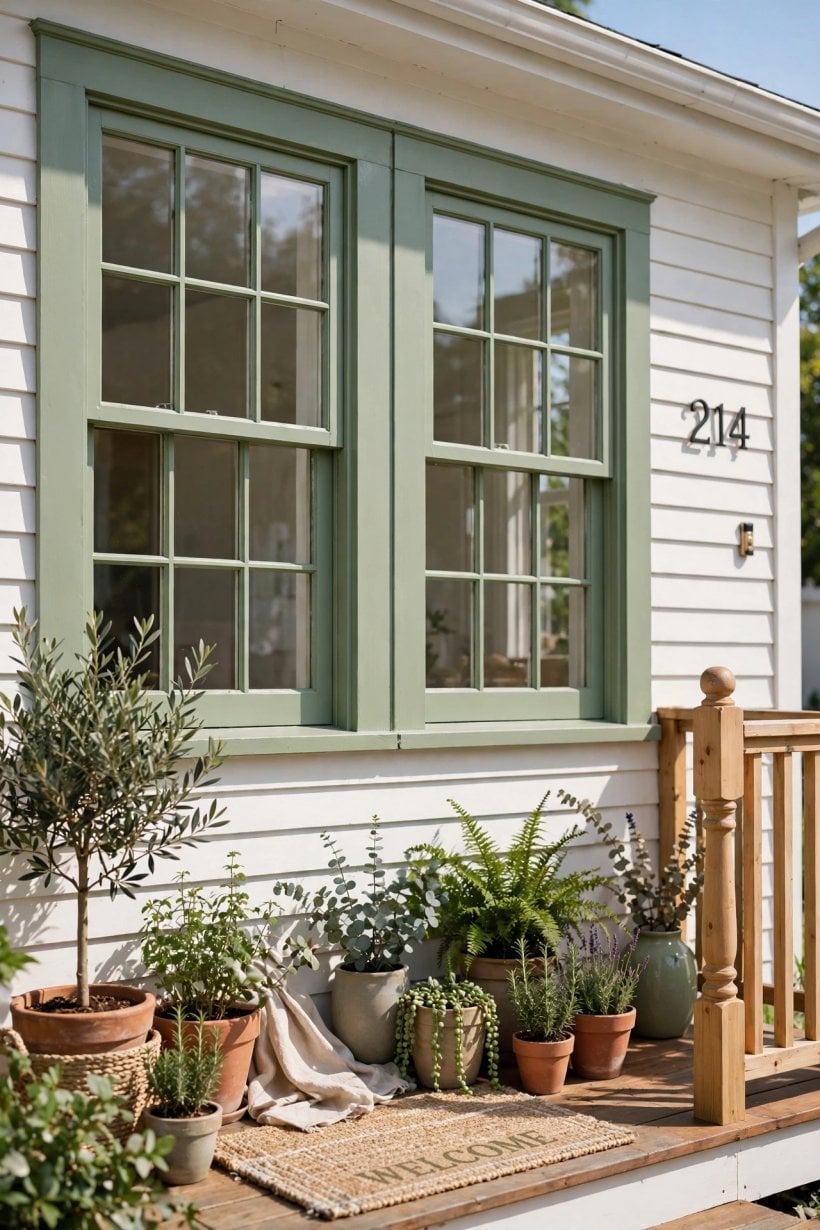
Colour is the decision with the longest shadow. Vinyl moves with temperature, and dark colours absorb more heat than pale ones, so a dramatic change from white to near-black on a sun-baked elevation is the riskiest version of this project. That does not make it impossible — it makes it a question to put to the paint manufacturer, whose technical guidance for vinyl typically addresses colour choice and heat, and to the window maker whose frames must live with the result.
Think about the whole facade while you are at it. Window colour ties together siding, trim, roof and door, and a colour tested on one small frame can look very different repeated twenty times around a house. The placement discipline in colorful tiny house interior ideas — strong colour, deliberately placed, calm background — works outdoors too: decide whether the windows are the accent or the background before choosing how bold to go.
- Treat dark-over-light changes as a question for both manufacturers.
- Ask about heat build-up on south and west facing frames specifically.
- Check whether the paint range publishes guidance for vinyl colours.
- Test the colour on one frame and view it across a full sunny day.
- Stand across the street; judge the facade whole, not the frame alone.
- Consider matching existing trim for a calmer, lower-risk change.
- Remember interior faces can be a different colour from exterior ones.
- Keep the colour name and code recorded for future touch-ups.
5. Check the Paint Is Made for Vinyl
This is the technical heart of the project. Vinyl is a smooth, low-energy surface that ordinary paints may not grip, and it flexes with temperature more than timber or metal, so the coating must flex with it. The only safe selection rule is the label: choose a paint whose manufacturer states it is suitable for vinyl, uPVC or exterior plastics, and read its technical sheet for surface preparation, primer requirements, application conditions and recoat times before buying.
Buy the system, not just the tin. If the maker specifies a bonding primer, a particular cleaner or a maximum application temperature, those are part of the product’s promise, and swapping components for whatever is in the shed weakens it. Ask the paint supplier to confirm your shortlist suits your exact situation — exterior frames, your climate, your chosen colour — and note the name of whoever advises you.
- Choose paint explicitly labelled suitable for vinyl or uPVC.
- Read the technical sheet, not only the front of the tin.
- Follow the maker’s primer decision — required or self-priming.
- Use the specified cleaners and preparation products as a system.
- Note application temperature and humidity limits before scheduling.
- Check recoat and curing times so windows are not closed too early.
- Confirm the finish sheen you want exists in the vinyl-safe range.
- Ask the supplier to confirm suitability for your colour change.
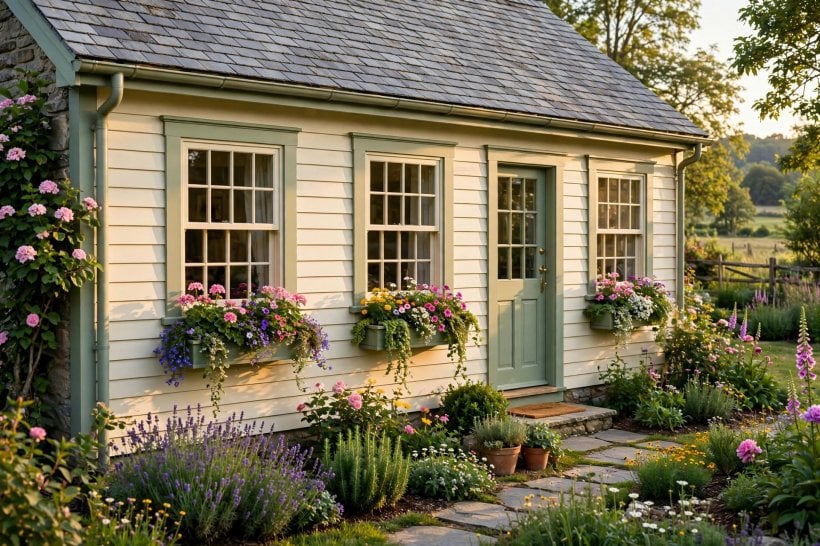
6. Surface Preparation Checks
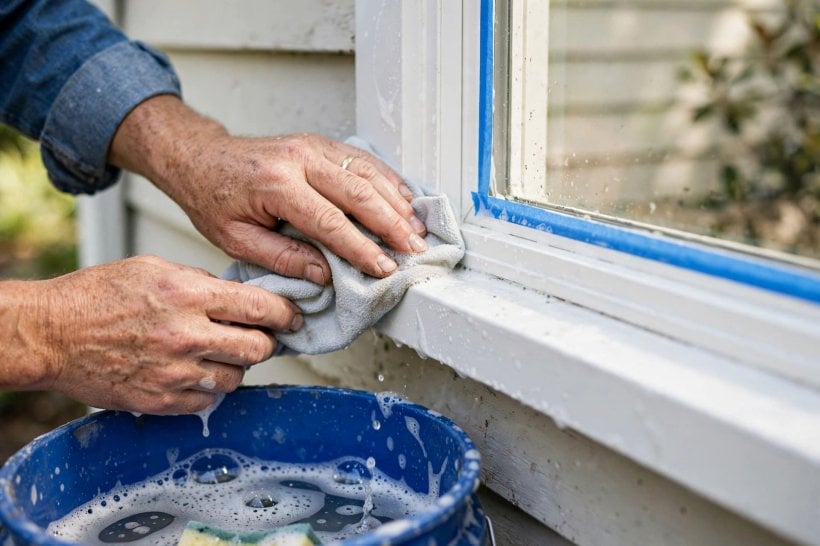
Professionals agree on one thing above all: paint jobs fail at the preparation stage, not the painting stage. Vinyl that has lived outdoors carries traffic film, algae, pollen, old silicone smears and general grease, and every trace of it sits between the new paint and the surface it must grip. Plan a thorough wash with the cleaner the paint system specifies, rinse well, and let frames dry completely before anything else happens.
Check three quieter details too. Silicone sealant residues are paint’s enemy — paint will not stick to them — so identify and remove contaminated spots. Glossy, slick areas may need the light abrasion the system recommends, using the grade specified rather than enthusiasm. And mask methodically: glass, walls, sills and hardware all take longer to clean than to cover. The build discipline behind guides like how to build your own tiny house applies in miniature: sequences exist because skipping steps is how small jobs become big ones.
- Wash frames with the cleaner the paint system specifies.
- Rinse thoroughly and allow complete drying before coating.
- Hunt down silicone smears; paint will not adhere to them.
- Follow the system’s abrasion guidance exactly where it applies.
- Remove or mask hardware, handles and house numbers.
- Tape glass edges and protect sills, walls and planting below.
- Work on one elevation at a time so preparation stays fresh.
- Keep a clean, damp cloth handy for immediate drips and slips.
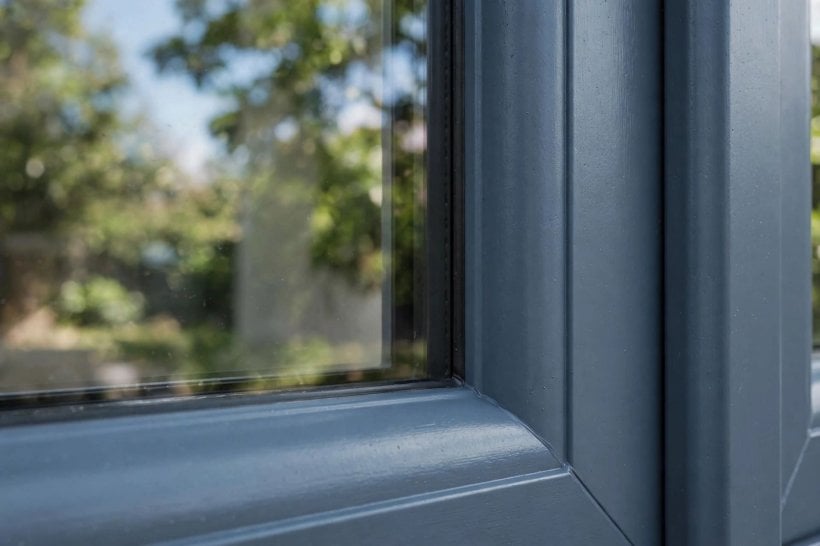
7. What Never To Paint: Moving Parts and Seals
A window is a machine as much as a surface. Weatherstripping and gaskets seal because they are soft and compressible; paint makes them stiff, sticky or both, and a painted seal can glue a sash shut or tear the first time it opens. Tracks that sliding windows run in, the meeting rails where sashes pass, locks, hinges and drainage paths all need to stay exactly as clean and bare as the maker left them.
Walk each window type in your home — casement, sliding, tilt — and list its moving and sealing parts before masking. Tape is your friend, but so is a steady hand and a small brush near the danger zones. If a part looks like it moves, flexes, compresses or drains, it stays unpainted; if you are unsure what a part does, find out before the paint reaches it rather than after.
- List each window’s moving parts before masking anything.
- Keep all weatherstripping and gaskets completely paint-free.
- Never paint sliding tracks or the channels sashes run in.
- Protect locks, hinges, handles and their contact points.
- Keep drainage holes and slots at the frame base clear.
- Open and close each window between coats to stop sticking.
- Remove masking while the final coat is fresh, per the system’s advice.
- After curing, test every sash, lock and vent for free movement.
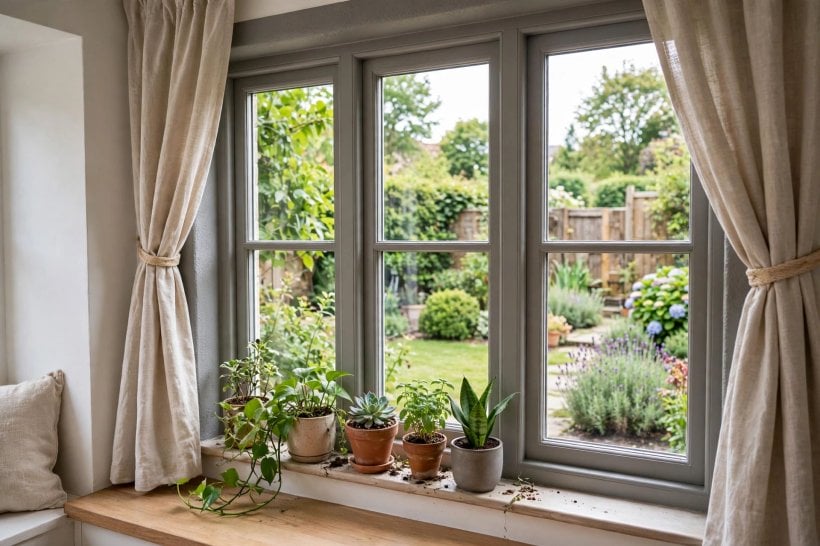
8. Weather, Timing and Curing Checks
Exterior painting is weather work. The paint’s technical sheet will give application conditions — typically a temperature window, dry surfaces and no imminent rain — and those limits are part of the product’s performance, not small print. Check the forecast for the full sequence, not just painting day: preparation, coating and the first curing days all want dry weather, and direct fierce sun on a frame can skin paint over before it has levelled.
Plan the household logistics too. Windows being painted need to stand open or be operated carefully at the right moments, which affects security, pets, children and heating. Work elevation by elevation so the house is never wide open at night, and in a small home — where one room may hold the only windows on that side — sequence the work so daily life keeps functioning around it, the way any well-planned project in a compact house has to.
- Check the paint’s stated temperature and dryness conditions.
- Plan around a forecast covering prep, painting and early curing.
- Avoid painting frames in fierce direct sun where possible.
- Start with the elevation that dries and cures soonest.
- Keep painted windows from being slammed or locked down early.
- Arrange security and pet plans for windows standing open.
- Allow the full curing time before washing or heavy use.
- Note dates, weather and coats in your project record.
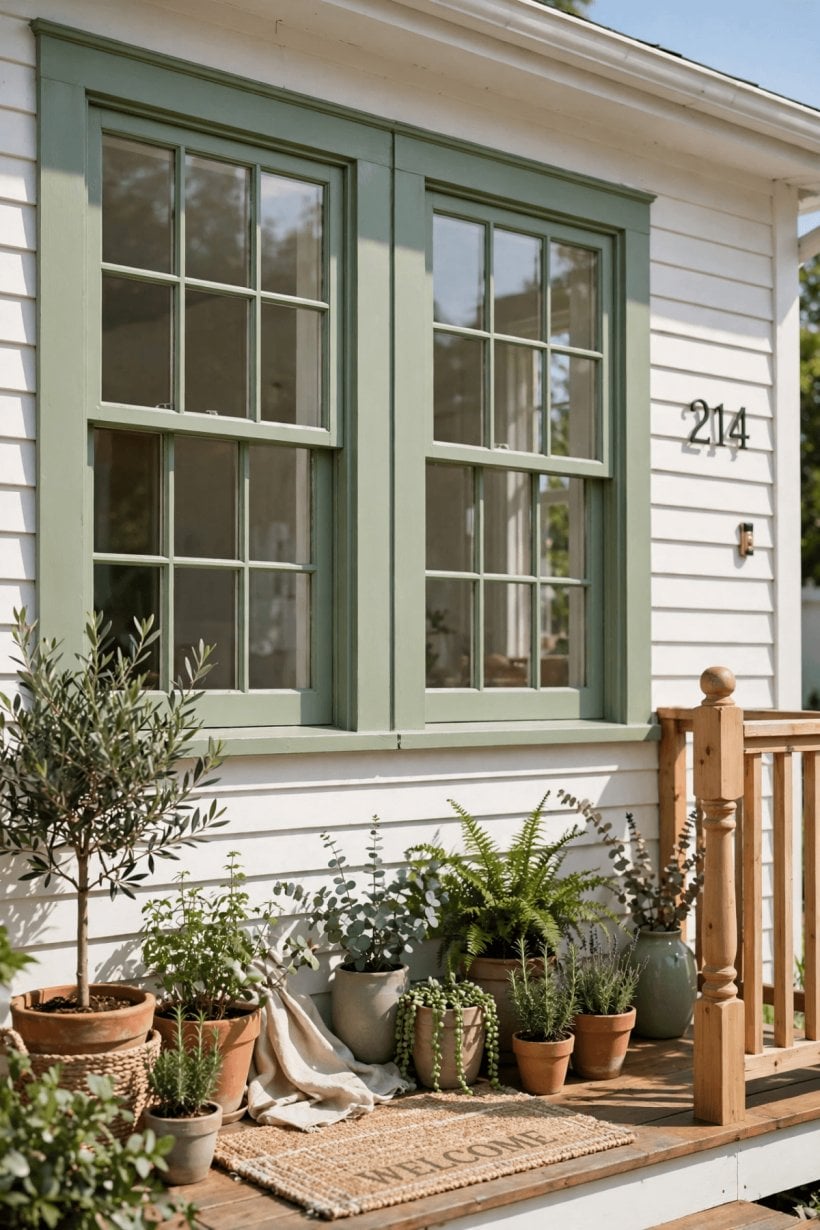
9. Test One Window First
However thorough the research, one real window teaches more than a hundred product pages. Choose the least visible frame — a side elevation, a utility room, the back of the house — and run the entire process on it: wash, prepare, prime if specified, paint, cure. Then live with it. Open and close it daily, look at it in morning and evening light, and check the finish after the first rain and the first hot afternoon.
A sensible test window is often a bedroom one, seen close-up every day but rarely judged by visitors — the same pragmatic thinking that runs through tiny house bedroom ideas, where the hardest-working rooms get the most honest testing. If the test disappoints, you have spent one window’s effort learning so, and every option — different paint, professional help, replacement — is still open and cheap.
- Pick the least visible window for the full-process test.
- Follow the complete system on it — no shortcuts for the trial.
- Operate the window daily through the curing period.
- Inspect the finish after rain and after a hot, sunny spell.
- Check adhesion at an inconspicuous edge, as the maker allows.
- Judge the colour at several times of day before scaling up.
- Time each stage; multiply honestly for the whole house.
- Only roll the process out once the test window has earned it.
10. Cost, Effort and the Alternatives To Weigh
Finally, weigh painting against its rivals with clear eyes. Painting is the least disruptive route and, done properly, refreshes a facade for a fraction of replacement’s upheaval — but it is still days of preparation, masking and curing across every frame, and its lifespan depends on the checks in this guide. Get a quote for professional spraying as well as pricing your own materials, so the DIY saving is a real number rather than an assumption.
The alternatives deserve a fair hearing too. Replacement windows reset warranties and performance entirely and may suit frames whose condition checks failed in Section 3; doing nothing but a deep clean surprises many owners, because washed vinyl and new hardware can transform a facade on their own. In the rooms behind the glass, life goes on — which is why disruptive projects are planned like the ones in tiny house living room ideas: room by room, with the household still able to live in the middle of the plan.
- Price your own materials and time honestly, stage by stage.
- Get at least one professional quote to compare against DIY.
- Weigh remaining frame life; paint cannot extend a failing frame.
- Consider a deep clean and new hardware as a real alternative.
- Compare replacement where condition checks failed badly.
- Factor in disruption: days of open windows and masked rooms.
- Keep a little paint back, labelled, for future touch-ups.
- Schedule an annual wash and inspection to protect the result.
- Store leftover system products as their labels direct.
- Revisit the decision elevation by elevation, not house-wide by default.
- Start only when every earlier check has a written answer.
Final Considerations
So, can you paint vinyl windows? Usually yes — provided the warranty allows it, the frames are sound, the colour respects the heat question, the paint is genuinely made for vinyl, and the preparation is done as if the result depends on it, because it does. Work through the checks in order, test on one window, and let evidence make the decision. That unglamorous sequence is what separates a finish that lasts from a weekend’s optimism.




0 Comments