
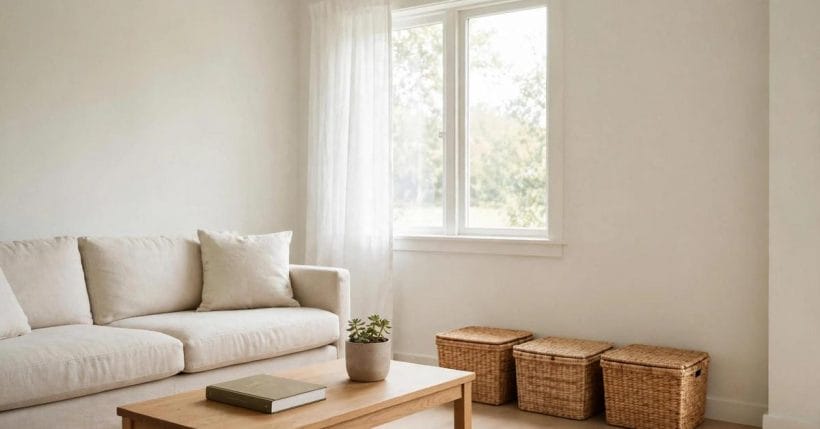
To pare down at home is not to empty a house or to chase a bare look for its own sake. It is the quieter work of keeping what you use, what you love and what genuinely helps the house run, and letting the rest go. A pared-down home is easier to clean, easier to move around in and easier to rest in, because every room carries less that competes for your attention. The surprising part is how little has to change before a room feels different. One clear surface, one drawer that closes properly and one shelf with breathing space can change the mood of a whole house.
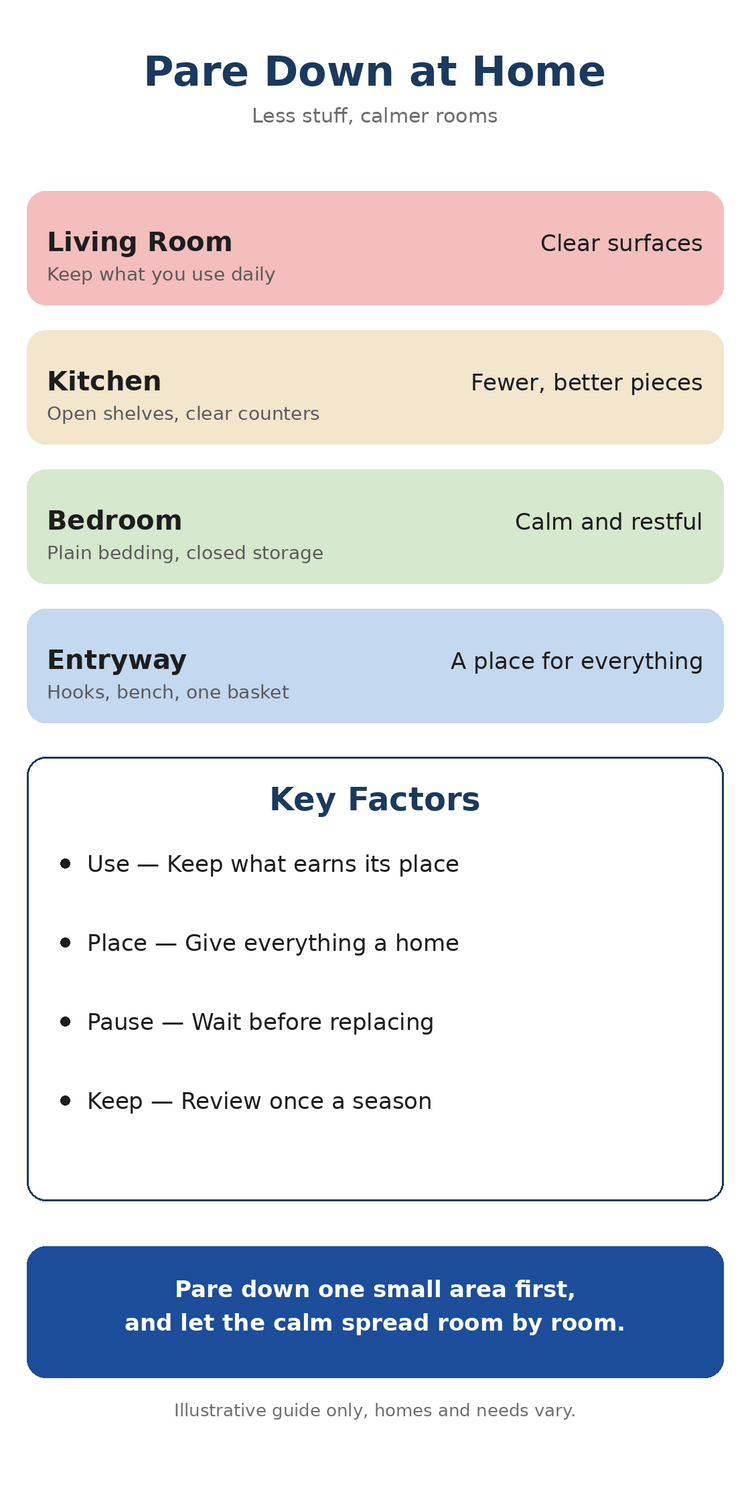
This guide works through the house room by room, with practical ways to pare down that suit ordinary homes rather than show homes. There is no single method to follow and no set of rules that fits every household. Instead, each section offers a way to look at a room, decide what earns its place there and give what remains a proper home. Work slowly, start small and keep only the changes that make daily life easier. A home that is pared down well still looks lived in. It simply looks lived in on purpose.
1. Start With One Small Area, Not the Whole House
The most common mistake when paring down is to begin with the largest, hardest room and run out of energy halfway through it. A better start is one small area that you can finish in a single sitting: a single drawer, one shelf, the top of a bedside table or the shelf by the front door. A small win shows you what the method feels like, and it gives you a finished corner to look at when the rest of the house still feels full. Choose somewhere you see every day, so the result rewards you often rather than hiding behind a closed door.
Take everything out of that small area first, clean the surface, and then put back only what belongs there and is actually used. Anything that belongs elsewhere goes to its proper room, anything broken or worn out leaves the house, and anything you are unsure about goes into a box kept out of the way for a while, so you can notice whether you miss it. If you do not reach for it, you have your answer, and if you do, it returns with a clear purpose. This small-area approach also protects you from the mid-project mess that makes so many clear-outs stall, because the rest of the house stays untouched while one corner becomes calm.
Notice how the finished area feels before you move on. A drawer that opens without catching, a shelf where you can see every item at a glance and a surface that takes a moment to wipe clean are small pleasures, and they are the real reward of paring down. They also set a standard for the next area. When every part of the house is judged by the same simple question, does this earn its place here, the work stays steady and the house slowly becomes easier to live in, one finished corner at a time.
2. Pare Down the Kitchen to What You Actually Cook With
Kitchens gather things faster than almost any other room, because almost everything that enters a kitchen looks useful. Gadgets arrive as gifts, containers multiply, and cupboards fill with items kept just in case. A pared-down kitchen starts by separating the tools you reach for most weeks from the ones you have not touched in a long while. Keep the everyday cooking tools close to where they are used, store the occasional items higher or further back, and let go of duplicates, broken tools and anything that duplicates a job another tool already does well.
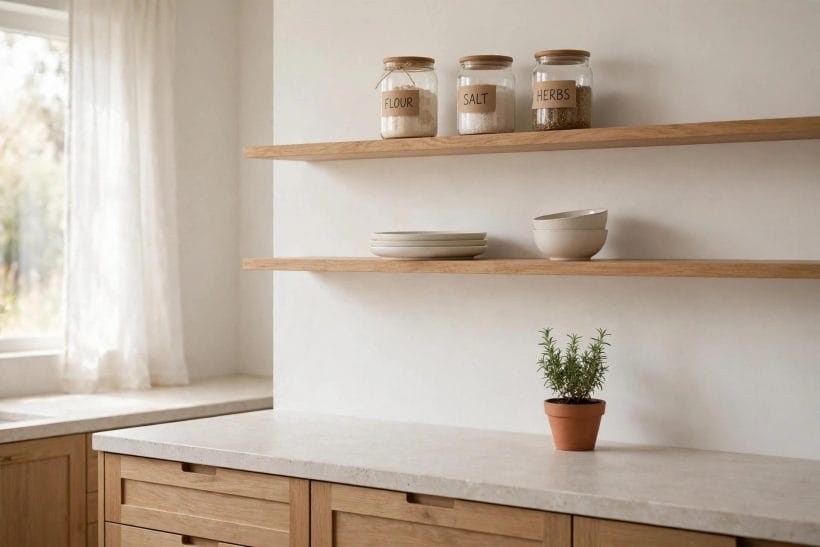
Open shelving, where a kitchen has it, is a good test of how far the paring down has gone. A shelf that holds a few plates, bowls and jars, with space between them, is easy to use and easy to clean, while a crowded shelf makes every meal feel like a search. The same thinking applies to counters. A clear counter with room to prepare food is worth more than a counter crowded with appliances that are rarely switched on. Appliances that live on the counter should be the ones used most often, and the rest can live in a cupboard until they are needed.
Food storage deserves the same honest look. Keep containers that stack, close properly and match their lids, and let the odd lids and stained boxes go. A smaller, matching set is easier to store and quicker to find than a large, mismatched collection. Pantries benefit from the same rule: keep what the household cooks with regularly, store it where it can be seen, and use older items before opening new ones. A kitchen pared down in this way does not feel empty. It feels ready, because everything in it has a job and a place.
3. Let the Living Room Breathe Again
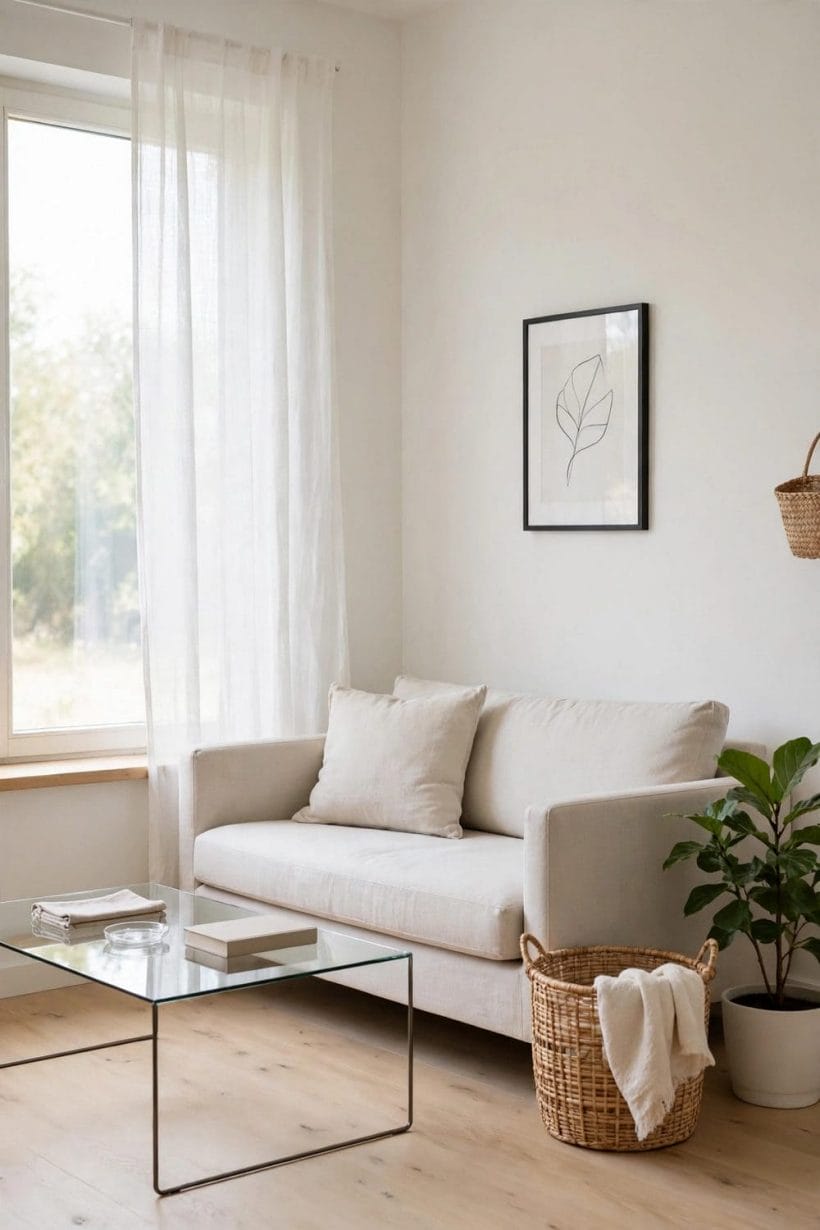
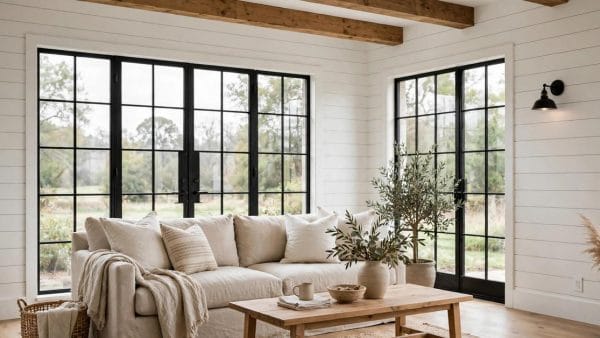
The living room is where a house relaxes, so it is also where clutter is most visible and most tiring. Magazines pile up, remote controls gather, blankets and toys drift across the seating, and surfaces slowly disappear under objects that arrived one at a time. Paring down a living room begins with the surfaces: the coffee table, the side tables and any open shelving. Clear each surface completely, then return only what the room needs for comfort and daily use, such as a book you are reading, a lamp and a plant. Everything else needs a closed home, a basket or a shelf elsewhere.
Seating deserves a similar review. A room works better with seating that suits the people who use it than with extra chairs kept for rare occasions. If a chair is mainly a place where clothes and bags land, it is not serving the room, and moving it elsewhere or letting it go can free a surprising amount of floor. The same applies to decorative objects. A few pieces that you genuinely enjoy looking at will do more for a room than a crowd of ornaments that blend into background noise. Choose the favourites, give them space, and let the rest find new homes.
Storage that closes is the living room’s best friend. Baskets with lids, drawers and closed cabinets hide the everyday machinery of a household, such as chargers, games and throws, while keeping them within reach. The goal is not to banish everything from sight, but to make tidying a quick reset rather than a long project. For more ideas on arranging a room that stays calm, see these small living room ideas, which show how seating, storage and light can work together in a compact space. When the living room is pared down, evenings feel easier, because the room itself invites you to sit down rather than asking to be sorted first.
4. Make the Bedroom a Restful Place to Sleep
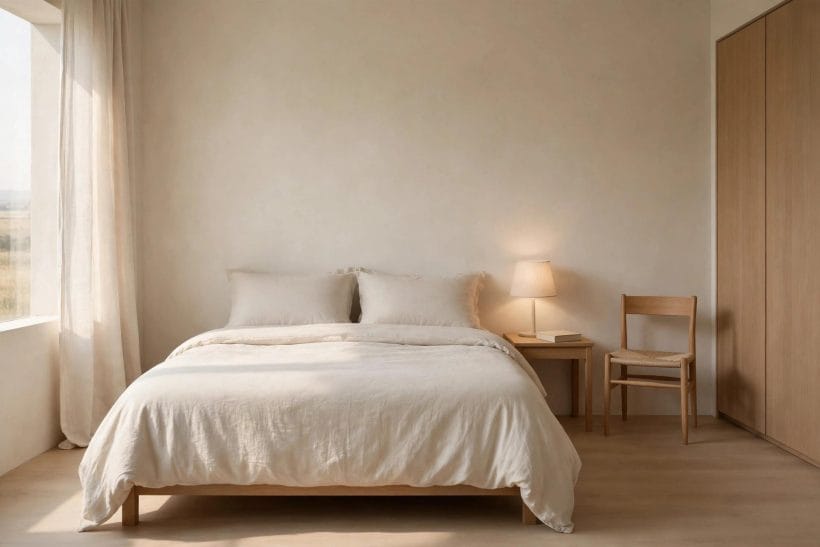
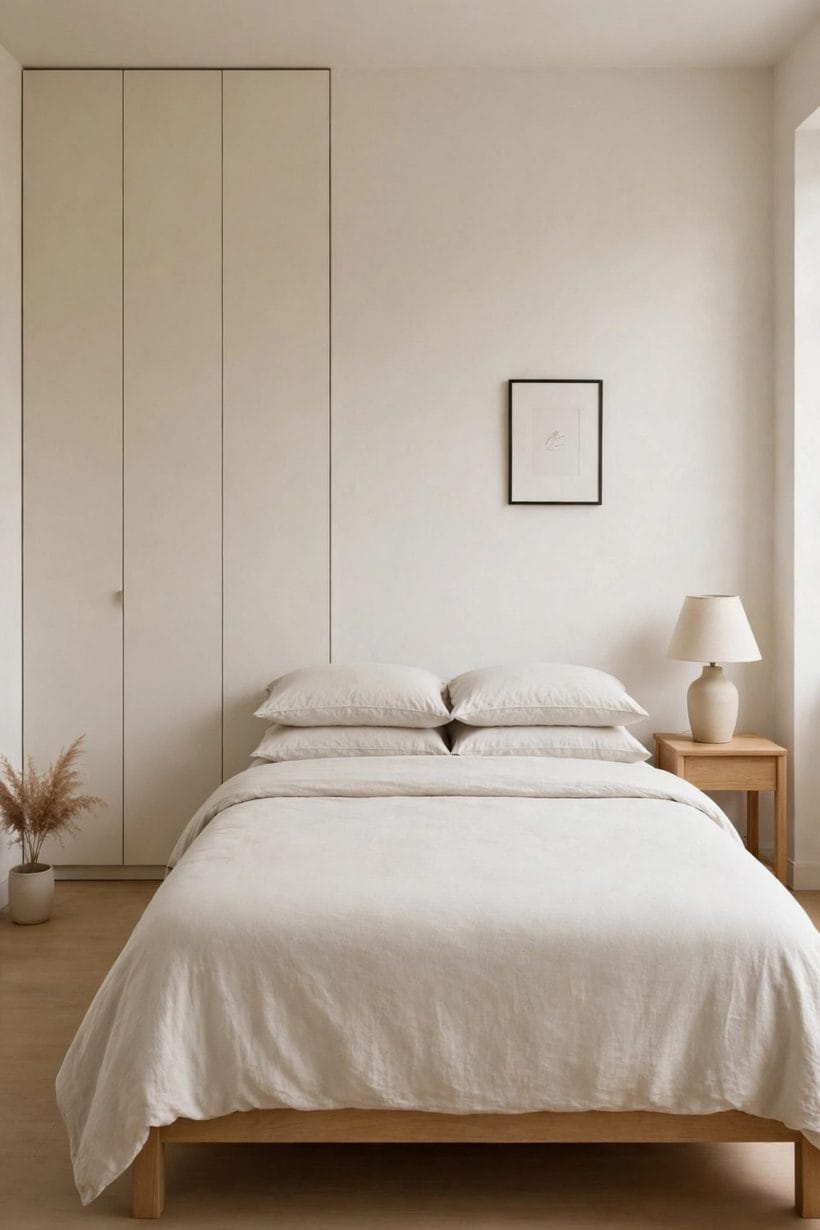
A bedroom should help you wind down, yet many bedrooms work against rest because they double as storage rooms, offices and laundry piles. Paring down a bedroom starts with the bed itself. Clear the bed of anything that is not bedding or sleep, and keep the bedside table to what you need at night: a lamp, a book and perhaps a glass of water. A clear bedside table makes the last moments of the day feel calmer, and a made bed in the morning sets a settled tone for the whole room.
Clothes are the next place to look. Clothes draped over chairs, piled on the bed or spilling from drawers make a bedroom feel restless even when the rest of the house is tidy. Give every item of clothing a home, whether that is a hanger, a drawer or a hook, and keep a single basket for laundry so that worn clothes have somewhere to go that is not the floor or a chair. If a chair in the bedroom mainly collects clothes, consider whether the chair or the habit needs to change, and give the room back its floor.
Bedroom storage works best when it closes. Closed wardrobes and drawers keep the visual noise down and help the room feel restful, even if the storage inside is full. If you are planning the room around rest, these tiny house bedroom ideas show how a small sleeping space can stay calm with plain bedding, closed storage and a single well-chosen lamp. A pared-down bedroom does not need to be plain or cold. It needs to be a room where the eye can rest, so that sleep comes more easily and mornings start without a search through piles.
5. Give the Entryway a Job and Nothing More
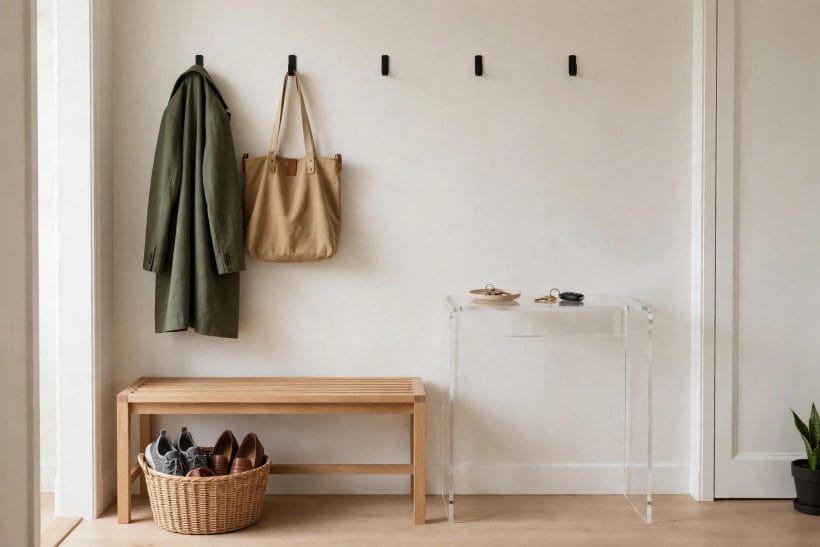
The entryway is the smallest room with the largest job, because it handles coats, bags, shoes, keys and post for everyone who comes and goes. When it has no clear system, it fills up fast and the clutter spills into the rooms beyond. Paring down an entryway means giving it a strict job: it holds what you need when you leave and what you carry when you arrive, and nothing else. Coats that are worn most often earn a hook, bags that are used daily earn a place, and everything else belongs deeper in the house.
A bench, a basket for shoes and a small dish for keys can carry the whole entryway if they are kept to their jobs. The bench is for sitting to put shoes on, not for storing parcels. The basket holds the shoes worn most often, not every pair in the house. The dish holds keys and the small items that leave with you each day. When each piece has one job, the entryway resets itself quickly, because there is an obvious place for everything that arrives at the door. Hooks help too, but only when they are not overloaded: a hook holding one coat is useful, while a hook buried under several coats is just another pile on a wall.
Seasonal items are the usual reason an entryway overflows. Heavy coats, boots and bags that belong to another season can live elsewhere until their season returns, leaving the entryway to serve the present. The same applies to post and paper, which should be dealt with near the door rather than allowed to stack on a console. A pared-down entryway makes leaving the house calmer and arriving home pleasanter, because the first and last thing you see is order rather than a pile waiting to be dealt with.
6. Pare Down the Wardrobe to Clothes You Actually Wear
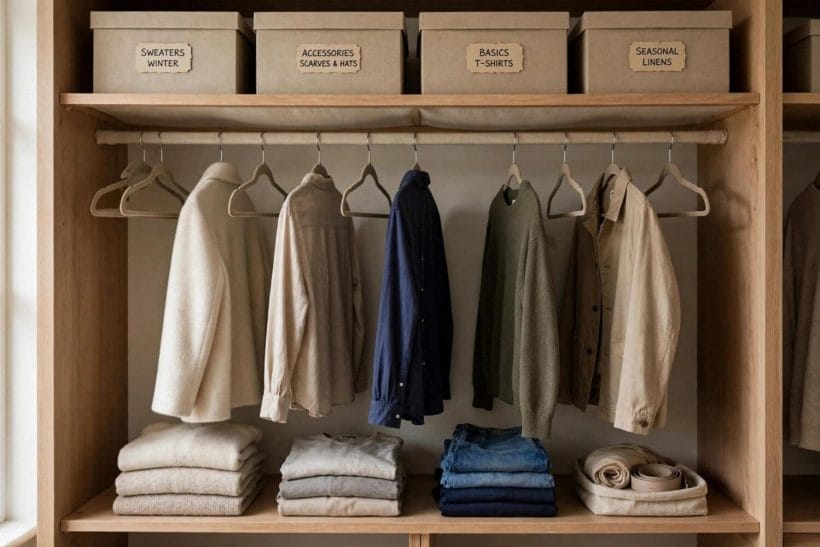
Wardrobes are where good intentions gather. Clothes kept for a different size, a different lifestyle or a day that never arrives take up the hangers and drawers that everyday clothes need. A pared-down wardrobe starts with a simple review: take out what you have not worn in a long while, what no longer fits comfortably and what is damaged beyond sensible repair. Keep the clothes that fit well, suit your daily life and make you feel like yourself when you wear them. The rest can be passed on, so that someone else can use what is only taking up space for you.
Once the wardrobe is smaller, it becomes easier to keep in order. Hangers with breathing space between them let you see what you own and choose without a struggle, while folded items in neat stacks are easier to find than piles that topple when one item is pulled out. Labelled boxes on a top shelf can hold seasonal or occasional items without letting them drift into daily space. This kind of order is worth planning properly, and these tiny house closet design ideas show how rails, shelves and doors can be arranged so that a compact wardrobe works hard without feeling cramped.
A smaller wardrobe also makes mornings simpler. When every item in it is something you would happily wear, getting dressed stops being a search and becomes a choice. Keep a small box for clothes that are on trial, so that an item you are unsure about can be tested in real life rather than argued over in front of the wardrobe. If it stays unworn, it leaves without guilt. A wardrobe pared down in this way does not limit what you can wear. It reveals what you actually enjoy wearing, and it gives those clothes the space they deserve.
7. Clear the Desk and Let Paper Find Its Place
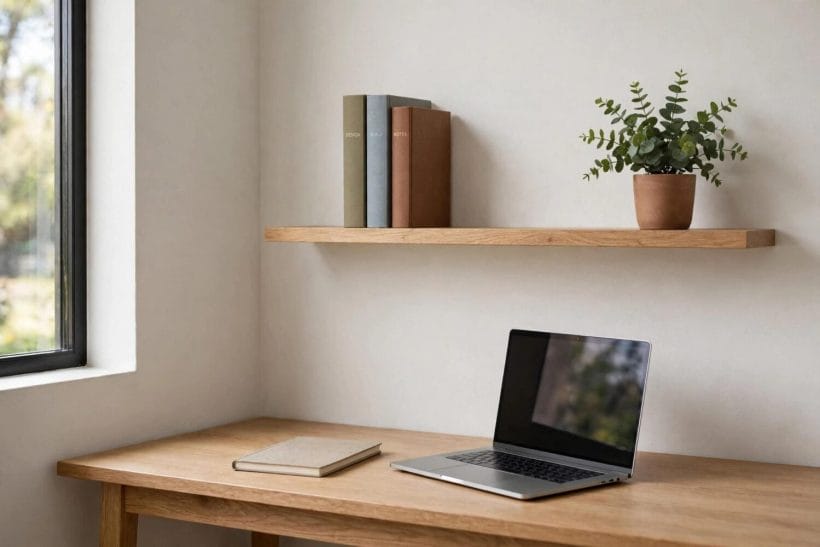
Home offices and desks attract paper, cables and half-finished tasks, and a cluttered desk makes work feel heavier before it even begins. Paring down a desk starts with clearing it completely, then returning only what the work needs: the computer or notebook, a pen, a notebook and perhaps a plant. Everything else should live in a drawer, on a shelf or in a file, so that the desk surface itself stays a place for working rather than a place for storing.
Paper is the main culprit on most desks. Sort it into what needs action, what needs filing and what can be recycled, and deal with each pile in turn rather than letting a single stack grow. A simple tray for incoming paper, a folder for current work and a file for reference can hold the whole system, provided the trays are emptied regularly. Digital clutter deserves the same attention: a tidy desktop, a few well-named folders and regular clearing of downloads make finding a file as easy as finding a pen used to be.
Cables, chargers and spare equipment also benefit from a limit. Keep the chargers that serve devices in daily use, store spares together in one labelled box, and let broken or obsolete cables go. A single shelf above a desk, holding a few books and a plant, can carry everything a working corner needs to feel pleasant without crowding it. When the desk is pared down, work starts faster and finishes cleaner, because the space itself stops adding to the task.
8. Use the Same Rule in Small Rooms and Tight Corners
Small rooms punish clutter more than large ones, because there is nowhere for excess to hide. A tiny bedroom, a narrow hallway or a compact corner can feel cramped with only a few extra items, yet the same rooms can feel generous when they are pared down. The rule does not change for a small room, but it matters more: every item must earn its place, and anything that does not serve the room should live elsewhere. A small room with clear floors and closed storage feels larger than a larger room full of piles.
In a small room, furniture should do more than one job where possible, but it should not try to do everything. A bed with storage beneath it, a bench that holds shoes and a table that folds away can each earn their floor space, while extra furniture kept just in case only steals it. Light helps too: a room with a clear window, a pale wall and a single lamp feels calmer than a room where light is blocked by stacks and tall piles. Keeping surfaces clear lets light move around the room, which is the cheapest way to make a small space feel open.
Living in a compact home makes these choices daily rather than occasional, and the habits that keep a small home calm are the same ones that keep any home calm. For practical examples of compact living done well, see how to live in a tiny apartment, where limited space forces clear decisions about what stays and what goes. Whether the room is a whole apartment or a single corner, paring down is what turns a tight space from a constraint into a comfort.
9. Pare Down the Bathroom for Calmer Mornings
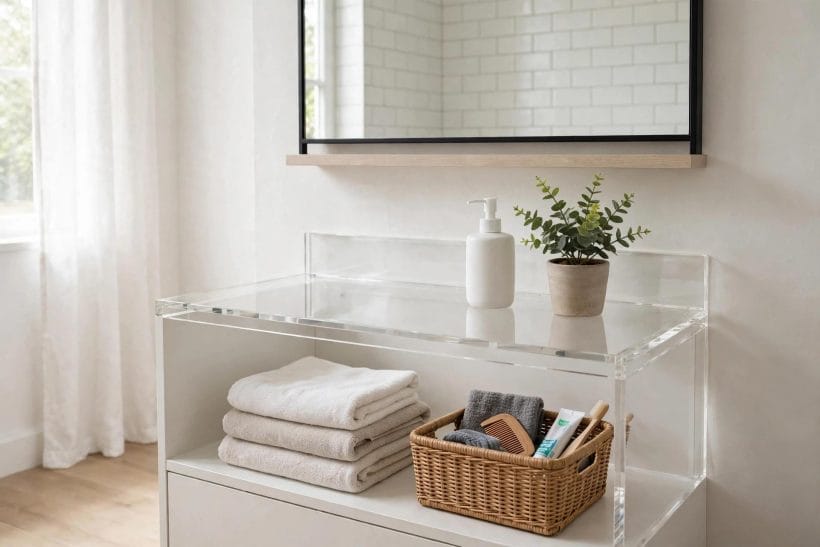
Bathrooms are small, busy rooms, and they collect half-used bottles, old towels and products bought for a single purpose. A pared-down bathroom starts with the vanity: clear it completely, then return only the items used every day, such as soap, a toothbrush and a small plant if you like one there. Everything else can live in a cabinet, a basket or a drawer, so that the surface you use each morning is clear and quick to wipe.
Towels deserve a limit as well. A household needs enough towels for daily use and laundry, but a large stack of worn or mismatched towels only fills shelves that could hold what is actually used. Keep the towels that are soft, absorbent and in good condition, fold them neatly, and let the rest go. The same applies to toiletries: keep the products that suit you and are used regularly, and let go of duplicates, dried-out items and products bought for a routine that never took hold. A basket holding only everyday essentials is easier to use than a shelf crowded with bottles you reach past each morning.
Cleaning becomes simpler in a pared-down bathroom, because there are fewer items to move and fewer surfaces hidden behind bottles. A clear vanity, folded towels and a single basket for essentials make the room feel fresh even before it is cleaned. Mornings improve too, because everything you need is visible and within reach, and nothing you do not need is in the way. A bathroom pared down in this way is not a spa or a showroom. It is simply a room that starts the day well.
10. Keep It Pared Down Without Starting Over
Paring down is only half the work. Keeping a home pared down is the habit that stops the clutter returning, and it is easier than the first clear-out because it works in small, regular moments rather than large projects. A useful habit is to review one small area whenever it starts to feel full, rather than waiting until the whole house feels overwhelming again. A drawer that is tidied when it first sticks, a shelf that is edited when it first crowds and an entryway that is reset when shoes first pile up all stay calm with little effort.
What comes into the house matters as much as what leaves it. Before bringing something home, ask whether it has a place, a purpose and a reason to stay. If it would need a new storage solution, a new shelf or a rearrangement to fit, it may be better left where it is. Gifts, bargains and free items deserve the same question, because they fill a house just as surely as purchases do. A home that is pared down does not stop welcoming new things. It simply welcomes them deliberately, so that each arrival is chosen rather than accumulated.
Hidden storage can help a pared-down home stay that way, provided it is planned rather than used as a place to hide overflow. Storage built into a floor plan, under a bed or behind a closed door keeps everyday items accessible without letting them crowd the rooms. For ideas on storage that works with a plan rather than against it, see these tiny house plans with hidden storage, and for arranging the rooms around that storage, these tiny house floor plans show how layout and storage can support each other. A further guide to apartment interior design ideas for tiny houses shows the same thinking applied to compact interiors, where every storage choice has to earn its place. When storage is part of the plan, paring down becomes maintenance rather than rescue.
Final Considerations
Paring down at home is not a race and it is not a test. Some rooms will become calm quickly, others will take longer, and some areas will need more than one pass before they feel right. That is normal, and it is not a failure of the method. The house you live in changes with seasons, family and work, so the work of keeping it pared down changes too. What matters is the direction: fewer things competing for attention, clearer surfaces, and rooms that serve the life lived in them.
Start with one small area, keep what earns its place, give everything a home, and review the house gently as it changes. If a room feels calmer, cleaner and easier to use, the paring down has worked, whether the room looks minimal or simply well lived in. A pared-down home is not an empty home. It is a home where what remains has been chosen, and where the space left behind is room to breathe.



0 Comments