
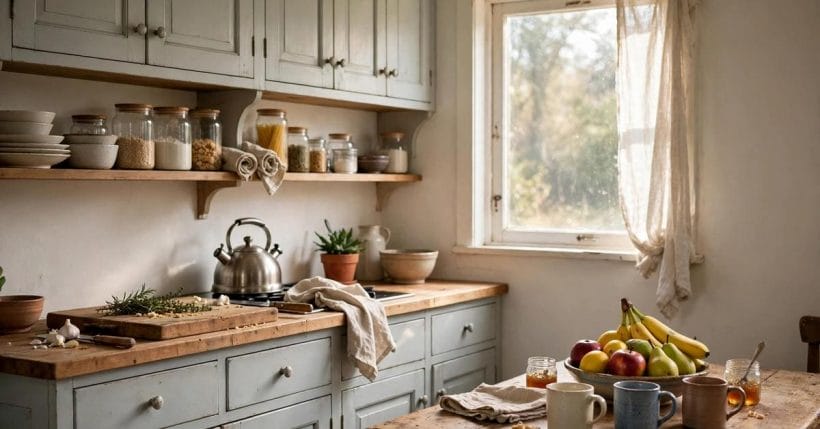
A beautiful kitchen does not have to look untouched. The kitchens people love most are usually the ones that show their working life: a table with room for breakfast and homework, shelves holding the plates that get used every day, a worktop marked by years of cooking, and a window that lets daylight fall across the sink. These rooms are not styled for a photograph and then left alone. They are cooked in, eaten in, talked in and tidied up again, and that daily use is exactly what makes them beautiful.
This guide is about those everyday rooms. It looks at what makes an ordinary kitchen feel welcoming, how its parts work together, and how to keep it pleasant without chasing a flawless finish. Nothing here depends on a large room, a new fitted suite or a particular style. A small kitchen with painted cabinets and a worn wooden table can be just as beautiful as a large one, because beauty in a normal kitchen comes from fit, light, order and use, not from newness.
It helps to start by letting go of the idea that a kitchen should look finished. A lived-in kitchen is never quite finished, and that is a strength rather than a fault. The kettle has a place, the mugs have their shelf, the fruit bowl fills and empties, and the room changes through the day as meals are made and cleared away. The sections below walk through the parts of such a room one by one, from the table to the sink corner, and end with what is worth keeping, what is worth changing, and what is best left alone.
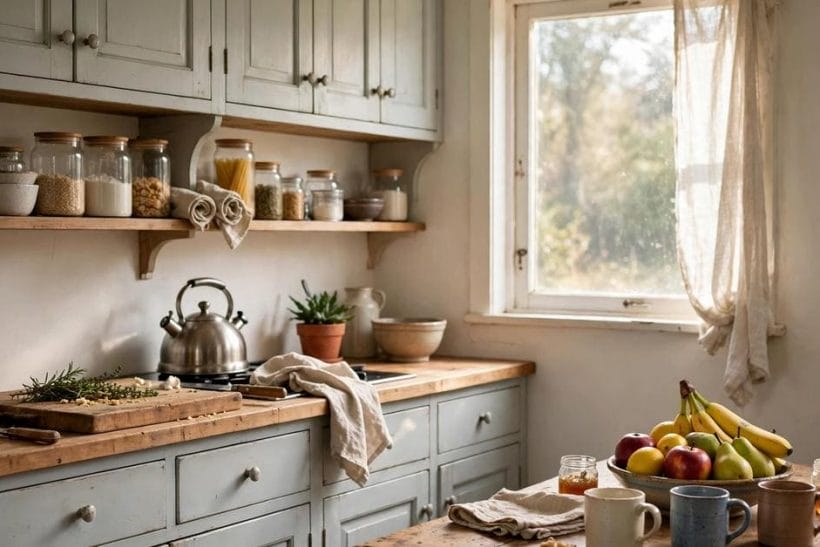
1. What Makes a Kitchen Beautiful When It Is Normal
A normal kitchen is beautiful when it fits the household that uses it. The room does not need to impress a visitor; it needs to welcome the people who cook there every day. That fit shows in small things: a clear stretch of worktop where chopping actually happens, a drawer that opens without a struggle, a chair that can be pulled out without moving something else first. When those small things work, the room feels calm, even when it is busy.
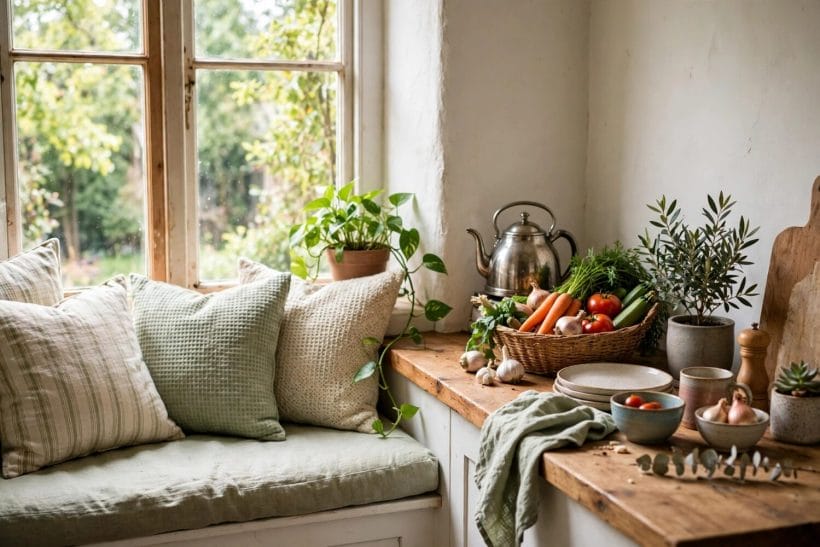
Light matters more than decoration. A kitchen with daylight at the sink and a warm light in the evening feels good to stand in, whatever its cabinets look like. Pale walls help daylight travel, and a window that opens brings in air as well as light. Where daylight is limited, a few well-placed lights over the worktop and the table do more for the room than any single decorative object. The goal is a room that is pleasant to work in at breakfast and still pleasant at supper.
Order matters too, but order in a normal kitchen is not emptiness. It is everything having a place it returns to. Plates live where hands reach for them, pans live near the stove, and the everyday tools live where they are used rather than in a drawer across the room. When things return to their places without thought, the room tidies itself in passing, and the worktop stays clear enough to cook on without a clearing-up operation first.
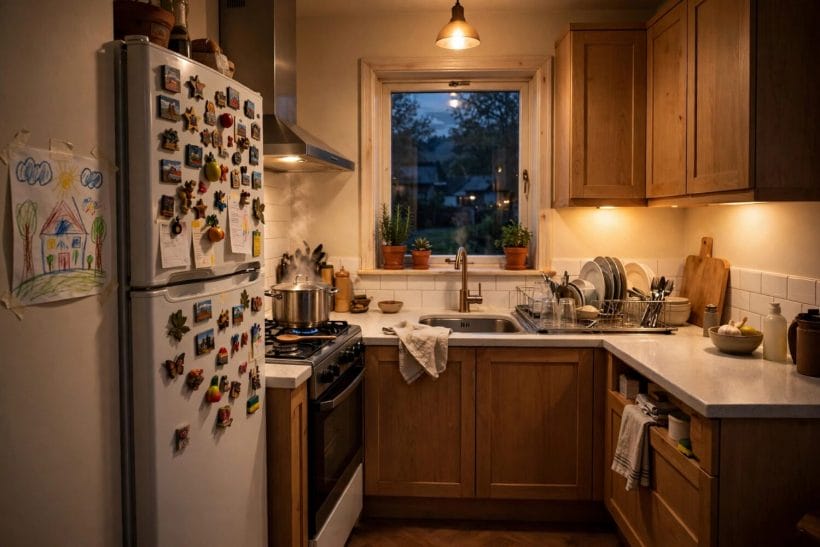
Finally, a normal kitchen carries signs of the people who live with it. A plant on the windowsill, a picture held up by a magnet, a favourite mug that is always the first one chosen: these are not clutter. They are the room’s memory, and they are what separates a kitchen that is merely tidy from one that feels loved. A beautiful normal kitchen makes room for those signs instead of designing them away.
2. The Table at the Centre of the Room
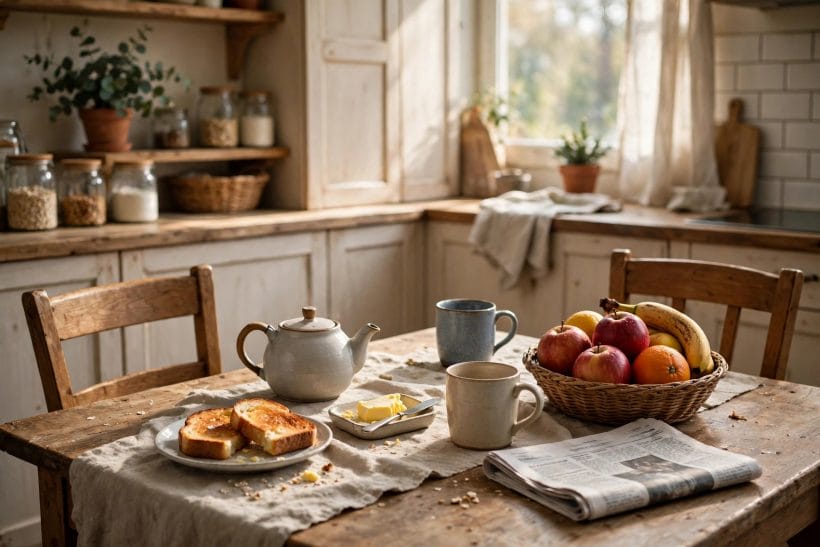
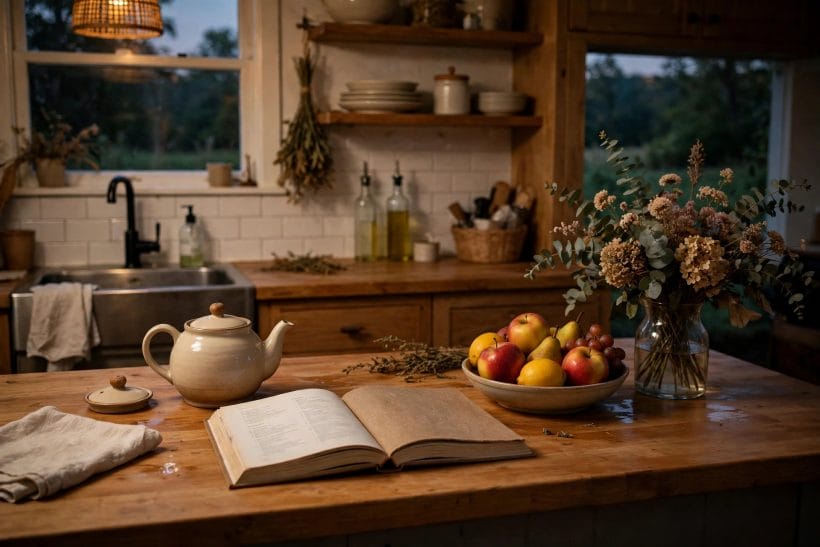
Where a kitchen has a table, the table is often the real centre of the home. It is where breakfast happens, where bags are unpacked, where homework spreads out, and where conversations start while supper cooks. A table that earns that role does not need to be large or matched to anything else in the room. It needs to be sturdy, at a comfortable height, and clear enough that sitting down does not require moving a project first.
The surface of a kitchen table tells the household’s story. A wooden top that has carried hot plates, homework, board games and flower vases will show marks, and those marks are part of its character rather than damage to be hidden. A cloth or a mat protects the surface where it needs protecting, while leaving most of the wood free for daily use. The balance is practical: protect the table enough that it lasts, but let it be used without anxiety.
Chairs matter as much as the table itself. A kitchen chair should be comfortable enough for a long conversation and sturdy enough for daily use, and it helps when chairs can be pulled out and pushed in without scraping or wobbling. Keeping one chair free, rather than using every seat as a resting place for bags and laundry, keeps the table inviting. An empty chair is an open invitation to sit down.
The table also sets the room’s rhythm. Meals eaten at the table, even quick ones, give the day a shape that eating elsewhere does not. A fruit bowl on the table, a teapot within reach, and a clear space for plates are small arrangements that make sitting down easy. For more on how kitchen rooms are arranged around daily life, see kitchen ideas for the wider picture of kitchen layouts and uses.
3. Cabinets, Shelves and Everyday Storage
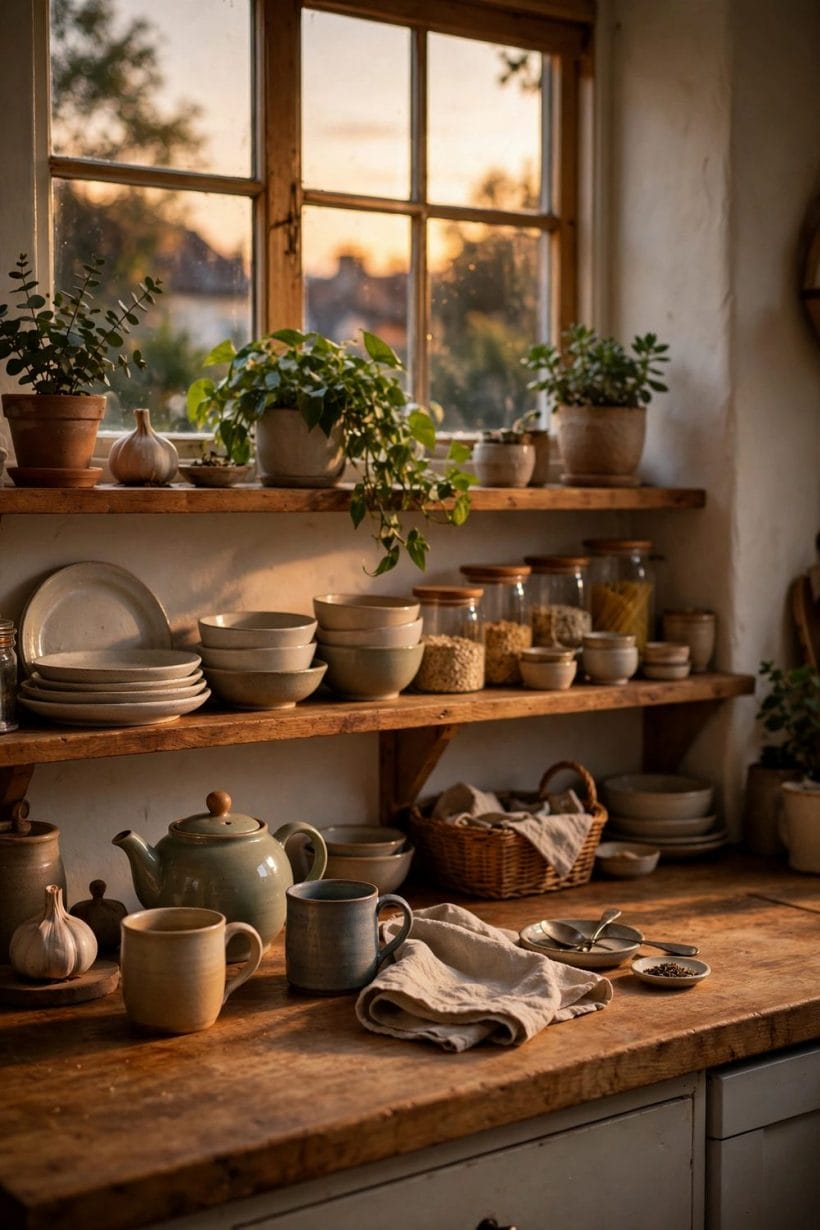
Storage in a normal kitchen is judged by reach, not by capacity. The plates used every day should live where they can be taken down and put back without a step or a stretch. The same goes for glasses, mugs and bowls. When everyday things live at hand height, the kitchen works smoothly, and the less-used pieces can live higher up or further back without causing daily frustration.
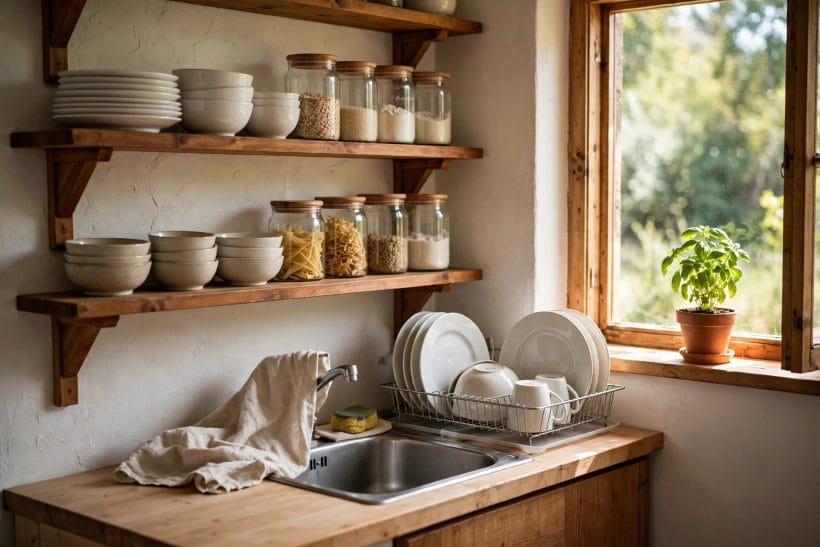
Open shelves suit many normal kitchens because they show what is there. A shelf of plain plates, bowls and jars is easy to use and easy to tidy, since anything out of place is visible at a glance. Open shelves also suit a room that is short on wall cabinets, because they keep the wall feeling light. They do ask for a little regular attention, since displayed things gather dust, but a shelf that holds only everyday pieces is wiped in passing as part of putting things away.
Closed cabinets have their own place, especially for food, cleaning things and the pieces that are used less often. A cabinet door hides the variety of packets and containers inside, which keeps the room looking calm even when the contents are mixed. The best arrangement in most kitchens is a mix: open shelves for the everyday dishes, closed storage for food and supplies, and a drawer near the stove for the tools that cooking actually needs.
Whatever the mix, storage works best when it follows use rather than symmetry. The mugs live near the kettle, the pans near the stove, the chopping boards near the worktop where chopping happens. For ideas about keeping a compact kitchen in good order, see tiny kitchen storage hacks, which covers the same reach-first thinking in small rooms.
4. Worktops That Show Their Working Life
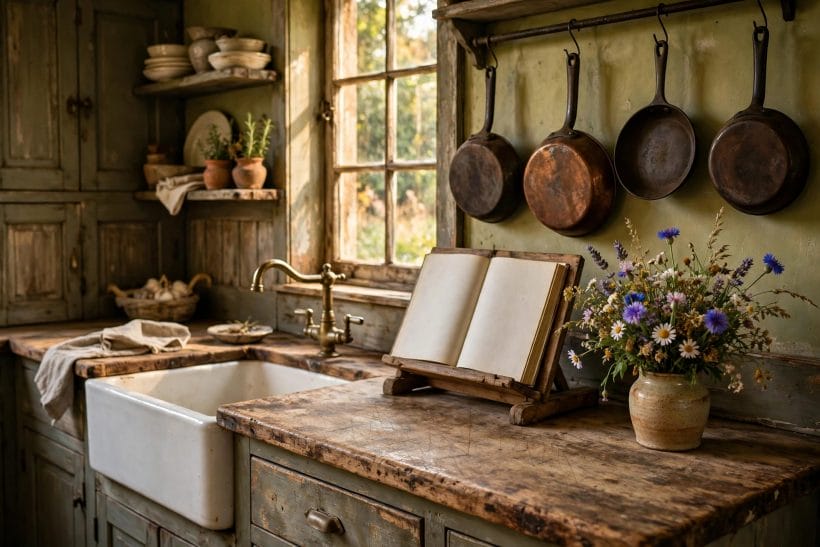
A worktop in a normal kitchen is a working surface before it is a display surface. It is where vegetables are chopped, pastry is rolled, letters are opened and bags are unpacked. A worktop that can take that life without complaint is worth more than one that must be protected at all times. Wood, in particular, ages gracefully in this role: it gains marks and a deeper colour, and it can be sanded and oiled back to a fresh surface when the household wants a change.
Keeping a worktop usable is mostly about keeping part of it clear. A clear stretch beside the stove and a clear stretch beside the sink cover most daily cooking, and everything else can live elsewhere. When the whole worktop is covered, cooking becomes a shuffling exercise, and the room feels crowded even when it is tidy. Clearing the worktop at the end of cooking, rather than letting things accumulate through the day, keeps the next meal easy to start.
The things that stay on a worktop should earn their place by daily use. A kettle, a board, a jar of utensils and a fruit bowl are the usual residents, because they are reached for constantly. Anything that is used rarely is better stored away, since a worktop crowded with rarely used pieces leaves no room for the work itself. This is not minimalism for its own sake; it is keeping the working surface free for work.
Cleaning a worktop is part of the same habit. A wipe after cooking, a rinse of the cloth, and a dry of the surface take very little time and keep the room pleasant for the next person who walks in. Different surfaces need different care, and the maker’s guidance for the particular worktop should be followed, but the rhythm is the same for all of them: wipe, rinse, dry, and the room is ready again.
5. Light, Windows and the Sink Corner
The sink corner is where a kitchen’s light is most appreciated. Washing up in daylight, with a view through a window, turns a chore into a calmer moment, and a window that opens brings fresh air into the room while cooking steam clears. Where the sink sits under a window, the windowsill often becomes a small garden of its own, holding herbs and plants that enjoy the light and the humidity.
Evening light needs its own thought. A single bright light in the middle of the ceiling can make a kitchen feel harsh, while lights placed over the worktop, the sink and the table give the room a warmer, more useful glow. The aim is light where work happens and light where people sit, rather than light everywhere at once. A kitchen lit this way feels welcoming after dark, when much of its social life happens.
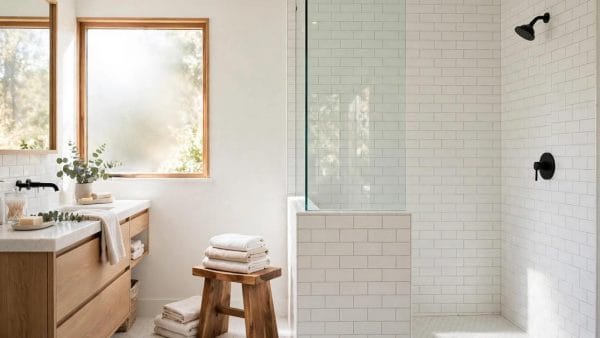
Colour in a normal kitchen often follows the light. Pale walls and cabinets bounce daylight around a small room, while wood adds warmth that keeps pale rooms from feeling cold. A tiled splashback behind the sink catches light and is easy to wipe, which suits the hardest-working corner of the room. These choices are practical before they are decorative: they make the room brighter, warmer and easier to keep clean.
The sink itself deserves the same everyday attention as the worktop. A sink that is rinsed after washing up and wiped dry stays pleasant, and a draining rack that is emptied and rinsed keeps dishes from picking up a film. For the wider family of kitchen layouts, including how sink corners sit within the whole room, see small kitchen ideas for compact arrangements that keep the sink corner working well.
6. Colour Without a Showroom Finish
Colour in a normal kitchen usually arrives gradually rather than all at once. A painted cabinet here, a set of bowls in a favourite colour there, a curtain or a blind chosen for the window, and the room builds its palette over time. This slow accumulation suits a lived-in room, because each addition has been chosen for use and then kept because it works. The result is a palette with variety but also with coherence, since everything in it has earned its place.
Pale colours are a common choice, and for good reason: they keep a small or dim room feeling open, and they sit quietly behind the busier colours of food, plants and crockery. A pale kitchen is not a blank kitchen, though. Wood brings warmth, plants bring green, and the everyday objects on the shelves bring their own colours. The room’s colour comes from life as much as from paint.
Stronger colours have their place too, often as accents rather than as whole-room treatments. A painted dresser, a bright kettle, a set of coloured bowls or a tiled splashback can give a pale room a focus without overwhelming it. Accents are easy to change when tastes change, which suits a normal kitchen better than a whole-room commitment that is hard to undo. A room that can change its accents can stay fresh without being redone.
The test of a kitchen’s colour is how it looks on an ordinary day, not how it looks when the room is empty. A colour that looks calm with dishes in the rack, food on the worktop and people moving through the room is the right colour for that household. Colours that only work when the room is bare are colours for a photograph, not for a kitchen.
7. Cooking in a Kitchen That Is Already Lived In
Cooking in a normal kitchen is woven into the rest of the room’s life. The stove sits near the worktop, the pans hang or stack within reach, and the spices and oils live where the cook’s hand finds them without searching. This arrangement is not designed once and frozen; it shifts as the household’s cooking changes, with the most-used things drifting toward the stove and the rarely used things drifting away.
A lived-in kitchen also tolerates the mess of cooking without drama. Steam, splashes and crumbs are part of making a meal, and a room that can be wiped down after cooking is a room that invites cooking. Keeping a cloth at hand, a board ready, and a clear space for hot pans makes the cooking itself calmer, because the cook is not improvising a workspace in the middle of a recipe.
The tools of a normal kitchen are the ones that get used. A few good pans, a sharp knife, a board, a wooden spoon and a set of bowls cover most daily cooking, and each of them earns its storage space by constant use. Tools that are rarely touched, however attractive, are better stored out of the way or passed on, since they take the place of something that would be used. A kitchen equipped for its actual cooking is easier to work in than one equipped for an imagined repertoire.
After cooking, the room resets. Pans are washed or left to soak where their material allows, surfaces are wiped, and the table is cleared for whatever comes next. This reset is part of cooking, not an interruption to it, and a household that treats it that way keeps its kitchen ready for the next meal. For the cooking heart of the home in compact houses, see tiny house kitchens, where the same cooking habits are fitted into smaller rooms.
8. Small Kitchens, Ordinary Kitchens, Honest Rooms
Small kitchens are normal kitchens too, and they are often the most loved rooms in a home. A small kitchen asks for honest choices: fewer things, each with a clear place, and a layout that puts the sink, the stove and the worktop within easy reach of each other. When those choices are made well, a small kitchen feels efficient rather than cramped, because everything is where it is needed.
The same honesty helps larger kitchens. A large room with too many gadgets, too many chairs and too many surfaces can feel less welcoming than a small room that is well arranged. Size does not make a kitchen beautiful; fit does. A room that matches its household’s cooking, eating and gathering will feel right at any size, while a room that fights its household will feel wrong however large it is.
Ordinary kitchens also have the advantage of being easy to change. A shelf can be added, a table can be moved, a blind can be replaced, and the room improves without a full refit. These small changes, made when a need appears rather than on a schedule, keep the room evolving with the household. A kitchen that changes gradually stays current in the way that matters: it stays suited to the people who use it.
It is worth saying plainly that a normal kitchen need not apologise for being normal. The rooms that appear in glossy pictures are often styled, emptied and lit for the camera, and they are not a fair standard for a room that is cooked in every day. A kitchen that feeds a household, hosts its conversations and holds its daily life is already doing the job a kitchen exists to do. For more on making small cooking spaces work hard, see tiny kitchen ideas.
9. Keeping a Normal Kitchen Beautiful Over Time
A normal kitchen stays beautiful through habits rather than through projects. The daily habits are small: wipe the worktop after cooking, rinse the sink, put dishes away when they are dry, and return things to their places. None of these takes long on its own, and together they keep the room ready for use at any hour. A kitchen maintained this way rarely needs a major clearing effort, because it never drifts far from order.
Weekly habits cover the things that daily wiping misses. Shelves get a wipe, the inside of the fridge gets a check, the floor gets a proper clean, and anything that has drifted out of place finds its home again. These habits are easier when they are tied to a regular moment, such as the end of the week’s shopping or a quiet hour at the weekend, rather than left to whenever someone notices a problem.
Seasonal attention keeps the room’s fabric in good repair. Hinges are tightened, a worn board is oiled or replaced, a chipped shelf is touched up, and a plant that has outgrown its pot is moved on. These small repairs matter because they stop small wear from becoming a larger job, and they keep the room feeling cared for. A kitchen that is repaired as it wears stays beautiful far longer than one that waits for a refit.
Over time, a kitchen also accumulates things that no longer earn their place. A regular, gentle clear-out, keeping what is used and loved and passing on what is not, keeps the room from slowly filling up. This is not a purge; it is the same judgement the room has always used, applied to the things that have quietly stopped being useful. For the wooden heart of many normal kitchens, see wood kitchen cabinets, which covers warm grain, layouts and finishes that age alongside a household.
10. What to Keep, What to Change, What to Leave Alone
When a normal kitchen starts to feel tired, the first step is to notice what still works. The table that has hosted years of meals, the shelf that holds the everyday plates, the window that lights the sink: these are the room’s strengths, and they should be kept. Changing a kitchen wholesale when only part of it is tired wastes the parts that were working well, and the room often loses character in the process.
What is worth changing is usually specific. A worktop that no longer wipes clean, a tap that drips, a light that leaves the worktop in shadow, a drawer that sticks: each of these is a clear, fixable problem, and fixing it improves daily life immediately. Small, specific changes like these give a better return than a vague desire for a new room, because they answer a real frustration rather than an imagined shortcoming.
What is best left alone is often the room’s character. The worn table, the mismatched mugs, the plant that has lived on the windowsill for years, the picture held by a magnet: these are not problems to solve. They are the evidence of a household’s life, and removing them in pursuit of a cleaner look usually makes the room feel emptier rather than better. A kitchen should be improved, not erased.
A useful test before any change is to ask whether daily life will be easier afterwards. If the answer is yes, the change is worth making. If the answer is that the room will only look different in a photograph, it is worth pausing. The best normal kitchens are changed for the people who cook in them, not for the camera. For the surfaces that frame the sink corner, see quartz backsplash ideas for layouts, colours and practical details around the splashback.
Final Considerations
A beautiful normal kitchen is not a compromise and it is not a waiting room for a better kitchen. It is a room that fits its household, welcomes daylight, keeps its everyday things within reach, and carries the marks of a life lived in it. The table, the shelves, the worktop, the sink corner and the small personal touches all work together, and none of them needs to be new or flawless to play its part.
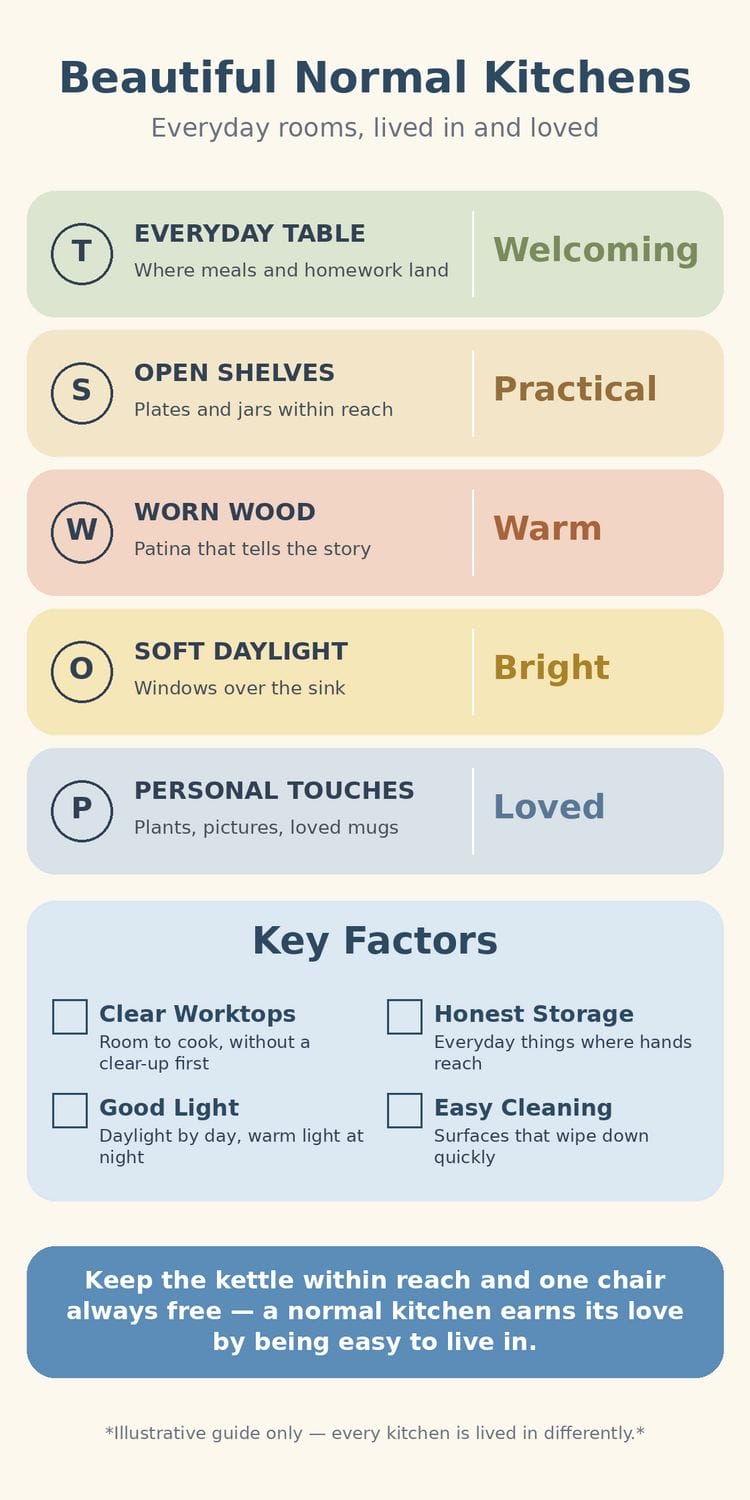
The way to love such a kitchen is to use it well and keep it in good repair: clear worktops, honest storage, good light, easy cleaning, and a regular rhythm of wiping, tidying and small repairs. A room kept this way stays beautiful because it stays useful, and it stays useful because it is shaped by the people who cook, eat and gather in it every day. That is the whole secret of the normal kitchen, and it is enough.


0 Comments