

They look like twins in the showroom and strangers in your bathroom. Polished nickel and chrome part company the moment daylight hits them — one warm and mellow, one icy and mirror-bright.
This guide compares polished nickel vs chrome properly: tone, shine, water spots, cleaning, durability, what each does to a room’s palette, and the checks to run before you commit a whole bathroom to either.
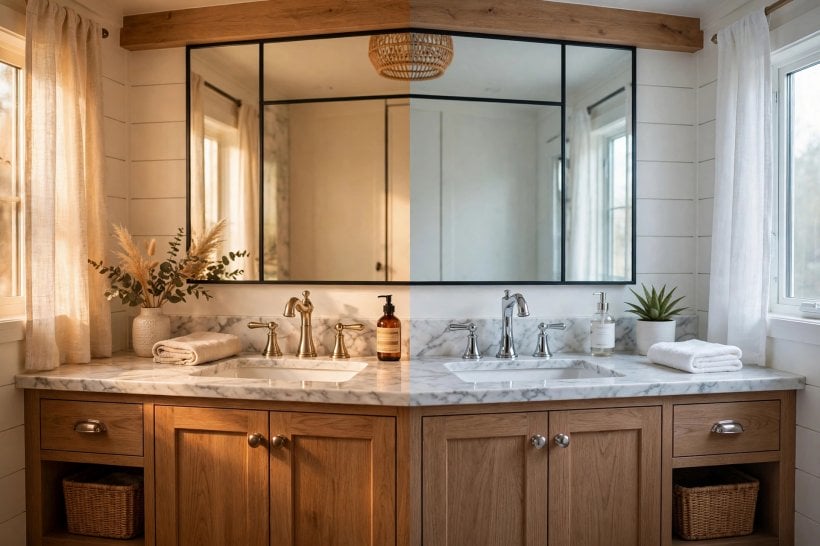
1. Polished Nickel vs Chrome at a Glance
Both finishes start as plating over a base metal — usually brass or zinc — but the top layer differs, and that layer is the whole story. Chrome plate is a very thin, very hard layer of chromium with a blue-white, mirror-like reflectivity. Polished nickel is a thicker layer of nickel, polished to a shine, with a warmer, slightly golden-grey tone and a softer depth of reflection. Neither is “bare metal” jewellery; both are engineered coatings, and their behaviour — spotting, scratching, ageing — follows from how each coating is built.
| Tone? | Chrome is cool and blue-white. Polished nickel is warm, with a champagne-grey depth that reads almost antique in soft light. |
| Shine? | Chrome is the brighter mirror. Polished nickel reflects with a glow rather than a glare — objects in it look softer, slightly blurred at the edges. |
| Water spots and fingerprints? | Chrome shows every spot and print crisply. Nickel’s warmer, deeper surface hides them noticeably better between cleans. |
| Care? | Both want soft cloths and mild cleaners. Nickel asks for a little more respect — no abrasives, and unlacquered versions develop a patina you either love or polish back. |
| Cost direction? | Polished nickel typically costs more than chrome on the same fixture, because the finish takes more work; chrome is the default finish on most ranges, which keeps it the easier, cheaper buy. |
| Availability? | Chrome is everywhere, at every price. Polished nickel is a deliberate choice, commoner in mid-range and premium lines than in budget ones. |
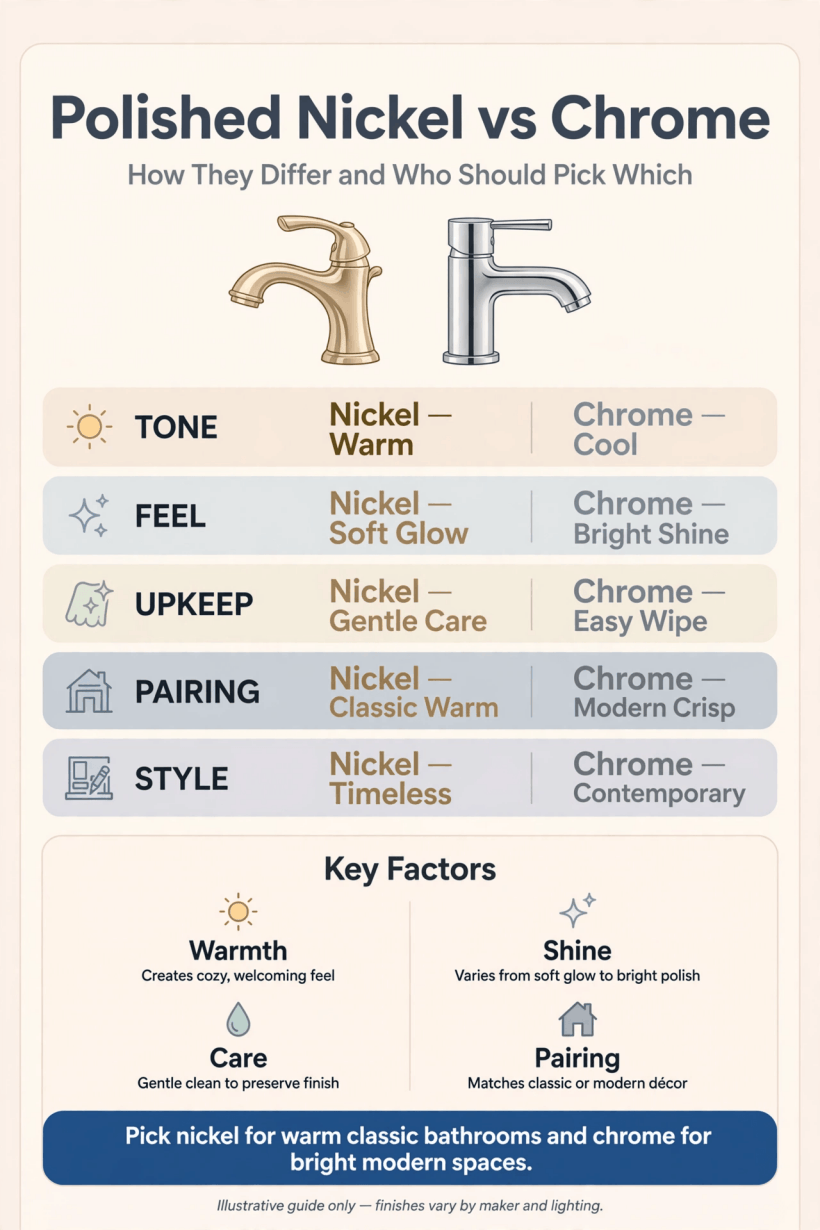
At a glance: chrome is the cool mirror, nickel the warm glow — tone first, then spotting, care and cost in that order.
2. Tone: The Warm–Cool Divide
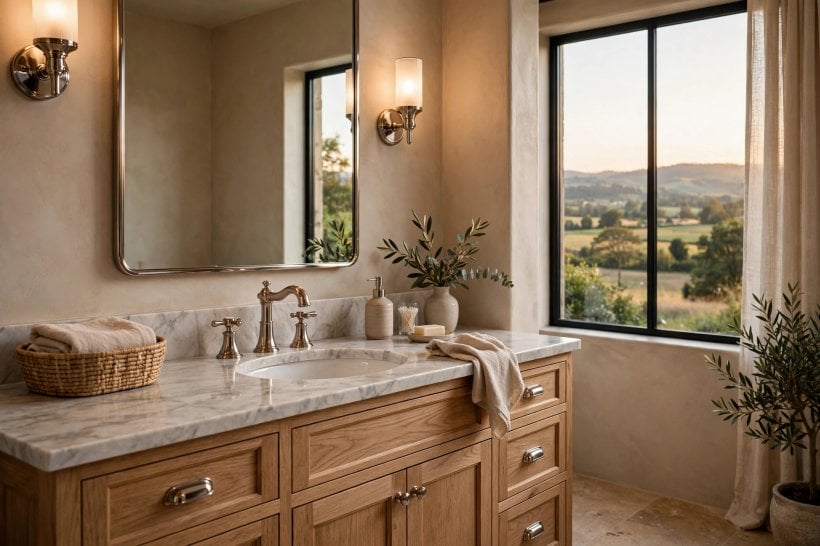
Hold the two under the same light and the difference is unmistakable. Chrome throws back a crisp, slightly blue reflection — the colour of still water under a clear sky. Polished nickel answers with warmth: a soft, buttery grey that flatters skin tones and sits comfortably beside warm whites, marble with gold veining, timber and brass-adjacent palettes. This is why nickel is the traditional partner for classic and transitional bathrooms, while chrome anchors modern and minimalist ones — the palettes throughout our bathroom interior design ideas lean on exactly this warm–cool decision, whether the fixtures are the headline or not.
Light changes the verdict, so judge in your own conditions. Under warm evening bulbs the gap narrows; under cool daylight or white LEDs it widens, and chrome can turn almost steely while nickel stays kind. If your bathroom has a window, that daylight will referee the finishes for most of the day — test both finishes against a sample of your tile at the window, not under the showroom’s spots.
3. Shine and Reflection: Mirror vs Glow
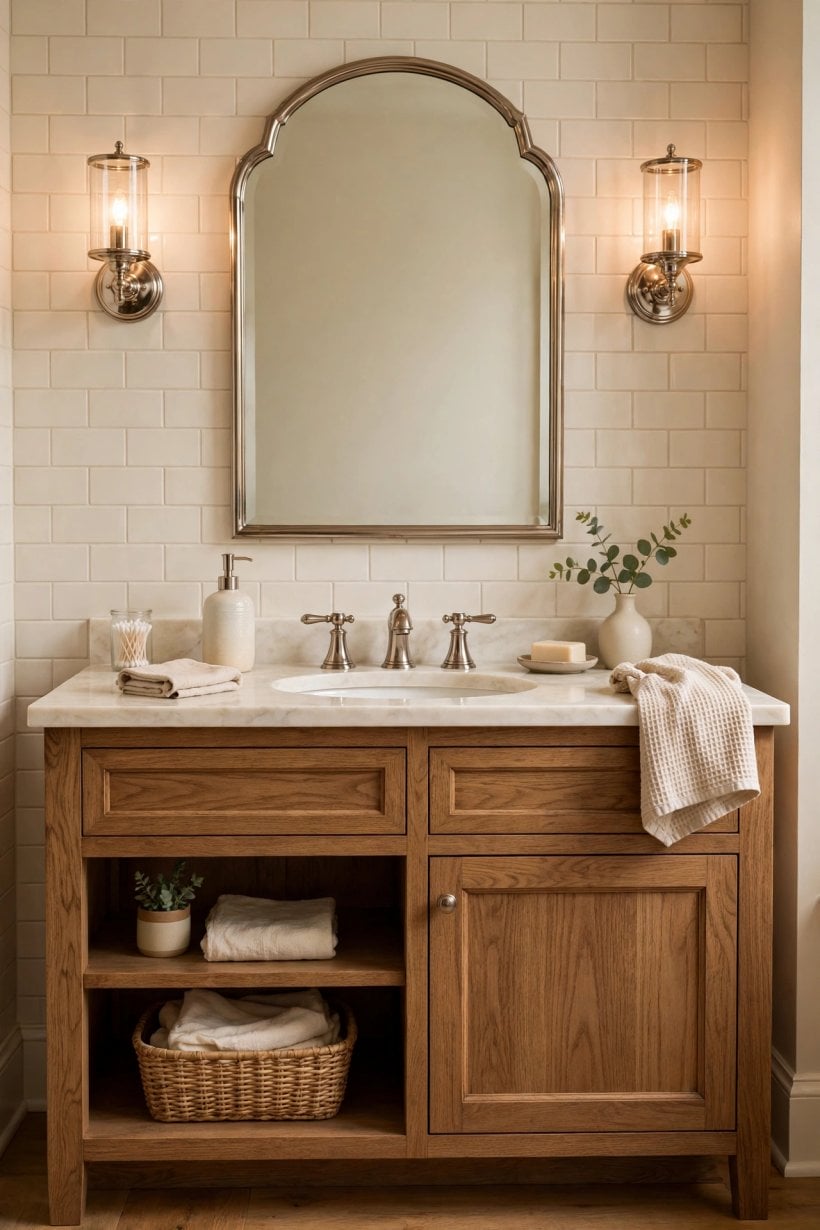
Chrome is the better mirror. Its reflection is sharp enough to shave by, which is part of its appeal in a contemporary scheme: fixtures read as bright punctuation marks against matte tile and stone. Polished nickel reflects like water at dusk — recognisable shapes, softened edges, no hard glare. Designers use that softness deliberately in rooms meant to feel calm and layered, and use chrome’s snap where the scheme is graphic and hard-edged.
There is a practical shadow to chrome’s perfection: a flawless mirror shows every flaw around it. Water marks, soap film and the faintest scratch announce themselves on chrome at conversational distance. Nickel’s glow is more forgiving of the room and of itself, which is one reason busy family bathrooms — the kind planned in our tiny house bathroom layouts — so often end up nickel or a satin finish rather than full-polish chrome.
Small bathrooms tilt the balance further. In a compact room the fixtures sit close to the mirror, the light and the user, so reflections — and imperfections — are seen at half the distance of a large bathroom. A hand-polished glow that softens the room, or a mirror finish that doubles the light in a windowless box: both are rational choices, and both are made more confidently once you picture the fixture at arm’s length, splashed, at seven in the morning, rather than gleaming on a display plinth at noon.
4. Water Spots, Fingerprints and Hard Water
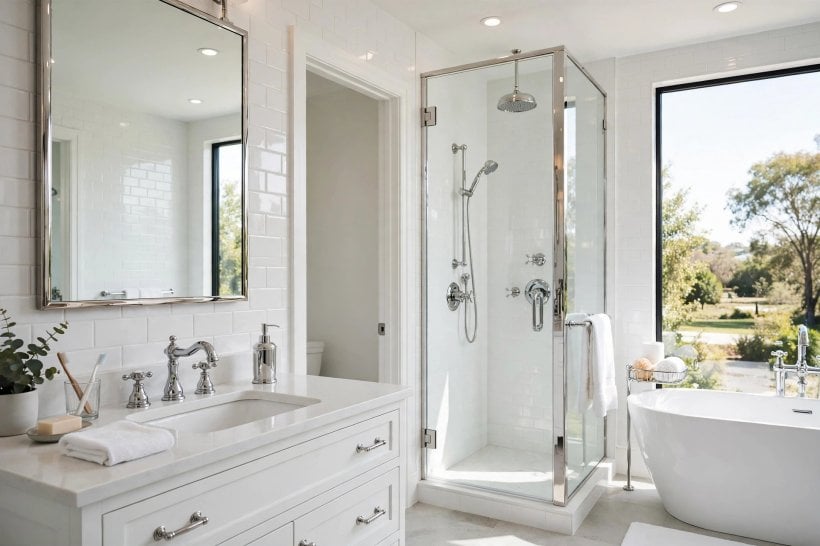
If your water is hard, this section may decide the whole comparison. Mineral spots dry white and chalky, and on chrome’s dark, crisp reflection they stand out like frost on a window. On polished nickel the same spots sit closer to the finish’s own tone and texture, so the fixture looks presentable for longer between wipes. Neither finish is immune — scale builds on both and must be dissolved gently, never scraped — but the interval between “just cleaned” and “needs cleaning” is honestly longer with nickel.
Fingerprints follow the same rule. Chrome records every touch, which is why showroom chrome is polished hourly. Nickel smudges too, but the marks melt into its depth instead of sitting on the surface. In a guest bathroom that is wiped before visitors, the difference is trivial; in the main family bathroom, it is the difference between a fixture that looks kept and one that looks tired by Wednesday.
5. Cleaning and Day-to-Day Care
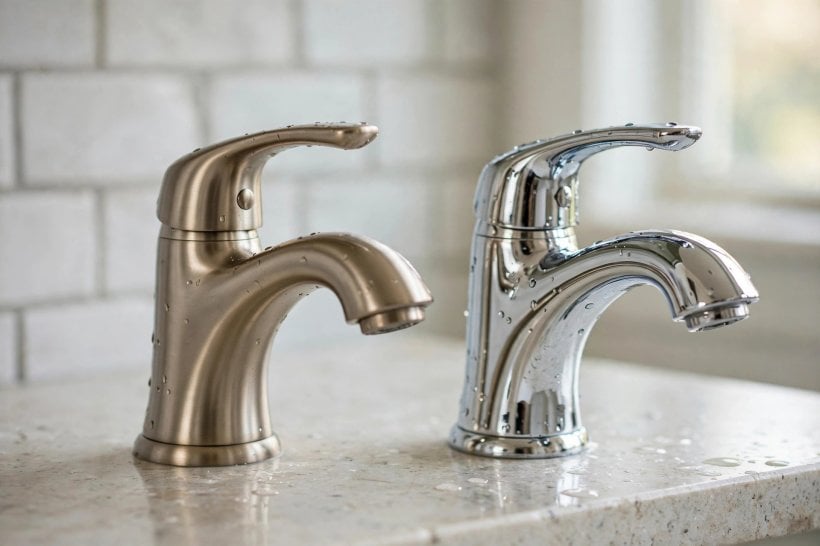
Both finishes clean the same basic way: warm water, a drop of mild soap, a soft cloth, dry afterwards. The drying step matters more than the washing — most “stains” on either finish are dried water, not dirt. Keep abrasive pads, scouring powders and acidic descalers away from both; acids and grit damage the plating, and plating damage cannot be polished back.
The care paths diverge over years. Chrome asks for nothing beyond gentle cleaning and rewards neglect poorly but predictably. Polished nickel comes in two families: lacquered, where a clear coat freezes the finish as bought, and unlacquered (“living finish”), where the nickel slowly deepens and softens with touch and time. A living finish is a feature in a heritage-style room and a frustration anywhere else — check which family you are buying before the first clean, because the care advice for one (leave it alone to age) is the opposite of the other (keep it bright). In steamy, hard-working rooms like the ones in our waterproof tiny house bathroom guide, lacquered finishes of either metal are the lower-maintenance bet.
6. Durability, Scratches and Ageing
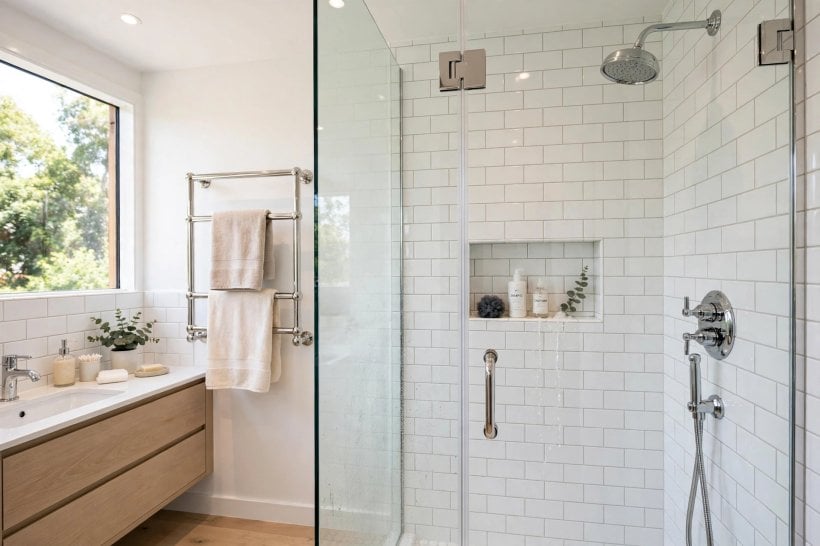
Chrome plate is extremely hard — harder than nickel — and resists scratching well, but it is also very thin. When chrome does fail, it tends to fail by flaking or pitting through to the base metal, especially where water sits or where threads and edges take knocks, and a flaked chrome fixture is finished: the repair is replacement. Polished nickel is a thicker, more substantial coating; it can pick up fine surface scratches, but they read as soft wear rather than damage, and the finish beneath a scratch is still nickel, so the fixture ages as a whole instead of spotting through.
Under both finishes, the base metal and the manufacturer’s plating quality matter more than the choice between the two. A well-plated budget fixture in either finish will outlast a poorly plated premium one. Practical check: heft matters — solid brass bodies plate better and feel it — and a finish warranty from the maker is worth more than a shine in the shop. The fixtures curated in our tiny house bathroom designs follow that rule: construction first, coating second.
7. What Each Finish Does to the Room
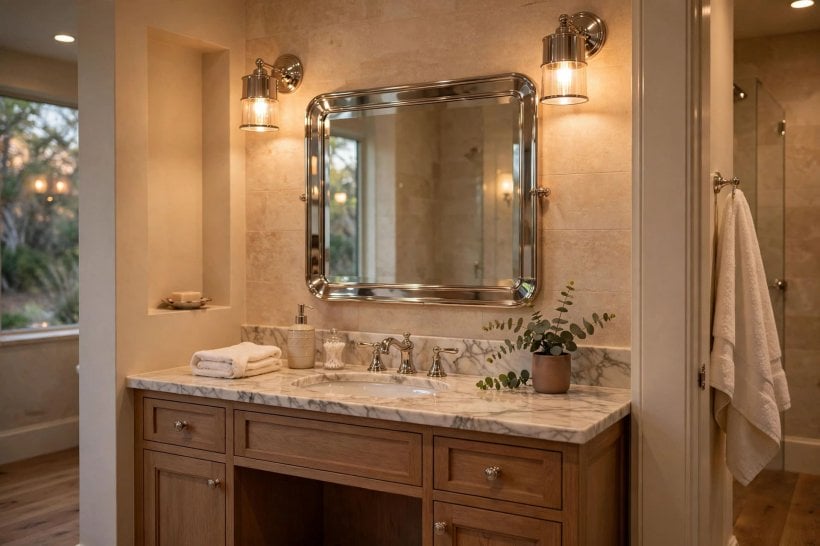
Fixtures are small, but they are the room’s jewellery, and the finish sets the temperature of everything around them. Chrome sharpens: it loves white and grey tile, black accents, glass and pale stone, and it makes colours beside it look cleaner and cooler. Polished nickel warms: it flatters cream and warm-white schemes, marble, unlacquered brass neighbours, timber vanities and the softer traditional palette. Put nickel into a stark blue-grey scheme and it can look faintly yellow; put chrome into a warm cream scheme and it can look faintly cold. Neither is wrong — the mismatch is.
Mirrors and lighting multiply the effect. A chrome fixture under a chrome-framed mirror in cool light doubles down on crispness; nickel beside warm bulbs and a timber frame doubles down on glow. Decide the room’s temperature first, then let the finish agree with it — the same sequence used in the scheme planning in our interior design for tiny house bathrooms.
8. Matching Across Fixtures and Brands
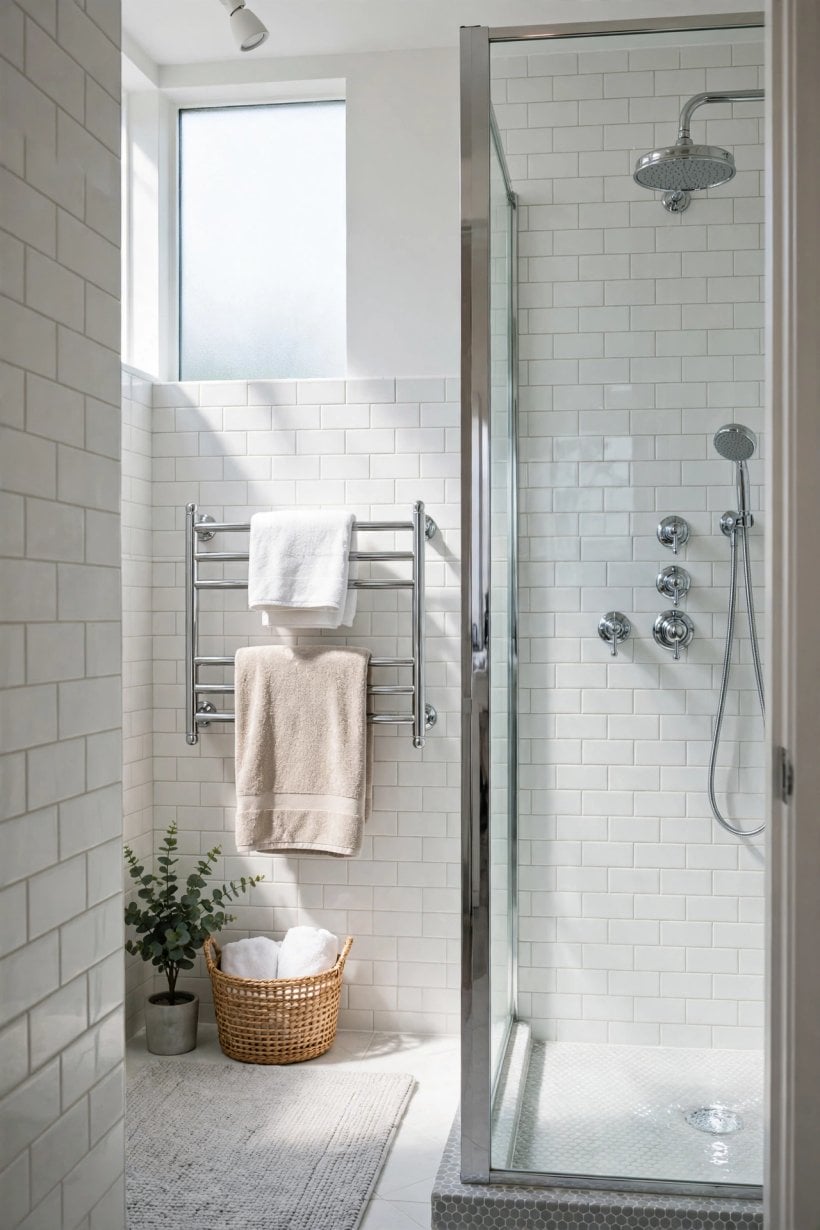
Chrome is chrome, more or less, across brands — the chromium layer leaves little room for interpretation, so a chrome tap from one maker usually sits happily beside a chrome rail from another. Polished nickel is not standardised in the same way: each brand’s nickel has its own depth and warmth, and two “polished nickels” from different makers can clash visibly on the same wall. If you choose nickel, the safe discipline is one brand for everything the eye compares at a glance — taps, shower fittings, flush plate, towel rail — or physical samples checked side by side before ordering the rest.
Consistency beyond the main fixtures is the part buyers forget. Towel rails, robe hooks, toilet-roll holders, shower baskets and the trim around the mirror all carry the finish too, and a room where nine pieces match and one shouts is worse than a room in either single finish. When you price a finish, price the whole supporting cast, not just the taps and shower — nickel’s supporting cast, in particular, should come from the same maker’s range if the pieces will share a wall. Future repairs argue the same way: a finish you can still buy accessories for in five years is a finish that keeps the whole room coherent without a full refit.
The mixing question also arises with neighbouring metals. Nickel sits close enough to stainless steel that the two can share a kitchen or utility space without quarrelling, while chrome beside stainless can look like a near-miss. In kitchens planned along the lines of our tiny house kitchen design guide, nickel’s friendliness with appliances is a genuine practical argument. And if you fall for both finishes, use them in different rooms rather than different corners of one room — a house can hold both temperatures; a single wall rarely can.
9. Costs and Availability: The Honest Picture
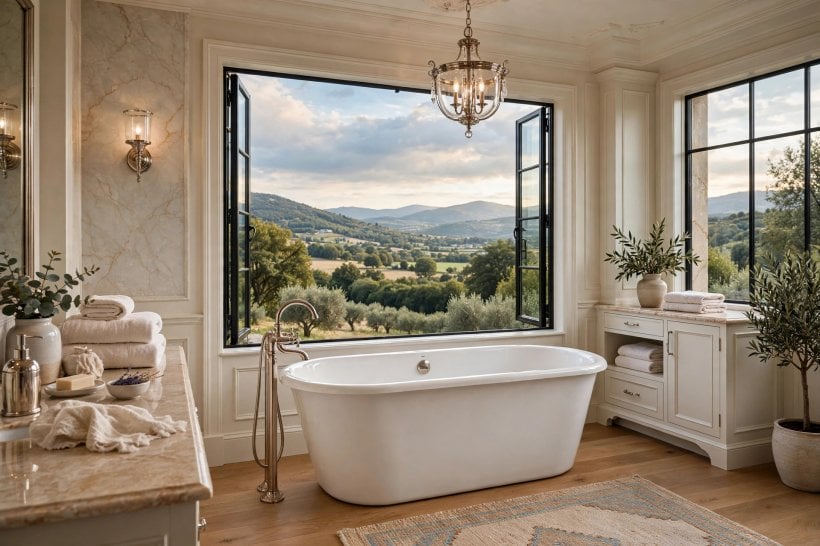
No invented figures are needed to describe the cost relationship: on the same fixture from the same maker, polished nickel is generally the pricier finish, because nickel plating polished to this standard takes more material and more finishing labour than chrome. Chrome is also the default — the finish most ranges are designed around — so it appears at every budget, in stock, with matching accessories. Nickel concentrates in mid-range and premium lines, which means choosing it can quietly move the whole fixtures budget up a tier, and can complicate replacements years later if a line is discontinued.
Availability cuts the other way on lead times: a chrome replacement tap is a same-week errand in most towns; a matching nickel piece may be an order and a wait. None of this should veto nickel where nickel is right — fixtures are bought once and used daily for years — but it belongs in the decision, especially for rental properties and hard-used family bathrooms where replacement speed matters. Outdoor and coastal use is the last cost factor: both finishes dislike salt air, plated finishes outdoors are a maintenance commitment either way, and the sheltered fixtures in our simple outdoor shower ideas favour solid, marine-appropriate metals for a reason.
10. Who Should Pick Which: The Verdict
Pick polished nickel if your bathroom’s palette runs warm — cream, marble, timber, traditional shapes — if your water is hard and you would rather wipe weekly than daily, if you like a finish that ages with a little depth, and if you are buying a coordinated set from one maker anyway. Pick chrome if your scheme is cool and contemporary, if you want the brightest, crispest reflection, if budget and easy replacement matter, or if you are mixing pieces from several brands and need a finish that matches itself everywhere. The undecided can split the difference knowingly: satin and brushed versions of both metals mute exactly the qualities compared here — but between the two polished classics, tone is the honest decider. Warm room, nickel; cool room, chrome.
Final Considerations
Polished nickel vs chrome is not a contest with a champion; it is a temperature choice with maintenance consequences. Chrome gives you the perfect mirror and asks to be kept perfect. Nickel gives you a warmer glow, hides the evidence of real life between cleans, and asks only that you buy its pieces to match.
Stand in your bathroom with a sample of each against your tile, in morning and evening light, and the room will tell you which one it wants. Believe it the first time — fixtures are a decade-long decision, and this is the cheapest moment to get it right.




0 Comments