

Choosing between a converted school bus and a house built on a trailer is rarely about which one photographs better. It is about how you want to travel, where you expect to park, how much building you genuinely want to do, and who will service the vehicle underneath your kitchen when something wears out. The skoolie vs tiny house decision starts with two very different shells: one is a retired commercial vehicle with an engine, a steel body and a service history, and the other is a purpose-built frame that carries a small house and nothing else.
Neither route is the cheap or easy shortcut it is sometimes made out to be. A bus gives you a strong steel shell and the ability to drive your home away under its own power, but it also hands you demolition work, curved walls and a drivetrain to maintain. A house on wheels gives you straighter walls, a residential building process and a detached tow vehicle, but it asks you to source a trailer, manage total weight carefully and arrange a suitable truck every time you move. This comparison works through both options attribute by attribute, so you can match the home to your skills, your roads and your long-term plans.
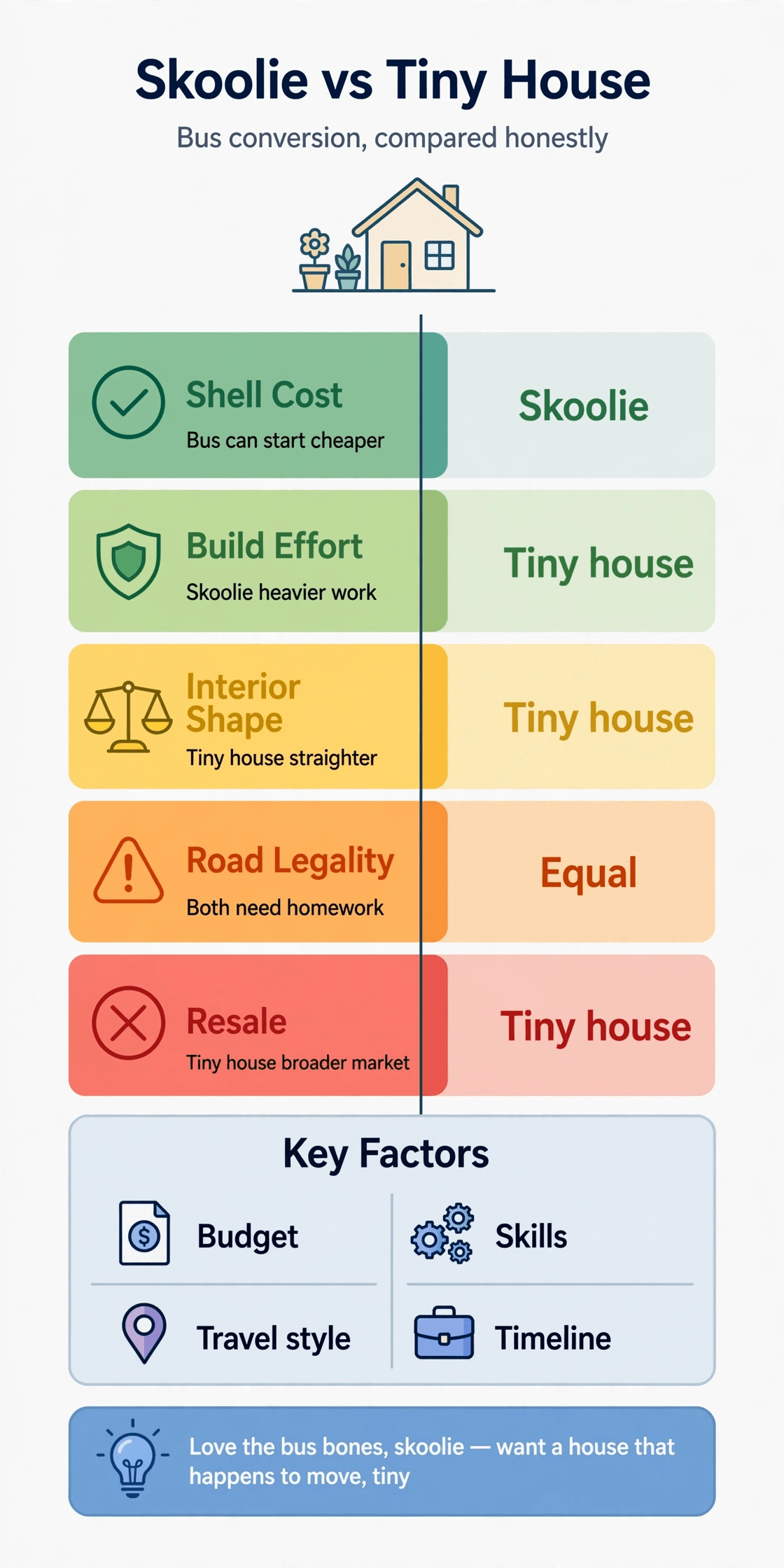
Skoolie vs Tiny House at a Glance
The table below summarises the head-to-head differences that matter most before you spend anything. Read it as a starting map rather than a verdict, because the sections that follow explain the conditions, exceptions and homework behind every row.
| Criterion | Skoolie (Bus Conversion) | Tiny House on Wheels |
|---|---|---|
| Starting shell | A used school bus with engine, steel body and existing windows and doors to remove or adapt | A new or used tiny house trailer that you frame a house onto from the subfloor up |
| Shell cost pattern | One purchase buys shell and drivetrain together, but condition varies widely and mechanical repairs can follow | Trailer cost is separate from the house build, and a purpose-built trailer is a significant first purchase |
| Build effort | Heavy demolition first: seats, flooring, ceiling panels and rust treatment before any building starts | Mostly new construction from day one, following familiar framing and finishing steps |
| Interior shape | Curved roof, wheel wells and sloped walls shape every cabinet and ceiling decision | Straight walls and flat ceilings accept standard cabinets, doors and appliances more easily |
| Road legality homework | Title change, registration class, insurance and licence questions all attach to the vehicle itself | Registration, certification and parking rules attach to the trailer and how your area classifies it |
| Moving the home | Drives itself, so no tow vehicle is needed, but a breakdown stops the whole house | Needs a capable tow vehicle, yet the house and the vehicle can be serviced separately |
| Resale market | A smaller, enthusiast buyer pool that values documented mechanical and conversion work | A broader small-home buyer pool, especially for certified, well-documented builds |
1. What Each Home Actually Is: Shell, Structure, and Starting Point
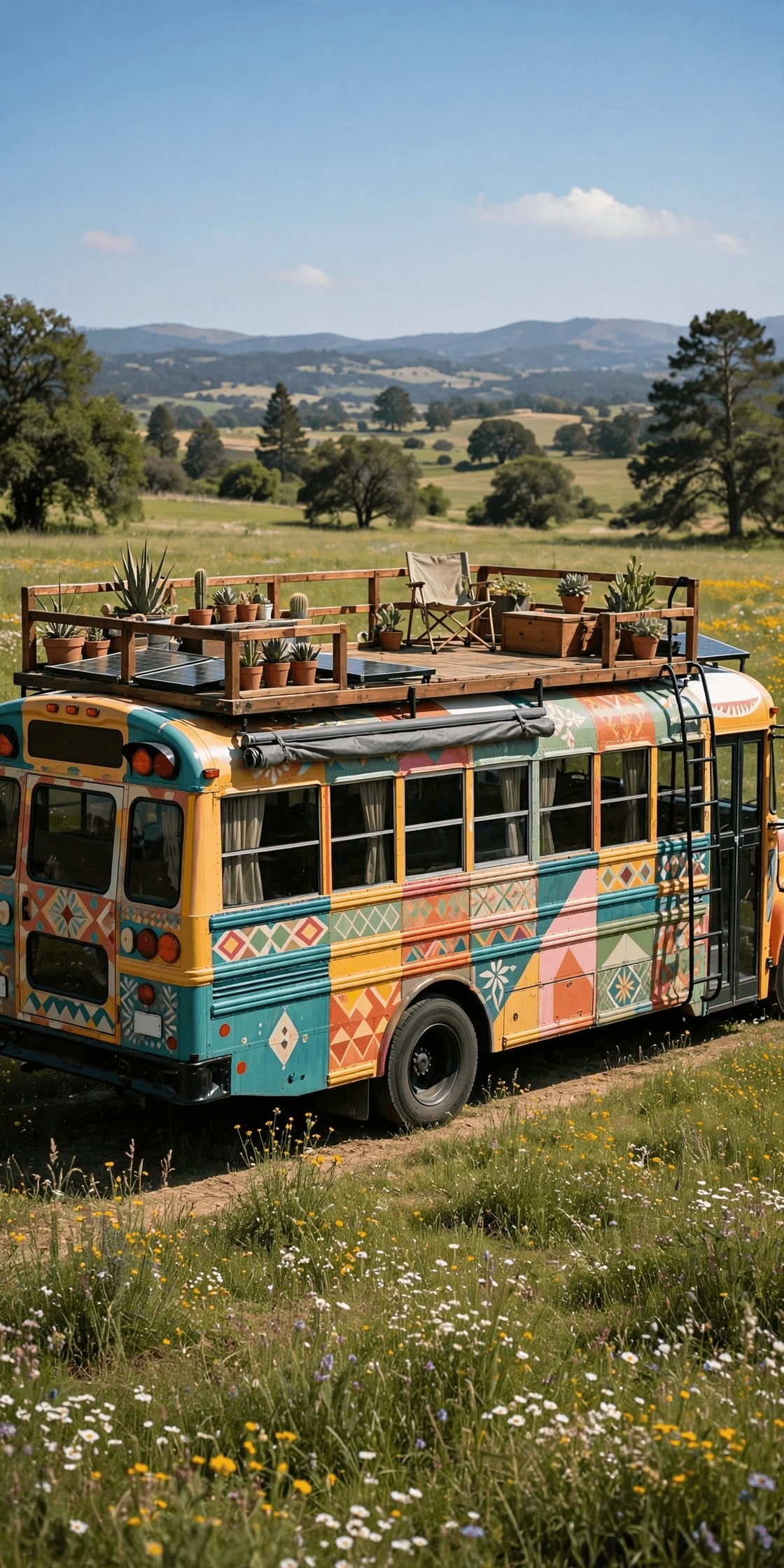
A skoolie begins as a working vehicle. School buses are built to demanding safety standards, with steel ribs, a heavy chassis and a body designed to protect passengers, and that overbuilt structure is the main attraction. You are buying the shell, the engine, the transmission and the road history in a single transaction. The floor is flat and strong, the roof is already weatherproof, and the home can move the day you buy it, even if the interior is still rows of bench seats.
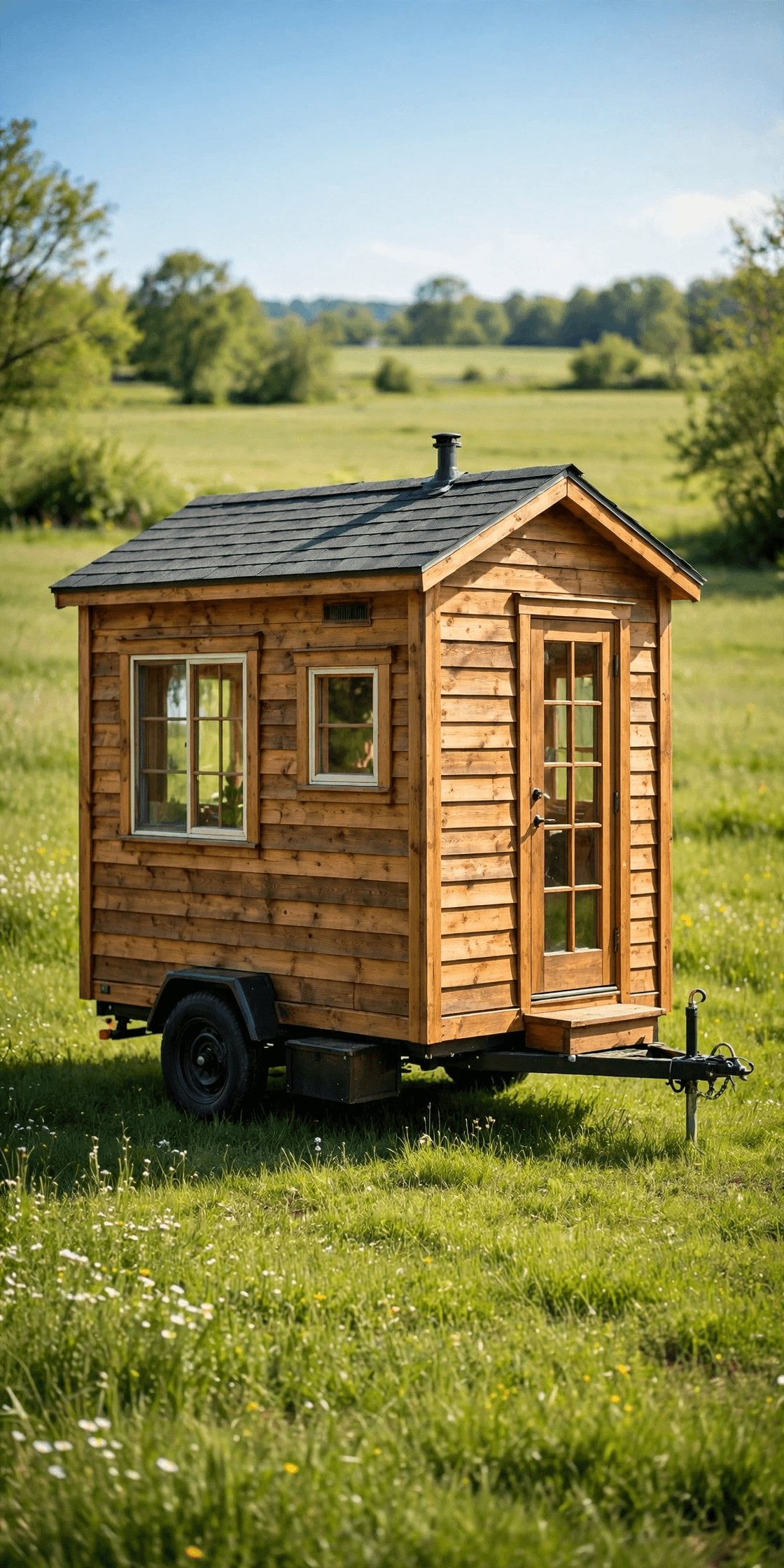
A tiny house on wheels begins as a frame. The trailer is engineered for the load, with the subfloor, flashing and tie-downs planned before the first wall goes up, and everything above it is residential construction that you design or commission. That clean-sheet start is why many builders compare these homes against other alternative housing options such as earthships, container homes and domes before deciding. The trade-off is simple: the bus gives you more structure on day one, while the trailer gives you more control over every layer that follows.
2. Shell Cost and the Real Price of a Starting Point
Bus prices vary enormously with age, mileage, engine type, rust level and region, so treat any single figure you see advertised as one data point rather than a going rate. A low purchase price can hide deferred mechanical work, tired tyres or corrosion that only appears once the floor comes up. Budget-minded buyers therefore price the whole starting point: the bus itself, getting it home legally, the first service, fluid and filter changes, and any safety items a mechanic flags before conversion work begins.
The trailer route separates the costs. A purpose-built tiny house trailer costs real money before a single stud is cut, and our tiny house trailer buying guide explains why deck design, axle rating and brakes matter more than a bargain flatbed conversion. On top of that come framing, roofing, windows and systems, much like a small conventional build. In honest terms, the bus usually concentrates spending into repairs and conversion of an existing shell, while the house on wheels spreads spending across new materials. Either can overrun if the starting point is chosen on price alone.
3. Build Effort and Skills: Demolition, Rust, and Framing
Converting a bus starts with subtraction. Seats, rubber flooring, ceiling panels, wiring runs and sometimes the original heater systems all come out before insulation can go in, and every removed screw seems to leave two more behind. Rust assessment is the critical early skill: surface rust on a floor can be treated, but structural corrosion around mounts and wheel arches is a different conversation, and it is far cheaper to walk away from the wrong bus than to repair it. Expect grinding, cutting and metalwork to dominate the early months.
Framing a house on a trailer is more conventional carpentry. Walls are squared, sheathed and raised in a familiar order, skills transfer from ordinary building work, and trades can be hired for single stages without explaining a vehicle to them. Insulation choices follow the same logic in both homes, and the methods in our guide to how to insulate a tiny house with spray foam, rockwool or sheep’s wool apply inside a bus shell just as they do between studs. The honest difference is sequencing: the bus front-loads messy demolition and metal repair, while the trailer build is steadier, cleaner construction from the start.
4. Interior Shape and Living Space: Curved Roof, Straight Walls
Stand inside a bus and the shape announces itself. The roof curves, the walls taper slightly, and the wheel wells interrupt the floor plan at fixed points you cannot move. Headroom is generous in the centre of the aisle and tighter at the edges, which pushes tall storage toward the middle and makes standard flat-pack cabinets an awkward fit without scribing and filler panels. Many converters raise the roof to solve this, which is a major structural project in its own right and not a casual weekend decision.
A house built on a trailer offers the rectangle builders dream about. Walls meet the ceiling at predictable angles, cabinets sit flat, standard doors hang properly, and a tape measure behaves the way it does in any room. The interior width is still narrow and every centimetre is planned, but the shape stops fighting you. If your priority is a conventional kitchen, full-height wardrobes and straightforward built-ins, the straight-walled shell is easier to furnish well. If you enjoy fitting joinery to a curve and like the industrial character of riveted steel, the bus interior has a charm the rectangle cannot copy.
5. Floor Plans, Lofts, and Where Furniture Actually Fits
Bus floor plans work around fixed obstacles. The entry stairwell, driver’s area, wheel wells and rear emergency door all claim space before you draw a single wall, and the engine layout decides whether the back can become a bedroom, a garage or neither. Long buses give a genuinely generous one-level plan with no loft ladder required, which suits people who want everything on one floor. Shorter buses demand the same compromises as any small footprint, with the added puzzle of building over wheel boxes.
Trailer-based homes plan vertically instead. Sleeping lofts reclaim the volume above the kitchen or bathroom, and understanding how to frame a tiny house loft for joist span and load matters because the loft structure carries people, not storage boxes. The driver’s cab problem disappears, but a new one appears: the home’s length is set by the trailer, so the plan is a negotiation between living space, bathroom size and loft access from the first sketch. In both homes, tape the layout on the floor at full scale before building. Furniture that fits on paper regularly fails against real wheel wells, real ceilings and real knees.
6. Road Legality, Registration, and Insurance Homework
This is the section to research before money changes hands, because the rules attach differently to each home and they vary by state, province and country. A converted bus usually needs its title and registration changed from a commercial or school vehicle to a recreational or motorhome classification, and insurers and licensing offices typically want evidence that the conversion is real: fixed sleeping, cooking, water and power systems are commonly part of that conversation. Seats removed and a mattress in the back rarely qualifies on its own.
A house on a trailer faces a different set of questions: how it is registered, whether certification to a recognised standard helps with insurance and campground access in your area, and where it may legally park or be lived in. Neither route is paperwork-free, and verbal reassurance from a seller is not documentation. Keep a file of titles, receipts, inspection reports and photographs of each build stage for whichever home you choose, and read our guidance on how to keep your tiny house safe with locks, trackers and anchor systems as part of the same ownership homework. Check the current requirements with your own licensing, insurance and local authorities before you commit, because classifications change and enforcement is local.
7. Weight, Towing, and Driving the Finished Home
A bus carries its home within a chassis designed for heavy loads, so converters worry less about every kilogram of cabinetry and more about axle distribution and the condition of tyres, brakes and suspension. Driving one is a skill of its own: the length, turning circle, air brakes on some models and sheer height demand practice, and fuel stops, low bridges and tight campsites all need planning. The reward is self-contained movement, with no separate tow vehicle to buy, insure or store.
The trailer home inverts the problem. The build must stay within the trailer’s rated capacity and the tow vehicle’s limits, which is why learning how to calculate the weight of a tiny house and respecting tiny house weight limits, GVWR and axle ratings is non-negotiable. Towing a tall, slab-sided house also means crosswinds matter, and our notes on tiny house wind resistance and aerodynamic towing are worth reading before your first highway trip. The compensation is flexibility: unhitch, and the truck is your daily vehicle while the house stays parked.
8. Systems: Power, Water, and Heat in a Bus vs a Trailer Build
Off-grid systems follow the same physics in both shells. Solar arrays charge a battery bank, an inverter serves household loads, water lives in fresh and grey tanks, and heat usually comes from a small stove, a diesel or propane heater, or electric heat when shore power is available. Sizing still starts with an honest load list, and the method in our guide to solar panel kits for tiny homes and sizing an off-grid battery bank works identically under a bus roof. Roof shape is the practical difference: a curved bus roof complicates flat panel mounting and walkable access, while a pitched tiny house roof trades panel angle against loft headroom.
Fuel and servicing separate the two homes more than wiring does. A bus conversion can integrate vehicle systems, sharing diesel for heat, for example, but any engine work means your house goes into the workshop with it. A trailer build keeps house systems independent, and the fuel decision mirrors the one in our propane vs electric in tiny houses comparison: match the energy source to how you will actually camp, refill and maintain it. Whichever shell you choose, leave access panels to pumps, filters and shut-offs. Systems buried behind finished joinery turn small repairs into demolition.
9. Resale Market, Buyers, and How Each Home Holds Value
Resale is where documentation earns its keep. A converted bus sells to a smaller, knowledgeable pool of buyers who will ask hard questions about the engine, the rust repair, the roof raise if there is one, and whether the conversion was inspected. A tidy, well-photographed build with service records and a clear title classification attracts those buyers; an undocumented project bus competes against every other unfinished conversion on the market, and there are always unfinished conversions on the market.
A house on a trailer sells to the wider small-home audience, including buyers who would never consider a vehicle conversion. Certification, a reputable trailer, quality exterior materials such as those compared in our tiny house siding options guide, and proof that the build stayed within weight limits all support the asking price. Neither home should be bought as an investment, and both reward owners who keep records, photograph the build and maintain systems visibly. Expect value to follow condition, documentation and honesty of the listing far more than the money originally spent.
10. Maintenance, Longevity, and Living With Your Choice Year After Year
Long-term ownership is a tale of two maintenance schedules. The bus owner maintains a house and a heavy vehicle: engine servicing, tyres, brakes, belts, coolant and the slow vigilance against rust returning at seams and around the floor. The work is predictable if you budget for it, and any competent truck or bus mechanic can handle the mechanical side, but it never disappears, and skipping it converts directly into breakdown risk with your home attached.
The trailer-home owner maintains a house and a much simpler running gear: bearings, brakes, tyres, seals and periodic checks of the frame and tie-downs, plus the same roof, moisture and systems care any small home needs in tiny house living in cold climates or hot ones. The tow vehicle is maintained as a normal truck, on a normal schedule, by any garage. Over a decade, the bus concentrates cost and expertise in one vehicle, while the trailer spreads lighter duties across separate assets. Choose the schedule you will actually keep, because deferred maintenance is the most expensive option in either home.
Final Considerations
Strip away the labels and the choice is between a vehicle that became a home and a home that can be moved. The bus offers a tough, characterful, self-propelled shell at the price of demolition, curved walls, mechanical upkeep and a narrower resale audience. The trailer build offers straight walls, conventional construction, separate servicing and broader resale appeal at the price of a serious trailer purchase, strict weight discipline and a tow vehicle for every move. Your skills point one way: confident mechanics and metalworkers thrive in a conversion, while carpenters and first-time builders usually find the framed house more forgiving.
Who should pick which? Choose the skoolie if you want to drive your home without a tow vehicle, you enjoy mechanical projects, you have verified the title, registration and insurance path in your area, and you have found a bus with honest mechanicals and minimal rust. Choose the tiny house on wheels if you want a conventional interior, easier furnishing, certification options and the freedom to park the home and use your truck separately. If you are still torn between several small-home formats, work through our where to live quiz comparing a tiny house, yurt and cob cottage, then go and stand inside real examples of both before you buy anything. An hour inside each will settle arguments that no specification sheet can.


0 Comments