

A gas range is the hardest-working object in most kitchens and the one bought with the least evidence — a few minutes of showroom admiration for a decade of daily service. The checks that matter are not the ones under the showroom lights; they are the ones that describe the thousandth meal, not the first.
This guide sets them out in the order a range is actually lived with: fit, burners, oven, build, cleaning, ventilation, fitting and paperwork — so the range you choose earns its place on a wet Tuesday, not just on the day it arrives.
Related Guide: Downdraft Gas Range Guide: What To Check Before You Buy
Related Guide: Who Manufactures Sears' Gas Ranges: Kenmore Makers and How to Identify Yours by Model Number
1. Gas Ranges at a Glance
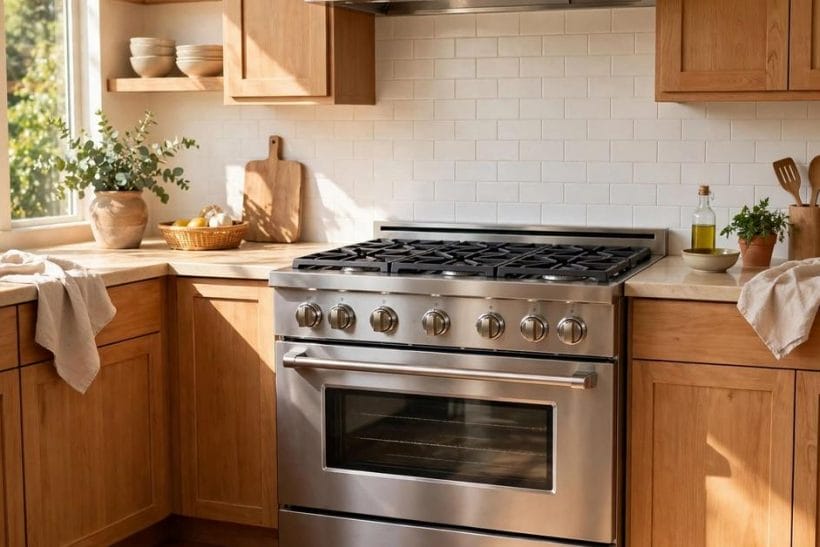
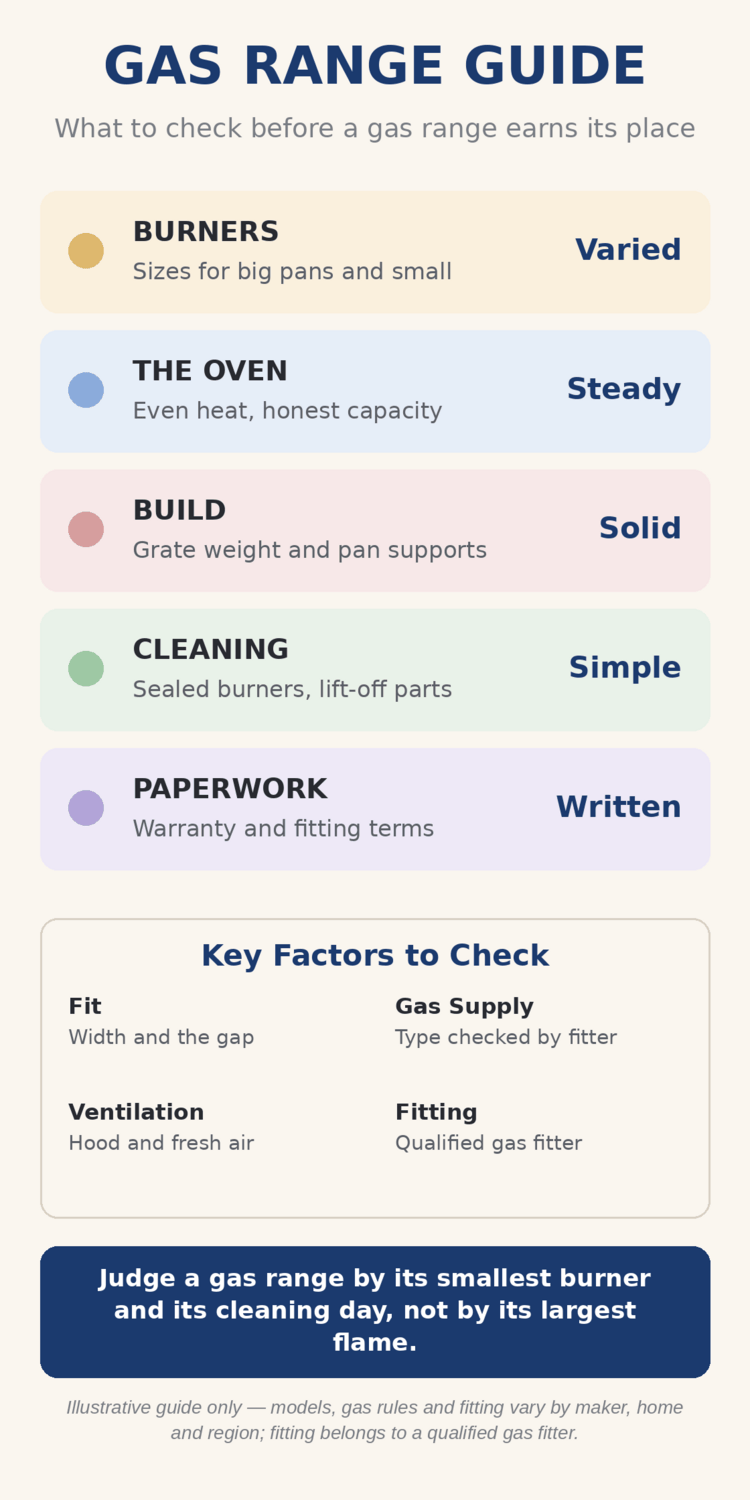
A gas range is five purchases wearing one coat: a set of burners, an oven, a piece of furniture-grade metalwork, a cleaning commitment, and a small file of paperwork that decides what happens when something fails. Buyers who check all five, in that order, rarely regret the range; buyers who check only the first usually meet the others later, at a worse time.
For the room the range anchors, start with kitchen ideas.
| Family | Character | What it means |
|---|---|---|
| Burners | Sizes for big pans and small | Varied |
| The Oven | Even heat, honest capacity | Steady |
| Build | Grate weight and pan supports | Solid |
| Cleaning | Sealed burners, lift-off parts | Simple |
| Paperwork | Warranty and fitting terms | Written |
Scope, so the lanes stay clear: this is a what-to-check guide for choosing any gas range — it names no maker, crowns no winner and quotes no prices, because those change faster than a range wears out. Its appliance siblings take the same approach to their own machines: the major appliances guide covers the whole family’s checks, and the discount appliances guide covers buying them for less without buying them worse.
2. Fit First: Width, Depth and the Space It Stands In
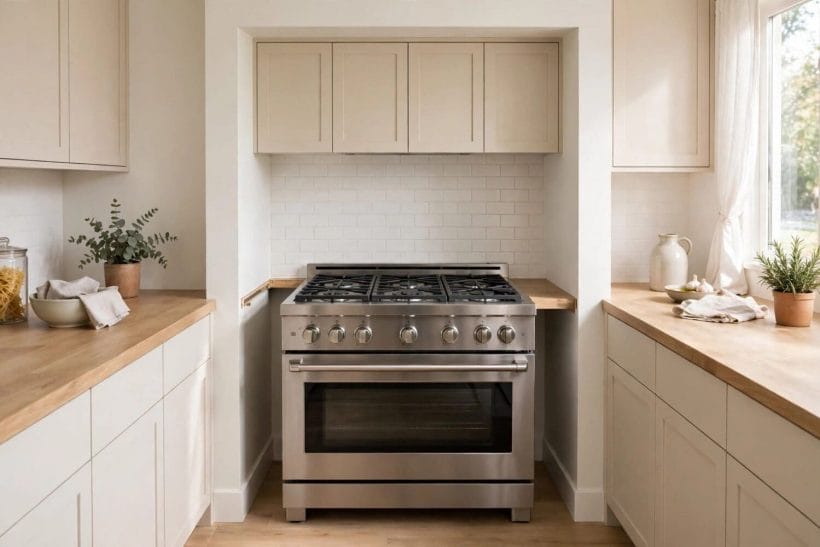
More ranges are returned for fit than for cooking. The gap in your kitchen is a fixed fact; the range must answer it exactly, in three dimensions and in the swing of its doors.
Measure the Gap, Not the Brochure
Measure the actual opening — width between the units, depth to the wall, height to any hood or shelf above — and measure it at several points, because old kitchens are rarely square. Then check the range against those numbers rather than its headline size: handles project, doors swing, and a range that fits on paper can still strand a pan handle against a unit. The range-family posts, premier gas ranges among them, show how much presence the machine takes once installed.
Level Floors and Honest Doors
Stand in front of the showroom model and open everything: oven doors should swing without scraping the floor or dropping heavily, and the whole machine should feel planted rather than tinny on its feet. At home, an unlevel floor makes pans pool oil to one side and doors drift — adjustable feet and a level stand are a fitter’s finishing job, and worth asking about before delivery day.
Room to Stand Back
A range is worked at arm’s length, often with a hot pan in each hand mentally if not literally. Check the space in front of it: an island or table edge too close behind the cook turns every roast into a negotiation. The best-fitting range is the one the kitchen can serve, not merely contain.
3. Burners: The Daily End of the Range
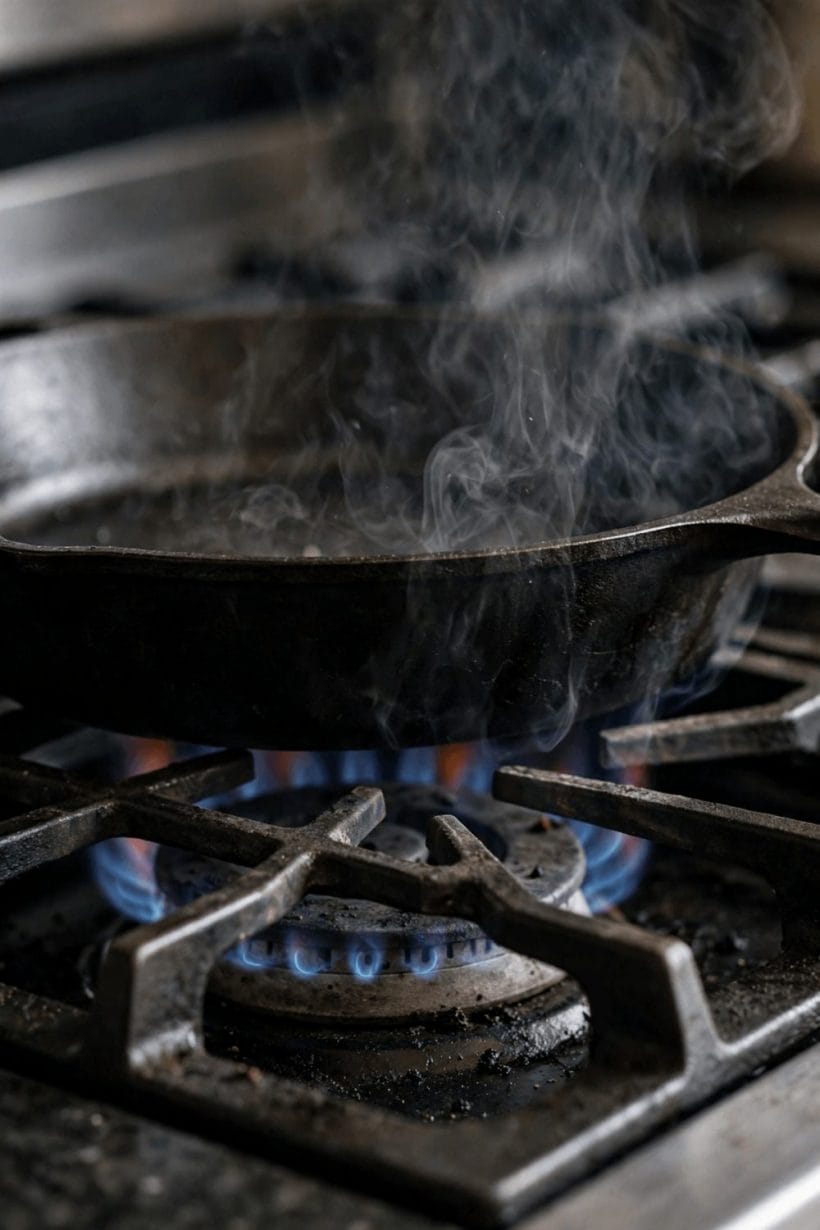
You will use the burners thousands of times and the oven’s special features a dozen. Judge the top of the range with the seriousness of daily habit.
A Spread of Sizes Beats One Big Ring
Real cooking needs opposites: a wide burner that brings a stockpot up without sulking, and a small one that holds a sauce at the edge of a simmer without scorching it. A hob of four near-identical burners serves neither. Look at the spread and ask which burner would take your biggest pan and which your smallest — the honest answers describe the range better than any headline about power.
The Small Burner Is the Honest One
Showrooms love the big ring; kitchens are made by the small one. A burner that turns genuinely low — holding a pan at a bare shimmer without clicking out or catching the bottom — is where sauces, rice and slow mornings are won. Turn the small burners down in the shop and watch whether the flame stays low, even and alive.
Ignition and Control Feel
Work the knobs with the hands you cook with — wet, hurried, holding a cloth. Ignition should be certain rather than sparky and reluctant; knobs should turn with a smooth, readable resistance so a half-asleep cook can set a low flame by feel. These small certainties are the difference between a range that feels trustworthy and one that feels theatrical.
4. The Oven: Heat, Space and Honesty
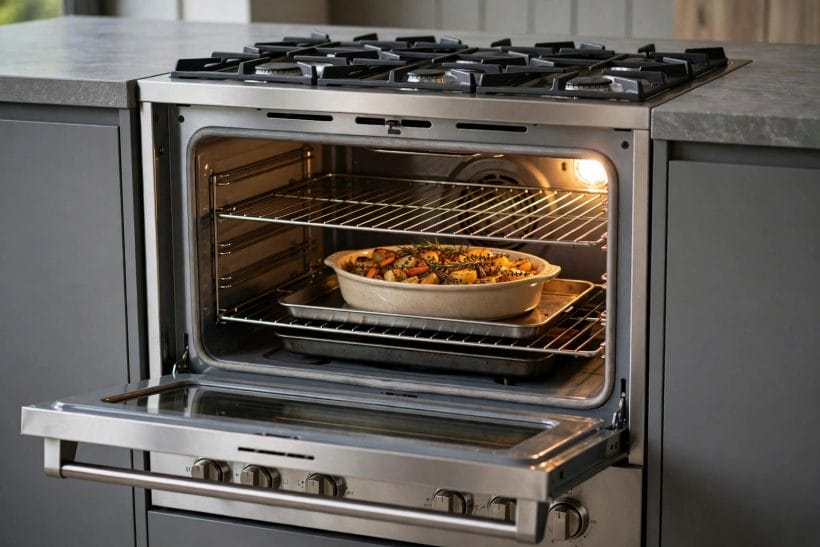
Oven capacity is quoted in the maker’s own arithmetic. The checks below translate it into the only units that matter: your dishes, your trays, your roasts.
Capacity Means the Dish You Actually Cook
Take your largest roasting dish and your widest baking tray to the shop, or at least their measurements. An oven earns its capacity claim only if your cookware fits with room for air to move around it — a tray that scrapes both walls cooks at the edges and sulks in the middle. Shelf positions matter as much as volume: several usable heights beat a tall, single-slot cave.
Heat You Can Trust at the Edges
Gas ovens heat from below, which suits roasts and trays of vegetables beautifully and asks a little technique of delicate baking. Without quoting figures no home cook can verify, the practical checks are these: a door seal that closes evenly all round, a thermostat that holds a setting without constant correction, and an even account from owners of the same model about browning. Consistency, not drama, is the oven virtue.
One Oven or Two
A second, smaller oven is the range world’s quiet triumph: weekday portions without heating the big cavity, a grill that works while the roast rests, two temperatures on feast days. It costs main-oven height, so the choice is honest either way — tall roasts point one way, frequent small meals the other. Decide from your own cooking, not the showroom’s feast-day fantasy.
5. Build: Grates, Knobs and Doors
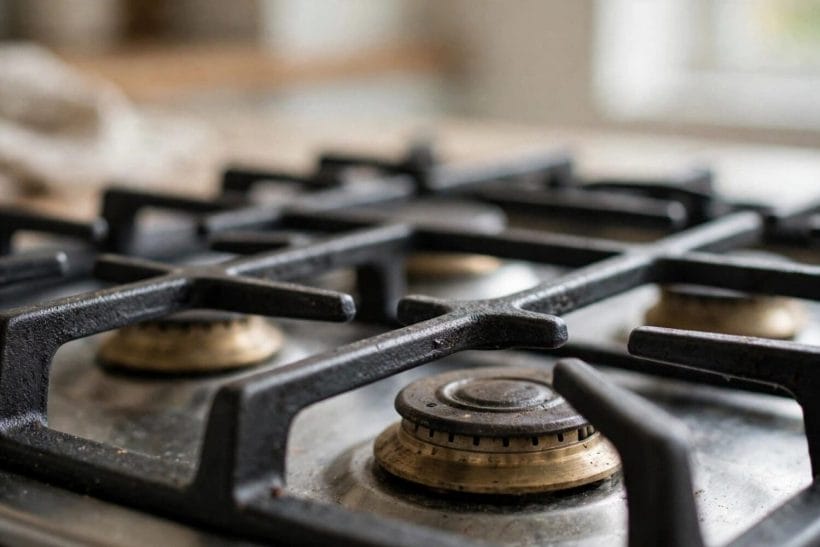
A range is handled hard, daily, for years. Its build quality is not a luxury judgement — it is the difference between a machine that tightens your cooking and one that slowly loosens around it.
Grates: Weight, Stability and Span
Lift a pan support. It should feel like ironmongery, not wirework: heavy, flat and stable, with a span that lets a small pan sit centred over a small burner without tipping. Continuous supports that let pans slide between burners suit busy cooks; individual ones lift out more easily for cleaning. Wobble in the shop becomes rattle at home, amplified by a decade of pans.
Knobs and Handles Under Wet Hands
Knobs are the range’s handshake, shaken a dozen times a day. They should be graspable with a cloth, clearly marked, and firmly mounted — a knob that already rocks on its spindle in the showroom is announcing its future. The oven handle takes the cook’s whole weight at times; it should feel like part of the door, not an accessory bolted to it.
Doors, Seals and Hinges
Open and close the oven door slowly. Good hinges travel evenly and hold the door where you leave it; the seal should meet the frame all round without gaps or bunching. A door that closes true keeps heat honest, cooks evenly and saves the kitchen from a decade of escaped warmth. This is the cheapest check in the guide and one of the most revealing.
6. Cleaning: The Second-Day Test
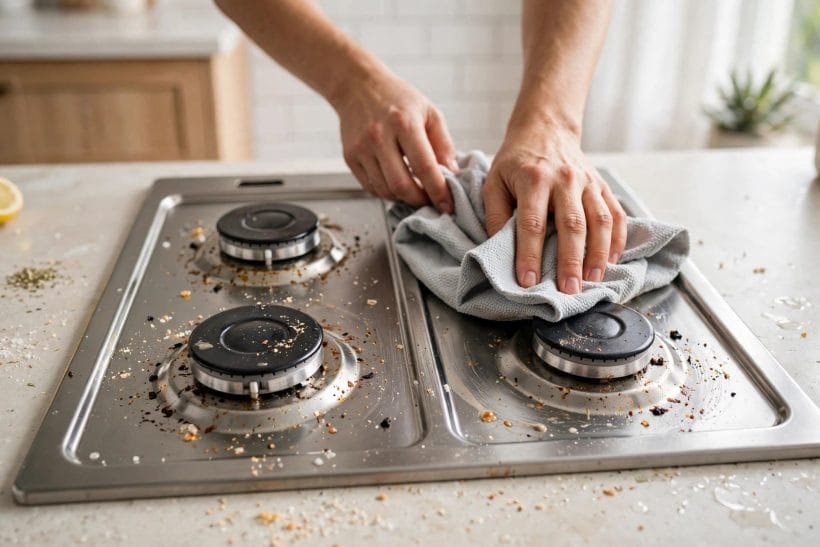
Every range is clean in the showroom. The range you are really buying is the one that exists after a Sunday of cooking — judge it there.
Sealed Burners and Lift-Off Parts
Spills are certain; the question is where they go. Burners sealed against the hob keep the mess on the surface where a cloth can reach it, and caps and supports that lift off without tools turn a dreaded job into a soak and a wipe. Count the parts that must come off for a proper clean — and imagine doing it weekly, in winter, in a hurry.
The Hob Surface Itself
Enamel, glass and bare metal each age differently under pans and cleaners. Look for surfaces without dirt traps: minimal seams, no sharp folded edges around the burners, controls mounted where splashes do not pool behind them. A hob that can be wiped in one continuous pass will be wiped; a hob with archaeology in its corners will be wiped around.
Oven Interiors and Their Coatings
Inside the oven, ask plainly what the cleaning story is: which surfaces are coated to make spills release, which parts remove, and what the maker expects you to do after a roast has redecorated the walls. Prefer the honest answer over the magical one — and check that the racks and liners you must handle are light enough to handle often.
7. Ventilation and the Room Around It
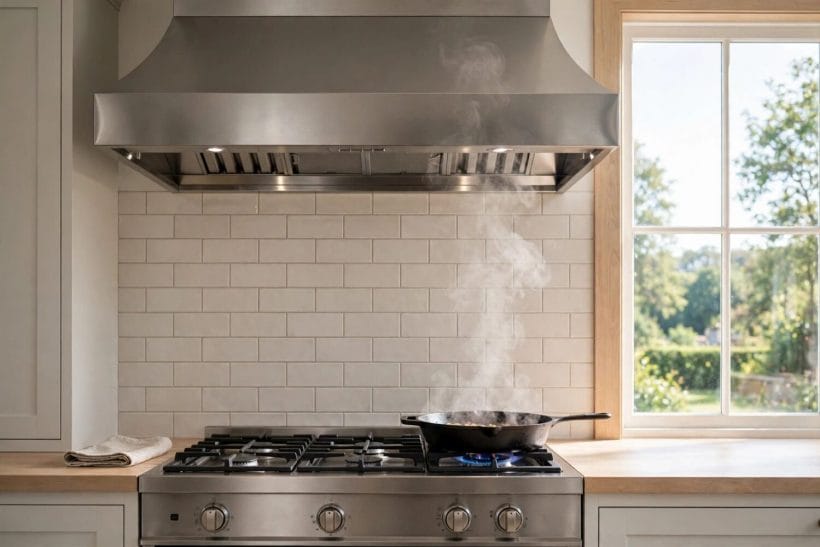
A gas range breathes with its room. Steam, heat and cooking fumes all have to go somewhere, and the range’s performance cannot be separated from the air above it.
A Hood Matched to the Cooking
The extractor is the range’s partner, not its accessory: it should cover the burners’ footprint and suit the way you cook — gentle simmering asks little, searing and frying ask a lot. The microwave-over-range alternative is covered in over the range microwave, which weighs that compromise honestly. Whatever carries the air away, it must actually carry it — outside where possible.
Air In as Well as Air Out
Extractors remove air; rooms must replace it. A kitchen sealed tight against draughts can starve both the hood and the burners of the air they need. Windows that open near the range, and a door that is not always shut against it, are part of the installation in everything but paperwork — and any concern about a room’s air supply is a question for the fitter, not for guesswork.
Cooking Styles and the Air They Make
Match the ventilation to the cooking you really do. A household of gentle simmerers needs modest extraction; a household that sears, fries and blackens needs the hood to be the range’s equal, or the kitchen will wear the evidence in its paintwork and soft furnishings. Be honest at this step — the hood is bought once, alongside the range, and upgraded rarely.
8. Gas Supply and Professional Fitting

This section is short because its message is simple: everything about connecting a gas range belongs to a qualified gas fitter, and the buyer’s job is choosing and checking, not connecting.
The Gas Supply Is a Professional’s Job
A range must match the home’s gas type and supply, sit level and stable, and be connected, tested and certified by a qualified fitter working to your area’s rules. That is not a courtesy or an upsell; it is the law in many places and plain sense in all of them. No part of this guide describes the work itself, deliberately — the same way a buyer’s guide to a car does not teach brake fitting.
What a Proper Fitting Visit Includes
As the customer, know what a proper visit looks like so you can recognise one: the fitter confirms the supply suits the appliance, positions and levels the range, connects and tests it, checks the burners and oven through their paces, and leaves the certification and manual with you. If any of that is missing, the visit is not finished — ask, and keep the paperwork either way.
9. Paperwork: Warranty, Manuals and Service
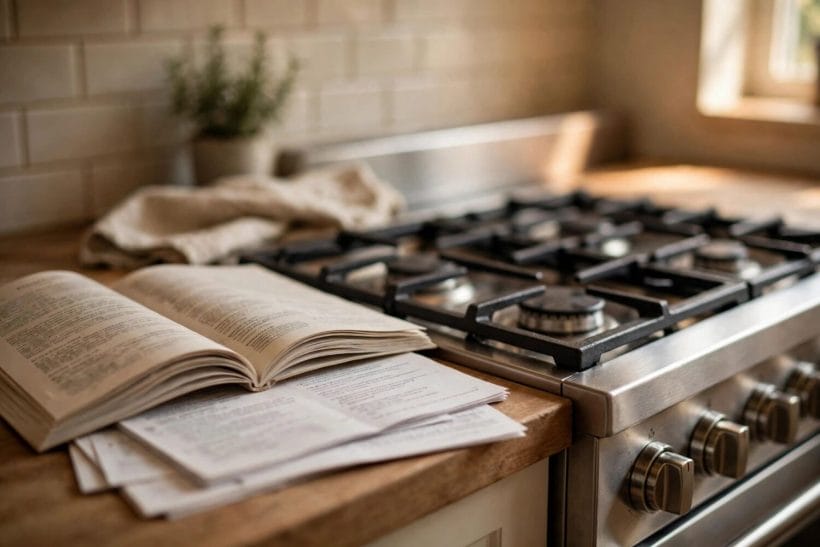
Ranges outlive their showrooms. The paperwork is the part of the purchase that speaks for the maker years later, and it deserves the same scrutiny as the grates.
Warranty Terms Worth Reading
Read the warranty as a document, not a number: what it covers, for how long each part is covered, what it asks of you — registration, approved fitting, servicing — and what it quietly excludes. A shorter warranty with plain terms is worth more than a long one wrapped in conditions. The appliance family’s paperwork habits are compared in the stackable washer dryer guide, which asks the same questions of its machines.
Manuals, Parts and Service Networks
Ask how parts and service work before you need them: whether burners, caps, knobs and seals are obtainable as spares, whether local engineers service the brand’s machines (whoever the maker is), and whether the manual is a real book or a pamphlet. Small consumables and honest care — the spirit of the dishwasher detergent guide — keep appliances young; a range is no different.
10. Checks Before You Buy
The whole guide compresses into one showroom visit, taken slowly, with your own cookware measurements in your pocket and your own cooking in mind.
The Showroom Tests
Measure the model against your gap and your biggest dish. Work every knob, open every door, lift a grate, turn the small burner low and watch it hold. Ask the cleaning questions and the paperwork questions out loud. A range that passes all of that in the shop has earned the right to be judged on price — and not before.
Judge It on a Tuesday
Finally, run the only test that matters: picture the range in your kitchen on an ordinary Tuesday — tired cook, wet hands, a sauce that must not catch, a tray that must fit, a hob that must wipe clean afterwards. The right range is the one that wins that unglamorous evening, every week, for years.
Final Considerations
A gas range is chosen in an hour and used for a decade, so let the decade do the choosing: fit measured honestly, burners judged by their smallest flame, an oven sized to your own dishes, build you can feel in the grates and doors, cleaning you can picture without dread, fitting left to a qualified fitter, and paperwork you have actually read.
Take the measurements, take your time in the showroom, ask the awkward questions about cleaning and paperwork while the answers are still free, and let the range that serves your real cooking — not the showroom’s theatre — come home with you.




0 Comments