

The smallest garden room in the house may be a paved patch the size of a rug — and yet, edited well, it hosts the morning coffee, the summer lunch and the last drink of the evening with more grace than gardens ten times its size.
These small patio ideas treat the little room seriously: a floor that works, shade where the sun lands, seating at honest scale, planting in pots, and the light and warmth that stretch its season from a few fine weeks to most of the year.
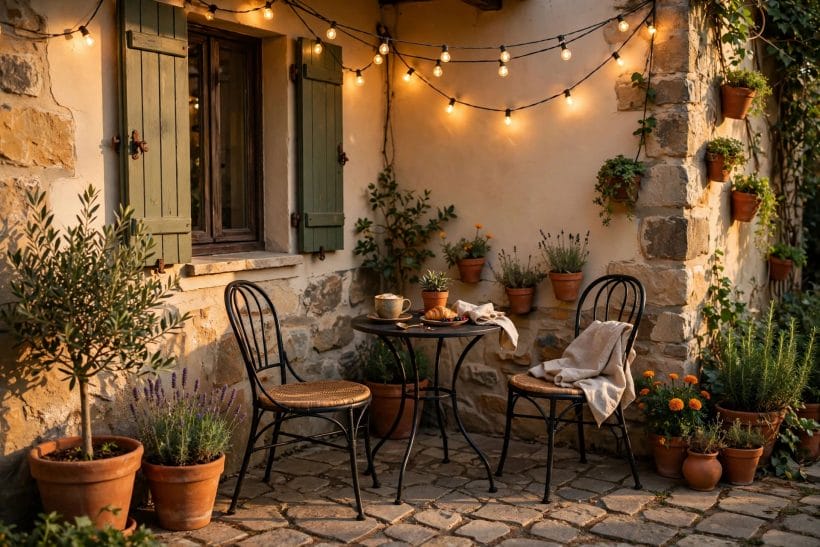
1. Small Patio Ideas at a Glance
The small patio is a paved outdoor room of modest footprint, opening from the house and furnished as a single-purpose-led space: floor, seat, shade, green and light, each edited to fit. Its attributes are the floor (paving, pattern and falls), the boundaries (house wall, fence, hedge — its walls), the shade (fixed, folding or grown), the furniture (few, comfortable, movable) and its storage (the dry place where its soft furnishings live). It is the compact end of the outdoor-room family whose full survey is the patio ideas pillar; this post is the chapter for the smallest rooms in that family, where every decision shows.
| Question | Short answer |
|---|---|
| How small can a patio be and still work? | As small as two chairs, a little table and a clear patch to stand on — purpose and comfort matter more than area. |
| What does a small patio need first? | A level, well-drained floor, one comfortable seat and shade where the sun lands at the hours of use. |
| Pots or beds? | Pots, almost always: the small patio’s garden lives in containers, edited and moved like furniture. |
| How is its season stretched? | Low warm light, an honest heat source and dry cushion storage turn a summer room into a most-of-the-year one. |
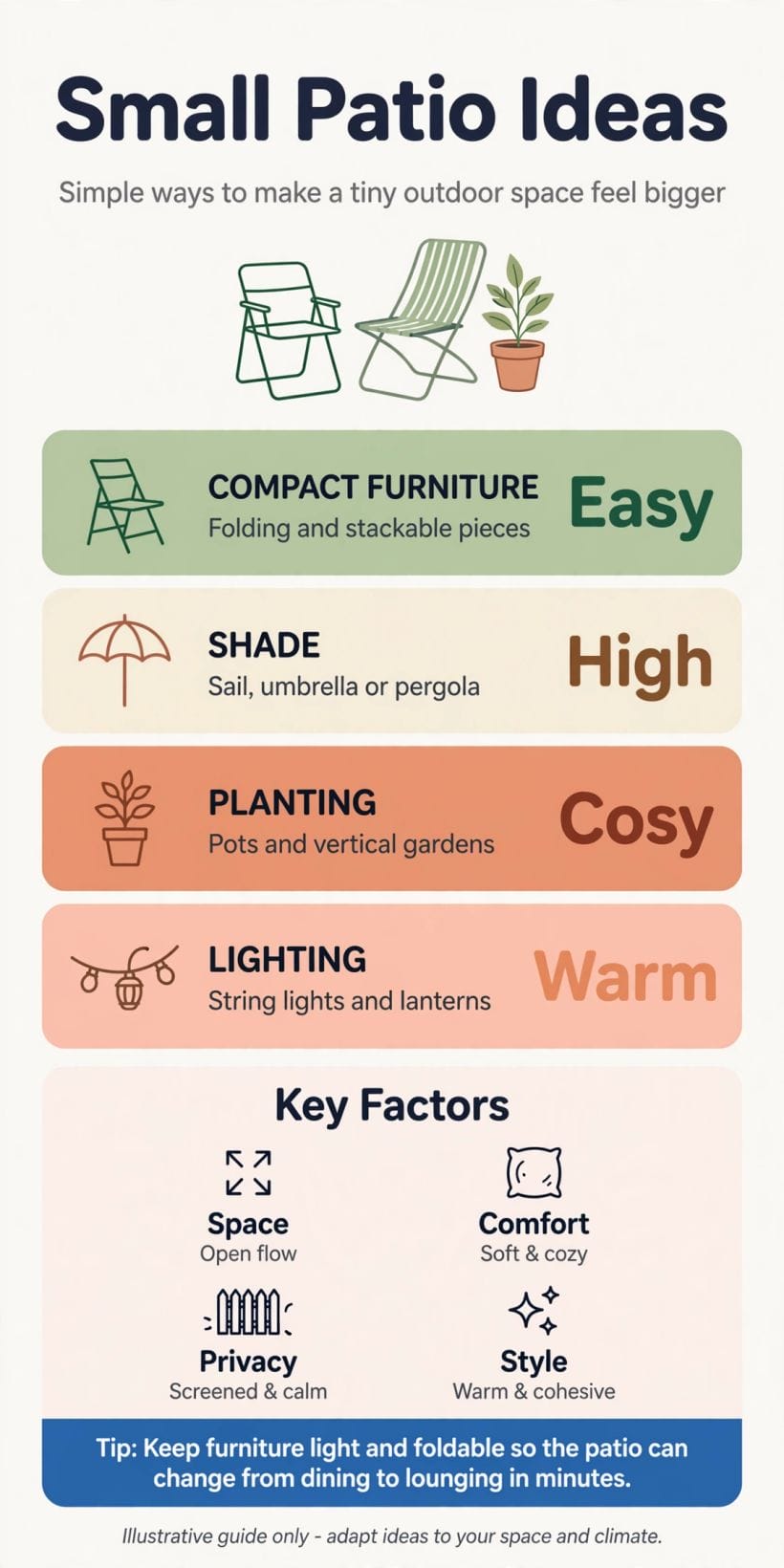
2. The Small Patio Itself: A Room With Sky for a Ceiling
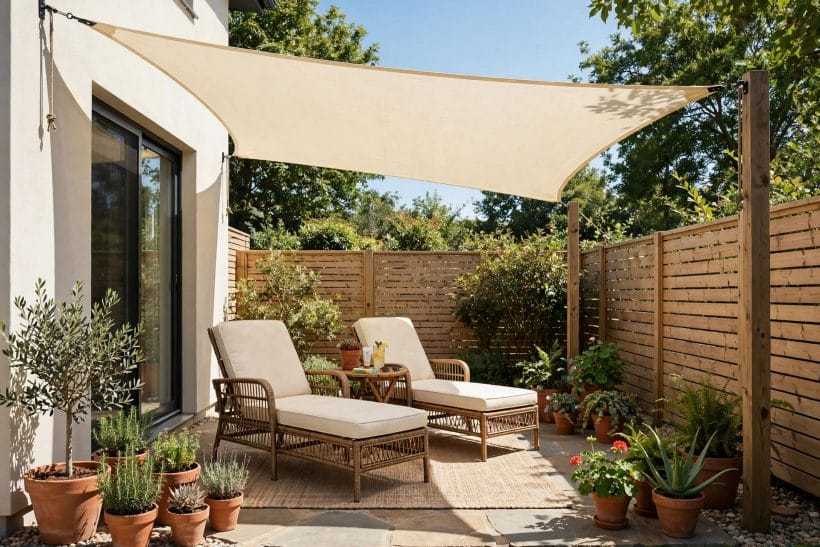
A small patio is the house’s outdoor room at its most concentrated: a paved patch, a door opening onto it, and everything a garden room needs — seat, shade, green, light — edited to fit. It is the small-space member of the family the porch ideas survey shares a wall with; where the porch borrows the house’s roof, the patio borrows only its wall and the sky.
1. Small is a discipline, not a deficiency
A small patio cannot hold everything, so it must hold the right things in the right order: a seat you love, shade where the sun lands, green at the eye’s edges, and a clear patch of floor to stand on.
2. The door decides the patio
The patio begins at the door that serves it: its swing, its step down and its view from inside set the room’s axis.
3. One purpose leads, the rest visit
Decide the patio’s first job — morning coffee, evening drinks, dining for a few, a sun-trap for one — and furnish that job properly.
4. The wall is the patio’s fourth side
House wall, fence or hedge: the small patio leans on its boundaries for shade, shelter and hanging space.
5. Keep a clear heart of floor
Every small patio needs one uncluttered patch where a person can stand, turn and set down a tray. Furniture pushed to the edges around a clear centre makes the smallest patio feel composed rather than crowded.
6. Borrow the garden beyond
Where the patio borders lawn or beds, let the eye travel: low planting at the patio’s edge, a gap in the screening, the garden’s depth on loan. Borrowed landscape is the small patio’s oldest expansion trick.
7. Think in seasons from the start
The small patio is used in the margins of the year — the first spring lunch, the last autumn evening — more than at midsummer.
8. Storage is the small patio’s hidden room
Cushions, covers and tools must live somewhere within a few steps, or the patio will store them on itself. A bench with a dry box inside it is the classic solution, and it earns its floor space twice.
9. One generous thing
Give the small patio a single generous element — an oversized pot, a proper armchair, a small tree in a tub — and its scale reads as chosen rather than apologetic.
10. The measure is evenings used
A small patio succeeds in hours, not in photographs: count the evenings it hosts across a year. Every idea in this survey is aimed at that count — comfort, shelter and ease, repeated daily.
11. Start with the chair test
Before paving or planting, carry the intended chairs onto the patch, sit down at the intended hours, and look at what the seat actually sees. The patio that passes the chair test rarely fails at anything else.
3. Floor and Edges: Ground That Works at Small Scale
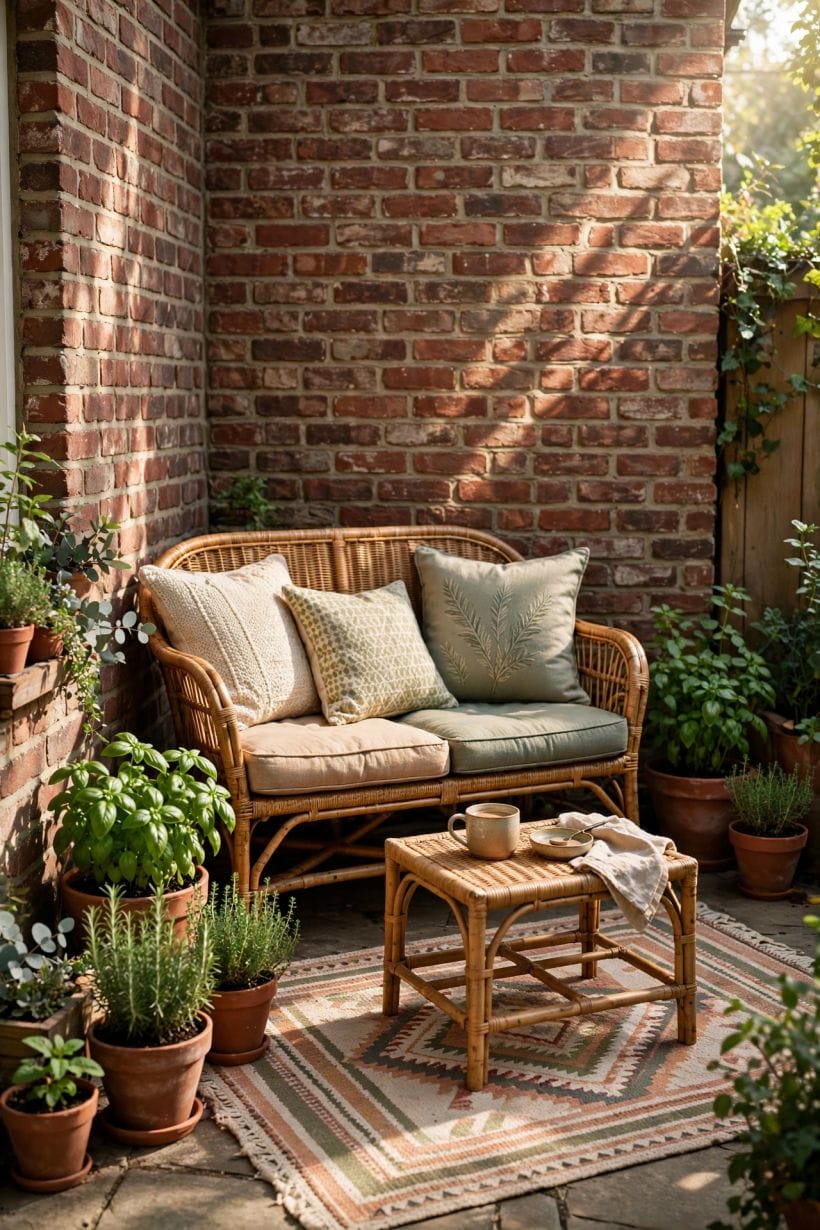
The floor is the small patio’s largest surface and its hardest worker. The raised alternative — boards instead of paving — is worked in the foldable outdoor deck survey; here the subject is the paved floor and the edges that finish it.
12. Pale paving widens the room
Light-toned slabs bounce light into the house and make the floor read larger; dark paving grounds the space and shows every leaf. In small north-facing patios the pale floor is close to a structural decision.
13. Large slabs calm a small floor
Fewer, larger pieces mean fewer joints and a calmer ground — the same rule as large tiles indoors. Busy small-unit paving on a small patio spends the eye’s energy before the furniture gets any.
14. A gravel margin forgives everything
Where paving meets planting, a gravel strip absorbs the awkward cuts, drains the border and lets pots stand level. It is the small patio’s tolerance band, hiding a multitude of measurement sins.
15. Rockscape at the tight edge
Where the patio squeezes against a bank or a shaded corner, the planted bed gives up and stone takes over — the craft worked in the small backyard rockscaping tiny spaces survey, and the right answer for the corners nothing will grow in.
16. Lay the pattern along the view
Slabs laid in courses running away from the door lengthen the patio; laid across, they widen it. The floor’s direction is a free optical decision — take it deliberately, in the direction the little room needs.
17. Level is a kindness, falls are a duty
The sitting floor must feel level under a chair’s four legs while still shedding rain away from the house.
18. An edge the eye can finish
A soldier course of bricks, a steel strip, a single step of stone: the patio’s perimeter wants a drawn border. Rooms read as finished at their edges, and the small patio is all edges.
19. One step, made generous
Where the house floor sits above the patio, a single wide step is a seat, a shelf for pots and the room’s threshold in one.
20. Leave the tree its circle
Where a tree shades the patio, its roots own a circle of the ground; pave around it with gravel or set slabs on sand within its territory. The tree is the patio’s landlord — negotiate, don’t fight.
21. Underfoot in winter matters
Glazed and polished surfaces turn treacherous in frost and wet leaf-fall. The small patio’s floor must grip in the dark months, because its door opens onto it in every season, usually in slippers.
22. Sweepings have a home
A small patio shows every leaf and crumb; give it a brush that lives by the door and a two-minute ritual. The tidy patio gets used; the littered one gets postponed.
4. Shade: The Small Patio’s Roof
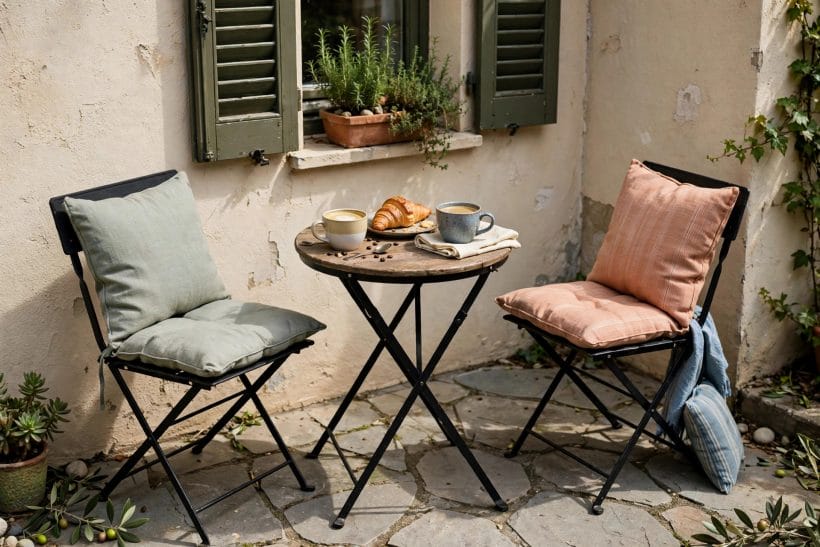
An unshaded small patio is a part-time room, closed by the sun for the best hours of summer. Shade — fixed, folding or grown — is what turns the paved patch into the house’s most used seat, and it must be planned at the scale of the little room: everything below is proportioned to a few square metres of sky.
23. Read the sun before buying the shade
Sit on the patch through a summer day and note where the sun lands at the hours you will actually use it.
24. The parasol: shade that follows the day
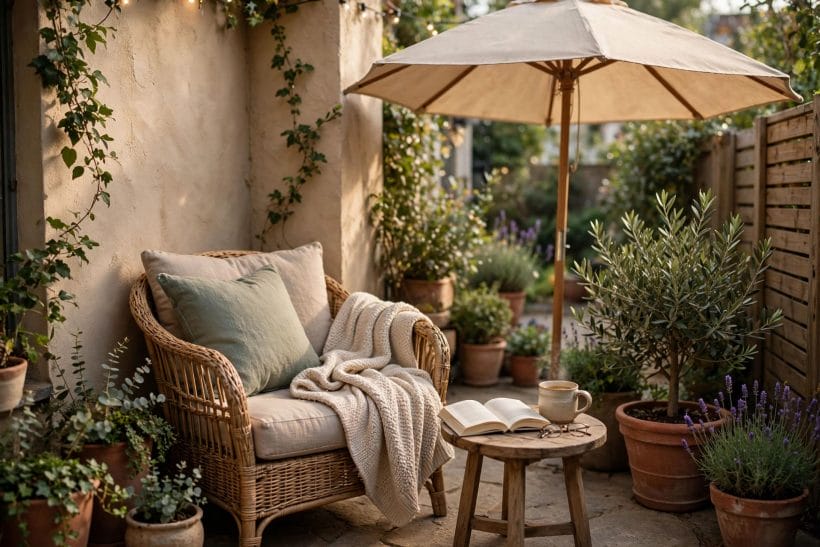
A tilting parasol on a weighted base is the small patio’s flexible roof — raised for lunch, folded for the stars, moved as the season turns.
25. A sail shade for the modern patch
A stretched sail gives high, clean shade with almost no footprint and a sculptural line against the sky. It wants firm fixings and honest tension, and it comes down for winter storms without complaint.
26. The lean-to pergola against the house wall
A slim pergola leaned on the house wall roofs the patio’s sitting half and gives climbers their ladder.
27. A retractable awning for the serving wall
Over a door and its serving hatch of a patio, an awning shades the threshold and the cook’s route as well as the table.
28. Grow the shade: one small tree
A small tree in the ground or a great pot — a multi-stemmed amelanchier, an olive in kind climates — shades with dapple rather than darkness and gives the patio its ceiling of leaves.
29. Climbers on the fence line
A fence clothed in jasmine, clematis or vine cools the boundary it covers and perfumes the evening air. Living shade on the vertical plane leaves the small floor entirely free, which is where shade is cheapest.
30. Shade the seat, not the whole patio
Even at midsummer, the small patio wants a sunny corner for the morning and the plants. Shade the table and the chairs; leave the pots their sun. Partial shade, exactly placed, is the connoisseur’s answer.
31. Light fabric, deep shade
Pale canopies reflect heat and keep the air beneath them kind; dark fabric drinks the sun and radiates it downward. On the small patio, where the shade is close overhead, the pale cloth is the cool head’s choice.
32. Wind is shade’s enemy and editor
Every canopy is a sail in a gust. Fixings, weights and the habit of folding before weather are part of the shade’s specification — the small patio’s roof must be as storm-literate as it is sun-literate.
33. Evening shade becomes evening shelter
The same canopy that shades the lunch keeps the dew off the evening’s cushions and the light rain off the party. Shade planned generously repays the household twice a day.
5. Seating and the Table: Furniture at Honest Scale
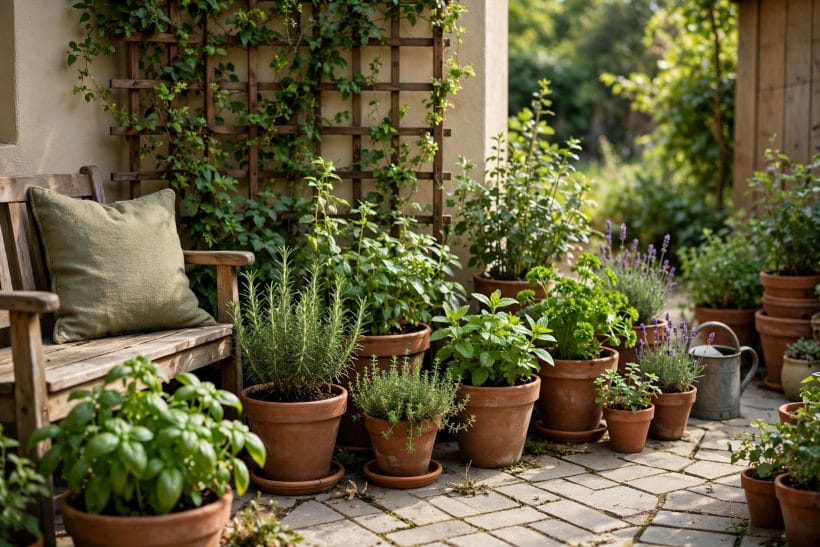
Small patio furniture fails in two directions: doll-sized pieces that admit the patio is small, and garden-centre suites that admit nothing else onto it. This section argues for the middle way — real comfort at edited count, furniture that folds, stacks or doubles, and a table sized to the meals the patio actually hosts.
34. Two proper armchairs beat six perch seats
Comfort is the small patio’s luxury: two chairs you can sit in for an evening, with cushions that live in the bench box, will host more life than a ring of folding perches. Count evenings, not seats.
35. The bistro set: the classic answer
A small round table and two folding chairs is the patio’s founding furniture — movable with the sun, storable against the wall, and exactly right for coffee, lunch and a laptop’s hour.
36. A bench along the wall seats the crowd
A built or bought bench against the house wall seats three where chairs seat two, stores the cushions inside itself, and leaves the floor’s heart clear. With a loose table it is the dining answer for the narrow patio.
37. Folding and stacking are structural virtues
On a small patio, furniture that folds flat or stacks lets the room change its mind — cleared for the barbecue, ringed for guests, emptied for winter. Fixed suites on small floors are decisions the household must live around.
38. The table sized to the real meal
Most patio dining is two people and a shared dish, not eight and a banquet.
39. Cushions live within arm’s reach
Outdoor cushions that must be fetched from the house will be fetched less and less.
40. Materials that forgive the weather
Teak, powder-coated metal, woven resin and stone: the small patio’s furniture must survive being the room’s only furniture, out in all weathers. Covers help; honest materials help more; wishful indoor furniture helps not at all.
41. A footstool is a second chair
The low stool or ottoman serves feet at coffee, a guest at drinks and a tray at lunch. In the small patio’s economy, every piece that does two jobs has paid its rent; the stool does three.
42. Keep the door swing sacred
Furniture that must be moved to open the door will be resented daily and finally abandoned against the wall. Measure the swing, mark it on the plan, and let no chair leg cross it — the patio’s first law.
43. One chair in the sun, on purpose
Even in a shaded scheme, keep one seat that catches the day’s best sun — the winter morning’s throne.
44. Dress the table, not the patio
A cloth, a lantern and a pot of herbs on the table civilise the smallest patch more than any redecoration of its edges. The small patio dresses from the centre out.
6. Planting in Pots: Green Walls Without Beds
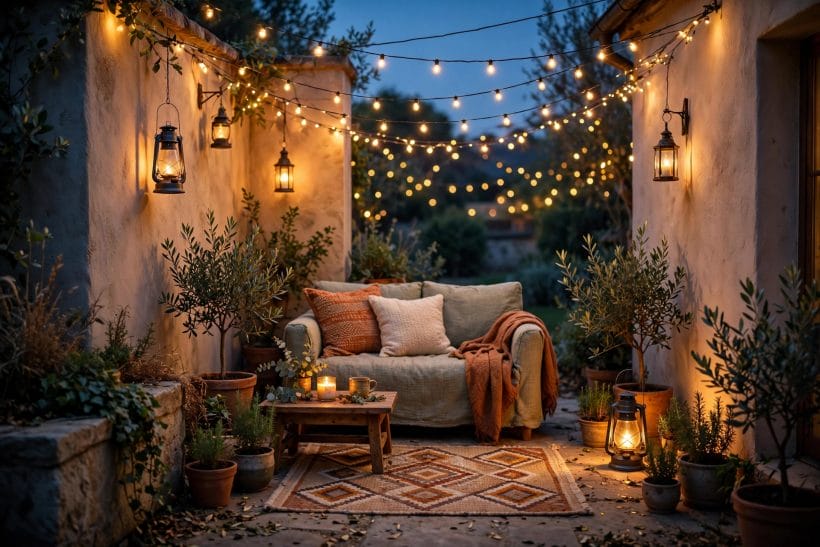
The small patio usually has no soil of its own, so its garden lives in pots — which turns out to be a freedom: the planting can be edited, moved, rested and replaced like furniture. The system as a whole is worked in the container garden ideas survey; here it is applied at patio scale.
45. One big pot beats five small ones
A single generous container — a small tree, a great shrub, a sweep of grasses — gives the small patio its green architecture.
46. Plant the boundary, keep the heart
Pots massed at the patio’s edges and corners soften its boundaries while the floor’s centre stays clear for chairs and feet. The green should frame the sitting, never compete with it for the same square metre.
47. Height in pots: the green wall
Tall pots and stands lift planting to the eye’s level, where it screens, shades and perfumes the seat. A green wall grown in containers is the small patio’s hedge — movable, and innocent of foundations.
48. Herbs by the door, always
A pot of herbs within the cook’s reach of the kitchen door is the patio’s most used planting: clipped daily, fragrant when brushed, and proof the little room is a working part of the house.
49. Scent is the small patio’s perfume
In a confined space, scent concentrates: jasmine at the evening seat, lavender at the step, a lemon tree in the sun trap. Plant for the nose at patio scale — it is the sense the little room serves best.
50. Evergreen bones, seasonal guests
Keep a skeleton of evergreen pots that holds the patio’s shape all winter, and rotate seasonal colour through a few changeable containers. The bones keep the room furnished in January; the guests keep it interesting in June.
51. Watering is the pots’ rent
Containers drink daily in summer, and a small patio’s planting plan is really a watering plan: group the thirsty together, stand pots where the hose or can reaches easily, and choose drought-kind plants for the far corners.
52. Pots on feet, saucers with sense
Raised pots drain freely, spare the paving its stains and keep roots from the winter’s cold floor. Saucers under the thirstiest, feet under the rest — the patio floor will show the difference within a season.
53. Climbers in pots climb just the same
A climber in a big pot with a trellis panel gives the fence its green without a bed.
54. Repeat one plant for calm
Three of the same grass, two of the same lavender, one family repeated: repetition knits a container garden into a composition. The collector’s scatter of single specimens belongs in a bigger garden than this.
55. Winter pots earn their place
The patio is seen from indoors all winter; a few pots of evergreen structure, winter berries and early bulbs keep the view furnished in the dark months. Plant the winter picture while the summer one is still in flower.
7. Light, Warmth and the Evening Hour
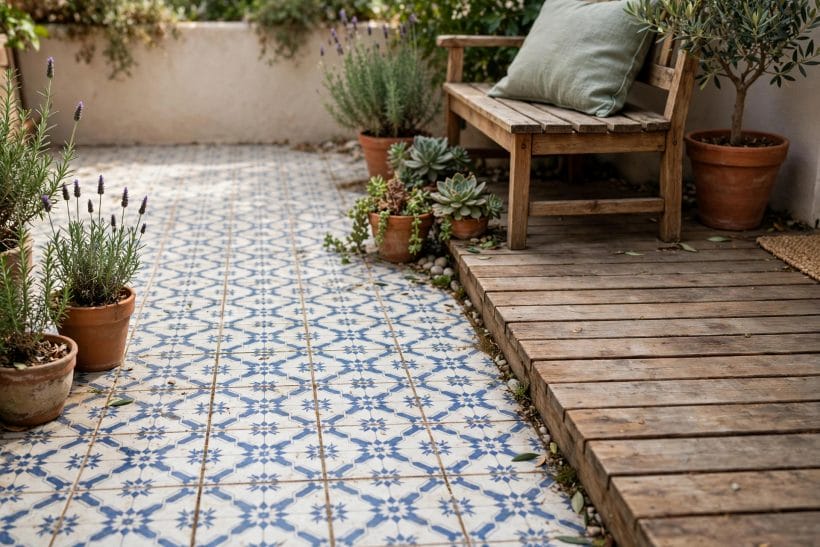
The small patio’s great hours are the edges of the day — first coffee, last drink — and both happen in low light. This section covers the little room’s lamps, its honest warmth and its screening from the neighbours, the three things that stretch its season from a few summer weeks to most of the year.
56. String lights: the patio’s ceiling of stars
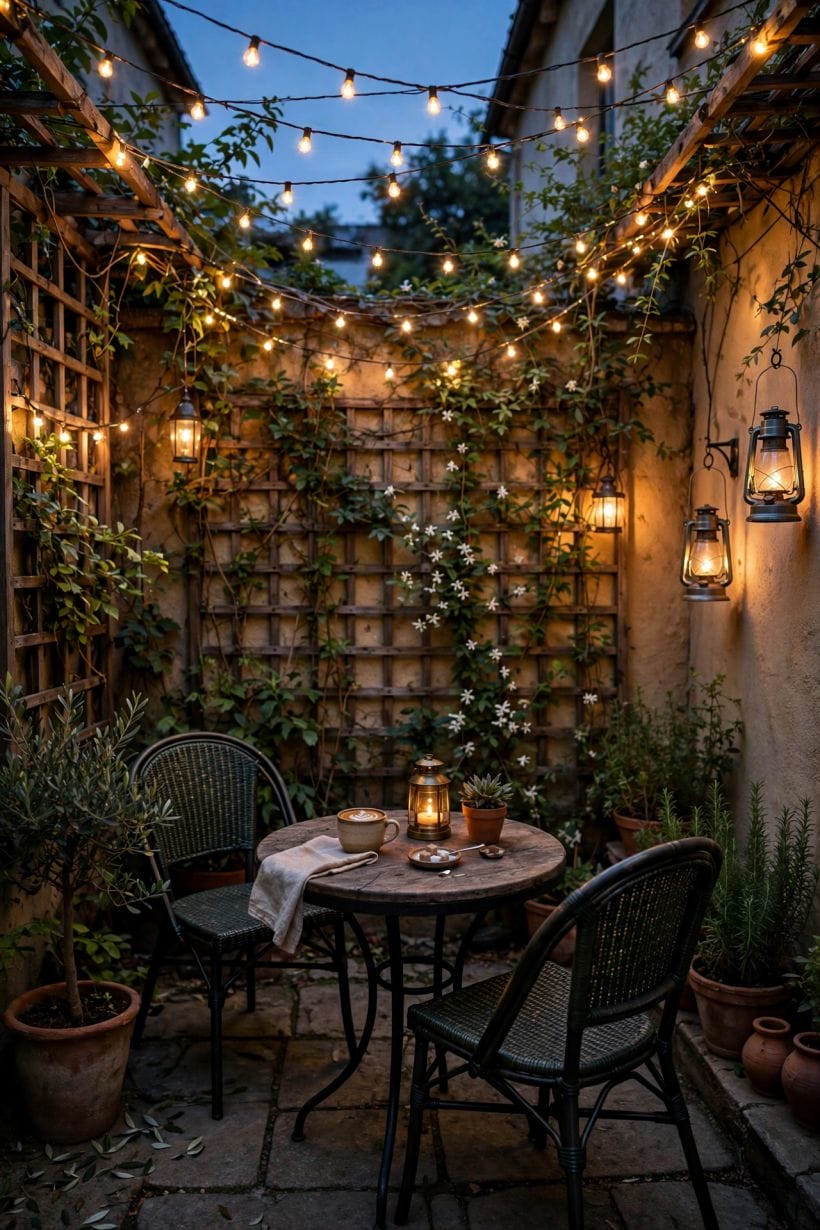
A festoon strung from wall to fence draws a glowing ceiling over the small patio and costs less than any other structure in this survey. It flatters everything beneath it and turns an ordinary Tuesday supper into an occasion.
57. Lanterns where the feet are
Light at ankle and table height — lanterns, a candle in a jar, a low lamp on the bench — makes faces kind and steps safe, where a single bright overhead would flatten the evening into a yard.
58. The fire bowl, sized to the patch
A small fire bowl or chiminea gives the patio its hearth: warmth, a focal flame and the season’s extension at both ends.
59. A heater where the seat is
Where fires are unwelcome, a modest radiant heater aimed at the sitting corner — not at the whole sky — buys the evening hours honestly. Warm the people, not the parish: the small patio’s heating motto.
60. Screening is the evening’s privacy
The little room feels overlooked most at lamplight.
61. Candles are infrastructure here
In a space this small, candlelight is not garnish: a few jars on the table and the step are a lighting system, with a perfume of their own.
62. Light the door’s route
The path from door to seat crosses the patio in the dark all winter; a low light at the step and one at the seat make the route kind.
63. Warm light only, by house rule
Outdoor light should be the colour of candlelight and hearth-glow, never the blue-white of the car park.
64. Plug points planned, not trailed
A weatherproof socket at the patio’s wall — for lights, a heater, a speaker — ends the era of cables through the door. It is an electrician’s short visit and a permanent improvement to every evening the patio hosts.
65. The evening check from indoors
Judge the patio’s lighting from the kitchen window, where it will be seen for half the year. It should read as a lit room of the house — warm, low, inhabited — an invitation printed in light.
8. Small All Year: Storage, Care and the Winter Picture
The small patio is the easiest outdoor room to keep and the easiest to neglect, because it is seen daily and used in bursts. This closing section covers its manners with the seasons — and its place in the family of the house’s thresholds, between the deck ideas survey’s boards and the porches, one of which — the front porch ideas post — keeps the same threshold arts at the front of the house.
66. Autumn: clear the falls, feed the floor
Leaves left on paving stain it and slick it; the autumn patio wants a weekly sweep, gutters above it cleared, and pots lifted or footed before the frosts. An hour in autumn is worth a weekend in spring.
67. Winter: the furnished view
Stack or cover the furniture honestly, keep the evergreen pots composed, and let the patio be the house’s winter picture — a lit lantern at the step does more for January morale than any resolution.
68. Spring: wash, oil, replant
The spring hour: paving washed, timber oiled, the bench box emptied and dried, the first herbs planted. The small patio’s whole annual service fits in one fine morning, which is its quiet boast over bigger gardens.
69. Covers that fit get used
A cover that wrestles will be left in the box; one that drops on in a minute will be used nightly. Buy covers for the furniture’s real shapes and keep them in the bench they protect.
70. The cushion rule: dry box or indoors
Cushions live in exactly two places — on the chairs, or in the dry box. The third place, the damp pile by the door, is where cushions go to die. The rule is small; the savings are not.
71. Drainage checked with a kettle
Once a year, pour water at the patio’s high side and watch where it goes. It should leave — away from the house, toward the garden or the drain.
72. Repoint and repair while it is small
Paving joints and timber ends are renewed cheaply while the patio is young and the failing is local. The small patio rewards the stitch in time more visibly than any other part of the garden.
73. Keep the kit by the door
Brush, trowel, watering can, candle spares: the patio’s small kit lives in one box or basket by its door. Tools within reach are chores halved; the patio stays kept because keeping it is easy.
74. Guests: the two-minute transformation
The small patio’s party trick is speed: cushions out, lanterns lit, the fire bowl kindled, a cloth on the table — two minutes from paved patch to the house’s best room.
75. End the year with the chair test again
Each spring, sit in the patio’s chair at its best hour and read the little room as a guest would. What the eye finds tired, fix in the spring hour; what it finds lovely, leave entirely alone.
9. Checks and Mistakes: Before the First Purchase or the First Stone
The checks are small and physical. Sit in the patio’s own chair at its intended hours and read the sun, the breeze and the neighbours’ sightlines from the seat itself. Walk the door’s swing, the serving route and the cushion’s journey to its dry box. Pour the kettle of water and watch the falls. A small patio planned at full size, in the seat, rarely disappoints at any size.
The mistakes are the two vanities: furnishing for the crowd that comes twice a year while the daily two rattle in a suite built for eight, and scattering little pots and ornaments until the room reads as a shelf. Furnish the daily life generously, edit the rest, and let one big gesture carry the room’s dignity.
10. Costs and Pulling It Together
Small patios divide by floor and furniture rather than by fortune. The modest register keeps the existing paving, buys the bistro set and the big pot, and strings the lights — a weekend’s money for a season of evenings. The middle register re-lays the floor, builds the bench box and adds the sail or the lean-to pergola. The generous register is the garden-room build: new stone, planted boundaries, water and power brought to the wall. In every register the order of spending is the same: floor first, seat second, shade third, green and light with what remains.
Pull the little room together the way its bigger relatives are pulled: one purpose leading, one palette, one generous thing. The patio that knows its job — the coffee at dawn, the supper at dusk — will be used more in a month than a grand terrace that never decided. Small is not the patio’s apology; properly edited, it is the whole of its charm.
Final Considerations
The small patio is the democrat of garden rooms: it asks for a door, a patch of ground and an honest edit, and it returns a room under the sky that the household uses out of all proportion to its size. Its seventy-five ideas make one argument — that outdoor living is a matter of decisions, not of acreage.
Give the little room its floor, its seat, its shade and its lantern, keep its cushions dry and its chair test passed, and it will host the year’s best hours quietly, a few steps from the kitchen door, from the first spring lunch to the last bright evening of autumn.

0 Comments