
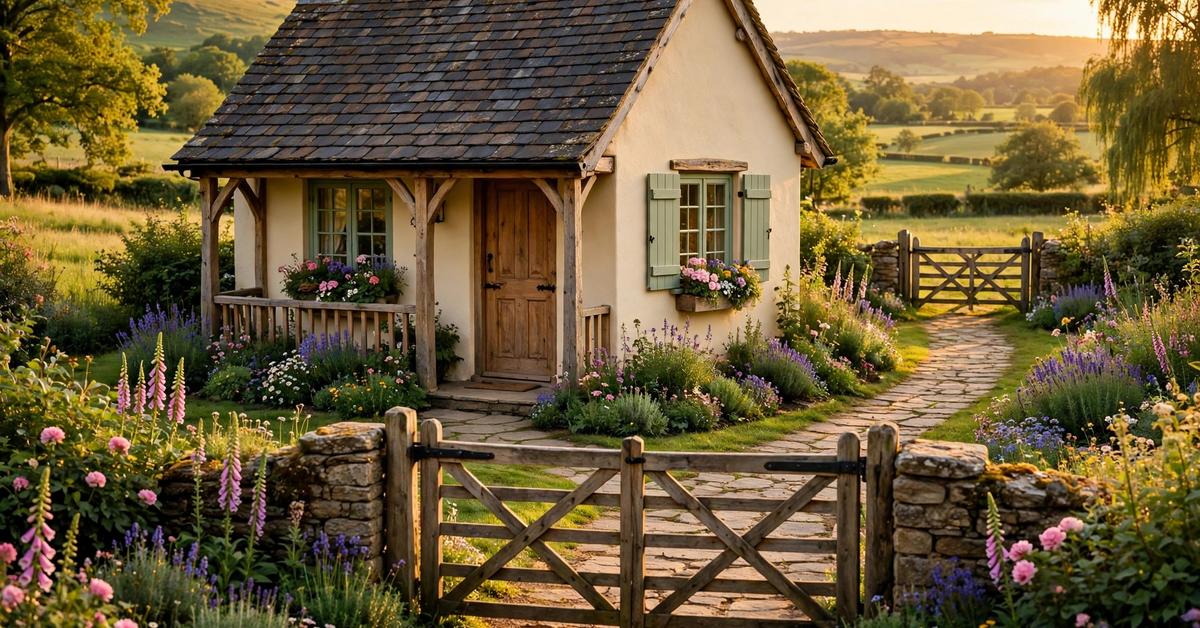
A cottage exterior earns its charm before anyone steps inside. The roof line against the sky, the colour of the walls, the planting beside the path and the glow at the door all speak together, and on a small house every one of those choices shows. Nothing here needs grandeur. A modest cottage can look complete and welcoming when its parts agree with each other, and this gallery gathers the details that help that agreement happen, from the shape of the roof to the planting at the gate.
Small cottage exteriors reward restraint. Because the front is compact, a single strong idea carries further than a crowd of competing ones, and the most appealing fronts tend to repeat one material, one soft colour family and one planting mood from gate to door. The ideas below walk that front slowly, in the order a visitor meets it, so each choice can be weighed on its own and then fitted into the whole. For a closer look at one wall material, the brick cottage ideas gather brick fronts in the same spirit, while the cottage garden look follows the planting side of the picture from path edge to doorstep.
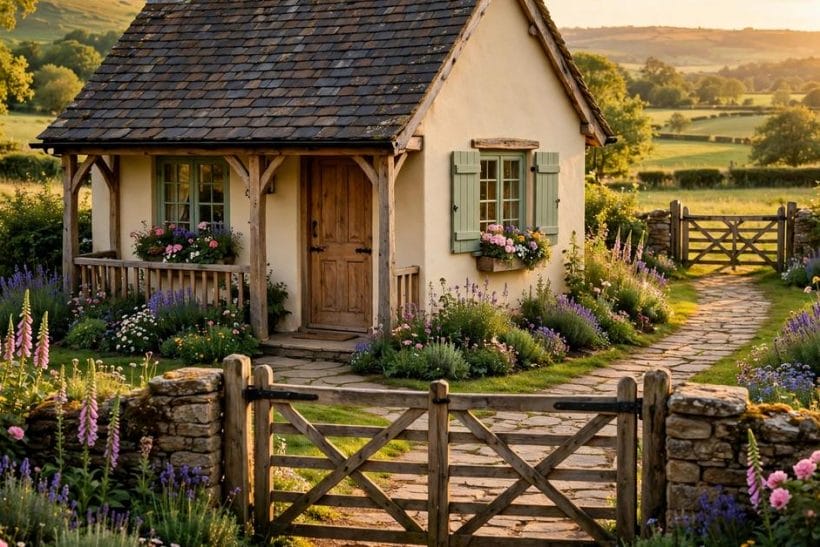
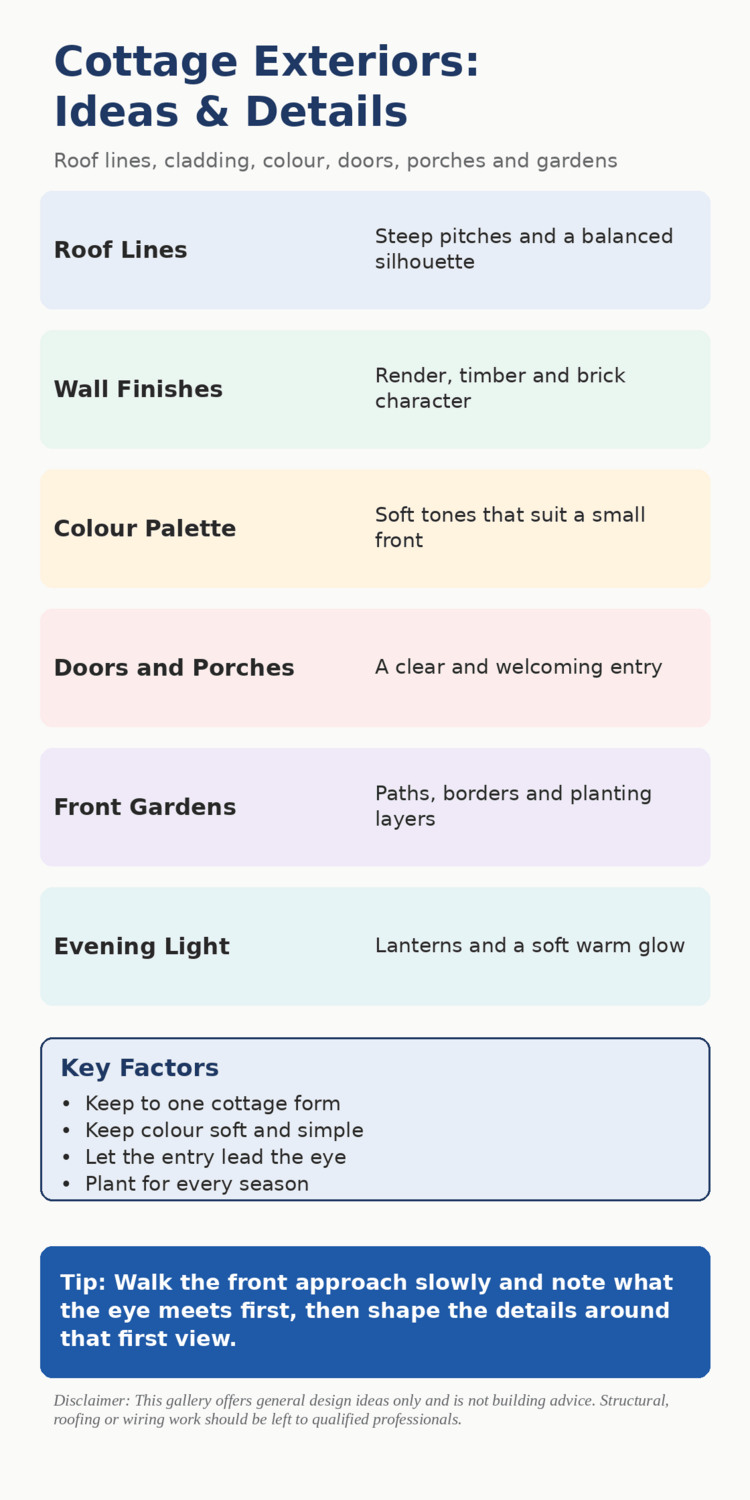
| Item | What it is |
|---|---|
| The Cottage Silhouette | Stand back and look at the whole shape before studying any single detail. |
| Roof Lines That Shape the Cottage | The roof does more of the visual work on a cottage than on almost any other house form, because it often covers a large share of what is seen from the street. |
| Doors, Porches and the Welcome Point | Every cottage front has one moment that matters more than the rest: the step where a visitor arrives and the door opens. |
| Colour for a Small Cottage Front | Colour on a cottage should feel as though it grew out of the landscape rather than being imposed on it. |
| Paths, Borders and the Front Garden | The path is the cottage garden in miniature: it sets the pace of arrival and decides whether the front feels tended or merely passed through. |
| Light After Dark | A cottage that looks charming by day should not disappear at dusk. |
| Outdoor Rooms and Seating Corners | A cottage front need not be only a passage to the door; with a little shelter and a seat, it can become a room in its own right. |
| Stone Walls and Sheltered Porches | Stone gives a cottage front a sense of permanence that painted surfaces alone cannot supply. |
| A Cottage in the Wider Landscape | No cottage front stands alone, and the best exteriors acknowledge the landscape around them. |
| Keeping the Exterior in Good Repair | Charm fades quickly when maintenance slips, and a cottage exterior asks for regular, gentle attention rather than occasional heroic effort. |
1. The Cottage Silhouette
Stand back and look at the whole shape before studying any single detail. A cottage reads first as a silhouette: a pitched roof, a chimney, a low wide front and a door set somewhere near the middle or slightly to one side. When that outline is calm and balanced, the smaller choices underneath it fall into place more easily, and when the outline is restless, no amount of planting quite settles it. The silhouette is therefore the right place to begin, not with paint charts or plant lists but with the simple question of whether the house looks settled on its plot.
Proportion matters more than size on a cottage front. A roof that rises steeply gives a small house presence without bulk, while a shallow roof can leave the same house looking flat and unfinished. Dormers, gables and porches should feel like part of the original shape rather than additions stuck on afterwards, and the eye should be able to travel from ridge to eaves to door without a jarring break. If one element shouts, whether a porch too large for the front or a dormer set awkwardly high, the whole front feels uneasy, and softening that one element usually restores the calm.
2. Roof Lines That Shape the Cottage
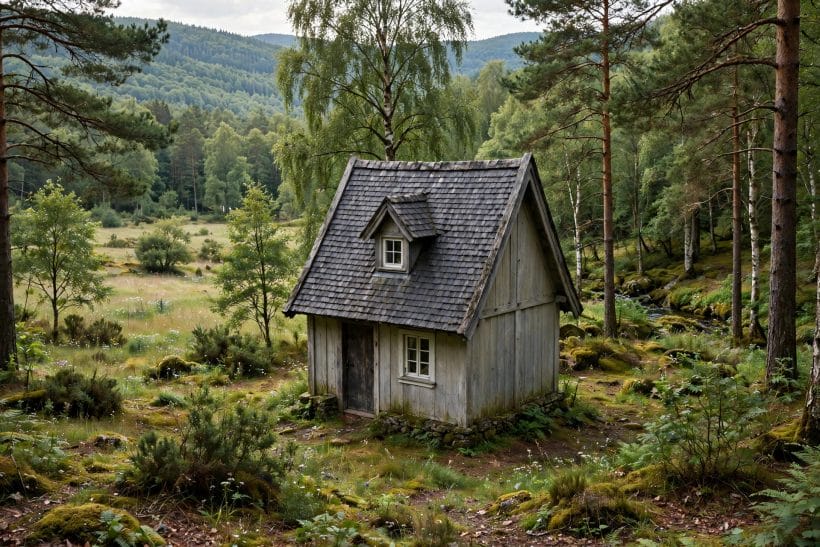
The roof does more of the visual work on a cottage than on almost any other house form, because it often covers a large share of what is seen from the street. A steep gable gives a cottage its storybook outline and sheds weather cleanly, while a gentler pitch suits a low, spreading cottage that sits close to the ground. Either can look right, provided the pitch suits the walls beneath it and the eaves finish neatly rather than ending in a ragged edge. The material of the roof, whether slate, tile or thatch in appearance, should also sit comfortably with the walls, so the house reads as one building rather than two ideas stacked together.
Details at roof level deserve the same care as the main pitch. A small dormer can bring light and headroom to an upper room, but its size and position should respect the roof it sits in, and a chimney should look like it belongs to the house rather than arriving as an afterthought. Gutters and downpipes, often ignored until they fail, are part of the picture too: kept straight, painted to blend with the walls or the roof edge, and running cleanly to the ground, they protect the walls and keep the roof line looking finished. Work at roof height, and any repair to gutters or chimneys, belongs to qualified professionals, since falls and hidden decay make it unsafe and unwise to improvise up there. The craftsman exterior ideas show how exposed roof details can be made a deliberate feature rather than an accident of construction.
3. Doors, Porches and the Welcome Point
Every cottage front has one moment that matters more than the rest: the step where a visitor arrives and the door opens. A porch, even a shallow one, gives that moment shelter and scale, framing the door and offering a place for a lantern, a boot scraper or a pair of pots. Without some kind of cover, a door can feel exposed and abrupt, however pretty its colour, while a porch that is too deep or too grand for the cottage can swallow the front entirely. The right porch is the one that matches the house: timber posts and a simple pitched canopy for a rustic cottage, a neat flat hood for a plainer front.
The door itself should be legible from the path, with its colour, its handle and its frame all working together. A painted door in a soft contrasting tone draws the eye gently toward the entry, while a natural timber door suits a cottage whose walls are already warm and textured. Keep the furniture simple and sturdy, since a cottage door is used in all weathers, and make sure the step and threshold are safe and level, with a clear path up to them. For door colour inspiration, the black front door ideas show how a dark door can anchor a pale front, and the covered porch ideas gather sheltered entries of every depth, from a simple canopy to a full sitting porch.
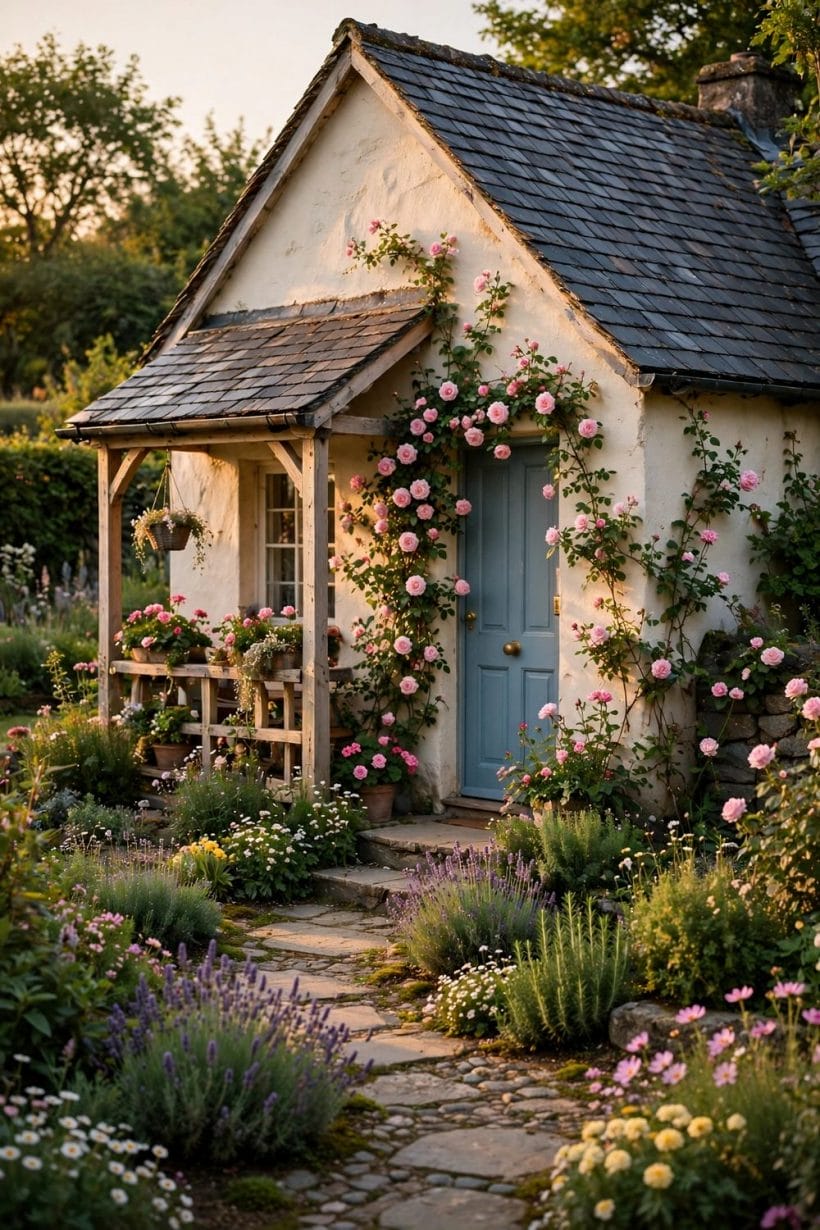
4. Colour for a Small Cottage Front
Colour on a cottage should feel as though it grew out of the landscape rather than being imposed on it. Soft whites, creams, pale greens and muted blues all sit comfortably against stone, brick and timber, and they keep a small front looking fresh without shouting across the street. Strong colour has its place, usually in a single accent such as the door or the window boxes, where a bolder tone can act as a full stop at the end of a quiet sentence. When every surface competes for attention, the front turns noisy; when one soft family of tones runs through walls, trim and door, the cottage looks considered even before a single flower is planted.
Test colour in daylight and in evening light before committing, since a shade that looks gentle on a small sample can turn harsh across a whole wall, and a tone that glows at noon can go grey under cloud. Paint the trim a shade lighter or darker than the walls rather than introducing a wholly new colour, and let the natural materials of the house, the stone of a wall or the grain of a timber door, supply the texture that paint alone cannot. The beige exterior ideas are a useful study in restraint, showing how a single warm neutral can carry a whole front when the planting and the door provide the contrast.
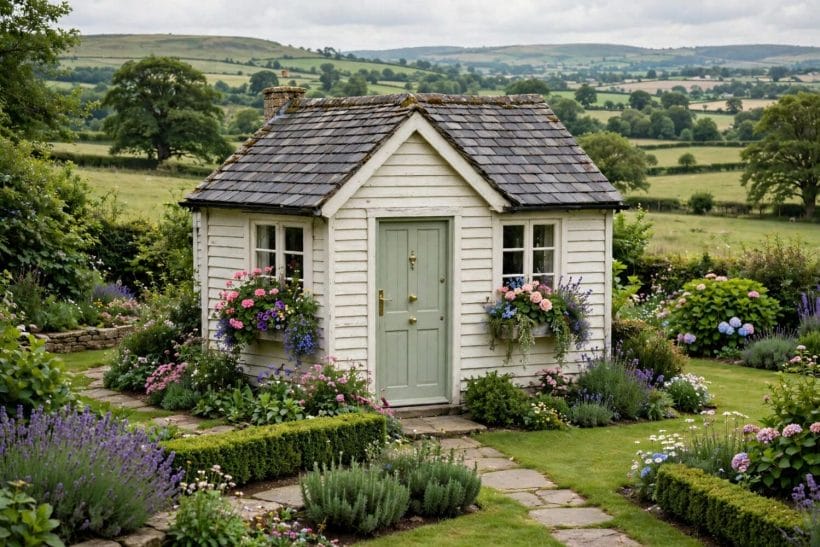
5. Paths, Borders and the Front Garden
The path is the cottage garden in miniature: it sets the pace of arrival and decides whether the front feels tended or merely passed through. A winding stone or gravel path, edged with low planting, slows a visitor down and gives the eye time to enjoy the front, while a straight concrete strip hurries people past the very details that make the cottage charming. Keep the path wide enough to walk comfortably and its surface even and safe underfoot, and let the borders spill softly over its edges without blocking it, so the walk to the door feels like moving through a garden rather than along a corridor.
Planting beside a cottage front works best in layers. Low edging plants hold the line of the path, middle-height shrubs and perennials fill the beds with shape through the seasons, and climbers on the walls draw the eye upward and tie the garden to the house. Choose plants that suit the soil and the light of the plot rather than fighting them, and favour varieties that offer something across the year, whether spring blossom, summer scent or autumn colour, so the front never has a bare season. A small gate at the street end completes the picture, giving the garden a threshold and the cottage a sense of arrival that an open gap can never quite supply.
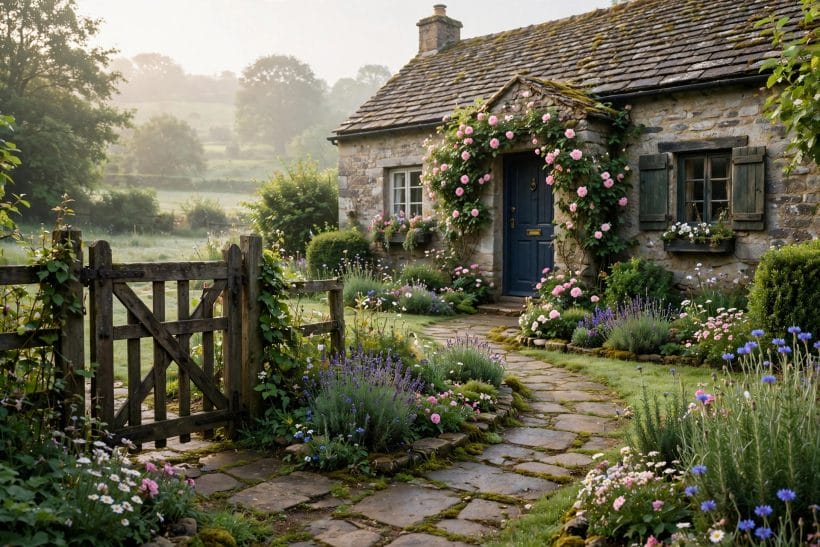
6. Light After Dark
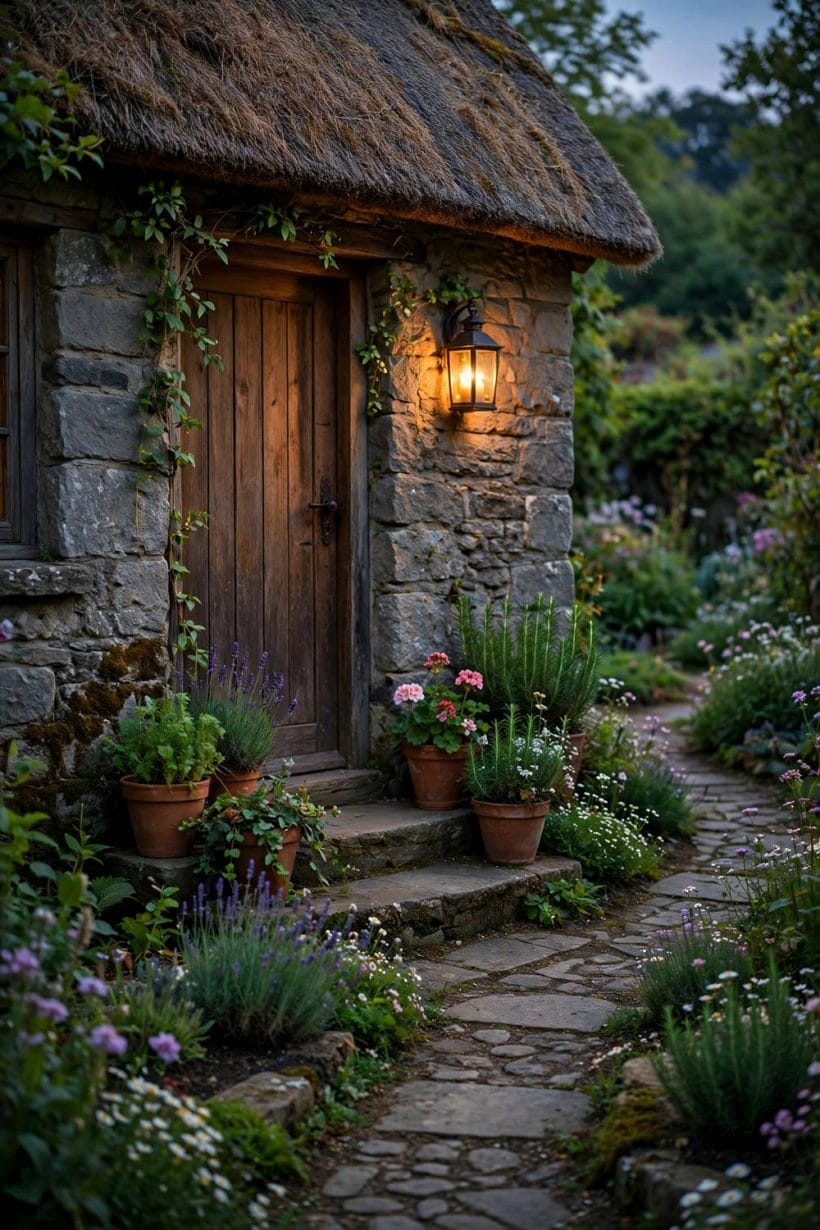
A cottage that looks charming by day should not disappear at dusk. A lantern beside the door, a soft light in a porch and a gentle glow from a window change the whole character of the front in the evening, turning a dark shape into a welcoming presence. The aim is warmth rather than brightness: one or two well-placed lights, shielded so they do not glare into the street, do more for a cottage than a blaze of floodlighting that flattens every detail and disturbs the neighbours. Light should reveal the path, the step and the door, since those are the places where safety and welcome meet.
Think about light as part of the design from the start rather than as an afterthought bolted on later. A lantern that matches the style of the porch, whether simple black metal or aged brass in tone, looks like it belongs, while a mismatched fitting can jar as badly as a wrong paint colour. Solar or mains fittings both have their place, but any wiring work, and any fitting fixed at height or near water, should be left to a qualified electrician, since exterior electrics punish improvisation. Done well, evening light extends the cottage garden into the night and gives the house a second, quieter beauty after sunset.
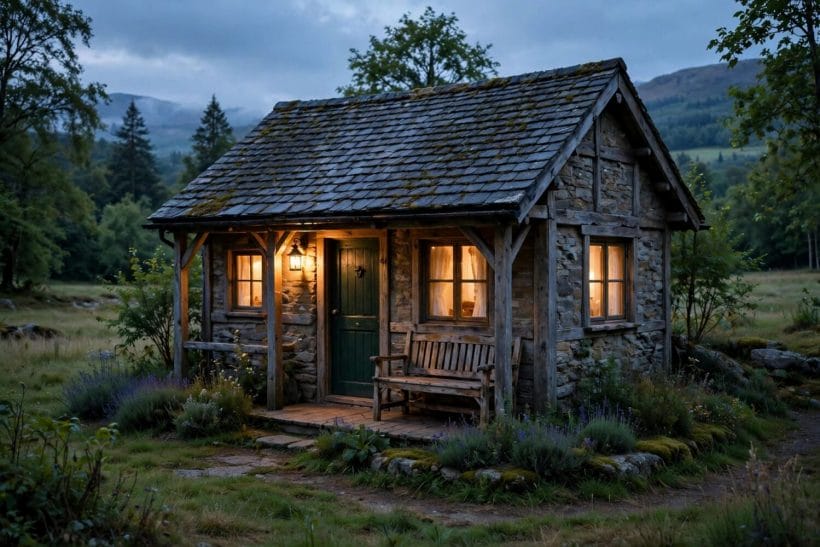
7. Outdoor Rooms and Seating Corners
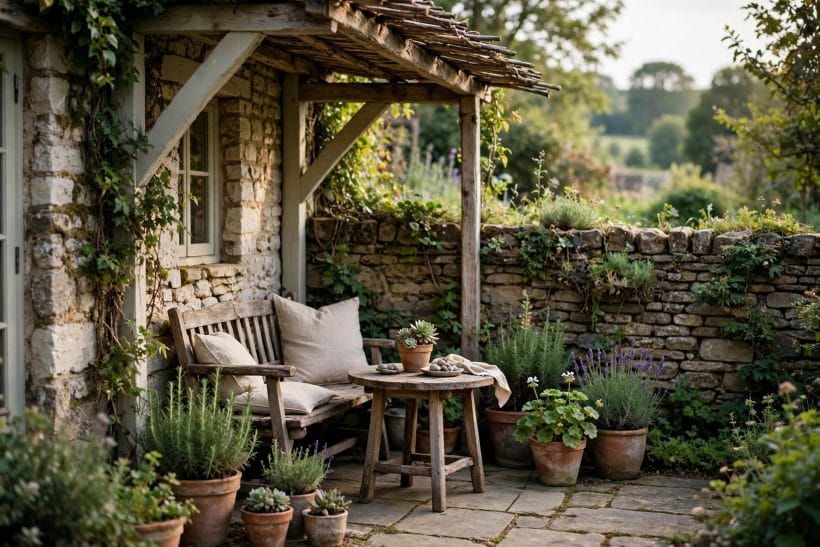
A cottage front need not be only a passage to the door; with a little shelter and a seat, it can become a room in its own right. A bench beside the porch, a small table tucked against a sunny wall, or a pair of chairs on a paved corner all invite the household to use the front of the house rather than merely pass through it. The key is scale: cottage seating should be modest, weatherproof and easy to move, since a heavy suite designed for a large patio will crowd a small front and make it feel cluttered rather than comfortable.
Place seating where it catches the sun at the time of day it will actually be used, and give it a backdrop, whether a stone wall, a hedge or a climbing plant, so the sitter feels sheltered rather than exposed to the street. Pots and planters can soften the edges of a seating corner without taking up the room a bed would need, and a small table makes the corner useful for a morning drink or an evening rest. The backyard patio ideas carry the same thinking around the back of the house, where a larger paved area can hold the same modest furniture in a more private setting.
8. Stone Walls and Sheltered Porches
Stone gives a cottage front a sense of permanence that painted surfaces alone cannot supply. A stone wall, a stone step or a stone surround to the door grounds the house in its plot and ages gracefully, weathering into character rather than wearing out. Where the whole cottage is not stone, a stone feature, such as a low garden wall or a porch built of matching stone, can still lend that feeling, provided the stone tones agree with the walls behind them. Mixed stone types and clashing colours, on the other hand, can make a front look patched together, so restraint in the choice of stone pays as surely as restraint in paint.
A sheltered porch built against a stone wall has a particular charm, since the stone holds the day’s warmth and the canopy keeps the rain off the step. Keep the porch structure simple and honest, with posts and beams that look capable of carrying the roof they hold, and avoid ornamental details that fight the plain character of the stone. Climbing plants soften the junction between wall and porch over time, but they should be kept clear of gutters and roof edges, and any plant that threatens the mortar or the roof covering should be cut back before it causes damage that needs professional repair.
9. A Cottage in the Wider Landscape
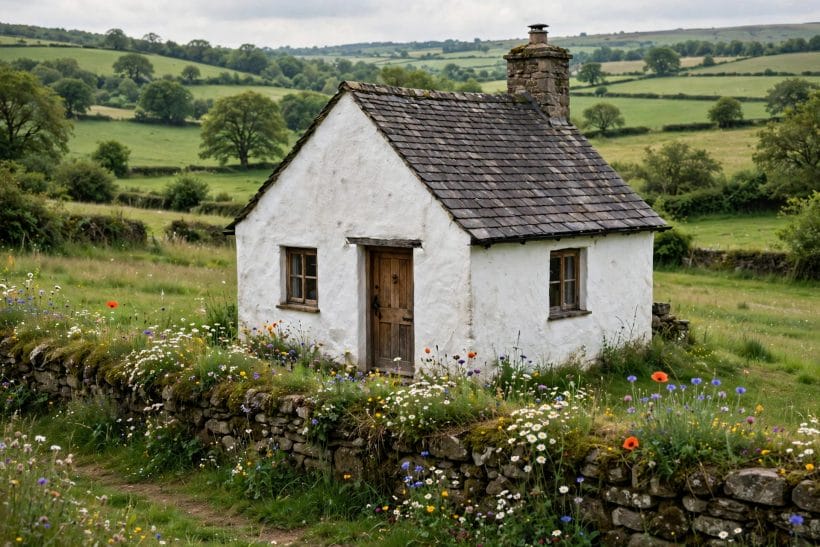
No cottage front stands alone, and the best exteriors acknowledge the landscape around them. A cottage in open countryside can afford a wilder edge, with meadow planting running up to a stone wall and hedges rather than fences marking the boundary, while a cottage on a village street needs a tidier threshold, with a gate and a clipped hedge keeping the front presentable to passers-by. In both cases the boundary treatment should suit the setting: a rustic wooden gate suits a rural lane, while a simple iron gate suits a formal street, and swapping the two usually looks wrong in both places.
Views out from the cottage matter as much as views in. Windows placed to catch a garden view or a distant hill make the small rooms inside feel larger, and the planting outside should frame those views rather than block them. Keep trees and large shrubs at a distance that lets light reach the walls, since a cottage shaded all day can feel damp and gloomy however pretty its planting, and let the roof line stay visible from the approach rather than hiding it behind fast-growing screens. A cottage that sits comfortably in its landscape looks as though it belongs there, and that sense of belonging is the hardest quality to fake and the most rewarding to achieve.
10. Keeping the Exterior in Good Repair
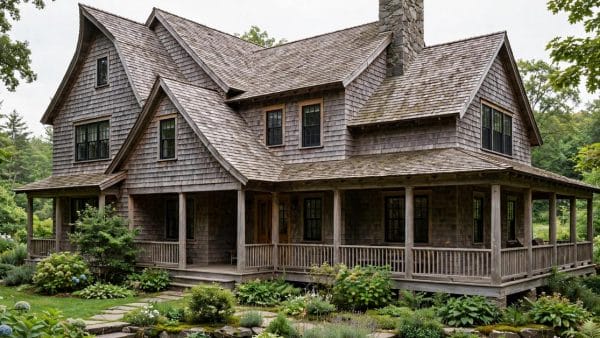
Charm fades quickly when maintenance slips, and a cottage exterior asks for regular, gentle attention rather than occasional heroic effort. Paintwork should be washed and touched up before it peels, timber should be checked for softness and treated before decay spreads, and pointing on stone and brick should be inspected for gaps that let water in. Small jobs done often keep a cottage looking loved, while the same jobs left for years turn into expensive repairs that change the character of the front as well as its condition.
Some work should never be improvised. Structural repairs, roof work, chimney work and anything involving electrics or gas belong to qualified professionals, and a reputable tradesperson will explain what needs doing and why before starting. Keep a simple record of what has been done and when, so future work can build on a known history rather than guesswork, and walk the front of the house with fresh eyes each season, noting what has changed since the last look. A cottage kept in this steady, unhurried way holds its charm for decades, and every later improvement starts from a sound and honest base.
Final Considerations
The ideas in this gallery share one thread: a cottage front succeeds when its parts agree. Roof, walls, colour, door, path and planting each have a voice, but none should shout over the rest, and the most satisfying fronts are often the quietest ones, where a soft palette, a clear entry and a tended garden do the work without fanfare. Begin with the silhouette, settle the colour, then let the garden and the light follow, and resist the urge to add one more feature when the front already feels complete.
Small cottage exteriors are forgiving subjects for this kind of slow improvement, since each change is small enough to try, to live with and to adjust. Change the door colour before rebuilding the porch, plant the borders before relaying the path, and add a lantern before rewiring the front, and the cottage will tell you at each step whether the change belongs. Worked through in that order, with professional help for anything structural, electrical or at height, a modest cottage front can grow into one of the most welcoming sights on its street, season after season.

0 Comments