
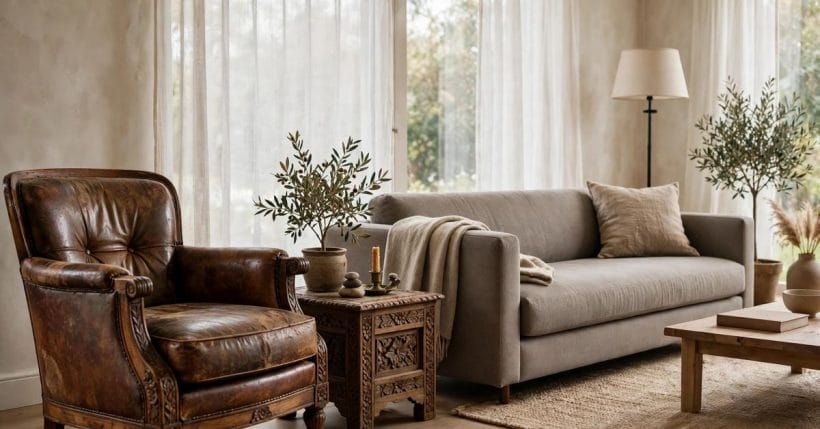
Vintage modern style is one of those phrases that sounds simple until you try to pin it down. It pairs two ideas that seem to pull in opposite directions: vintage, which points to older pieces with age and character, and modern, which points to clean lines and calm, uncluttered rooms. Put together, vintage modern style describes a room where older pieces and modern pieces share the space, and neither side overwhelms the other. The vintage pieces bring warmth, patina and a sense of history, while the modern pieces bring order, breathing room and a quiet backdrop. This guide explains what vintage modern style means in general terms, how the two halves work together, and how to recognise the style when you see it.
It helps to think of vintage modern style as a balance rather than a formula. There is no single approved list of pieces, no fixed colour scheme and no rule that says a room must contain a particular type of furniture. What matters is the relationship between the older elements and the newer ones. When that relationship is right, the room feels lived in rather than staged, and calm rather than crowded. When it is wrong, the room usually tips too far one way: either it feels like a collection of old things with no breathing room, or it feels so sleek that the older pieces look lost. The rest of this guide walks through each part of that balance so the term stops feeling vague and starts feeling useful.
1. The Short Answer: What Vintage Modern Means
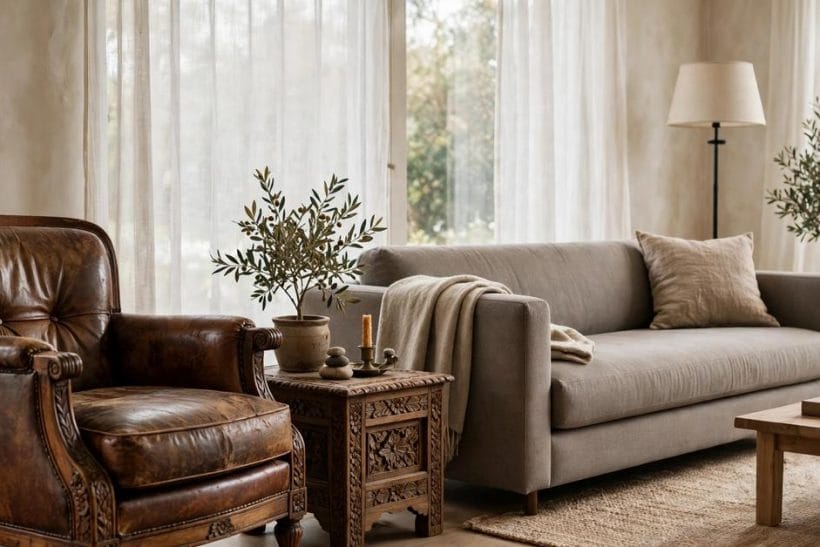
At its simplest, vintage modern style means mixing vintage pieces with modern lines. The vintage side is made up of pieces that show their age in a gentle way: wood with visible grain and wear, leather that has softened and darkened, fabric that has faded a little, and shapes that were made before clean, straight lines became the norm. The modern side is made up of pieces with simple silhouettes, plain surfaces and little decoration. A vintage modern room lets both sides be visible at the same time, and the contrast between them is part of the appeal.
The word vintage here is used in a general sense. It does not point to one particular period, one particular maker or one particular type of furniture. It simply means older pieces that carry signs of earlier use and earlier making. In the same way, the word modern here does not point to one particular movement or one particular school of design. It means the plain, uncluttered lines that most people picture when they hear the word modern: straight edges, simple shapes and surfaces that are left to speak for themselves. Vintage modern style is the conversation between those two broad ideas, and like other definition explainers on this site, such as our guide to what a rotunda is, it is best understood by looking at form first and detail second.
One useful test is to imagine removing either half. Take the older pieces out of a vintage modern room and what remains is a plain modern room: calm, but with less warmth and less story. Take the modern pieces out and what remains is a room full of older pieces: full of character, but often busy and heavy. Vintage modern style exists in the middle, where the older pieces give the room its character and the modern pieces give it its calm. Neither half is decoration for the other. Each half does a job the other cannot do alone, and the room works because both jobs are being done.
2. The Two Halves of the Style
Every vintage modern room has two halves, and it is worth naming them clearly before going further. The vintage half supplies texture, warmth and a sense of time. Its pieces tend to have curves, carving, turned legs, woven surfaces or finishes that have changed with age. The modern half supplies shape, order and rest. Its pieces tend to have straight lines, flat planes, slim legs and finishes that stay even and quiet. The style is not about hiding the difference between the halves. It is about letting the difference show, and letting it look deliberate rather than accidental.
The infographic below sums up the mix at a glance: what each half contributes, how colour and texture behave, and what the overall balance feels like. Keep it in mind as you read on, because each section that follows unpacks one row of it in more detail.
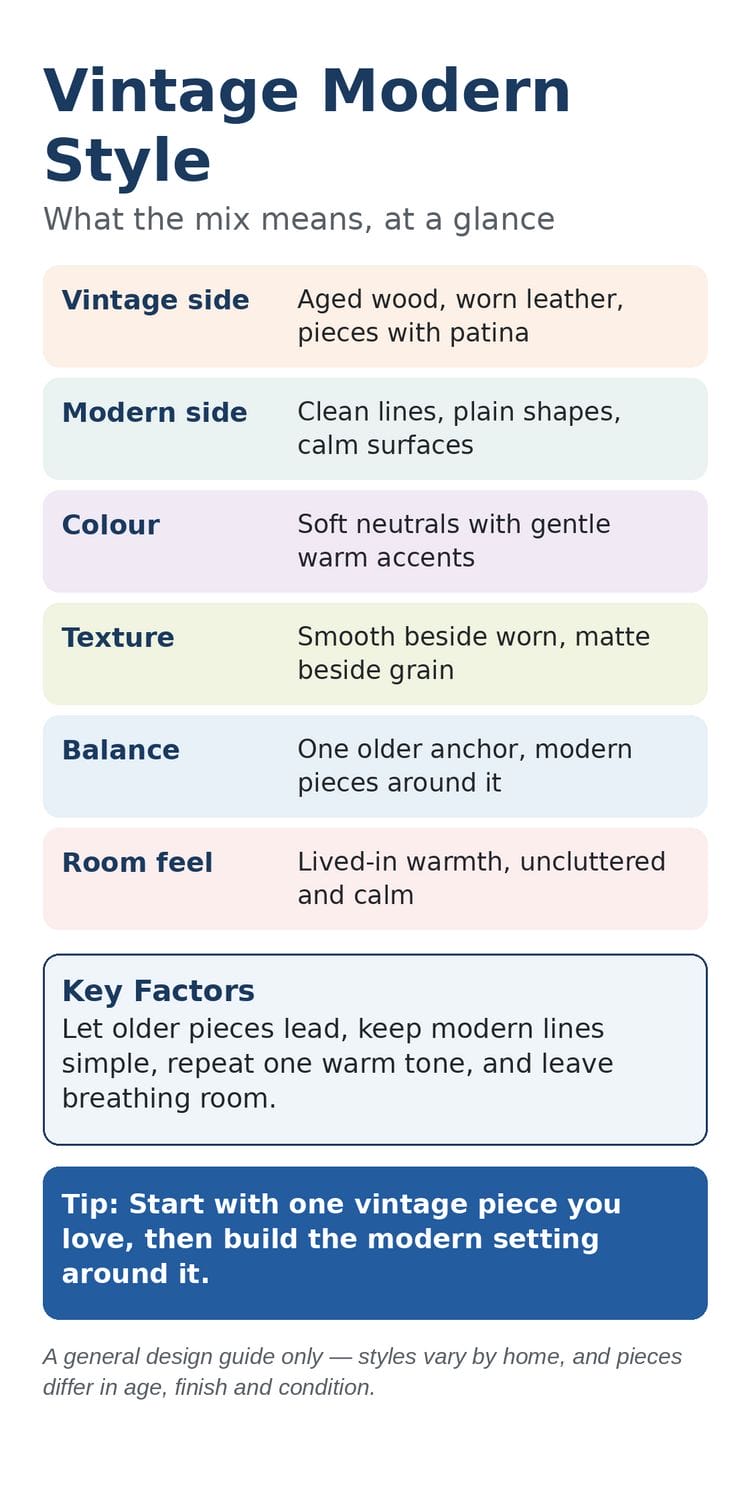
Notice that the two halves do not contribute equally in every room, and they do not need to. Some rooms lean a little more vintage, with several older pieces softened by a few modern ones. Others lean a little more modern, with one strong older piece standing out against a plain modern setting. Both can be vintage modern style, as long as both halves are present and the room still feels settled. The trouble only starts when one half disappears entirely, because then the room is simply vintage or simply modern, and the particular warmth of the mix is gone.
3. What Counts as the Vintage Half
The vintage half of vintage modern style is any older piece that shows its age honestly. A wooden table with worn edges, a leather chair with creases and softened colour, a lamp with a patina on its metal, a rug whose pattern has faded in places: all of these can play the vintage role. What they share is not a particular look but a particular quality. They look as though they have lived a life before this room, and that earlier life is visible in their surface, their shape or their wear.
It is worth being clear about what the vintage half is not. It is not damage, and it is not clutter. A piece with a broken leg or a torn seat is not contributing character; it is asking for repair. A room crowded with old things is not vintage modern style either, because the modern half has no room to breathe. The vintage half works best when it is chosen rather than accumulated: a few pieces with real presence, given space to be seen. Older homes often suit this approach naturally, and our guide to old houses, their character and their care covers the same idea at the scale of a whole house.
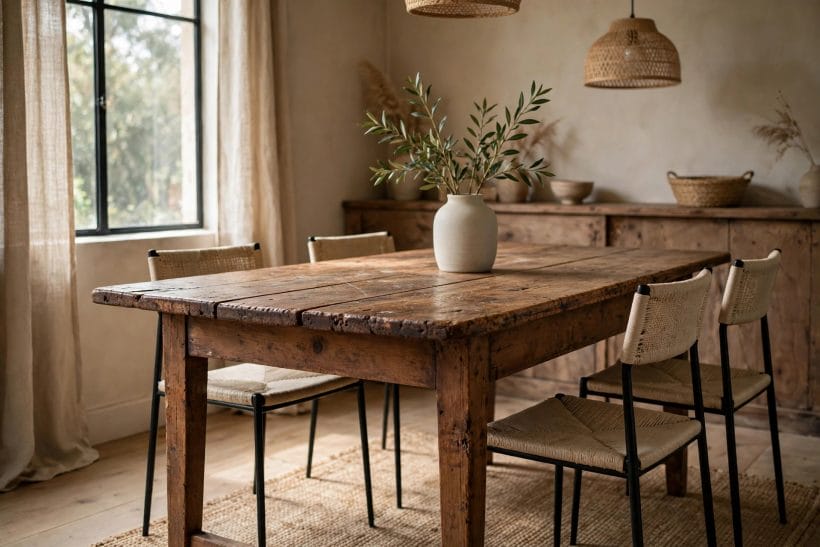
When you look at a vintage piece in a vintage modern room, ask what it adds that a new piece could not. Usually the answer is texture or shape: the grain of old wood, the softness of worn leather, the curve of a turned leg, the uneven colour of a faded fabric. Those qualities are hard to reproduce quickly, which is why the vintage half feels warm. A new piece can copy a shape, but it cannot copy the slow change that time brings to a surface, and that slow change is exactly what the vintage half is there to provide.
4. What Counts as the Modern Half
The modern half of vintage modern style is quieter and easier to overlook, which is why it deserves its own section. Modern pieces in this style are plain in a good sense: simple shapes, straight lines, flat surfaces and little or no decoration. A low sofa in a plain fabric, a console with clean straight edges, a floor lamp with a simple shade, a chair with slim legs: these are the pieces that give a vintage modern room its calm. They do not compete with the vintage pieces. They frame them.
That framing job matters more than it first appears. Without a calm modern backdrop, older pieces can blur together into a busy whole, and the eye has nowhere to rest. With it, each older piece stands out, and the room feels composed rather than crowded. Modern lines also keep the room feeling current. A room full of older pieces alone can feel like a step backwards in time, however beautiful the pieces are. Add plain modern lines and the room feels like a present-day room that happens to love older things, which is the heart of vintage modern style. The same plain-lines thinking runs through our guide to modern home renovation ideas, where simple shapes do the same calming work at a larger scale.
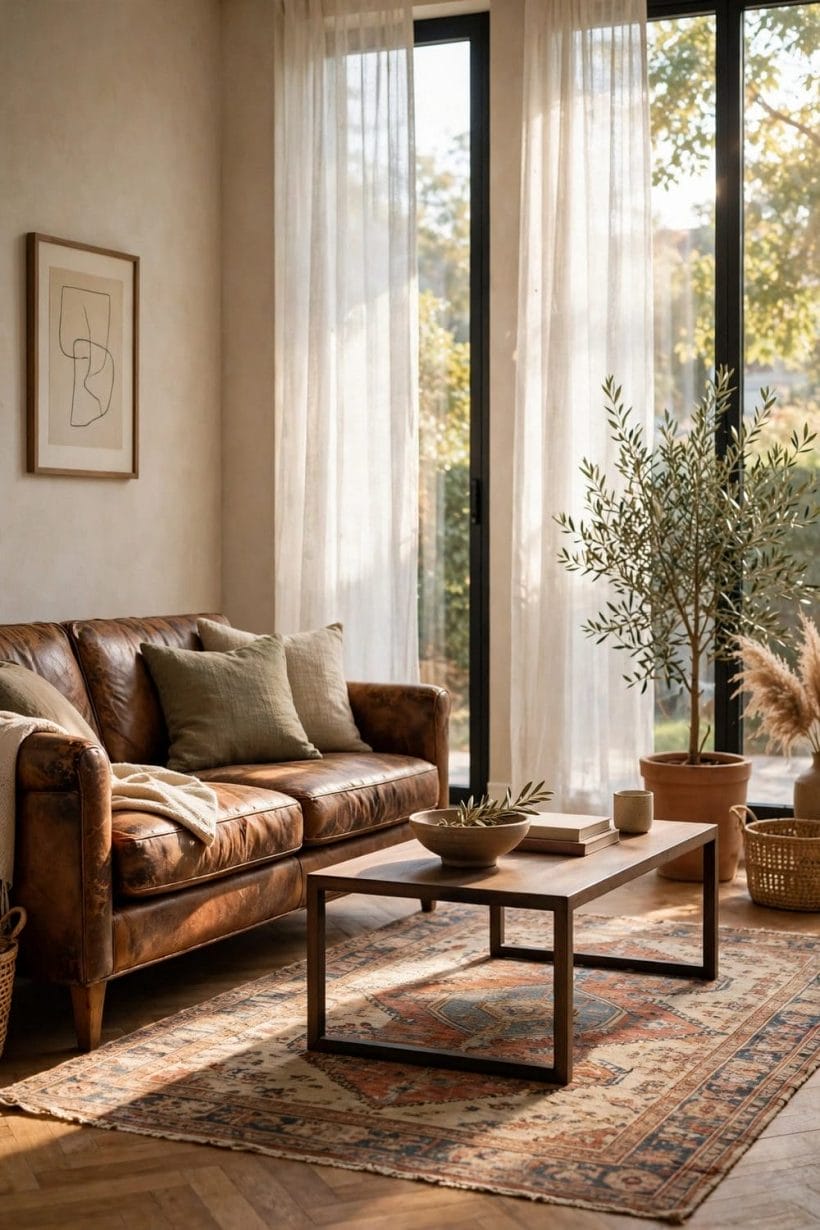
Modern pieces also do practical work. Their simple shapes are easy to live with, easy to move around and easy to keep tidy, and their plain surfaces give the eye a rest between the richer textures of the vintage half. In a small room this matters even more, because a plain modern piece takes up less visual space than a decorated one, even when the two are the same size. That is one reason vintage modern style suits smaller homes well: the modern half keeps the room feeling open while the vintage half keeps it feeling warm.
5. How the Balance Works in a Room
Balance is the word people reach for when they describe vintage modern style, and it is the right word, as long as it is understood loosely. Balance here does not mean equal amounts. It does not mean half the room vintage and half the room modern, and it does not mean matching pieces in pairs. It means that neither half shouts over the other, and that the eye can move comfortably between the older pieces and the modern lines without getting stuck or tired.
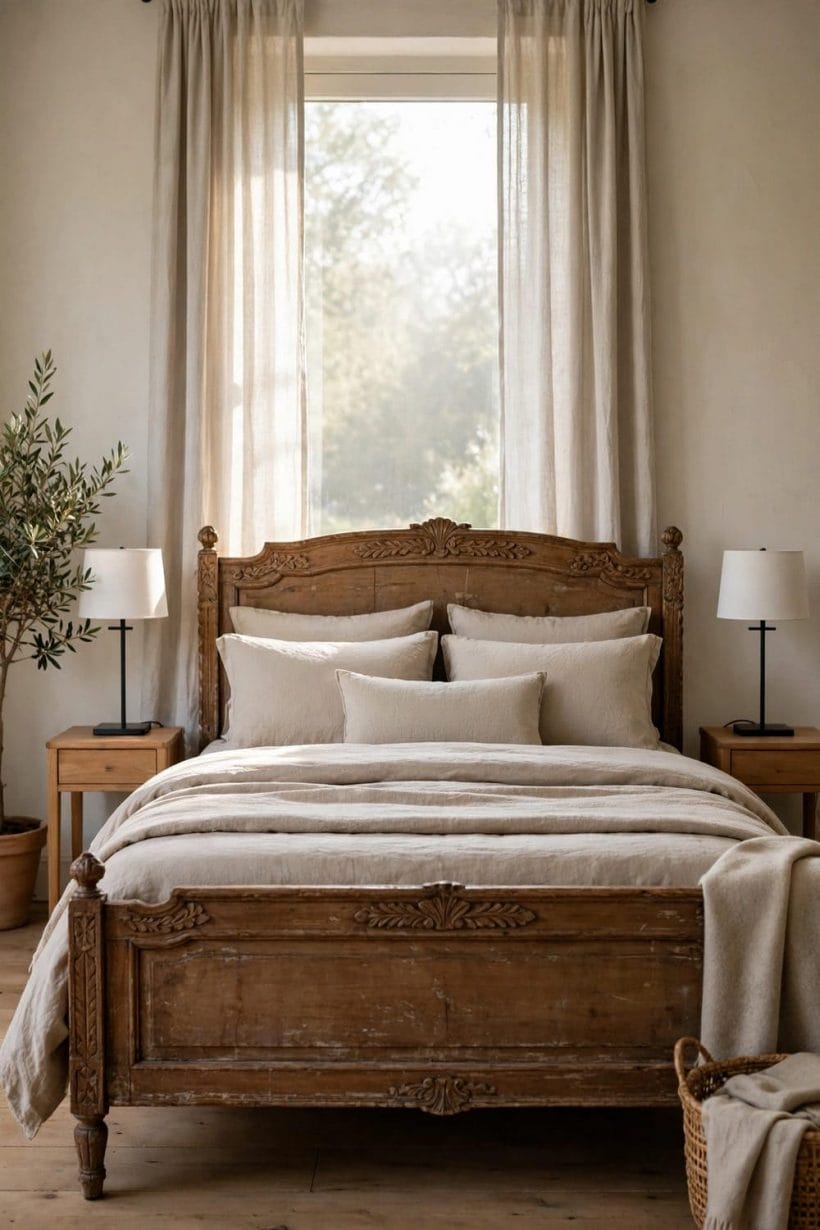
A common way to reach that balance is to let one older piece lead. A worn leather chair, an old wooden table, a carved bed frame: one strong vintage anchor gives the room its character, and the modern pieces around it give it its calm. Another way is to spread the vintage half thinly, with smaller older pieces, a lamp, a bench, a stack of old books, scattered through a mostly modern room. Both approaches work, and both are vintage modern style, because in both cases the two halves are talking to each other rather than ignoring each other.
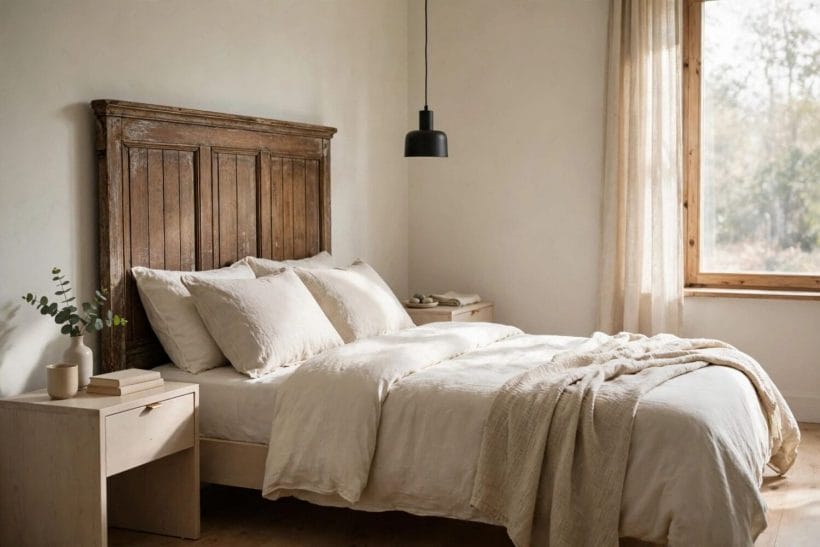
When the balance fails, the failure is usually easy to name. Too much vintage and the room feels heavy, dark or cluttered, with no plain surface for the eye to rest on. Too much modern and the room feels cold or bare, with the older pieces looking like accidents rather than choices. The fix in both cases is the same: adjust the quieter half, not the louder one. Add a plain modern surface to a heavy room, or add one warm older piece to a bare one, and the conversation between the halves usually restarts on its own.
6. Colour in Vintage Modern Style
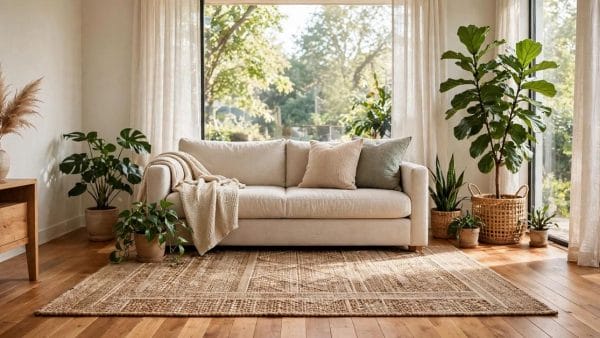
Colour in vintage modern style tends to stay soft and restrained, because the style already has plenty of contrast in shape and texture. Soft neutrals do most of the work: warm whites, pale greys, gentle beiges and muted earth tones. These colours let both halves show clearly. They do not fight the grain of old wood or the patina of worn leather, and they do not distract from the clean lines of modern pieces. Against a soft neutral backdrop, the vintage half reads as warm and the modern half reads as calm, which is exactly the combination the style is aiming for.
That does not mean colour is banned. A gentle accent can lift the whole room, as long as it stays gentle. Muted greens, soft blues, faded rusts and dusty ochres all sit comfortably in a vintage modern room, especially when they appear in smaller pieces such as cushions, throws, artwork or a single chair. What tends to break the style is loud, saturated colour used in large amounts, because it competes with both halves at once: it shouts over the quiet modern lines and it drowns the subtle texture of the vintage pieces. If you want a stronger colour, our colour guide on how to work with turquoise shows how one accent colour can be handled without letting it take over a room.
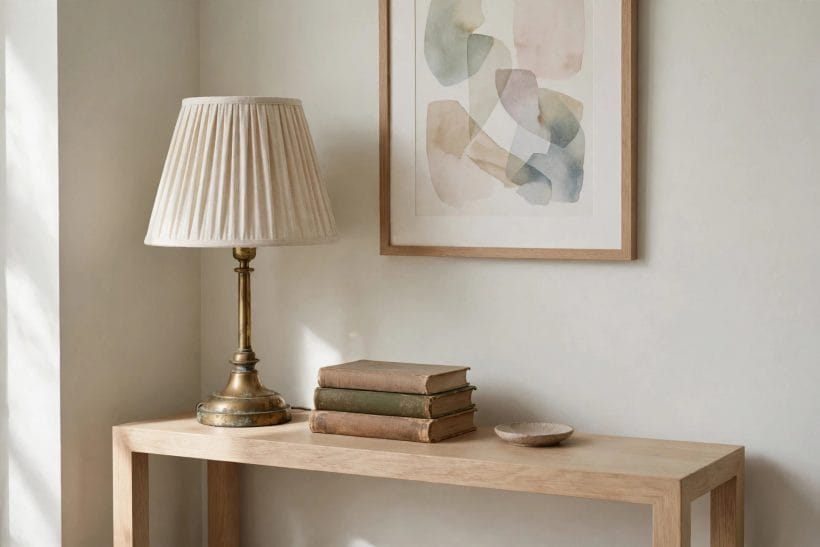
It also helps to repeat one warm tone through the room. That tone might come from the wood of a vintage piece, the leather of a chair, or the weave of a rug, and picking it up again in a cushion, a throw or a frame ties the halves together. Repetition of this kind is quiet work, and it is easy to miss when it is done well, but its absence is noticeable: without a shared tone, the vintage and modern halves can feel like two separate rooms sharing one floor. With it, they feel like one room with two kinds of character.
7. Texture and Materials
If colour is the quiet part of vintage modern style, texture is the loud part, in the best sense. The style lives in the contrast between surfaces: smooth beside worn, matte beside grain, soft fabric beside hard wood, cool metal beside warm leather. A vintage modern room invites touch in a way that a purely modern room often does not, because its older pieces carry textures that only time can make, and its modern pieces carry textures that are deliberately plain. The contrast between them is what makes the room feel rich without feeling busy.
Wood is usually the leading material on the vintage side, and it earns that place honestly. Old wood shows grain, wear, knots and colour change, and each of those marks tells the eye that the piece has been used and kept. Leather behaves the same way, softening and creasing with age. On the modern side, plain fabrics, smooth lacquer, slim metal and clear glass do the opposite job: they stay even, quiet and unmarked, and they give the eye somewhere calm to land. Put a worn wooden surface next to a plain modern one and both look better, because each makes the other more legible.
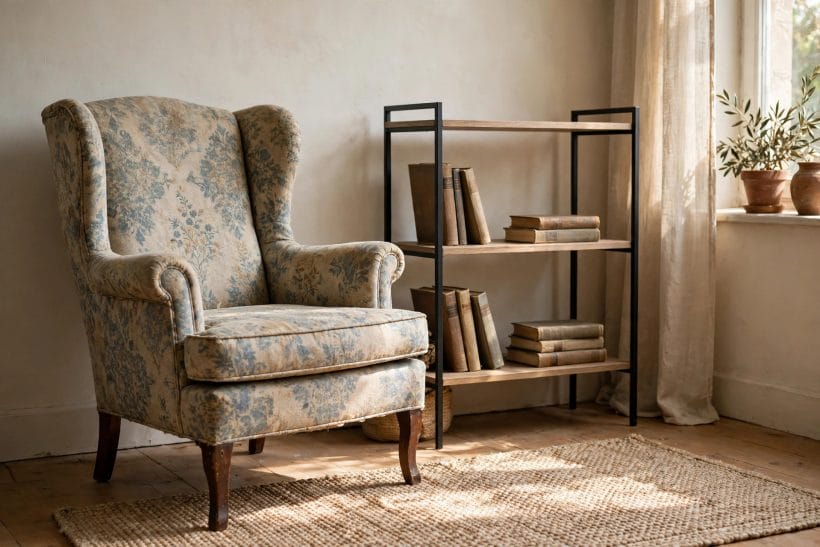
One practical note follows from this. In a vintage modern room, materials should be allowed to age visibly on the vintage side and stay plain on the modern side, and mixing those two jobs up usually weakens the style. A vintage piece that has been refinished until it looks brand new has lost the very quality it was there to provide, and a modern piece covered in decoration has lost the calm it was there to provide. Let each half do its own job, and the room will look after itself.
8. Where Vintage Modern Works Best
Vintage modern style is flexible about rooms, and that flexibility is part of its appeal. Living rooms suit it naturally, because they are the rooms where comfort and calm matter most, and the style provides both at once: vintage seating for warmth, modern lines for order. Bedrooms suit it too, for a similar reason: a vintage bed frame or headboard gives the room character, while plain modern bedside pieces and bedding keep it restful. Dining rooms are another natural home, where an old table can anchor the room and simple modern chairs keep it from feeling heavy.
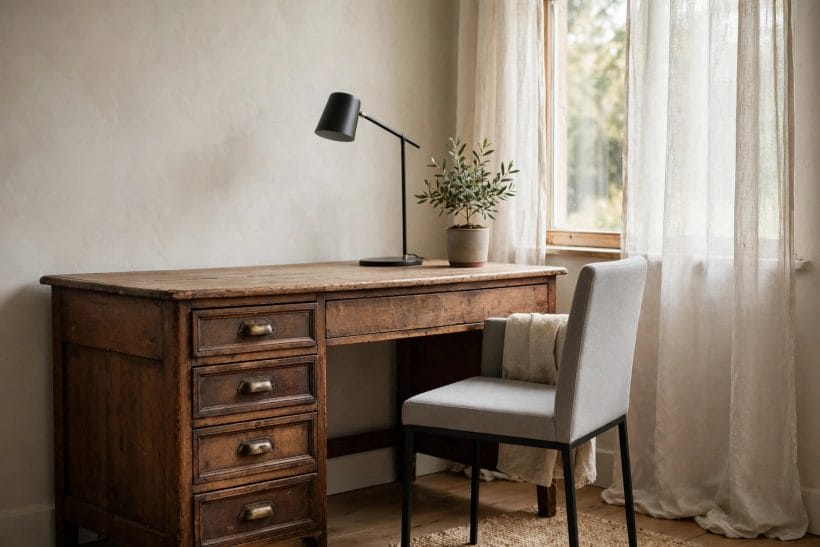
Smaller and more characterful spaces suit it as well. Entryways, reading corners and home offices all benefit from the same mix: one older piece to give the space warmth, modern lines to keep it tidy and usable. Even rooms that are usually treated as purely modern, such as basements, can carry the style well when a vintage piece is added to soften their plain lines, as our guide to modern basement ideas shows from the modern side. And rooms full of personality, like the ones in our collection of quirky rooms full of character, show how far the vintage half can go before the modern half needs to step in and restore calm.
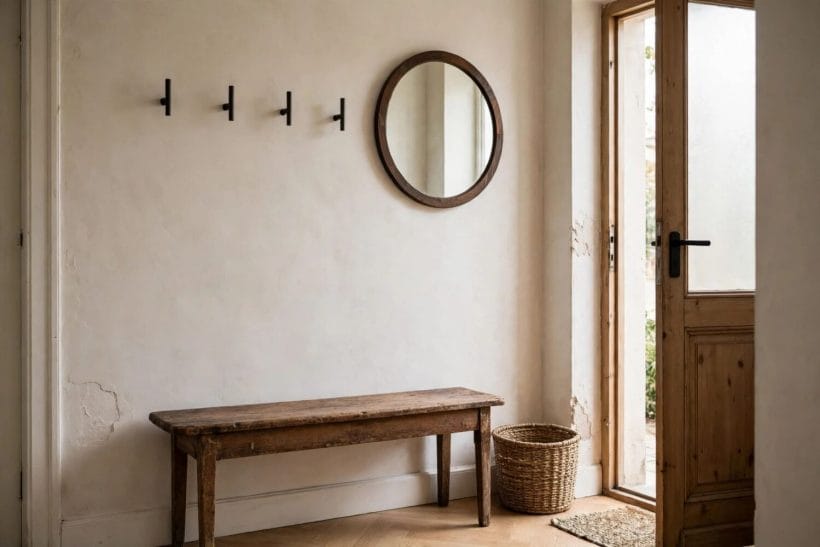
The style is less about which room you choose and more about how you handle the mix in that room. A large living room and a small entryway can both be vintage modern, as long as both halves are present and the balance holds. The question to ask of any room is not whether it is the right kind of room, but whether the older pieces and the modern lines are each doing their job. If they are, the room will read as vintage modern whatever its size or purpose.
9. Common Mistakes That Break the Mix
Most vintage modern rooms that go wrong go wrong in one of a few familiar ways, and all of them are easy to avoid once they are named. The first is crowding: too many vintage pieces, each one interesting on its own, packed so tightly that the modern half has no room to work. The fix is to remove rather than add, and to let the remaining pieces breathe. The second is the opposite: a room so modern that a single vintage piece looks stranded, like something left behind by accident. The fix is to add one more older piece, or one warm texture, so the vintage half feels chosen rather than accidental.
The third mistake is matching too hard. Vintage modern style is not about finding modern copies of vintage shapes, or vintage copies of modern shapes. It is about contrast, and contrast needs real difference. A modern chair that imitates an old shape too closely blurs the line between the halves, and the room loses the very tension that makes the style interesting. Let the vintage pieces look vintage and the modern pieces look modern. The gap between them is not a problem to solve. It is the style itself.
The fourth mistake is forgetting the backdrop. Walls, floors and large plain surfaces are part of the modern half even when they are not furniture, and a busy backdrop can undo the calm that the modern pieces are trying to provide. Soft neutral walls, plain floors and simple window treatments all help the mix, because they give both halves a quiet stage. When the backdrop is calm, the vintage pieces can be warm and the modern pieces can be plain, and neither has to shout to be seen.
10. How to Start Without Redoing a Room
One of the kindest things about vintage modern style is that it does not demand a full redo. Most rooms already lean one way or the other, and the style can be reached by adjusting the lean rather than starting over. In a mostly modern room, add one strong vintage piece: a worn chair, an old bench, a wooden table with visible age. In a mostly vintage room, add one plain modern piece: a simple console, a low sofa in a plain fabric, a floor lamp with a plain shade. Either single change moves the room towards the middle, and the middle is where vintage modern style lives.
Start with the piece you will use most, because that piece will set the tone for everything around it. In a dining room that might be the table, and our guide to how to choose a dining table covers the size, shape and material questions that matter before any styling begins. In a living room it might be the seating, and in a bedroom the bed frame. Once the leading piece is settled, the supporting pieces can follow its lead: modern lines around a vintage anchor, or vintage warmth around a modern anchor. Either direction works, as long as both halves end up present.
Then stop, and live with the room for a while before adding more. Vintage modern style rewards patience, because the balance between the halves is easier to feel than to plan, and a room that looks right on paper can still feel heavy or bare in person. Add one piece at a time, and check after each addition whether both halves are still visible and still comfortable with each other. When they are, the room is done, even if it looks simpler than you expected. Simplicity, after all, is half the style.
Final Considerations
Vintage modern style, then, is a mix rather than a look: vintage pieces with age and character, modern pieces with clean lines and calm surfaces, held together in a balance that lets both halves be seen. It has no fixed list of pieces, no fixed colour scheme and no single period to copy, and that looseness is a strength, not a weakness. It means the style can adapt to living rooms and bedrooms, to large homes and small ones, and to rooms that already lean one way or the other. What it asks for is not money or expertise but judgement: the judgement to let older pieces lead where they can, to let modern lines calm where they should, and to stop when the room feels settled.
If you remember one thing from this guide, let it be the test from the first section. Imagine removing either half, and ask what would be lost. If removing the vintage pieces would leave a calm but characterless room, and removing the modern pieces would leave a characterful but crowded one, then the mix is doing its job, and the room is vintage modern in the truest sense. That test works for any room, any budget and any collection of pieces, because it tests the relationship between the halves rather than the halves themselves. And that relationship, more than any single piece, is what vintage modern style means.

0 Comments