
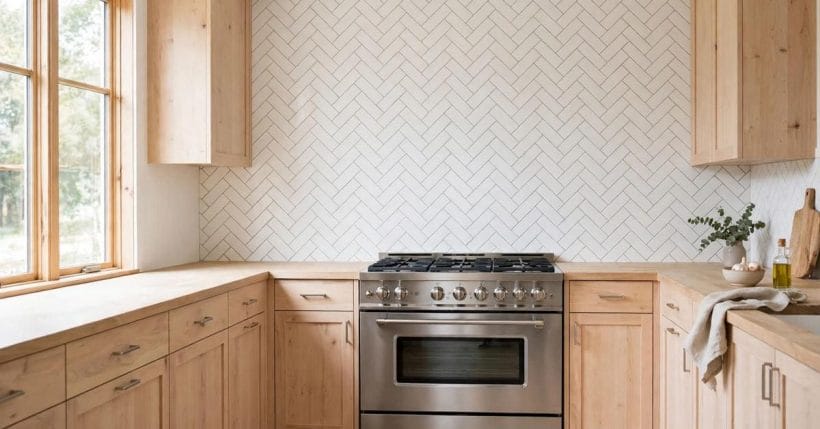
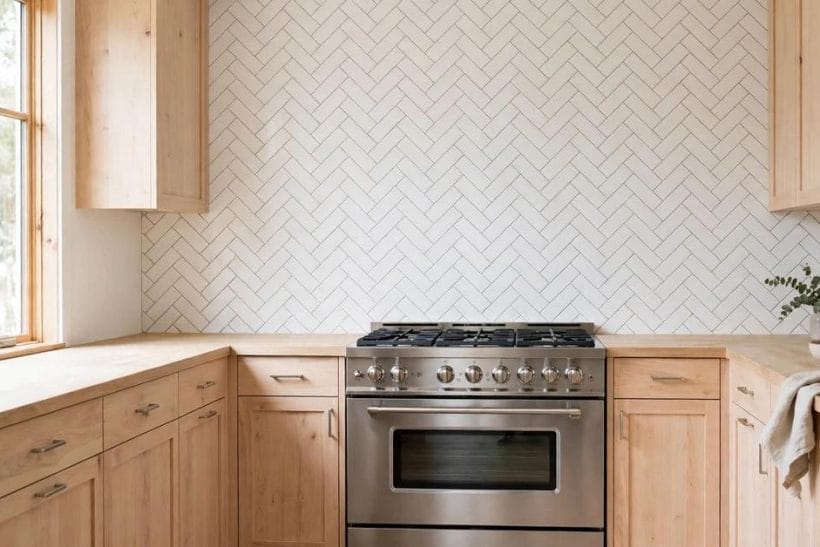
The wall behind a range does more work than any other stretch of kitchen wall, and a herringbone backsplash gives that wall a pattern with movement, rhythm and a quiet sense of craft. The tiles meet at angles that draw the eye in a zigzag, so even a plain colour gains depth and life once it is laid in this way. This guide looks at herringbone backsplash layouts, colours and practical details for the range wall only, from the direction of the pattern to the grout lines that shape it, so you can picture the effect clearly and discuss it with confidence when the work is planned.
A herringbone pattern suits the range wall because the range itself is the natural focus of the kitchen, and the zigzag gives that focus a backdrop with energy without shouting for attention. The same pattern can feel calm in a pale glaze or dramatic in a deep green, depending on the colour and grout you pair with it. Read the sections below as a way to narrow your own taste, and let samples held against your cabinets and worktop settle every final choice in your own daylight.
1. Reading the Herringbone Pattern
Herringbone is a way of laying rectangular tiles so that each tile meets the next at a right angle, forming a broken zigzag that runs across the wall. The eye follows the zigzag rather than resting on any single tile, which is why the pattern feels lively even when every tile shares one colour. Around a range, that movement matters, because the wall behind the hob and oven is seen from across the room as often as it is seen up close, and a pattern with direction holds its interest at both distances.
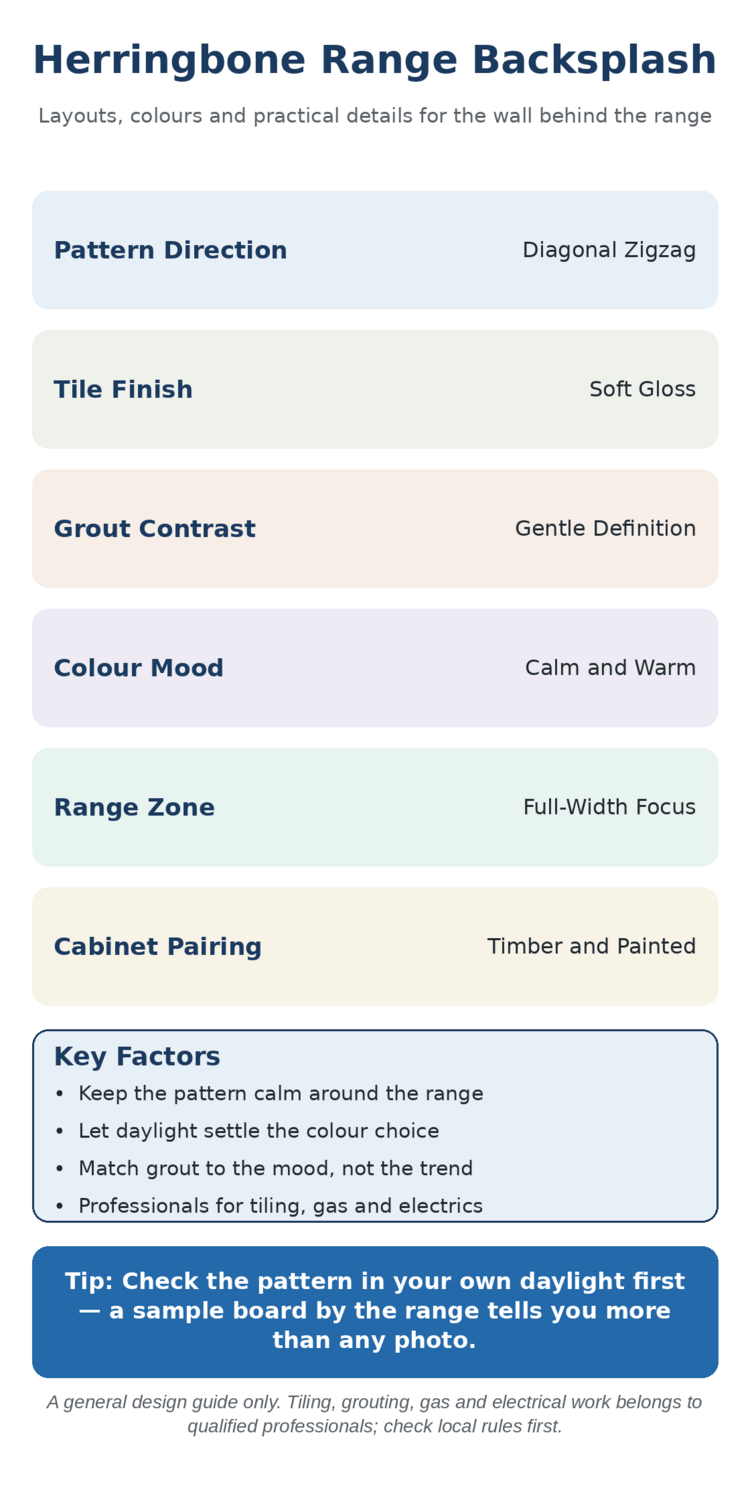
The table below gathers the six decisions this guide returns to again and again, and it mirrors the infographic above so you can compare the choices at a glance before reading on.
| Pattern Direction | Diagonal Zigzag |
|---|---|
| Tile Finish | Soft Gloss |
| Grout Contrast | Gentle Definition |
| Colour Mood | Calm and Warm |
| Range Zone | Full-Width Focus |
| Cabinet Pairing | Timber and Painted |
Direction is the first decision, and it changes the whole feeling of the wall. A zigzag that climbs diagonally feels energetic and draws the eye upward, which suits a tall range wall with a hood above it. A quieter reading of the same pattern comes from keeping the colour pale and the grout close to the tile, so the zigzag reads as texture rather than as a bold graphic. Either way, the pattern itself stays the same, and that is the strength of herringbone: one layout, many moods, all decided by colour, finish and grout.
2. Where the Backsplash Begins and Ends
The range wall can carry herringbone as a full-width panel that runs from worktop to hood, or as a framed feature that sits neatly behind the range alone, and the choice sets the scale of the whole kitchen. A full-width panel makes the range wall feel generous and unbroken, and it suits kitchens where the range sits in a long run of worktop with cabinets on both sides. A framed feature, by contrast, treats the herringbone as a picture on the wall, with plain tiles or painted plaster around it, and it suits kitchens where the range deserves a moment of its own.
Thinking through where a backsplash starts and stops helps here, because the edges of the panel are where the pattern either resolves cleanly or frays. Herringbone needs a considered edge wherever it stops, since the angled tiles meet a straight border in small cut pieces, and a border strip or a neat trim gives those cuts a finished home. Discuss the edges with the person laying the tiles before work begins, and ask how the pattern will be centred on the range, so the zigzag reads symmetrically from the front rather than drifting to one side.
Height matters too, in general terms rather than in fixed figures. A panel that rises to the underside of the hood feels purposeful, because it follows the shape of the cooking zone, while a panel that stops lower can leave an awkward gap of bare wall above it. If open shelves sit on the range wall, the herringbone can run behind them and between them, tying the shelves into the same story, but the shelves themselves will break the zigzag, so picture the pattern with the shelves in place rather than imagining an empty wall.
3. Tile Finishes That Suit a Range Wall
Finish is what you feel as much as what you see, and the range wall asks more of a finish than most kitchen surfaces. A soft gloss glaze reflects light gently and wipes clean with a damp cloth, which suits a wall that collects cooking splashes and steam. A matt glaze, by contrast, gives a softer, chalkier reading of the same pattern, and it can calm a kitchen that already has plenty of shine from steel, glass and polished worktops. Both finishes carry the zigzag well, so the choice is about the mood of your room rather than about one finish being right and the other wrong.
Glazed ceramic and porcelain tiles are the usual choices for a range wall, and both offer the smooth, sealed surface that a cooking zone needs. Handmade-look tiles, with their slight variation from tile to tile, add warmth and a crafted feel, and that variation can actually flatter herringbone, because the zigzag already expects the eye to move. Whatever finish you choose, hold a sample tile against the range itself and look at it in morning light and in evening light, since a glaze that looks pale at noon can read much deeper under warm lamps.
4. Colours That Sit Calmly Behind a Range
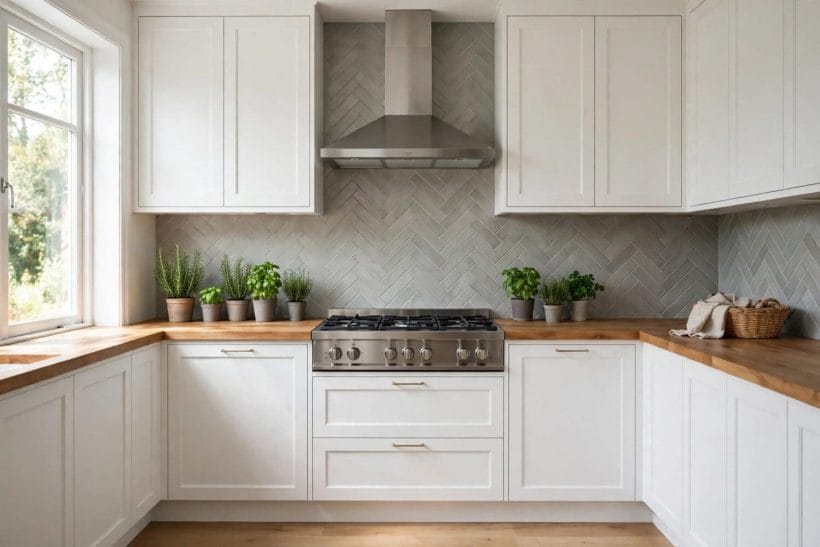
White remains the most forgiving herringbone colour for a range wall, because it brightens the cooking zone and lets the pattern do the talking. Cream softens that brightness and pairs beautifully with timber, while soft grey adds a cooler, more tailored note that suits steel ranges and pale stone worktops. Each of these pale colours keeps the kitchen feeling open, and each one shows the zigzag as a gentle texture rather than a loud statement.
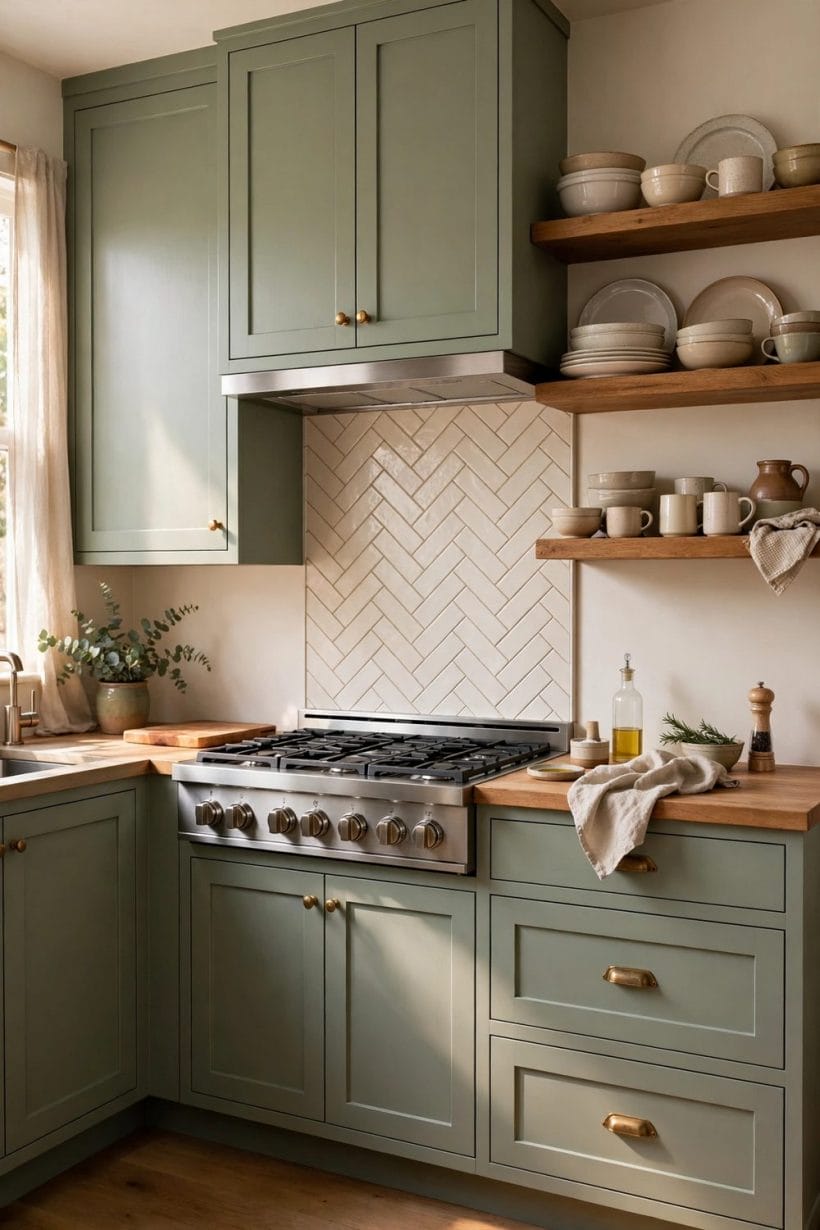
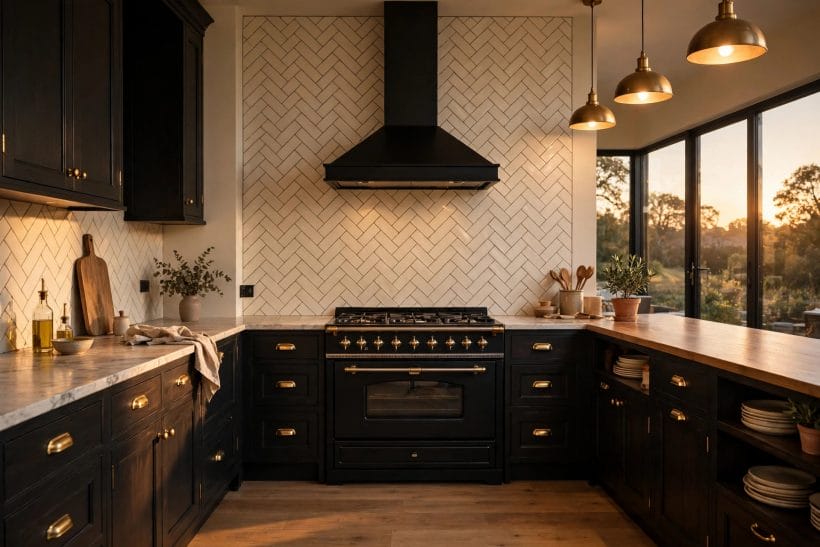
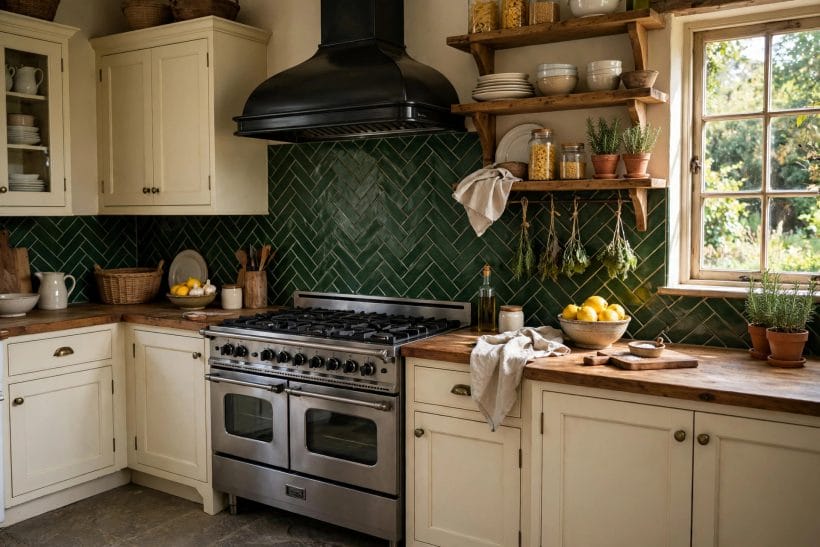
Deeper colours earn their place when the kitchen around them is calm enough to hold them. A deep green herringbone behind a range feels rich and botanical, especially against cream cabinets and wooden shelves, while a dark, smoky tile can anchor a kitchen with pale walls and give the range a sense of occasion. The interior paint colours guide is a useful companion here, because the wall colour beside the backsplash decides whether a deep tile reads as a jewel or as a shadow. Test deep colours with a generous sample board, and live with it on the wall for a few days before committing.
Colour also changes with the light in the room, and the range wall often sits under a hood light as well as daylight. A tile that looks serene in a showroom can turn cold under a bright hood lamp, and a warm cream can glow amber in the evening. The safest approach is to judge samples in the room itself, at the times of day when you actually cook, and to remember that the grout colour will shift the overall tone just as surely as the tile colour does.
5. Grout Lines and How They Shape the Pattern
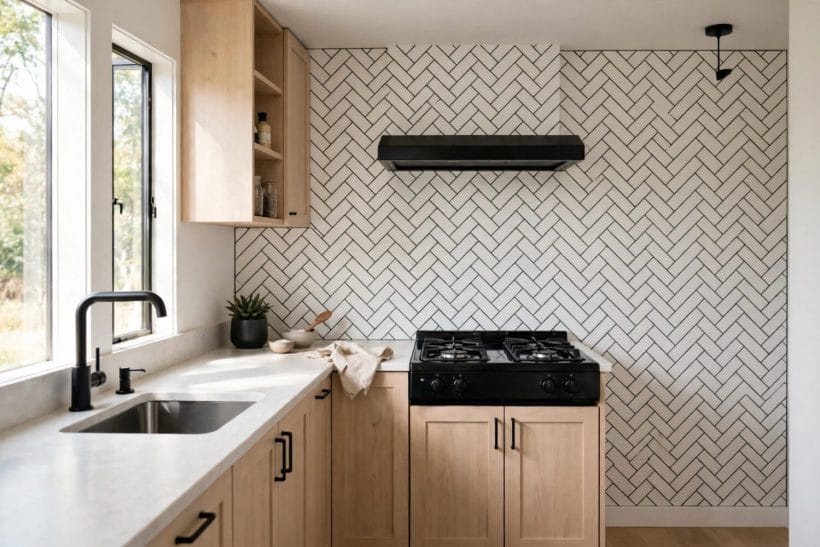
Grout is the quiet partner of herringbone, and its colour decides whether the zigzag whispers or speaks clearly. A grout close in tone to the tile lets the pattern read as texture, with the zigzag emerging softly as light moves across the wall. A grout with more contrast draws every angled joint into view, so the pattern becomes a graphic feature in its own right, and that bolder reading suits kitchens where the backsplash is meant to be the room’s artwork.
The joints of a herringbone layout deserve care at the corners and edges, where the angled tiles turn and meet. Reading about how tile turns an inside corner gives a sense of why those junctions matter, even though the pattern here is herringbone rather than a stacked brick layout. The principle carries across: a clean turn at a corner keeps the pattern honest, while a rushed turn breaks the rhythm the eye has been following. Ask the tiler how corners and edges will be handled, and expect the answer to be part of the plan rather than an afterthought.
Keeping grout looking even is a matter of routine rather than effort. A soft cloth and plain water handle everyday splashes, and a gentle wipe after cooking stops grease from settling into the joints. Avoid harsh scouring on glazed tiles, since a dulled glaze shows marks more readily than a fresh one, and follow the advice of the tile maker for anything beyond a simple wipe. Sealing and grout care are best discussed with the professional who lays the tiles, since the right approach depends on the tile and grout chosen.
6. Pairing Herringbone With Cabinets and Worktops
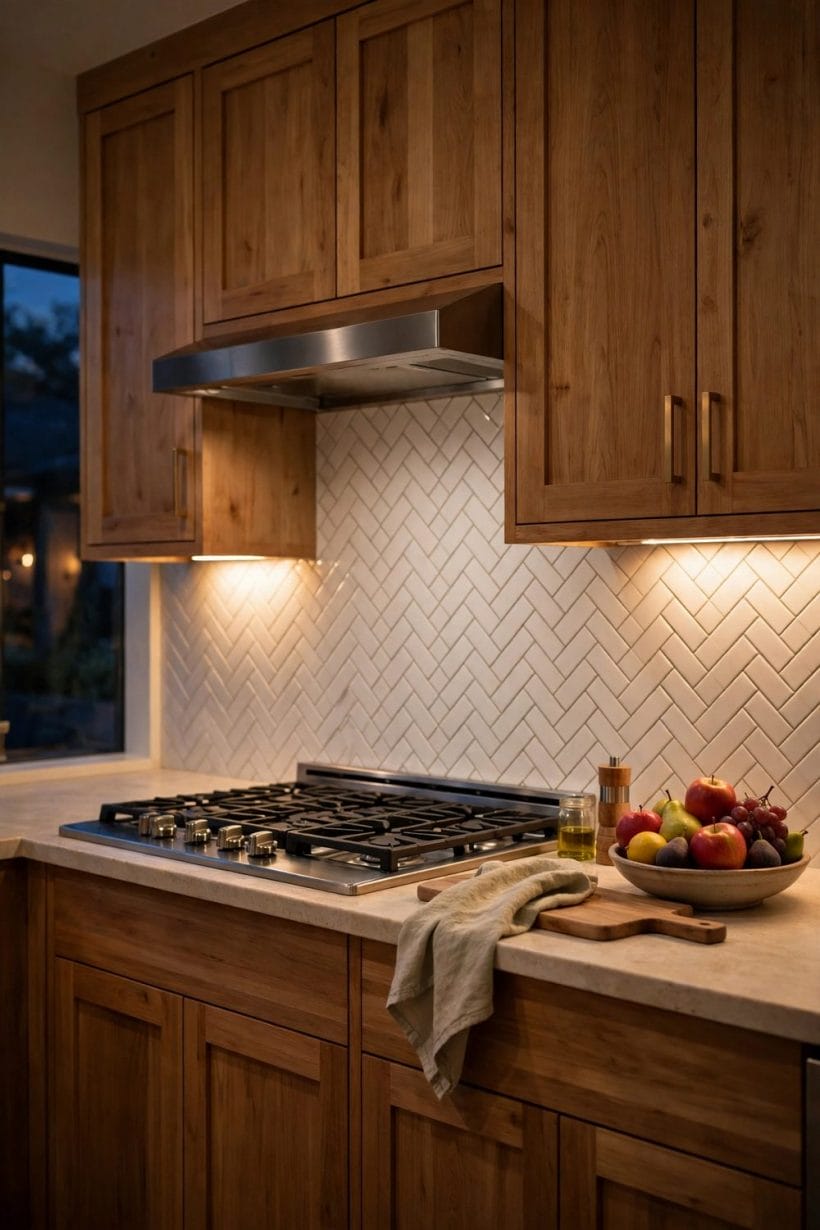
Cabinets decide the frame around the herringbone, and the pattern is generous with both timber and painted finishes. Pale timber cabinets warm a white or cream herringbone and give the kitchen a relaxed, natural feeling, while painted cabinets in soft greens, creams or deep tones let the backsplash sit as a calm panel within a coloured room. The pairing works best when one element leads and the other supports, so a bold tile colour pairs with quieter cabinets, and a pale tile lets coloured cabinets take the lead.
Wooden cabinets bring grain and warmth that echo the crafted feeling of the zigzag, and the oak cabinet kitchens gallery shows how grain and tile can share a room without competing. Worktops complete the sandwich: a timber worktop softens a crisp white herringbone, a pale stone worktop keeps a grey herringbone feeling tailored, and a dark worktop grounds a pale tile and gives the range wall a clear base. Hold worktop samples, cabinet samples and tile samples together before deciding, since the three materials are always seen as one composition.
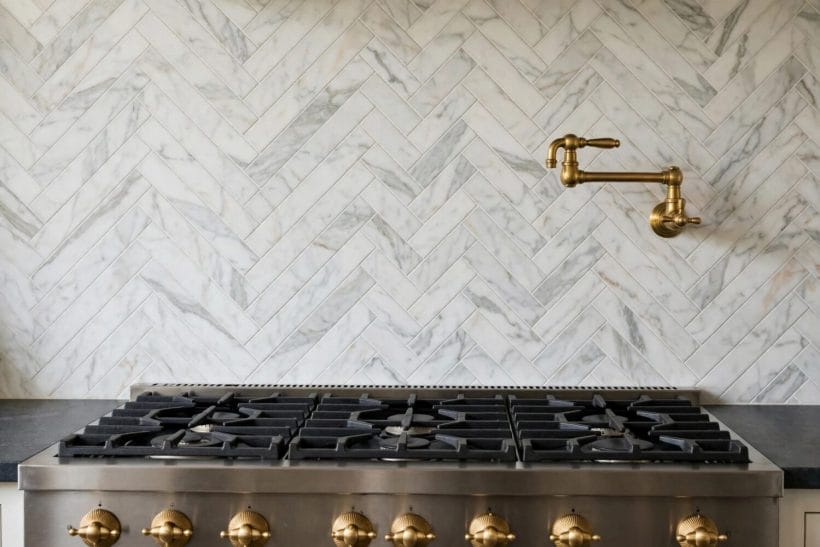
Handles, taps and hood finishes are the jewellery of the range wall, and they deserve the same calm thinking. Brass warms a cream or green herringbone, black steel sharpens a white or grey one, and brushed steel quietly suits almost any pairing. Keeping one metal throughout the range wall, from tap to hood trim, stops the eye from scattering, and lets the herringbone remain the pattern the room remembers.
7. Small Kitchens and the Herringbone Effect
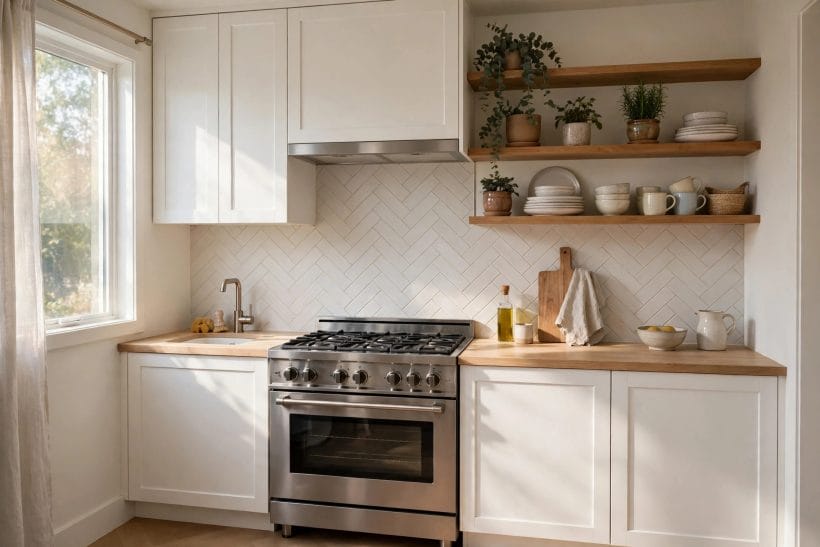
Herringbone can be a friend to a small kitchen, because the diagonal movement draws the eye across the wall and makes a compact range zone feel considered rather than cramped. A pale herringbone in a small room keeps the wall bright, and the zigzag gives the eye something to follow, which reads as generosity in a space where every surface counts. The trick is restraint elsewhere: when the backsplash carries the pattern, the surrounding walls and worktops can stay plain, and the room feels composed rather than busy.
Compact kitchens reward the same full-width thinking as larger ones, scaled down. A panel that runs neatly behind the range and under the wall cabinets gives a small kitchen a finished backbone, and open shelves above the herringbone can hold everyday crockery without hiding the pattern entirely. The tiny kitchen ideas gallery shows how small rooms balance pattern, storage and light, and a herringbone range wall fits that balance when it is treated as one clear feature rather than one feature among many.
Light is the other ingredient in a small kitchen, and herringbone in a soft gloss finish helps bounce it around the cooking zone. Under-cabinet lighting, where it exists, will pick out the zigzag in the evening and turn the range wall into a warm focal point after dark. In a small room, that evening glow matters, because the kitchen is often part of the living space, and a backsplash that looks good by lamplight earns its place twice over.
8. The Range Wall in a Wider Kitchen Scheme
A herringbone range wall never stands alone, and the kitchens that wear it best are the ones where the pattern echoes something else in the room. That echo can be as simple as a timber floor that shares the warmth of the cabinets, a rug or runner that picks up the tile colour, or a shelf of crockery in a matching tone. The echo does not need to be literal, and it should not be repeated so often that the room feels themed, but one gentle rhyme elsewhere in the kitchen stops the backsplash from feeling isolated.
Seeing the range wall as part of a whole kitchen helps, and the kitchen ideas gallery offers a wider view of how range walls sit within complete rooms. Within that wider view, the kitchen backsplash ideas gallery places herringbone beside other backsplash treatments, which can sharpen your sense of what makes the zigzag distinct: its movement, its craft, and its ability to make a single colour feel rich. Use those comparisons to confirm your taste, not to dilute it, and return to the range wall itself when the final choice is made.
Style families all welcome herringbone in their own way. A cottage kitchen pairs it with cream cabinets and open shelves, a tailored kitchen pairs it with flat-fronted cabinets and steel, and a warm rustic kitchen pairs it with timber and deep green. The pattern is old enough to feel timeless and lively enough to feel current, and that double quality is why it survives changes of fashion better than louder treatments. Choose the version of herringbone that suits the kitchen you already have, rather than reshaping the kitchen around the tile.
9. Living With a Herringbone Backsplash
Daily life with a herringbone backsplash is pleasantly uneventful, which is exactly what a range wall should offer. Cooking splashes land on glaze rather than on plaster, and a quick wipe after cooking keeps the wall fresh. The zigzag itself is forgiving of everyday marks, since the eye reads the pattern before it reads any single spot, and that forgiveness is a genuine practical virtue in the hardest-working corner of the kitchen.
Steam and heat are part of life behind a range, and a tiled wall handles both with ease, provided the tiling itself was carried out properly in the first place. Keep an eye on the grout lines nearest the hob, since those joints see the most heat and splashing, and mention any cracking or loosening to a professional promptly rather than letting moisture find its way behind the tiles. Waterproofing and sealing behind a range wall are professional matters, and the right advice depends on the wall construction and the tiles chosen, so this guide leaves those decisions to qualified hands.
Over time, the herringbone pattern also proves easy to live with because it does not date the way a novelty tile can. A single-colour zigzag in a calm tone will sit happily beside new handles, a repainted wall or a changed worktop, and that adaptability means the range wall can evolve with the kitchen rather than forcing a full renewal. When a refresh is wanted, changing the wall colour beside the backsplash or swapping the shelf styling is often enough to make the same herringbone feel new again.
10. Planning the Work With a Professional
Herringbone looks effortless on a finished wall, and that effortlessness is the result of careful setting out. The pattern must be centred, the cuts at the edges must be planned, and the courses must stay true across the width of the range, all of which takes more time and patience than a straight stacked layout. Expect the work to be discussed in those terms, and be wary of any plan that treats the setting out as a detail to be settled on the day.
Tiling and grouting are skilled work, and this guide describes them only in general terms. A professional tiler will advise on the tile and grout suited to your wall, on how the pattern will be centred and edged, and on how the finished wall should be cared for. Gas and electrical work around a range, including any change to the supply, the hood connection or the lighting, belongs strictly to qualified professionals, and no part of this guide should be read as instruction for that work. The same applies to any change to the wall itself, which should be assessed by someone qualified before tiles are fixed.
Before work begins, agree the pattern direction, the tile colour, the grout colour and the edge treatment, and ask to see the setting out marked on the wall. A short conversation at that stage prevents most disappointments, because everyone is picturing the same zigzag in the same place. With those decisions settled, the herringbone range wall can be built once and enjoyed for years, which is the proper reward for choosing a pattern with such lasting character.
Final Considerations
A herringbone backsplash earns its place behind a range because it combines movement, craft and calm in a single pattern, and because it flatters both pale and deep colours without ever overwhelming the room. Keep the decisions in order: direction first, then colour, then finish, then grout, and let each choice support the one before it. A sample board in your own daylight, a centred setting out agreed before work begins, and a professional hand for the tiling and for any gas or electrical work will carry the project from idea to finished wall.
If one image from this guide stays with you, let it be the quiet zigzag behind a range in a colour you already love, framed by cabinets that feel like home. That is the whole promise of the pattern: a wall that works hard, looks crafted, and keeps its character for years. A herringbone backsplash chosen this way will not shout for attention, and that is precisely why it will hold it.




0 Comments