

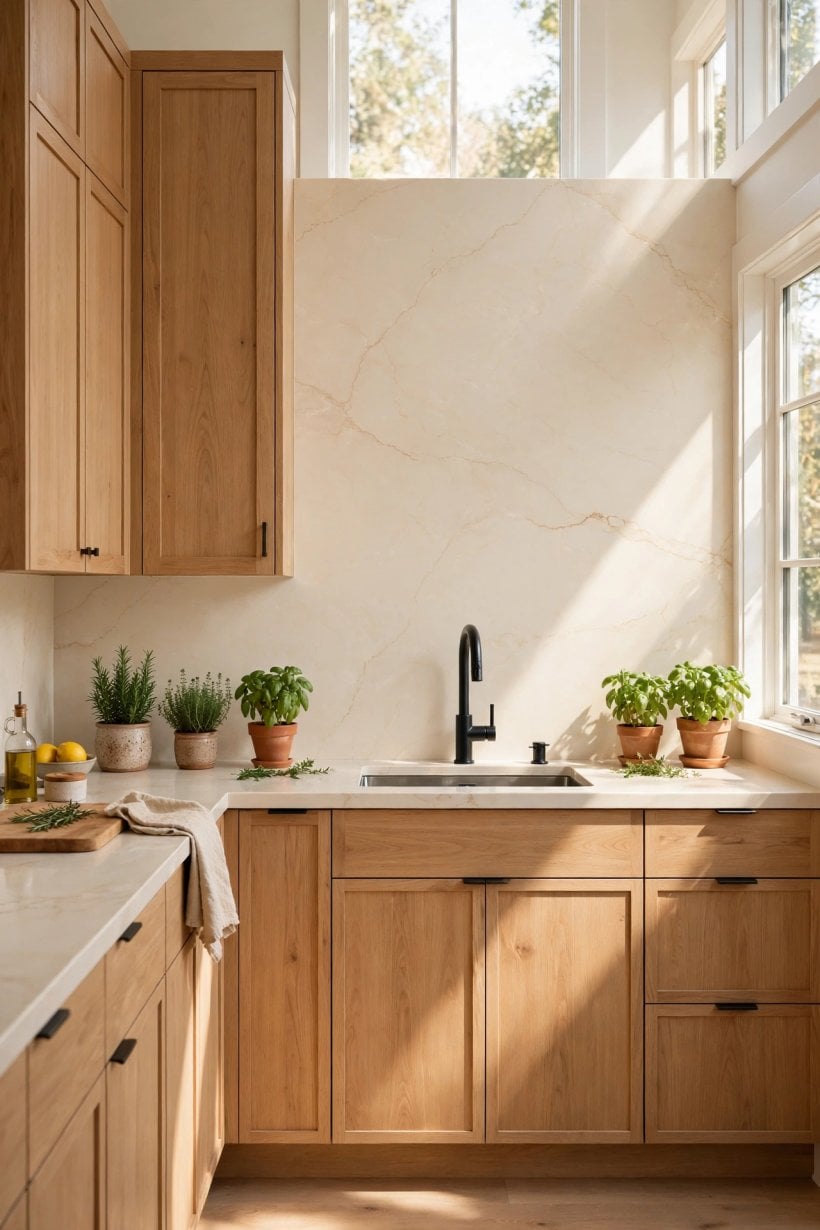
A slab backsplash replaces rows of small tiles with one calm, continuous surface. In a compact kitchen that calm matters, because the eye reads the wall as a single plane rather than a busy grid.
This guide compares natural stone, quartz and porcelain slabs honestly, covering fitting, cleaning, heat, repairs and daily life, so you can choose the material that suits how you actually cook.
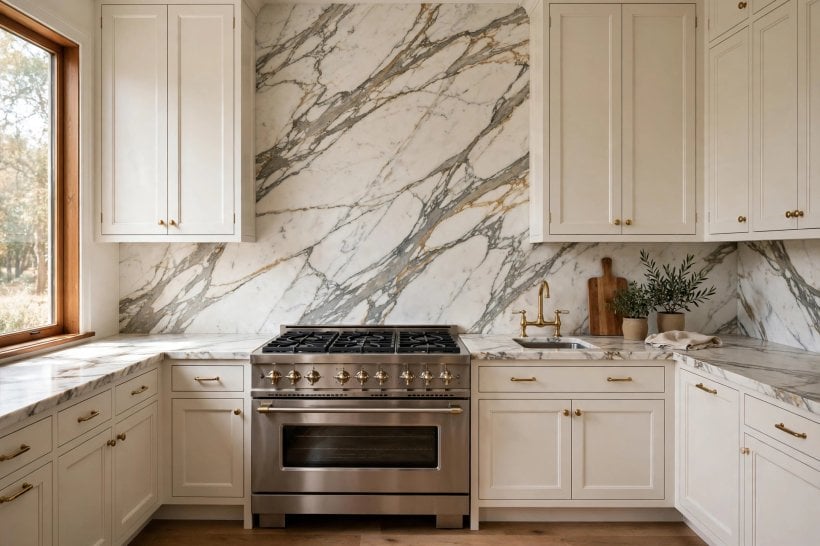
1. At a Glance: The Three Slab Materials Compared
Before the detail, here is the short version. Stone brings natural movement and a sense of permanence, but it usually wants sealing and a little more gentleness around acids and oils. Quartz offers consistent colour and a forgiving, non-porous surface that suits busy households. Porcelain arrives in large, relatively light sheets, shrugs off heat and stains well, and can mimic stone convincingly, although its edges and cut-outs demand a skilled fabricator. None of these choices is universally best. The right answer depends on your hob type, your tolerance for maintenance, the shape of your wall, and whether you prefer a surface that ages with patina or one that stays visually steady for years.
| Question | Stone | Quartz | Porcelain |
|---|---|---|---|
| Best for | Character and natural variation | Low-effort daily use | Large areas and heat confidence |
| Seams | Possible, matched by vein | Possible, usually discreet | Fewer, thanks to large sheets |
| Cleaning | Gentle cleaners, wipe spills promptly | Warm water and mild detergent | Warm water and mild detergent |
| Heat | Generally tolerant, avoid sudden shock | Use trivets for very hot pans | Generally highly tolerant |
| Repairs | Specialist polishing sometimes possible | Specialist repair, chips can show | Replacement of a section is typical |
| Feel | Cool, varied, unique | Consistent, smooth, predictable | Slim, crisp, contemporary |
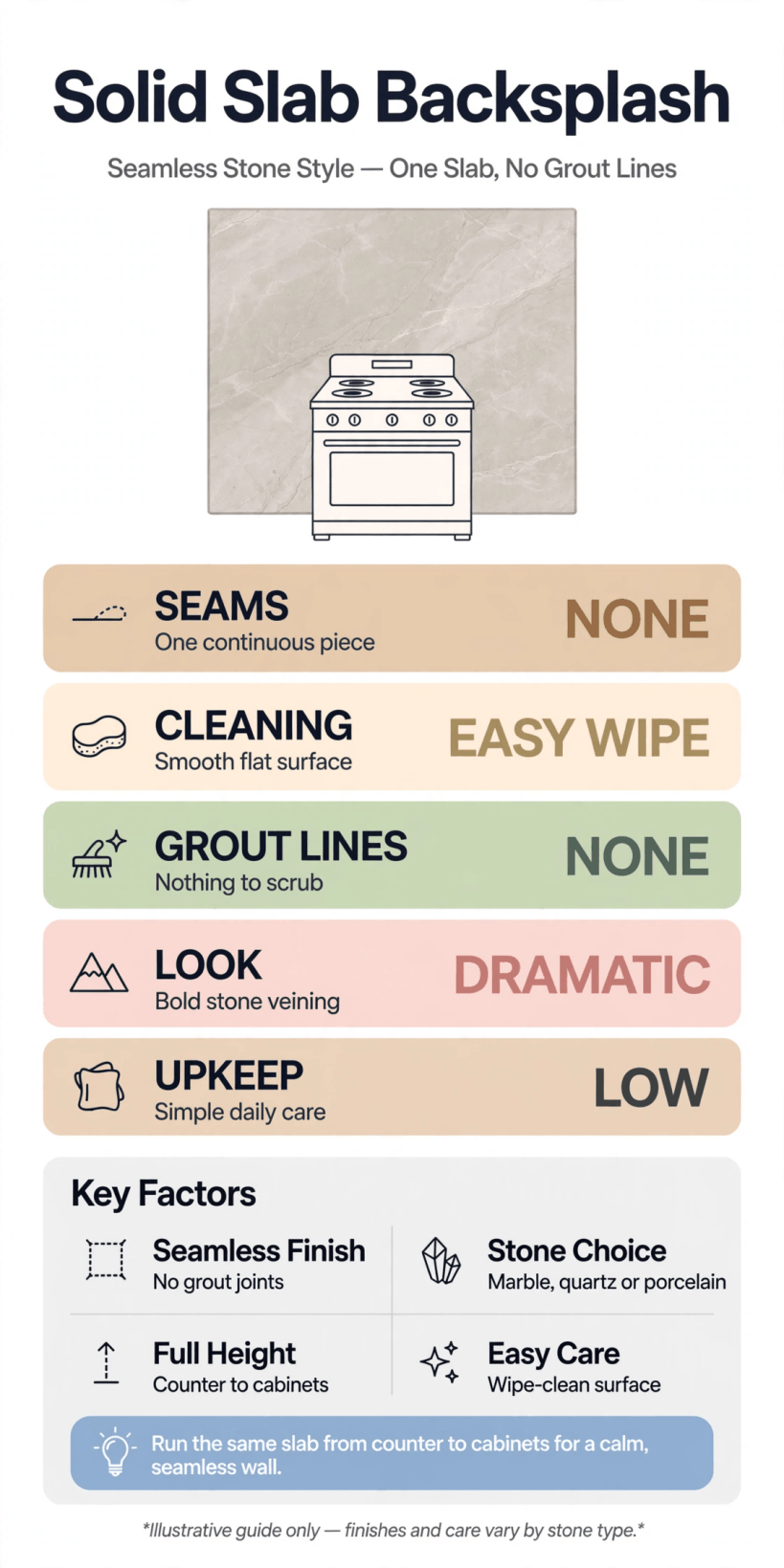
The three slab families at a glance: character, care and heat behaviour compared side by side.
Treat the table as a starting filter, not a verdict. A household that cooks with lots of oil and turmeric may value porcelain or quartz differently from a household that mostly makes tea and toast. Likewise, a wall with many sockets changes the fabrication story for every material, because each cut-out is labour, risk and finishing. Keep your own habits in view as you read the sections that follow, and note which trade-offs you would happily live with and which would quietly irritate you every single morning.
2. Why One Continuous Surface Changes a Small Kitchen
The strongest argument for a solid surface backsplash is visual quiet. Grout lines break a wall into a grid, and in a small room that grid can feel restless, especially under bright task lighting. A slab removes most of that interruption. Cabinets appear to float against a calmer background, worktops read as longer than they are, and even modest cabinetry gains a more deliberate, finished look. This is the same principle that makes simple layouts work so well in tiny house kitchen design, where every surface has to earn its place.
There is a practical side to the quiet, too. Fewer joints means fewer places for cooking film and dust to settle, and a single wipe travels further before it meets an edge. Behind a hob, where splashes land daily, a smooth wall is simply faster to return to clean. You still need to clean it, of course, and no material makes splashes vanish by magic, but the job becomes one motion rather than a session with a grout brush.
Finally, a slab lets material do the decorating. Veining in stone, a soft cloud in quartz, or a fine porcelain pattern supplies all the movement the wall needs, so you can keep shelves, rails and accessories restrained. In a compact kitchen, that restraint is valuable. It stops the room competing with itself, and it means changing the look later can be as simple as changing textiles, handles or a kettle, rather than retiling a wall.
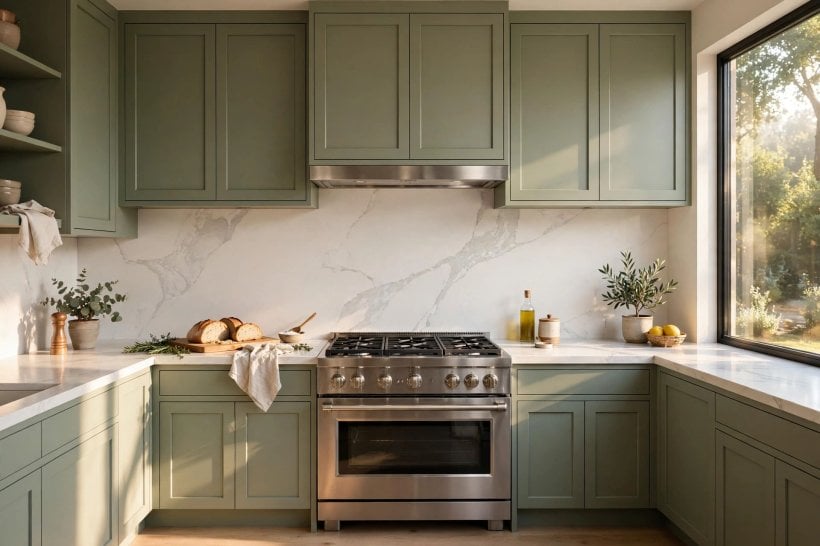
3. Natural Stone: Character You Cannot Repeat
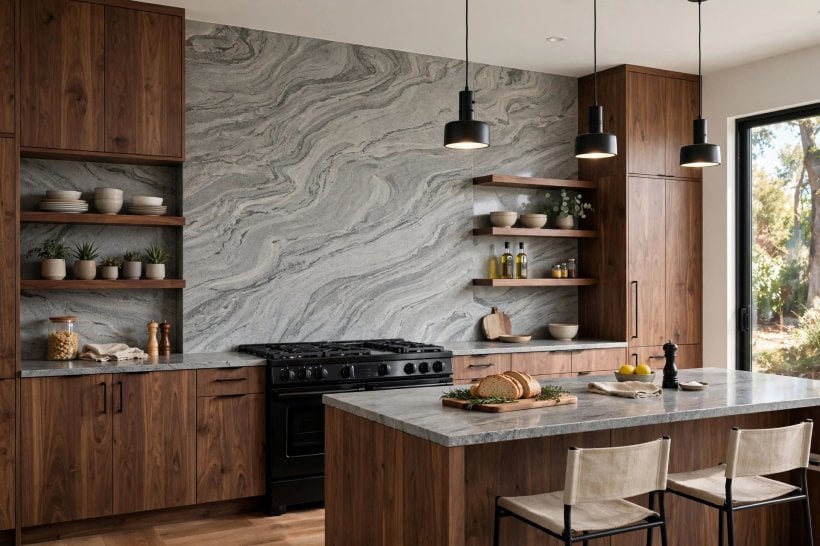
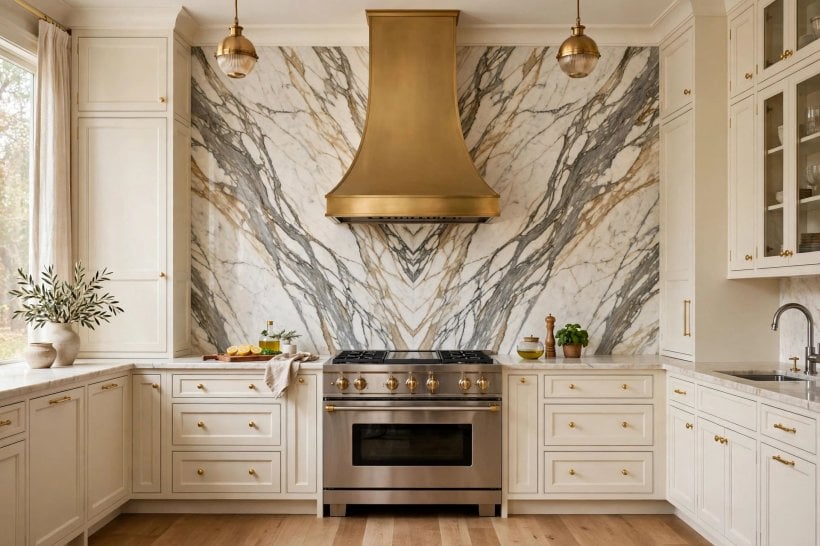
Stone is the choice for people who want a wall that could belong to no other kitchen. Marble, granite and quartzite each carry their own grain, flecks and veining, formed long before your kitchen existed. That uniqueness is the appeal and the responsibility. A sample in a showroom is only a hint of your slab, so view the actual piece whenever you can, and agree where its strongest movement will fall in the finished wall.
Daily care is straightforward but attentive. Most natural stone used this way benefits from sealing as advised by the fabricator, and from prompt wiping of lemon, vinegar, wine and oil, which can mark some stones if left to sit. Use gentle, stone-appropriate cleaners rather than harsh sprays, and treat the surface as you would a good wooden table: respected, used daily, and not expected to stay showroom-perfect without help.
In return, stone ages with a kind of honesty many people love. Slight softening of sheen and the odd faint mark become part of the room’s story, much as they do in the relaxed interiors shown in living room interior design for a tiny house. If that patina would please you, stone is rewarding. If it would bother you every time you noticed it, choose a more uniform material and enjoy its steadiness instead, without apology.
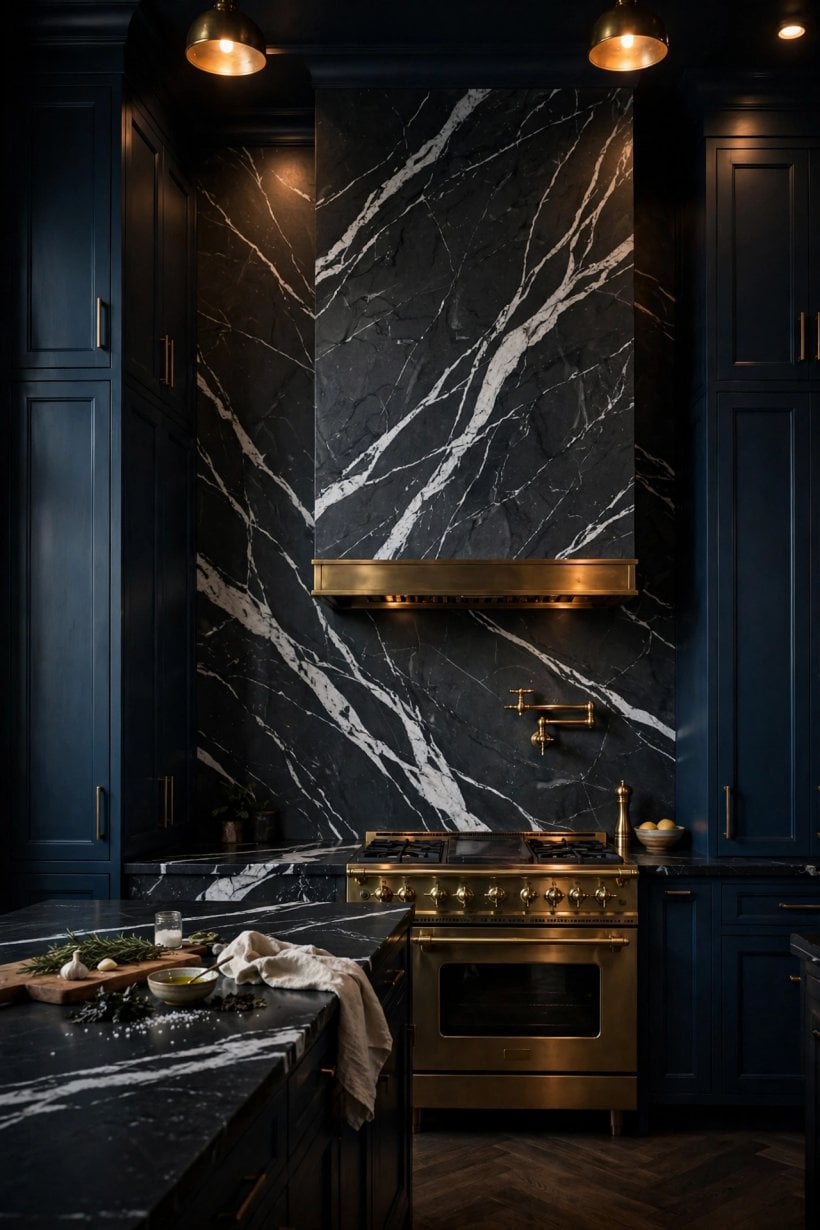
4. Quartz: Consistency for Busy, Everyday Cooking
Quartz slabs are engineered from stone aggregate and resin, which is why their colour and pattern stay so consistent from one end of the wall to the other. For a homeowner trying to match a slab to existing worktops, that predictability is a genuine relief. What you approve in the sample is, in broad terms, what arrives on the wall, and seams can often be placed and blended with confidence.
The surface is non-porous, so everyday spills sit on top rather than soaking in, and routine cleaning is usually warm water, a soft cloth and a mild detergent. That makes quartz a friendly choice for households that cook often and clean quickly. It also suits rental properties and family kitchens where several people use the space and nobody wants a long list of special instructions taped inside a cupboard door.
The main caution is heat. Very hot pans placed or leant directly against quartz can damage resin, so trivets and pan rests remain good habits, especially near the hob. Treat quartz as tough but not invincible, and it will serve quietly for years. Its calm, even appearance pairs well with the uncluttered approach in bathroom interior design ideas for tiny houses, where easy-clean surfaces matter just as much.
5. Porcelain: Large Sheets, Slim Profile, Heat Confidence
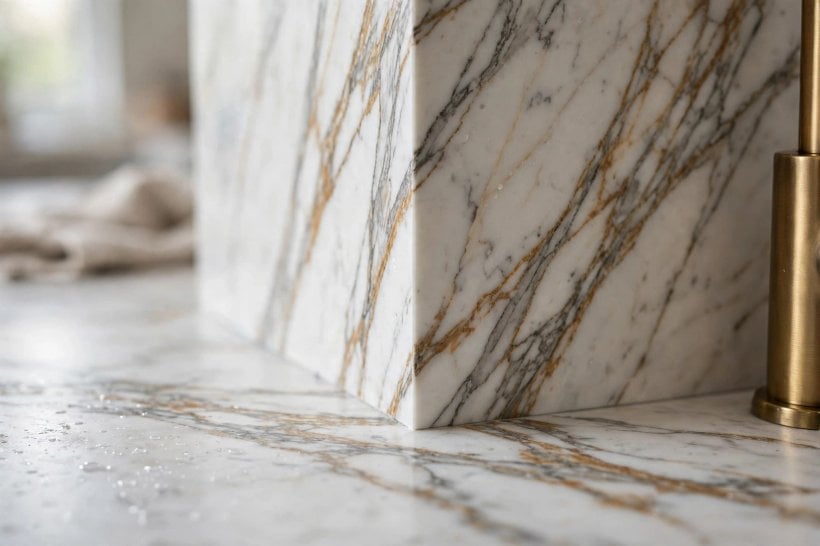
Porcelain slabs are made in generously sized sheets that can cover a long wall with very few joins, and they do it at a slimmer thickness than most stone or quartz. That slim profile helps where worktop depth is tight or where a backsplash must slip neatly behind a hob or under a rail. It also keeps weight down compared with a thick stone panel, which can simplify handling on site.
Performance is a strong point. A glazed porcelain surface resists staining well, tolerates heat confidently in normal kitchen use, and does not ask for sealing. For cooks who use high heat, splash sauces freely and want to wipe the wall without thinking twice, porcelain removes a lot of low-level worry. Modern printing and glazing can suggest marble, concrete, metal or plain soft colour, so the practical choice never has to look merely practical.
The skill sits in fabrication and fitting. Porcelain is hard but can be brittle at edges and around cut-outs before it is fixed, so experienced cutting and careful transport matter. Ask who will template, cut and install, and how edges will be finished where the slab stops. A well-fitted porcelain wall feels crisp and effortless; the effort simply happened earlier, in the workshop, which is exactly where you want it.
6. Measuring, Templating and the Honest State of Your Wall
Every slab project stands or falls on templating. Walls that look flat rarely are, and a rigid panel cannot be persuaded around a bow or a corner that drifts out of square the way individual tiles sometimes can. A good templater checks levels, notes where cabinets end, marks socket positions precisely, and agrees the finished height: to the underside of wall units, to a shelf line, or full height to the ceiling for a more architectural effect.
Decide early how the slab will meet its neighbours. Where does it stop at the end of a run? Does it return around a corner, or finish with a polished edge? How will it sit against a window reveal, a cooker hood or an uneven plaster line? Small shadow gaps and neat silicone joints in a matching tone can absorb minor irregularities honestly, without pretending the wall was ever perfect.
If you are renovating rather than starting fresh, allow time between removing the old surface and templating. Old adhesive, loose plaster and hidden cables all appear at this stage in real projects, as anyone who has followed a self-build in how to build your own tiny house will recognise. A calm week spent preparing the wall is cheaper than a rushed slab cut to fit a wall that was not ready to receive it.
7. Edges, Cut-Outs, Sockets and the Details That Decide Quality
Look closely at any slab installation and the quality lives at the edges. A polished or softly rounded visible edge feels considered; a raw, chipped arris does not. Agree the edge finish for every exposed side before cutting begins, including the top edge if the slab stops below wall units and will be seen from a doorway or a taller person’s viewpoint.
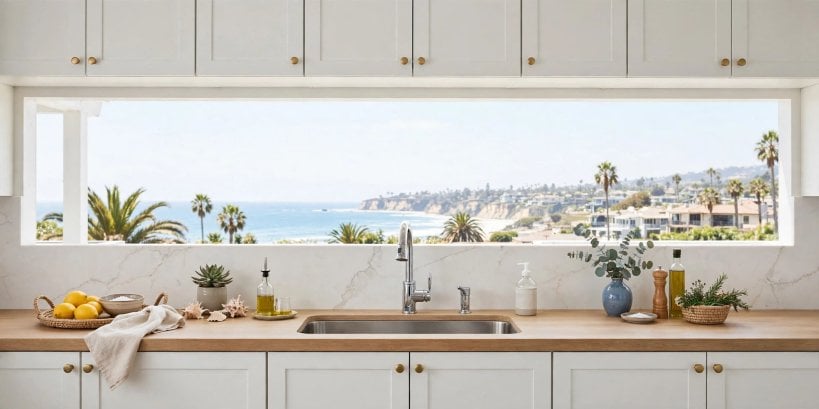
Sockets deserve a planning conversation of their own. Each socket, switch, cooker control and under-unit light needs a precise cut-out, and moving a socket even slightly is far easier on paper than in a finished slab. Consider whether sockets could sit in a worktop upstand, in the underside of wall units, or in a discreet strip, reducing cuts in the slab. Fewer cuts usually means a cleaner look, lower fabrication risk and a simpler install day.
The hob and sink junctions matter just as much. A neat, heat-appropriate seal behind the hob, a clean line where slab meets worktop, and taps that do not foul the wall when their levers tilt back are unglamorous details that decide whether the kitchen feels finished. Photograph these junctions on reference jobs if you can. A fabricator who is proud of them will happily show you close-ups, not just wide, flattering room shots.
8. Cleaning, Sealing and Living With the Surface Daily
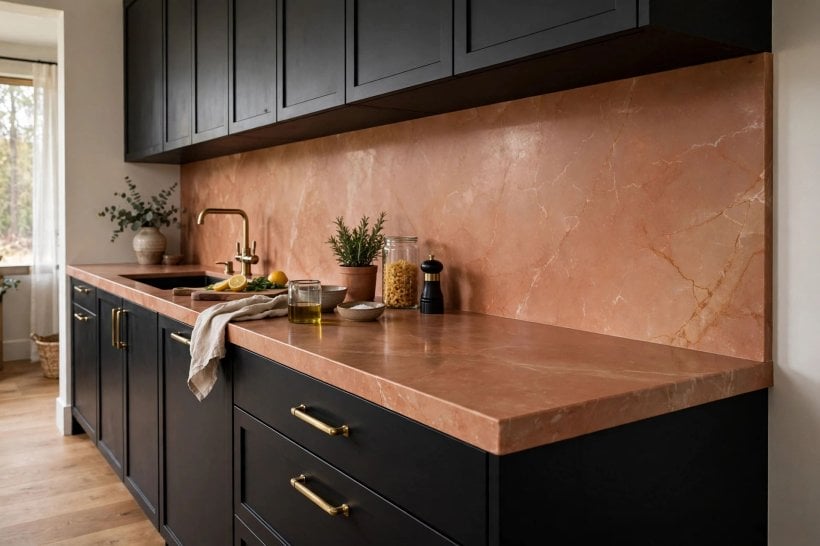
Day to day, all three materials ask for less effort than a grouted wall. A soft cloth, warm water and a drop of mild detergent handle most splashes, and a microfibre cloth buffs away water marks around the sink and hob. Avoid abrasive pads on polished finishes, and lift heavy pans across the wall rather than dragging them, whatever material you choose.
Sealing applies mainly to natural stone, and the fabricator should tell you what product suits your slab, how often it typically needs attention, and how you will know when it is due. Keep that note with your appliance manuals. Quartz and porcelain generally do not need sealing, which is one reason busy households lean towards them, but their joints and silicone lines still deserve an occasional check and refresh to keep the whole wall looking sharp.
Build one small habit and the wall will look after itself: wipe the hob zone while the pan is resting and the splashes are fresh. It takes under a minute, prevents baked-on film, and keeps any solid surface backsplash looking close to installation day. Households that share cooking can share this habit easily, because it is obvious, quick and strangely satisfying once the surface responds so well to it.
9. Costs, Budgeting and Where the Money Actually Goes
Slab costs are best understood in parts rather than as a single mysterious figure. There is the material itself, which varies widely with rarity, brand and finish; the templating visit; fabrication, including cut-outs and edge work; transport of a large, fragile panel; and installation, sometimes with two fitters for a long piece. A modest wall in a common porcelain design and a dramatic book-matched stone wall are different projects, and their quotes will reflect that honestly.
Because ranges vary so much by region and material, treat any single figure you read online with caution and gather comparable local quotes that itemise the parts above. Ask what is excluded: socket moves, plaster repairs, removing the old backsplash, and sealing often sit outside the headline number. A clear, itemised quote lets you trim sensibly, perhaps by simplifying an edge or reducing full-height coverage, rather than cutting corners you cannot see.
Value, meanwhile, is not only the invoice. A wall that wipes clean in seconds, every day for years, returns its cost in small daily dividends. That everyday return is the same logic behind many choices in interior design ideas borrowed from restaurant spaces, where surfaces must look good and recover quickly after hard use. Budget for the surface you will enjoy maintaining, not the one you will quietly resent.
10. Choosing Between Stone, Quartz and Porcelain for Your Kitchen
Start with your cooking, not the showroom. Frequent high-heat cooking and colourful sauces point towards porcelain or quartz for their forgiving surfaces. A cook who loves natural materials and already enjoys caring for wood and cast iron will likely settle happily with stone and its gentle routine. Neither temperament is better; being honest about yours is what makes the choice hold up after the novelty fades.
Next, look at the wall itself. Long, unbroken runs flatter porcelain sheets and book-matched stone. Walls crowded with sockets may suit a material your chosen fabricator cuts most confidently, so ask each supplier to talk through your exact wall rather than a generic sample. Their comfort with your layout is useful evidence, and a supplier who raises awkward details early is usually protecting your result, not complicating your day.
Finally, stand samples against your own cabinets, in your own light, morning and evening. Veining that sang under showroom spots may shout under a north-facing window, and a quiet quartz may come alive beside warm timber. Borrow large samples where possible, live with them against the wall for a few days, and let the room vote. Kitchens are used at every hour, as the flexible spaces in guides to renting tiny houses often show, and your slab should please you at breakfast and at midnight alike.
Final Considerations
A solid slab backsplash succeeds because it simplifies two things at once: the look of the wall and the work of keeping it clean. Stone offers unrepeatable character with a little attentive care. Quartz offers consistency and an easy, non-porous routine, with sensible respect for very hot pans. Porcelain offers large, slim, heat-confident sheets whose quality depends on skilled fabrication. Choose by your habits, your wall and your light, in that order, and the material will feel obvious rather than agonised over.
Before you commit, confirm the template date, the edge finishes, every cut-out position, and what your quote excludes. Keep offcuts if they are offered, since a small piece can serve as a trivet, a shelf or a future repair reference. Then enjoy the simplest pleasure this wall offers: one calm surface, one quick wipe, and a kitchen that looks composed even on the busiest cooking night of the year.



0 Comments