

From the Smoky Mountains to the Mississippi River, Tennessee has become one of the most talked-about states for going small — but finding tiny house builders tennessee buyers can trust still takes real homework. Who designs the home, who actually builds it, what the finished project costs, and where you are legally allowed to place it all vary more than most first-time buyers expect.
This guide compares the four builder types you will genuinely encounter — custom, semi-custom, shell, and kit and plan sellers — with honest cost talk and a practical checklist of what to verify before you sign anything or hand over a deposit.
1. Tiny House Builders in Tennessee at a Glance
Nearly every company offering tiny homes here fits one of four business models, and the model decides how much control you keep, how much you pay, and how much work falls on you. The table below distills the trade-offs; save the infographic beneath it for reference while you shop.
| Builder type | What you get | Control | Relative cost |
|---|---|---|---|
| Custom builders | Full design-build from a blank page | Most control | Highest |
| Semi-custom builders | Proven plans plus options and upgrades | High | Mid-range |
| Shell builders | Weather-tight shell, unfinished interior | Medium | Lower upfront, DIY finish |
| Kit & plan sellers | Materials package or drawings only | Total — you build | Lowest |
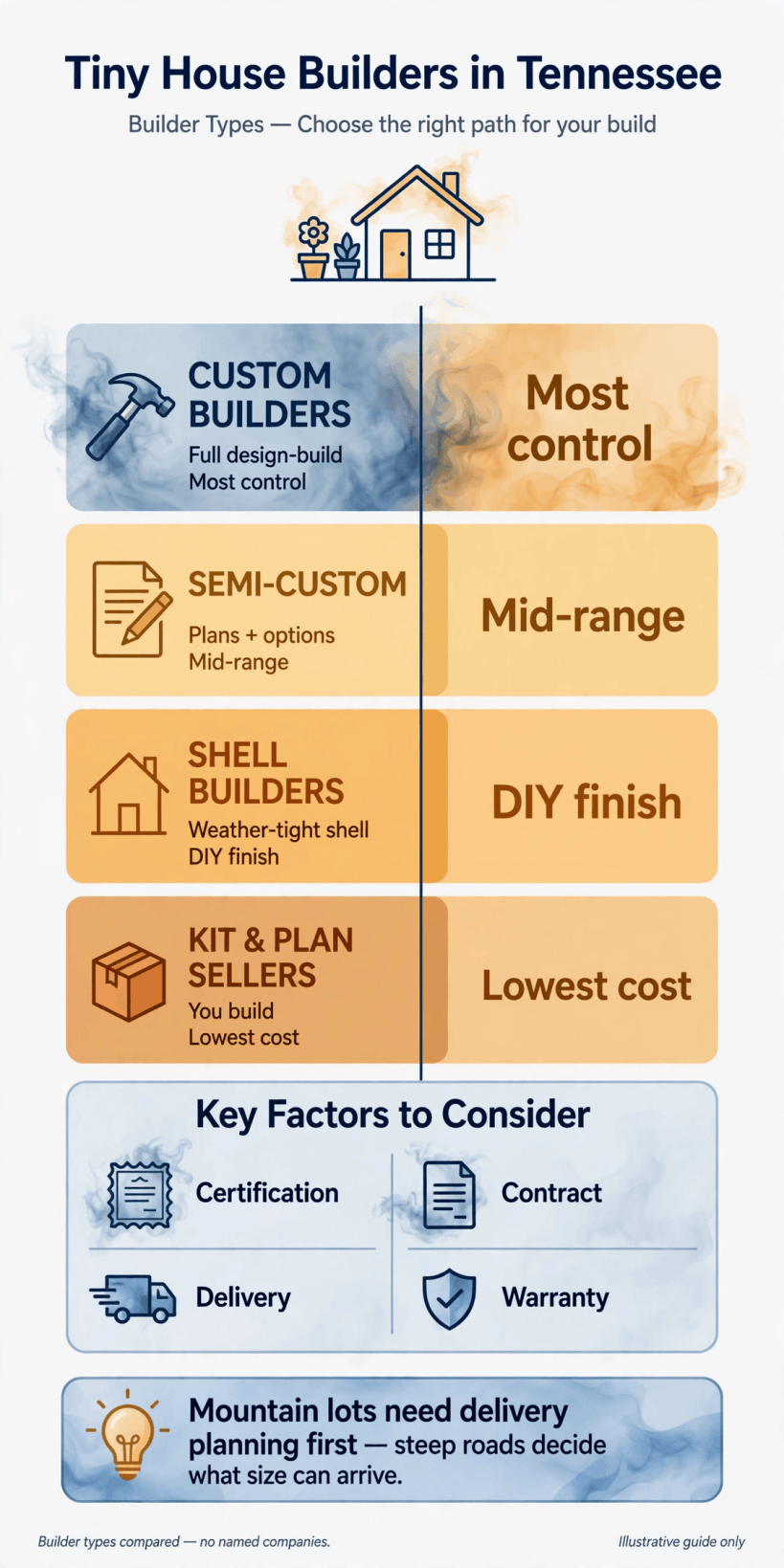
Infographic: the four tiny house builder types compared at a glance — custom builders offer the most control, semi-custom sits in the mid-range, shell builders deliver a weather-tight shell for a DIY finish, and kit and plan sellers are the lowest-cost route. Key factors to weigh in Tennessee: certification, contract terms, delivery logistics, and warranty. Mountain lots need delivery planning first — steep roads decide what size can arrive.
2. What the Four Builder Types Actually Sell You
The word “builder” covers very different businesses. A custom builder is a design-build partner that draws your home from scratch and constructs it start to finish. A semi-custom builder starts from a catalog of proven floor plans and lets you choose finishes, fixtures, appliance packages, loft configurations, siding, and sometimes modest layout changes. A shell builder delivers a weather-tight structure — framed, roofed, sided, with windows, doors, and rough utilities — and leaves the interior to you. A kit or plan seller ships pre-cut materials or simply sells the drawings, and you (or your own crew) do the building.
Understanding which model you are buying matters more than the brand name on the truck, because the model sets the price structure, the timeline, and who is responsible when something goes wrong. A quote from a custom builder and a quote from a shell builder are not comparable numbers; they are different products entirely. If you are weighing a dedicated tiny-home company against a local general contractor taking on a small project, our guide to hiring builders vs. contractors walks through that decision in detail.
Tennessee adds its own wrinkles: the terrain swings from flat river bottomland in the west to genuinely steep mountain lots in the east, and that terrain decides delivery long before design does. The state’s popularity with tiny-home buyers also means the range of sellers is wide — from serious shops with third-party certification to weekend operations. Keep both realities in mind as you read the sections below.
One more distinction worth making early: a tiny house on wheels and a tiny house on a permanent foundation are regulated, financed, and insured as different things, even when they look identical from the street. Most dedicated tiny-home builders specialize in one or the other, and some do both. Decide which you are pursuing before you shortlist builders, because a company that excels at wheeled homes may not be the right fit for a foundation project — and the questions you ask each type are different.
3. Custom Builders: Full Design-Build, Most Control
Custom builders design your home from a blank page and build it start to finish. You choose the footprint, the roofline, the layout, the systems, and the finishes — within what the building code and your site allow. This is the right model when your needs do not fit a catalog plan: a sloped mountain lot, multigenerational layouts, accessibility requirements, or a design that has to work around mature trees and a view you refuse to waste.
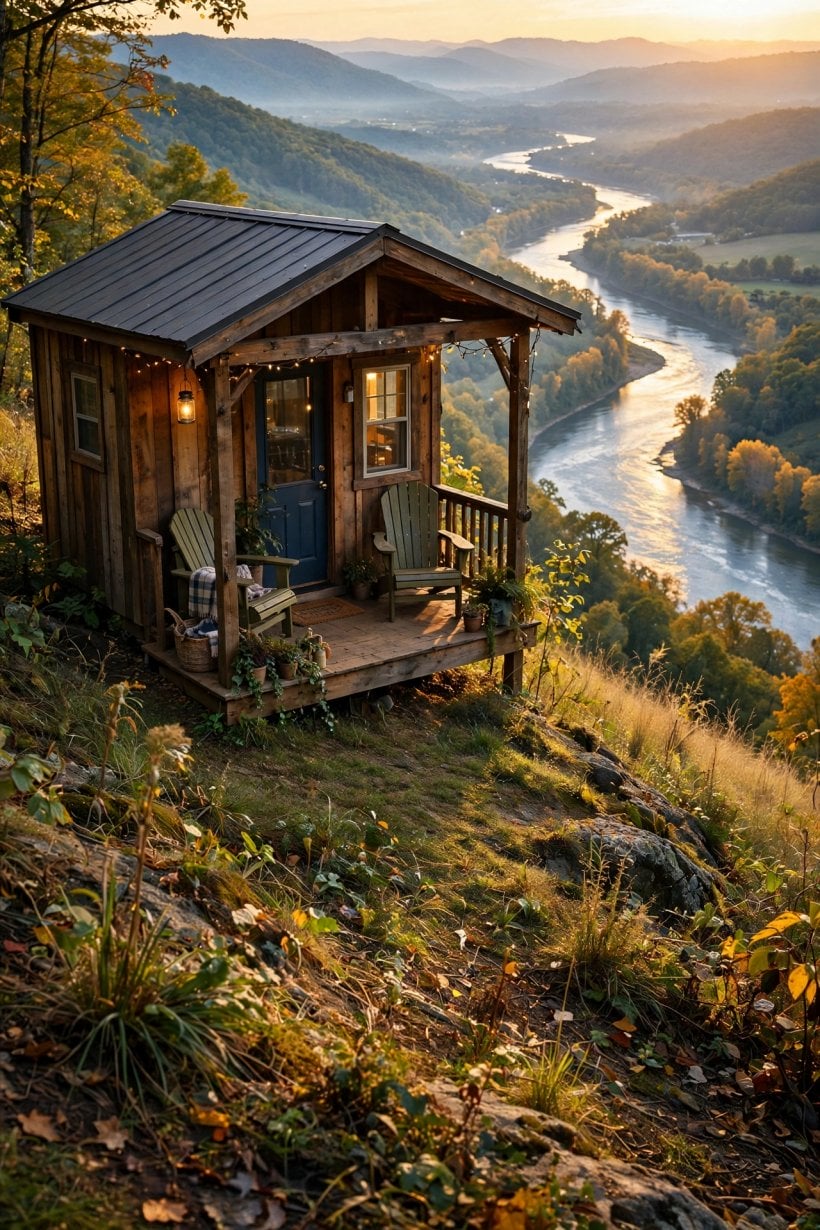
Expect the highest cost of the four models, and expect it for good reasons: one-off design work, engineering, and a build crew dedicated to a single unique project. Timelines run longer because design, permitting drawings, and material lead times all stack up before construction starts. The payoff is a home that fits your site and your life exactly, plus a single party accountable for the whole result. Ask how design revisions are billed, what happens to the schedule when you change your mind mid-build, and whether the price is fixed or cost-plus. Our Oregon builder-type guide shows how the same custom model plays out in another state, which is useful perspective before you commit.
4. Semi-Custom Builders: Proven Plans Plus Options
Semi-custom builders start from a set of floor plans they have built before and let you personalize within defined options: finishes, fixtures, appliance packages, loft configurations, siding, and sometimes modest layout changes. Because the core design is proven, engineering is largely done, material lists are dialed in, and crews have built the same bones repeatedly — which shows up in fewer surprises.
That repetition is why semi-custom sits in the mid-range on cost and usually delivers faster than full custom. You give up the blank page, but you gain predictability: a clearer budget, a clearer timeline, and a track record you can inspect by touring completed homes or talking to past buyers. The main trap is option creep — a modest base price can climb steeply once you start checking upgrade boxes, so always price the home the way you would actually order it, not the way the brochure shows it. Get the full options list with prices in writing before you compare quotes, and confirm which “standard” features other builders include by default so you are comparing honestly.
Semi-custom is often the sweet spot for Tennessee buyers who want a quality home without a year-long design process. Just be wary of builders whose “options” are really just different paint colors — meaningful semi-custom programs let you move walls, change rooflines, and pick real systems, not just finishes. When you tour a model or completed home, look past the staging and inspect the bones: how doors close, how trim joints meet, and how the mechanical systems are accessed for service.
5. Shell Builders: A Weather-Tight Shell You Finish
A shell builder delivers the structure weather-tight: framed and sheathed walls, roof on, siding applied, windows and doors set, and utilities roughed in — but no finished interior. Insulation, drywall, flooring, cabinetry, plumbing fixtures, and electrical finish work are yours to complete, either with your own hands or by hiring trades yourself.
The appeal is a lower upfront build cost plus total control over the interior, on your own schedule. It suits skilled DIYers and buyers who want premium finishes without paying a builder’s markup on every tile and faucet. The risk is equally real: an unfinished interior is still your legal responsibility, and your finish work must meet code if the home will be permitted, certified, or financed. Budget honestly for materials and your own time, and be realistic about how many weekends a full interior actually takes — most people underestimate it badly. Before choosing this path, work through our tiny house build checklist so no system, inspection, or sign-off step slips through the cracks.
6. Kit and Plan Sellers: The Lowest-Cost Route
Kit sellers ship you a pre-cut, labeled materials package — framing, sheathing, roofing, windows, doors, and sometimes systems — with assembly instructions. Plan sellers go one step further back and sell only the drawings: you source every stick of lumber yourself. Either way, you are the builder, and this is the lowest cash-cost route to a tiny house.
Lowest cost does not mean easiest. You need tools, skills, time, and usually a few experienced friends. A kit simplifies procurement and eliminates cutting mistakes, but you still handle the foundation or trailer, utility connections, and every inspection yourself. With plans-only, add material sourcing, delivery coordination, and waste to your workload. One often-missed step: confirm the drawings will satisfy your county’s permit office — some jurisdictions want an engineer’s stamp on structural drawings, which is far easier to arrange before you start cutting than after an inspector asks. Kits and plans make the most sense for experienced DIYers with a flexible timeline, a secure place to build, and honest self-assessment of their skills.
Kit quality varies enormously, so compare what is actually in the box. A good kit includes detailed assembly drawings, labeled components, flashing and weatherproofing details, and support you can call when a step confuses you. A thin kit is little more than a lumber package with a marketing name. Ask for the full component list, the assembly manual, and references from people who built the same kit — their experience is the most honest review you will find.
7. What a Tiny House Costs in Tennessee
Honest talk about tiny house costs works in trade-offs rather than fixed numbers, because the builder type you choose moves the total more than anything else. Custom design-build sits at the top: you are paying for one-off design, dedicated labor, and full project management. Semi-custom comes next, with the proven base plan holding costs down and your option choices deciding the final figure. A shell lowers the builder’s invoice substantially, but the interior finish — materials plus your labor or hired trades — brings real cost back in. Kits and plans are the lowest outlay, trading money for your time, skill, and patience.
Beyond the build itself, budget for everything around it: site preparation, the foundation or trailer, utility hookups or off-grid systems, delivery and crane time if the home arrives whole, permits and inspections, and insurance during construction. In Tennessee’s hill country, site work deserves special respect — grading, driveway access, and drainage on a sloped lot can rival the cost of systems inside the house. These “beyond the build” costs surprise more buyers than the price of the house itself, so get written estimates for them before you lock in a builder. If you will borrow, read our guide to tiny house loans early — financing a tiny home works differently from financing a conventional house, and knowing your options shapes which builder type is realistic for your budget.
One more cost habit worth building: compare lifetime cost, not just purchase price. A well-insulated, well-built home from a reputable builder costs less to heat, cool, maintain, and insure over a decade than a cheap build that fights you every season. Tennessee summers test cooling and moisture control just as winters test insulation, so weigh build quality as a cost line item, not a luxury.
8. What to Check Before You Sign Anything
Whatever builder type you choose, the contract is where good projects are protected. Insist on a written scope of work that describes exactly what is included and, just as importantly, what is excluded — allowances, site work, delivery, utility connections, and permit fees are the classic gray areas. Tie payments to completed milestones rather than calendar dates, and never pay the bulk of the price before the bulk of the work exists.
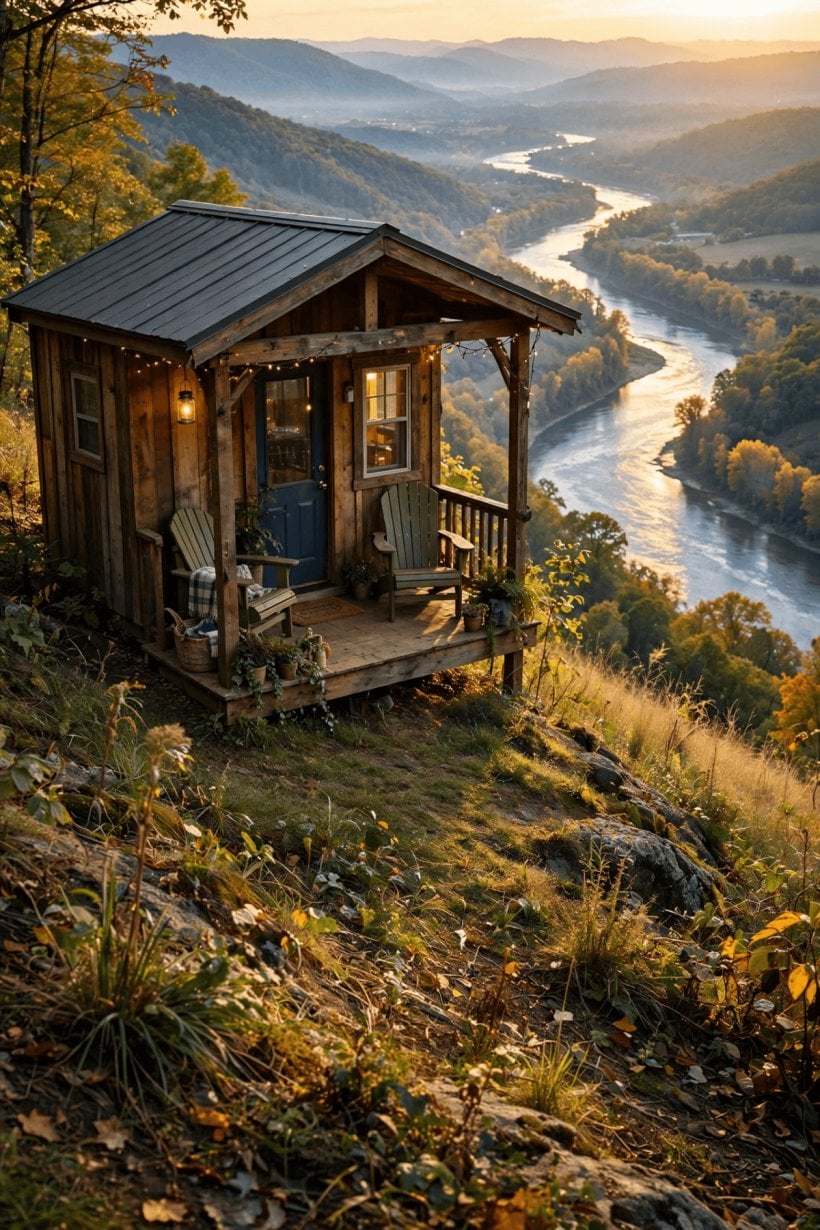
Certification deserves its own line in your checks. Ask whether the builder’s homes carry third-party certification and what standard they are built and inspected to — certification affects financing, insurance, and in some jurisdictions whether the home can be placed at all. Get the warranty in writing: what it covers, for how long, and who performs the repairs. Confirm who pulls permits and who is responsible for transport and placement. Ask for references from recent buyers and actually call them; ask what went wrong, not just what went right. Our overview of tiny house mortgages also flags documentation lenders expect, which doubles as a useful paperwork checklist for your own files.
Watch for red flags in the sales process itself. Pressure to sign today for a “limited” discount, reluctance to put promises in writing, deposits far above industry norms, and no physical address or workshop you can visit are all reasons to walk away. Legitimate builders expect scrutiny and answer it with documentation; the ones who bristle at questions are doing you a favor by revealing themselves early.
9. Placement, Zoning, and Mountain Delivery in Tennessee
Here is the part many buyers research last and regret most: where the home is allowed to sit. Tennessee has no single statewide tiny house rule that settles the question. Zoning is set at the county and municipal level, and the answer changes across county lines — some counties and smaller towns are notably relaxed about small dwellings, while larger metros and their suburbs regulate them tightly. Deed restrictions and HOA rules can prohibit what zoning allows, so check those too.
Treat placement as a check-with-your-county exercise from day one. Call the county or municipal planning office for every location you are considering, describe exactly what you plan to place — tiny house on wheels, tiny house on a foundation, or accessory dwelling unit — and get the answer in writing where you can. Foundation-built tiny homes are generally treated like small single-family houses or ADUs; homes on wheels are often treated like RVs, which limits where they can stay long-term. Our guide to where you can live in a tiny house maps every placement option, and if you are buying land, read how to buy land for a tiny house before you make an offer — the cheapest acre is no bargain if you cannot legally place your home on it.
Then plan the delivery before you fall in love with a lot. In East Tennessee especially, steep grades, switchbacks, low branches, and narrow gates decide what can physically arrive — a home that fits the lot may never reach it. Walk the route with your builder or transporter, agree on who pays for trimming, escort vehicles, or a crane set, and get that in writing. Mountain lots need delivery planning first; the road, not the floor plan, often decides the maximum size of your home.
10. How to Compare Quotes and Vet a Builder
Comparing builders starts with making quotes comparable. Ask every contender for the same scope in writing: structure, systems, finishes, appliances, delivery, and site-work boundaries. When one quote is dramatically lower, the difference is usually in what was left out — allowances that will balloon, excluded delivery, or finish levels you would never accept. A detailed higher quote often costs less in the end than a vague low one.
Vet the business behind the quote. How long have they built tiny homes specifically? Can you tour a finished home or at least see detailed photos of their work? What does their warranty actually cover, and who honors it if they close? How do they communicate during the build, and how are delays handled? For homes arriving whole, confirm transport logistics early — route surveys, escort requirements, and crane placement are all arranged before build day, not on it, as our guide to how to transport a tiny house explains. Take your time here; the cheapest lesson is the one you learn from someone else’s contract.
Finally, get the timeline in writing with milestones you can verify: design approval, permit submission, build start, rough-in complete, finishes, delivery, and final walkthrough. Ask what happens when milestones slip and how you will be notified — a builder with a real schedule communicates proactively, while a builder with a vague one leaves you guessing. Put communication expectations in the contract, not just in conversation.
Final Considerations
Tennessee rewards buyers who do their homework in the right order: confirm placement with your county first, choose the builder type that matches your budget and skills, then vet individual builders against a written scope. Start with the county — and the delivery route — not the floor plan. Custom gives you the most control, semi-custom balances cost and predictability, shells reward DIY commitment, and kits reward it even more. Whichever path you take, written contracts, milestone payments, certification clarity, and verified references are non-negotiable. For a look at how the same builder types compare in very different terrain, see our South Dakota builder-type guide or browse how buyers evaluate tiny house communities in Nevada.


0 Comments